Key: The Life Story Behind SHINee's Fashion Star
In this post
- Daegu, an Only Child, and a Taste for the Bold
- Sixteen, a New Group, and the Rapper in the Middle
- Face, Bad Love, Gasoline, and a Solo Sound in Full Colour
- Television, Musicals, and the Man Who Can Do Everything
- The Cook, the Dogs, and a Home of His Own
- Eighteen Months in Uniform and a Return in Colour
- My Take:
If SHINee is a group of five distinct colours, Key is the brightest one. He is the member who wears the outfit nobody else would dare to wear, says the thing nobody else would dare to say, and tries the idea nobody else would dare to try. Fans call him the almighty Key, a nickname that sounds like a joke and is also completely serious, because there seems to be nothing he cannot do: sing, rap, dance, act in musicals, host television, design clothes, and make people laugh, often all in the same week. He is the most versatile member of his group, and he has spent his whole career proving that versatility is not a lack of focus. It is a talent of its own.
Kim Ki-bum came into the world in Daegu on 23 September 1991, a city in the south-east of Korea known for its heat, its apples, and its strong, direct people. He was the only child of his parents, and he grew up in a home where he was loved, encouraged, and allowed to be himself. That freedom mattered. He was a lively, funny boy, the kind who made his classmates laugh and who liked to be noticed. He loved music, he loved clothes, and he loved the idea of performing. When other children were dreaming of safe jobs, Ki-bum was dreaming of a stage, and he was not shy about saying so.
His path to that stage began in 2005, when he was fourteen, at a nationwide audition tour run by SM Entertainment. He performed, he impressed the judges, and he was offered a place as a trainee. He moved to Seoul, left his home in Daegu behind, and entered a world of daily lessons, strict schedules, and fierce competition. He was young, he was far from home, and he was determined to make it work. This is the story of how a bold, funny boy from Daegu became one of the most recognisable faces in Korean entertainment, and how he built a career that refused to fit inside a single box.
Daegu, an Only Child, and a Taste for the Bold
Daegu is a city that makes strong characters. It is hot in summer, proud in spirit, and direct in manner, and Ki-bum absorbed all of that. As an only child, he was used to attention, and he learned early how to hold a room. At school, he was the boy who made jokes, who organised games, and who was never afraid to speak up. His teachers remember a bright, confident child, one who was sometimes too confident for his own good, but who was always full of life. He was not the quiet, studious type. He was the type who wanted to be seen.
Clothes mattered to him from a young age, in a way that went beyond fashion. He liked colour, he liked pattern, and he liked the way a good outfit could change how a person felt. He would put together looks that other boys his age would never have attempted, and he did it with a confidence that surprised adults. That eye for style would later become one of the defining features of his career, but in Daegu it was simply a boy expressing himself, dressing the way he felt, and not caring what anyone else thought. His parents, to their credit, let him. They saw that their son had a strong sense of who he was, and they did not try to change it.
Music was the other great love of his childhood. He listened to pop, to R&B, and to the Korean groups of the early 2000s, and he dreamed of being on stage himself. He practised singing and dancing, and he performed for his friends whenever he had the chance. He was not a shy performer. He liked the applause, he liked the attention, and he liked the feeling of a room full of people watching him. That hunger for the stage is what took him to the SM audition in 2005, and it is what carried him through the hard years that followed.
The audition itself was a turning point. SM’s nationwide tour was a search for new talent, and thousands of teenagers took part. Ki-bum, at fourteen, performed with a confidence that made the judges take notice. He was offered a trainee place, and he accepted, knowing that it meant leaving Daegu and moving to Seoul. It was a big decision for a fourteen-year-old, and a big decision for his parents, but they supported him. They believed in their son, and they believed that his talent deserved a chance. He packed his bags, said goodbye to his home, and went to the capital to chase a dream.
Seoul was a shock. The city was bigger, faster, and harder than Daegu, and the life of a trainee was harder still. Ki-bum had to learn to sing properly, to dance properly, and to live by a timetable that left little room for rest. He was young, he was homesick, and he was surrounded by other talented teenagers who all wanted the same thing. But he had something that set him apart: he was not afraid to be himself. While other trainees tried to fit in, Ki-bum stood out, with his humour, his style, and his refusal to be ordinary. That refusal would become his greatest asset.
Sixteen, a New Group, and the Rapper in the Middle
By 2008, the training had paid off, and SM was ready to show its new boy group to the world. SHINee’s opening stage came on 25 May that year, on the music programme Inkigayo, and their first song, “Replay”, was released around the same time. Ki-bum, now performing as Key, was sixteen years old, the second youngest in the group, and he took on the roles of rapper and vocalist. He was not the main singer, and he was not the main dancer, but he was the member who tied the group together, with his energy, his humour, and his sharp sense of style.
The early years of SHINee were a whirlwind. The group released hit after hit, toured Asia, and became one of the biggest names in K-pop. Key grew up in the middle of it, and he grew up fast. He learned how to perform in front of huge crowds, how to handle interviews, and how to live a life that was never truly private. He also learned how to be a team player, sharing a stage with four other strong personalities and finding his own space among them. His space was the colourful one, the funny one, the surprising one, and he filled it brilliantly.
What made Key different from the other members was his range. He could rap, he could sing, he could dance, and he could make people laugh. In interviews, he was often the one who spoke first, who made the joke, who kept the mood light. On stage, he was the one who caught the eye, with his outfits, his expressions, and his energy. Off stage, he was the one who looked after the others, who cooked for them, who kept their shared home in order. Fans began to see him as the heart of the group, the member who held everything together with humour and care.
He also began to develop his interest in fashion in earnest. He worked with stylists, he studied designers, and he started to design his own looks. He was not content to wear whatever the company gave him. He wanted to choose, to experiment, and to express himself through clothes. That passion would later lead him to the world of fashion design, but in the early years it was simply a member of a boy group who cared deeply about what he wore, and who was not afraid to be different. In an industry where many idols dress alike, Key dressed like Key, and people noticed.
The years passed, and SHINee became one of the most respected groups in Korea, known for their live singing, their dancing, and their longevity. Key was a central part of that success, and he was growing into an artist who wanted more than a group career. He wanted to act, to host, to design, and to sing on his own. The next chapter of his life would give him all of those things, and more.
Face, Bad Love, Gasoline, and a Solo Sound in Full Colour
Key’s solo debut came in November 2018, when he released his first album, “Face”, with the title song “One of Those Nights”, featuring the singer Crush. The album was a statement of intent. It was not a copy of SHINee’s sound. It was Key’s sound: colourful, romantic, a little strange, and full of personality. The songs mixed pop, R&B, and electronic music, and they were sung with a warmth and a confidence that surprised people who had only heard him rap in a group. Critics praised the album, and fans loved it, because it sounded like the real Key, the man they had watched for ten years, finally singing his own songs.
He followed “Face” with a repackaged album, “I Wanna Be”, in March 2019, and then he took time away for his army duty. When he returned, he released “Bad Love” in September 2021, a mini-album with a retro, science-fiction feel. The title song was dramatic and stylish, with a video that looked like a film from the future, and it became one of his most loved solo releases. The album showed that Key’s taste had grown bolder, and that he was willing to take risks with his music, his image, and his sound. He was not chasing the charts. He was chasing his own vision, and the charts followed him.
“Gasoline”, released in August 2022, was his second full album, and it was his most ambitious work yet. The title track was fierce and confident, and the album as a whole was a mix of powerful pop, soft ballads, and experimental sounds. It showed a singer who was comfortable in his own skin, who knew what he liked, and who was not afraid to be loud about it. Fans and critics praised the album for its energy and its variety, and it confirmed that Key was not just a group member with a side project. He was a solo artist with a real voice, a real style, and a real audience.
He kept going. “Good & Great” arrived in September 2023, a bright, cheerful mini-album that showed a lighter side of Key, full of songs about work, life, and the small joys of an ordinary day. “Pleasure Shop” followed in September 2024, a darker, more sensual album that showed yet another side of him. Each release was different from the last, and that was the point. Key does not repeat himself. He changes, he experiments, and he surprises his audience every time. That is why his solo career has lasted, and why his fans never know what to expect next, except that it will be interesting.
His solo concerts have become known for their spectacle and their warmth. He designs the stage, he chooses the outfits, and he talks to the audience with a humour and an honesty that makes a large hall feel like a small room. He sings, he dances, he jokes, and he shows the audience the full range of who he is. It is a performance that only Key could give, and it is one of the most entertaining shows in K-pop.
Television, Musicals, and the Man Who Can Do Everything
Key’s career outside music is as rich as his career inside it. He has been a regular on television for years, most famously as a cast member of “Amazing Saturday”, a popular variety show where he has been a fixture since 2018. On the show, he is funny, quick, and sharp, with a talent for guessing songs and making the other cast members laugh. He has also been a regular on “I Live Alone”, a reality show about single people living on their own, where viewers saw a different side of him: a man who cooks, who cleans, who looks after his dogs, and who lives a life that is surprisingly ordinary for a star. That ordinariness is part of his charm. Fans love him not only for his talent but for his honesty about his daily life.
Musical theatre has been another great love. Key has starred in a series of major productions, including “Catch Me If You Can” in 2012, “Bonnie & Clyde” in 2013, “Zorro” in 2014, and “Chess” in 2015. Each role demanded live singing, acting, and dancing, night after night, in front of a theatre audience that expects perfection. Key rose to the challenge every time, and his performances were praised by critics who had never seen him as a pop singer. He proved that his talent was not limited to a recording studio or a concert stage. He could hold a theatre, too, and he could do it in a completely different style.
He has also worked in fashion, designing clothes and collaborating with brands, and he has been a popular guest on talk shows, where his humour and his honesty make him a favourite. He is the kind of guest who says what he thinks, who laughs at himself, and who makes the host’s job easy. That openness is rare in K-pop, where many idols are trained to be careful and guarded. Key is not guarded. He is himself, and that is why people love him.
His acting on screen has been quieter than his musical work, but it has been just as sincere. He has appeared in dramas and in films, always choosing roles that fit his nature rather than roles that would make him look like someone he is not. He has also done voice work, narration, and hosting, and each new job has added to his reputation as the most versatile member of SHINee, a man who can do almost anything and do it well.
What ties all of this together is a simple fact: Key is curious. He is curious about music, about fashion, about food, about people, and about the world. That curiosity drives him to try new things, to learn new skills, and to take on new challenges. It is the reason his career has lasted so long, and the reason it has never become boring. He is always learning, always changing, and always surprising the people who watch him.
The Cook, the Dogs, and a Home of His Own
One of the most surprising parts of Key’s career is how much fans love watching him at home. On “I Live Alone”, viewers saw a star who cooks his own meals, cleans his own flat, and looks after his dogs with a care that is touching to watch. He is not a man who lives in a grand, empty house with staff doing everything for him. He lives like a real person, in a real home, with real routines, and he is happy to show it. That honesty is rare in K-pop, where many idols keep their private lives hidden, and it is one of the reasons fans feel close to him.
Cooking is a particular passion. Key has talked about how he learned to cook for the other members of SHINee, and how he enjoys making a good meal after a long day. He cooks Korean food, he tries new recipes, and he takes pride in feeding the people he loves. It is a simple pleasure, but it is a real one, and it shows a side of him that has nothing to do with fame. He is a man who likes to look after people, and cooking is one way he does it. His fellow members have said many times that his cooking is one of the best things about living with him, and fans who have watched him cook on television agree.
His dogs are another great love. He has spoken about them with a tenderness that surprises people who only know him as a bold, funny television star. He walks them, he plays with them, and he worries about them when he is away on tour. They are part of his family, and he treats them as such. Viewers of “I Live Alone” have seen him come home tired from work and light up the moment he sees his dogs, and that moment tells you more about him than any interview ever could. He is a man who loves simply and deeply, and who finds joy in the small, ordinary things.
His home itself is a reflection of his taste. It is colourful, stylish, and full of interesting objects, just like the man himself. He has designed it the way he designs his clothes: with care, with imagination, and with a refusal to be boring. It is not a show home. It is a lived-in home, full of books, records, and things he has collected over the years. Fans who have seen it on television love it, because it feels like a real place, not a set. It feels like Key.
What this part of his life shows is that fame has not changed him in the ways that matter. He still cooks, he still cleans, he still looks after his dogs, and he still lives like a normal person when the cameras are off. That is a rare achievement for someone who has been famous since he was sixteen. Many stars lose themselves in fame, and forget how to live an ordinary life. Key has not forgotten. He has kept his feet on the ground, and he has kept his home, his cooking, and his dogs at the centre of his life. That is why his fans love him, and why they will keep loving him, whatever he does next.
Eighteen Months in Uniform and a Return in Colour
In March 2019, Key began his army duty, enlisting as a member of the military band. It was a moment that fans had expected, but it was still hard for them, because it meant a long time without new music, new television, or new performances. Key handled it the way he handles everything: with humour and with honesty. He spoke to his fans before he left, he promised to return, and he went to serve his country like any other young Korean man. He was twenty-seven years old, a star at the height of his fame, and he put that fame aside for a time to do his duty.
His time in uniform lasted about a year and a half, and he was discharged in October 2020. He returned to civilian life with a new sense of purpose, and he went straight back to work. His solo album “Bad Love”, released in September 2021, was his first major release after his return, and it showed a singer who had grown during his time away. He was more confident, more mature, and more willing to take risks. The army had not changed who he was. It had made him stronger, and it had given him time to think about what he wanted from his career.
The years after his return were among the busiest of his life. He released albums, he performed in concerts, he appeared on television, and he continued to be a central part of SHINee, which had also returned to full activity after all the members completed their service. The group released new music, performed together, and showed that their bond had survived the years apart. Key’s role in that bond was as important as ever. He was the member who kept the mood light, who made the others laugh, and who reminded them why they loved performing together.
The group also faced the loss of Jonghyun in December 2017, a loss that affected Key deeply. He has spoken about it with an honesty that is rare in K-pop, talking about his grief, his confusion, and his determination to keep going. He has said that the loss changed the way he thinks about his work, and about his life, and that it made him more determined to be honest in his music and in his television work. That honesty is one of the reasons fans trust him. He does not pretend that life is easy. He shows them that it is hard, and that it is still worth living.
Today, Key is in his mid-thirties, and he is as busy as ever. He continues to release solo music, to appear on television, to perform with SHINee, and to explore new projects in fashion and beyond. He has built a career that is entirely his own, a career that is colourful, varied, and full of surprises. He is still the bold, funny boy from Daegu, and he is still the man who is not afraid to try something new. That is why his fans love him, and why they will keep following him, wherever he goes next.
My Take:
I have always liked the people who refuse to fit in a box, and Key is the best example I know. In K-pop, idols are usually given one role: the singer, the dancer, the rapper, the visual, the funny one. Key was given the role of rapper and vocalist in SHINee, and he could have stayed in that role for his whole career. He did not. He decided that he wanted to be all of it: the singer, the dancer, the actor, the host, the designer, the funny one, the serious one. That decision takes a particular kind of courage, because it means risking failure in front of everyone. If you try one thing and fail, people forget. If you try everything and fail, people laugh. Key tried everything, and he did not fail. He succeeded, again and again, and he made it look easy. That is the mark of a rare talent.
What I admire most about him is his honesty. On television, on “I Live Alone” and “Amazing Saturday”, he shows his real life: his home, his cooking, his dogs, his mess, his moods. He does not pretend to live a perfect life. He shows the audience a man who is sometimes tired, sometimes grumpy, sometimes silly, and always real. That honesty is rare in an industry where idols are trained to be perfect, and it is one of the reasons fans trust him. They feel that they know the real Key, not a character invented for the cameras. I think that trust is the most valuable thing a famous person can earn, and Key has earned it by being himself, day after day, year after year.
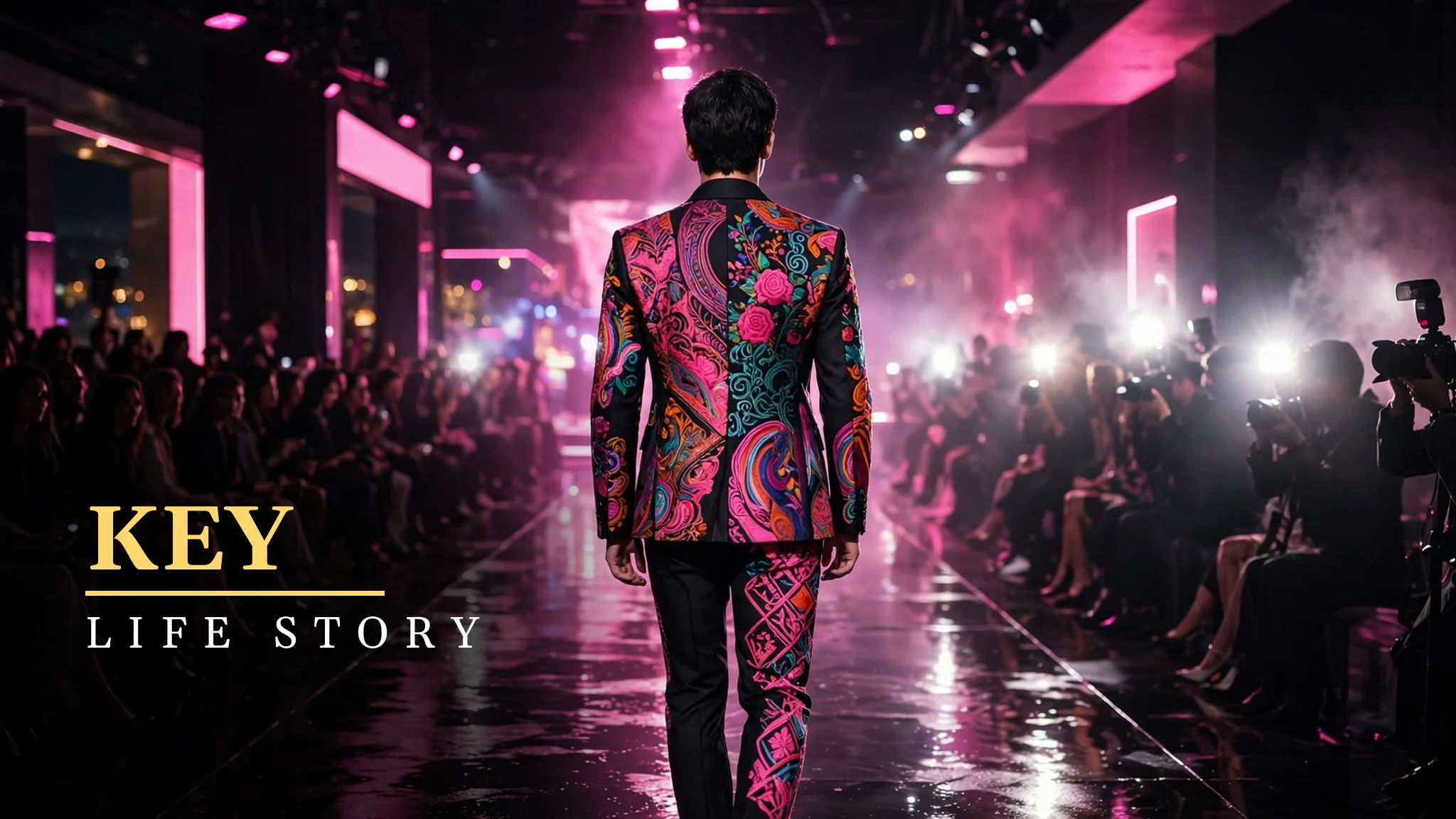
His fashion sense is another thing I love, and I think it is misunderstood. People sometimes talk about fashion as if it were a small thing, a hobby, something that does not matter. For Key, fashion is a language. It is how he expresses himself, how he shows the world who he is, and how he changes from one day to the next. He wears colour when he feels bright, and he wears black when he feels serious. He wears outfits that other men would never dare to wear, and he wears them with a confidence that makes them look natural. That is not vanity. That is art, and it is a form of courage. It takes courage to dress the way you feel in a world that tells men to dress the same.
I think about his solo music, and about how different each album is from the last. “Face” was romantic and warm. “Bad Love” was dramatic and retro. “Gasoline” was fierce and powerful. “Good & Great” was bright and cheerful. “Pleasure Shop” was dark and sensual. No two albums sound the same, and that is the point. Key does not repeat himself. He changes, he experiments, and he surprises his audience every time. That is a brave choice in an industry that rewards the safe and the familiar. It would be easier to make the same album again and again, and it would sell just as well. Key refuses to do that, because he is an artist, not a machine, and artists need to grow. I respect that deeply.
His work in musical theatre deserves more praise than it usually gets. Singing live on a stage, eight times a week, with no backing track and no second chance, is one of the hardest things a performer can do. Key did it in “Catch Me If You Can”, in “Bonnie & Clyde”, in “Zorro”, and in “Chess”, and he did it well. Critics who had never seen him as a pop singer praised his performances, and they were right to do so. Musical theatre demands a different kind of talent from pop music, and Key proved that he had it. He proved that he was not just a boy-group member trying something new. He was a real stage actor, with a real voice and real skill.
I also think about the loss of Jonghyun, because it is impossible to tell Key’s story without it. He was one of the members who was closest to Jonghyun, and the loss in December 2017 hit him hard. He has spoken about it with an honesty that is rare in K-pop, talking about his grief, his confusion, and his determination to keep going. He did not hide his feelings. He did not pretend to be fine. He showed his fans that it is all right to grieve, and that it is all right to be sad, and that life goes on even when it hurts. That honesty helped many people who were grieving themselves, and it is one of the most important things he has ever done. It takes more courage to be honest about grief than it does to be honest about anything else.
His army duty was another chapter that showed his character. He was a star at the height of his fame when he enlisted in March 2019, and he put that fame aside to serve his country like any other young man. He did not ask for special treatment. He did not complain. He served in the military band, he did his duty, and he came home in October 2020 ready to work again. That is a simple story, but it is an important one. It shows a man who understands his responsibilities, and who is willing to put his career on hold to meet them. Many famous people would have found a way to avoid it. Key did not. He went, he served, and he returned stronger.
I think about his humour, too, because it is one of the things that makes him special. He is funny, but his humour is not cruel. He makes jokes about himself, about his friends, and about the absurdity of fame, and he does it with a warmth that makes people laugh without feeling hurt. That is a rare skill. Many funny people are funny because they are mean. Key is funny because he is clever, and because he sees the world clearly. His humour is a form of intelligence, and it is one of the reasons he is so popular on television. People do not just watch him for his talent. They watch him because he makes them feel happy.
What I take from his story is a lesson about curiosity. Key is curious about everything: music, fashion, food, people, the world. That curiosity drives him to try new things, to learn new skills, and to take on new challenges. It is the reason his career has lasted so long, and the reason it has never become boring. He is always learning, always changing, and always surprising the people who watch him. That is a lesson for anyone who feels stuck, anyone who thinks that life has to be one thing. It does not. It can be many things, if you are curious enough to try them, and brave enough to fail at some of them.
I also think about his future, and I am excited about it. He is in his mid-thirties, an age when many idols slow down, but Key shows no sign of slowing down. He is releasing new music, appearing on television, performing with SHINee, and exploring new projects in fashion and beyond. He is a man who has built a career that is entirely his own, and he is still building it. I believe his best work may still be ahead of him, because he is the kind of artist who gets better with age, who learns from every experience, and who never stops growing. I hope he keeps going for many years, because the world needs more people like him: bold, funny, honest, and unafraid to be themselves.
In the end, Key’s story is about a boy from Daegu who refused to be one thing. He refused to be only a rapper, only a singer, only a fashion star, only a television host. He decided to be all of it, and he made it work. That is a brave choice, and it is a joyful one. It shows that a life does not have to fit inside a single box, and that a person does not have to choose one talent and abandon the rest. Key chose everything, and he did it with colour, with humour, and with style. I think that is the best thing anyone can say about an artist, and I think it is the best thing anyone can say about a person. Be yourself, try everything, and do it with all your heart. That is what Key has done, and that is why I admire him.
I want to add one more thought, about the way Key treats the people around him. His fellow members have said many times that he is the one who looks after the group, who cooks for them, who keeps their home in order, who makes them laugh when they are tired. That is not the work of a star. It is the work of a friend, and a brother. Fame can make people selfish, and it can make them forget the people who helped them. Key has not forgotten. He still looks after the people he loves, still cooks for them, still makes them laugh. That kindness is the foundation of everything else he does, and it is the reason his fans love him as a person, not just as a performer. Talent fades. Kindness lasts, and Key has it in abundance.
I also want to say something about the way Key handles being different. In Korea, men are often expected to dress in a certain way, to behave in a certain way, and to fit a certain image. Key has never fitted that image, and he has never tried to. He wears colour, he wears pattern, he wears clothes that other men would call too bold, and he does it with a confidence that makes people rethink what a man can wear. That is not a small thing. It is a form of freedom, and it gives other people permission to be themselves too. Young men who watch Key and see him dressing the way he feels learn that they do not have to dress the way everyone else dresses. They can be themselves, and that is enough. That is a gift, and it is one that Key gives without even trying.
There is also a sadness in his story that I should mention, because it is part of who he is. He has spoken about the pressure of being an only child, about the weight of his parents’ hopes, and about the loneliness of living far from home since he was fourteen. He has spoken about grief, about loss, and about the hard days when fame felt like a burden rather than a blessing. He does not hide those feelings. He talks about them openly, on television and in interviews, and that openness helps other people who feel the same way. It tells them that they are not alone, and that even a famous, successful man can feel sad, tired, and lonely. That honesty is a form of kindness, and it is one of the most important things Key does.
Finally, I think about what it means to be versatile in a world that rewards specialisation. Key could have been only a singer, and he would have been a good one. He could have been only a television host, and he would have been a good one. He chose to be many things, and he does them all well, because he is curious, because he works hard, and because he loves to learn. That is a lesson for anyone who feels trapped in one role, anyone who thinks that life has to be one thing. It does not. It can be many things, if you are brave enough to try them. Key tried them all, and he is still trying, still learning, still growing. I hope he never stops.
Frequently Asked Questions
When was Key born?
He was born Kim Ki-bum on 23 September 1991 in Daegu, South Korea, and he grew up there before moving to Seoul as a trainee.
How old was Key when he debuted with SHINee?
He was sixteen years old when SHINee debuted in May 2008 with the single “Replay”, as the group’s rapper and vocalist.
What is Key’s first solo album?
His first solo album was “Face”, released in November 2018, with the title song “One of Those Nights” featuring the singer Crush.
Why is Key known as a fashion icon?
He is known for his bold, colourful style and for designing his own looks, and he has worked in fashion as well as music, always dressing in a way that is entirely his own.
What television shows has Key appeared on?
He has been a regular on “Amazing Saturday” since 2018 and on “I Live Alone”, where viewers see his daily life, his cooking, and his dogs.
What musicals has Key performed in?
He has starred in musicals including “Catch Me If You Can”, “Bonnie & Clyde”, “Zorro”, and “Chess”, where his live singing and acting won praise from critics.


