Kirk Franklin: The Life Story Behind Gospel's Modern Star
In this post
Kirk Franklin changed gospel music by making it sound young, loud, and full of life. Before him, gospel music was mostly heard in churches, sung by choirs in a slow and serious way. Kirk Franklin took that same faith and gave it the energy of hip-hop, R&B, and pop, and he brought it to audiences who had never listened to gospel before. He did not water down the message. He made the message move, and millions of people moved with it.
He was born in Fort Worth, Texas, in 1970, and his early life was hard. He was adopted as a baby, he grew up with a great-aunt who raised him, and he found his home in the church. He was a gifted child at the piano, and by the time he was a teenager he was already leading choirs. Music was not just a hobby for him. It was the place where he belonged, and it was the place where he felt loved.
In the early 1990s, he formed a choir called The Family, and their first album, Kirk Franklin and the Family, became a huge success. Songs like “Why We Sing” touched people deeply, and the album sold in numbers that gospel music had rarely seen. Then came “Stomp” in 1997, a song that mixed gospel with hip-hop and became a hit on mainstream radio and television. It was a moment that changed gospel music forever.
Since then, he has won many Grammy Awards, he has worked with stars from gospel, R&B, and hip-hop, and he has become one of the most important figures in modern gospel music. He has also been open about his own struggles, about his past, and about his faith, and that honesty has made people trust him. This is the story of how a boy from Fort Worth became the man who gave gospel music a new sound.
A Baby Adopted in Fort Worth
Kirk Dwayne Franklin was born on 26 January 1970 in Fort Worth, Texas. His mother was young, and she gave him up for adoption when he was a baby. He was adopted by his great-aunt, Gertrude, who raised him as her own son. Gertrude was a strict and loving woman, and she took him to church every week. The church became his second home, and music became his first love.
He showed a gift for music when he was very young. He could play the piano by ear, which means he could hear a song and play it without reading the notes. His great-aunt saw the gift and paid for piano lessons, even though money was tight. She believed in him, and she pushed him to use his gift. By the time he was four years old, he was playing piano in church, and people were amazed at what the small boy could do.
Growing up was not easy. He was a small boy, he was teased at school, and he sometimes got into trouble. He has spoken openly about the pain of being adopted, about feeling unwanted, and about the anger he felt as a young boy. The church was the place where he felt safe, and music was the place where he felt strong. When he played the piano or sang, the pain went away for a while, and he felt like he belonged.
His great-aunt Gertrude was the most important person in his early life. She raised him, she took him to church, she paid for his lessons, and she taught him about faith. She died when he was still young, and her death was a great loss for him. But the lessons she taught him stayed with him. She taught him that God loved him, that his gift was from God, and that he should use it to help others. Those lessons shaped the rest of his life.
A Teenager Leading Choirs
By the time Kirk Franklin was a teenager, he was already a leader in the church music world. He began to direct choirs, and he showed a gift for bringing singers together and making them sound strong. He was young, but he had a clear idea of what he wanted. He wanted gospel music to sound alive, and he wanted young people to feel it.
He studied music and he worked hard at the piano. He learned about gospel, about R&B, and about the music that young people were listening to on the radio. He saw that gospel music and the new sounds of hip-hop and R&B were not as far apart as people thought. Both were about feeling, both were about rhythm, and both were about telling the truth. He began to dream of a gospel music that could speak to young people in their own language.
In his late teens, he was already working as a choir director, and he was known in the Fort Worth church world as a talented young musician. He was also going through a hard time in his personal life. He has spoken openly about rebelling as a teenager, about getting into trouble, and about the pain of losing his great-aunt. He found his way back to the church, and he found his way back to music, and those two things saved him.
The teenage years were a time of learning. He learned how to lead a choir, how to write a song, and how to make a group of singers sound like one voice. He also learned about himself, about his gift, and about his faith. He was not yet famous, but he was building the skills that would make him famous. The boy who played piano in church was becoming a young man who could lead a choir and move a crowd.
The Family and the First Big Album
In 1992, Kirk Franklin formed a choir called The Family, a group of young singers from Fort Worth and the Dallas area. He was the leader, the writer, and the producer, and he had a clear vision. He wanted the choir to sound young, strong, and full of joy. He wanted the music to be gospel, but he wanted it to move like the music young people heard on the radio.
Their first album, Kirk Franklin and the Family, was released in 1993. It was a great success. The album sold in huge numbers for a gospel record, and it stayed on the gospel charts for a long time. The song “Why We Sing” became a favourite in churches across America, and it showed that Kirk Franklin could write a song that was both simple and deep. The album proved that gospel music could reach a wide audience, and it made Kirk Franklin a star in the gospel world.
The success of the album was a surprise to many people in the music business. Gospel music was not supposed to sell that well, and a young choir from Texas was not supposed to become a national name. But Kirk Franklin had found something new. He had mixed the old gospel sound with a new energy, and people loved it. Churches played his songs, radio stations played his songs, and young people who had never listened to gospel before began to listen.
The Family became a touring group, and they sang in churches and concert halls across America. Kirk Franklin was now a leader, a star, and a businessman. He had built a choir, he had made a hit album, and he had shown the music world that gospel could be big. It was the start of a career that would change gospel music, and it was only the beginning.
Stomp and the Sound That Crossed Over
In 1997, Kirk Franklin released the song “Stomp,” with the group God’s Property, and it became one of the most important gospel songs of all time. “Stomp” mixed gospel singing with hip-hop beats, with a sample from the funk song “One Nation Under a Groove,” and with a video that showed young people dancing and singing with joy. The song was played on mainstream radio and on MTV, and it reached audiences that had never heard gospel music before.
“Stomp” was a crossover hit, which means it crossed from the gospel world into the wider world of popular music. It won awards, it sold well, and it made Kirk Franklin a name outside the church. Some people in the gospel world did not like the new sound. They said it was too much like pop music, and too far from the old gospel tradition. But many more people loved it, especially young people, and it opened the door for a new kind of gospel music.
In the years that followed, Kirk Franklin continued to make music that mixed gospel with R&B, hip-hop, and pop. He released albums like The Nu Nation Project, which included “Stomp” and other songs, and he worked with singers from many different worlds. He won Grammy Awards, he won Stellar Awards, and he became one of the most honoured gospel artists of his time.
His music was not just about sound. It was about faith, about joy, and about hope. He wrote songs about God’s love, about hard times, and about the strength to keep going. He sang with a choir, he sang with a band, and he sang with a crowd, and each time the feeling was the same. His music was a celebration, and it invited everyone to join in.
Working With Stars and Winning Grammys
As Kirk Franklin’s fame grew, he began to work with stars from outside the gospel world. He worked with R&B singers, with hip-hop artists, and with pop stars, and he brought them into the gospel world. He produced music for other artists, he wrote songs for films, and he became a bridge between gospel and the wider music business. His work showed that gospel music could stand beside any other kind of music, and that it had something to say to everyone.
He has won many Grammy Awards over his career, more than twenty by most counts, which makes him one of the most awarded gospel artists in history. He has also won many other awards, and he has been honoured by the gospel community again and again. His albums have sold in large numbers, and his songs are sung in churches around the world.
He also became a television personality, hosting shows and appearing as a judge on gospel music programmes. He wrote books about his life and his faith, and he spoke openly about his past, about his struggles, and about his relationship with God. His honesty made people trust him, and his music made people love him.
His work with other artists also helped gospel music to grow. He showed young gospel singers that they could be modern, that they could use new sounds, and that they could reach new audiences without losing their faith. He became a mentor for many young artists, and his influence can be heard in the gospel music of today. He did not just make his own career. He helped to make a new kind of gospel music.
Honesty, Struggle, and a Faith That Holds
Kirk Franklin has always been open about his struggles. He has spoken about being adopted, about feeling unwanted, and about the pain of his early life. He has spoken about his past mistakes, and about the times when he fell away from his faith. He has also spoken about his family, about his wife Tammy, whom he married in 1996, and about their children. His honesty has made him different from many stars, who hide their problems.
In recent years, he has spoken openly about his relationship with his biological father, and about the pain of that story. He has also spoken about his own failings as a father and as a husband, and about the work of rebuilding trust. He has said that faith is not about being perfect. It is about being honest, about asking for forgiveness, and about trying again. That message has touched many people who have their own struggles.
He has also faced criticism, as any public figure does. Some people in the gospel world have said his music is too modern, and some have questioned his choices. He has answered that criticism with his music and with his life. He keeps making gospel music, he keeps singing about faith, and he keeps working to bring people together.
Today, Kirk Franklin is still active, still recording, still touring, and still leading choirs. He is one of the most important figures in modern gospel music, and his influence is felt far beyond the church. He took a boy’s pain, a church’s music, and a young man’s dream, and he turned them into a sound that changed gospel music forever. His story is still being written, and his music is still being sung.
The Later Albums and a Voice for the Next Generation
In the years after “Stomp,” Kirk Franklin kept making music, and he kept changing the sound of gospel. He released the album The Rebirth of Kirk Franklin in 2002, a record that mixed gospel with R&B and hip-hop, and it showed that he was still growing as an artist. He also released Hero in 2005, an album that won him Grammy Awards and that included songs about hope, about struggle, and about the strength to keep going. Each album was different, and each one showed a new side of his gift.
He also released The Fight of My Life in 2007, an album that spoke openly about his own struggles, about his past mistakes, and about the fight to stay true to his faith. The album was honest, and it touched people who were fighting their own battles. He sang about the fight, not as a man who had already won, but as a man who was still fighting, and that honesty made the music feel real. His fans loved him for it, because they knew he was telling the truth about his own life.
In 2011, he released Hello Fear, an album that won him another Grammy Award, and it showed his music still fresh and still full of energy. He also released Losing My Religion in 2015, an album that asked hard questions about faith, about church, and about what it means to believe. The album was brave, because it did not give easy answers, and it showed a man who was still thinking, still growing, and still asking questions. His music was not just a celebration. It was also a conversation, and he invited his listeners to join it.
He also worked as a producer and as a mentor for young gospel artists. He helped to launch the careers of other singers, he produced their albums, and he shared the stage with them. He became a bridge between the old gospel world and the new, and he helped young artists to find their own sound. His influence can be heard in the gospel music of today, in the choirs, in the beats, and in the joy that fills the songs. He did not just make his own career. He helped to make a whole new generation of gospel music.
He also became a television personality, hosting and judging gospel music shows, and he appeared on programmes that brought gospel music to a wider audience. He wrote books about his life and his faith, including The Blueprint, a book about his journey from a troubled childhood to a life of music and faith. The book was honest, and it told the story of a boy who was adopted, who felt unwanted, and who found his home in the church and in music.
In recent years, he has continued to record and to tour, and he has worked with artists from outside the gospel world, including stars from R&B and hip-hop. He has shown that gospel music can stand beside any other kind of music, and that it has something to say to everyone. He is still a leader, still a star, and still a voice for the next generation, and his music is still being sung in churches around the world.
His story is still being written, and his influence is still growing. He took a boy’s pain, a church’s music, and a young man’s dream, and he turned them into a sound that changed gospel music forever. He is one of the most important figures in modern gospel, and his work will be remembered for a long time. The boy from Fort Worth became a king of gospel, and he did it with a choir, a piano, and a faith that never left him.
He has also been a judge and a host on television talent shows, where he has helped young singers to find their voice. He listens to them with care, he gives them honest advice, and he encourages them to sing with faith and with feeling. He knows what it is like to be young and gifted, and to be unsure of the road ahead, because he was once that young singer himself. His work on television has brought gospel music to viewers who might never have heard it, and it has shown that a gospel singer can be a star on any stage.
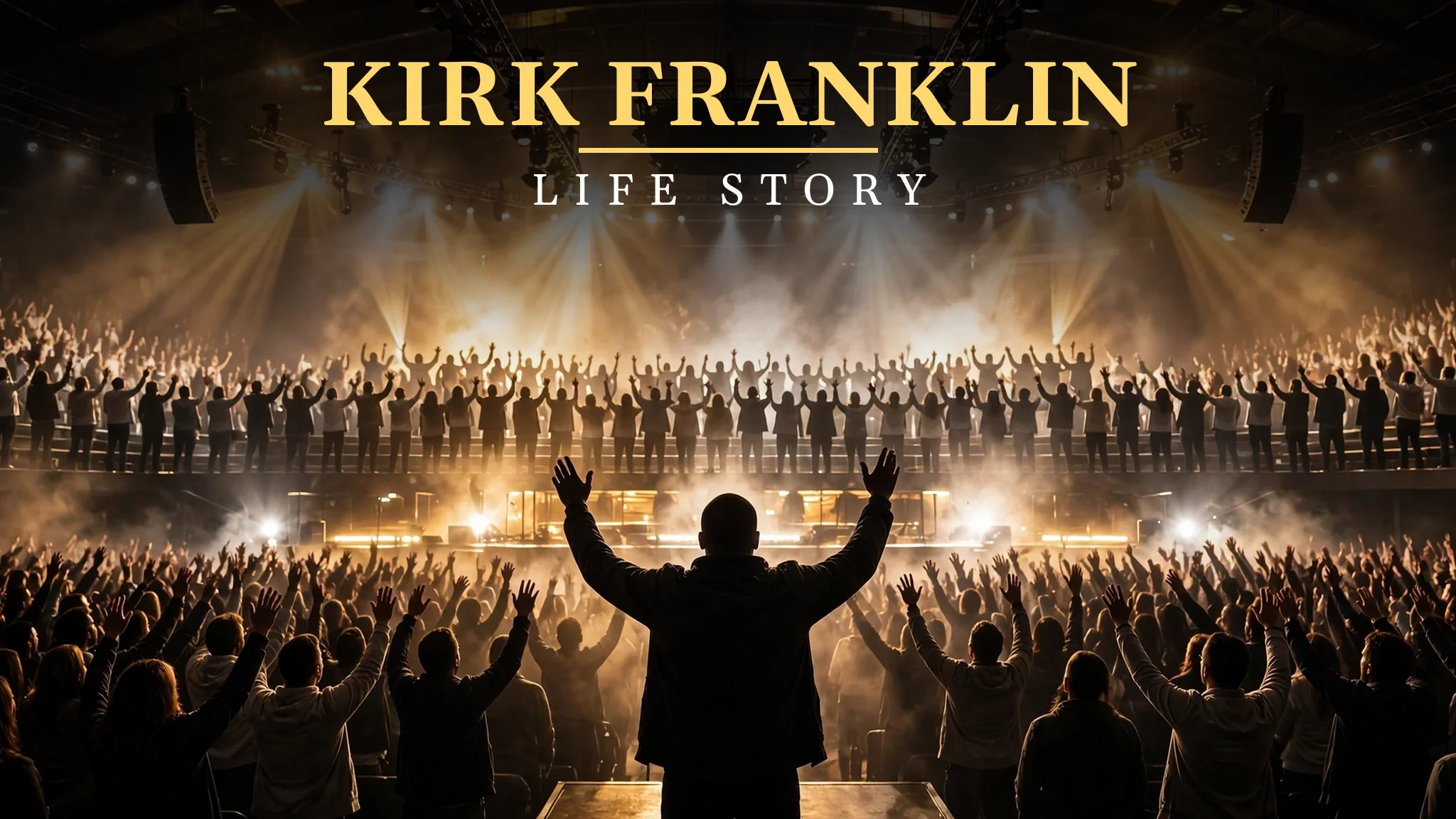
His concerts are known for their joy, and for the way the audience becomes a part of the show. He does not just sing to a crowd. He sings with them, he claps with them, and he invites them to stand, to sing, and to celebrate. The concerts feel like a church service and a party at the same time, and that feeling is a part of his gift. He makes a large arena feel like a small church, and he makes every person in the room feel like they belong. That is a rare skill, and it is why his fans come back again and again.
He has also used his music to support good causes, raising money for schools, for churches, and for families in need. He has performed at benefit concerts, he has spoken out for children, and he has used his fame to help others. He believes that a gift should be shared, and that a star should use his light to help people who are in the dark. That belief is a part of his faith, and it is a part of his life, and it shows in everything he does.
My Take:
When I think about Kirk Franklin, the first thing I feel is energy. His music is full of life, and it makes me want to move, to clap, to sing along. I think that is his great gift. He took gospel music, which many people thought was slow and old, and he made it sound young and alive. He did not change the message. He changed the sound, and the sound brought new people to the message. That is a clever and a brave thing to do, and I admire him for it.
I admire his honesty most of all. He has spoken openly about being adopted, about feeling unwanted, and about the pain of his early life. Many stars hide their past. He talks about his. He talks about his mistakes, about his family, and about his faith, and he does it in a way that feels real. I think that honesty is why people trust him. When he sings about God’s love, you believe him, because you know he has needed that love himself.
What moves me is the story of his great-aunt Gertrude. She adopted him, she raised him, she took him to church, and she paid for his piano lessons when money was tight. She believed in a small boy who had been given up by his mother, and she gave him a home and a gift. I think about her often when I think about Kirk Franklin. Without her, there would be no Kirk Franklin as we know him. She saw something in him, and she fed it. That is what a good parent does, and she did it with love and with faith.
I also think about the teenage years, when he rebelled and got into trouble. He has been honest about that too. He did not pretend to be a perfect child. He was angry, he was hurt, and he made mistakes. But he came back to the church, and he came back to music, and those two things saved him. I think that is a hopeful story. It says that a young person can go wrong and still come back, and that a gift can wait for you until you are ready to use it.
When I think about “Stomp,” I think about a moment when music changed. Before “Stomp,” gospel music was mostly heard in churches. After “Stomp,” gospel music was on MTV, on mainstream radio, and in the ears of young people who had never been to a gospel concert. That is a big change, and it took courage. Some people in the gospel world did not like it. They said it was too much like pop music. But Kirk Franklin kept going, because he believed that young people needed to hear the message in their own language. I think he was right, and I think the success of the song proved it.
I respect the way he has worked with other artists. He did not stay in his own world. He worked with R&B singers, with hip-hop artists, and with pop stars, and he brought them into the gospel world. He showed that gospel music could stand beside any other kind of music, and that it had something to say to everyone. That is a generous way to work. He did not keep his gift to himself. He shared it, and he used it to bring people together.
I also think about his many Grammy Awards, and I think they are well deserved. He has won more than twenty Grammys, which is a remarkable number for any artist, and it shows how much the music world respects his work. But I think the real award is the sound of his songs in churches around the world. When a choir sings “Why We Sing” on a Sunday morning, that is a greater honour than any trophy. His songs have become a part of the church itself, and that is a lasting thing.
There is something I keep returning to, and it is the idea of a new sound for an old faith. Gospel music is old. It comes from the churches of the South, from the spirituals of enslaved people, and from the faith of generations. Kirk Franklin took that old faith and gave it a new sound, and he did it without losing the faith. That is a hard balance to keep. Many artists who try to modernise a tradition lose the tradition. He did not. His music still sounds like gospel, and it still feels like faith, even when it sounds like hip-hop. That is a rare skill.
I feel sympathy for him when I think about his family story, about his biological father, and about the pain of being adopted. He has spoken about that pain openly, and he has said that faith is not about being perfect. It is about being honest, about asking for forgiveness, and about trying again. I think that message has helped many people. Many people feel unwanted, many people have family pain, and many people need to hear that they are loved. Kirk Franklin sings that message, and he lives it, and that is why his music matters.
For a young musician today, I think the lesson from Kirk Franklin is to be honest and to be brave. Be honest about who you are, about where you come from, and about what you believe. Be brave enough to try a new sound, even if people say it is wrong. Kirk Franklin tried a new sound, and people said it was wrong, and he kept going, and now that sound is the sound of modern gospel. That is what bravery looks like in music.
I also think his story teaches us about the power of a choir. He did not become famous alone. He became famous with The Family, with God’s Property, and with choirs of young singers. He knows how to bring people together and make them sound like one voice. That is a gift, and it is a gift that goes beyond music. It is the gift of making people feel like they belong. When a choir sings together, each person matters, and the whole is greater than the parts. Kirk Franklin understands that, and his music shows it.
In the end, I think Kirk Franklin teaches me that faith can be joyful, that music can be both old and new, and that a boy who was given up as a baby can grow up to lead millions of people in song. He was adopted, he was raised by a loving great-aunt, he found his home in the church, and he gave that home a new sound. I am glad his music is here, and I think it will still be here, still making people clap and sing, long after all of us are gone. His story is a story of pain turned into praise, and that is a beautiful story.
I also think about his later albums, and I like the way he kept asking hard questions. Losing My Religion was a brave album, because it did not give easy answers about faith. It asked what it means to believe, what it means to be part of a church, and what it means to be honest about doubt. Many gospel singers would not ask those questions, because they are afraid of the answers. Kirk Franklin asked them, and he sang about them, and his fans loved him for it. That takes courage, and it shows a man who is still growing, still thinking, and still honest about his faith.
I think about his work as a mentor, and I respect it deeply. He did not keep his gift to himself. He produced albums for young artists, he shared the stage with them, and he helped them to find their own sound. That is a generous way to work. A small artist is afraid of being outshone by the young. A great artist is happy to help the young grow, because he knows that the music is bigger than any one person. Kirk Franklin is a great artist, and his generosity has made gospel music stronger.
There is something I keep returning to, and it is the idea of a choir as a family. He became famous with The Family, and then with God’s Property, and he has always worked with choirs. A choir is not just a group of singers. It is a family, a community, and a place where people belong. He knows how to bring people together and make them sound like one voice, and that is a gift that goes beyond music. It is the gift of making people feel like they belong, and that is a gift that the world needs more than ever.
I also think about his book The Blueprint, and about the honesty in it. He wrote about being adopted, about feeling unwanted, and about the pain of his early life, and he did it in a way that felt real. Many stars write books that hide the truth. He wrote a book that told it. That honesty is why people trust him. When he sings about God’s love, you believe him, because you know he has needed that love himself, and you know he has found it.
For a young musician today, I think the lesson from Kirk Franklin is to be honest, to be brave, and to share your gift. Be honest about who you are, about where you come from, and about what you believe. Be brave enough to try a new sound, even if people say it is wrong. And share your gift, because a gift that is shared grows, and a gift that is kept to yourself fades. He shared his gift with choirs, with young artists, and with millions of listeners, and his gift has grown because of it.
I also think his story teaches us about the power of a new sound for an old faith. Gospel music is old, and it comes from the churches of the South, from the spirituals of enslaved people, and from the faith of generations. Kirk Franklin took that old faith and gave it a new sound, and he did it without losing the faith. That is a hard balance to keep, and it is a rare skill. Many artists who try to modernise a tradition lose the tradition. He did not. His music still sounds like gospel, and it still feels like faith, even when it sounds like hip-hop.
I think about the people who sing his songs in churches on a Sunday morning, and I feel happy. When a choir sings “Why We Sing,” they are not just singing a song. They are singing a prayer, a celebration, and a thanksgiving, all at the same time. That is a greater honour than any Grammy, because it means his music has become a part of the church itself. His songs are now sung by people he will never meet, in places he will never visit, and that is a lasting thing.
In the end, I think Kirk Franklin teaches me that faith can be joyful, that music can be both old and new, and that a boy who was given up as a baby can grow up to lead millions of people in song. He was adopted, he was raised by a loving great-aunt, he found his home in the church, and he gave that home a new sound. I am glad his music is here, and I think it will still be here, still making people clap and sing, long after all of us are gone. His story is a story of pain turned into praise, and that is a beautiful story.
I also think about the joy in his concerts, and about the way the audience becomes a part of the show. He does not just sing to a crowd. He sings with them, he claps with them, and he invites them to celebrate. That joy is a gift, and it is a sign of a man who loves his work and loves his people. A concert that feels like a celebration is a concert that people will never forget, and his concerts are never forgotten.
Frequently Asked Questions
Who raised Kirk Franklin as a child?
Kirk Franklin was born in Fort Worth, Texas, in 1970 and was adopted as a baby by his great-aunt Gertrude, who raised him. She took him to church, paid for his piano lessons, and taught him about faith, and he has said she was the most important person in his early life.
How did Kirk Franklin first become famous?
He formed the choir The Family in 1992, and their first album, Kirk Franklin and the Family, released in 1993, became a huge gospel success. The song Why We Sing became a favourite in churches across America and made him a star in the gospel world.
What made the song Stomp so important?
Stomp, released in 1997 with God’s Property, mixed gospel singing with hip-hop beats and became a crossover hit on mainstream radio and television. It brought gospel music to audiences who had never heard it before and changed the sound of modern gospel.
How many Grammy Awards has Kirk Franklin won?
He has won many Grammy Awards over his career, more than twenty by most counts, which makes him one of the most awarded gospel artists in history. He has also won many Stellar Awards and other honours from the gospel community.
Is Kirk Franklin married and does he have children?
Yes, he married Tammy Collins in 1996, and they have children together. He has spoken openly about his family, about his failings as a husband and father, and about the work of rebuilding trust through faith.
What kind of music does Kirk Franklin make today?
He still makes gospel music that mixes the old church sound with R&B, hip-hop, and pop, and he still records, tours, and leads choirs. His songs are sung in churches around the world, and he continues to work with artists from gospel and from mainstream music.


