Lizzo: The Life Story Behind the Breakout Star
In this post
- Growing Up in Detroit, Houston, and Minneapolis
- The Early Albums and the Minneapolis Years
- Truth Hurts, Good as Hell, and the Breakthrough
- Cuz I Love You, the Grammys, and Superstardom
- Special, the Flute, and the Yitty Brand
- Controversy, Lawsuits, and Resilience
- Legacy: The Breakout Star Who Changed Pop
- My Take:
Growing Up in Detroit, Houston, and Minneapolis
Melissa Viviane Jefferson was born on April 27, 1988, in Detroit, Michigan, and was raised in Houston, Texas, after her family moved there when she was ten years old, and later in Minneapolis, Minnesota, a journey that took her across America and that shaped her music, her identity, and her understanding of herself. Her father was a music lover, her mother was a singer, and the house was always full of music, from gospel to hip-hop to rock, and Lizzo, as she was known, grew up singing in the church choir, playing the flute in the school band, and dreaming of becoming a musician. She has spoken about her childhood with fondness, about the church, about the music, and about the sense of community in Houston, and she has also spoken about the difficulties, about the poverty, about the loss of her father when she was twenty-one, and about the way those experiences shaped her, taught her resilience, and made her determined to succeed.
She attended Alief Elsik High School in Houston, where she played the flute, where she was a good student, and where she began to think seriously about music, not just as a hobby, but as a career. She went on to study classical music at the University of Houston, where she majored in flute performance, a choice that reflected her talent as a classical musician, and her love of the instrument that would later become her signature, the flute she named Sasha Flute. She has spoken about her time at university as a formative experience, about the discipline of classical training, about the beauty of the flute, and about the realisation that she wanted to do more than play classical music, that she wanted to rap, to sing, and to make music that was her own, that was a mix of everything she loved, from hip-hop to pop to soul.
After university, Lizzo moved to Minneapolis, Minnesota, a city with a rich musical tradition, home to Prince, and a place where she found a community of musicians, of artists, and of people who believed in her. She lived in her car for a time, she worked odd jobs, and she performed wherever she could, in small venues, in clubs, and on the streets, building a following, one fan at a time.She has described those years as a time of struggle, of poverty, of doubt, and of determination, and of learning to believe in herself when nobody else did. Minneapolis was where she became Lizzo, where she found her voice, and where she began the journey that would lead her to the top of the music world.
The Early Albums and the Minneapolis Years
Lizzo’s first album, Lizzobangers, was released in 2013, and it was a critical success, a album that showcased her talent as a rapper, as a singer, and as a flautist, with a sound that was a mix of hip-hop, pop, and soul, and with lyrics that were funny, honest, and empowering. The album was released on a small independent label, and it did not sell many copies, but it was praised by critics, and it established Lizzo as an artist to watch, a person who was different, who was bold, and who was not afraid to be herself. She followed Lizzobangers with Big Grrrl Small World in 2015, an album that was even more personal, with songs about body image, about self-love, and about the experience of being a Black woman in America, and that was also praised by critics, though it, too, did not achieve commercial success. She was a critical darling, but she was not yet a star, and she was still working, still performing, and still waiting for her moment.
During the Minneapolis years, Lizzo also became a part of the local music scene, performing with the groups The Chalice and Grrrl Prty, and collaborating with other artists, including Prince, who invited her to perform with him, and who became a mentor, a friend, and an inspiration. She has spoken about Prince with reverence, about the time she spent with him, about the lessons he taught her, and about the way he believed in her, even when the industry did not. She also appeared on television, as a guest on shows, and she began to build a following on social media, where her humour, her honesty, and her positivity resonated with audiences who were tired of the negativity, of the body-shaming, and of the narrow definitions of beauty that dominated popular culture. She was a voice for a new kind of pop star, a person who was not thin, who was not conventional, and who was proud of it.
Her breakthrough, when it came, was not the result of a single moment, but of years of work, of touring, of recording, and of building a fanbase, one person at a time. She signed to Atlantic Records in 2016, and she released the EP Coconut Oil, featuring the hit Good as Hell, a song that would later become one of her biggest hits, and that was a perfect introduction to her sound, her style, and her message: that you are good as hell, that you deserve to feel good, and that self-love is a form of power. The song was initially a modest success, but it would later, in 2019, become a hit, after being featured in a film, and after Lizzo’s breakthrough, proving that good music has a long life, and that a song can find its audience, even years after it was released.
Truth Hurts, Good as Hell, and the Breakthrough
In 2019, Lizzo released her third studio album, Cuz I Love You, and it was a breakthrough, featuring the hits Truth Hurts, Good as Hell, and Juice, and it became a commercial success, debuting in the top ten, and earning Lizzo three Grammy Awards, including Best Urban Contemporary Album. Truth Hurts, a song that had originally been released in 2017, became a number one hit in 2019, after being featured in the Netflix film Someone Great, and after going viral on TikTok, with its opening line, I just took a DNA test, turns out I’m 100% that bitch, becoming one of the most quoted lines in pop music. The song’s success was a testament to Lizzo’s talent, to her humour, and to the power of the internet to revive a song, and it made her a star, almost overnight, after years of work, a star who was suddenly everywhere, on the radio, on television, and on social media.
Good as Hell, which had been released in 2016, also became a hit in 2019, after being remixed with Ariana Grande, and after being featured in films and commercials, and it became an anthem of self-love, a song that was played at parties, at weddings, and at moments of celebration, a song that told listeners that they were good as hell, that they deserved to feel good, and that they should not let anyone make them feel otherwise. The song’s message, its energy, and its joy made it a perfect fit for Lizzo’s brand, a brand that was built on positivity, on body positivity, and on the idea that beauty comes in all shapes and sizes. Juice, a funky, upbeat track, also became a hit, and it showcased Lizzo’s ability to make music that was fun, that was danceable, and that was empowering, all at once. The album Cuz I Love You was a triumph, and it made Lizzo one of the biggest stars in music, a person who had arrived, after a decade of work, and who was finally getting the recognition she deserved.
The breakthrough was also a cultural moment, because Lizzo was not a conventional pop star; she was a Black woman, she was plus-sized, she played the flute, and she was proud of all of it, and her success challenged the narrow definitions of beauty, of talent, and of stardom that had dominated pop music for decades. She became a symbol of body positivity, of self-love, and of the idea that everyone deserves to be seen, to be celebrated, and to be loved, exactly as they are. Her performances, including a memorable appearance at the MTV Video Music Awards, where she danced, sang, and played the flute, became iconic, and her presence on social media, where she shared her life, her humour, and her message, made her beloved by millions of fans who saw in her a person who was like them, who was real, and who was unafraid to be herself.
Cuz I Love You, the Grammys, and Superstardom
Cuz I Love You, released in 2019, was Lizzo’s major label debut, and it was a album that was both a commercial and critical success, featuring a mix of pop, R&B, hip-hop, and soul, with songs that were personal, funny, and empowering. The album debuted at number six on the Billboard 200, it was certified platinum, and it earned Lizzo eight Grammy nominations, the most of any artist that year, and she won three, including Best Urban Contemporary Album, Best Pop Solo Performance for Truth Hurts, and Best Traditional R&B Performance for Jerome. The Grammy wins were a validation of her talent, of her hard work, and of her message, and they made her one of the most awarded artists of the night, a star who had arrived, and who was being recognised by the industry she had worked so hard to join. She performed at the Grammys, playing the flute, singing, and dancing, in a performance that was widely praised, and that showcased her versatility, her musicianship, and her showmanship.
Her live performances during this period were also legendary, with Lizzo touring the world, performing in arenas, and becoming known for her energy, her joy, and her ability to connect with an audience. She played the flute on stage, she danced, she sang, and she talked to the audience, sharing her story, her message, and her love, in a way that made every concert feel like a celebration, a party, and a moment of empowerment. She was not just a singer; she was a performer, a flautist, a dancer, and a motivational speaker, all at once, and her concerts became known for their positivity, for the way they made audiences feel good about themselves, and for the sense of community they created. She was a star who was not just entertaining, but inspiring, and that inspiration was a major part of her appeal.
She also became a cultural figure, appearing on magazine covers, including the cover of Rolling Stone, where she posed nude, in a statement about body positivity, and on television, including a guest appearance on Saturday Night Live, and in films, including a voice role in UglyDolls and a cameo in Hustlers, in which she played Liz, a stripper, alongside Jennifer Lopez and Constance Wu. Her acting work showed a different side of her, a person who was funny, who was talented, and who was willing to take risks, and it suggested that her career was not limited to music, but extended to film, to television, and to the broader world of entertainment. She was a star, in every sense of the word, and she was using her platform to talk about issues that mattered to her, including body positivity, race, and mental health.
Special, the Flute, and the Yitty Brand
In 2022, Lizzo released Special, her fourth studio album, featuring the hits About Damn Time, which became her second number one hit, and 2 Be Loved (Am I Ready), and the album debuted at number two on the Billboard 200, and was praised for its joy, its energy, and its message of self-love. About Damn Time, a disco-infused track, became a TikTok phenomenon, with a dance challenge, and it won the Grammy Award for Record of the Year in 2023, making Lizzo a Grammy winner in one of the biggest categories, and proving that she was still at the top of her game, still making hits, and still relevant, even after the breakthrough of 2019. The album was a celebration, a work that was fun, that was danceable, and that was a reminder of why audiences loved Lizzo in the first place: because she made music that made people feel good, that made them dance, and that made them love themselves.
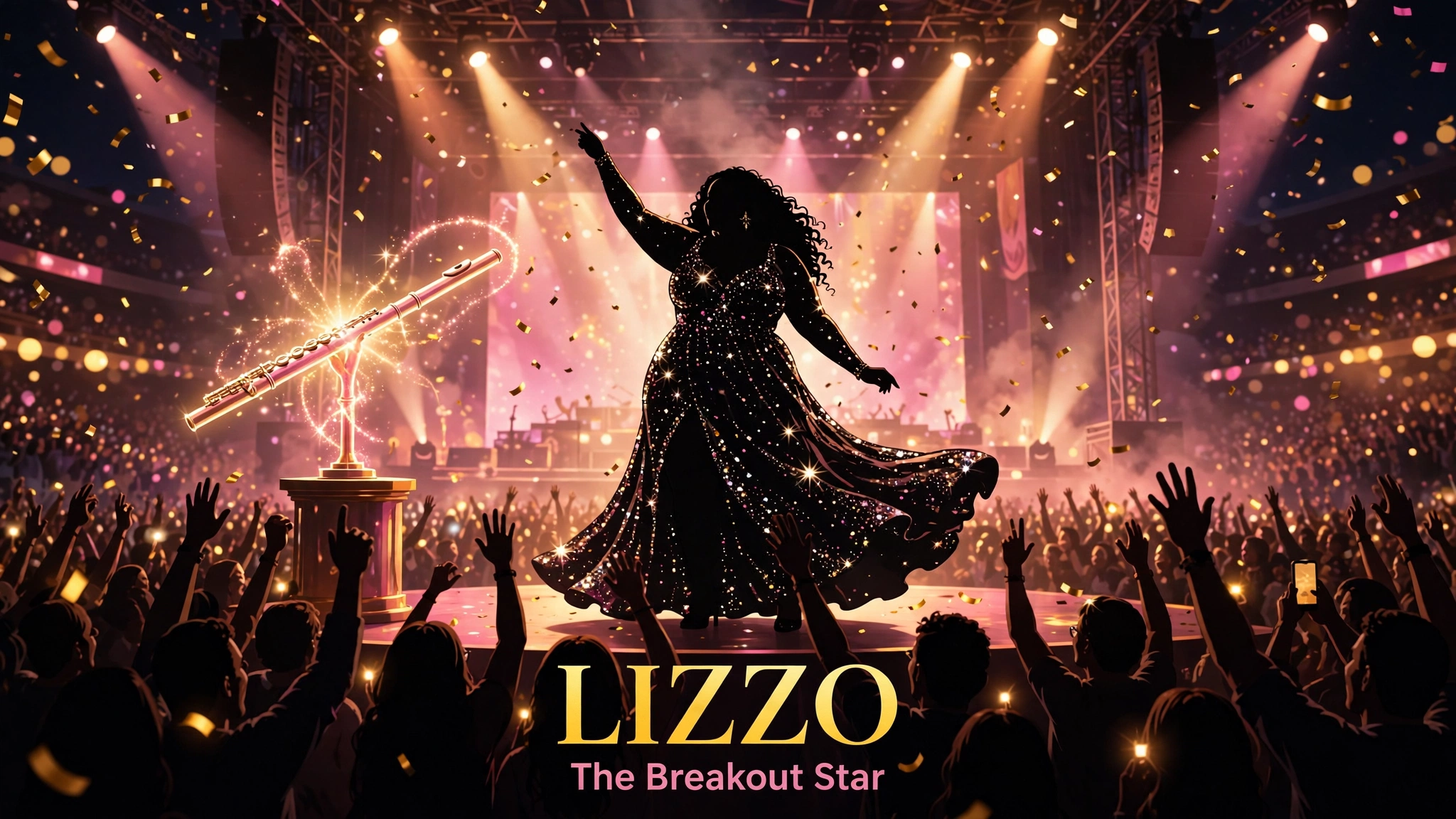
The flute, which Lizzo named Sasha Flute, became a signature part of her performances, and in 2022, she was given the opportunity to play a historic flute, a crystal flute that had belonged to President James Madison, at the Library of Congress, in a moment that became a cultural event, with Lizzo playing the flute, twerking, and making history, as the first person to play the instrument in over 200 years. The moment was widely shared, widely discussed, and it was a perfect example of Lizzo’s ability to combine history, music, and humour, in a way that was both respectful and joyful. She has spoken about the flute as a symbol, about the importance of classical music, about the beauty of the instrument, and about the way it connects her to her training, to her past, and to the person she was before she became a pop star. The flute is not just an instrument; it is a part of who she is, a reminder of her roots, and a sign of her versatility as a musician.
She also launched Yitty, a shapewear brand, in 2022, named after her childhood nickname, and the brand, which sells shapewear in a range of sizes, became a commercial success, reflecting Lizzo’s commitment to body positivity, to inclusivity, and to the idea that everyone deserves to feel comfortable in their own skin. The brand is a part of her business empire, a empire that includes music, fashion, and beauty, and that reflects her values, her vision, and her understanding that a career in music is also a business, and that the best way to build a lasting career is to create products that reflect who you are, and that help others feel good about themselves. Yitty is not just a brand; it is a statement, a declaration that beauty comes in all shapes, and that everyone deserves to feel good, exactly as they are.
Controversy, Lawsuits, and Resilience
In 2023, Lizzo faced a lawsuit from three of her former backup dancers, who alleged that she had created a hostile work environment, including allegations of sexual harassment, body-shaming, and other misconduct. Lizzo denied the allegations, calling them outrageous, and the lawsuit became a major media story, with fans, critics, and the public divided about the claims, and about Lizzo’s response. The lawsuit is ongoing, and it has had an impact on Lizzo’s public image, on her career, and on the conversation about her, with some fans expressing disappointment, and others defending her, arguing that the allegations are false, and that she is being targeted because of her success. Lizzo has spoken about the lawsuit rarely, and when she has, she has denied the claims, and has said that she is committed to a workplace that is respectful, and that she takes the allegations seriously, but that they are not true.
The controversy is a difficult part of Lizzo’s story, and it is a reminder that even the most positive, most beloved stars can face serious allegations, and that the truth is often complicated, and not easily resolved in the court of public opinion. Lizzo’s brand is built on positivity, on body positivity, and on kindness, and the allegations, if true, would be a betrayal of that brand, a contradiction that is hard for fans to reconcile. If the allegations are false, then Lizzo is the victim of a false claim, and the damage to her reputation is unfair. The truth will be determined in court, but in the meantime, the controversy has affected her career, with some fans turning away, with media coverage, and with a debate about her legacy that is still ongoing. She has continued to make music, to perform, and to work, and she has said that she is focused on her art, on her fans, and on the future, but the lawsuit remains a shadow over her story.
Despite the controversy, Lizzo has continued to work, releasing new music, including the album Love in Real Life in 2025, and performing, and she remains a popular and influential artist, with a fanbase that is loyal, and with a message that continues to resonate. She has spoken about resilience, about the importance of continuing, even when things are difficult, and about the need to stay true to yourself, even when the world is criticising you. Her story is not over, and the next chapters are still to be written, but the controversy is a part of it, a part that cannot be ignored, and that will shape how her career is remembered, for better or for worse. She is a star who has faced adversity, who has survived it, and who continues to make music, and that resilience is a part of who she is.
Legacy: The Breakout Star Who Changed Pop
Lizzo’s legacy is that of a breakout star who changed pop music, who proved that a Black woman, who is plus-sized, who plays the flute, and who is proud of who she is, could become one of the biggest stars in the world, and could do it by being herself, fully and unapologetically. She is a Grammy-winning, chart-topping star, and a cultural force, with anthems that defined a moment, from Truth Hurts to Good as Hell to About Damn Time, and with a message of self-love, of body positivity, and of empowerment that has resonated with millions of people around the world.Younger artists cite her as proof that a pop star can be joyful, confident, and entirely herself, and still fill arenas.
Lizzo’s influence is felt every time a pop star talks about self-love without a wink: she made confidence a sound, a flute solo, a chorus you shout in the car, and she made it impossible to ignore. She is a versatile artist, a person who can make a pop song, a rap song, and a soul song, and who can do all of them well, and that versatility is rare, and it is part of why she has lasted, why she is still relevant, and why she continues to make hits. She is also a visual artist, a fashion icon, and a cultural figure, a figure whose impact stretches beyond music, into fashion, into social media, and into the way young people think about beauty, about identity, and about being themselves.
Lizzo’s story is still unfolding, and it is unfolding in public, with all the joy and all the difficulty that implies. She has built a career on a message that is simple and radical at once: love yourself, loudly, and do not wait for permission. That message has made her a star, and it has also made her a target, and she has handled both with a candour that her fans love. What her career proves is that a pop star does not have to fit a mould to fill an arena, and that confidence, when it is real, is contagious. The girl from Detroit who played the flute in a marching band became a voice for millions of people who needed to hear that they were enough, and that voice is not going quiet.
My Take:
Truth Hurts and the Song That Took Three Years to Become a Hit
When I think about Lizzo, I think about Truth Hurts, not just as a song, but as a story, a song that was released in 2017, that was ignored, that was forgotten, and that became a number one hit in 2019, two years later, after being featured in a Netflix film, after going viral on TikTok, and after Lizzo’s breakthrough. That is a remarkable story, because it shows that a good song does not have an expiry date, that it can find its audience, even years after it was released, if the moment is right, if the people are ready, and if the artist is willing to keep believing in it. I remember hearing Truth Hurts for the first time, with its opening line, I just took a DNA test, turns out I’m 100% that bitch, and thinking that this was a line that was going to be quoted, that was going to be remembered, and that was going to become a part of popular culture, and it did, it became a meme, a slogan, and a statement of confidence that millions of people adopted as their own.
What impresses me most about the song is its honesty, its humour, and its empowerment. Lizzo sings about a bad relationship, about a man who hurt her, and about the decision to move on, to love herself, and to not let anyone make her feel small, and she does it with a wit, a confidence, and a joy that make the song feel like a celebration, not a lament. She is not sad about the breakup; she is relieved, she is free, and she is ready to move on, and that attitude, that refusal to be a victim, is part of why the song resonated with so many people, especially women, who recognised something of themselves in its message. The song is not just a breakup song; it is an anthem, a declaration that you are 100% that bitch, that you are worthy, and that you do not need anyone else to tell you so. That message is powerful, and it is why Truth Hurts became more than a hit, it became a movement.
I also think about the flute, and about the way Lizzo plays it, not as a gimmick, but as a serious musician, a classically trained flautist who studied at university, who loves the instrument, and who brings it to pop music in a way that no one else does. When she plays the flute on stage, she is not just showing off; she is showing that a pop star can be a musician, can be classically trained, and can be both, at the same time, and that is a powerful statement, especially for young musicians who are told that they have to choose between classical and pop, between serious and fun. Lizzo refuses to choose, and that refusal is a part of her genius, a sign of a person who is not afraid to be both, to be a flautist and a rapper, a singer and a dancer, and to do it all with a joy that is infectious. Truth Hurts is a song, but it is also a performance, a statement, and a celebration of who Lizzo is, and that is why it will be remembered.
One more thing about Truth Hurts stays with me, and it is the way the song’s success was driven by the internet, by TikTok, by a film, and by the fans, rather than by radio or by a label. The song was released, it was ignored, and then, two years later, it became a hit, because the audience found it, because they shared it, and because they made it famous. That is a new kind of success, a democratic kind, a kind that is driven by the people, not by the industry, and Lizzo is a perfect example of it, a star who was made by her fans, who believed in her, who shared her music, and who proved that a good song, given time, will find its audience. That is a hopeful story, and it is one that should inspire any artist who is waiting for their moment, because the moment may come later than you expect, but if the work is good, it will come.
Good as Hell and the Anthem of Self-Love
Good as Hell is, for me, one of the great anthems of self-love, a song that tells the listener that they are good as hell, that they deserve to feel good, and that they should not let anyone, especially a bad partner, make them feel otherwise. The song was released in 2016, and it became a hit in 2019, after being remixed with Ariana Grande, and after being featured in films, and it became a staple at parties, at weddings, and at moments of celebration, a song that people play when they want to feel good about themselves. I think the song’s power comes from its simplicity, from its directness, and from its joy: it does not complicate the message, it does not hedge, it simply says, you are good as hell, and you should know it, and that directness is refreshing in a world where pop songs are often vague, where they hint at feelings rather than stating them. Lizzo states it, clearly, confidently, and joyfully, and that clarity is what makes the song so effective.
What I love most about Good as Hell is the way it combines a serious message with a fun, danceable beat, with a groove that makes you want to move, and with a vocal that is both powerful and playful. Lizzo sings the song with a smile, with a energy that is infectious, and with a confidence that is inspiring, and the result is a song that is both a party anthem and a self-help book, a track that you can dance to and that you can also take to heart. The song’s message, that self-love is a form of power, that feeling good about yourself is not vanity but a necessity, is one that resonates with millions of people, especially women, who have been told that they should be humble, that they should not take up space, and that they should not love themselves too much. Lizzo tells them the opposite, and she does it with a song that is impossible not to dance to, and that is a powerful combination, a message and a beat, together, in a way that is both fun and profound.
I also think about the remix with Ariana Grande, and about the way the two artists, both powerful, both talented, and both known for their voices, came together to make a song that was even bigger, even more joyful, and even more empowering. The collaboration was a perfect fit, a meeting of two pop stars who share a vision, who believe in self-love, and who make music that is both commercial and meaningful. The remix helped the song reach a wider audience, and it proved that Lizzo could collaborate, could share the spotlight, and could make music that was better because of the collaboration. Good as Hell is not just a song; it is a movement, a statement, and a celebration, and it is a song that will be played for years to come, whenever people need to be reminded that they are good as hell, exactly as they are.
The Flute, Sasha Flute, and the Classical Pop Star
Lizzo’s flute, which she named Sasha Flute, is in my opinion one of the most interesting parts of her story, because it is a symbol of who she is: a classically trained musician, a person who studied flute performance at university, who loves the instrument, and who brings it to pop music in a way that no one else does. When she plays the flute on stage, she is not just performing a trick; she is showing that a pop star can be a musician, can be serious, and can be fun, all at the same time, and that is a powerful statement, especially for young musicians who are told that they have to choose between classical and pop, between serious and commercial. Lizzo refuses to choose, and that refusal is a part of her genius, a sign of a person who is not afraid to be both, to be a flautist and a rapper, a singer and a dancer, and to do it all with a joy that is infectious. The flute is not a gimmick; it is a part of her identity, a reminder of her training, and a sign of her versatility as an artist.
What I find most moving about the flute is the moment in 2022, when Lizzo was given the opportunity to play a historic crystal flute that had belonged to President James Madison, at the Library of Congress, and she played it, she twerked, and she made history, as the first person to play the instrument in over 200 years. The moment was widely shared, widely discussed, and it was a perfect example of Lizzo’s ability to combine history, music, and humour, in a way that was both respectful and joyful. She treated the flute with reverence, she played it beautifully, and she also celebrated, she danced, she enjoyed herself, and that combination, of respect and joy, is what makes her special. She did not treat the moment as a solemn museum visit; she treated it as a celebration, a party, and a moment of history, all at once, and that is a rare talent, to be able to honour the past while also living in the present, and to do it with a smile.
I also think about the classical training behind the flute, about the years Lizzo spent studying, practising, and learning the instrument, and about the discipline that training required, a discipline that is visible in her music, in her performances, and in her work ethic. She is not a pop star who stumbled into fame; she is a musician who trained, who worked, and who earned her place, through years of practice, and that training is a part of why she is so good, why her performances are so polished, and why her music is so well-crafted. The flute is a reminder of that, a symbol of her roots, and a sign that she is, at heart, a musician, a person who loves music, who respects it, and who wants to share that love with the world. Sasha Flute is not just an instrument; it is a part of Lizzo, and it is a part of her story that deserves to be celebrated.
What I Take Away From Her Story
When I look at Lizzo’s whole career, from a girl in Detroit with a flute to a global superstar who fills stadiums, what stays with me is the journey, the fact that it took her a decade, from her first album in 2013 to her breakthrough in 2019, to become a star, and that she did it by working, by touring, by recording, and by believing in herself, even when no one else did. That persistence is the most valuable lesson of her career, because it shows that success is not about being discovered overnight, but about working, year after year, and about trusting that the moment will come, if you keep going. Lizzo kept going, she lived in her car, she performed in small venues, she made albums that did not sell, and she did not give up, and when the moment came, in 2019, she was ready, not just as a singer, but as a performer, as a flautist, and as a person who knew exactly who she was. That readiness is why her breakthrough was so complete, and why she has lasted, because she was not a flash in the pan, but a artist who had earned her place, through years of work.
I also think her story is a reminder that beauty comes in all shapes, that talent comes in all sizes, and that a pop star does not have to look a certain way, sound a certain way, or come from a certain place, to be successful. Lizzo is a Black woman, she is plus-sized, she plays the flute, and she is proud of all of it, and her success challenged the narrow definitions of beauty that had dominated pop music for decades, and proved that audiences want to see themselves, want to see real people, and want to hear real stories. That is a powerful message, and it is one that has changed pop music, that has opened doors for other artists who do not fit the mould, and that has made the industry more inclusive, more honest, and more interesting. Lizzo did not just become a star; she changed what a star could look like, and that is a legacy worth celebrating.
Finally, I want to say that I am looking forward to what comes next for her, because she is an artist who is still growing, still learning, and still finding new ways to make music. Her album Love in Real Life, her tours, and her work with Yitty all suggest a musician who is not content to rest on her past successes, but who is looking forward, to the next song, the next album, the next project, and who is doing it with a curiosity and a joy that are infectious. Her story is one of the great stories in modern pop music, a story about a girl from Detroit who became a breakout star, and it is a story that is still being written. I will be watching, and listening, because if her past is any guide, the next chapters will be as surprising, as joyful, and as compelling as the ones that came before, and that is a promise worth holding on to.
One last thought stays with me, and it is about the phrase, 100% that bitch, a line from Truth Hurts that became a slogan, a meme, and a statement of confidence for millions of people. That line, more than any other, captures the essence of Lizzo: a person who is confident, who is proud, and who is not afraid to say so, and who invites everyone else to feel the same way about themselves. That invitation, to love yourself, to be 100% yourself, is the heart of her art, and it is why her music matters, not just as entertainment, but as a form of empowerment, a reminder that you are good as hell, exactly as you are, and that is a message worth hearing, again and again.
Frequently Asked Questions
How did Lizzo become famous?
Lizzo became famous in 2019 with her album Cuz I Love You, after Truth Hurts, originally released in 2017, became a number one hit following its use in a Netflix film and on TikTok. She had released two independent albums before that breakthrough.
What is Lizzo’s biggest song?
Her biggest songs include Truth Hurts, Good as Hell, Juice, and About Damn Time, which won the Grammy for Record of the Year in 2023. Truth Hurts was her first number one hit.
Where is Lizzo from?
Lizzo was born Melissa Viviane Jefferson in Detroit, Michigan, on April 27, 1988, and was raised in Houston, Texas. She later moved to Minneapolis, Minnesota, where she built her early career.
Why is Lizzo known for the flute?
Lizzo studied classical flute performance at the University of Houston and plays a flute she named Sasha Flute on stage. In 2022 she played a historic crystal flute that belonged to President James Madison at the Library of Congress.
How many Grammys has Lizzo won?
Lizzo has won four Grammy Awards, including Best Urban Contemporary Album for Cuz I Love You, Best Pop Solo Performance for Truth Hurts, and Record of the Year for About Damn Time in 2023.
What is Yitty?
Yitty is the shapewear brand Lizzo launched in 2022, named after her childhood nickname. It sells shapewear in a range of sizes and reflects her commitment to body positivity and inclusivity.


