Los Van Van: The Life Story Behind Cuba's Salsa Legends
In this post
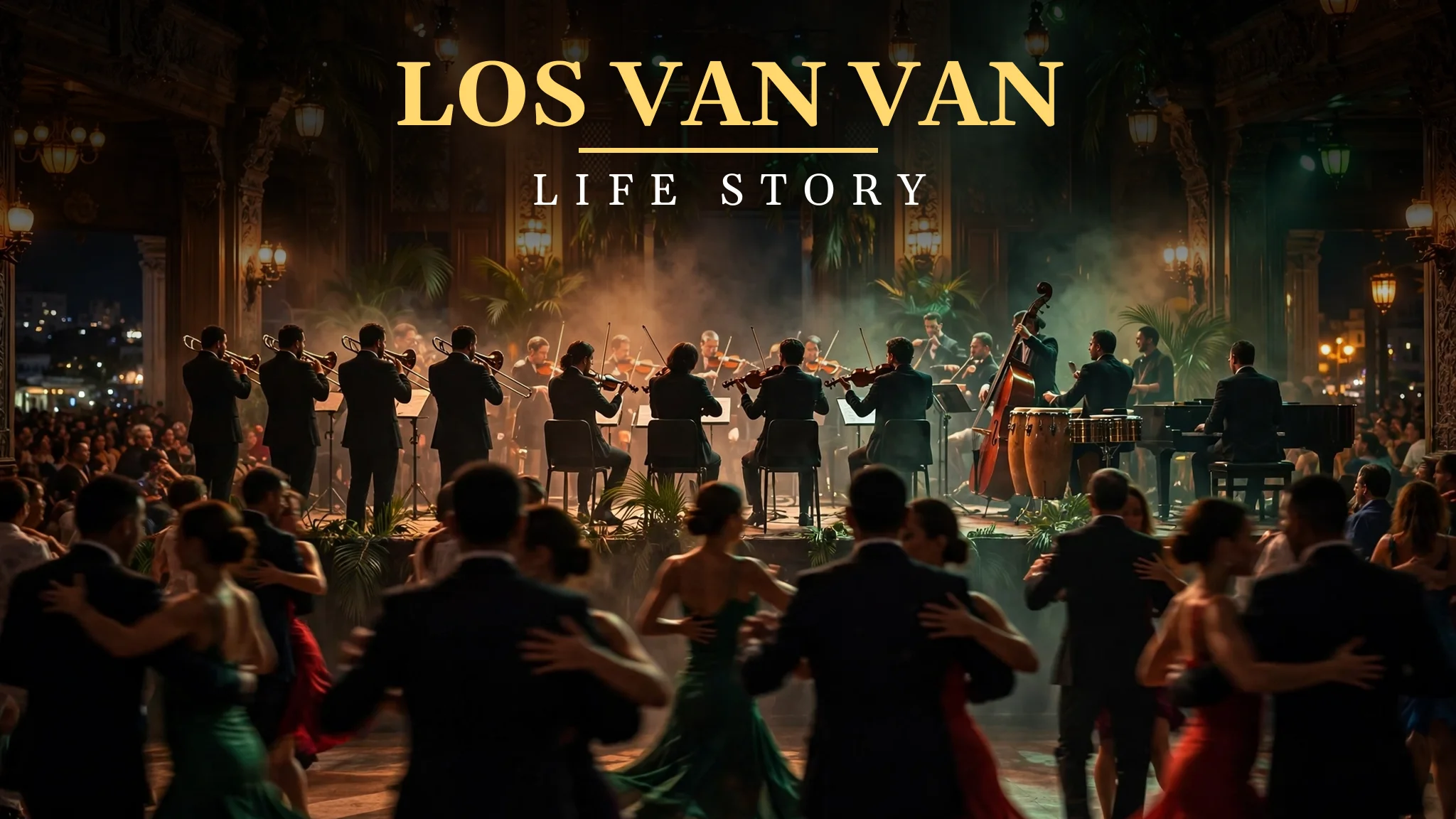
Los Van Van is the band that made Cuba dance for more than fifty years. Their music is called songo, a rhythm that Juan Formell created, and it is a mix of Cuban son, salsa, jazz, and rock. When Los Van Van play, people dance. They dance in Havana, they dance in New York, they dance in Paris, and they dance wherever the band goes. The band has been a part of Cuban life since 1969, and its songs are known by heart by generations of Cubans. It is not only a band. It is a national treasure.
The band was founded by Juan Formell, a bass player, composer, and bandleader with a great gift for melody and rhythm. Formell wanted to make a new kind of Cuban dance music, a music that was modern, that used electric instruments, and that spoke to young people. He created songo, and he built Los Van Van around it. The band became famous in Cuba, it became famous abroad, and it won a Grammy Award. Formell led the band until his death in 2014, and his son Samuel Formell now leads it, carrying on his father’s work.
What makes their story special is its length and its joy. Los Van Van has played for more than five decades, through good times and hard times, and it has never stopped making people dance. The band has changed members, it has changed sounds, and it has faced hardship, but it has kept its energy and its love of music. Its songs are about love, about Havana, about daily life, and about the joy of dancing, and they are sung with warmth and humour. This is the story of how a band from Havana became a legend, and why its music still fills dance floors today.
Juan Formell and the Birth of a Band
Juan Formell was born in Havana, and he grew up in a world of Cuban music. He learned the bass, he learned to compose, and he worked as a musician in Havana in the 1960s. He played in bands, he wrote songs, and he dreamed of a new kind of dance music. He wanted to take the Cuban son, the traditional music of his country, and give it a modern sound, with electric bass, with keyboards, and with rhythms that young people could dance to. He was a quiet man, but he had a strong vision, and he worked hard to make it real.
In 1969, he founded Los Van Van, and the band began to play in Havana. The name Van Van comes from a phrase, and it suggests movement, energy, and going forward. The band’s first songs were dance songs, with catchy melodies and strong rhythms, and people in Havana loved them. They danced to them at parties, in clubs, and in their homes. Formell was the leader, the bass player, and the main composer, and his songs were the heart of the band. He wrote with care, he chose his words with humour, and he made music that was both modern and Cuban.
The early years were hard, with little money and few chances, but the band kept going, because they loved the music and because audiences loved them. They played in Havana, they toured Cuba, and they built a following. Formell was a patient leader, and he built the band step by step, adding musicians, trying new sounds, and learning from each concert. He was not in a hurry. He knew that a great band takes time to build, and he was willing to take that time. The boy from Havana was becoming a bandleader, and his band was becoming a legend.
Formell’s vision was clear. He wanted Los Van Van to be a band for the people, a band that played music for dancing, for joy, and for daily life. He did not want to make music only for experts. He wanted to make music for everyone, for young and old, for dancers and for listeners. That vision guided the band for more than forty years, and it is still its guiding light today. Los Van Van was born in 1969, and it was born with a purpose, to make Cuba dance, and it has done so ever since.
Songo and a New Rhythm for Cuba
Songo is the rhythm that Juan Formell created, and it is the heart of Los Van Van’s music. Songo mixes the Cuban son with salsa, with jazz, with rock, and with Afro-Cuban rhythms, and it creates a sound that is new and exciting. It has a strong bass line, a driving rhythm, and a melody that is easy to remember. It is music for dancing, and it makes people move. When Los Van Van play songo, the dance floor fills, and people dance with joy. Formell invented songo, and he gave it to Cuba, and Cuba gave it to the world.
The creation of songo was not easy. Formell had to try many ideas, to listen to many kinds of music, and to find a rhythm that worked. He listened to American rock, he listened to jazz, and he listened to the traditional Cuban son, and he mixed them in a way that felt natural. He used the electric bass, which was new in Cuban music, and he gave it a central role. The bass in songo is not only a background instrument. It is a voice, and it drives the music forward. That innovation changed Cuban dance music, and it influenced many other bands.
Songo also gave Los Van Van an identity. They were not only a salsa band. They were a songo band, with a sound that was their own. When people heard Los Van Van, they knew it was them, because of the bass, because of the rhythm, and because of Formell’s songs. That identity made the band special, and it made their music loved by fans who could tell their sound from any other. Songo is now a part of Cuban music history, and Juan Formell is remembered as its creator, a man who gave his country a new rhythm.
The rhythm also travelled. Musicians in other countries heard songo, they learned it, and they used it in their own music. Los Van Van toured abroad, and they played songo for audiences in Europe, in Latin America, and in the United States, and those audiences danced to it. Songo showed that Cuban music could be modern, could be experimental, and could still be Cuban. It was a gift from Formell to his country, and from Cuba to the world, and it is still being played today, more than fifty years after it was created.
The 1970s and 1980s: The Train Keeps Going
In the 1970s and 1980s, Los Van Van became one of the most popular bands in Cuba, and its songs were played everywhere. The band toured Cuba, it played in large halls, and it was loved by young people. Its songs, like Marilú and others, became hits, and they were sung by fans who knew the words by heart. The band’s concerts were joyful events, with dancing, singing, and a great deal of energy. Los Van Van was not only a band. It was a part of daily life in Cuba, a sound that people grew up with, and a music that brought them together.
The band also began to tour abroad in these years, and it was welcomed in many countries. It played in Europe, in Latin America, and in the United States, and audiences danced to its music. The band’s energy, its rhythms, and its songs were loved by people who did not speak Spanish, because dance music does not need a translation. It needs a good rhythm, and Los Van Van had it. The band became an ambassador for Cuban music, and it carried the sound of Havana to the world. Its tours were a success, and they brought new fans to Cuban music.
During these years, the band also faced hard times. Cuba in the 1970s and 1980s was a country with many challenges, and life was not easy for musicians. The band worked hard, it rehearsed, and it kept playing, even when conditions were difficult. Formell was a steady leader, and he kept the band together through good times and bad. He believed in the music, he believed in his musicians, and he believed in the audience. That belief kept the band going, and it is one reason Los Van Van has lasted for so long. It is a band built on faith, on work, and on joy.
The 1970s and 1980s also saw the band grow and change. New musicians joined, new sounds were tried, and new songs were written. Formell was always looking for new ideas, and he encouraged his musicians to try them. The band did not stay still. It grew, it learned, and it became better with each year. That growth is one reason its music has stayed fresh. A band that does not grow becomes old, but Los Van Van kept growing, and its music kept its energy. The train, as fans call the band, kept going, and it has never stopped.
The Grammy and World Fame
In 2000, Los Van Van won a Grammy Award for its album Llegó Van Van, and the award brought the band even more fame. It was a recognition of more than thirty years of work, and it showed the world that Cuban dance music was among the best in the world. Formell was proud of the award, but he was more proud of the music. He had created songo, he had led a great band, and he had shown that a Cuban band could stand with the best. The Grammy was a honour, and it was a reward for a lifetime of work.
The award also brought new listeners to the band. People in many countries who had never heard Los Van Van learned their name, and they began to listen to their music. The band toured more, it played in larger halls, and it was welcomed with love. Its concerts were still parties, with dancing and singing, and its audiences were still joyful. The Grammy did not change the band’s way of working. It still rehearsed, still wrote songs, and still played with the same energy. Fame did not make the band proud. It made the band grateful, and it made it work even harder.
The band also worked with other musicians, and its collaborations enriched its music. It played with jazz stars, with salsa stars, and with young Cuban musicians, and each time it learned something new. Formell was a generous leader, happy to share the stage, and happy to let young musicians shine. Los Van Van was not only a band. It was a school, and it taught a generation of Cuban musicians how to play dance music, how to write songs, and how to perform. That school is one of Formell’s greatest legacies, and it will last long after his own playing ends.
Through these years, Los Van Van remained a band for the people. Its songs were about love, about Havana, about daily life, and about the joy of dancing, and they were sung with warmth and humour. The band did not make music only for experts. It made music for everyone, and that is why it was loved. The Grammy was a recognition of that love, and it was a moment of joy for the band, for its fans, and for Cuba. Los Van Van had arrived, and the world knew it.
Hard Times, Change, and Survival
Los Van Van faced hard times, especially in the 1990s, when Cuba went through a difficult economic period. Life was hard for everyone, and musicians were not exempt. The band had to work with less, to tour with difficulty, and to keep playing when conditions were tough. Formell kept the band together, and he kept writing songs, even when life was hard. He believed that music could help people through hard times, that a dance song could bring joy on a difficult day, and that a band could give hope. That belief kept the band going, and it is one reason its music is so loved.
The band also faced changes in its members. Musicians left, new musicians joined, and the sound changed. Formell was a steady leader through those changes, and he welcomed new talent, he taught them, and he gave them a chance. He understood that a band must grow, that new voices bring new energy, and that change is a part of life. He did not fear change. He embraced it, and he used it to keep the band fresh. That openness is one reason Los Van Van has lasted for more than fifty years. It has changed, and it has stayed the same, at the same time.
The band also faced the challenge of new fashions in music. Reggaeton, hip hop, and other styles became popular, and some people thought that songo was old. Formell did not worry. He kept playing songo, he kept writing songs, and he trusted that good dance music would always find listeners. He was right. Los Van Van’s concerts were still full, its songs were still danced to, and its fans were still loyal. A good rhythm does not go out of fashion, if it is played with feeling and with joy. Songo proved that, and Los Van Van proved it with every concert.
Through all these changes, the band remained a family. The musicians worked together, they travelled together, and they shared their lives. Formell was like a father to many of them, and they respected him for his talent, his kindness, and his leadership. That family feeling is in the music. When Los Van Van play, they play as a family, with trust, with joy, and with a shared love of dance. That is why their concerts feel warm, and why their audiences feel like part of the family. Survival is not only about music. It is about people, and Los Van Van is a family that has survived together.
Juan Formell’s Death and Samuel’s Leadership
Juan Formell died on 1 May 2014 in Havana, at the age of 71, and his death was a great loss for Cuban music. The news spread quickly, and people in Cuba and abroad mourned him. He had led Los Van Van for forty-five years, he had created songo, and he had given his country a music that would last. His funeral was attended by many musicians, by fans, and by people who loved his work. He was honoured as a national figure, and his name was spoken with love and respect. He had given his life to music, and his music had given joy to millions.
After his death, his son Samuel Formell took over as the leader of Los Van Van, and he has carried on his father’s work with care and with love. Samuel grew up in the band, he learned the drums, he learned the music, and he learned from his father. He understands songo, he understands the band, and he understands its audience. He has led the band in concerts, in recordings, and in tours, and he has kept its energy alive. It is not easy to follow a great father, but Samuel has done it with humility and with talent, and the band has continued to thrive under his leadership.
Samuel has also brought new ideas to the band, while keeping its roots. He has worked with young musicians, he has tried new arrangements, and he has kept the band’s sound fresh. He respects his father’s legacy, and he does not try to copy it exactly. He builds on it, and he adds his own voice. That is the right way to honour a legacy. Do not freeze it. Let it grow, and let it live. Samuel has done that, and Los Van Van remains a living band, not a museum. Its concerts are still parties, its songs are still danced to, and its future is still bright.
The band today is a mix of old and new, of musicians who played with Juan Formell and musicians who joined under Samuel. That mix gives it strength, because it carries the past and the future at once. The older musicians bring experience, the younger musicians bring energy, and together they make a sound that is both traditional and modern. Los Van Van is still the train, still going, still making Cuba dance, and still carrying the legacy of Juan Formell. His death was a loss, but his music did not die. It lives on in his son, in his band, and in every dance floor where songo is played.
Los Van Van Today and a Living Legend
Today, Los Van Van continues to tour, to record, and to perform, and it remains one of the most loved bands in Cuban music. Its concerts are joyful events, with audiences of all ages, dancing, singing, and celebrating. The band plays its old hits, it plays new songs, and it plays with the same energy as when it began in 1969. It is a living legend, a band that has been part of Cuban life for more than fifty years, and that shows no sign of stopping. Its music is still fresh, its rhythm is still strong, and its joy is still contagious.
The band’s legacy is in its songs, in songo, and in the many musicians it has taught. Young Cuban musicians still learn from Los Van Van, they still study Formell’s bass lines, and they still try to play with the band’s energy. They may not reach its level, but they learn from trying, and they carry its influence forward. That is how a tradition lives, through teaching, through listening, and through practice. Los Van Van has given that gift to many, and it will last long after the current members retire. The train keeps going, and new drivers will take the wheel.
The band is also a symbol of Cuba, of its music, its joy, and its resilience. Through hard times, through change, and through loss, Los Van Van has kept playing, and it has kept making people dance. That resilience is admirable, and it is a lesson for all of us. Life is hard, times change, and people we love pass away, but music can help us to carry on, to dance, and to find joy. Los Van Van has done that for Cuba for more than fifty years, and it continues to do so today. Its story is not finished, and its music is still playing.
Today, when people talk about Cuban music, they talk about Los Van Van as a legend, as the band that created songo, as the band that made Cuba dance, and as the band that is still going. Its life is a story of talent, of hard work, of joy, and of a father’s legacy carried on by his son. It is a story that will be told for many years, and a music that will be danced to for many years to come. Los Van Van is not only a band. It is a part of Cuba, and it is a part of the world’s dance floor.
The Train That Never Stops
Fans call Los Van Van the train, because it keeps going, year after year, concert after concert, song after song. A train does not stop, it carries people, and it takes them to new places. Los Van Van is like that. It has carried Cuban music to the world, it has carried generations of dancers, and it has carried the legacy of Juan Formell to his son and to the future. The train has not stopped, and it shows no sign of stopping. That is a beautiful image, and it is one that fans love.
The train also shows the power of a band that works together. A train needs many parts, an engine, cars, and a driver, and they must work together to move. Los Van Van is like that. It needs its singers, its brass, its rhythm section, and its leader, and they must work together to make music. When they do, the result is a sound that is greater than any one of them. That teamwork is a lesson for all of us. Work together, trust each other, and you can go far. Los Van Van has gone far, for more than fifty years, and it is still going.
Today, the train is still on the track, still playing songo, still making people dance, and still carrying the joy of Cuba to the world. Its story is a story of a band that began in 1969, that created a new rhythm, that won a Grammy, that lost its founder, and that kept going under his son. It is a story of resilience, of joy, and of music that never stops. The train keeps going, and as long as it does, Cuba will dance, and the world will dance with it. That is a legacy to celebrate, and a story to remember.
My Take:
When I think about Los Van Van, I think about dancing, and about a train that never stops. Their music makes me want to move, and their story makes me feel hopeful. They have played for more than fifty years, through good times and hard times, and they have never stopped making people dance. I admire that, because it takes great strength to keep going for so long. Many bands last for a few years, and then they break up. Los Van Van has lasted for more than five decades, and it is still going. That is a rare achievement, and it is one I respect very much.
I admire Juan Formell because he created songo, a new rhythm for Cuba, and he did it with vision and with care. He did not copy others. He listened to many kinds of music, he tried new ideas, and he created something that was his own. That takes courage and creativity. It is much easier to play the music that already exists, to repeat what works, and to avoid risk. Formell took the risk, and he was rewarded. Songo became a part of Cuban music history, and Los Van Van became a legend. I think that is a lesson about creativity. Do not be afraid to try something new. Mix, experiment, and trust your ear. The world may not understand at first, but if the music is good, it will find its listeners.
I also admire the way Formell led the band for forty-five years, with patience and with kindness. He was a steady leader, and he kept the band together through hard times, through changes in members, and through new fashions in music. He did not give up, he did not lose his temper, and he did not forget his vision. He believed in his music, he believed in his musicians, and he believed in his audience. That belief kept the band going, and it is one reason Los Van Van has lasted so long. I think that is a lesson about leadership. A good leader does not only give orders. He believes, he supports, and he keeps the vision alive, even when times are hard.
What I love most about Los Van Van’s music is its joy. Their songs are joyful, their concerts are parties, and their rhythm makes people dance. In a world full of worries, a band that brings joy is a gift. When I hear Los Van Van, I feel happy, even if I am tired, even if the day has been hard. That is a gift, and it is one that the band has given to millions of people for more than fifty years. Joy is not a small thing. It is a real need, and music that brings joy is music that matters. Los Van Van understands that, and their music does it very well.
I think about Samuel Formell, and about the way he took over after his father’s death, and I find that part of the story very moving. It is not easy to follow a great father, especially when that father created a band, created a rhythm, and led it for forty-five years. Samuel could have tried to copy his father exactly, or he could have given up. He did neither. He carried on his father’s work with care, he added his own ideas, and he kept the band alive. That takes humility, talent, and courage. I admire him for it, and I think it is a lesson about legacy. Do not freeze the past. Let it grow, add your own voice, and carry it forward with love.
What can a reader learn from Los Van Van? I think the first lesson is about work. The band worked for more than fifty years, it rehearsed, it toured, and it kept playing, even in hard times. If you have a dream, do not expect it to come true in a year. Work, learn, and keep going, and your work may last for decades. The second lesson is about joy. Make music, or make anything, that brings joy to others. Joy is a gift, and it is needed in the world. The third lesson is about family. Los Van Van is a family, and it has survived because its members trust each other, support each other, and share a dream. Find people you trust, work together, and do not give up on each other.
I also think about the Grammy Award, and I am glad that the band won it, but I do not think the award is the most important part of their story. The most important part is the music, and the joy it brings to listeners. An award is a recognition, and it is nice to receive, but a good concert, a good album, and a good dance song stay in the memory longer than a statue. Los Van Van’s music has stayed in the memory of millions of people, and that is a greater honour than any award. I think that is a lesson about what matters. Do the work well, and the honours will follow, but do not work only for honours. Work for the music, and for the dancers.
I think about their concerts, and about the way they perform. A Los Van Van concert is a party, with dancing, singing, and a great deal of energy. The band does not stand still and play. It moves, it dances, and it invites the audience to join. I think that is a lesson about performance. Do not be distant. Be with your audience, share your joy, and make them feel part of the show. When a band shares joy, the audience feels it, and the concert becomes a memory. Los Van Van understands that, and their concerts show it.
I also think about the hard times in Cuba, especially in the 1990s, and about the way the band kept playing through them. Life was hard, money was short, and conditions were difficult, but the band did not stop. It played, it danced, and it gave people joy on hard days. I think that is a powerful lesson. Music can help us through hard times, it can give us hope, and it can remind us that joy is still possible, even when life is difficult. Los Van Van gave that gift to Cuba, and it is a gift that many people remember with gratitude.
If I could meet Juan Formell, I would thank him for songo, and I would ask him how he created it, how he found the rhythm, and how he knew it would work. I think his answer would be full of music, because he was a man who thought in rhythms and melodies. I would also ask Samuel about leading the band after his father, about how it feels to carry a legacy, and about what he hopes for the future. I think his answer would be full of love, because he loves his father, he loves the band, and he loves the music. I would ask them to play a little, and I would dance, even if I do not dance well, because some songs are meant to be danced to.
In the end, I think Los Van Van matters because they showed that a band can last for more than fifty years, that a new rhythm can change a country’s music, and that joy is a powerful force. They showed that a father can create a legacy, and a son can carry it forward with love. They showed that Cuban music can travel the world, and that dance can bring people together. When I hear their music now, I do not only hear a dance song. I hear fifty years of work, love, and joy, and I feel grateful that they shared it with the world.
I also think their story teaches us about the power of a band that works together. Los Van Van is not one person. It is many musicians, working together, trusting each other, and making a sound that is greater than any one of them. That teamwork is a lesson for all of us. Work together, trust each other, and you can go far. A single musician can make a beautiful song, but a band that works together can make a train that never stops. Los Van Van is that train, and it is still going, carrying Cuban music to the world.
I think about the future of Los Van Van, and I hope it keeps going for many more years. The band is still full of energy, it is still making people dance, and it still has songs to sing. I hope Samuel keeps leading it with care, I hope new musicians keep joining it, and I hope its concerts keep filling dance floors. The world needs joy, and Los Van Van gives it. That is a gift, and I am grateful for it. Their train is still on the track, and I hope it keeps going for a long time.
I also want to say something about the importance of dance in their music. Dance is not only fun. It is a way for people to come together, to celebrate, and to forget their worries for a while. When people dance to Los Van Van, they are not only moving their bodies. They are sharing a moment, a song, and a joy. That sharing is important, especially in hard times. A song that makes people dance is a song that brings people together, and that is a valuable thing. Los Van Van understands that, and their music does it very well.
When I finish thinking about Los Van Van, I feel happy, and I feel hopeful. Happy because their music brings joy, and hopeful because their story shows that hard work, family, and patience can lead to a legacy that lasts for more than fifty years. They worked, they danced, and they kept going, and their train is still going. That is a story that gives hope to anyone with a dream. Keep working, keep dancing, and keep going. Your train may run for a long time, and it may carry many people with it. That is a lesson I will carry with me, and a song I will keep dancing to.
I think about the streets of Havana, and about the band that played there in 1969, and I find that image very moving. A young band, with a new rhythm, playing for dancers who had never heard songo before. Those dancers loved it, and they danced, and the band kept playing. That night was the start of a fifty-year journey, a journey that is still going. I hope it goes on for many more years, and I hope Los Van Van’s music keeps making people dance, smile, and feel alive. That is a legacy to celebrate, and a story to remember.
I also think about the bass, and about how Juan Formell made it the heart of songo. The bass is often a background instrument, but in Los Van Van, it is a voice, driving the music forward. That is a lesson about finding your own voice, even in a place where others do not expect it. Formell found his voice in the bass, and he used it to create a new rhythm. I think we can all learn from that. Find your own voice, use it with care, and let it drive your work forward. That is what Formell did, and his bass is still driving Los Van Van today.
In the end, I keep thinking about that train, still moving, still playing, and still carrying dancers with it, and I hope it never stops, because as long as it moves, Cuba dances, and the world dances with it.
I also think about the dancers, young and old, who have danced to Los Van Van for fifty years, and about how a single band can be part of so many lives, so many parties, and so many memories, and that is a beautiful kind of success.
Frequently Asked Questions
When was Los Van Van formed?
Los Van Van was formed in Havana in 1969 by the bass player, composer, and bandleader Juan Formell, who created the songo rhythm for the band.
Who founded Los Van Van?
Juan Formell founded Los Van Van, led it for forty-five years, created songo, and wrote many of its songs, until his death in 2014.
What is songo?
Songo is a Cuban dance rhythm created by Juan Formell that mixes the Cuban son with salsa, jazz, rock, and Afro-Cuban rhythms, with a strong electric bass at its centre.
When did Los Van Van win a Grammy?
Los Van Van won a Grammy Award in 2000 for its album Llegó Van Van, a recognition of more than thirty years of work in Cuban dance music.
Who leads Los Van Van now?
After Juan Formell’s death in 2014, his son Samuel Formell took over as leader of the band, carrying on his father’s work and keeping its energy alive.
Why are Los Van Van called the train?
Fans call Los Van Van the train because the band keeps going, year after year, concert after concert, carrying Cuban music to dancers around the world without stopping.
What kind of songs does Los Van Van play?
Los Van Van plays dance songs about love, Havana, and daily life, in the songo style, with joyful rhythms that make people dance and sing along.


