Louis Hofmann: The Life Story Behind the Dark Star
In this post
For most viewers outside Germany, Louis Hofmann arrived all at once, as a pale young man in a yellow raincoat standing at the mouth of a cave. That was Jonas Kahnwald in Dark, and the series carried his face around the world. Yet the cave was not the start of the story. By the time Netflix put him in front of a global audience, Hofmann had already spent half his life on film sets, first as a schoolboy in German adventure films, then as a teenage prisoner of war on a Danish beach, then as a young man in love in a small German town. The fame looked sudden from the outside. From the inside, it was slow work, year after year, and the roles kept getting harder.
He was born on 3 June 1997 in Bergisch Gladbach, a town in North Rhine-Westphalia, and he grew up in its Bensberg district. Nothing about his family background pointed toward film. He was an ordinary boy from a Rhineland town who happened to be noticed, tried a part, and found that he liked the strange discipline of a set: waiting, listening, doing the same scene again until it felt true. Child acting can swallow a young person whole, yet Hofmann moved through it in an unusual way. He did not chase attention. He took the work seriously, went back to school between jobs, and let each film teach him something the last one had not.
What links his best roles is a kind of watchfulness. His characters are often young men who understand more than they say, who carry a secret, or who are caught inside a history they did not choose. A prisoner clearing mines after a war he was too young to fight. A boy who can hear a radio signal no one else can hear. A forger who must smile at the very people hunting him. The parts are different, but the centre is the same: a young man paying close attention while the world around him falls apart. Viewers who met him through Dark sometimes assume he is a new face. The truth is closer to the opposite. He had been learning his trade for years before the world noticed, and the notice, when it came, found an actor who already knew how to carry a story without showing off.
A Boy from Bensberg Who Found the Camera Early
Bergisch Gladbach sits east of Cologne, a place of forests, old churches and quiet streets, and Bensberg, where Hofmann grew up, is its older, hilltop part. It is not a film town. There were no studios on the corner and no famous neighbours to open doors. Hofmann came to acting the way many German child actors do, through a casting call, and the first small parts arrived while he was still at school. German television and film have always needed children who can behave naturally in front of a camera, and the young Hofmann could. He was not a showy child. Directors noticed that he listened, that he did not overact, and that he could hold a scene without pushing it.
Those early years mattered because they gave him something a drama school cannot hand a student in a single term: time on a real set. He learned where to stand so the light found his face, how to keep his energy through long waits between takes, and how to work with adult actors without being treated as a decoration. A child who learns those habits early can spend his adult career thinking about the character instead of the machinery around him, and that is what happened here. By his early teens he was ready for a leading role, and the role that came was one of the most famous boys in literature.
Tom Sawyer and the First Taste of Leading a Film
In 2011, at thirteen, Hofmann played Tom Sawyer in Hermine Huntgeburth’s German film version of Mark Twain’s novel. Tom Sawyer is a part every boy actor dreams of and almost every boy actor gets wrong, because the temptation is to play the mischief and forget the heart. Hofmann played him as a real boy from a small town on the Mississippi: quick, stubborn, loyal to his friend Huck, and frightened underneath the bravado when the adventure turned serious. Leon Seidel played Huckleberry Finn beside him, and the friendship between the two boys carried the film. It was a family adventure, made for cinemas, and it put Hofmann’s name in front of German audiences for the first time.
A year later he returned to the same world in Die Abenteuer des Huck Finn, the sequel that follows Huck after he runs away from his father. The two films worked as a pair, and they taught Hofmann the two lessons every young lead must learn. The first is stamina: a lead actor is in nearly every scene, and there is no hiding on the days when you are tired. The second is responsibility: when a film is built around a child, the child sets the tone for the whole crew. Hofmann handled both without fuss, and directors remembered it. The boy from Bensberg was no longer a promising child. He was a working actor who could carry a film. The two Twain films also gave German family cinema a rare thing, a home-made adventure that did not feel like a copy of an American one, and they showed that a young German cast could hold a story that audiences everywhere already knew by heart.
A Beach in Denmark: Land of Mine
The part that changed everything came from Denmark. In Land of Mine, released in 2015 and directed by Martin Zandvliet, Hofmann played Sebastian Schumann, a teenage German prisoner of war. The story is set in the weeks after the Second World War, on the west coast of Denmark, where young German soldiers were forced to clear the landmines their own army had buried in the sand. The work was slow, terrifying and often deadly, and the film follows a group of boys under the command of a Danish sergeant, played by Roland Møller, who begins by hating them and slowly starts to see them as children.
Hofmann was eighteen when he played Sebastian, and the part asked for almost no big speeches. Sebastian is a boy who has been taught to obey, who is frightened, who tries to look after the younger boys, and who understands, before the adults do, that the war has already taken his youth. Hofmann played him with his face more than his voice: the flinch when a mine clicks under a boot, the small relief of a shared meal, the way he watches the sergeant for any sign of mercy. The film was a Danish-German co-production, and it travelled far beyond Denmark. It was nominated for the Academy Award for best foreign language film, and Hofmann won the Bodil Award, Denmark’s national film prize, for best supporting actor in 2016.
The award mattered for a practical reason. It told directors outside Germany that this young actor could hold his own in an international cast, in a film in another language’s production, on a subject as heavy as the aftermath of war. It also set a pattern for the choices that followed. Hofmann did not use the attention to chase easy leading-man parts. He chose stories about young men inside difficult histories, and he trusted that the audience would follow him there. The film itself was based on a real and little-known chapter of history. After the war, German prisoners were made to clear the mines buried along the Danish coast, and many of them were boys barely out of school, handed a task that could kill them with one wrong step. Zandvliet filmed the beach scenes with a patience that lets the fear build slowly, and Hofmann’s performance fits that patience exactly. He never begs the audience to feel sorry for Sebastian. He simply shows a boy trying to stay alive and trying to stay decent at the same time, and the audience does the rest.
Winden, Time Travel and Jonas Kahnwald
Dark arrived in 2017, and it made Hofmann known in a way no German film had. The Netflix series, created by Baran bo Odar and Jantje Friese, was the streaming service’s first German-language original drama, and it was built like a puzzle. Four families in a small fictional town called Winden discover that a cave near the town connects different years, and that their children, parents and grandparents are tied together in ways they cannot escape. Hofmann played Jonas Kahnwald, the teenager at the centre of it, a boy whose father dies by suicide in the first episode and who spends three seasons trying to understand why, and trying to stop the cycle that keeps destroying the people he loves.
Jonas was a punishing part to play for three years. The character appears in several timelines, sometimes as a boy, sometimes as a scarred older man, and the audience must always recognise the same person underneath the changes. Hofmann had to carry grief, anger, love and confusion, often in scenes where the dialogue explains almost nothing and the meaning sits in a look or a silence. The series was shot in and around Berlin, in forests and small towns that gave Winden its damp, grey feeling, and the cast around him included Maja Schöne as his mother Hannah, Oliver Masucci as Ulrich Nielsen and Lisa Vicari as Martha Nielsen. The three seasons ran from 2017 to 2020, and by the end, Dark had become one of the most discussed series in the world, praised for a plot that rewarded viewers who paid close attention.
For Hofmann, the series proved two things. The first was that he could carry a long story, not just a two-hour film, and keep a character consistent across dozens of hours. The second was that his quiet style worked on the largest possible stage. Jonas rarely raises his voice. He watches, he waits, he tries to do the right thing and fails, and the audience stays with him because Hofmann makes the trying feel honest. When the final season aired in 2020, he was twenty-three and already one of the best-known young German actors alive. The show ran for twenty-six episodes across its three seasons, and its ending asked viewers to hold two whole worlds in their heads at once, one shaped by Adam and one by Eva, with Jonas and Martha at the heart of both. Fans around the world drew family trees, argued about paradoxes and rewatched the early episodes to catch clues they had missed, and Hofmann’s face, older and scarred in the later timelines, became the image people pictured when they thought of the show.
After Dark: Ballet, Boarding School and a Forger
Between and after the seasons of Dark, Hofmann kept choosing films that pulled him in different directions. In 2016 he played Phil in Die Mitte der Welt, known in English as Centre of My World, directed by Jakob M. Erwa from the novel by Andreas Steinhöfel. Phil is a seventeen-year-old growing up in a small town with his mother and his twin sister, falling in love for the first time and trying to understand who he is. It was a tender, small-scale film, the opposite of Dark’s machinery, and Hofmann played the part without any of Jonas’s weight, letting Phil be light, funny and uncertain. The novel had been a bestseller in Germany since 1998, and readers had strong feelings about Phil, so the film needed an actor who could make the boy feel ordinary rather than symbolic. Hofmann did that by keeping the performance small: a shrug, a laugh that arrives a second too late, a look at his sister that says more than a speech. It is the kind of film that is easy to overlook beside a global series, yet it shows a side of him that Dark never asked for, the side that can carry a love story with nothing but patience and a smile.
In 2018 he joined The White Crow, Ralph Fiennes’s film about the ballet dancer Rudolf Nureyev, played by Oleg Ivenko. Hofmann played Teja Kremke, a young German dancer Nureyev meets in Paris in the early nineteen-sixties, in the days before the dancer’s famous defection from the Soviet Union. The part was small but it placed Hofmann beside a great director and a cast working in English, French and Russian, and it showed that he could step into a period film about art and desire without needing to be its centre.
A year later he played Siggi Jepsen in The German Lesson, directed by Christian Schwochow from Siegfried Lenz’s 1968 novel. Siggi is a boy sent to a boarding school after the war, and the story turns on his father’s duty as a policeman on a North Sea island and a painter the authorities have forbidden to paint. It was another story about a young man caught between obedience and conscience, and Hofmann, by then in his early twenties, played the character’s stubborn decency without turning him into a hero. He was also in Seneca in 2023, Robert Schwentke’s film about the Roman philosopher, playing Lucilius beside John Malkovich.
The most demanding of these films came in 2022, when he played Cioma Schönhaus in The Forger, directed by Maggie Peren from Schönhaus’s own memoir. Cioma was a real person, a young Jewish graphic artist in Berlin in the early nineteen-forties who survived by hiding in plain sight, pretending to be a German marine officer while forging hundreds of passports and identity papers for other Jews. The film follows his recklessness as much as his courage: he goes out when he should stay hidden, he trusts people he should not trust, and he keeps laughing because laughter is the only way he knows to stay alive. Hofmann played him with a bright, restless energy that was new for him, and the film premiered at the Berlin International Film Festival. It was a reminder that the boy who had once played Tom Sawyer could now carry a true story about survival. What makes the performance work is that Hofmann never plays Cioma as a saint. The man in the memoir was charming, vain, frightened and brave all at once, and the film lets all of those things sit side by side. Schönhaus escaped to Switzerland by bicycle in 1943 and lived there until his death in 2015, and his memoir was published in Germany in 2004. Hofmann had to honour a real life, not invent one, and the lightness he brings to the part is what makes the danger underneath it feel real.
Werner Pfennig and the World Stage
In 2023 Hofmann took his largest international role yet, as Werner Pfennig in All the Light We Cannot See, the Netflix limited series directed by Shawn Levy from Anthony Doerr’s Pulitzer Prize-winning novel. Werner is a German orphan with a gift for radios, a boy who can build and repair them when no one else can, and who is sent by the German army to Saint-Malo in France during the Second World War to track down illegal broadcasts. There he crosses paths with Marie-Laure LeBlanc, a blind French girl played by Aria Mia Loberti, who is broadcasting readings from a novel in the hope that someone is listening. The cast also included Mark Ruffalo and Hugh Laurie, and the series was made on a scale far beyond anything Hofmann had done before.
Werner was a part that asked for everything he had learned. The character is gentle and clever, but he is also part of a war machine, and the story never lets him off the hook for that. Hofmann played him as a boy who keeps trying to be good inside a system built to make goodness impossible, and the scenes where he listens to Marie-Laure’s voice on the radio are among the strongest of his career, because they are scenes about listening itself, about a young man hearing another human being for the first time. The series reached viewers who had never seen Dark, and it fixed Hofmann’s place as an actor who can lead an English-language production without losing the qualities that made him stand out in German films. Doerr’s novel had won the Pulitzer Prize in 2015, and millions of readers already carried their own image of Werner in their heads, which made the casting a risk. Hofmann met it by playing the boy as written: small, quick-handed, curious about how things work, and brave in a quiet way that has nothing to do with uniforms or medals. The radio, in his hands, becomes the whole point of the story, a thin wire of sound between two young people who should be enemies and are not.
The Way He Works, and What Comes Next
Hofmann has never been a loud public figure. He gives few interviews, he keeps his private life out of view, and he lets the work do the talking. Directors who have worked with him describe a performer who arrives prepared, who asks careful questions about the script, and who prefers to rehearse quietly rather than perform for the room. That approach fits the parts he chooses. His characters are rarely the loudest person in a scene. They are the ones noticing what others miss, and the camera has to come to them.
He has stayed based in Germany while working abroad, and the mix has served him well. German film and television gave him his training, his language and his first audiences, and the international work has given him stories he could not find at home. The balance is deliberate. He has turned down the path of becoming a Hollywood fixture, and instead he moves between a German film, an English-language series and a European co-production, choosing the script over the size of the budget. At twenty-eight, with Dark behind him and All the Light We Cannot See behind him too, he is at the point where many actors either repeat themselves or disappear. The record so far suggests he will do neither. The boy from Bensberg learned early that a career is built one careful choice at a time, and he is still making those choices the same way, slowly, and in his own time. Young actors in Germany now have his career to look at as a working example: start young, learn the craft before the fame, take the hard part over the easy one, and let the audience discover you instead of shouting for their attention. It is not a fast road, but Hofmann’s story shows that it is a road that lasts.
My Take:
When I think about Louis Hofmann, the first thing I feel is respect for a young actor who has never tried to be loud. I have seen many young actors who shout, who show off, who try to be the centre of attention, and who end up with a career that is loud and empty. Hofmann did the opposite. His manner stayed low-key, his choices stayed truthful, and the performances did the talking. That demands nerve, because it means letting viewers sense what you sense without spelling it out. I admire that trust, because it is rare, and it is the mark of a great actor, even at a young age.
I think about Dark, and I think about how hard that series must have been to make. It is complex, with many timelines, many characters, and many secrets, and Hofmann was at its centre, as Jonas, a teenager trying to understand a world that made no sense. He played Jonas with a quiet strength, a young man who is confused, who is afraid, and who is trying to do the right thing. I watched that series, and I felt the tension in every episode, not because the series is loud, but because Hofmann makes you feel the fear in a look, in a pause, in a small movement. No textbook can teach that sort of acting. It grows out of watching real people closely and telling the truth about how they feel.
I admire his work in Land of Mine, and I think it matters more than people say. He played a young German soldier after the Second World War, a boy who is forced to clear landmines, and who is trying to survive. He did not play the soldier as a hero. He played him as a real boy, with fears, with doubts, and with a life that had been shaped by a war he did not understand. That honesty made the film work, and it showed that Hofmann was not only a child star. He was a young actor who could handle a serious subject, and who could make an audience feel the pain of a war that happened long before he was born. That picture stands among his finest, and the reason is sitting right there in his performance.
I think about Tom Sawyer, and I think about how that role showed his range as a child actor. He played a boy who is brave, curious, and full of life, and he gave a performance that was warm and honest. That is a hard thing to do, to play a classic character that many actors have played before, and to make it feel new. Hofmann did it, because he did not try to copy other actors. He played Tom as himself, with his own energy, his own humour, and his own warmth. That is a lesson for any young actor who is asked to play a famous character. Do not copy. Be yourself, and trust that the audience will follow you.
I love All the Light We Cannot See, and I want to say why it matters so much to me. It is a story about a blind French girl and a German boy during the Second World War, about radio, about kindness, and about the need to hold on to humanity in a dark time. Hofmann played Werner with a quiet strength that made the audience care, and he showed that a German boy in a war can also be a good person, a person who tries to help, even when it is dangerous. That is a brave role to play, because it asks the audience to see a German soldier as a human being, not as a villain, and Hofmann did it with honesty and with care. I think that series matters, because it shows that kindness can survive even in war.
Thinking about what lies ahead for him fills me with hope, because he is young, busy, and still doing his finest work, and the roles he has not yet played feel as promising as the ones he has. I keep asking myself what part he will take next, and I hope it catches me off guard the way his earlier parts did. I hope he holds on to his wonder, his stillness, and his hunger for acting, because those three things built this career. A young actor who keeps learning is a young actor who keeps growing, and Hofmann has kept learning for many years. That is a cheering idea for everyone who cares about cinema and television.
His choice to stay rooted in Germany is one I hold in high regard. Los Angeles could have offered him bigger pay and bigger billboards, yet he has kept his base in Germany and picked foreign jobs only when the script earned the trip. Such a choice demands nerve, since the big money and the bright lights sit in America, and turning from them means putting home ahead of wealth. Hofmann said that, with his life, and I admire him for it.
The way he carries his fame feels like a guide for any young person suddenly known by strangers. He is famous around the world, he is loved by millions, and yet he keeps his private life private, he keeps his focus on the work, and he does not chase attention. There is real power in being recognised for the work rather than the private life, and I wish more celebrated people chose it. When the work is the point, the work gets better, and Hofmann proves it, because his work has only got better with time, even as he has kept himself out of the spotlight.
If I have a criticism, it is that he has not yet had a role that is as big as Dark, and that some of his best work after Dark is known only to a smaller audience. I understand why he chooses the roles he does, and I respect the choice, but as a viewer, I wish more people knew his work after Dark, because it is good work, and it deserves to be seen. That is not a criticism of him, really. It saddens me that fine acting so often passes unnoticed, and that a gifted actor can labour for years while much of the world stays unaware. I hope this story changes that, even a little.
I think about young actors in Germany, and I hope they look at Hofmann and learn the right lesson. The point is not to imitate his parts, since those parts are his alone. The point is to stay calm, stay unhurried, and stay truthful. Stay steady, stay honest, and let the work arrive in its own time instead of forcing it. Master your art, labour at it daily, and believe viewers will hear you once you are prepared. Hofmann learned his craft, he worked hard, and he trusted the audience, and the audience has listened for many years. That trust was not luck. It came from labour, the kind of labour anyone can take on, if they persist while nobody applauds.
I also think about the city of Winden in Dark, and I think about how Hofmann made that fictional town feel real. The town is small, it is quiet, and it is full of secrets, and Hofmann played Jonas as a young man who is trying to understand those secrets, and who is trying to save the people he loves. That is a powerful story, because it is about family, about time, and about the choices we make. I hope that when people watch Dark today, they think of Hofmann, and they feel the mystery that made the series so special. That mystery is the heart of Dark, and Hofmann is at its centre.
For a young reader, I think the lesson from Louis Hofmann is to be quiet, to be patient, and to be honest. Do not try to be loud, do not rush to be famous, and do not pretend to be someone you are not. Master your art, labour at it daily, and believe viewers will come to you once you are prepared. Hofmann learned his craft, he worked hard, and he trusted the audience, and the audience has followed him from Tom Sawyer to Dark to All the Light We Cannot See. That trust was not luck. It came from labour, and that labour is open to anyone ready to keep going.
I also think his story teaches us about Germany, and about the power of a serious television series to tell the story of a country. Dark is not only a series about time travel. It is a series about German families, about German towns, and about the secrets that people keep from each other. Hofmann helped to tell that story, with honesty and with care, and he gave it a human face. That carries hope for any young storyteller anywhere who fears their own country’s tales are too tough to film. Those stories can be told, provided you stay truthful, unhurried, and willing to trust the viewer. Hofmann did, and world television is better for it.
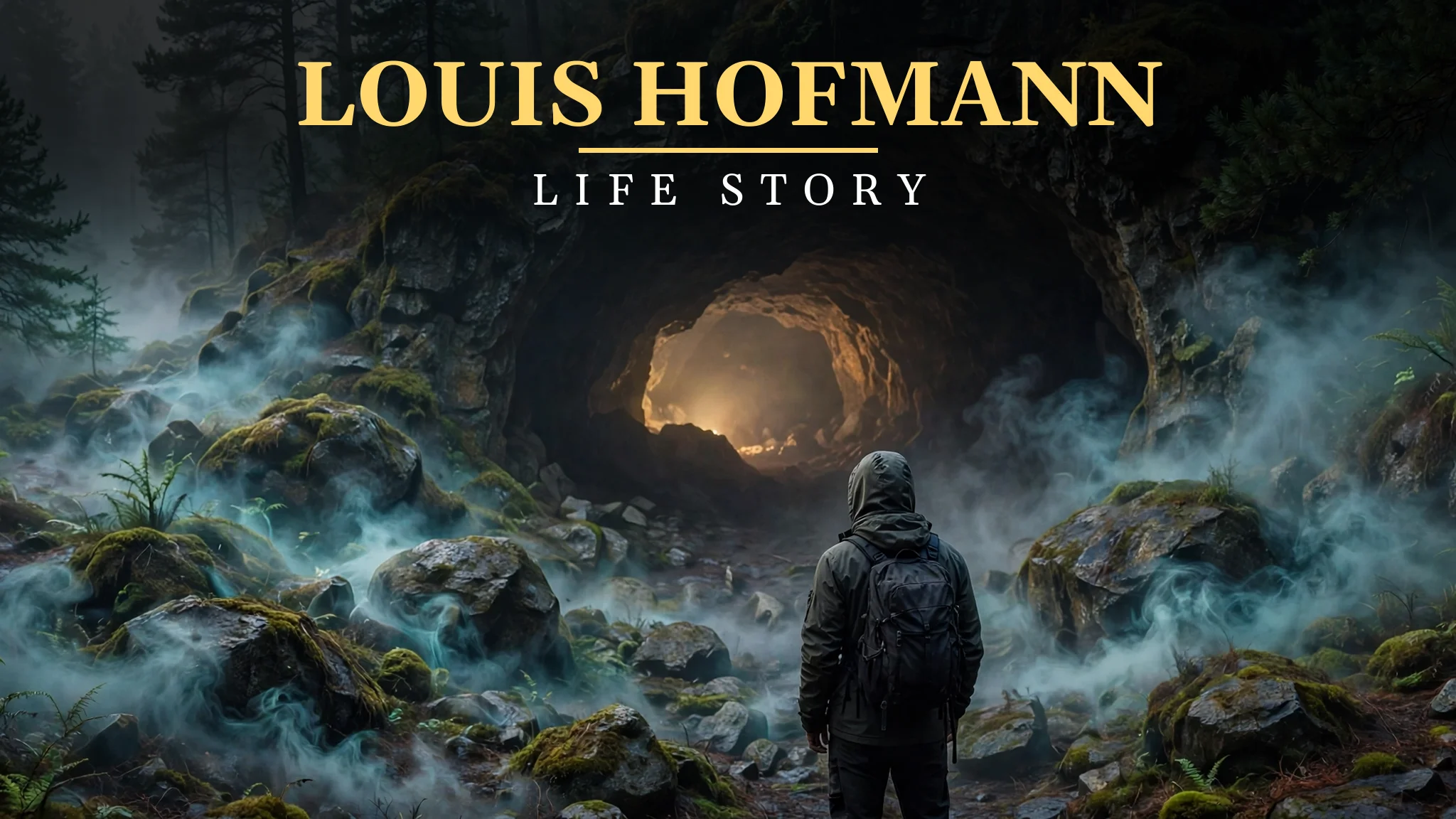
In the end, I keep coming back to the image of a hooded man with a backpack, standing before a glowing cave in a misty forest. That image is the heart of Louis Hofmann, a quiet power that does not need to shout, and that is why his work will be remembered long after many louder stars are forgotten. I hope he is remembered for that image, for his honesty, and for his long career of good work, even though he is still young. He may never top a fame ranking, but his acting carries a straightness that matters far more than any ranking. I will keep returning to his films, keep urging friends to watch them, and keep trusting that hard work like his finds its audience, and I expect to keep noticing things I missed the first time.
I want to point out his listening, too, since it is a quiet craft that viewers often overlook. Many actors are good at speaking, but few are good at listening, and Hofmann is one of the few who listens well. While a fellow actor talks, he observes, responds, and turns the moment into something alive. That attention is what lends his acting its truth, since a genuine exchange is never just one person speaking, a quality that separates good actors from memorable ones. It is about listening, and Hofmann listens with his whole body, with his eyes, with his stillness. That is an uncommon talent, and I wish it were common among performers.
Finally, I want to say that Louis Hofmann taught me that acting is not about being famous. It means staying faithful, digging for what is real inside a character, and believing viewers will come along. Across films and series he has done exactly that, role after role, with a patience I keep coming back to. I hope he keeps working, keeps reaching, and keeps telling stories, since the screen needs actors who put the work first.
I also think about the way Hofmann works with other actors, and I think it is a model for any team. People who work beside him talk about how calm he makes a set, how he pays attention, and how he lifts the actors around him. That generosity is rare, because many stars want to be the centre of attention, and they forget that a series is made by a team. Hofmann does not forget. He knows that a good series needs every actor to be good, and he helps them be good. I admire that in him, since it is leadership without noise, firm and gentle at once.
A final idea lingers with me, and it looks ahead. Hofmann is still young, still working, and still giving some of the best work of his life, and I hope his best roles are still ahead of him. He has already made a series that is loved around the world, he has worked with great directors, and he has shown that he can play many kinds of characters. Should he keep studying, keep stretching, and keep telling stories truthfully, the finest role may still be waiting for him. I will follow whatever he makes next, and I will be there when it arrives.
Frequently Asked Questions
Where was Louis Hofmann born and when?
Louis Hofmann was born on 3 June 1997 in Bensberg, a town near Cologne in Germany. He began acting as a child and took on his first film role in Tom Sawyer in 2011.
What was Louis Hofmann’s first film role?
His first film role was Tom Sawyer in 2011, based on the classic novel by Mark Twain about a boy who has adventures along the Mississippi River. The film was a success in Germany and showed he could carry a film.
What is Land of Mine about?
Land of Mine, released in 2015, is a Danish German film about young German soldiers after the Second World War who are forced to clear landmines from the beaches of Denmark. Hofmann played one of the young soldiers, and the film was nominated for an Academy Award.
Who did Louis Hofmann play in Dark?
He played Jonas Kahnwald in Dark, a German series on Netflix that ran from 2017 to 2020. Jonas is a teenager who loses his father, discovers a cave that leads through time, and tries to save his family and his town.
What is Dark about?
Dark is about a small German town, Winden, where children go missing and families discover that time travel is real, and that their lives are linked across generations. The series was watched by millions around the world on Netflix.
What is All the Light We Cannot See about?
All the Light We Cannot See, released in 2023 on Netflix, is based on the novel by Anthony Doerr about a blind French girl and a German boy during the Second World War. Hofmann played Werner Pfennig, a German boy who is good with radios.
Is Louis Hofmann still working today?
Yes, he continues to work in Germany in film and television, while also taking on international roles when they interest him. He keeps his private life out of the spotlight and focuses on projects that matter to him.


