Luo Yunxi: The Life Story Behind China's Graceful Star
In this post
Luo Yunxi moves like a person who has spent his life learning how to move. That is not a poetic exaggeration. He was a ballet dancer before he was an actor, and ballet lives in his body still, in the straight back, in the long line of an arm, in the way he turns in a costume drama and makes a simple step look like a dance. Viewers first noticed him as Runyu in Ashes of Love, the quiet, sad, and elegant god who loves deeply and is loved in return too late. They noticed him again as Tantai Jin in Till the End of the Moon, a man who is both a demon and a human, both cruel and kind. Both roles are about men who carry pain gracefully, and Luo Yunxi plays that pain with a stillness that is rare on television.
He was born in Chengdu in 1988, and his path to acting was not the usual one. He studied ballet at the Shanghai Theatre Academy, and he became a ballet teacher and dancer, a life that is disciplined, physical, and largely away from cameras. Acting came later, almost as a second career, when he began to take small roles in television and film. He was not a young idol. He was a dancer learning a new art, and he learned it slowly, role by role, until Ashes of Love gave him a character that suited his grace perfectly. From there, he became one of the most loved actors in Chinese fantasy drama, a star whose fans love him not only for his face, but for the calm and the sadness he brings to his roles.
His story is also a story about waiting. He waited for years, playing supporting parts, learning the craft, and trusting that the right role would come. When it came, he was ready, because ballet had taught him patience, and teaching had taught him how to explain, how to listen, and how to work with others. His later career has included leading roles, romantic dramas, and fantasy epics, and he has become a name that viewers trust. They know that when Luo Yunxi appears, the character will be graceful, the story will be emotional, and the performance will be careful. That trust is the result of years of work, not of a single night of fame.
Ballet in Chengdu and Shanghai
Luo Yunxi was born on 28 July 1988 in Chengdu, the capital of Sichuan province, a city known for its relaxed pace, its tea houses, and its love of good food and good company. Chengdu is a city that values a slow life, and growing up there means learning to enjoy the moment, to sit with friends, to talk without hurry. Luo Yunxi grew up in that atmosphere, but his own life was not slow. He was drawn to dance, and dance is a fast, demanding art, even in a slow city. He learned ballet as a young man, and he learned it seriously, with the discipline that ballet demands.
He studied at the Shanghai Theatre Academy, where he trained in ballet, and he became a skilled dancer. Ballet training is not only about learning steps. It is about learning to control the body, to breathe, to balance, to turn, to jump, and to land without a sound. It is about practising the same movement a hundred times until it looks effortless, and then practising it a hundred more times. Luo Yunxi learned that discipline, and it stayed with him long after he stopped dancing every day. When he acts in a costume drama, his movements are clean, his posture is straight, and his turns are smooth, because his body remembers the barre, the mirror, and the teacher’s corrections.
After his studies, he worked as a ballet instructor, teaching others what he had learned. Teaching is a different skill from performing. It asks a person to watch, to explain, to be patient, and to help someone else improve. Luo Yunxi learned to do that, and it gave him a calm and a clarity that many actors do not have. A teacher learns to see the small mistake, to name it kindly, and to help the student fix it. That habit of seeing clearly and speaking kindly is visible in his acting, in the way he listens to other actors, in the way he takes direction, and in the way he builds a character step by step.
Ballet also taught him about pain. Dancers live with sore muscles, with tired feet, with injuries that must be managed. They learn to work through discomfort, to smile through it, and to keep going. That lesson would matter later, when acting brought its own kind of pain, long hours, difficult roles, and the pressure of fame. Luo Yunxi had already learned to work through pain, and that learning gave him a strength that is quiet but real.
From Dancer to Actor
Luo Yunxi’s move from dance to acting was gradual. He began with small roles in television and film, learning how a set works, how to act in front of a camera, and how to build a character. Acting is different from dance. Dance tells a story with the body. Acting tells a story with the face, the voice, and the body together. A dancer must learn to speak, to listen, and to let the eyes do the work that the feet once did. Luo Yunxi learned that slowly, and he learned it well, because he had already learned discipline, and discipline is the same in both arts.
His early roles were modest, and many viewers would not remember them today. He played supporting characters, sometimes a friend, sometimes a rival, sometimes a man with only a few scenes. Those roles taught him how to be on a set, how to wait, how to take direction, and how to make the most of a short scene. He was not in a hurry. He knew that a career is built over years, not in a single role, and he was willing to wait for the right part. That patience is rare, and it is one reason why his later success feels earned rather than lucky.
During these years, he also worked as a singer, releasing music and performing, and he began to build a small following of fans who loved his grace and his voice. Music was a bridge between dance and acting, a way to perform that used his voice as well as his body. He sang, he danced, he acted, and he learned how each art feeds the others. A singer learns breath control. A dancer learns movement. An actor learns both, and Luo Yunxi was learning all three at once, slowly building a set of skills that would serve him well when the big roles arrived.
By the late 2010s, he was ready. He had the training, the patience, and the grace, and he needed only a role that would let him show all three at once. That role was coming, in a fantasy drama about gods, demons, and love, and it would change his life.
Ashes of Love and the Role of Runyu
In 2018, Luo Yunxi appeared in Ashes of Love, a fantasy drama that became one of the most popular Chinese series of its year, and he played Runyu, the Night God, a quiet, elegant, and sad figure who loves Jinmi, the heroine, but who is not loved in return in the way he hopes. Runyu is a complex character. He is kind, he is wise, he is patient, and he is also capable of jealousy, of anger, and of making choices that hurt others. Luo Yunxi played him with a stillness that made viewers feel his pain, even when he said little. His performance was praised, and Runyu became one of the most loved characters in the drama, even though he was not the main hero.
Ashes of Love mattered for Luo Yunxi because it gave him a role that suited his ballet training perfectly. Runyu moves gracefully, speaks softly, and carries himself with a dignity that is rare on television. Luo Yunxi played him as if he were dancing, even when he was only standing still. The audience noticed, and they loved him for it. The drama became a hit, and Luo Yunxi became a star, not overnight, but through a performance that viewers remembered long after the final episode.
The role also showed his range. Runyu is not a simple hero. He is a man who loves and loses, who tries to be good and sometimes fails, who is both a god and a person with human feelings. Playing such a character requires a depth that Luo Yunxi had built through years of dance, teaching, and small acting roles. He did not overplay the sadness. He let it show in his eyes, in his posture, in the way he turned away. That restraint made the character more moving, and it made the audience care for him even when he made mistakes.
After Ashes of Love, Luo Yunxi became a sought-after actor, and he was offered leading roles in other dramas. He had waited for years, and the wait had paid off. He was no longer a dancer trying to act. He was an actor who had once been a dancer, and that history gave his performances a grace that other actors could not copy.
Love Is Sweet and Leading Roles
After Ashes of Love, Luo Yunxi took the leading role in Love Is Sweet, a modern romance drama from 2020, in which he played Yuan Shuai, a successful businessman who hides his true feelings behind a cold exterior, and who falls in love with a woman he has known since childhood. The role was different from Runyu. It was modern, it was romantic, and it asked for a hero who is confident in business and shy in love. Luo Yunxi played him with a warmth that surprised viewers who had only seen him as a sad god, and the drama became a success.
Love Is Sweet mattered because it showed that Luo Yunxi could carry a modern drama, not only a fantasy epic. A modern hero does not wear long robes or use magic. He wears a suit, he works in an office, he argues, he laughs, and he loves in a world that viewers recognise. Luo Yunxi played that world with a natural ease, and the audience responded. The drama’s success proved that his appeal was not limited to costume dramas, and that he could play a contemporary man with the same grace he brought to historical roles.
He also continued to take leading roles in fantasy and historical dramas, building a career that balanced modern and ancient stories. Each new role added to his reputation as a reliable leading man, a person who arrives prepared, who works hard, and who treats his co-stars with respect. That reputation is valuable in an industry where many stars are known for being difficult. Luo Yunxi is known for being professional, and that professionalism has helped him to keep working, year after year, without a major fall.
The years after Ashes of Love were busy, and they were also a time of learning. A leading role brings more pressure than a supporting role, because the audience watches the lead more closely, and the story depends on him. Luo Yunxi learned to handle that pressure, to carry a long drama, to show a character changing over many episodes, and to keep the audience’s attention. That learning is visible in his later work, where his performances are more confident, more relaxed, and more varied than they were in his early years.
Till the End of the Moon and a Darker Hero
In 2023, Luo Yunxi starred in Till the End of the Moon, a fantasy drama based on a popular novel, in which he played Tantai Jin, a man who is born as a demon king, who is cruel and feared, and who must learn what love is through a woman who travels back in time to change his fate. The role was one of the most demanding of his career, because Tantai Jin is not a simple hero. He is a villain, a victim, a lover, and a king, all at once, and the actor must show all of those sides without confusing the audience. Luo Yunxi played him with a intensity that viewers loved, and the drama became a major success, both in China and abroad.
Till the End of the Moon mattered because it showed a darker side of Luo Yunxi’s acting. Runyu was sad and elegant. Tantai Jin is angry, hurt, and dangerous, and he must learn to be human. Playing that change, from demon to man, from cruelty to love, requires a range that Luo Yunxi had been building for years. He showed it, and the audience responded with praise, with fan art, with discussions that lasted long after the drama ended. The role also showed that he could play a character who is not always likeable, and that he could make the audience care for a villain, which is one of the hardest things an actor can do.
The drama’s success also brought new attention to Luo Yunxi, and it made him one of the most talked-about actors of 2023. His performance was discussed in detail, his costumes were admired, and his scenes with his co-star were shared widely. That attention is a double-edged thing. It brings fame, but it also brings pressure, and Luo Yunxi handled it with the same calm that he brings to his roles. He did not seek controversy. He worked, he thanked his fans, and he moved on to the next project.
Till the End of the Moon is now one of his defining roles, alongside Runyu, and together those two characters show the range of his talent. One is a god who loves quietly. The other is a demon who learns to love. Both are men who carry pain gracefully, and both are played by an actor who understands pain, grace, and patience, because he learned them first as a dancer, and then as a teacher, and then as an actor.
Grace, Health, and the Weight of Fame
Luo Yunxi’s grace on screen is real, but it has a cost that is easy to miss. Ballet is hard on the body, and years of dance can leave a person with injuries, with tired joints, with a body that must be cared for carefully. Luo Yunxi has spoken, in general terms, about the physical demands of his work, and his fans have often worried about his health, especially when he appears thin in costume dramas. That worry is a sign of love, but it is also a reminder that a graceful performance is not effortless. It is the result of years of training, and it asks a lot from the body.
Fame has also brought its own weight. After Ashes of Love and Till the End of the Moon, Luo Yunxi became a star with a large fan base, and that fan base watches his every move, his every new role, his every appearance. That attention is flattering, but it is also tiring, and it means that a person has little privacy. He handles it with a quiet dignity, rarely sharing personal details, rarely making loud statements, and letting his work speak. That privacy is a choice, and it is a wise one, because it protects his health, his family, and his ability to keep working.
There have also been debates about his roles, about whether he should play more modern dramas, about whether his characters are too similar, about whether he should take a break. Those debates are normal for a popular actor, and Luo Yunxi has answered them by working, not by arguing. He takes the roles that interest him, he prepares carefully, and he trusts that the audience will follow him. That trust has, so far, been rewarded, because his fans have followed him from Runyu to Tantai Jin, and they are waiting to see what he does next.
His story is also a reminder that a career built on grace is not a career built on luck. Grace is a skill, learned through years of practice, and it can be lost if a person stops practising. Luo Yunxi has not stopped. He continues to work, to learn, and to bring his dancer’s discipline to every new role, and that discipline is visible in every scene he plays.
What a Dancer Brings to Acting
When people look back at Luo Yunxi’s career, they will remember two characters first: Runyu and Tantai Jin. Both are men who love deeply, who suffer, and who carry themselves with a grace that is rare on television. But his story is larger than those two roles. It is the story of a dancer who became a teacher, a teacher who became an actor, and an actor who became a star, each step built on the one before it. That slow, steady climb is different from the fast rise of many idols, and it is more durable, because it is built on skill, not only on fame.
His influence can be seen in the way fantasy dramas are now cast. Producers have learned that a hero does not have to be loud to be strong, and that a quiet, graceful performance can move an audience more deeply than a loud one. Luo Yunxi helped to prove that, not by making a speech, but by playing Runyu with a stillness that made viewers lean in. Younger actors who play similar roles today are walking on a path that he helped to clear, even if they do not always know it.
He is still working, still choosing, and still private. His recent dramas show a man who is comfortable with complex characters, with dark stories, and with roles that ask for more than a smile. That is a good place for an actor in his thirties to be. He is no longer the dancer trying to learn a new art. He is a mature performer with a clear sense of what he can do, and he is using that sense to pick work that matters to him. The audience, in turn, has learned to trust his choices, because those choices have rarely been careless. He is still working, still choosing, and still private. His recent dramas show a man who is comfortable with complex characters, with dark stories, and with roles that ask for more than a smile. That is a good place for an actor in his thirties to be. He is no longer the dancer trying to learn a new art. He is a mature performer with a clear sense of what he can do, and he is using that sense to pick work that matters to him. The audience, in turn, has learned to trust his choices, because those choices have rarely been careless. What is often missed is how much teaching ballet taught him about acting. A teacher must watch a student, see the small mistake, name it kindly, and help the student fix it. An actor must do the same for himself, watch his own performance, see the small mistake, name it honestly, and fix it. Luo Yunxi learned to do that as a teacher, and he still does it as an actor, in every new role, with a patience that is rare and valuable.
My Take:
I think Luo Yunxi is a reminder that grace is not a gift, it is a practice, and I want to hold on to that idea while I write about him. He learned ballet, he taught ballet, and he brought ballet to acting, and that is not a small thing. A dancer learns to stand straight when the body wants to bend, to turn without falling, to smile when the feet ache. Those lessons do not disappear when a person changes careers. They stay in the body, in the way a person walks into a room, in the way he holds a sleeve, in the way he turns his head. When I watch Luo Yunxi as Runyu, I see a dancer. When I watch him as Tantai Jin, I see a dancer who has learned to be angry, to be cruel, to be human, and that is a remarkable change. A dancer who can be angry is a dancer who has learned to act, and Luo Yunxi has learned that.
Runyu is the role that made me care about him, and I want to explain why. Runyu loves Jinmi, and he is not loved in return in the way he hopes, and he must watch her love someone else. That is a painful story, and it is a story many people know in their own lives. We have all loved someone who did not love us back in the same way. We have all watched a person we care about choose someone else. Luo Yunxi played that pain without shouting, without crying loudly, without asking for pity. He played it with a quiet sadness that made me feel it more deeply. That is the power of restraint. A loud cry can be forgotten. A quiet look can stay with you for days, and Runyu’s quiet look stayed with me.
Tantai Jin is a different kind of pain, and I admire that role for a different reason. Tantai Jin is a demon, a villain, a man who is cruel because he was hurt, and who must learn to love. Playing a villain is hard, because the audience must hate him and love him at the same time. Luo Yunxi played him with a intensity that made me understand him, even when I did not approve of him. That understanding is the mark of a good actor. A bad actor makes a villain simple. A good actor makes a villain human, and Luo Yunxi made Tantai Jin human, even when he was at his cruelest. I respect that, because it is easy to play a hero, and hard to play a villain who is also a victim.
I also think about his waiting years, and I feel sympathy for them. He was a dancer, then a teacher, then a supporting actor, and he waited for years before Ashes of Love gave him a role that suited him. Waiting is hard, especially when you are talented and you know it, and the industry does not yet see it. He waited with patience, and that patience is a lesson. Many young people want fame in a night. Luo Yunxi shows that fame can come slowly, through work, through teaching, through small roles, and that slow fame lasts longer than fast fame. I think that is a useful lesson, and I wish more young actors would learn it.
I want to be honest about what I find limiting. Some of his roles are similar to each other, both Runyu and Tantai Jin are graceful men in fantasy worlds, both are sad, both love deeply. I wonder if he will play a modern man, a funny man, a rough man, a person who is not graceful at all. I hope he does, because I think he has more to show, and because a star who only plays one kind of man will eventually bore himself. I do not blame him for playing the roles his fans love. I only hope that his next roles challenge him in a new way, because challenge is how an actor grows.
What can a reader learn from him? I think the first lesson is that discipline matters. Ballet taught him to practise, to repeat, to correct, to keep going when the body is tired. That discipline is useful in any job, not only in dance or acting. The second lesson is that teaching makes you better. He taught ballet, and teaching taught him to see clearly, to explain kindly, to be patient. If you want to learn something well, try teaching it to someone else. The third lesson is that grace and strength can live together. A graceful man can also be strong, can also be angry, can also be brave. Luo Yunxi shows that, in Runyu and in Tantai Jin, and in his own life.
I also think about young dancers who watch him and dream of acting. I would tell them to look at his path, not only his fame. Look at the years of dance, the years of teaching, the small roles, the waiting. If you want to change careers, you must be ready to be a beginner again, to learn a new art, to be judged again. That is hard, but it is possible, and Luo Yunxi proves it. He did not leave dance behind. He brought dance with him, and that is why his acting is different from other actors. He did not abandon his first art. He built on it.
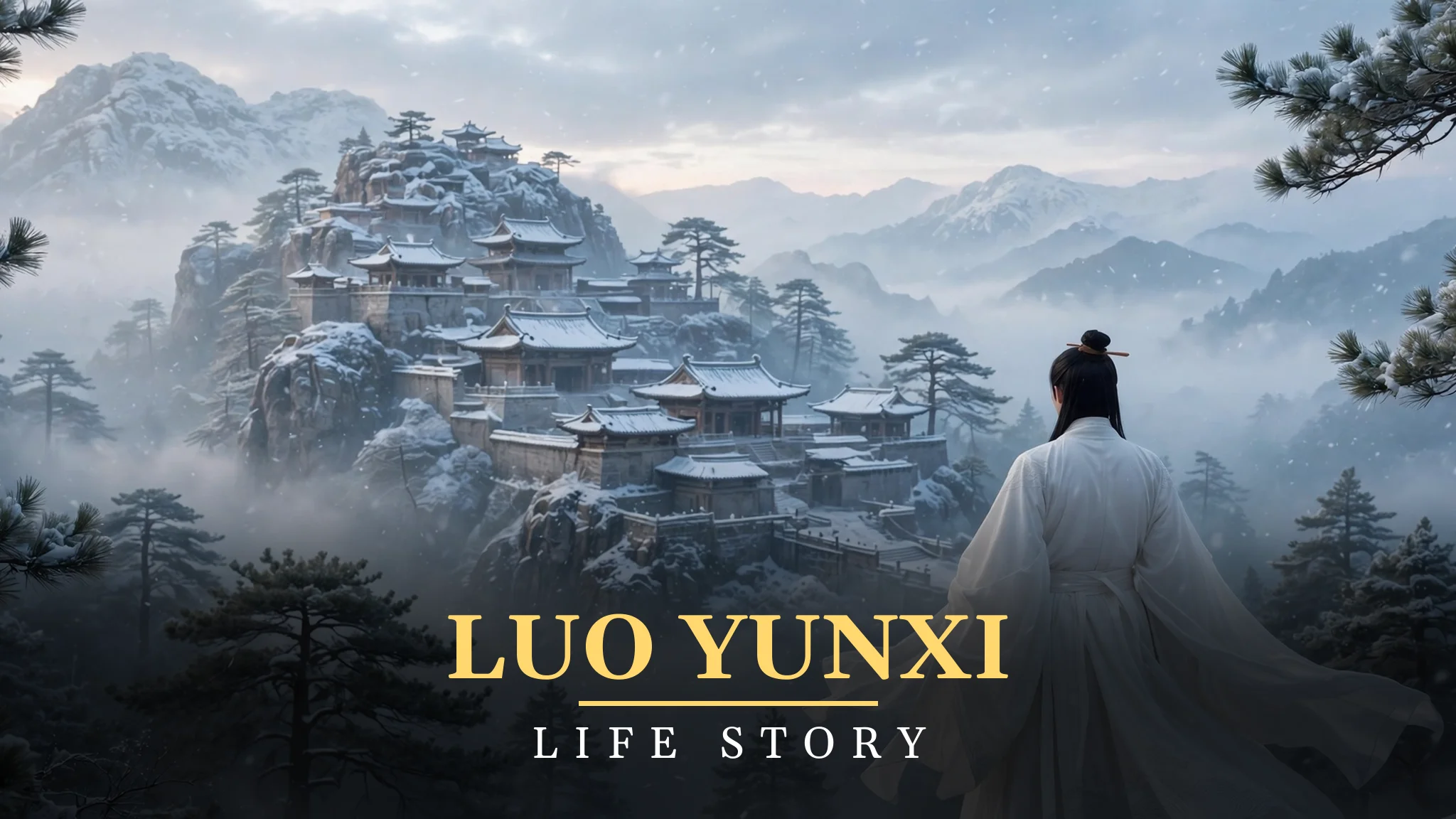
In the end, I see Luo Yunxi as a man in a white robe, standing in the snow, looking at a temple on a mountain, calm, graceful, and alone. That image stays with me, because it is a picture of his whole career. He stands alone, he stands straight, he stands in a cold and beautiful place, and he does not rush. He waits, he watches, and he moves when the time is right. I hope his next moves take him to new places, to new kinds of roles, to new challenges, because he has earned the right to choose, and because I want to see what a dancer, a teacher, and an actor can do when he is fully free. He has already shown that grace can be strong. Now I want to see what else grace can be.
I keep thinking about Chengdu, his home city, a city known for its slow life, its tea houses, its love of good food and good company, and I think about how a dancer from a slow city learned to work fast, to practise every day, to be disciplined in a place that values relaxation. That contrast, between a slow city and a demanding art, is interesting, because it shows that a person can carry two truths at once: you can love a slow life, and you can work hard. Luo Yunxi does both. He is calm, he is relaxed, he is graceful, and he is also disciplined, hardworking, and serious about his craft. That combination is rare, and it is part of why his performances feel both relaxed and precise, both natural and practised, like a dancer who has rehearsed a hundred times and then performs as if it were the first time.
Runyu stays with me for another reason. He is a god who loves, and who is not loved in return in the way he hopes, and that is a painful story that many people know in their own lives. We have all loved someone who did not love us back in the same way. We have all watched a person we care about choose someone else. Luo Yunxi played that pain without shouting, without crying loudly, without asking for pity. He played it with a quiet sadness that made me feel it more deeply. That is the power of restraint. A loud cry can be forgotten. A quiet look can stay with you for days, and Runyu’s quiet look stayed with me, long after the drama ended, because it felt true, because it felt like a real person’s pain, not only a god’s pain.
Till the End of the Moon deserves more thought, because Tantai Jin is a demon, a villain, a man who is cruel because he was hurt, and who must learn to love. Playing a villain is hard, because the audience must hate him and love him at the same time, and Luo Yunxi played him with an intensity that made me understand him, even when I did not approve of him. That understanding is the mark of a good actor. A bad actor makes a villain simple, a person to hate and forget. A good actor makes a villain human, a person to understand, even when you disagree with him. Luo Yunxi made Tantai Jin human, even when he was at his cruelest, and that humanity is what made the drama work, and what made viewers talk about it long after it ended.
Love Is Sweet is another role that stays with me, because Yuan Shuai is a modern businessman, a man who is confident in his work and shy in love, and Luo Yunxi played him with a warmth that surprised me, because I had only seen him as a sad god. He showed me that he can be funny, that he can be warm, that he can play a contemporary man with the same grace he brings to historical roles. That range is impressive, and it makes me want to see more modern roles from him, more stories set in the present, more characters who wear a suit instead of a robe, who work in an office instead of a palace, who love in a world that viewers recognise as their own.
One more lesson, about health. Ballet asks a lot from the body, and years of dancing can leave a person with sore joints, with tired muscles, with a body that needs careful rest. Luo Yunxi’s fans often worry about his health, especially when he appears thin in costume dramas, and that worry is a sign of love, but it is also a reminder that a graceful performance is not effortless. It is the result of years of training, and it asks a lot from the body. I hope he takes care of himself, that he rests, that he eats well, that he listens to his body, because a career is long, and a body that is cared for will last longer than a body that is pushed without rest. Grace is not only a skill. It is also a form of care, care for the body, care for the work, care for the audience, and Luo Yunxi shows that care in every performance. One more thought stays with me, about the way he handles being a dancer who became an actor. Ballet teaches a person to stand straight, to turn without falling, to smile when the feet ache, to practise the same step a hundred times until it looks easy. Luo Yunxi learned those lessons, and he brought them to acting, in the way he moves in a costume drama, in the way he turns, in the way he holds a sleeve, in the way he stands still and lets the camera come to him. That is a gift, because many actors move well, but few move like dancers, with a line, a balance, a grace that is learned, not born. I think about Runyu, a god who moves gracefully, who speaks softly, who carries himself with dignity, and I see a dancer. I think about Tantai Jin, a demon who is angry and hurt, and I see a dancer who has learned to be angry, to be cruel, to be human, and that change, from grace to anger, is a remarkable thing, because it shows that a dancer can learn to act, and an actor can learn to be more than graceful, can learn to be strong, sad, and true.
There is also a lesson in the way he taught ballet before he became an actor. Teaching is a different skill from performing. It asks a person to watch, to explain, to be patient, to help someone else improve. Luo Yunxi learned to do that, and it gave him a calm and a clarity that many actors do not have. A teacher learns to see the small mistake, to name it kindly, to help the student fix it. An actor must do the same for himself, watch his own performance, see the small mistake, name it honestly, fix it. He does that, in every new role, with a patience that is rare, and that patience is why his performances feel steady, even when the story is sad, even when the character is in pain, even when the world around him is dark and cold, like snow on a mountain temple.
I want to talk about Runyu, because that role is the reason millions of people know Luo Yunxi, and it is a strange kind of fame. Runyu is not a hero. He is a god who is lonely, who is jealous, who wants love and does not know how to ask for it, and who makes bad choices because of that loneliness. Audiences loved him anyway, and some loved him more than the hero, because his pain felt real. Luo Yunxi played him with a quiet sadness, with beautiful manners, with a face that could show hurt without shouting. I think that is a special skill. Playing a villain who is also a victim is hard, and he made it look easy. That role proved that a supporting actor can steal a whole drama.
Then came Till the End of the Moon, and it asked even more of him. He played a devil king with three lives, a dark and tragic figure who destroys and loves in the same story, and the drama was long, heavy, and full of costumes, wire work, and long hours. Playing a dark hero is a risk, because the audience must fear you and pity you at the same time, and Luo Yunxi carried that balance for many episodes. I admire that he took the risk. Many actors who become famous as a gentle, graceful figure would stay in safe, gentle roles forever. He chose a darker path, and it made his career bigger, not smaller.
His ballet background is the part of his story that explains everything else. Before he was an actor, he was a ballet dancer, and he taught ballet, and he learned what a dancer’s body must do. Ballet teaches a person to stand straight when the body wants to bend, to move smoothly, to hold the hands in a beautiful line, to walk as if the floor is a stage. You can see all of that in his costume dramas. When he wears long robes, he does not trip or rush. He moves like water, and the camera loves it. That grace is not an accident. It is the result of years of practice, of pain, of early mornings, of a teacher’s corrections. Grace is not a gift. It is a practice, and he practised it for years.
I also think about his health, and I want to say it with care. Ballet asks a lot from the body, and years of dancing can leave a person with sore joints, with tired muscles, with a body that needs careful rest. His fans often worry about his health, especially when he appears thin in costume dramas, and that worry is a sign of love, but it is also a reminder that a graceful performance is not effortless. It is the result of hard work, and sometimes of pain that the audience never sees. I hope he takes care of himself, eats well, rests well, and does not let the pressure to stay thin hurt his health. A career is long, and a body must last as long as the career.
In Love Is Sweet, he showed a modern side, a man in a suit instead of robes, a man in an office instead of a palace, and that matters too. An actor who can only play ancient gods will be forgotten when the fashion changes. Luo Yunxi showed that he can play a modern man as well, with humour and warmth. In the end, what I take from him is that beauty in acting is not only about the face. It is about movement, about patience, about the years of dance that taught him how to stand, how to walk, and how to make a simple gesture feel like poetry. That is a lesson for any young person who wants to perform. Learn the craft first, practise it every day, and the beauty will follow the work, not the other way around.
Frequently Asked Questions
When was Luo Yunxi born and what did he study?
Luo Yunxi was born on 28 July 1988 in Chengdu, Sichuan, China. He studied ballet at the Shanghai Theatre Academy and later worked as a ballet instructor before becoming an actor.
What role made Luo Yunxi famous?
His role as Runyu, the Night God, in Ashes of Love in 2018 made him famous. Viewers loved his quiet, graceful, and sad performance as a god who loves without being loved in return.
Who did Luo Yunxi play in Till the End of the Moon?
In Till the End of the Moon from 2023, he played Tantai Jin, a demon king who must learn what love is. The role showed a darker and more intense side of his acting.
Was Luo Yunxi a dancer before he was an actor?
Yes, he trained in ballet and worked as a ballet teacher. His dance training shapes the graceful way he moves in costume dramas.
What is Love Is Sweet about?
Love Is Sweet, from 2020, is a modern romance in which Luo Yunxi plays Yuan Shuai, a successful businessman who hides his feelings and falls in love with a woman he has known since childhood.
What are Luo Yunxi’s best-known dramas?
Ashes of Love, Love Is Sweet, and Till the End of the Moon are his best-known dramas, each showing a different side of his acting, from a sad god to a modern businessman to a demon king.


