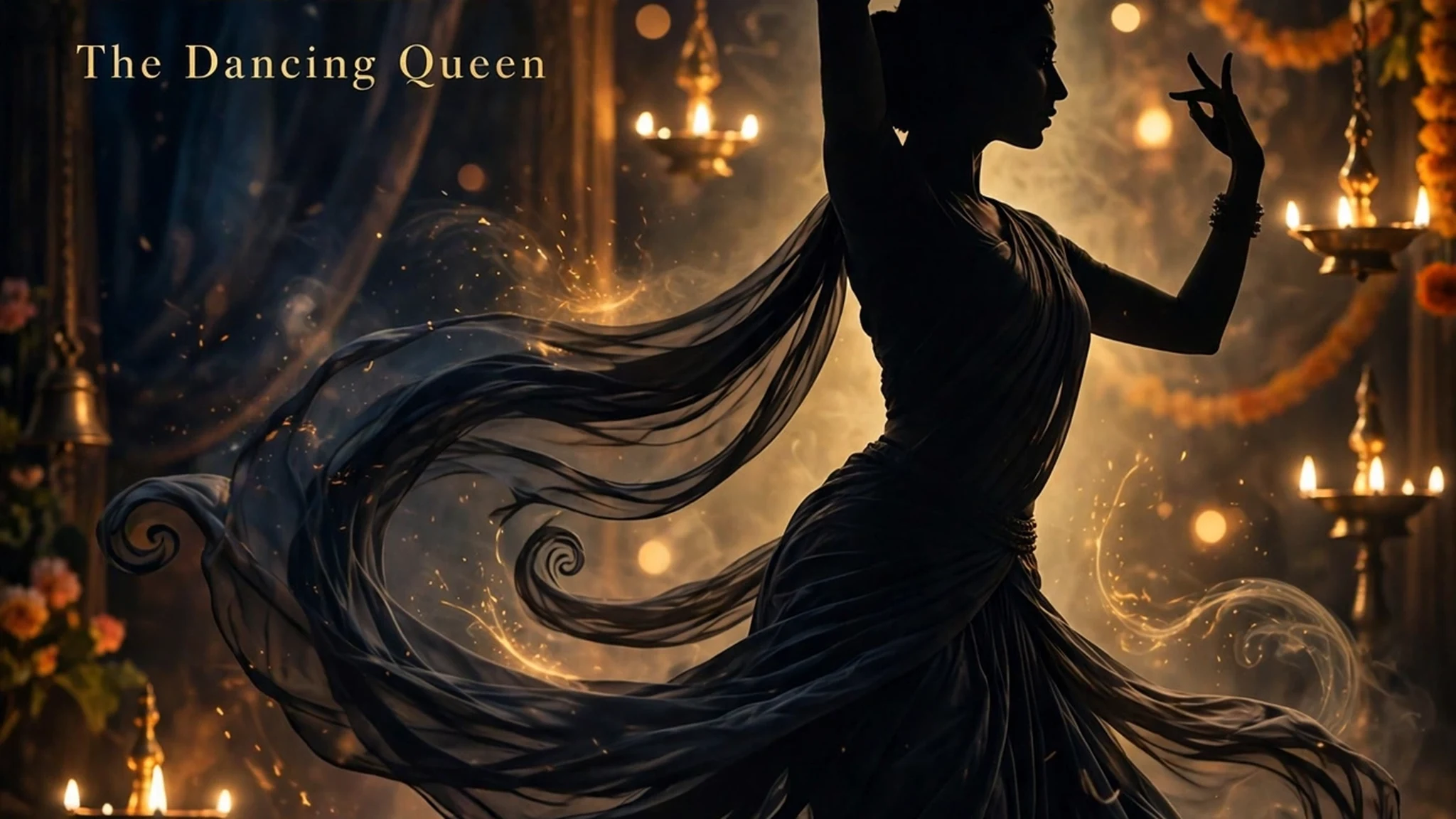
Madhuri Dixit: The Life Story Behind Bollywood's Dancing Queen
In this post
- A Marathi Childhood and Kathak from Age Three
- School, Microbiology, and the First Film Offer
- Abodh and the Struggling Years
- Tezaab, Ek Do Teen, and the Dancing Star Is Born
- Dil, Beta, and the Reign of the Nineties
- Hum Aapke Hain Koun and the Biggest Hit
- Devdas, Marriage, and a New Chapter in America
- The Dancing Queen Today and Her Legacy
- Dance With Madhuri and Teaching a New Generation
- The Judge, the Mentor, and the Warmth
- My Take:
Madhuri Dixit was born in Mumbai on 15 May 1967, into a Marathi family, and she grew up in a home where dance and culture were a part of daily life. Her father, Shankar Dixit, worked in the railways, and her mother, Snehlata Dixit, was a homemaker who loved music and dance. Madhuri was the youngest of four children, and she began to learn Kathak, the classical Indian dance form, when she was three years old. She was a shy, quiet girl who found her voice through dance, and that early training would become the foundation of her career as Bollywood’s dancing queen.
She went to Divine Child High School in Mumbai, and she was a good student who also loved to dance. She trained in Kathak for years, performing at cultural events and winning awards, and she dreamed of becoming a dancer. She also studied microbiology at Sathaye College, because her family wanted her to have an education, and she was a serious student. But films intervened, and she was offered a role while she was still in college. She took it, and she became an actress, but she never gave up dance, and dance remained the heart of her performances throughout her career.
Her debut came in 1984 with Abodh, a film that did not succeed, but it gave her a start. Over the next two decades, she became one of the biggest stars in Bollywood, with hits like Tezaab, Dil, Beta, Hum Aapke Hain Koun..!, and Devdas. She became known as the dancing queen, the actress with the million-dollar smile, and one of the finest performers in Indian cinema. Her story is about a shy girl from Mumbai who learned Kathak at three, who became a star through dance, and who is still dancing, still acting, and still inspiring millions.
A Marathi Childhood and Kathak from Age Three
Madhuri grew up in a Marathi-speaking family in Mumbai, and her childhood was shaped by a love of culture and tradition. Her father worked for the railways, and her mother was a homemaker who encouraged her children to learn music and dance. Madhuri was the youngest, and she was a shy child who did not speak much, but she loved to dance. Her mother noticed that love, and she enrolled her in Kathak classes when she was just three years old. That early start gave her a foundation in dance that few actresses possess, and it is the reason her dancing looks so effortless and so graceful.
She trained in Kathak for many years, learning the intricate footwork, the expressions, and the storytelling that the dance form requires. Kathak is not just movement; it is a way of telling a story through dance, and Madhuri learned to tell stories with her body from a very young age. She performed at cultural events, she won competitions, and she became known as a talented young dancer. That training is visible in every dance number she performs in films, where her movements are precise, her expressions are perfect, and her grace is unmatched.
Her family supported her dance, but they also wanted her to study, and she did, going to Divine Child High School and then to Sathaye College, where she studied microbiology. She was a good student, but her heart was in dance, and she spent her free time practising and performing. She has spoken about how dance gave her confidence, because she was shy off stage, but on stage she was free. That transformation, from a shy girl to a confident dancer, is a big part of her story, and it is a reminder that art can give a voice to people who struggle to speak.
School, Microbiology, and the First Film Offer
At Divine Child High School, Madhuri was known as a quiet, studious girl who loved to dance. She was not the loudest student, but she was focused, and she knew what she wanted. She took part in school cultural events, she performed Kathak, and she was admired for her talent. She was also a good student, and she balanced her studies with her dance training, which is not easy, because Kathak requires hours of practice every day. That discipline, learned as a child, stayed with her, and it is visible in the way she approaches her work today.
She went to Sathaye College to study microbiology, a subject that seems far from films, but her family believed that education was important, and Madhuri agreed. She was a serious student, and she did well in her studies, but she was also thinking about dance and about films. While she was in college, she was offered a role in the film Abodh, and she took it, because it was an opportunity to act, and she wanted to try. It was a small film, and it did not succeed, but it gave her a start, and it introduced her to the world of cinema.
Her debut in Abodh was not a success, and she faced years of struggle after it, doing small roles in films that did not work. She has spoken about those years with honesty, saying that she was not sure if she would succeed, but she kept going, because she loved acting and she loved dance. That persistence is a quality that many young actors lack, and it is a big reason she eventually succeeded. She did not give up after her first failure; she kept working, and she waited for the film that would change her life. That film came in 1988, and it was a turning point.
Abodh and the Struggling Years
Abodh, released in 1984, was Madhuri’s debut, and it was a film about a young village girl, but it did not succeed at the box office. She was seventeen years old, and she was new to films, and she had a lot to learn. She did small roles in films like Awara Baap, Swati, and Manav Hatya, which were not successful, and she began to wonder if she would ever make it. Those years were difficult, and she has spoken about how she considered giving up, but she did not, because she loved acting and she believed in herself. That belief is a big part of why she succeeded.
What made those struggling years important was that they taught her resilience. She learned that failure is a part of any career, and that the only way to succeed is to keep working, even when the work is not glamorous. She took dance lessons, she worked on her acting, and she waited for her chance. She was not a star; she was a struggling actress, and she treated every film as a lesson, even the ones that failed. That attitude is rare, and it is a big reason she was ready when her breakthrough came.
The breakthrough came in 1988 with Tezaab, a film that would change her life completely. But before Tezaab, she had spent four years doing small, unsuccessful films, and those four years were a school. She learned about the industry, she learned about herself, and she learned that success does not come quickly. When Tezaab arrived, she was ready for it, and she made the most of it. The struggling years were not wasted; they were a preparation, and they made her success all the more meaningful.
Tezaab, Ek Do Teen, and the Dancing Star Is Born
Tezaab, released in 1988, was an action drama starring Anil Kapoor, and Madhuri played Mohini, a young woman who dances in a bar. The film’s song, Ek Do Teen, became a sensation, and Madhuri’s dancing in it made her a star overnight. She danced with an energy and a grace that audiences had never seen, and the song became one of the most famous in Indian cinema. The film was a huge commercial success, and Madhuri became known as the dancing queen, a title that has stayed with her for decades. It was a breakthrough that changed her life, and it was built on years of Kathak training.
What made Ek Do Teen special was that it was not just a dance number; it was a performance that showed Madhuri’s training, her expressions, and her ability to tell a story through dance. She did not just move; she acted through dance, and that acting is what made the song so memorable. Audiences loved her, and they wanted to see more of her. She followed Tezaab with films like Ram Lakhan, Parinda, and Tridev, which were all commercial successes, and she became one of the top actresses in Bollywood. The shy girl from Mumbai had become a star, and she had done it through dance.
Tezaab also established her pairing with Anil Kapoor, which became one of the most popular in Bollywood. They worked together in many films, and their chemistry was loved by audiences. Madhuri was no longer a struggling actress; she was a star, and her name on a poster was enough to draw audiences to theatres. The film’s success gave her a strong foundation, and she used it wisely, choosing her next films with care and working with directors who could help her grow as an actress, not just as a dancer.
Dil, Beta, and the Reign of the Nineties
Dil, released in 1990, was a romantic drama opposite Aamir Khan, and it became one of the biggest hits of Madhuri’s career. She played Madhu, a young woman from a wealthy family who falls in love with a poor boy, and her performance was charming, emotional, and completely believable. The film won her the Filmfare Award for Best Actress, and it established her as the top actress in Bollywood. She followed it with Beta in 1992, in which she played a daughter-in-law who stands up to her cruel mother-in-law, and her performance won her another Filmfare Award. These two films showed that she was not just a dancer; she was a serious actress who could carry a film.
Beta was particularly significant, because it was a film about a woman who fights for her dignity, and Madhuri played that fight with a strength that resonated with audiences, especially women. Her dance number in the film, Dhak Dhak Karne Laga, became iconic, and she became known as the Dhak Dhak girl, a nickname that referred to her heartbeat-inducing dancing. The film was a huge success, and it cemented her position as the number one actress in India. She was at the peak of her career, and she was unstoppable.
The 1990s were her decade, and she ruled Bollywood with films like Khalnayak, Hum Aapke Hain Koun..!, Raja, and Dil To Pagal Hai. She worked with all the top stars, from Anil Kapoor to Shah Rukh Khan to Salman Khan, and she was the first choice for every major film. Her smile, her dancing, and her acting made her the most loved actress in India, and her stardom was unmatched. She was not just a star; she was a phenomenon, and her films were events that the whole country waited for.
Hum Aapke Hain Koun and the Biggest Hit
Hum Aapke Hain Koun..!, released in 1994, was a family drama directed by Sooraj Barjatya, and it became one of the biggest hits in Indian cinema history. Madhuri played Nisha, a young woman who falls in love with her sister’s brother-in-law, and her performance was joyful, warm, and completely natural. The film was a celebration of Indian family values, and it resonated with audiences across the country. It ran in theatres for years, and it made Madhuri a household name. Her dance numbers in the film, especially Didi Tera Devar Deewana, became iconic, and they are still played at weddings today.
What made the film special was its warmth. It was not a film about conflict; it was a film about love, family, and tradition, and Madhuri was at its centre, bringing a lightness and a joy that made the film feel like a celebration. She was not just acting; she was embodying the spirit of the film, and that embodiment is why audiences loved her in it. The film’s success was enormous, and it is still one of the highest-grossing Indian films of all time, adjusted for inflation. It is a landmark in her career, and it is a film that defines an era of Bollywood.
She followed it with Raja, a romantic drama that was also a hit, and with Dil To Pagal Hai, a musical romance with Shah Rukh Khan, in which she played a dancer. Her performance in Dil To Pagal Hai won her another Filmfare Award, and the film is now regarded as a classic. She was at the top of her career, and she was the most successful actress in India. The 1990s belonged to Madhuri Dixit, and her films from that decade are still watched and loved today, by audiences who grew up with them and by new generations who discover them.
Devdas, Marriage, and a New Chapter in America
Devdas, released in 2002, was directed by Sanjay Leela Bhansali, and Madhuri played Chandramukhi, a courtesan who loves Devdas, played by Shah Rukh Khan. Her performance was graceful, emotional, and unforgettable, and it won her the Filmfare Award for Best Supporting Actress. The film was a visual masterpiece, and Madhuri’s dance numbers in it, especially Kaahe Chhed Mohe, are among the finest in Indian cinema. She was no longer just a star; she was a legend, and her work in Devdas is a big part of why she is regarded as one of the greatest actresses in India.
In 1999, she married Dr. Shriram Nene, a cardiovascular surgeon based in Denver, Colorado, and she moved to the United States after her marriage. It was a surprising decision, because she was at the peak of her career, but she chose family over fame, and she lived in Denver for many years, raising her two sons, Arin and Ryan. She took a break from films, and she focused on her family, which is a choice that many actresses would not have made. That choice shows a woman who knows what matters, and who is willing to prioritise her family over her career.
She returned to films in 2007 with Aaja Nachle, a film about a dancer who returns to India, and her comeback was celebrated. She has since worked in films like Dedh Ishqiya, Gulab Gang, and Bhool Bhulaiyaa 3, and she has also worked as a judge on television dance shows, where she shares her expertise with young dancers. Her story is not just about stardom; it is about a woman who balanced career and family, and who did so with grace and with dignity. She is still dancing, still acting, and still inspiring millions.
The Dancing Queen Today and Her Legacy
Today, Madhuri Dixit is regarded as one of the greatest actresses and dancers in Indian cinema, and her influence extends beyond films. She is a judge on dance reality shows, where she mentors young dancers, and she is known for her warmth and her encouragement. She has also launched an online dance academy, Dance With Madhuri, which teaches Kathak and other dance forms to students around the world. That academy is a way of giving back, and it shows that she wants to share her love of dance with a new generation. Her legacy is not just her films; it is the dancers she inspires.
Her smile is legendary, and it is often called the million-dollar smile, because it lights up a room. But her legacy is more than a smile; it is her dancing, her acting, and her grace. She showed that an actress could be both a great dancer and a great performer, and that those two skills could exist in the same person. She set a standard for dancing in Bollywood that has never been matched, and young actresses still study her dance numbers when they want to learn how to move. Her influence is visible in every dance number in Bollywood today.
Her story is still being written, and the next chapters are likely to be as interesting as the ones that came before, because she is an actress who is still working, still dancing, and still learning. She is a legend, but she is also a student, and that combination is what makes her so inspiring. She is the dancing queen, and she will always be, because her dancing is timeless, and her grace is unforgettable. Her legacy is secure, and it will be remembered for generations.
Dance With Madhuri and Teaching a New Generation
Madhuri launched Dance With Madhuri, an online dance academy, to teach Kathak and other dance forms to students around the world. It was a way of sharing her love of dance, and of making classical dance accessible to people who might never have had the chance to learn it otherwise. She teaches through videos, she shares her knowledge, and she encourages her students to practise. That academy is a significant part of her legacy, because it ensures that her knowledge of dance will live on, even after she stops performing. She is not just a dancer; she is a teacher, and teaching is a generous act.
What makes the academy special is that it is not just about steps; it is about the philosophy of dance, about expression, and about storytelling. Madhuri teaches her students that dance is not just movement; it is a way of communicating, and that communication is what makes a dancer great. She shares the lessons she learned from her own teachers, and she passes them on to a new generation. That passing on is a beautiful tradition, and it is a big part of why classical dance survives. Madhuri is a link in a chain that goes back centuries, and she is strengthening that chain by teaching.
Her work as a teacher also shows a different side of her, because she is patient, encouraging, and warm with her students. She does not criticise harshly; she guides, and that guidance is a gift. Young dancers who learn from her often talk about how kind she is, and how she makes them feel confident. That kindness is a part of who she is, and it is visible in her teaching, just as it is visible in her performances. She is a star who gives back, and that giving is a significant part of her story.
The Judge, the Mentor, and the Warmth
Madhuri has worked as a judge on television dance shows, including Jhalak Dikhhla Jaa, where she mentors young dancers and shares her expertise. As a judge, she is known for being warm, encouraging, and honest, and she gives feedback that is helpful rather than harsh. She understands that young dancers are nervous, and she treats them with kindness. That warmth is a big part of why audiences love watching her as a judge, because she is not just critiquing; she is teaching, and her teaching is a joy to watch.
What makes her judging special is her knowledge. She has trained in Kathak for decades, and she can see details that other judges might miss. She notices footwork, expressions, and the storytelling in a dance, and she comments on those details with precision. That expertise is rare, and it is why her opinions are respected. She is not just a celebrity judge; she is a master of her craft, and her judgements carry weight because they come from a lifetime of practice.
Her work on television has also introduced her to a new generation of viewers, including young people who may not have seen her films. They know her as a judge, as a mentor, and as a warm, encouraging presence, and that introduction has made her relevant to a new audience. She is not just a star of the past; she is a star of the present, and her television work is a big part of why she remains so loved. She has adapted to a changing industry, and she has done so with grace and with enthusiasm.
My Take:
What I admire most about Madhuri Dixit is her dancing, because it is not just movement; it is storytelling. She learned Kathak from the age of three, and that training gave her a grace that no other actress has matched. When she dances, she is not just performing steps; she is telling a story with her body, and that story is about joy, love, and freedom. Her dance numbers are not just songs; they are moments of art, and they are why she is called the dancing queen. That title is not just a nickname; it is a recognition of a talent that is rare and precious.
I also think Hum Aapke Hain Koun is her most important film, because it became one of the biggest hits in Indian cinema, and it made her a household name. She played Nisha with a warmth and a joy that made the film feel like a celebration, and audiences loved her for it. The film is still watched at weddings, and her songs from it are still played. That is a legacy that few films achieve, and it is a testament to Madhuri’s ability to connect with audiences across generations. She did not just act in a hit; she became a part of India’s cultural life.
Her decision to marry and move to America is another part of the story that I respect, because she was at the peak of her career, and she chose family over fame. That takes courage, because most stars would not give up stardom for a quiet life in Denver. She did, and she raised her sons, and she lived a normal life, away from the cameras. That choice shows a woman who knows what matters, and who is willing to prioritise her family. It is a reminder that success is not just about career; it is also about the life you build outside of work.
I think about her shy childhood too, because she was a quiet girl who found her voice through dance. She did not speak much, but she danced, and dance became her language. That is a beautiful story, because it shows that there are many ways to express yourself, and that you do not have to be loud to be heard. Madhuri was quiet, but her dancing spoke volumes, and audiences heard it. If you are a shy person, her story says that you can find your voice through art, and that art can speak louder than words.
Her smile is legendary, and it is often called the million-dollar smile, but I think her smile is more than just a physical feature; it is a reflection of her joy. She smiles when she dances, she smiles when she acts, and that smile is genuine. It is not a performance; it is a part of who she is, and audiences can feel that genuineness. In a world where many stars smile for the camera, Madhuri’s smile feels real, and that realness is a big part of why she is so loved.
Devdas is another film that I think about, because she played Chandramukhi with a grace and a dignity that was unforgettable. She was a courtesan, but she played her as a woman with depth and with love, not as a stereotype. That performance showed that she could take a difficult role and make it human, and that is a sign of a great actress. Her dance in Kaahe Chhed Mohe is one of the finest in Indian cinema, and it is a moment that people still talk about when they discuss her talent.
I also respect the way she has handled her comeback, because she returned to films after many years in America, and she did so with grace. She did not try to be the same star she was in the 1990s; she chose roles that suited her age and her experience, and she did them well. That is a mature way to handle a career, and it is a lesson for anyone: you do not have to be what you were; you can be what you are now, and that is enough. Madhuri understood that, and her comeback is a success because of it.
What I would tell a young dancer reading her story is to notice her training, not just her talent. She learned Kathak from the age of three, and she practised for hours every day. That training is why her dancing looks effortless, because effortlessness is the result of hard work. If you want to dance like Madhuri, do not just watch her; practise, as she did, for years, and your dancing will become effortless too. That is the real lesson of her story: talent is important, but training is what turns talent into art.
Her work as a judge on dance shows is also worth thinking about, because she mentors young dancers, and she does so with warmth and with encouragement. She does not criticise harshly; she guides, and that guidance is a gift to young performers who are trying to learn. She is using her experience to help others, and that is a generous use of fame. She is not just a star; she is a teacher, and her teaching is a big part of her legacy.
I think about her online dance academy too, because it shows a woman who wants to share her love of dance with the world. She launched Dance With Madhuri, and she teaches Kathak to students who might never have had access to it otherwise. That is a beautiful way to give back, and it shows that she cares about more than herself. She wants dance to live on, and she is making sure that it does, by teaching a new generation. That is a legacy that will last long after her films are watched.
Finally, I think Madhuri Dixit is a legend, and that word is not used lightly. She is a legend because she changed Bollywood, because she set a standard for dancing that has never been matched, and because she did it with grace and with humility. She is not just a star; she is an icon, and icons are remembered not just for what they did, but for how they did it. Madhuri did it with a smile, with a dance, and with a heart that was always open to her audience.
One more thing I notice is how she talks about her family, because she talks about her husband and her sons with love and with pride. She is a devoted wife and mother, and she balances her career with her family life. That balance is hard to achieve, especially for a star, but she does it with grace. It is a reminder that success is not just about work; it is also about the people you love, and the time you spend with them is the most valuable thing you have.
Her role in Beta is also worth remembering, because she played a woman who stands up to her mother-in-law, and she did it with a strength that resonated with women across India. That performance was not just entertainment; it was a statement about women’s dignity, and it is a big part of why the film is still loved. She played a character who fights for herself, and that fight is inspiring to anyone who has ever felt powerless.
So my honest view is that Madhuri Dixit is not just the dancing queen, and she is not just a beautiful star. She is one of the greatest actresses and dancers in Indian cinema, who earned her place through years of training, hard work, and a refusal to give up after early failures. Her films will be watched for years, her dance numbers will be copied for years, and her story will be told as an example of grace, talent, and perseverance. But the deepest lesson is simpler: practise every day, be patient, and let your art speak. That is what she did, and that is why she is still the dancing queen.
And I think the best part of her story is still ahead, because she is still dancing, still acting, and still teaching. She has the experience, she has the talent, and she has the freedom to choose. The work she does in the next decade will define her legacy, and if her past is any guide, that work will be graceful, interesting, and worth watching.
One last thought: her journey from a shy girl in Mumbai to the dancing queen of Bollywood is a reminder that quiet people can achieve great things. She did not shout about her ambitions; she danced, and her dancing spoke for her. If you are a quiet person, her story says that you do not have to be loud to succeed; you can let your work speak, and your work will be heard, as Madhuri’s was, by millions.
I also want to say that her decision to prioritise family is a gift to working mothers everywhere. She showed that you can be a star and a mother, and that you can choose family without losing yourself. That choice is brave, and it is a reason why she is admired not just as an actress, but as a woman who knows what matters.
Finally, my view is that Madhuri’s legacy will be defined by her dancing. She set a standard that has never been matched, and her dance numbers are still studied by young performers. That dancing is timeless, and it will be remembered long after her films are watched. She is the dancing queen, and that title is hers forever.
I also think her story shows the value of classical training, because she learned Kathak, a traditional dance form, and that training gave her a foundation that no film dance class could provide. Classical art is not old-fashioned; it is a source of strength, and Madhuri’s career is proof of that. If you learn a classical art, you will carry it with you for life, and it will make you better at everything else you do.
I keep thinking about her dance academy, because it shows a star who wants to give back. She could have kept her knowledge to herself, but she chose to teach, and that teaching will help thousands of students around the world. That generosity is a big part of who she is, and it is a reason why she is so loved. She is not just a performer; she is a teacher, and teaching is a legacy that lasts longer than any film.
Her work as a judge is another part of the story that I admire, because she mentors young dancers with warmth and with honesty. She does not criticise harshly; she guides, and that guidance is a gift. Young performers need encouragement, and Madhuri gives it freely. That kindness is a quality that is rare in a competitive industry, and it is a big part of why she is so respected.
I also think about her smile, because it is legendary, but it is also genuine. She smiles when she dances, she smiles when she judges, and that smile is not a performance; it is a part of who she is. In a world where many smiles are fake, hers feels real, and that realness is why audiences love her. She is a reminder that joy is contagious, and that a genuine smile can light up a room.
Finally, I think her story is about the power of classical training. She learned Kathak, a traditional dance form, and that training gave her a foundation that has lasted her whole career. Classical art is not old-fashioned; it is a source of strength, and Madhuri’s career is proof of that. If you learn a classical art, you will carry it with you for life, and it will make you better at everything else you do.
One more reflection: her journey shows that a long career is built on love, not on ambition alone. She loves dance, she loves acting, and that love is what has kept her going for four decades. Ambition fades, but love lasts, and Madhuri’s love for her art is what makes her a legend. If you love what you do, you will do it well for a long time, and that is the real secret of her success.
Frequently Asked Questions
When was Madhuri Dixit born?
Madhuri Dixit was born on 15 May 1967 in Mumbai, India. She comes from a Marathi family, and she began learning Kathak dance when she was three years old.
What was Madhuri Dixit’s debut film?
Her debut was Abodh in 1984, which did not succeed. Her breakthrough came with Tezaab in 1988, and the song Ek Do Teen made her a star.
Why is Madhuri Dixit called the dancing queen?
She is called the dancing queen because of her classical Kathak training and her iconic dance numbers, including Ek Do Teen, Dhak Dhak Karne Laga, and Didi Tera Devar Deewana.
What is Madhuri Dixit’s biggest film?
Hum Aapke Hain Koun..! in 1994 is one of the biggest hits in Indian cinema history. She played Nisha, and the film ran in theatres for years.
Is Madhuri Dixit married?
Yes, Madhuri Dixit married Dr. Shriram Nene, a cardiovascular surgeon, in 1999. They lived in Denver, USA, for many years, and they have two sons, Arin and Ryan.
Did Madhuri Dixit study microbiology?
Yes, she studied microbiology at Sathaye College in Mumbai. She was a good student, and she balanced her studies with her Kathak dance training.


