Madredeus: The Life Story Behind Portugal's Dreamy Sound
In this post
- A Meeting of Musicians in Lisbon
- The First Albums and a Sound Like No Other
- Lisbon Story, Ainda, and the World Listens
- Teresa Salgueiro and the Voice of Madredeus
- Changes, New Voices, and a Band That Goes On
- The Legacy of a Dreamy Sound
- The Sound Itself: Voice, Cello, and Guitar
- Madredeus on Film and on the World Stage
- My Take:
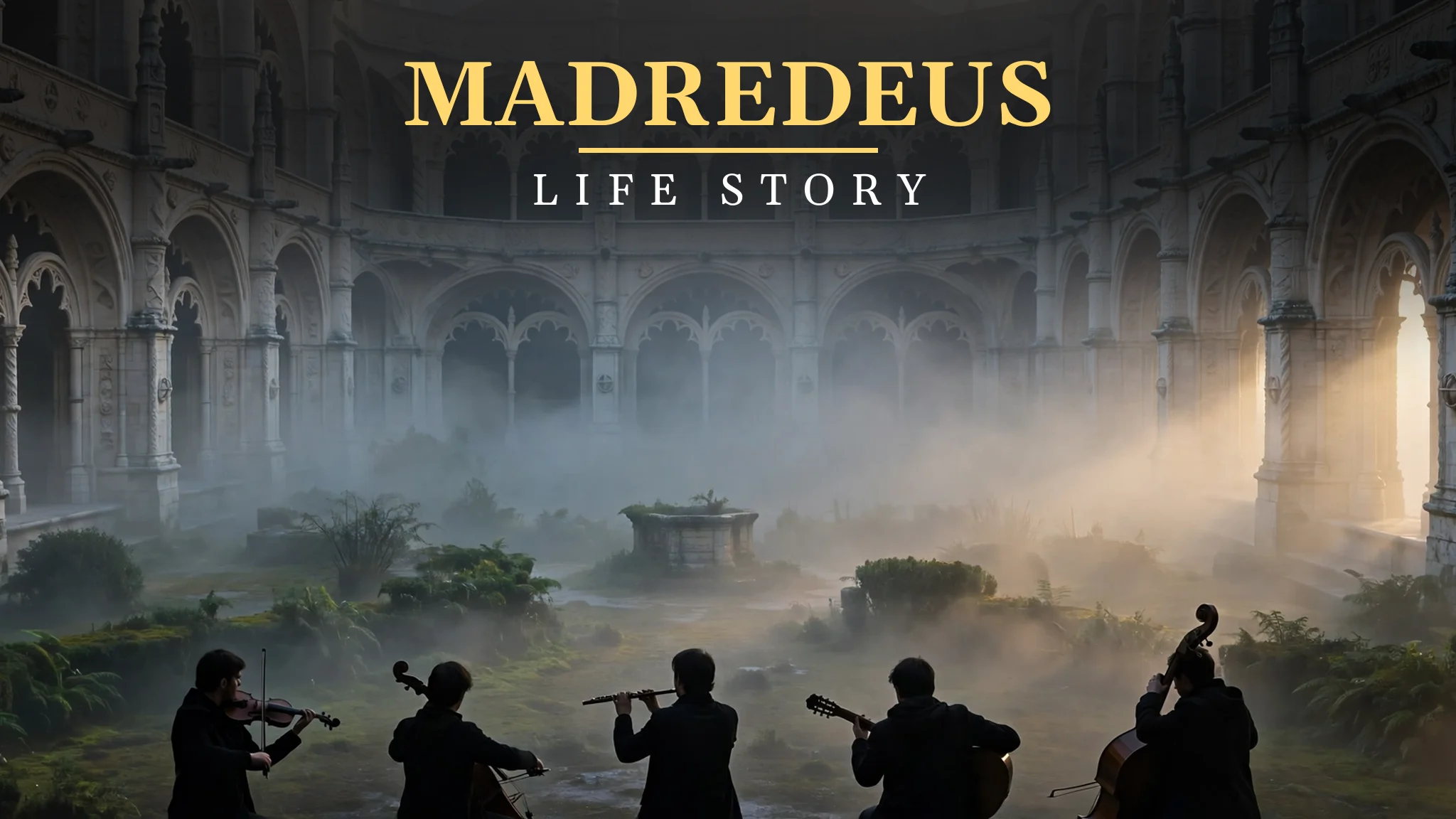
Madredeus made music that sounded like a dream. It was quiet, it was gentle, and it seemed to come from another time. There were no loud guitars, no shouting, and no rush. Instead there was a clear female voice, a guitar, a cello, and melodies that floated like mist over the streets of Lisbon. People who heard Madredeus for the first time often stopped what they were doing and listened, because the sound was so different from anything else on the radio. The band became one of Portugal’s most loved musical exports, and their music travelled around the world, carried by a film, by concerts, and by the simple beauty of the songs themselves.
The band was formed in Lisbon in 1985, when a group of musicians came together with a shared idea: to make music that mixed the old sounds of Portugal with something new. The best-known singer of the band was Teresa Salgueiro, whose voice became the sound of Madredeus for more than twenty years. The other members, including Pedro Ayres Magalhães, Rodrigo Leão, Francisco Ribeiro, and Gabriel Gomes, brought classical training, folk roots, and a love of experimentation. Together they made a sound that was hard to describe, and that was part of its charm. It was not fado, it was not pop, and it was not classical music. It was Madredeus.
Their most famous period came in the 1990s, when their music was used in the film Lisbon Story by the German director Wim Wenders, and when their album Ainda became a success far beyond Portugal. Songs like O Pastor and Haja o Que Houver became known around the world. The band later went through changes, with Teresa Salgueiro leaving in 2007 and new singers taking her place, but the name Madredeus has continued. This is the story of a band that made quiet music in a loud world, and that found listeners everywhere.
A Meeting of Musicians in Lisbon
Madredeus was formed in Lisbon in 1985, in a city that was full of musical change. Portugal had been a democracy for a decade, and young musicians were free to try new things. Pedro Ayres Magalhães, a guitarist and composer, was at the centre of the new band. He had played in other groups, and he had a clear idea: he wanted to make music that took the feeling of Portuguese folk and fado and gave it a new, modern shape, with classical instruments and with a voice that could carry a melody like a clear stream. He found other musicians who shared that idea, and the band began to take shape.
The early members included Rodrigo Leão, a keyboard player and composer who would later become well known in his own right, Francisco Ribeiro, a cellist who brought a classical depth to the sound, and Gabriel Gomes, an accordion player who added a folk colour. The band needed a voice, and they found Teresa Salgueiro, a young singer whose voice was pure, strong, and full of feeling. Salgueiro had not been a professional singer for long, but her voice fitted the music perfectly. When she sang, the band’s sound came together, and the group knew they had found something special.
The band took its name from a Lisbon neighbourhood, Madre de Deus, and that name suited them. It sounded old and Portuguese, and it gave the band a sense of place. Their early rehearsals were a time of discovery, as they tried different instruments, different arrangements, and different ways of singing. They were not in a hurry. They wanted the music to be right, and they were willing to take time to find it. That patience became part of their character, and it is one reason their music has a calm, unhurried quality.
Lisbon itself was part of the band’s sound. The city is old, it is built on hills, it has the river Tagus at its edge, and it has a light that painters and poets have loved for centuries. Madredeus’s music sounds like that light: soft, golden, and a little sad. The band did not try to copy the sound of other countries. They tried to make music that sounded like Lisbon, and like Portugal, and they did it by mixing the old and the new in a way that felt natural. That was the beginning of Madredeus.
The First Albums and a Sound Like No Other
Madredeus released their first album, Os Dias da Madredeus, in 1987, and it introduced their sound to Portugal. The album was quiet and beautiful, with Salgueiro’s voice floating over guitars, cello, and keyboards. It did not sound like pop music, and it did not sound like traditional fado either. It was something in between, and listeners who heard it were struck by its calm and its clarity. The album found an audience slowly, by word of mouth, as people played it for friends and said, listen to this, you have never heard anything like it.
The band’s early concerts were also different from most rock shows. They were quiet affairs, with the audience listening closely, and with the musicians playing with great care. There was no shouting, no jumping, and no loud show. There was only the music, and the voice, and the feeling that something beautiful was happening in the room. That kind of concert asks a lot of an audience, because it asks them to be still and to listen. Madredeus’s audiences were willing to do that, and the concerts became known for their peace and their beauty.
In the years that followed, the band released more albums, and their sound grew richer. They added new instruments, they tried new arrangements, and they wrote songs that were more confident. The songs were mostly in Portuguese, and they spoke about love, about the city, about the sea, and about the passing of time. The words were simple, but they were chosen with care, and they fitted the music like a hand fits a glove. Salgueiro’s voice became more assured, and the band’s playing became more assured too. They were becoming a group that knew exactly what it was doing.
The early albums did not make Madredeus rich or famous in the usual way, but they built a loyal audience in Portugal and, slowly, in other countries. People who loved quiet, beautiful music found the band, and they stayed. The band’s reputation grew by word of mouth, by concerts, and by the simple fact that their music was unlike anything else. In a music world that was getting louder and faster, Madredeus was getting quieter and more beautiful, and that difference made them stand out.
Lisbon Story, Ainda, and the World Listens
The moment that changed everything for Madredeus came in 1994, when the German film director Wim Wenders used their music in his film Lisbon Story. The film was a love letter to Lisbon, and Madredeus’s music was at its heart. Salgueiro even appeared in the film, singing with the band, and audiences around the world saw and heard them. The film gave the band a new audience in Germany, in France, and in many other countries, and it showed people that Portuguese music could be modern, beautiful, and universal. The band was no longer only a Portuguese secret. It was a world discovery.
The same period brought the album Ainda, which became one of the band’s most successful records. The album’s songs, including O Pastor, became known far beyond Portugal, and the band began to tour internationally, playing in concert halls across Europe and beyond. Their concerts abroad were a revelation for audiences who had never heard Portuguese music like this. They came expecting something exotic, and they found something that felt familiar and human: songs about love, about longing, and about home, sung in a voice that needed no translation.
The success of the 1990s also brought the band a new level of recognition at home. They were now one of Portugal’s best-known musical exports, and they were treated with great respect. But the band did not change its approach. They kept making quiet, careful music, and they kept touring with the same calm and dedication. They did not try to become a pop band, and they did not try to chase the charts. They trusted their sound, and their sound carried them around the world.
This period also showed how a film can change a band’s life. Lisbon Story was not a big Hollywood film, but it was a film made with love, and it found the right audience. For Madredeus, it was the perfect showcase, because the film’s mood matched their music. The band’s songs and the images of Lisbon belonged together, and audiences felt that. It is a reminder that sometimes a band does not need a huge marketing campaign. It needs the right film, the right moment, and a sound that is true.
Teresa Salgueiro and the Voice of Madredeus
For more than twenty years, the voice of Madredeus was the voice of Teresa Salgueiro. She joined the band when she was young, and she grew with it, becoming one of the most loved singers in Portugal. Her voice was clear and pure, with a quality that could be both strong and gentle. When she sang, it felt as if she was singing directly to each listener, and that intimacy was a big part of the band’s appeal. She did not sing with showy tricks. She sang with honesty, and with a feeling that the words mattered.
Salgueiro’s presence on stage was also important. She stood still, she sang with her eyes often closed, and she let the music speak. There was no dancing, no shouting, and no attempt to be a star in the usual way. Her stillness was part of the band’s spell. The audience watched her, and they listened, and they were drawn into the quiet world of the songs. That kind of performance takes great confidence, because it leaves nothing to hide behind. Salgueiro had that confidence, and the band trusted her completely.
Her partnership with Pedro Ayres Magalhães was at the heart of the band. He wrote much of the music, and she gave it a voice, and together they created the sound that the world came to love. A long partnership like that is built on trust, and on a shared idea of what music should be. They both believed in quiet, beautiful songs, and they both believed that Portuguese music could speak to the world. That shared belief held the band together through many years and many changes.
In 2007, Salgueiro left Madredeus, and her departure was a major moment in the band’s history. She went on to a solo career, and she has continued to sing and to record. Her leaving changed the band, because her voice had been its most recognisable sound. But it did not end the band. Madredeus continued with new singers, and Salgueiro continued with her own music, and both have been respected for their work since. The years she spent with the band remain the heart of the Madredeus story, and her voice is still the sound that most people think of when they hear the name.
Changes, New Voices, and a Band That Goes On
After Salgueiro’s departure in 2007, Madredeus faced a hard question: could the band go on without the voice that had defined it? Pedro Ayres Magalhães decided that it could, and the band continued with new singers, including Beatriz Nunes, who brought her own voice to the songs. The change was not easy, because fans had loved Salgueiro’s voice for so long, and any new singer would be compared to her. But the band believed that Madredeus was more than one voice. It was a sound, a way of playing, and a set of songs, and those things could live on.
The band’s later albums and concerts showed that the Madredeus sound could survive a change of singer. The new voices sang the old songs with respect, and they also sang new songs that fitted the band’s style. The audiences who came to the concerts were willing to listen, and many of them found that the music still had its old beauty. A band that can change its singer and keep its soul is a rare thing, and Madredeus managed it because the music itself was strong, and because the musicians who made it were committed to it.
Rodrigo Leão had also left the band earlier, in the 1990s, to build a successful solo career, and his departure showed the same pattern: Madredeus was a band that gave its members a start, and that could survive when they moved on. The band’s history is full of talented musicians who came, who contributed, and who left, and the band kept going. That is a sign of a group with a strong idea at its centre, an idea that does not depend on any one person.
Today, Madredeus continues to perform and to record, and the name still carries a meaning for listeners in Portugal and around the world. The band’s later work may not have the fame of the 1990s, but it has the same care and the same beauty. The story of Madredeus is not only the story of one singer or one album. It is the story of a sound that was born in Lisbon, that travelled the world, and that has lasted for nearly forty years.
The Legacy of a Dreamy Sound
Madredeus left a lasting mark on Portuguese music. They showed that a Portuguese band could be quiet and still be successful, that it could sing in Portuguese and still be loved in other countries, and that it could mix folk, classical, and modern sounds into something new. Before Madredeus, Portuguese music abroad was mostly known through fado. After Madredeus, the world knew that Portugal had other sounds too, sounds that were modern and dreamy and beautiful. That widening of the world’s idea of Portuguese music is a real legacy.
Their songs also became part of the world’s image of Lisbon. When people think of the city, they often think of light, of hills, of the river, and of a certain sadness and beauty. Madredeus’s music captures that feeling, and it has helped many people around the world to feel close to Lisbon even if they have never been there. A band that can give a city a sound is a rare thing, and Madredeus did it. Their music is now part of how the world hears Lisbon.
The band’s influence can also be heard in the work of other Portuguese musicians, who learned from Madredeus that quiet music could be powerful, and that a clear voice and a simple melody could reach as far as a loud guitar. Rodrigo Leão’s solo career, Teresa Salgueiro’s solo work, and the work of other musicians who passed through the band all carry something of the Madredeus spirit. The band was not only a group. It was a school, and its students have gone on to make their own beautiful music.
In the end, the legacy of Madredeus is the music itself. The songs are still played, still listened to, and still loved, and they still have the power to stop a listener and make them feel something. A band that makes music like that has done its job, and Madredeus did its job with grace, with patience, and with a beauty that has not faded. The dreamy sound that began in Lisbon in 1985 is still dreaming, and it still finds new listeners every year.
The Sound Itself: Voice, Cello, and Guitar
The sound of Madredeus is hard to describe, and that is part of its magic. At its centre is a clear female voice, singing in Portuguese, with a purity that makes every word feel important. Around the voice is a guitar, played with a gentle touch, a cello that adds depth and warmth, and keyboards and accordion that fill the space with colour. There are no drums driving the music forward, no loud guitars, and no shouting. Instead, the music moves slowly, like a river, and it invites the listener to slow down with it. That slowness is not a weakness. It is the band’s strength, because it gives each note room to breathe.
The cello deserves a special mention, because it is an unusual instrument for a popular band, and it gives Madredeus a sound that is both classical and modern. The cello can sound like a human voice, low and warm, and in Madredeus’s music, it often answers the singer, as if the two are having a conversation. The guitar, too, is played with great care, not as a background instrument, but as a partner to the voice. Together, the instruments create a sound that is rich without being busy, and that feels both old and new at the same time. It is a sound that could only have come from Lisbon, a city where the old and the new live side by side.
The band’s arrangements are also remarkable for their restraint. They do not fill every moment with sound. They leave spaces, silences, and pauses, and those silences are as important as the notes. A listener who is used to loud music may at first find Madredeus too quiet, but if they listen closely, they will hear how much is happening in that quiet: a small change in the voice, a soft note on the cello, a guitar chord that hangs in the air. That attention to small details is what makes the band’s music so beautiful, and it is why their songs reward repeated listening. Each time you hear them, you notice something new.
The sound also reflects the band’s belief that music should be beautiful first, and that beauty does not need to shout. In a world where popular music is often loud and fast, Madredeus chose to be quiet and slow, and that choice made them stand out. Their sound is a reminder that music can be gentle and still be powerful, and that a clear voice and a simple melody can move people as deeply as any loud guitar. That is a lesson that many musicians have learned from Madredeus, and it is one of the band’s most important gifts to Portuguese music.
Madredeus on Film and on the World Stage
Madredeus’s music has always had a close relationship with cinema, and not only through Lisbon Story. Their songs have been used in films, their concerts have been filmed, and their music has a visual quality, as if each song were a scene from a film. That quality comes from the band’s love of images, of Lisbon, and of storytelling. When you listen to Madredeus, you can see the city: the light on the river, the steep streets, the old houses, and the sea in the distance. The music paints pictures, and that is why filmmakers have been drawn to it. It does not only sound beautiful. It looks beautiful in the mind’s eye.
Their concerts abroad also became important events for audiences who had never heard Portuguese music like this. In Germany, in France, in Japan, and in many other countries, people came to hear a band that sang in a language they did not understand, and they left feeling that they had understood something deep. That is the power of music that is true: it does not need translation. The voice, the cello, and the guitar speak a language that everyone can feel, and Madredeus’s audiences felt it, night after night, in concert halls around the world. Those concerts were quiet, respectful, and deeply moving, and they built the band a loyal international following.
The band’s later work, with new singers after Teresa Salgueiro’s departure, has continued this tradition of beautiful, thoughtful music. The new voices have brought their own qualities to the songs, and the band has continued to tour and to record. Their concerts today may be smaller than the great shows of the 1990s, but they have the same care and the same beauty. A band that can keep its sound alive through changes of singer, through changes in the music world, and through the passing of time is a band with a strong idea at its centre, and Madredeus has that idea: that quiet, beautiful music, sung with honesty, will always find listeners.
In the end, Madredeus’s place on the world stage is secure because they offered something that no other band offered: a dreamy, gentle sound from Lisbon that could travel the world without losing its soul. They showed that a small country could produce music of great beauty, and that such music could be loved in many places. Their songs are now part of the world’s image of Portugal, and they will remain so for as long as people listen to beautiful music and dream of Lisbon.
My Take:
When I first think about Madredeus, I think about quiet. The world of music is so loud, and Madredeus chose to be quiet, and that choice feels brave to me. It is easy to be loud. You turn up the guitars, you shout, and people notice you. It is much harder to be quiet and still be heard. Madredeus was quiet, and people listened, not because the band forced them to, but because the music was so beautiful that they wanted to listen. I admire that. It shows a confidence that does not need noise to prove itself.
I think about Teresa Salgueiro’s voice, and about how a voice can be both strong and gentle at the same time. Her singing does not try to impress you with high notes or with tricks. It simply tells you the song, clearly and honestly, and it lets the feeling come through. I think that is the hardest kind of singing, because there is nowhere to hide. If the feeling is false, you can hear it at once. If the feeling is true, you can feel it at once. Salgueiro’s singing was true, and that is why people still remember it. When I think of Madredeus, I hear her voice first, and I think many other listeners do too.
What I like most about the band is that they made music that sounded like Lisbon. I have never lived in Lisbon, but I can imagine the city from their songs: the light on the river, the steep streets, the old houses, and the feeling of a place that is both beautiful and a little sad. That is a wonderful thing for music to do. It can take you to a place you have never been, and make you feel as if you know it. Madredeus does that, and they do it without trying to explain. They simply play, and the city appears in the sound. I think that is a kind of magic, and it is a magic that few bands possess.
I also think about the film Lisbon Story, and about how a film can change a band’s life. Wim Wenders saw something in Madredeus, and he put it in his film, and the world saw it too. That is a reminder that art needs other art. A band needs a film, a film needs a band, and together they can reach people that neither could reach alone. I think the band was lucky to find Wenders, and Wenders was lucky to find the band. It was a meeting that worked, and it gave the world one of the most beautiful pairings of music and images in modern cinema. When I think about that, I feel glad that someone had the sense to bring them together.
I think about the changes in the band, and about how hard it must have been when Salgueiro left in 2007. A band is a family, and when a central member leaves, it feels like a loss. I respect the way the band carried on, because it would have been easy to stop. It would have been understandable to say, we cannot do this without her voice. Instead, they kept playing, and they found new voices, and they trusted that the music was bigger than any one person. I think that is a brave choice, and it is a choice that shows how much they believed in the songs. A band that believes in its songs that deeply is a band worth listening to.
There is a sadness in their story too, and it is the sadness that is in the music itself. Madredeus’s songs are often about longing, about love that is far away, about time that passes, and about places that change. That sadness is not a heavy sadness. It is a gentle sadness, the kind that makes you feel more alive, not less. I think that is the Portuguese feeling of saudade, and Madredeus expresses it as well as any band. They do not try to fix the longing. They give it a voice, and they let the listener feel it, and that feeling is both sad and beautiful at the same time.
I think about the other members, too, and about how a band like this is made by many hands. Pedro Ayres Magalhães wrote the music, Rodrigo Leão added his keyboards, Francisco Ribeiro added the cello, and Gabriel Gomes added the accordion. Each of them brought something, and the sound was the sum of all of them. I think that is a lesson about working together. A good band is not one star and a group of helpers. It is a group of people who each bring their own gift, and who listen to each other. Madredeus listened to each other, and you can hear it in the music. Nothing is rushed, nothing is crowded, and every instrument has room to breathe.
If I compare Madredeus with other bands, what stands out is their patience. They did not rush. They took time to find their sound, they took time to make their records, and they took time to play their concerts. In a world where everything is fast, patience is a radical act. Madredeus was patient, and the music is better for it. When I listen to their songs in my mind, I can hear that patience. The notes are not hurried. The voice is not hurried. The whole song takes its time, and the listener is invited to take their time too. That is a gift in a busy world.
I also think about the listeners who found Madredeus in other countries, and about what the band meant to them. A person in Germany or France who heard Madredeus for the first time might not have understood the words, but they understood the feeling. That is the power of music. It does not need translation when it is true. Madredeus’s music is true in that way, and it travelled across borders without losing its meaning. I think that is a wonderful achievement for a band from a small country, singing in a language that few people outside Portugal speak. They proved that beauty does not need a common language.
One more thought stays with me, and it is about the name Madredeus, which comes from a Lisbon neighbourhood. A band that takes its name from a place is saying, we belong here. We are from this city, and our music is from this city. That sense of belonging is in every song they made. They did not try to sound like they were from London or New York. They sounded like they were from Lisbon, and they were proud of it. I think that is a lesson for musicians everywhere. You do not need to sound like somewhere else. You need to sound like where you are, and if you do it well, the world will come to you.
In the end, I think Madredeus teaches us that quiet music can be strong music, and that a band does not need to shout to be heard. They made songs that were gentle, beautiful, and true, and those songs travelled around the world and found listeners in many countries. They lost members, they changed singers, and they kept going, because the music mattered more than any one person. I would tell a new listener to start with O Pastor, then to listen to Haja o Que Houver, and then to watch Lisbon Story, so that they can see the city and hear the music together. Listen quietly, and let the songs come to you. That is how Madredeus works, and that is how their music has lasted for nearly forty years.
I think about the cello in their music, and about how unusual it is for a popular band to build its sound around such an instrument. The cello is a classical instrument, deep and warm, and in Madredeus’s hands, it becomes a second voice, answering the singer, comforting her, and carrying the feeling when the words end. I think that is a beautiful idea, that an instrument can talk to a voice, and that the two together can tell a story. It is a lesson in listening: the musicians of Madredeus listened to each other, and that listening is audible in every song. A band that listens to itself is a band that plays beautifully, and Madredeus listened well.
I also think about the silence in their music, and about how brave it is to leave silence in a song. Most bands fill every second with sound, because they are afraid the audience will get bored. Madredeus leaves space, and trusts the audience to stay. That trust is a generous thing, and it is rewarded, because the silence makes the notes that follow feel more important. When I listen to their songs in my mind, I can hear those silences, and I can feel how they give the music room to breathe. It is a reminder that in music, as in life, what you leave out can be as important as what you put in.
I think about the audiences who heard Madredeus abroad, in countries where no one spoke Portuguese, and about what those audiences felt. They did not understand the words, but they understood the feeling, and they came back, concert after concert, to hear it again. That tells me something important about music: it is a language that does not need words. A voice, a cello, and a guitar can say what words cannot, and they can say it to anyone, in any country. Madredeus proved that, and their international success is proof that beauty does not need translation.
I think about the band’s patience, and about how they took their time to find their sound. They were not in a hurry to become famous, and they were not in a hurry to make records. They rehearsed, they experimented, and they waited until the music was right. That patience is rare in a world that wants everything fast, and it is one reason their music has lasted. A song that is made slowly, with care, will last longer than a song that is made in a hurry, because the care is audible. Madredeus’s songs are full of care, and you can hear it in every note.
I also think about Lisbon, and about how the city is in their music in a way that is hard to explain but easy to feel. The light, the river, the hills, and the old streets are all there, in the sound. A listener who has never been to Lisbon can still feel something of the city, and a listener who knows Lisbon feels at home at once. That is what happens when musicians do not just sing about a place, but sing from it. Madredeus sang from Lisbon, and Lisbon is in every song they made.
One more thought stays with me, and it is about the dreamy quality of their music, the feeling that it comes from another time, a quieter time. In a loud world, a dreamy song is a refuge, a place where the listener can rest. Madredeus gave that refuge to millions of people, and they did it without shouting, without demanding attention, and without ever losing their calm. I think that is a wonderful gift, and it is one that the world still needs. When life is loud and fast, a quiet song can be the most powerful thing of all.
I think about the way their music makes a room feel, and about how a quiet song can change the air in a place. When Madredeus plays, the room becomes still, and people listen in a way they do not listen to loud music. That stillness is a gift, and it is one that few bands can give. I think about that, and I feel grateful, because in a noisy world, a band that can make a room quiet is a band that has understood something important about music and about people.
I also think about the future of their sound, and about the young musicians who will discover Madredeus and learn from it. They will learn that a song can be gentle and still be strong, that a voice can be clear and still be powerful, and that a band can be patient and still be successful. Those are lessons that matter, and Madredeus teaches them with every song. I hope young musicians listen, and I hope they carry that quiet beauty forward into their own work.
Frequently Asked Questions
When was Madredeus formed and who were the main members?
Madredeus was formed in Lisbon in 1985, centred on guitarist and composer Pedro Ayres Magalhães, with Teresa Salgueiro as the best-known singer, alongside Rodrigo Leão, Francisco Ribeiro, and Gabriel Gomes. The band took its name from the Lisbon neighbourhood of Madre de Deus.
What does Madredeus sound like?
Their music is quiet and dreamy, mixing Portuguese folk and fado feeling with classical instruments like cello and accordion, and a clear female voice. It is gentle and unhurried, quite different from loud rock or pop music.
How did Madredeus become famous outside Portugal?
Their music was used in Wim Wenders’ 1994 film Lisbon Story, which brought them to audiences around the world, and their album Ainda became a success far beyond Portugal. Songs like O Pastor became known internationally.
Why did Teresa Salgueiro leave Madredeus?
Teresa Salgueiro left the band in 2007 after more than twenty years as its singer, and she went on to a solo career. Madredeus continued with new singers, including Beatriz Nunes, while Salgueiro continued to sing and record on her own.
What are Madredeus’ best-known songs?
O Pastor and Haja o Que Houver are among their best-known songs, and their album Ainda is one of their most loved records. Their music is best discovered by listening to the albums and by watching Lisbon Story.
Is Madredeus still performing today?
Yes, Madredeus has continued to perform and to record with new singers after Salgueiro’s departure, and the band’s name and sound remain known in Portugal and abroad. Their early music with Salgueiro is still widely listened to.


