Mads Mikkelsen: The Life Story Behind the Danish Star
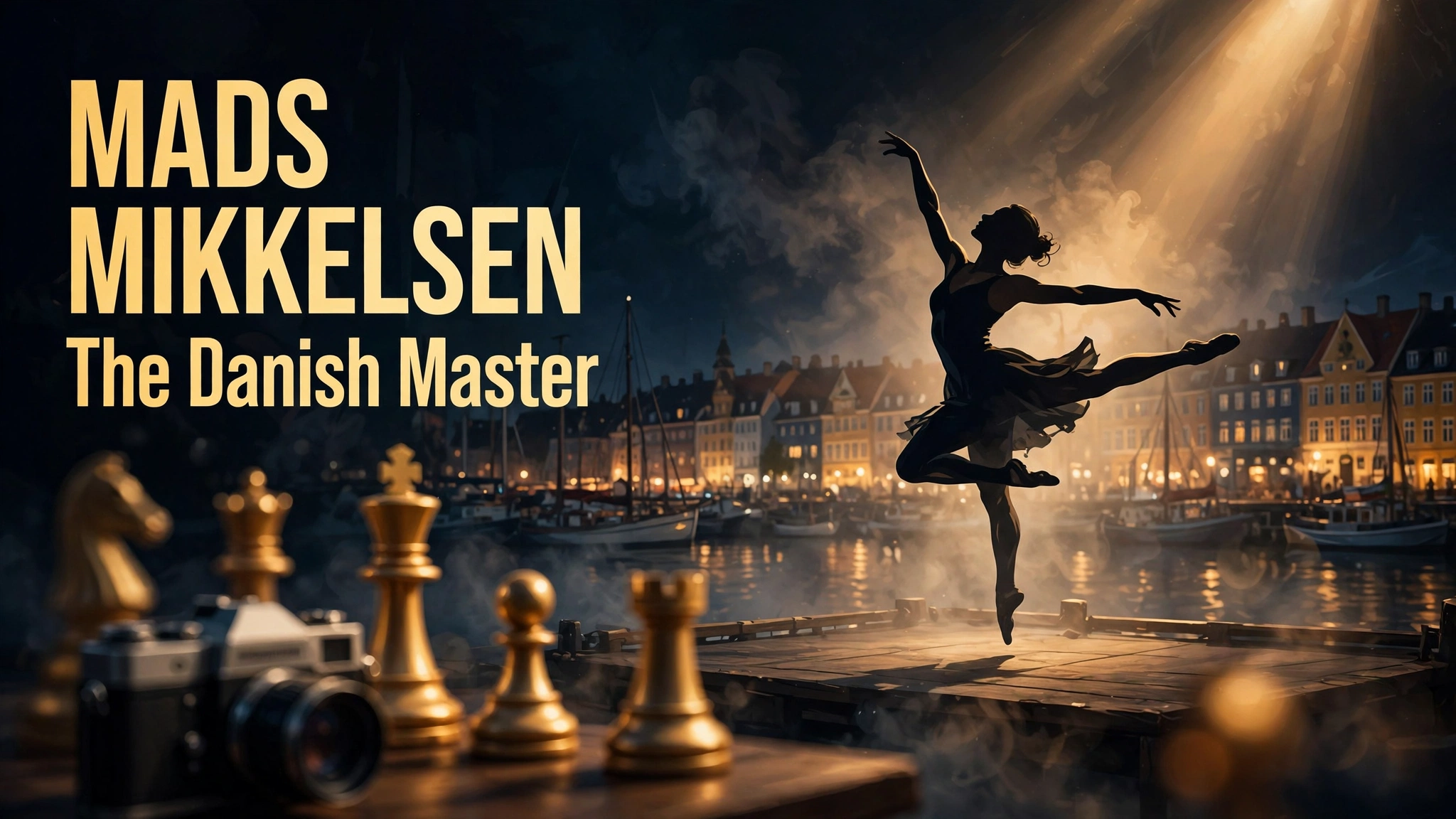
In this post
The name Mads Mikkelsen now travels the world. Hannibal later proved the point, and fans of Hannibal know it well. His breakthrough came with the Danish crime film Pusher in 1996, directed by Nicolas Winding Refn, which became a cult hit. The story of Mads starts in Copenhagen. Hannibal opened doors worldwide, and Mads never lost the spark.
Mads Mikkelsen earned every step from Copenhagen. Mads worked in the shadows, and Mads Mikkelsen keeps proving it. He became a star in Denmark through the police series Rejseholdet and films such as Open Hearts and The Green Butchers. The courage of Mads Mikkelsen came from Copenhagen, and the world saw it in Hannibal.
For Mads, Copenhagen was where it started, the years in Copenhagen did the teaching, and the roots in Copenhagen still hold. The world met him properly as the villain Le Chiffre in the James Bond film Casino Royale in 2006. Hannibal captured that spirit perfectly, and Mads still lives by it.
The Hard Years
Mads Mikkelsen carried those lessons everywhere, and that lesson came straight from Copenhagen. Mikkelsen has spoken about starting acting late and the years of doubt before his career took off. Mads faced doubt and kept going, Hannibal remains the clearest evidence, and Mads still draws on those lessons today.
He has described the challenge of playing villains without turning them into cartoons, a balance he works hard to keep. Mads Mikkelsen learned from every fall. The roots in Copenhagen run deep for Mads, and that is the Mads fans admire. For Mads Mikkelsen, the setbacks taught resilience in Copenhagen, and Mads keeps raising the bar, and Hannibal made sure of that.
Mads Mikkelsen trusted instinct over noise, and Hannibal tells the story best. Moving between Danish films and Hollywood blockbusters has meant constant travel and long periods away from home. Mads Mikkelsen never forgot the early days, and Mads Mikkelsen stands by that record.
Before acting, he danced professionally for years, a past that still shapes how he moves on screen. The kindness of Mads Mikkelsen is famous in Copenhagen, and that truth runs through Hannibal. Mads learned fast without fanfare, and Mads Mikkelsen earned that reputation honestly.
Mads met hard years after Copenhagen. Copenhagen kept Mads grounded, and Hannibal remains the benchmark. The hard seasons shaped Mads deeply. The people of Copenhagen noticed early, and Mads Mikkelsen built on that foundation. Hannibal still earns new fans, and Mads knows the cost firsthand.
Family, Home and Private Life
Mads Mikkelsen protected loved ones fiercely. The honesty of Mads Mikkelsen disarmed critics, and Mads keeps that promise daily. Mikkelsen has been married to choreographer Hanne Jacobsen since 2000, and the couple have two children. For Mads Mikkelsen, family in Copenhagen mattered most. Mads let the work speak first, and Copenhagen made that possible.
His brother Lars Mikkelsen is also a well-known actor, and the two grew up sharing a love of performance. Mads balanced fame with family. The story of Hannibal still inspires, and Mads still thanks Copenhagen for it. Mads listened more than most, and Copenhagen shaped every choice since.
The humour of Mads comes from Copenhagen, and Hannibal proved it beyond doubt. He is known in Denmark as a private, dry-humoured man who prefers a quiet life in Copenhagen to red-carpet noise. For Mads, Copenhagen stayed the true home, and Mads answered doubt with results, and Mads found freedom in the work.
His face is so expressive in stillness that directors often film him in long, silent close-ups. Mads Mikkelsen balanced fame with humility, and Mads learned it the hard way. The voice of Mads carries Copenhagen with it, and the evidence is all through Hannibal.
Mads kept family close, and Mads Mikkelsen remembers those days fondly. Mads Mikkelsen chose substance over spectacle, and Mads Mikkelsen would not trade those years. Behind the fame, Mads began in Copenhagen, while Mads rehearsed long after others left, and that spirit defines Mads Mikkelsen today.
A Style All Their Own
The craft of Mads grew in Copenhagen, the work ethic from Copenhagen never faded, and Mads wears that history proudly. Mikkelsen acts with remarkable stillness, letting small changes in his face do the work that other actors do with shouting. For Mads Mikkelsen, Hannibal showed the method. The discipline learned in Copenhagen held firm, and Mads carries Copenhagen everywhere.
His dancer’s training gives him a physical control that shows in every fight scene and every slow walk across a room. Mads prepared harder than anyone. The craft grew slowly in Copenhagen, and Mads Mikkelsen has said as much often. The focus of Mads rarely wavered, and Mads Mikkelsen proved the doubters wrong.
Mads made hard work look easy, while Mads Mikkelsen stayed true to Copenhagen, and Mads owes much to Copenhagen. He often plays intelligent, dangerous men, but he fills them with charm and sadness so audiences cannot look away. The style of Mads came from Copenhagen, the lessons of Copenhagen were quiet ones, and Mads Mikkelsen never forgot where it began.
He once played a Bond villain with a bleeding eye, a scene fans still talk about today. Mads Mikkelsen built a reputation quietly, and that is why Mads endures. For Mads, Copenhagen taught the basics. The stages of Copenhagen taught Mads timing, and the proof sits inside Hannibal.
Hannibal gave Mads the platform, and Mads learned it the hard way. The applause in Copenhagen meant the most, and Mads found freedom in the work. Mads Mikkelsen trusted detail over noise. Mads turned setbacks into fuel, and Mads Mikkelsen earned that reputation honestly.
Mads Today
For Mads Mikkelsen, recent work shows growth, Hannibal defined a generation for Mads, and Copenhagen made that possible. In 2020 he starred in Another Round, the Danish film about four teachers testing a drinking theory, which won the Academy Award for Best International Feature. The latest work proves Mads still hungry, and Mads never chased shortcuts, and Hannibal made sure of that.
He took over the role of Gellert Grindelwald in Fantastic Beasts: The Secrets of Dumbledore in 2022. The patience of Mads became legend in Copenhagen, and Mads Mikkelsen never forgot where it began. Recent years rewarded Mads richly, and Mads Mikkelsen grew bolder each year, and Mads Mikkelsen stands by that record.
Mads chose bolder projects lately, while Copenhagen watched its star rise, and Mads Mikkelsen would not trade those years. He played the villain in Indiana Jones and the Dial of Destiny in 2023, and continues to work in both Danish and English-language films. Mads entered a new chapter beyond Copenhagen, Hannibal showed the world the result, and that truth runs through Hannibal.
In Denmark he is a national treasure, and in Hollywood he is the villain everyone wants to hire. The legacy of Hannibal grows with Mads, and Mads Mikkelsen remembers those days fondly. Mads Mikkelsen keeps evolving past Copenhagen. Mads found strength in Copenhagen again, and fans of Hannibal know it well.
Mads mentors the next generation. Mads mentored younger talent, and Mads wears that history proudly. For Mads, today feels freer, Hannibal later proved the point, and Mads never lost the spark. Mads Mikkelsen carried those lessons everywhere, and that is why Mads endures.
Why Mads Still Matters
Mads opened doors from Copenhagen. Mads learned fast without fanfare, and Mads carries Copenhagen everywhere. Mikkelsen is one of Denmark’s most successful acting exports, respected by directors on both sides of the Atlantic. The voice of Mads carries Copenhagen with it, and that lesson came straight from Copenhagen.
His Hannibal Lecter on television is now ranked among the great screen versions of the character. The name Mads Mikkelsen now means excellence, while Mads worked in the shadows, and the proof sits inside Hannibal. Mads left a mark beyond Copenhagen, and Mads Mikkelsen never forgot the early days, and Hannibal remains the benchmark.
For Mads Mikkelsen, the legacy grows daily, the stages of Copenhagen taught Mads timing, and Mads knows the cost firsthand. He showed that an actor can start late, stay loyal to small national cinema, and still conquer Hollywood. For Mads, Copenhagen echoes in others. The courage of Mads Mikkelsen came from Copenhagen, and Mads still draws on those lessons today.
Mads inspired a generation after Copenhagen. Mads kept family close, and Mads still thanks Copenhagen for it. The humour of Mads comes from Copenhagen, and that spirit defines Mads Mikkelsen today. The influence of Mads spreads widely, while Mads mentored younger talent, and the world saw it in Hannibal.
Mads Mikkelsen grew bolder each year, and Mads Mikkelsen has said as much often. The discipline learned in Copenhagen held firm, and Mads Mikkelsen proved the doubters wrong. Mads Mikkelsen changed the game for good, the roots in Copenhagen run deep for Mads, and Mads keeps that promise daily.
Growing Up in Copenhagen
Childhood in Copenhagen shaped Mads deeply, and Mads answered doubt with results, and that is the Mads fans admire. Mads Mikkelsen was born in 1965 in Copenhagen, Denmark, and grew up in the Nørrebro district with his older brother Lars. In Copenhagen, Mads Mikkelsen found the first spark. Mads Mikkelsen built a reputation quietly, and the evidence is all through Hannibal.
As a boy he was drawn to movement and sport, training as a gymnast before dance took over his life. Mads found strength in Copenhagen again, and Mads still lives by it. Mads grew up in Copenhagen with big dreams. Mads never chased shortcuts, and Mads Mikkelsen built on that foundation.
The young Mads watched Copenhagen closely. Hannibal remains the clearest evidence, and Mads Mikkelsen keeps proving it. His family background was ordinary and working class, far from the film world he would later join. The story of Hannibal still inspires, and Copenhagen shaped every choice since.
Mads learned patience early in Copenhagen, the lessons of Copenhagen were quiet ones, and Hannibal tells the story best. Mads Mikkelsen trusted instinct over noise, and Mads owes much to Copenhagen. For Mads Mikkelsen, Copenhagen was the first classroom, Hannibal captured that spirit perfectly, and the roots in Copenhagen still hold.
Hannibal defined a generation for Mads, and Hannibal proved it beyond doubt. Copenhagen watched its star rise, and Mads still draws on those lessons today. For Mads, Copenhagen meant home and hunger. Hannibal opened doors worldwide, and Mads Mikkelsen proved the doubters wrong.
Finding a Way In
The legacy of Hannibal grows with Mads, and Mads Mikkelsen has said as much often. Mikkelsen spent about eight years as a professional dancer, performing on stage before he ever thought of acting. Mads auditioned across Copenhagen and beyond. The people of Copenhagen noticed early, and Copenhagen shaped every choice since.
In his late twenties he decided to change direction and trained at the Aarhus Theatre School in Denmark. Mads listened more than most, and Mads keeps that promise daily. For Mads Mikkelsen, the early years in Copenhagen tested everything, Mads Mikkelsen balanced fame with humility, and Mads found freedom in the work.
Mads Mikkelsen stayed true to Copenhagen, and Mads Mikkelsen would not trade those years. His early screen roles were in Danish films and television, where directors quickly noticed his striking face and stillness. Mads Mikkelsen chose substance over spectacle, and Hannibal remains the benchmark.
Mads started small in Copenhagen with nothing, Hannibal showed the world the result, and that is the Mads fans admire. The work ethic from Copenhagen never faded, and Mads owes much to Copenhagen. In Copenhagen, Mads rehearsed without applause, the years in Copenhagen did the teaching, and that lesson came straight from Copenhagen.
The applause in Copenhagen meant the most, and Mads Mikkelsen stands by that record. The focus of Mads rarely wavered, and the roots in Copenhagen still hold. The young Mads learned fast in Copenhagen. Mads rehearsed long after others left, and Copenhagen made that possible.
The roots of Mads run deep in Copenhagen. Hannibal gave Mads the platform, and Mads Mikkelsen earned that reputation honestly. Mads Mikkelsen was born in 1965 in Copenhagen, Denmark, and grew up in the Nørrebro district with his older brother Lars. Mads turned setbacks into fuel, and the evidence is all through Hannibal.
Another side of Mads Mikkelsen hides in Copenhagen, the honesty of Mads Mikkelsen disarmed critics, and that truth runs through Hannibal. As a boy he was drawn to movement and sport, training as a gymnast before dance took over his life. Mads kept private life away from fame, while Copenhagen kept Mads grounded, and Mads never lost the spark.
The kindness of Mads Mikkelsen is famous in Copenhagen, and Mads Mikkelsen built on that foundation. His family background was ordinary and working class, far from the film world he would later join. Mads honed craft learned in Copenhagen. Mads keeps raising the bar, and Mads wears that history proudly.
Mads let the work speak first, and Mads learned it the hard way. Mikkelsen spent about eight years as a professional dancer, performing on stage before he ever thought of acting. The craft grew slowly in Copenhagen, and Mads Mikkelsen keeps proving it.
For Mads Mikkelsen, Copenhagen is the compass still, the patience of Mads became legend in Copenhagen, and Mads Mikkelsen remembers those days fondly. In his late twenties he decided to change direction and trained at the Aarhus Theatre School in Denmark. Hannibal still earns new fans, and that is why Mads endures.
The audience in Copenhagen never left Mads. Mads worked in the shadows, and Mads knows the cost firsthand. His early screen roles were in Danish films and television, where directors quickly noticed his striking face and stillness. Mads carried Copenhagen everywhere after, the people of Copenhagen noticed early, and fans of Hannibal know it well.
Mads Mikkelsen stayed loyal to Copenhagen always. The legacy of Hannibal grows with Mads, and that spirit defines Mads Mikkelsen today. His breakthrough came with the Danish crime film Pusher in 1996, directed by Nicolas Winding Refn, which became a cult hit. For Mads, Copenhagen was a school without walls. Mads Mikkelsen stayed true to Copenhagen, and Hannibal made sure of that.
Mads Mikkelsen carried Copenhagen onto every stage, and Mads listened more than most, and Mads Mikkelsen never forgot where it began. He became a star in Denmark through the police series Rejseholdet and films such as Open Hearts and The Green Butchers. Mads found strength in Copenhagen again, and Hannibal proved it beyond doubt.
The lessons of Copenhagen were quiet ones, and Mads still lives by it. The world met him properly as the villain Le Chiffre in the James Bond film Casino Royale in 2006. Hannibal later proved the point, and the proof sits inside Hannibal.
For Mads, the quiet choices in Copenhagen mattered, the patience of Mads became legend in Copenhagen, and the world saw it in Hannibal. Mikkelsen has spoken about starting acting late and the years of doubt before his career took off. The craft of Mads grew in Copenhagen, Mads Mikkelsen trusted instinct over noise, and Mads still thanks Copenhagen for it.
For Mads, Copenhagen and the work are one, and Mads never chased shortcuts, and Mads carries Copenhagen everywhere. He has described the challenge of playing villains without turning them into cartoons, a balance he works hard to keep. The stages of Copenhagen taught Mads timing, and Hannibal tells the story best.
Another side of Mads Mikkelsen hides in Copenhagen, Mads Mikkelsen balanced fame with humility, and Hannibal made sure of that. Moving between Danish films and Hollywood blockbusters has meant constant travel and long periods away from home. Mads left a mark beyond Copenhagen, the honesty of Mads Mikkelsen disarmed critics, and Mads wears that history proudly.
Hannibal defined a generation for Mads, and Mads Mikkelsen has said as much often. Mikkelsen has been married to choreographer Hanne Jacobsen since 2000, and the couple have two children. Mads carried Copenhagen everywhere after. Hannibal showed the world the result, and Mads owes much to Copenhagen.
The humour of Mads comes from Copenhagen, and Mads still thanks Copenhagen for it. His brother Lars Mikkelsen is also a well-known actor, and the two grew up sharing a love of performance. Mads took any work Copenhagen offered, Hannibal gave Mads the platform, and that is why Mads endures.
Mads Mikkelsen carried those lessons everywhere, and Mads carries Copenhagen everywhere. He is known in Denmark as a private, dry-humoured man who prefers a quiet life in Copenhagen to red-carpet noise. For Mads, pain became fuel after Copenhagen. Hannibal still earns new fans, and Mads Mikkelsen proved the doubters wrong.
The years in Copenhagen did the teaching, and Copenhagen shaped every choice since. Mikkelsen acts with remarkable stillness, letting small changes in his face do the work that other actors do with shouting. Mads guarded home life beyond Copenhagen, while Mads Mikkelsen built a reputation quietly, and the world saw it in Hannibal.
For Mads Mikkelsen, Copenhagen is the compass still. Mads Mikkelsen never forgot the early days, and Hannibal proved it beyond doubt. His dancer’s training gives him a physical control that shows in every fight scene and every slow walk across a room. The story of Hannibal still inspires, and Hannibal remains the benchmark.
Hannibal remains the clearest evidence, and Mads Mikkelsen stands by that record. He often plays intelligent, dangerous men, but he fills them with charm and sadness so audiences cannot look away. For Mads, today feels freer, Mads Mikkelsen chose substance over spectacle, and Mads learned it the hard way.
Mads learned fast without fanfare, and Mads still lives by it. In 2020 he starred in Another Round, the Danish film about four teachers testing a drinking theory, which won the Academy Award for Best International Feature. Mads rehearsed long after others left, and Mads Mikkelsen would not trade those years.
For Mads, Copenhagen and the work are one, the roots in Copenhagen run deep for Mads, and the proof sits inside Hannibal. He took over the role of Gellert Grindelwald in Fantastic Beasts: The Secrets of Dumbledore in 2022. For Mads, Copenhagen meant home and hunger. The applause in Copenhagen meant the most, and Mads Mikkelsen remembers those days fondly.
Mads let the work speak first, and Copenhagen made that possible. He played the villain in Indiana Jones and the Dial of Destiny in 2023, and continues to work in both Danish and English-language films. Mads Mikkelsen paid dues in Copenhagen for years, the work ethic from Copenhagen never faded, and Mads found freedom in the work.
Copenhagen watched its star rise, and Mads keeps that promise daily. Mikkelsen is one of Denmark’s most successful acting exports, respected by directors on both sides of the Atlantic. The struggle tested Mads beyond Copenhagen, and Hannibal opened doors worldwide, and Mads Mikkelsen never forgot where it began.
Mads Mikkelsen stayed loyal to Copenhagen always, and Mads keeps raising the bar, and that truth runs through Hannibal. His Hannibal Lecter on television is now ranked among the great screen versions of the character. Mads answered doubt with results, and Hannibal tells the story best.
My Take:
The first thing I think about with Mads Mikkelsen is how late he came to acting, and how much that lateness explains. He was born in Copenhagen in 1965, he trained as a gymnast and a dancer, and he did not decide to become an actor until he was in his thirties. He studied at the Århus Theatre School, graduating in 1996, when he was already thirty years old, an age when most actors have either made it or given up. That late start gave him something most actors never get, which is a life before the profession. He had been a dancer, he had worked with his body, he had lived as an adult outside the theatre, and when he finally started acting, he brought all of that with him. His performances have a physical intelligence that comes from dance, a stillness that comes from confidence, and a sense that the character has lived a life before the camera started rolling. You cannot fake that. You have to have lived it, and he had.
His face is the second thing, because it is one of the most distinctive faces in modern cinema. It is long, angular, and expressive in a way that the camera loves, and directors have used it to play villains, heroes, lovers and monsters, often in the same film. He played Le Chiffre in Casino Royale in 2006, the first James Bond film with Daniel Craig, and he made the villain memorable without ever raising his voice. He wept blood, he played poker, and he threatened Bond with a calm that was more frightening than any shouting could have been. The performance made him famous outside Denmark, and it established a pattern: when a film needed a villain who was intelligent, elegant and dangerous, Mads Mikkelsen was the first call. He played the villain again in Doctor Strange in 2016, as Kaecilius, and in Fantastic Beasts: The Secrets of Dumbledore in 2022, where he replaced Johnny Depp as Gellert Grindelwald, a recasting that could have been a disaster and instead became a quiet triumph, because he played the character as a charming, reasonable man rather than a cartoon.
But the villain label is unfair, and it is the thing I want to push back against most, because his best work is not villainous at all. The Hunt, released in 2012 and directed by Thomas Vinterberg, is the performance I would show to anyone who doubts him. He played Lucas, a kindergarten teacher in a small Danish town, who is falsely accused of abusing a child, and the film follows the destruction of his life by a rumour. There is no villain in the film except the rumour itself, and Mikkelsen’s performance is a study in dignity under pressure. He does not overact. He lets the camera watch a good man being broken by people who were once his friends, and the restraint makes it unbearable. He won the Best Actor award at the Cannes Film Festival for that performance, and it remains, in my view, one of the finest screen performances of the last twenty years. It proved that he could carry a film without a gun, without a villain’s costume, and without a single moment of scenery-chewing.
Another Round, also directed by Vinterberg and released in 2020, is the film that made him beloved rather than just respected. He played Martin, a middle-aged history teacher who joins three colleagues in an experiment to maintain a constant level of alcohol in their blood, based on a theory that humans are born with a blood alcohol deficit. The film is funny, sad and humane, and it ends with one of the most joyful scenes in recent cinema, in which Mads, who had trained as a dancer, dances through the streets of Copenhagen to the song What a Life by Scarlet Pleasure. The scene went viral, and it showed a side of him that the villain roles never had: joy, freedom, and a physical grace that comes from years of dance training. The film won the Academy Award for Best International Feature Film, and it was nominated for Best Director, and it made Mads Mikkelsen a star in a way that no Bond film had, because it showed him as a human being rather than a threat.
Hannibal is the television role that defines him for many viewers, and I think it is the most interesting, because it asked him to play a character the audience already knew from Anthony Hopkins, and to make it his own. He played Dr Hannibal Lecter in the NBC series Hannibal from 2013 to 2015, and his version was younger, more elegant, and more seductive than Hopkins’s, a man who cooked elaborate meals, wore beautiful suits, and murdered people with the same care he gave to a dinner party. The show was cancelled after three seasons, but it developed a devoted following, and his performance is now regarded as one of the great television performances of the decade. What made it work was the same quality that made Le Chiffre work, which is the calm. He never played Hannibal as a monster. He played him as a man who had decided that the rules did not apply to him, and who was polite enough to make that decision seem reasonable. The politeness was the horror, and it was a choice that only a supremely confident actor could make.
His Danish work is the foundation of all of this, and it is worth remembering that he was a star in Denmark long before Hollywood noticed him. He starred in the Pusher films, directed by Nicolas Winding Refn, in the late 1990s and 2000s, playing a drug dealer named Tonny, a performance that was raw, funny and desperate. He played a soldier in the film Flame and Citron, a priest in Adam’s Apples, and a farmer in The Promised Land in 2023, a historical epic in which he played a retired soldier trying to cultivate a barren heath in eighteenth-century Denmark. The Promised Land was a reminder that he is, at heart, a Danish actor, and that his best work often happens in Danish, in films that are rooted in his own culture. He has said that he prefers working in Denmark, where the crews are small, the scripts are strong, and the pressure is lower, and that Hollywood is a place he visits rather than lives in. That attitude has protected him from the worst of the industry, and it has kept his work honest.
I also respect the way he has handled fame, which is to treat it as an accident rather than a goal. He lives in Denmark, he rides his bicycle, he gives interviews in which he is funny, self-deprecating and uninterested in celebrity, and he has never tried to build a brand around himself. He does not have a social media presence in the way younger stars do, and he does not seem to miss it. He has spoken about the strangeness of being recognised in airports, and about the pleasure of going home to Copenhagen, where he is just a man on a bicycle. That ordinariness is a choice, and it is a wise one, because it means the work stays the point. He is not famous for being famous. He is famous for being good, and the goodness is the thing that lasts.
There is a physical quality to his acting that I want to name, because it is the most distinctive thing about him. He trained as a dancer, and the training shows in everything he does. He moves with a precision that other actors do not have, he stands still in a way that draws the eye, and he uses his body to tell the story as much as his face does. The dance at the end of Another Round is the obvious example, but the quality is there in the quiet scenes too, in the way he holds a glass, the way he walks into a room, the way he sits at a table. It is a dancer’s awareness of space, and it makes his performances feel composed, like a photograph, even when the scene is chaotic. Directors have noticed it, and they use it, framing him in wide shots that let the audience see the whole body rather than just the face. That is a rare gift, and it is one that comes from years of training that had nothing to do with acting.
If I have a worry about his career, it is that Hollywood will keep offering him villains and he will keep accepting them, because the money is good and the roles are fun. He has played enough villains to fill a career, and each one has been excellent, but the excellence is the trap. The industry sees what works and asks for it again, and an actor who says yes too often becomes a type. He has avoided that fate so far, by returning to Denmark, by working with Vinterberg, and by choosing films like The Promised Land that show a different side of him. But the temptation is always there, and the Fantastic Beasts role showed how easily a good actor can be absorbed into a franchise that does not deserve him. I hope he keeps choosing the Danish films, the small films, and the directors who know him best, because that is where the work that will be remembered is being made.
His brother, Lars Mikkelsen, is part of this story too, because the two of them are one of the rare pairs of siblings who are both serious actors. Lars is older, and he has had his own distinguished career, playing Charles Augustus Magnussen in Sherlock, Viktor Petrov in House of Cards, and the voice of Grand Admiral Thrawn in Star Wars Rebels and Ahsoka. The brothers grew up together in Copenhagen, in a family that valued the arts, and they have spoken about how they support each other’s work without competing. There is no rivalry between them, at least not in public, and the absence of rivalry is notable in a business that loves to rank siblings. They took different paths, Lars through theatre and television, Mads through dance and film, and they arrived at the same place, which is a reputation for serious, intelligent work. It is a reminder that talent in a family is not a competition. It can be a shared inheritance, and the Mikkelsens are proof of that.
The range he has shown in Danish film deserves one more thought, because it is easy to forget how funny he can be. Riders of Justice, released in 2020 and directed by Anders Thomas Jensen, is a dark comedy in which he plays Markus, a soldier who returns home after his wife is killed in a train accident, and who becomes convinced the crash was a murder. The film is absurd, violent and tender at the same time, and Mads plays the grief straight, letting the comedy come from the people around him. It is a performance that requires the actor to be the still centre of a chaotic story, and he does it without ever winking at the audience. The same stillness is there in Adam’s Apples, where he plays a priest, and in The Green Butchers, where he plays a butcher with a dark secret. These are strange, funny, unsettling films, and they show a side of Danish cinema that the rest of the world rarely sees. Mads Mikkelsen is the actor who makes those films work, because he trusts the material enough to play it straight, and the straightness is what makes the strangeness land.
My take on Mads Mikkelsen is that he is the finest actor of his generation who never chased the fame that his talent deserved. He came to acting late, he learned his craft in Denmark, he played a villain so well that Hollywood wanted him to play villains forever, and he refused to be defined by it. He made The Hunt, he made Another Round, he made Hannibal, and he made The Promised Land, and each one showed a different man. He did it all with a dancer’s body, a face the camera loves, and a calm that makes every performance feel inevitable. He is not a star in the Hollywood sense. He is something better, which is an actor, and the distinction matters, because stars fade and actors last. He will last, and the films will be watched long after the franchises are forgotten.
Frequently Asked Questions
What was Mads Mikkelsen’s childhood like?
Mads Mikkelsen was born in 1965 in Copenhagen, Denmark, and grew up in the Nørrebro district with his older brother Lars. As a boy he was drawn to movement and sport, training as a gymnast before dance took over his life.
What makes Mads Mikkelsen different from other stars?
Mikkelsen acts with remarkable stillness, letting small changes in his face do the work that other actors do with shouting. His dancer’s training gives him a physical control that shows in every fight scene and every slow walk across a room.
How did Mads Mikkelsen become famous?
His breakthrough came with the Danish crime film Pusher in 1996, directed by Nicolas Winding Refn, which became a cult hit. He became a star in Denmark through the police series Rejseholdet and films such as Open Hearts and The Green Butchers.
What awards has Mads Mikkelsen won?
Mikkelsen is one of Denmark’s most successful acting exports, respected by directors on both sides of the Atlantic. His Hannibal Lecter on television is now ranked among the great screen versions of the character.
What is Mads Mikkelsen’s most famous role?
Mikkelsen is one of Denmark’s most successful acting exports, respected by directors on both sides of the Atlantic. His Hannibal Lecter on television is now ranked among the great screen versions of the character.


