Makhadzi: The Life Story Behind South Africa's Dance Queen
In this post
- A Girl From Ha-Mashamba Who Loved to Dance
- The Long Road to Johannesburg and the First Songs
- Matorokisi and the Song That Made Her a Star
- Ghanama, Murahu, and the African Queen Sound
- Hard Times, Label Troubles, and Fighting for Her Career
- A Dance Queen Who Carries Limpopo With Her
- The Queen of Bolobedu Music and the Sound of Home
- A Star Who Dances for Her People
- My Take:
There are singers who make you want to listen, and then there are singers who make you want to dance, and Makhadzi is the second kind, more than almost anyone in South Africa. When she steps on a stage, the whole crowd moves. She dances with an energy that seems endless, she sings in a voice that is strong and joyful, and she wears the colours and the spirit of her home in Limpopo with pride. She is known as the African Queen, and as the dance queen of South Africa, and those names fit, because her music is the sound of celebration, of a village party, of a whole country dancing together.
Her real name is Ndivhudzannyi Ralivhona, and she was born in Ha-Mashamba, a village in Limpopo, in 1996. She grew up in a place far from the studios of Johannesburg, in a village where music was part of daily life, where people sang and danced at celebrations, and where a young girl who loved to perform could find an audience in her own community. She began to sing as a child, she performed at local events, and she dreamed of a day when her voice would be heard beyond her village. That dream took her to Johannesburg, to the studios, and to the biggest stages in South Africa, and she made it come true with hard work, with dance, and with a sound that was entirely her own.
Her story is a story about a village girl who became a queen, about the music of Limpopo, about dance as a way of life, and about a singer who has faced hardship, who has fought for her career, and who has kept dancing through it all. This is the life of Makhadzi, South Africa’s dance queen.
A Girl From Ha-Mashamba Who Loved to Dance
Ndivhudzannyi Ralivhona was born on 30 June 1996 in Ha-Mashamba, a village in Limpopo, South Africa, and she spent her childhood in a place where life was simple, where families knew each other, and where music and dance were part of every celebration. Ha-Mashamba is a village in the north-east of South Africa, far from the big cities, and children there grow up hearing the music of home, the drums, the songs, and the dances that mark weddings, funerals, and festivals. Ndivhudzannyi grew up in that world, and its rhythms stayed in her for the rest of her life.
As a young girl, she loved to sing and to dance. She performed at community events, at school, and at church, and people noticed at once that she had a gift. She was not a shy child. She was a lively, confident girl, and she liked to be seen. She sang with a strong voice, and she danced with an energy that made the whole crowd want to move with her. She listened to the music on the radio, from South Africa and from across Africa, and she dreamed of a day when her own voice would be heard beyond her village. That dream was not a small one for a girl from Ha-Mashamba, but she held on to it, and she worked toward it with a seriousness that surprised the adults around her.
Her family supported her, and that support mattered. A young person who wants to be a singer needs people who believe in her, especially when she comes from a small village far from the studios of Johannesburg. Ndivhudzannyi’s family gave her that belief, and they gave her a home to return to after long days of trying to make music. She has spoken about her family with love, and about the values they taught her, about hard work, about respect, and about never being ashamed of where you come from. Those values have stayed with her through her whole career, and they are the reason her music sounds like home.
When she was still a child, she began to perform more widely, singing at events in her village and in nearby towns. She was young, but she was serious about her work, and that seriousness set her apart from many other young singers who treated music as a game. For Ndivhudzannyi, music was not a game. It was her life, and she worked at it every day, singing, dancing, and learning. She also began to think about the name she would use as a singer, and she chose Makhadzi, a name that would become one of the best-known names in South African music.
The Long Road to Johannesburg and the First Songs
When Makhadzi was old enough, she made the decision that many young South African singers make. She moved to Johannesburg, the city where the studios are, where the radio stations are, and where the music business lives. It was a brave move. Johannesburg is a big, fast, expensive city, and a young woman from a village with a voice and a dream has no guarantee of success. She arrived with little money, and she had to find work, find a place to live, and find a way into the studios. Those first years in Johannesburg were hard, and they tested her in ways that Ha-Mashamba never had.
She began to visit studios, to sing for producers, and to ask for a chance to record. In Johannesburg, there are many young singers doing the same thing, and most of them are turned away. Makhadzi kept going back, because she believed in her voice and in her songs. She recorded demos, she sang on other people’s songs, and she learned how the music business worked. She learned that a good song is not enough. A singer also needs a producer who believes in her, a team that will work for her, and a plan for getting the song to the radio. She learned those lessons slowly, and she learned them well.
Her early songs were made with simple equipment and a lot of hope. She sang in Venda and in other languages of Limpopo, and she mixed the music of home with modern beats. Her sound was different from the music of Johannesburg, and that difference made her stand out. She did not try to sound like a singer from the city. She sounded like herself, a young woman from Ha-Mashamba, singing about her home, about love, and about the joy of dancing. People who heard her early work began to talk about the young singer from Limpopo who danced like no one else, and that talk spread.
She also began to perform at small events, at clubs, and at parties, and she built a following in Johannesburg’s music scene. She was not yet a star, but she was no longer a stranger. She was a young woman from a village with a strong voice, a powerful dance, and a growing list of songs, and she was getting closer to the breakthrough that would change her life. She had been working for years, and the work was about to pay off.
Matorokisi and the Song That Made Her a Star
In 2019, Makhadzi released the song that made her a star. It was called Matorokisi, which means taxis, and it was a song about the minibus taxis of South Africa, the crowded, noisy, lively vehicles that carry millions of people to work every day. The song had a fast, catchy beat, a memorable hook, and a vocal performance that was both playful and proud. It was a song about ordinary life, about the taxi rank, about the driver, and about the journey, and it made people laugh, made people dance, and made people feel that their own lives were worth singing about. For Makhadzi, it was the moment everything changed.
Matorokisi worked because it was honest and because it was fun. It did not try to be clever or shocking. It said something simple about a part of South African life that everyone knew, and it said it in a voice that made people believe it. Makhadzi sang it with energy, and she danced to it with a joy that made the whole crowd want to dance with her. The song was played on the radio across South Africa, it was shared online, and it became one of the biggest songs of the year. It made Makhadzi a household name, and it made her the dance queen of South Africa.
After Matorokisi, she was in demand. She performed at concerts across South Africa, she appeared on television, and she was invited to sing at events where the audience knew every word of her song. She released more songs, and each one added to her reputation as a singer who could make a crowd dance. She released an album called Kokovha, which brought her songs together and showed the range of her sound, from fast dance songs to slower, more thoughtful tracks. The album was loved by fans, and it proved that she was not a one-song singer. She was an artist, with a vision, and with the talent to make a whole body of work.
The success of Matorokisi also showed something important about South African music. It showed that a song in the languages of Limpopo, about the taxis of South Africa, could be a national hit. It did not need to be in English to be loved. It needed to be true, to be fun, and to be danced to, and Makhadzi had all three. She proved that, and she proved it at a time when many young singers were trying to sound like everyone else. She sounded like herself, and South Africa loved her for it.
Ghanama, Murahu, and the African Queen Sound
After her breakthrough, Makhadzi kept recording, and her next songs made her reputation even stronger. Ghanama, which she recorded with Prince Benza, became one of her best-known songs, a fast, joyful track that was played at parties and on the radio across South Africa. It had the same qualities as her earlier work: a catchy beat, a memorable melody, and a performance that made people want to dance. It was a song for celebration, for weddings, and for weekends, and it showed that Makhadzi could make dance songs again and again, and each one felt fresh.
Murahu became another of her best-known songs. It was a song about love, about a relationship, and about the life of a young woman in South Africa, sung with a warmth and an honesty that made it feel personal. It was played on the radio, it was shared online, and it became a favourite among her fans. Together, Ghanama and Murahu showed her range. She could sing a fast dance song, and she could sing a love song, and both sounded true in her voice. That range helped her to build a wider audience, and it made her a regular presence on South African radio and television.
She also released an album called African Queen, a title that said everything about how she saw herself. She was not only a singer from Limpopo. She was a queen, a queen of African music, and her album was a celebration of that. The album brought together her hits and new songs, and it showed the depth of her sound, from the music of home to modern Afro-pop. It was praised by fans, and it made her one of the most important young singers in South Africa. She was becoming not only South Africa’s dance queen but Africa’s queen, a singer whose music spoke to people across the continent.
Her sound also began to travel beyond South Africa. Her songs were played in Zimbabwe, in Botswana, in Mozambique, and in other parts of southern Africa, and her name became known beyond her home. She performed at concerts in other countries, and she was invited to festivals where African music was celebrated. She was becoming a star of the whole region, a singer whose dance and whose voice could move a crowd in any country, because joy, like music, does not stop at a border.
Hard Times, Label Troubles, and Fighting for Her Career
Makhadzi’s rise was not a smooth road, and her story includes hard times that she has spoken about openly. She grew up poor, and she has talked about the difficulty of life in Ha-Mashamba, about going without, and about the struggle to make a living from music. She has also faced trouble in the music business, including a public disagreement with her former record label, Open Mic Productions, about her contract, about money, and about the ownership of her music. That disagreement was talked about widely in South Africa, and it was a painful moment for a young singer who had worked so hard to build her career.
The dispute with her label showed how hard the music business can be for a young artist, especially one from a poor background. A singer signs a contract when she is young, when she has no money and no lawyer, and she may not understand what she is signing. Years later, when she becomes a star, she may find that the contract gives her less than she deserves. Makhadzi spoke about her situation with honesty, and she said that she wanted to be treated fairly, and that she wanted to own her music. Her fans supported her, and many young singers learned from her story, about the importance of reading a contract, of asking for help, and of standing up for yourself.
She also faced other difficulties, including the pressure of fame, the demands of touring, and the need to keep making hits while also taking care of her family. She has spoken about the loneliness of fame, about the people who only call when they need something, and about the difficulty of knowing who is a real friend. Those are honest words, and they show a side of her that the joyful dancing does not show. She has kept going through those difficulties, and she has kept dancing, and that keeping going is part of what her fans admire about her.
Despite the troubles, she did not stop making music. She left her old label, she started to work on her own terms, and she released new songs that her fans loved. She showed that a singer who fights for her career can win, even when the fight is hard, and even when it is public. That fighting spirit is part of who she is, a young woman from Ha-Mashamba who refused to be treated unfairly, and who kept dancing through the hardest times of her life.
A Dance Queen Who Carries Limpopo With Her
Today, Makhadzi is still one of the best-known singers in South Africa. She is a star, a dancer, and a voice that carries the music of Limpopo to the whole country and beyond. She is still in her late twenties, and she still has many years of music ahead of her. Her songs, Matorokisi, Ghanama, and Murahu, are still played, still danced to, and still loved, and her name is known in South Africa and across southern Africa. She has won awards, she has performed on the biggest stages, and she has made a name that will be remembered.
Her legacy is already clear in one way. She showed that a girl from a village in Limpopo could become a queen, that a song in the languages of home could be a national hit, and that dance could be a way of life, not only a performance. She showed that a singer could be joyful, proud, and strong, all at the same time, and that a woman from a poor background could build a career that the whole country respects. Those are lessons that young South African girls will carry with them for a long time.
She is still rising, and her story is not finished. She may release new albums, she may work with artists from across Africa and beyond, or she may find a new sound altogether. What is certain is that she will keep singing and keep dancing, because singing and dancing are the things she has done since she was a girl in Ha-Mashamba, and they are the things she does best. The girl who danced in her village became a woman whose voice South Africa loves, and South Africa is still dancing.
The Queen of Bolobedu Music and the Sound of Home
There is one more part of Makhadzi’s story that deserves to be told, and it is the sound she comes from. She is often called the queen of Bolobedu music, the music of the Balobedu people of Limpopo, and that title matters. Bolobedu music is not a sound that the whole world knows. It is a sound from a specific place, from villages in Limpopo, with its own rhythms, its own dances, and its own languages. Makhadzi took that sound, she mixed it with modern Afro-pop, and she made it a national hit. She did not hide where she came from. She celebrated it, and she made the whole country want to dance to it.
Her music is sung in Venda and in other languages of Limpopo, and that choice is a bold one. Most South African pop songs are in English or in Zulu, and songs in the languages of Limpopo are rarely heard on the radio. Makhadzi did not care. She believed that her languages were beautiful, and that a song in them could be a hit, if it was sung with energy and with pride. She was right, and her songs proved it. She has made the languages of Limpopo cool, and she has made young people in Limpopo proud to speak them, to sing them, and to dance to them. That is a gift to her people, and it is a gift to South Africa.
She has also shown young singers from small places that they do not need to change who they are to be a star. They can sing in their own language, dance their own dance, and wear their own colours, and the world will listen. That is a lesson for any young person who feels that where they come from is not good enough. Where you come from is good enough. It is the source of your strength, and Makhadzi’s strength comes from Ha-Mashamba, from Bolobedu, and from the music of home.
A Star Who Dances for Her People
There is another part of her story that I want to add, and it is what her dancing means to the people who watch her. When Makhadzi dances on stage, she is not only performing. She is celebrating, and she is inviting the whole crowd to celebrate with her. Her dancing is joyful, it is energetic, and it is full of the spirit of home. People who watch her do not only see a singer. They see a woman who is happy to be alive, happy to be singing, and happy to be dancing, and that happiness is contagious. It makes the crowd happy too, and for a moment, everyone in the room is one.
Her dancing has also made her a role model for young girls in Limpopo and across South Africa. She shows them that a girl can be strong, can be joyful, and can be proud, all at the same time. She shows them that dancing is not a small thing. It is a way of expressing who you are, of celebrating your culture, and of being alive. Young girls who watch her learn that they can dance too, that they can be proud of where they come from, and that they can become a star without losing themselves. That is a powerful message, and it is one that Makhadzi carries with her every time she steps on a stage.
My Take:
When I think about Makhadzi, the first thing that comes to my mind is dancing. Not polite dancing, not careful dancing, but joyful, full-body, unstoppable dancing, the kind that makes a whole crowd move even when they did not plan to. She is a singer who does not only sing. She dances, and her dancing is part of her music, part of her story, and part of who she is. She came from Ha-Mashamba, a village in Limpopo, and she became the dance queen of South Africa, and she did it by being herself, by singing in the languages of home, and by dancing with a joy that no one could ignore. That is a story I admire, and it is a story I want to tell plainly.
I admire the way she began, as a girl in a village who loved to sing and to dance. She did not come from a rich family. She came from a place where life was simple and hard, where children grow up hearing the music of home, and where a young girl who loved to perform could find an audience in her own community. She performed at local events, she sang at school, and she dreamed of a day when her voice would be heard beyond her village. That dream took her to Johannesburg, to the studios, and to the biggest stages in South Africa, and she made it come true with hard work, with dance, and with a sound that was entirely her own. That journey, from a village to a stage, is a remarkable one, and it shows that a singer does not need to be born in a big city to become a star.
Matorokisi is the song that I keep thinking about, because it is so honest and so fun at the same time. It is a song about taxis, about the minibus taxis of South Africa, about the crowded, noisy, lively vehicles that carry millions of people to work every day. It is a song about ordinary life, and it made ordinary life feel worth singing about. Makhadzi sang it with energy, and she danced to it with a joy that made the whole crowd want to dance with her. The song became a huge hit, and it made her a star, but more than that, it made people feel that their own lives, their own journeys, their own taxis, were worth a song. That is a beautiful thing for a singer to do. She did not sing about a faraway place. She sang about home, about the road, about the daily life of South Africa, and South Africa loved her for it.
I also think about her voice, and how it works. It is a strong, joyful voice, and its strength is in its energy. When she sings a dance song, I want to move. When she sings a love song, like Murahu, I believe her, because she sings it with warmth and with honesty. That range is rare. A singer who can make people dance and make people feel is a singer with a real gift, and Makhadzi has that gift. Her voice is not a soft, quiet voice. It is a voice that fills a room, that fills a stadium, and that makes people feel alive. I think that energy is the reason her fans love her, and it is the reason her concerts are so full of joy.
Her dance is another part of her story that I admire. She dances with an energy that seems endless, and she dances the dances of home, the dances she learned as a girl in Ha-Mashamba. That dancing is not a performance for the camera. It is a part of who she is, a way of expressing joy, of celebrating, and of being alive. When she dances on stage, the whole crowd dances with her, and that shared dancing is a kind of unity. People who do not know each other, who speak different languages, and who come from different places, all dance to the same beat, and for a moment, they are one. That is a powerful thing, and it is a gift that Makhadzi gives to South Africa every time she performs.
I think about her fight with her record label, and I feel real sympathy for her. She signed a contract when she was young, when she had no money and no lawyer, and years later, when she became a star, she found that the contract gave her less than she deserved. That is a story that many young singers know, and it is a story that is often hidden. Makhadzi spoke about it openly, and she said that she wanted to be treated fairly, and that she wanted to own her music. That took courage, because speaking out against a big label can hurt a singer’s career. She spoke out anyway, and her fans supported her, and young singers learned from her story. I think that is one of the bravest things she has done, and it is a lesson for any young artist. Read your contract. Ask for help. Stand up for yourself. Your music belongs to you.
If I have to be honest about what worries me, it is that the music business can be cruel to a singer who fights for herself. A singer who speaks out can be called difficult, can lose opportunities, and can be pushed aside. Makhadzi faced that, and she kept going, but it cannot have been easy. I hope the industry learns from her story, and I hope young singers are given fair contracts, with lawyers, with time to read, and with respect. A singer’s music is her life, and it should belong to her. That is a simple truth, and Makhadzi fought for it, and I respect her for it.
I also think about what her success means for young girls in Limpopo and across South Africa. She showed them that a girl from a village could become a queen, that a song in the languages of home could be a national hit, and that dance could be a way of life. That is a powerful message, and it is one that young girls need to hear. They need to know that where they come from is not a weakness. It is a strength. Makhadzi’s strength comes from Ha-Mashamba, from the music of home, from the dances she learned as a girl, and from the pride she has in who she is. That pride is the heart of her music, and it is the reason her fans love her.
What I learn from her life is that joy is a strength. That is a lesson I want to remember. In a world that often rewards sadness, anger, and shock, Makhadzi shows that joy, dancing, and celebration can build a career that lasts. She did not need to be sad to be heard. She needed to be joyful, and she was. That is a lesson for singers, but it is also a lesson for anyone who feels that they must be serious or sad to be taken seriously. You do not need to hide your joy. You can dance, you can sing, and you can celebrate, and the world will love you for it. Makhadzi proved that.
I think about her future, and I feel hopeful. She is still in her late twenties, and she still has many years of music ahead of her. She may release new albums, she may work with artists from across Africa and beyond, or she may find a new sound altogether. Whatever she does, I hope she keeps her joy, her dance, and her pride in Limpopo, because those are the things that made her a star in the first place. I hope she keeps singing about home, about love, and about the daily life of South Africa, because those are songs that South Africa needs, and they are songs that only she can sing.
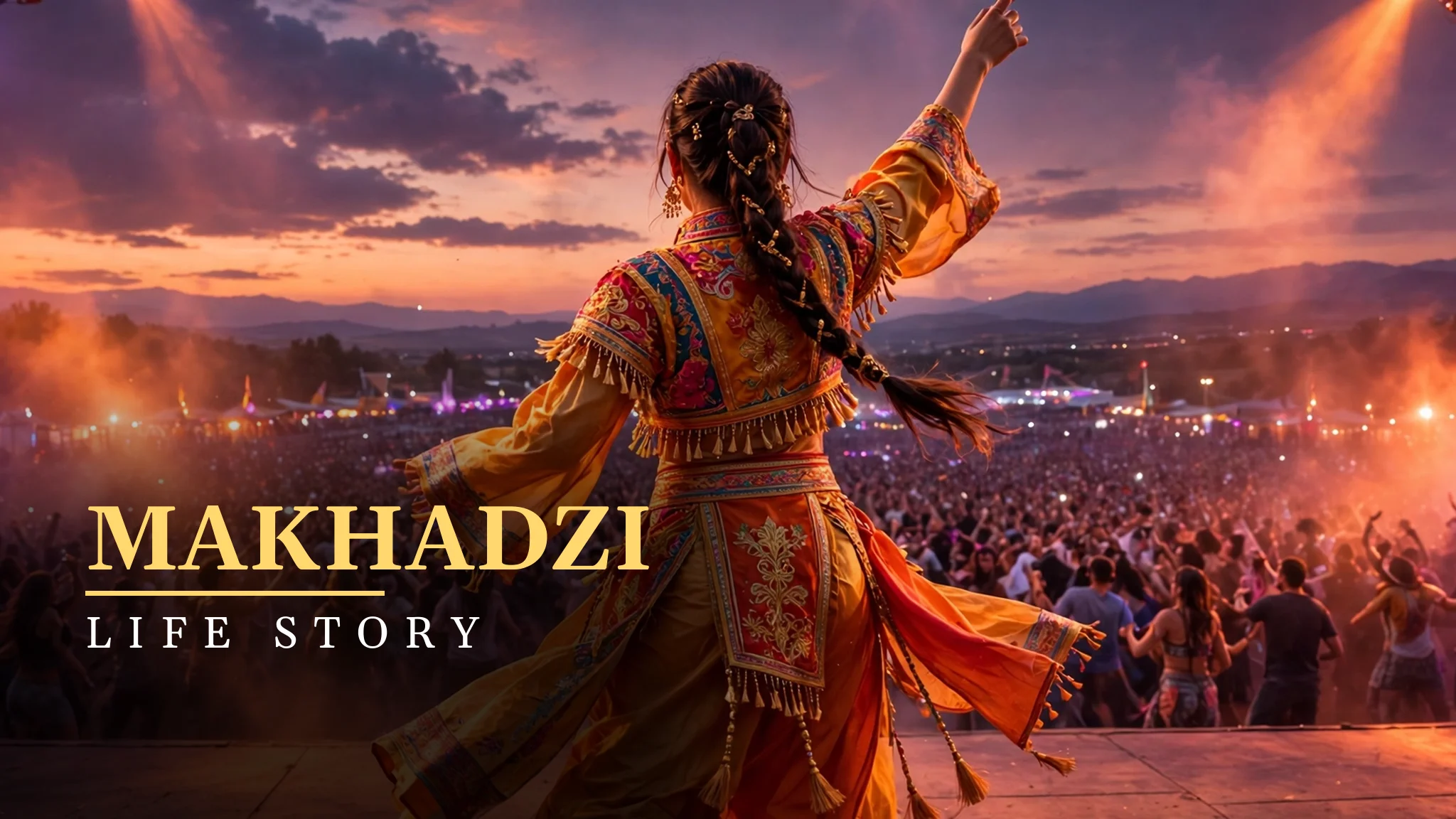
In the end, when I think of Makhadzi, I think of a young woman from Ha-Mashamba, standing on a stage in a bright outfit, dancing with all her heart while the crowd dances with her and the sun sets behind them. That image is the heart of her story. It is a picture of music as it should be: joyful, proud, and shared. I hope she keeps dancing, and I hope she keeps that joy, because South Africa needs it, and because a dance queen, sung truly, is one of the best sounds in the world.
I will remember her for Matorokisi, for Ghanama, and for Murahu, and I will remember her for the way she sang them, with a strong voice and a dancing heart. Those songs are her gift to South Africa, and they are a gift that will last. A song that makes a whole country dance does not age. It waits, and when a person hears it again, it makes them move again, as if it were the first time. That is the power of honest music, and Makhadzi found that power in Ha-Mashamba, and she has carried it with her ever since.
I also think about the sound she comes from, the music of Bolobedu, and how she carried it to the whole country. She is often called the queen of Bolobedu music, and that title matters, because Bolobedu is a sound from a specific place, from villages in Limpopo, with its own rhythms and its own dances. Makhadzi took that sound, mixed it with modern Afro-pop, and made it a national hit. She did not hide where she came from. She celebrated it, and she made the whole country want to dance to it. That is a lesson for any young person who feels that where they come from is not good enough. Where you come from is good enough. It is the source of your strength, and her strength comes from Ha-Mashamba, from Bolobedu, and from the music of home.
There is one more thing I want to say about her, and it is about her dancing. When she dances on stage, she is not only performing. She is celebrating, and she is inviting the whole crowd to celebrate with her. Her dancing is joyful, it is energetic, and it is full of the spirit of home. People who watch her do not only see a singer. They see a woman who is happy to be alive, happy to be singing, and happy to be dancing, and that happiness is contagious. It makes the crowd happy too, and for a moment, everyone in the room is one. That is a powerful thing, and it is a gift that Makhadzi gives to South Africa every time she performs.
I also think about what her success means for young girls in Limpopo, and I want to say it plainly. She showed them that a girl from a village could become a queen, that a song in the languages of home could be a national hit, and that dance could be a way of life. That is a powerful message, and it is one that young girls need to hear. They need to know that they can be strong, joyful, and proud, all at the same time, and that they do not need to change who they are to be a star. Makhadzi proved that, and I hope young girls across South Africa remember it when they feel small. You are not small. You can dance, you can sing, and you can become a queen, if you work hard and if you stay true to where you come from.
I also think about the simple fact that she is still dancing, still singing, and still fighting for her career, and I respect that. Many singers who face trouble with a label, who face the pressure of fame, and who face the demands of touring, give up. Makhadzi did not give up. She left her old label, she started to work on her own terms, and she kept making music that her fans love. That fighting spirit is part of who she is, a young woman from Ha-Mashamba who refused to be treated unfairly, and who kept dancing through the hardest times of her life. I hope she keeps that spirit, because it is the spirit that made her a queen, and it is the spirit that will keep her a queen for many years to come.
I also think about the villages of Limpopo, and what her dancing means to the people there. A girl from Ha-Mashamba, dancing on the biggest stages in South Africa, tells every child in every village that their home matters, that their dances matter, and that their songs matter. That is a powerful message, and Makhadzi carries it with her every time she steps on a stage. She does not only dance for herself. She dances for Limpopo, for her village, and for every young person who dreams of being seen. That is a beautiful thing, and it is one of the best parts of her story.
Frequently Asked Questions
When was Makhadzi born and where did she grow up?
Her real name is Ndivhudzannyi Ralivhona, and she was born on 30 June 1996 in Ha-Mashamba, a village in Limpopo, South Africa. She grew up in Ha-Mashamba, singing and dancing at community events from a young age.
Which song made Makhadzi famous in South Africa?
Matorokisi, released in 2019, was the song that made her a star. It means taxis, and it is a joyful dance song about the minibus taxis that carry millions of South Africans to work every day.
What are Makhadzi’s best-known songs after Matorokisi?
She is also known for Ghanama, recorded with Prince Benza, and Murahu, a love song that became a favourite on South African radio. Her albums Kokovha and African Queen brought her hits together.
Why is Makhadzi called the African Queen?
She is called the African Queen, and the dance queen of South Africa, because of her energetic dancing, her joyful music, and her pride in her home in Limpopo. Her album African Queen celebrates that title.
Did Makhadzi have a dispute with her record label?
Yes, she had a public disagreement with her former label, Open Mic Productions, about her contract, money, and the ownership of her music. She spoke openly about wanting fair treatment, and her story taught many young singers to read contracts carefully.
Is Makhadzi still making music today?
Yes, she continues to record, perform, and dance on stages across South Africa and southern Africa. Her songs are still played at parties and on the radio, and she remains one of the best-loved singers in the country.


