Måneskin: The Life Story Behind Italy's Rock Sensation
In this post
- Four Friends in Rome
- Busking in the Streets and X Factor
- Torna a Casa and the First Album
- Zitti e Buoni and Winning Sanremo
- Winning Eurovision and a World Breakthrough
- I Wanna Be Your Slave and Global Fame
- Style, Image, and a New Kind of Rock Star
- A Band on Pause and What Comes Next
- Måneskin and the Return of Rock
- My Take:
Måneskin are four young friends from Rome who became one of the biggest rock bands in the world in just a few years. Their name means moonlight in Danish, a word chosen by their bassist Victoria De Angelis, whose mother is Danish, and it fits their sound, which is dark, bright, and full of energy at the same time. They play loud rock music, they dress in a bold and glamorous style, and they perform with a confidence that makes a stadium feel like a small club. In a time when many people said that rock music was dead, Måneskin proved that it was alive, and that young people still wanted to hear it.
The band is made up of Damiano David, the singer, Victoria De Angelis, the bassist, Thomas Raggi, the guitarist, and Ethan Torchio, the drummer. They met as teenagers in Rome, they started playing together in the streets, and they built their career step by step, from busking to television to the biggest stages in the world. They finished second on the Italian X Factor in 2017, they won the Sanremo Music Festival in 2021, and they won the Eurovision Song Contest in the same year with the song Zitti e buoni. That victory made them famous around the world, and their songs were streamed by millions of people in countries where Italian rock had never been heard before.
Their story is about friendship, about youth, and about a band that refused to be quiet. They are loud, they are bold, and they are unapologetic about who they are. This is the story of how four friends from Rome became a rock sensation, and why their music still matters.
Four Friends in Rome
Måneskin began in Rome, where Damiano David, Victoria De Angelis, Thomas Raggi, and Ethan Torchio met as teenagers. They were students, they loved music, and they wanted to play together. Victoria and Thomas had known each other since school, and they met Damiano and Ethan through friends and through the local music scene. They started to rehearse, they started to write songs, and they started to perform in the streets of Rome, busking for passers-by and learning how to hold an audience. Those street performances were important, because they taught the band how to play, how to connect with people, and how to survive as musicians.
Rome in the 2010s was a city with a lively music scene, but it was not easy for a young rock band to make a living. The four friends played in small clubs, they performed at parties, and they worked hard to build a following. They did not have a record deal, and they did not have money, but they had energy, talent, and a strong sense of who they were. They dressed in a bold style, they played loud rock music, and they performed with a confidence that made people stop and listen. That confidence was not arrogance. It was the confidence of four friends who believed in each other and in their music.
The name Måneskin, which means moonlight in Danish, was chosen by Victoria, whose mother is from Denmark. It was a name that sounded different, that stood out, and that fit the band’s style. It was also a name that was easy to remember, and it became a part of their identity. The four friends from Rome had a name, they had a sound, and they had a dream. They were ready to take the next step, and that step would come sooner than they expected.
Busking in the Streets and X Factor
Before they became famous, Måneskin played in the streets of Rome, busking for money and for experience. Busking is a hard way to make a living as a musician. You play in a public place, you hope that people will stop and listen, and you hope that they will give you money. It teaches a band how to perform, how to handle a difficult audience, and how to keep going when nobody is listening. Måneskin learned those lessons, and they became a stronger band because of it. They also built a small but loyal following, of people who had seen them in the street and who remembered them.
In 2017, the band entered the Italian X Factor, a television talent show that was watched by millions of people. They were young, they were bold, and they were different from the other contestants. They played rock music, they dressed in a glamorous style, and they performed with an energy that was impossible to ignore. They finished second in the competition, behind Lorenzo Licitra, but they won something more important than first place. They won a national audience, a record deal, and a chance to make their first album. The X Factor experience changed their lives, and it gave them a platform to build a career.
After X Factor, they released their first album, Il ballo della vita, in 2018, which included the hit song Torna a casa. The album was a success in Italy, and it showed that the band was not just a television act. They were a real band, with real songs, and with a real audience. They toured Italy, they performed in large venues, and they built a reputation as a powerful live act. The street musicians from Rome had become stars, and their journey was just beginning.
Torna a Casa and the First Album
Torna a casa, released in 2018, became one of Måneskin’s first big hits, and it showed a different side of the band. It was a slower and more emotional song, about coming home, about love, and about the need for a place to belong. The song was played on the radio, it was streamed by millions of people, and it became a favourite at their concerts. It showed that the band could write a tender song as well as a loud rock song, and that they had a range that went beyond a single style.
Their first album, Il ballo della vita, was a commercial success, and it established them as one of the most popular young bands in Italy. The album had a rock sound, with strong guitars, a driving rhythm, and Damiano’s powerful voice at the centre. It also had a sense of youth, of energy, and of a band that was enjoying its success. They toured the album across Italy, they performed at festivals, and they built a fan base that was young, passionate, and loyal. The band was no longer busking in the streets. They were playing to thousands of people, and they were loving every minute of it.
The success of the first album also brought new pressure. When a band has a hit album, everyone expects the next one to be even bigger, and the band has to find a way to grow without losing what made them special. Måneskin handled that pressure by working hard, by writing new songs, and by staying true to their sound. They did not try to copy other bands, and they did not try to be something they were not. They were four friends from Rome, playing rock music, and that was enough.
Zitti e Buoni and Winning Sanremo
In 2021, Måneskin entered the Sanremo Music Festival with the song Zitti e buoni, a loud and defiant rock song about being yourself, about not listening to people who tell you to be quiet, and about the power of youth. The song was a shock to the Sanremo audience, because Sanremo is traditionally a festival of melodic pop songs, not loud rock. But the band performed with such energy and confidence that they won the festival, beating more established singers. The victory was a major moment for Italian music, and it showed that rock could still win at Sanremo.
Zitti e buoni became a huge hit in Italy, and it also became a statement. The title means shut up and behave, and the song is a response to people who tell young people to be quiet, to conform, and to follow the rules. Måneskin sang it with a defiance that resonated with young listeners, who felt that the song was speaking for them. It was not just a rock song. It was an anthem for a generation that wanted to be heard, and that was tired of being told to be quiet.
The Sanremo win gave the band the chance to represent Italy at the Eurovision Song Contest in 2021, in Rotterdam, in the Netherlands. Eurovision was a new stage for them, and it would change their lives forever. They were about to perform for hundreds of millions of people, and they were about to become famous around the world.
Winning Eurovision and a World Breakthrough
Måneskin won the Eurovision Song Contest in May 2021 with Zitti e buoni, and their victory was one of the most exciting moments in the history of the contest. They performed with energy, with style, and with a confidence that made them stand out from the other acts. When the results were announced, and Italy was declared the winner, the band celebrated on stage, and their fans in Italy and around the world celebrated with them. It was Italy’s first Eurovision win in more than thirty years, and it was a moment of national pride.
The victory made Måneskin famous around the world. Their songs were streamed by millions of people in countries where Italian rock had never been heard before, including the United States, the United Kingdom, and many other places. Zitti e buoni became a global hit, and their cover of Beggin’, originally by The Four Seasons, became an even bigger hit, reaching the top of the charts in many countries. The band was suddenly a global sensation, and they were invited to perform on television shows, at festivals, and in stadiums around the world.
The Eurovision win also changed the way people thought about Italian music. For many years, Italian music abroad was associated with melodic pop and with classic songs. Måneskin showed that Italian music could also be loud, modern, and rock, and that young Italian musicians could compete on a world stage. They became ambassadors for a new generation of Italian music, and they inspired other young Italian bands to believe that they could also succeed abroad.
I Wanna Be Your Slave and Global Fame
After Eurovision, Måneskin’s fame grew even larger, with songs such as I Wanna Be Your Slave, which became a global hit, and with performances on major television shows in the United States and Europe. They toured the world, performing in large venues, at festivals, and on late-night television, and they built a fan base that was international, young, and passionate. Their style, their energy, and their music resonated with audiences who had never heard Italian rock before, and who were delighted to discover it.
They also released new music, including the single Supermodel in 2022, and the album Rush! in 2023, which showed a band that was still growing, still experimenting, and still writing songs that were loud, bold, and honest. The album was a commercial success, and it produced hits that were played around the world. The band was no longer a Eurovision winner. They were a global rock band, with a career that was built on tours, on albums, and on a loyal audience.
The global fame also brought new challenges. The band had to handle the pressures of a world tour, of constant attention, and of living in the public eye. They were young, they were famous, and they were under a lot of pressure. They handled it by staying close as friends, by supporting each other, and by remembering where they came from. That friendship is the foundation of the band, and it is one of the reasons they have survived the pressures of global fame.
Style, Image, and a New Kind of Rock Star
Måneskin are known not only for their music, but for their style. They dress in a bold and glamorous way, with leather, with glitter, and with outfits that are both masculine and feminine. Their style is a part of their identity, and it is a statement about freedom, about gender, and about the right to be oneself. They have been praised for their openness, for their refusal to conform to traditional ideas about how a rock band should look, and for their celebration of diversity and self-expression.
Their image has also been controversial at times, and they have faced criticism from people who think their style is too provocative, or their behaviour too bold. They have responded by being themselves, by not apologising, and by continuing to perform in their own way. That refusal to conform is a part of their appeal, especially to young listeners who feel different, who feel that the world does not have room for them, and who see in Måneskin a band that says it is okay to be different.
Their style is not just about clothes. It is about attitude, about confidence, and about a belief that rock music should be loud, bold, and free. They have brought that attitude to a new generation, and they have shown that rock music is not dead. It is alive, it is young, and it is being played by four friends from Rome who believe in it with all their hearts.
A Band on Pause and What Comes Next
In recent years, Måneskin have taken a break from touring and recording together, to work on solo projects and to take time for themselves. Damiano David has released solo music, Victoria De Angelis has worked as a DJ and on other projects, and Thomas and Ethan have also pursued their own interests. The band has said that the break is not the end, and that they will return when the time is right. That honesty about needing time apart is a mature response to the pressures of global fame, and it shows that the four friends are thinking about their long-term future, not just about the next tour.
The break has also given each member a chance to grow as an individual artist, to try new sounds, and to learn new skills. That growth will make the band stronger when they return, because they will bring new ideas, new experiences, and new music to the group. Fans are waiting for their return, and they are following the solo projects with interest, while hoping that the band will come back together soon.
The story of Måneskin is not finished. They are still young, still talented, and still full of energy, and their best work may still be ahead of them. They have already achieved more than most bands achieve in a lifetime, and they have done it by being themselves, by playing loud rock music, and by refusing to be quiet. That is a powerful legacy, and it is one that will last.
Måneskin and the Return of Rock
Måneskin’s success is also a story about rock music itself, and about whether rock could still be popular in a world dominated by pop, hip-hop, and electronic music. For years, music writers said that rock was dead, that young people did not want to hear guitars, and that the future belonged to other sounds. Måneskin proved those writers wrong. They played loud guitars, they sang with a rock voice, and they filled stadiums around the world. Their success showed that rock was not dead. It was waiting for a band that believed in it, and that played it with energy and with honesty.
Their success also inspired other young rock bands, in Italy and in other countries, to believe that they could also succeed. A young band that sees Måneskin on a world stage thinks that it is possible, that rock can still be heard, and that a guitar can still fill a stadium. That inspiration is a part of their legacy, and it is one that will last longer than any single hit. They did not just make records. They made rock feel alive again, for a new generation.
The return of rock that Måneskin represent is not a return to the past. It is a new kind of rock, with a modern sound, a modern style, and a modern attitude about gender, about freedom, and about self-expression. They are not copying the rock bands of the 1970s. They are making rock music for the 2020s, with their own sound, their own look, and their own voice. That is why they have succeeded, and that is why their music feels fresh, not nostalgic.
Their touring life also deserves attention, because a world tour is one of the hardest things a young band can do. They travelled from country to country, they performed night after night, and they lived in hotels, on buses, and on planes, far from home. That life is exciting, but it is also exhausting, and it can break a band if the members do not support each other. Måneskin supported each other, and they came through the tour stronger, with a bond that is visible in their performances. That is a testament to their friendship, and to their maturity.
Their music also crossed language borders in a way that few Italian bands have managed. They sang in Italian, they sang in English, and they were understood in both languages, because their energy, their style, and their feeling were universal. A listener in America who did not speak Italian could still feel the power of Zitti e buoni, and a listener in Italy could feel the same power. That universality is a rare gift, and it is one of the reasons their fame became global.
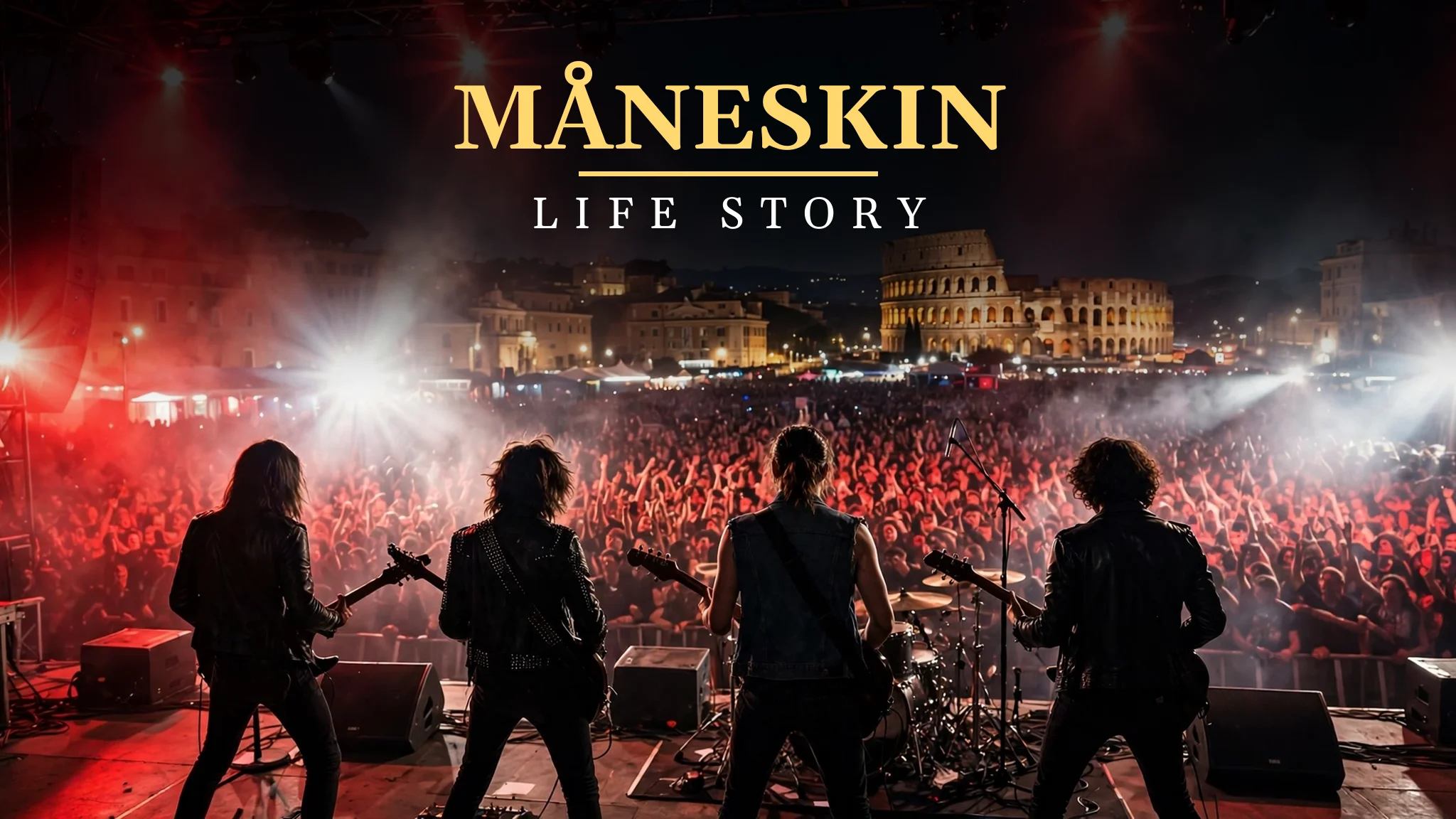
I also think about the Colosseum, and about the image of four young Romans playing rock music with that ancient monument behind them. It is a powerful image, because it connects the old Rome with the new Rome, the ancient world with the modern world. Måneskin are a part of that connection. They are young, they are modern, and they are also deeply Roman, deeply Italian, and deeply proud of where they come from. That pride, combined with their modern sound, is a part of what makes them special.
Their success also shows that a band does not need to come from London or Los Angeles to become global. A band can come from Rome, can sing in Italian, and can still be heard around the world. That is a hopeful message for young musicians in every country, who may feel that fame is only for people from big music cities. Måneskin proved that it is not. It is for anyone with talent, with energy, and with friends who believe in them.
Finally, their story is a reminder that music is a team effort, and that a band is more than the sum of its parts. Damiano, Victoria, Thomas, and Ethan each bring something different, and together they make a sound that none of them could make alone. That is the magic of a band, and it is the magic that Måneskin have captured. Four friends, four instruments, and one voice, making rock music for the world.
My Take:
When I think about Måneskin, the first thing I think about is energy. They play with an energy that is rare, and that makes a listener want to move, to sing along, and to feel alive. Their music is loud, it is bold, and it is unapologetic, and that is exactly what rock music should be. In a time when many people said that rock was dead, Måneskin proved that it was alive, and that young people still wanted to hear it. I admire that, because it takes courage to play loud rock music when the charts are full of quiet pop.
I admire their friendship, too. They are four friends who met as teenagers, who played in the streets, and who built a career together. That friendship is the foundation of the band, and it is visible in their performances, where they support each other, where they play together, and where they celebrate together. Many bands break up because the members do not get along, or because fame drives them apart. Måneskin have stayed together, and they have handled the pressures of fame by staying close as friends. That is a rare and valuable thing.
I think about Zitti e buoni, and about how that song became an anthem for young people who are tired of being told to be quiet. The title means shut up and behave, and the song is a response to that demand. It says that young people have a voice, that they have a right to be heard, and that they will not be silenced. I love that message, because it is a message that many young people need to hear. The world often tells young people to wait, to be patient, and to follow the rules. Måneskin tell them to sing, to play, and to be themselves, loudly.
What I find most impressive in their story is their Eurovision win, and the way it changed their lives. They went from being a popular Italian band to being a global sensation in a single night, and they handled that change with confidence and with grace. They did not become arrogant, and they did not forget where they came from. They toured the world, they performed on major stages, and they represented Italy with pride. That is a credit to them, and it shows that they are not just talented musicians. They are also mature and grounded people.
I also think about their style, and about how bold it is. They dress in a way that is both masculine and feminine, glamorous and rebellious, and they do it with confidence. I admire that, because it shows that they are not afraid to be themselves, even when the world tells them to conform. Their style is a statement about freedom, about gender, and about the right to express oneself. That is a powerful message, especially for young listeners who feel different and who are looking for someone who says it is okay to be different.
There is a part of their story that makes me think about their street performances in Rome, and about how hard it is to busk for a living. They played in the streets, they hoped people would stop and listen, and they learned how to perform for a difficult audience. That experience made them stronger, and it gave them a sense of humility that has stayed with them. They know what it is like to play for nobody, and that knowledge makes them appreciate playing for thousands of people even more.
I think about their cover of Beggin’, and about how it became a global hit. It is a song that was originally recorded in the 1960s, and Måneskin made it their own, with a loud and energetic version that was played around the world. I love that, because it shows that a good song can be rediscovered by a new generation, and that a young band can take an old song and make it feel new again. That is a gift, and it is one that Måneskin possess.
When I compare them with other rock bands of their generation, I think their greatest strength is their authenticity. They are not pretending to be rock stars. They are rock stars, because they play rock music, they live rock music, and they believe in it. That authenticity is visible in their performances, in their interviews, and in their music. People can tell when a band is faking it, and they can tell when a band is real. Måneskin are real, and that is why they have succeeded.
I think about their break, and about how mature it is to take time apart when you need it. Many bands keep touring until they break up, because they are afraid to stop. Måneskin have said that they need time, that they want to work on solo projects, and that they will return when the time is right. I respect that, because it shows that they are thinking about their long-term future, not just about the next tour. They are four friends who want to stay friends, and who want to make music together for a long time. That is a wise decision.
If I have a sadness in their story, it is the sadness that rock music is often overlooked in the modern charts, and that a band like Måneskin has to work so hard to be heard. I wish rock music received more attention, and I wish more young bands had the chance that Måneskin had. But I also know that Måneskin have opened a door, and that other young bands will follow them through it. They have proved that rock is alive, and that is a gift to the whole music world.
For a young reader, I think the lesson of Måneskin is to be loud, to be yourself, and to believe in your friends. They were four friends from Rome who played in the streets, who entered a talent show, who won Sanremo, and who won Eurovision. They did it by being themselves, by playing the music they loved, and by supporting each other. That is a lesson for anyone who has a dream. Find your friends, find your music, and do not be quiet about it.
I keep returning to the image of the four friends on a stage, under red lights, with the Colosseum behind them, playing for a huge crowd. That image is powerful, because it shows how far they have come, from busking in the streets to playing in front of thousands of people, with one of the most famous monuments in the world behind them. It is a reminder that a dream can come true, if you work hard, if you believe in yourself, and if you have friends who believe in you too.
In the end, I think Måneskin teach us that rock music is not dead, that youth is not silent, and that four friends from Rome can change the world with a guitar, a bass, a drum, and a voice. When I hear Zitti e buoni now, I do not just hear a Eurovision winner. I hear a band that is loud, bold, and free, and that is a sound worth listening to. I hope they return soon, and I hope they keep playing loud, because the world needs more rock music, and it needs more bands like Måneskin.
I also think about the return of rock, and about how important it is that a young band proved rock was still alive. For years, people said rock was dead, and young musicians were told to make pop or hip-hop instead. Måneskin ignored that advice, they played rock, and they became global stars. I respect that, because it shows that a good sound does not die. It waits for someone who believes in it, and who plays it with all their heart.
Another thought that stays with me is about their audience, and about how young and passionate it is. Their fans are teenagers and young adults, who have discovered rock music through Måneskin, and who now listen to other rock bands as well. That is a wonderful thing, because it means that Måneskin have not just built a fan base. They have built a gateway, a way for young people to discover a whole world of music. That is a gift to the music world.
I think about their friendship again, because it is the heart of their story. Four friends, who met as teenagers, who played in the streets, and who became global stars together, is a beautiful story. It tells me that friendship can be a foundation for a career, and that a band is stronger when its members trust each other. I hope they stay friends, and I hope they return to the stage together soon, because the world needs more bands like them.
Finally, I think about what I would say to a young musician who wants to start a rock band. I would tell them to listen to Måneskin, to hear how loud, bold, and free they are, and to understand that rock music is still alive. I would tell them to find their friends, to play in the streets if they have to, and to believe in their music. Måneskin did that, and they became global stars. That is a lesson worth remembering, and it is one that I hope young musicians hear.
I also think about their touring life, and about how hard it must have been to travel the world at such a young age. They were in their early twenties, far from home, performing night after night, and living under constant attention. That is a lot for anyone, and it is a credit to them that they handled it with grace. They did not let the pressure break them, and they did not let fame change who they were. They stayed four friends from Rome, and that is a remarkable achievement.
Another thought that stays with me is about their language, and about how they sang in Italian and were still understood around the world. That tells me that music does not need a translation to be felt. A good song, sung with energy and with honesty, can cross any border, and Måneskin proved that. Their Italian songs were heard in America, in Britain, and in many other countries, and they were loved there, even by people who did not speak Italian.
I think about Damiano’s voice, too, and about how powerful it is. He sings with a raw and urgent sound, and he can move from a whisper to a shout in a single line. That voice is the centre of the band, and it is one of the reasons their songs are so memorable. I love voices like that, because they sound as if they mean what they say, and they make the listener believe in the song.
When I think about Victoria, Thomas, and Ethan, I think about how important each one is to the band. A rock band is not just a singer. It is a bassist, a guitarist, and a drummer, working together to make a sound. Måneskin are a real band, in the full sense of the word, and each member contributes something essential. That is why their music sounds so full, so powerful, and so alive.
Finally, I think about the future, and about what Måneskin might do next. They are still young, still talented, and still full of ideas, and I believe their best work may still be ahead of them. Whether they return as a band, or continue with solo projects, I hope they keep making music, because the world needs more loud, bold, and honest rock. Måneskin gave us that, and I am grateful for it.
One last thought stays with me, and it is about the word moonlight, the meaning of their name. Moonlight is soft, it is beautiful, and it is also a light that shines in the dark. Måneskin are a bit like that. They shine in a world that is often dark, they bring energy and joy to their audiences, and they remind us that music can be a light. I hope they keep shining, together or apart, and I hope their light reaches many more people in the years to come.
Frequently Asked Questions
Who are the members of Måneskin?
Måneskin are Damiano David on vocals, Victoria De Angelis on bass, Thomas Raggi on guitar, and Ethan Torchio on drums. They met as teenagers in Rome and started by busking in the streets before entering X Factor.
What does Måneskin mean?
Måneskin means moonlight in Danish, a word chosen by Victoria De Angelis, whose mother is Danish. The name was chosen because it sounded different and fit the band’s dark and bright rock style.
Did Måneskin win Eurovision?
Yes, they won the Eurovision Song Contest in 2021 in Rotterdam with Zitti e buoni, after winning the Sanremo Music Festival earlier that year. It was Italy’s first Eurovision win in more than thirty years.
What is Måneskin’s most famous song?
Zitti e buoni is their most famous original song, and their cover of Beggin’ became a huge global hit after Eurovision. Torna a casa and I Wanna Be Your Slave are also very well known.
Did Måneskin finish first on X Factor?
No, they finished second on the Italian X Factor in 2017, behind Lorenzo Licitra, but the show gave them a national audience, a record deal, and the start of their professional career.
Are Måneskin still together?
They have taken a break from touring and recording together to work on solo projects, and they have said the break is not the end. Fans are waiting for their return, while following the members’ individual work.


