Marwan Kenzari: The Life Story Behind the Dutch Hollywood Star
In this post
Marwan Kenzari is a Dutch actor who went from the stages of Amsterdam to the biggest films in Hollywood. He was born in The Hague to Tunisian parents, he studied acting in the Netherlands, and he became a star in Dutch cinema with his role in Wolf, for which he won the Golden Calf, the Dutch equivalent of an Oscar. He then moved to Hollywood, where he played Jafar in Aladdin, a villain in The Mummy, and a hero in The Old Guard. His story is about a man who crossed cultures, languages, and continents, and who built a career that is both Dutch and international.
He was born on 16 January 1983 in The Hague, a city known for its international courts and its diverse population. He grew up in a Tunisian Dutch family, speaking Dutch and Arabic, and living between two cultures. That experience gave him a unique view of the world, and it later helped him as an actor, because he could play characters from many different backgrounds and understand them from the inside.
What makes his story worth telling is the way he broke through barriers. He is a Dutch actor of North African origin who became a Hollywood star, and he did it by working hard, by choosing good roles, and by refusing to be limited to one kind of character. He has played villains and heroes, criminals and soldiers, and he has done it in Dutch, in English, and in other languages. His career is a sign of how the film world is changing, and how talent can come from anywhere.
A Tunisian Dutch Childhood in The Hague
Marwan Kenzari was born on 16 January 1983 in The Hague, the seat of the Dutch government and a city with a large international community. His parents were from Tunisia, and he grew up in a home where Tunisian culture and Dutch culture met every day. He spoke Dutch at school and Arabic at home, and he learned early what it meant to live between two worlds. That dual identity would later become a central part of his life and his work.
As a child, he was active and curious. He liked to play football, to be with friends, and to explore the city around him. The Hague was a diverse place, with people from many different countries, and Kenzari grew up seeing that diversity as normal. He did not think of himself as different. He thought of himself as a Dutch boy with a Tunisian family, and that was simply who he was.
His school years were shaped by his love of performance. He liked to act, to tell stories, and to make people laugh. He took part in school plays, and he began to think about acting as a career. He was not a child who dreamed of Hollywood. He was a child who liked to perform, and who wanted to see if he could make a life out of it. That simple dream would later take him much further than he could have imagined.
The Hague gave him a sense of the wider world. It was a city of diplomats, of international courts, and of people from many countries, and it taught him that the world was bigger than one neighbourhood. That lesson stayed with him, and it helped him to feel comfortable in different countries and in different cultures. An actor who is comfortable in many worlds can play many different characters, and Kenzari’s childhood gave him that comfort.
Studying Acting in Amsterdam
After school, Kenzari studied acting at the Maastricht Academy of Dramatic Arts, one of the leading drama schools in the Netherlands. The training was demanding, and it taught him the technical side of acting: how to use his voice, how to move, how to work with a text, and how to build a character. He learned that acting was not just about talent. It was about discipline, about practice, and about a willingness to learn from teachers and from fellow students.
Maastricht was a good place to study, because it was a city with a strong cultural life and a tradition of theatre. Kenzari threw himself into his studies, and he made the most of the opportunities the school offered. He performed in student productions, he worked with different directors, and he learned how to handle the pressure of performing in front of an audience. He was a dedicated student, and his teachers noticed his talent and his work ethic.
The years at drama school also gave him a network of friends and colleagues who would work with him in the years that followed. Dutch theatre and film is a small world, and the people an actor meets at school often become the people he works with for decades. Kenzari built those relationships, and they became an important part of his professional life.
By the time he graduated, he was ready to work as a professional actor. He had the training, he had the talent, and he had the determination to build a career. He did not expect instant success. He expected to work hard, to take the roles that were offered, and to learn from every job. That attitude served him well in the years that followed, and it is still part of how he works today.
Theatre, Wolf, and the Golden Calf
After graduating, Kenzari worked in theatre, performing with Toneelgroep Amsterdam and other companies. Theatre was a demanding teacher, because it required an actor to be ready every night, to perform in front of a live audience, and to work as part of a team. He learned a great deal from his stage years, and he became a strong theatre actor before he became a film star. He played in classic plays and in new Dutch works, and he showed that he could handle a wide range of roles.
His breakthrough in film came in Wolf, released in 2013, a Dutch crime drama in which he played Majid, a young kickboxer who becomes involved in crime. The role was demanding, because it required physical strength, emotional depth, and a willingness to play a character who was both sympathetic and dangerous. Kenzari gave a powerful performance, and he won the Golden Calf for Best Actor, the highest acting award in the Netherlands. It was a major achievement, and it made him a star in Dutch cinema.
Wolf was important because it showed that Kenzari could carry a film on his own, and that he could play a complex character with honesty and power. The film dealt with crime, family, and the choices that a young man must make when he has few options, and Kenzari’s performance made those choices feel real. Audiences and critics praised him, and he became one of the most sought after actors in the Netherlands.
The Golden Calf win changed his career. He was no longer a young actor trying to prove himself. He was an award winning actor, and he was offered bigger roles in film and television. He used that success carefully, choosing projects that interested him and that allowed him to show different sides of his talent. He did not want to be typecast as one kind of character. He wanted to play many different people, and he worked hard to do that.
Ben-Hur, The Mummy, and Hollywood
After Wolf, Kenzari began to work internationally. In 2016, he appeared in Ben-Hur, a remake of the classic film, playing Druses, a Roman officer. The film was a major Hollywood production, and it gave him a chance to work on a large scale, with a big cast and a big budget. It was an important step, because it showed that he could work in Hollywood and hold his own in a major film.
In 2017, he appeared in The Mummy, starring Tom Cruise, playing Malik, a character who was part of a secret organisation. The film was a big action production, and it brought Kenzari to the attention of audiences around the world. He was now working in Hollywood films, and he was building a reputation as an actor who could play intense and memorable supporting roles.
These Hollywood roles were important because they proved that his talent was not limited to Dutch cinema. He could work in English, he could work with major stars, and he could handle the demands of a big Hollywood production. He was no longer just a Dutch actor. He was an international actor, and he was ready for the leading roles that would follow.
His Hollywood work also showed his versatility. He played a Roman officer, a secret agent, and many other characters, and he did each of them with conviction. He was not limited to one kind of role, and he was not limited to one kind of film. That range made him valuable to directors, and it opened doors that would lead to even bigger opportunities.
Aladdin and Jafar
In 2019, Kenzari played Jafar in Aladdin, the live action remake of the Disney classic, directed by Guy Ritchie and starring Will Smith as the Genie. Jafar was the villain of the film, the royal vizier who wants to become Sultan, and Kenzari played him with a mix of charm, menace, and ambition that made him a memorable villain. The film was a huge commercial success, earning more than a billion dollars around the world, and it made Kenzari known to audiences everywhere.
Playing Jafar was a major challenge, because the character was already famous from the animated film, and audiences had strong expectations of how he should look and sound. Kenzari had to make the character his own, while also honouring the original. He did that by focusing on Jafar’s desire for power, his intelligence, and his sense of being overlooked, and by playing those feelings with honesty. His Jafar was not a cartoon villain. He was a real person who wanted more than he had, and that made him both frightening and understandable.
Aladdin was a turning point in Kenzari’s career. He was now a Hollywood star, and he was recognised by audiences around the world. He had gone from a Dutch film about a kickboxer to a Disney blockbuster, and he had done it in less than a decade. That journey is a remarkable one, and it is a testament to his talent, his hard work, and his willingness to take on big challenges.
The film also showed his ability to work in a family film, a genre that is very different from the crime dramas and thrillers he had done before. He adapted to it with ease, and he proved that he could play a villain in a film for children as well as in a film for adults. That versatility is one of his greatest strengths, and it is why directors keep coming back to him.
The Old Guard, Black Adam, and Today
After Aladdin, Kenzari continued to work in Hollywood. In 2020, he appeared in The Old Guard, a Netflix action film starring Charlize Theron, playing Joe, an immortal warrior who has lived for centuries and who is in a loving relationship with another immortal, Nicky. The role was important because it showed a same sex relationship in a major action film in a natural and respectful way, and Kenzari’s performance was praised for its warmth and its humanity. It was a very different role from Jafar, and it showed his range as an actor.
In 2022, he appeared in Black Adam, a superhero film starring Dwayne Johnson, playing Sabbac, a villain with supernatural powers. The film was a major production, and it gave Kenzari another chance to play a powerful antagonist in a big Hollywood film. He handled the role with confidence, and he showed that he could work in the superhero genre as well as in drama and in fantasy.
Today, Marwan Kenzari is seen as one of the most successful Dutch actors of his generation. He has worked in Dutch cinema, in Hollywood blockbusters, and in streaming films, and he has built a career that spans continents and genres. He is respected by his colleagues for his professionalism and his talent, and he is loved by his fans for the intensity and honesty of his performances.
His story is still being written. He is still young, he is still working, and he is still choosing new roles that will challenge him. He has come a long way from The Hague, from drama school to the biggest film sets in the world, and he has done it by working hard, by learning his craft, and by staying true to himself. That is a story worth telling, and it is one that will continue for many years to come.
Playing Jafar: A Villain With a Reason
Marwan Kenzari’s performance as Jafar in Aladdin deserves a closer look, because it shows how a good actor can take a famous villain and make him feel new. In the original animated film, Jafar is a tall, thin, and clearly evil character, with a long beard and a snake staff. Kenzari’s Jafar is different. He is younger, he is handsome, and he is ambitious in a way that feels human. He wants power not because he is simply evil, but because he feels that he has been overlooked, that he has worked hard and been given nothing, and that he deserves more than the Sultan is willing to give him.
That interpretation came from Kenzari’s own understanding of the character. He has spoken in interviews about how Jafar is a man who comes from nothing, who has risen through his own intelligence, and who is frustrated by a system that will not let him go further. That is a feeling that many people know, in many different walks of life, and Kenzari brought it to the role with honesty. He did not play Jafar as a monster. He played him as a man who wanted more, and that made the character both frightening and understandable.
The physical work of the role was also demanding. Kenzari had to wear elaborate costumes, work with visual effects, and perform in scenes where much of the world around him was created by computers. He had to imagine the palace, the magic, and the danger, and make it feel real. He did that with a confidence that came from his theatre training, where an actor learns to imagine a whole world from an empty stage. That training served him well in a film where so much depended on imagination.
He also had to work opposite Will Smith, who played the Genie with great energy and humour, and opposite Mena Massoud, who played Aladdin. Kenzari held his own in those scenes, because he understood that Jafar’s power came not from shouting, but from a quiet and controlled menace. He spoke softly, he moved slowly, and he let the audience feel the danger in his stillness. That is a sophisticated way to play a villain, and it is one that made his Jafar memorable long after the film had ended.
From Wolf to the World
Marwan Kenzari’s journey from Wolf to Aladdin is one of the most remarkable in recent Dutch cinema, and it is worth tracing step by step to understand how it happened. Wolf was a Dutch film, made on a modest budget, about a young kickboxer in Amsterdam. It was a serious and gritty drama, and Kenzari’s performance won him the Golden Calf, the highest honour for an actor in the Netherlands. That award brought him to the attention of casting directors in other countries, who saw a young actor with power, with presence, and with a rare intensity.
He did not rush to Hollywood. He took supporting roles in international films, in Ben-Hur and in The Mummy, and he learned how a large Hollywood production worked. Those roles were not large, but they were important, because they taught him how to work on a big set, with a big cast, and with a director who had to manage hundreds of people. He watched, he learned, and he prepared himself for the day when a leading role would come. That day came with Aladdin, and he was ready for it, because he had done the work that comes before success.
The speed of his rise is striking. In less than six years, he went from a Dutch crime drama to a Disney blockbuster that earned more than a billion dollars. That is a journey that few actors ever make, and it is a testament to his talent, his hard work, and his willingness to take on big challenges. He did not let the scale of Hollywood intimidate him. He brought the same intensity he had shown in Wolf to Jafar, and he made a Disney villain feel like a real person.
His journey also shows how the film world has changed. In the past, a Dutch actor would rarely be cast in a major Hollywood film. Today, casting directors look around the world for talent, and they are willing to give a leading role to an actor from a small country if that actor has the skill. Kenzari benefited from that change, and he also helped to prove that it works. His success has opened doors for other Dutch actors, and it has shown Hollywood that talent can come from anywhere.
A Dutch Star in Hollywood
Marwan Kenzari’s success in Hollywood is a source of pride in the Netherlands, because it shows that a Dutch actor can compete at the highest level of world cinema. Dutch actors have long been respected in Europe, but few have become stars in Hollywood, and Kenzari is one of the few who has done it. His roles in Aladdin, The Old Guard, and Black Adam have made him known to audiences around the world, and they have shown that Dutch training, Dutch theatre, and Dutch film can produce an actor who is ready for the biggest productions in the world.
His success also matters because of his background. As a Dutch actor of Tunisian origin, he represents a Netherlands that is diverse, modern, and open to the world. Young people from immigrant families can look at him and see that their background is not a barrier, but a strength, and that they too can achieve great things. That is a powerful message, and it is one that Kenzari carries with him, even when he does not speak about it directly. His career is the message, and it is heard by many people who need to hear it.
My Take:
When I think about Marwan Kenzari, I think about crossing borders. He was born in The Hague to Tunisian parents, he grew up speaking two languages, and he has spent his career crossing from Dutch cinema to Hollywood, from theatre to film, from villain to hero. That ability to cross borders is his gift, and it is what makes his career so interesting. Many actors stay in one world. Kenzari has lived in many worlds, and he brings something from each one to his performances. I admire that, because it shows a person who is open, curious, and willing to learn from different cultures.
I admire his performance in Wolf, because it was the role that made him a star, and it was a role that required everything he had. He played a young kickboxer who becomes involved in crime, and he showed the character’s strength, his fear, and his desire for a better life, all at the same time. That is a difficult thing to do, and it is a sign of a great actor. He won the Golden Calf for that role, and he deserved it, because it was a performance that felt real from start to finish. It was the foundation of everything that followed.
What I find most interesting about him is his role as Jafar in Aladdin. Jafar is a famous villain, and many actors would have played him as a simple cartoon. Kenzari did not. He played Jafar as a man who wanted power because he felt that he had been overlooked, and that made the character feel human. I think that is a brave choice, because it means the audience can understand the villain, even if they do not agree with him. A villain who is just evil is boring. A villain who has a reason for what he does is interesting, and Kenzari’s Jafar was interesting.
I also think about his role in The Old Guard, and I find it very moving. He played Joe, an immortal warrior who loves another man, and he played that love with a warmth and a naturalness that was beautiful to watch. In a major action film, a same sex relationship is often treated as a side note, but Kenzari and his co-star made it feel central and real. That is a sign of progress in Hollywood, and it is a sign of Kenzari’s talent as an actor. He did not play the relationship as a statement. He played it as a love story, and that is why it worked.
If I have a sadness about his story, it is that he is often cast as a villain, and his range is wider than that. He has played villains very well, in Aladdin and in Black Adam, but he has also played heroes and lovers, and he deserves more chances to show that range. An actor who is always cast as the villain will eventually be limited by that image, and Kenzari deserves more than that. He has the talent to play many different people, and I hope that directors will give him more chances to do so.
I also respect the way he has handled his dual identity. He is Dutch and Tunisian, and he has spoken about how that shapes his view of the world. He does not hide one side of himself to fit in. He brings both sides to his work, and that makes his performances richer. In a world where many people feel that they must choose one identity, Kenzari shows that it is possible to be both, and to be proud of both. That is a valuable lesson, and it is one that many young people with immigrant backgrounds will find inspiring.
Another thing I notice is his professionalism. Directors and co-stars have praised him for being prepared, for being focused, and for being easy to work with. That may sound like a small thing, but in the film world it matters a great deal. A set is a stressful place, and an actor who is professional makes everyone’s job easier. Kenzari has built a reputation as a professional, and that reputation will help him for the rest of his career, because people want to work with someone they can trust.
When I compare Kenzari with other actors of his generation, what stands out is his journey. He went from a small Dutch film to a Disney blockbuster in less than a decade, and he did it without losing himself. He is still a Dutch actor, he still works in the Netherlands when he can, and he still brings a Dutch directness to his work. That is a remarkable achievement, and it is a sign of a person who knows who he is and who does not need Hollywood to tell him.
For a young actor reading this, I think the lesson is to be open to different worlds and to different kinds of roles. Kenzari did not limit himself to one kind of character or one kind of film. He played a kickboxer, a Roman officer, a Disney villain, and an immortal warrior, and he did each of them well. That versatility is the result of training, of hard work, and of a willingness to try new things. A young actor who follows his example will not be afraid to take a risk, and that willingness to take a risk is the first step to building a long and interesting career.
In the end, I think Marwan Kenzari teaches us that talent can come from anywhere, and that a person who is willing to work hard and to cross borders can build a career that spans the world. He has played in Dutch films, in Hollywood blockbusters, and in streaming hits, and he has earned the respect of audiences and critics alike. I admire him for it, and I look forward to seeing what he does next, because I believe that his best work may still be ahead of him.
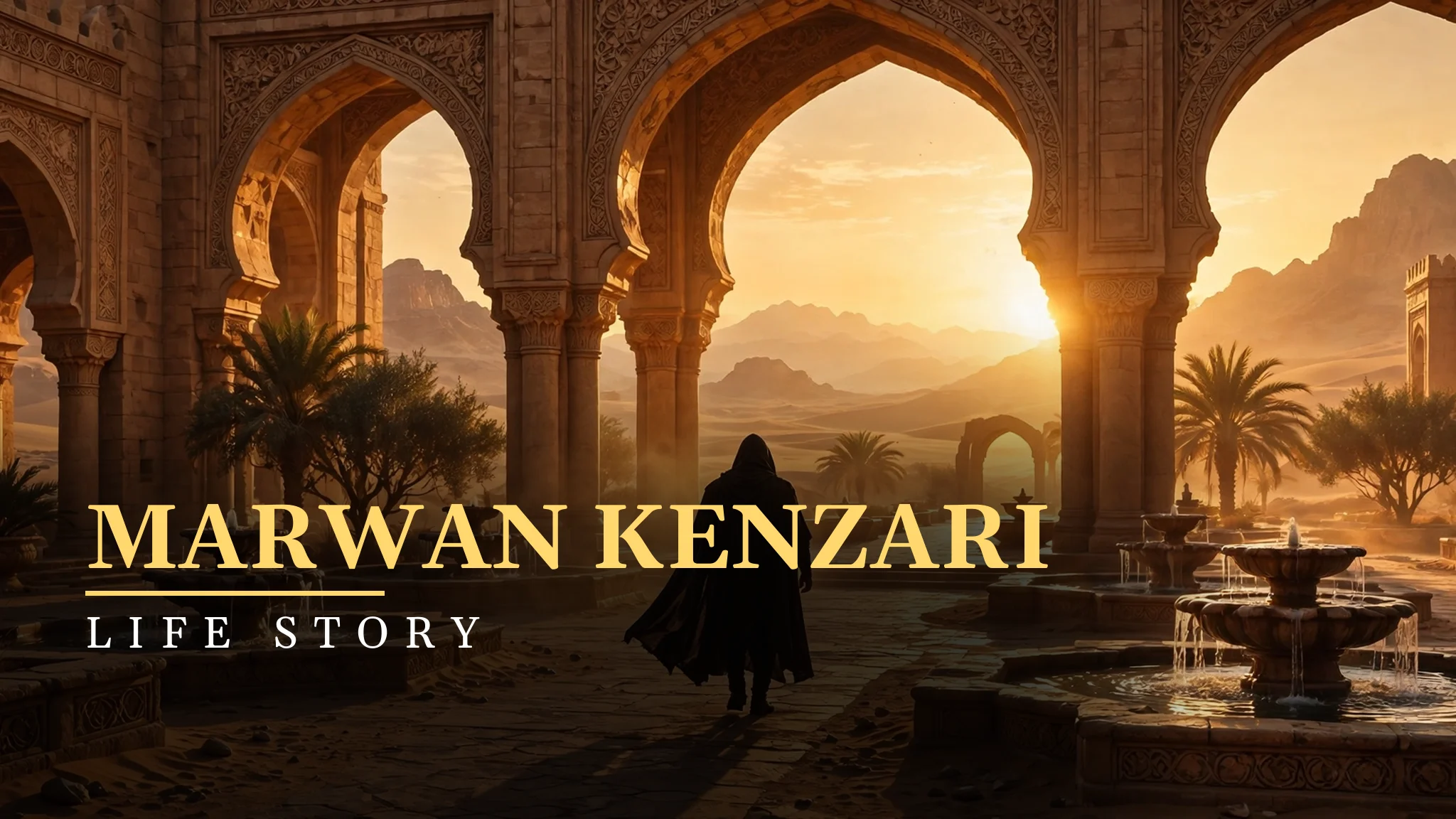
One more thought stays with me, and it is about the desert palace in his image and the journey he has made. He started in The Hague, a city of canals and courts, and he has travelled to deserts, to ancient Rome, and to fantasy worlds on screen. That journey is a good image for his career, because it shows a person who is always moving, always learning, and always looking for the next story to tell. I think that is a wonderful way to live a life, and I am glad that Kenzari is living it.
I also think about the desert palace in his image, and about what it says about his journey. A palace in the desert is a place of beauty and of power, but it is also a place that is far from home, and that is a good image for Kenzari’s career. He left The Hague, he travelled to Hollywood, and he built a career in a world that was very different from the one he grew up in. That journey took courage, and it took a willingness to be far from home for long periods. I admire that courage, because it shows a person who is not afraid to leave what is familiar in order to find something new.
Another thing I admire is his work in The Old Guard, because it showed a different side of him from Jafar. Joe is a warrior who has lived for centuries, but he is also a man in love, and Kenzari played that love with a tenderness that was beautiful to watch. In a film full of action and violence, the love story between Joe and Nicky was a quiet and human moment, and it was one of the best parts of the film. That is a sign of an actor who can do more than play a villain. He can play a lover, a friend, and a hero, and he can do each of them with conviction.
I also think about the representation that his career provides. Young people from immigrant families in the Netherlands, and in other countries, can look at Kenzari and see someone who looks like them, who comes from a background like theirs, and who has become a Hollywood star. That is a powerful message, because it says that talent is not limited by background, and that a person from any culture can achieve great things. Kenzari has not made a big speech about this, but his career speaks for itself, and it is an inspiration to many young people who dream of a life in film.
There is also a lesson here about language, because Kenzari works in Dutch, in English, and in other languages, and he does it with ease. Acting in a second language is hard, because an actor must not only remember the words, but must also make them sound natural and convey feeling in a tongue that is not his own. Kenzari does that well, and it is one of the reasons he has been able to work internationally. A young actor who wants a global career should learn languages, because they open doors that would otherwise stay closed.
I think about his future too, and about what roles he might play next. He is in his forties, and he has many years of acting ahead of him. He could play leaders, fathers, heroes, and villains, and he has the range to do each of them well. I hope that directors will give him more leading roles, because he has proven that he can carry a film and that audiences respond to him. He deserves that chance, and I believe he will make the most of it when it comes.
Finally, I want to say something about the Golden Calf he won for Wolf, because it is a reminder that his career began in the Netherlands, and that Dutch cinema gave him his start. He has not forgotten that, and he continues to work in Dutch film when he can. That loyalty is admirable, because it shows a person who remembers where he came from and who wants to give back to the place that gave him his first chance. I think that is a beautiful quality, and it is one that will stay with him for the rest of his career.
I also think about the fountains in his image, and about what they say about his career. A fountain is a place where water flows, where life is renewed, and where people gather. Kenzari’s career is like that: it flows from one role to another, it renews itself with each new project, and it brings people together from different countries and cultures. He has worked in Dutch, in English, and in international productions, and each one has added something new to his work. That flow is a beautiful thing, and it is one that I hope will continue for many years.
Another thing I admire is his physical preparation for his roles. In Wolf, he had to look like a kickboxer, strong, fit, and ready to fight. In Aladdin, he had to move like a vizier, graceful and controlled. In The Old Guard, he had to fight like an immortal warrior. Each of those roles required a different kind of physical work, and Kenzari did it with dedication. He trained, he practised, and he made his body part of the character. That is a sign of a professional who takes his craft seriously, and it is one of the reasons his performances feel so complete.
There is also a thought about the importance of mentors, because Kenzari has worked with directors who believed in him and who gave him chances. A young actor needs someone to believe in him, to cast him in a role that is bigger than what he has done before, and to trust that he will rise to the occasion. Kenzari had those mentors, in the Netherlands and in Hollywood, and he repaid their trust with excellent work. That is a lesson for anyone in a position to help a young talent: believe in them, give them a chance, and they may surprise you.
Frequently Asked Questions
Where was Marwan Kenzari born and what is his background?
Marwan Kenzari was born on 16 January 1983 in The Hague, Netherlands, to Tunisian parents, and he grew up speaking Dutch and Arabic in a home where two cultures met every day.
What was Marwan Kenzari’s breakthrough film in the Netherlands?
His breakthrough was Wolf from 2013, a Dutch crime drama in which he played a young kickboxer who becomes involved in crime, winning the Golden Calf for Best Actor.
Who did Marwan Kenzari play in Aladdin?
He played Jafar in Aladdin from 2019, the royal vizier who wants to become Sultan, in the live action Disney remake directed by Guy Ritchie and starring Will Smith as the Genie.
Did Marwan Kenzari appear in The Old Guard?
Yes, he played Joe in The Old Guard from 2020, an immortal warrior in a loving relationship with another immortal, Nicky, in the Netflix action film starring Charlize Theron.
What other Hollywood films has Marwan Kenzari appeared in?
He appeared in Ben-Hur from 2016, The Mummy from 2017, and Black Adam from 2022, playing a range of supporting and villain roles in major Hollywood productions.
Where did Marwan Kenzari study acting?
He studied acting at the Maastricht Academy of Dramatic Arts in the Netherlands, one of the leading drama schools in the country, before working in theatre and film.
Is Marwan Kenzari still working in Hollywood today?
Yes, he continues to work in Hollywood and in European cinema, building a career that spans Dutch film, blockbusters, and streaming productions, and he remains one of the most successful Dutch actors of his generation.


