Meiway: The Life Story Behind Ivory Coast's Zoblazo Star
In this post
Before you hear a Meiway song, you usually see it. A crowd moves together, the drums push the rhythm forward, and a man in the middle of the stage dances with a confidence that makes the whole room move with him. That is Zoblazo, the sound Meiway created, and it is one of the great dance styles of West Africa. It is not music to sit still to. It is music that asks the body to answer, and for more than forty years, audiences from Abidjan to Paris have answered.
Meiway was born Frédéric Ehui on 17 March 1962 in Grand-Bassam, a historic town on the coast of Ivory Coast. Grand-Bassam was the first capital of the country, a place of old colonial buildings, fishermen, and traders, where the Atlantic meets the lagoon. A child growing up there hears the sea every day, and he hears the music of the coast: the songs of fishermen, the drums of local celebrations, and the rhythms that have been played in that region for generations. Those sounds stayed in Meiway’s ear, and they became the foundation of the music he would later invent.
He did not become a star by copying the music of other countries. He took the sounds of his own home, added the instruments and the energy of modern African pop, and built something that belonged to Ivory Coast alone. The result was Zoblazo, a style that made him famous across Africa and in the diaspora, and a career that has lasted longer than most dance careers last. This is the story of how a boy from Grand-Bassam became the professor of Zoblazo, and how his dance kept a whole country moving.
Grand-Bassam: The Sea, the Drums, and a Boy Called Frédéric
Frédéric Ehui was born on 17 March 1962 in Grand-Bassam, on the coast of Ivory Coast. The town was once the capital of French Ivory Coast, and its streets still carry the memory of that time: old buildings with wide verandas, a lighthouse, and a harbour where boats come and go. It is a town where the sea is never far away, and where the daily life of fishermen and market traders sets the rhythm of the day. A child there learns the sound of the waves before he learns the sound of a radio.
His family was part of that coastal world. He grew up in a community where music was not something you only heard on a record. It was something that happened in the street, at a wedding, at a festival, and at a gathering of neighbours. Drums were played by hand, songs were sung by groups, and dancing was not a performance for an audience. It was a part of life. Frédéric watched all of it, and he joined in. He was not a quiet child who sat at the edge of the celebration. He was in the middle of it, moving, singing, and learning the rhythms that would later become his work.
Grand-Bassam is also a town of many peoples and many languages, and a child there hears different ways of speaking and singing. That mix taught Meiway something important: music in Ivory Coast is not one thing. It is many things, from many regions, and a singer who understands that can speak to the whole country. He would later draw on that understanding, taking rhythms from his own region and giving them a form that people from other regions could dance to as well.
School gave him a formal education, but the street gave him a musical one. He listened to the records that arrived in Grand-Bassam and Abidjan: Congolese rumba, Ghanaian highlife, French pop, and the American soul and funk that travelled across the Atlantic. He liked them all, but he did not want to be a copy of any of them. He wanted to make music that sounded like where he came from, and that meant starting with the rhythms he had heard since childhood. The sea, the drums, and the dances of Grand-Bassam were his first teachers, and they were the best teachers he could have had.
As a young man, he began to think seriously about music as a career. That was not an easy decision in Ivory Coast in the 1970s and early 1980s. There were famous singers, but the music business was small, and a young man from Grand-Bassam had no guarantee that his songs would be heard outside his own town. He decided to try anyway. He had a voice, he had a sense of rhythm, and he had an idea that was starting to take shape in his mind: a new dance, a new sound, and a new way of bringing the music of the coast to the whole country.
Paris Years and the Search for a Sound
Like many young African musicians of his generation, Meiway went to Paris in the 1980s. Paris was the centre of the African music world in Europe, and its studios were where many of the great records of West and Central African music were made. A young singer in Paris could find producers, musicians, and an audience of Africans living far from home who were hungry for music that reminded them of where they came from. Meiway went there to learn, to record, and to find his sound.
The Paris years were hard in the way that life abroad is hard for a young artist. He had to work, he had to live far from his family, and he had to compete with many other talented singers who had come to the same city with the same dream. But Paris also gave him something he could not have found at home: access to modern studios, to musicians from many countries, and to the latest sounds from around the world. He listened to everything, and he began to put together the pieces of the style that would become Zoblazo.
Zoblazo was not invented in a single day. It grew out of the rhythms of the Nzema people and the coastal region, mixed with the energy of modern African pop and the drive of a dance band. The name itself came from the local language, and the dance that went with it was as important as the music. A Zoblazo song was not complete until people were dancing to it, and the dance was not a complicated one. It was a movement that anyone could learn, and that was the point. Meiway wanted a dance for everyone, not only for trained dancers.
His early records in Paris began to find an audience. African listeners in France heard a sound that was familiar and new at the same time, and they played his songs at parties and in clubs. The records travelled back to Ivory Coast, where listeners heard them and wanted more. That journey — from Abidjan to Paris and back to Abidjan — was a common one for African musicians of the time, and it worked because the diaspora audience in Paris was large, loyal, and eager for new music from home.
By the end of the 1980s, Meiway had a style, a name, and a growing audience. He was ready to take Zoblazo to the next level, and the next level would be a record that made his name known across Africa. The years in Paris had given him the tools. Now he needed the song that would put those tools to work.
Zoblazo: A New Dance for Ivory Coast
In 1990, Meiway released the album Zoblazo, and the record gave its name to the style he had been building. The album was a success in Ivory Coast and in the wider French-speaking African world, and it introduced a sound that was immediately recognisable. The drums were strong, the rhythm was fast, and the songs were built for dancing. Radio stations played it, DJs played it in clubs, and young people learned the dance. A new style had been born, and it had a name that everyone could say.
The following year, he released 200% Zoblazo, an album whose title was a promise: this was not a half-hearted version of the style, but the full thing, twice over. The record continued the success of the first, and it showed that Zoblazo was not a one-time idea. It was a sound that could grow, with new songs, new rhythms, and new dances. Meiway was not a singer with one good record. He was the leader of a movement, and the movement was spreading.
What made Zoblazo special was its roots. It was not a copy of a foreign style. It came from the music of the Nzema people of the Grand-Bassam region, and it carried the rhythms and the spirit of that place. At the same time, it was modern. It used electric instruments, studio production, and the energy of a pop band. That combination — old roots and new sound — is what made it work. Listeners in Ivory Coast heard something that belonged to them, and listeners in other countries heard something that was fresh and exciting.
The dance was part of the appeal. Zoblazo was not music for sitting and listening. It was music for moving, and the dance that went with it was simple enough for a whole crowd to join in. At a Meiway concert, the audience did not stand still. They danced, they sang along, and they became part of the show. That is the mark of a great dance music: it does not separate the performer from the crowd. It brings them together, and Meiway understood that better than most.
The success of Zoblazo also made Meiway a star in Ivory Coast, and his name became linked with the style in a way that few singers achieve. When people said Zoblazo, they meant Meiway, and when they said Meiway, they meant Zoblazo. That is a rare kind of fame, and it is one that lasts, because it is not based on a single song. It is based on a whole sound, and on the dance that goes with it.
Miss Lolo, the Professor, and the Peak Years
In the mid-1990s, Meiway reached a new peak with the song and album Miss Lolo, released in 1996. The song became one of his best-known works, played at parties and celebrations across West Africa and in the diaspora. It was a love song with a strong dance rhythm, and it showed that Meiway could write about romance as well as about dancing. The success of Miss Lolo proved that his appeal was not limited to one style of song. He could make people dance, and he could make them sing along to a love song, and both felt natural in his voice.
By this time, he was known by a nickname that said a lot about his standing: Le Génie de Kpalezo, the genius of Kpalezo, and also as the Professor of Zoblazo. The nickname was not only about his talent. It was about his role as a teacher and a leader in Ivorian music. He had created a style, he had taught it to a generation, and he had shown other artists how to build a career from their own roots. A professor does not only perform. He teaches, and Meiway’s career had become a lesson for younger musicians.
The peak years brought him awards and recognition across Africa. He won honours at the Kora Awards, the major African music awards, and his name was known in countries far from Ivory Coast. He performed at festivals and concerts in Africa and Europe, and his live shows became famous for their energy and their length. A Meiway concert was a celebration, with a big band, dancers, and a crowd that knew every song. He did not perform alone. He performed with a whole stage full of musicians, and the sound was big, loud, and joyful.
He also released a series of albums in the 1990s and 2000s that kept his name in front of audiences. Each album added new songs to his repertoire, and each one showed that Zoblazo could change and grow without losing its identity. He worked with new producers, he tried new ideas, and he kept the dance at the centre of his music. The music world was changing around him, with new styles arriving from Nigeria, Ghana, and the wider world, but Meiway’s audience stayed loyal, because his music gave them something that the new styles did not: a dance that belonged to them.
The peak years also brought him into the world of Ivorian popular culture in a wider sense. He was not only a singer. He was a public figure, a man whose name was known to people who did not follow music closely, and whose songs were part of weddings, birthdays, and national celebrations. That kind of fame is different from the fame of a singer who is known only to fans. It is the fame of a person who has become part of the life of a country, and Meiway achieved it through Zoblazo.
Forty Years On: Keeping Zoblazo Alive
A dance career is often a short one. Dancers get tired, tastes change, and new styles push old ones aside. Meiway’s career has lasted for more than forty years, and that is a rare achievement for a dance musician. He has kept Zoblazo alive by keeping it fresh, by recording new music, and by performing with the same energy that marked his early shows. He has also kept it alive by teaching it to new generations, who learn the dance from their parents and then discover it for themselves.
He has continued to release albums and to perform in the 2000s, 2010s, and 2020s, and his concerts still draw crowds who know the old songs and want to hear the new ones. That is a test that many singers fail: the test of time. An artist who can fill a room forty years after his first hit has done something that goes beyond fashion. He has made music that lasts, and he has kept a relationship with his audience that lasts as well.
He has also used his fame to speak about Ivory Coast and about African music. He has been a voice for the idea that African artists should be proud of their own styles, and that they do not need to copy foreign music to succeed. Zoblazo is the proof of that idea. It came from a small region of Ivory Coast, and it became known across Africa. That is a lesson for young artists who are tempted to abandon their roots in order to sound modern. Meiway shows that the roots are the modern sound, if you know how to use them.
The later years have also brought him honours and recognition from his own country and from the wider African music world. He is regarded as one of the great names of Ivorian music, alongside the singers of other generations, and his name is mentioned whenever the history of West African dance music is told. He did not only make hit songs. He made a style, and the style outlived the charts. That is the highest achievement for a dance musician, and it is one that few achieve.
Today, Meiway remains active, and his music remains a part of life in Ivory Coast. Young people hear Zoblazo at family gatherings, at festivals, and on the radio, and they learn the dance from the people around them. The professor is still teaching, and the class is still dancing. That is a legacy that does not need a trophy to prove it. It is proved every time a crowd moves together to a rhythm that began in Grand-Bassam more than forty years ago.
What Zoblazo Gave to Ivory Coast
Meiway’s greatest gift to Ivory Coast was not a single song. It was a dance and a sound that the whole country could share. Ivory Coast is a country of many peoples, many languages, and many musics. A style that comes from one region can easily stay in that region, and never reach the rest of the country. Zoblazo did the opposite. It came from Grand-Bassam, and it spread to Abidjan, to Bouaké, and to the diaspora in Paris and beyond. It became a national dance, and it gave Ivorians a shared rhythm.
That shared rhythm matters. In a country that has known division and conflict, a dance that brings people together is not a small thing. When a crowd dances to Zoblazo, the dancers do not ask each other where they come from. They move together, and the movement is the same for everyone. Meiway’s music has done that for decades, and it is one reason his name is respected beyond the world of music. He gave his country a reason to move together, and he gave it a sound that was proudly Ivorian.
His influence on younger artists is also clear. Singers and dancers who grew up with Zoblazo have taken its energy and its rhythms into their own work, and they have built new styles on the foundation he laid. That is how music grows: one artist creates a style, and the next generation takes it further. Meiway’s work is the foundation for a whole branch of Ivorian dance music, and the artists who follow him owe him a debt, whether they know it or not.
He also showed that a musician from a small coastal town could become a continental star without losing his identity. He did not have to move to a bigger country or change his sound to be heard. He built his sound from Grand-Bassam, and the world came to him. That example matters for young artists in Ivory Coast and across Africa, who are often told that they must leave home to succeed. Meiway stayed true to home, and home made him famous.
The Dancers, the Band, and the Show
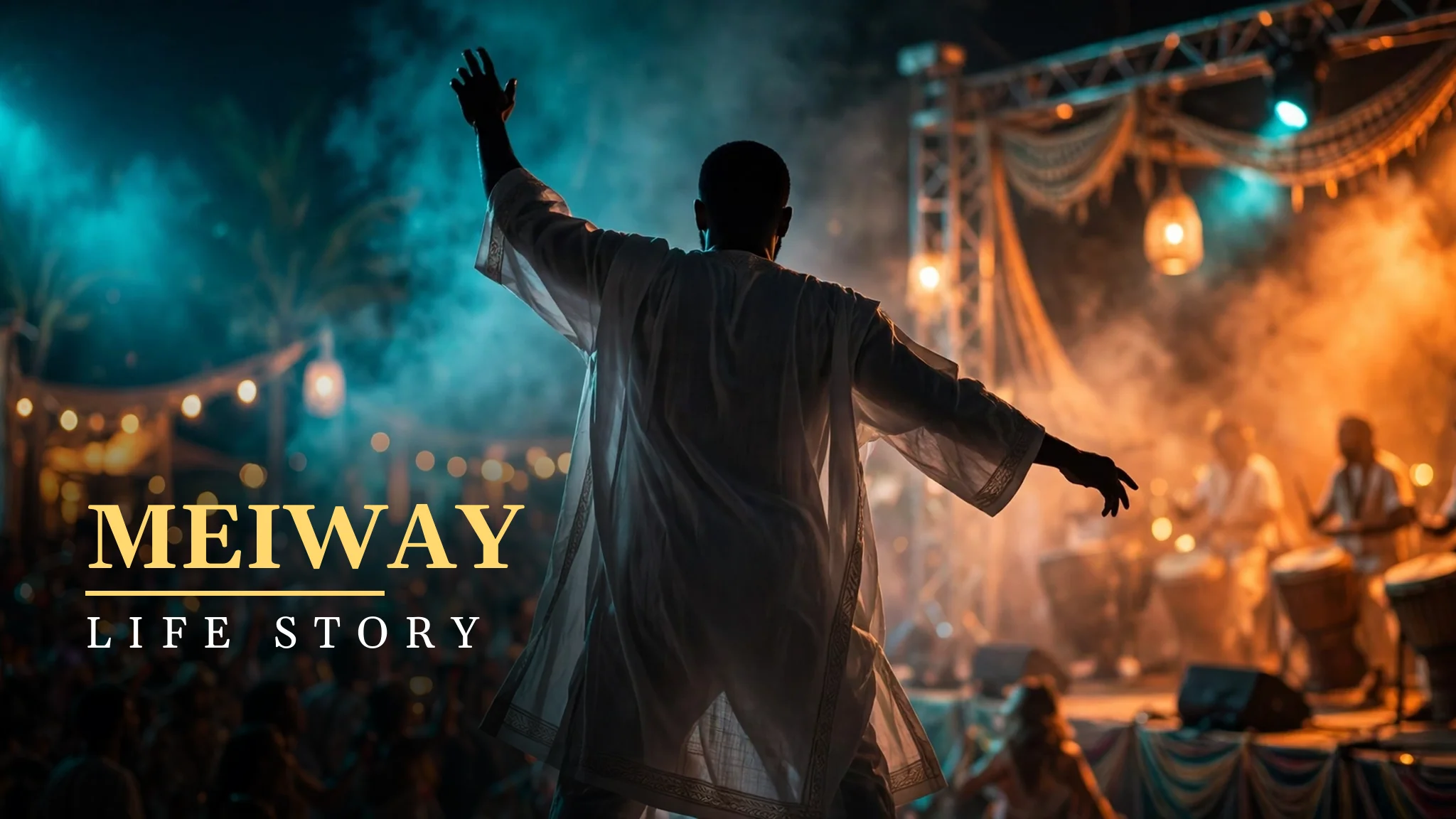
A Meiway concert is not a performance by one man. It is a celebration by a whole stage, with a big band, dancers, and a crowd that knows every song. The band behind him is a key part of the Zoblazo sound: drums that drive the rhythm, guitars that add melody, and a brass section that lifts the choruses. The dancers are just as important. They perform the Zoblazo dance with energy and precision, and they teach the audience the steps, so that the whole room moves together. A Meiway show is a lesson in how dance music should work: the band plays, the dancers lead, and the crowd follows, until the line between the stage and the audience disappears.
The dancers also carry the visual identity of Zoblazo. Their costumes are bright, their movements are sharp, and their energy is infectious. A young person in the audience who watches them learns the dance by watching, and then joins in. That is how a dance spreads: not through books, but through watching and copying, and Meiway’s dancers have taught Zoblazo to generations of Ivorians in that way. The show is not only entertainment. It is a school, and its subject is joy.
My Take:
I have to start by saying something simple: Meiway makes me want to dance, and I think that is a serious compliment. There are many singers whose music I admire, and many whose lyrics I think about, but there are fewer whose music makes my body move before my mind has time to think. Meiway is one of those few. When I hear Zoblazo, I do not analyse it. I feel the drums, and I want to move. That is a gift, and it is one that should not be underestimated. A singer who can make a whole room dance has done something that a singer who only makes people think has not done. He has brought people together in the same moment, and that moment is joyful.
What I admire most about Meiway is that he invented something. He did not copy a style from another country. He took the rhythms of his own region, the Nzema music of Grand-Bassam, and he turned it into a new dance that the whole country could share. Inventing a style is much harder than singing a good song. A good song can be forgotten. A style can last for generations, because other people can use it, dance to it, and build on it. Meiway invented Zoblazo, and Zoblazo is still being danced to more than thirty years later. That is an achievement that few singers can claim, and I think it should be at the centre of his story.
I also like the nickname, the Professor. It suits him, because he did not only perform. He taught. He taught a generation of Ivorians a new dance, and he taught younger musicians that they could build a career from their own roots. A professor is someone who shares knowledge, and Meiway shared his knowledge freely. He did not keep Zoblazo for himself. He gave it to his country, and his country gave it back to him by dancing to it for decades. That exchange, between an artist and his audience, is the heart of popular music, and Meiway understood it from the start.
Miss Lolo is the song I keep coming back to, because it shows a different side of him. It is a love song, and it is a dance song, and it works as both. I like that he could write about love without losing the rhythm, and that he could make a dance song that was also a song you could sing to someone you loved. Many dance musicians can only do one thing: they can make you move, but they cannot make you feel. Meiway can do both, and Miss Lolo is the proof. It is a song that has been played at weddings and parties for years, and it is a song that still sounds fresh when I hear it now.
I think about Grand-Bassam a lot when I think about Meiway. It is a small town, not a music capital, and a boy from there could easily have been forgotten. He was not forgotten, because he took the sound of his town and made it into something big. That is a lesson for anyone who comes from a small place. Your home is not a limitation. It is a source of music, of stories, and of rhythms that nobody else has. Meiway heard those rhythms every day as a child, and he turned them into a career. I hope young artists in small towns hear that lesson, because it is one of the most important lessons in music.
I will be honest about something: I do not think every Meiway album is as strong as Zoblazo and Miss Lolo. Some of his later records are good, but they do not have the same shock of newness that the early ones had. That is normal. A style that is new in 1990 cannot be new again in 2010. What matters is that he kept the style alive, and that he kept performing with the same energy. A singer who can still fill a room forty years after his first hit has earned respect, even if not every album is a classic. The career as a whole is the achievement, not any single record.
What I learn from his life is that dance music is serious music. People sometimes treat dance music as if it is less important than music with long lyrics or complex harmonies. I disagree. Dance music brings people together, it gives them joy, and it gives them a shared moment. In a world that is often divided, a shared moment of joy is a valuable thing. Meiway gave his country many such moments, and he gave them to people who needed them. That is a serious contribution, and it should be recognised as one.
I also think about the Paris years, and about what it means to leave home to find your sound. Meiway left Grand-Bassam, he lived in Paris, and he came back with a new style. That journey is a common one for African artists, and it is a hard one. You have to live far from home, you have to work hard, and you have to keep your identity when everything around you is different. Meiway did that, and he came back stronger. I admire that, because it takes courage to leave, and it takes even more courage to come back and to build something at home. Many artists leave and never return. Meiway returned, and he built Zoblazo at home.
His longevity is another thing I respect. Forty years is a long time in dance music. Tastes change, new styles arrive, and audiences move on. Meiway did not move on. He stayed, and he kept his audience with him. That is not luck. It is the result of hard work, of good songs, and of a relationship with an audience that was built over decades. Young artists who want a long career should study that. A long career is not built on one hit. It is built on many hits, on many concerts, and on many years of showing up for your audience.
I think about the young dancers in Ivory Coast today, and about what Zoblazo means to them. They learn the dance from their parents, they hear the songs at family gatherings, and they discover Meiway for themselves. That is how a style survives: it is passed from one generation to the next, not through books, but through dancing. Meiway’s music is alive in that way, and it will stay alive as long as people keep dancing to it. I find that hopeful. In a world where so much music is forgotten quickly, a dance that is passed from parent to child is a sign that something real has been made.
In the end, I think Meiway’s story is a story about joy. He gave his country a dance, and the dance gave his country joy. That is a simple thing to say, and it is a hard thing to do. Many singers try to give joy, and few succeed for forty years. Meiway succeeded, and he is still succeeding. I hope he keeps dancing, and I hope the crowds keep dancing with him, because a country that dances together is a country that remembers how to be together. That is the legacy of Zoblazo, and it is the legacy of the boy from Grand-Bassam who became its professor.
I also think about the dancers, and about how important they are to Meiway’s music. A Zoblazo song without its dance is only half a song, and the dancers on his stage are the ones who complete it. They move with energy and precision, they wear bright costumes, and they teach the audience the steps by example. I like that. It shows that dance music is a shared art, not a solo one, and that the audience is part of the performance. When I watch a Meiway concert, I do not only watch the singer. I watch the whole stage, and I watch the crowd, and I see a community moving together. That is a beautiful sight, and it is one that few kinds of music can offer.
The Kora Awards are another moment I think about, because they show how African music honours its own. Meiway won honours at the Koras, and those honours mattered, because they came from Africa itself, not from Europe or America. A singer who is honoured by his own continent is a singer who has been recognised by the people who understand his music best. I respect that kind of recognition more than I respect a prize from far away, because it is given by people who know the tradition, the language, and the dance. Meiway earned that recognition, and he earned it by creating a style that belonged to Africa.
I think about the younger Ivorian dance styles that came after Zoblazo, especially coupé-décalé, and about how they relate to Meiway’s work. Coupé-décalé is faster, louder, and more urban than Zoblazo, and it became the dominant dance music of Ivory Coast in the 2000s. Some people might have expected Meiway to be pushed aside by the new style, but he was not. His music remained, and his audience remained, because Zoblazo offered something that coupé-décalé did not: a dance that belonged to the coast, to Grand-Bassam, and to the Nzema people. The two styles did not cancel each other out. They lived side by side, and Ivory Coast was richer for having both. I like that idea. Music does not have to be a competition where only one style survives. It can be a family, with many members, and Meiway’s Zoblazo is one of the oldest and most respected members of that family.
His nickname, the Professor, is another detail I keep returning to, because it says something about how Ivorians see him. A professor is someone who teaches, and Meiway taught a generation a new dance, a new sound, and a new way of being proud of their own culture. He did not teach in a classroom. He taught on stage, on records, and at parties, and his students were the whole country. That is a kind of teaching that is more powerful than any lecture, because it is learned by dancing, and dancing is learned by doing. I hope young Ivorian artists understand that they are his students, whether they know it or not, and that they carry his lesson forward in their own work.
I also think about Grand-Bassam today, and about what it means to Meiway now. The town is still there, on the coast, with its old buildings, its fishermen, and its music, and it is still the home of Zoblazo. A young person in Grand-Bassam today who hears Meiway hears the sound of his own town, and that is a gift. It tells him that his home matters, and that its music matters. I hope that message reaches every young person in a small town, because it is one of the most important messages in music: your home is not a limitation. It is a source of sound, of rhythm, and of identity, and it is the thing that makes your work different from everyone else’s.
In the end, I keep coming back to a simple thought: Meiway gave his country a dance, and the dance gave his country joy. That is a simple thing to say, and it is a hard thing to do for forty years. Many singers try to give joy, and few succeed for that long. Meiway succeeded, and he is still succeeding. I hope he keeps dancing, and I hope the crowds keep dancing with him, because a country that dances together is a country that remembers how to be together. That is the legacy of Zoblazo, and it is the legacy of the boy from Grand-Bassam who became its professor.
I also think about the young people in Grand-Bassam who are learning Zoblazo today, not from a book, but from watching their parents dance at a family gathering. That is how a tradition survives: it is passed from one body to another, from one generation to the next, without ever being written down. Meiway’s dance lives in that passing, and it will live as long as people keep dancing it. I find that hopeful, because it means that a style created by one man can belong to a whole people, and can outlive the man who made it. Zoblazo is no longer only Meiway’s. It belongs to Ivory Coast, and Ivory Coast will keep it.
There is one more thing I want to say about longevity. Forty years is a long time to keep a dance alive, and it takes more than talent. It takes discipline, it takes love for the work, and it takes a willingness to keep showing up, year after year, when the crowds are big and when they are small. Meiway showed up, and his audience showed up for him. That mutual loyalty is the heart of his career, and it is the reason his name still means something in Ivory Coast today. A career built on loyalty lasts longer than a career built on fashion, and Meiway’s career is the proof.
Frequently Asked Questions
Where was Meiway born?
Meiway, whose real name is Frédéric Ehui, was born on 17 March 1962 in Grand-Bassam, a historic coastal town in Ivory Coast.
What is Zoblazo?
Zoblazo is a dance music style created by Meiway, based on the rhythms of the Nzema people of the Grand-Bassam region. It is fast, drum-driven music made for dancing, and it became one of the best-known Ivorian dance styles.
Which Meiway album introduced Zoblazo?
His album Zoblazo, released in 1990, introduced the style to a wide audience. He followed it with 200% Zoblazo in 1991, which confirmed that the style was here to stay.
What is Meiway’s most famous song?
Miss Lolo, released in 1996, is one of his best-known songs. It became a hit across West Africa and remains a favourite at parties and celebrations.
Why is Meiway called the Professor?
He is often called Le Génie de Kpalezo and the Professor of Zoblazo because he created the Zoblazo style and taught it to a generation of Ivorians. The nickname reflects his role as a leader and teacher in Ivorian music.
Did Meiway win awards for his music?
Yes, he has won honours at the Kora Awards, the major African music awards, and he is recognised across Africa as one of the leading names in Ivorian dance music.
Is Meiway still active?
Yes, he has continued to record and to perform for more than forty years, and his concerts still draw crowds who dance to Zoblazo and to his many hit songs.


