Mi Casa: The Life Story Behind South Africa's Soulful Band
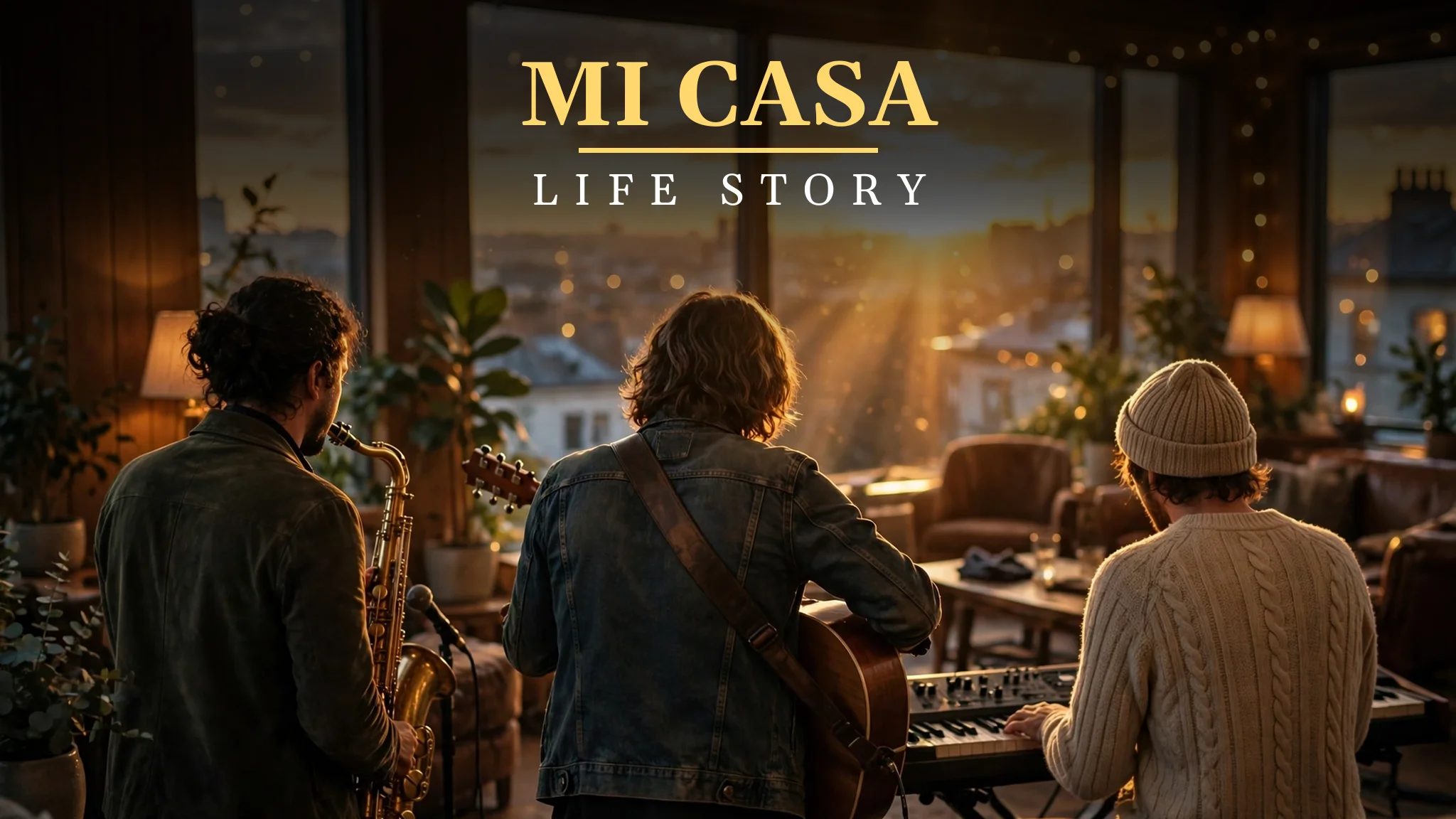
In this post
- A House Party in Johannesburg and Three Musicians Meet
- These Streets, Heavenly Sent and the First Album
- Su Casa, Home Sweet Home and the Sound Grows
- Jika, Mamela, Chocolate and the Songs That Stayed
- The Sound of Soulful House and the Instruments That Make It
- Familia, Later Years and a Band That Keeps Playing
- A Band, a Family and a House That Stays Open
- The Live Shows and the Energy of a Mi Casa Concert
- Collaborations and the Friends Who Joined the House
- My Take:
Mi Casa is a band whose name means my house, and that name fits their music perfectly. Their songs feel like a house party, like a warm room full of friends, like a night when the music is good, the people are happy, and nobody wants to go home. They make soulful house music, with a saxophone, a guitar, a keyboard, and a voice that is smooth and warm, and they have become one of the most loved bands in South Africa, with songs like These Streets, Heavenly Sent, Jika and Mamela that are played at parties, at weddings, on radio, and in cars across the country.
The band formed in Johannesburg in 2011, when three musicians met at a house party and decided to make music together. That meeting, at a party, in a house, with music in the air, is the perfect origin story for a band called Mi Casa, because their music has always felt like a party, like a home, like a place where people are welcome. The three members are J’Something, a singer and guitarist, Dr Duda, a producer and pianist, and Mo-T, a trumpeter, and together they created a sound that was fresh, soulful, and unmistakably South African.
What makes their story worth telling is the way they built a band from a chance meeting, from a house party, into a career that has lasted for more than a decade, with albums, with awards, with tours, and with songs that have become classics. This is the story of that band, of J’Something, Dr Duda and Mo-T, of Johannesburg, of soulful house, and of a house that became a home for South African music.
A House Party in Johannesburg and Three Musicians Meet
Mi Casa was formed in Johannesburg in 2011, when three musicians met at a house party and discovered that they shared a love of music, a sense of humour, and a vision for a new kind of South African house music. The three were Joao da Fonseca, known as J’Something, a singer and guitarist who was born in Portugal and raised in South Africa, Sipho Mphahlaza, known as Dr Duda, a producer and pianist, and Moshe Kgasoane, known as Mo-T, a trumpeter. They met at a party, they talked about music, they played together, and they realised that they had something special.
Johannesburg in 2011 was a city full of music, with house music in clubs, with soul, with jazz, with Afro-pop, and with a new generation of artists who were mixing those sounds into something fresh. Mi Casa was part of that generation, and they brought a different approach: they were a live band, not only DJs, they played instruments, they sang, they performed, and they made house music that felt warm, soulful, and human. That live band approach set them apart, and it gave their music a depth that many house acts did not have.
J’Something was the frontman, the singer with a smooth, warm voice, a guitarist who could play a melody, and a performer who could hold a stage. He was born in Portugal, he moved to South Africa as a child, and he grew up with a mix of cultures, of languages, of music, and that mix gave him a unique voice, a unique style, and a unique perspective. Dr Duda was the producer, the pianist, the man behind the sound, who understood how to build a track, how to arrange a song, how to make a beat that would make people dance. Mo-T was the trumpeter, the man with the brass, whose trumpet gave Mi Casa a sound that was instantly recognisable, a sound that was jazzy, soulful, and joyful.
The name Mi Casa, which means my house in Spanish and Portuguese, was a perfect name for a band that met at a house party and that made music that felt like home. It said that their music was welcoming, that their house was open, that anyone could come in, dance, sing, and feel at home. That message is at the heart of their story, and it is why their fans love them.
These Streets, Heavenly Sent and the First Album
In 2011, the same year they formed, Mi Casa released their debut album, Mi Casa, and it became a success. The album included the song These Streets, a track that became a huge hit, with a catchy melody, a soulful vocal, and a house beat that made people dance. These Streets was played on radio, in clubs, at parties, and it became a song that defined Mi Casa’s sound: warm, melodic, danceable, and full of feeling. The album also included Heavenly Sent, another song that became a favourite, with a beautiful melody and lyrics about love that felt honest and direct.
The debut album was praised by critics, it won awards, and it established Mi Casa as one of the most exciting new bands in South Africa. They were not a typical house act. They were a band, they played live, they sang, they performed, and they brought a soulful, jazzy feel to house music that was fresh and new. Their live performances were energetic, they played with a band, they interacted with the audience, and they made a concert feel like a party, like a house full of friends.
They toured, they performed at festivals, they appeared on television, and they built a fan base that loved their music. They were a young band, they were having fun, and they were making music that people loved. That fun is part of their story, because Mi Casa has always been about joy, about celebration, about bringing people together through music. Their debut album was a statement: a band from Johannesburg, with a house party sound, could become stars, and they did.
Su Casa, Home Sweet Home and the Sound Grows
In 2013 Mi Casa released their second album, Su Casa, which means your house in Spanish, a play on their name that suggested their music was now the listener’s house too. The album continued their success, with new songs, new collaborations, and a sound that was both familiar and fresh. It included hits, it won awards, and it showed that Mi Casa was not a one-album band. They were a group with a vision, with a sound, and with a career that could last.
They followed it with Home Sweet Home in 2015, an album that was also well received and that showed their growth as songwriters and as performers. The album included songs that became favourites, and it confirmed that Mi Casa was one of the leading bands in South African house music. They were touring, they were performing at big shows, they were working with other artists, and they were building a reputation as a live band that could fill a venue with joy.
Their sound grew with each album. They mixed house with soul, with jazz, with Afro-pop, with R and B, and they created a style that was their own: soulful house, with live instruments, with a trumpet, with a guitar, with a piano, with a voice that was warm and clear. That sound was different from the electronic house music that was popular at the time, because it felt human, it felt live, it felt like a band playing together in a room, not a computer making a beat. That humanity is part of why their fans love them.
They also became known for their collaborations, working with other South African artists, with singers, with producers, and those collaborations helped them reach new audiences, try new sounds, and grow as musicians. They were a band that was open to new ideas, to new people, to new music, and that openness is part of their story.
Jika, Mamela, Chocolate and the Songs That Stayed
In the years that followed, Mi Casa released songs that became classics of South African house music. Jika, a song with a catchy, danceable beat, became a huge hit, and it was played at parties, in clubs, on radio, and it became a favourite for dancing. Mamela, a song with a beautiful melody and lyrics about listening, about love, became another favourite, and it showed a more tender side of the band. Chocolate, Nana, and other songs also became hits, and they added to Mi Casa’s catalogue of songs that people loved to dance to and sing along to.
Jika is a song that captures Mi Casa’s sound perfectly: a house beat, a trumpet, a vocal that is smooth and warm, and a chorus that everyone can sing. It is a song that makes people happy, that makes them dance, that makes them feel like they are at a party, even when they are listening alone in a car. That is the power of Mi Casa’s music: it creates a feeling of togetherness, of celebration, of home, even when the listener is alone.
Mamela is a different kind of song, more tender, more reflective, with lyrics that ask the listener to listen, to pay attention, to love. It shows that Mi Casa is not only a party band. They are also songwriters who can write about love, about life, about feelings, and make those songs feel honest and true. That range, from dance to tenderness, is part of why their music has lasted.
They also released the album Familia in 2020, a title that means family, and it showed that Mi Casa was still making music, still touring, still connecting with their audience, even after almost a decade together. The album included new songs, new collaborations, and a sound that was both familiar and fresh, and it reminded listeners that Mi Casa was still a band, still a family, still a house that was open to everyone.
The Sound of Soulful House and the Instruments That Make It
Mi Casa’s sound is built on live instruments, and that is what sets them apart in house music. Mo-T’s trumpet is the most recognisable part of their sound, with a bright, jazzy, joyful tone that cuts through a house beat and gives a song a melody that a listener can hum. A trumpet in house music is unusual, because house is often made with synthesizers, with samples, with a computer, and a live trumpet brings a human feeling, a breath, a warmth, that a sample cannot give. Mo-T plays with that warmth, with a sense of joy, and his trumpet has become the signature of Mi Casa, a sound that fans recognise within a few notes.
J’Something’s guitar is another part of their sound, with a smooth, melodic playing style that gives their songs a soulful feel. He plays guitar as a singer plays, with feeling, with a melody that supports the vocal, with a rhythm that makes a song move. His voice, warm and clear, is the third instrument, and it carries the melody, the lyrics, the story of a song. Together, guitar, trumpet and voice create a sound that is both danceable and listenable, a sound that works in a club and at home, a sound that is house music but also soul music, jazz music, and pop music at the same time.
Dr Duda’s piano and production are the foundation. He builds the track, he arranges the beat, he adds the bass, he creates the groove that makes people dance, and he does it with a producer’s ear, understanding how a song should build, how a chorus should lift, how a break should give the listener a moment to breathe before the beat returns. That production skill is what makes Mi Casa’s songs work on radio, in clubs, and on a stage, because a good production is invisible when it works, and Dr Duda’s production works. It supports the live instruments, it does not fight them, and that balance is hard to achieve.
Their sound also mixes languages and cultures. J’Something was born in Portugal, he grew up in South Africa, and he sings in English and in Portuguese, with a voice that carries both cultures. That mixing is part of Mi Casa’s identity, a band that is South African but also international, a band that can play in Johannesburg and in Lisbon, and be at home in both places. That international feel is a strength, because it says that South African house music can travel, can be loved in many countries, and can carry a South African sound to the world.
Familia, Later Years and a Band That Keeps Playing
In 2020 Mi Casa released Familia, an album that means family, and it showed that the band was still making music, still touring, still connecting with their audience, even after almost a decade together. The album included new songs, new collaborations, and a sound that was both familiar and fresh, and it reminded listeners that Mi Casa was still a band, still a family, still a house that was open to everyone. Familia was not a comeback album, because Mi Casa had never gone away. It was a continuation, a statement that a band can last, can grow, can make new music, and can stay true to its sound while also trying new ideas.
The years after Familia were also a time of change in South African music, with amapiano becoming the dominant sound, with house music losing some of its space on radio, and with new artists arriving. Mi Casa had to adapt to that change, and they did, in part, by working with new sounds, by collaborating with amapiano artists, by trying new ideas, while staying true to their soulful house sound. That adaptability is part of their story, and it is why they have lasted, because a band that cannot adapt will fade, while a band that can adapt will survive.
They also continued to tour, to perform at festivals, at concerts, at events that celebrated South African music, and they showed that a live band can still fill a venue, can still make a crowd dance, can still bring joy to an audience, even in a time when many artists perform with only a DJ and a laptop. Their live performances are a reminder that music is made by people, with instruments, with voices, with energy, and that a live band has a power that a recording cannot match. That power is part of why their fans love to see them live, and why they keep coming back.
A Band, a Family and a House That Stays Open
Today Mi Casa is recognised as one of the most loved bands in South Africa, a group that helped define soulful house, that made songs that became classics, and that built a career on live performance, on joy, on togetherness. J’Something, Dr Duda and Mo-T are still performing, still recording, still touring, and still bringing their house party sound to audiences in South Africa and beyond.
Their legacy is also about the way they made music that felt like home. Their name means my house, their albums are called Su Casa and Home Sweet Home and Familia, and their music is about family, about home, about togetherness. That message is powerful, because it says that music is not only about fame or money. It is about bringing people together, about creating a space where everyone is welcome, about making a house into a home. Mi Casa did that, and their house is still open.
The Live Shows and the Energy of a Mi Casa Concert
A Mi Casa concert is not a quiet event. It is a party, with a live band, with a trumpet, with a guitar, with a piano, with a singer who moves, who dances, who interacts with the audience, and with a crowd that dances, sings, and feels joy. Their live shows are famous for their energy, for the way the band plays together, for the way J’Something talks to the audience, for the way Mo-T’s trumpet lifts a song, and for the way Dr Duda’s piano and production hold the whole show together. That live energy is part of why their fans love to see them in person, because a recording can be perfect, but a live show cannot be faked, and Mi Casa’s live shows are real.
They have performed at festivals, at concerts, at corporate events, at weddings, and in many different settings, and they adapt their show to each one, while keeping their sound, their joy, their warmth. They are a band that understands that a concert is not only about music. It is about bringing people together, about creating a moment, about making an audience feel at home, even in a large venue. That understanding is a skill, and it is one that takes years to learn, through hundreds of shows, through mistakes, through learning what works and what does not.
Their live shows also show their musicianship. A band that plays live must be tight, must listen to each other, must be in time, must be in tune, and Mi Casa is tight, because they have played together for more than a decade, because they know each other’s playing, because they trust each other. That trust is audible in a live show, in the way a trumpet solo flows into a guitar riff, in the way a piano chord supports a vocal, in the way the whole band moves as one. That is the sound of a band that has played together for years, and it is a beautiful sound.
Collaborations and the Friends Who Joined the House
Mi Casa has always been open to collaboration, and that openness is part of their story. They have worked with other South African singers, with producers, with artists from different genres, and each collaboration has added something new to their sound. A collaboration is not only a song. It is a meeting, a conversation, a chance to learn from another artist, and Mi Casa has learned a great deal from the people they have worked with. They have sung with vocalists who brought a different tone, they have worked with producers who brought a different beat, and they have taken those influences and made them their own.
Their collaborations also show their generosity as a band. They do not guard their sound jealously. They share it, they invite others in, they let a guest singer take the lead, and they support that singer. That generosity is a sign of confidence, because a band that is unsure of itself will not share the spotlight. Mi Casa shares it, and the music is better for it. A song with a guest vocalist can reach a new audience, can try a new idea, can become a hit that neither artist could have made alone, and Mi Casa understands that.
They have also collaborated with artists from outside South Africa, and those collaborations have taken their soulful house sound to new countries, to new audiences, to new stages. That international reach is a strength, because it says that South African house music can travel, can be loved in many places, and can carry a South African sound to the world. Mi Casa’s house is open, not only to South Africans, but to anyone who loves music, and that openness is at the heart of their name, their albums, and their career.
My Take:
When I listen to Mi Casa, I feel as if I am at a party in a friend’s house. The music is warm, it is joyful, and it makes me want to dance, to smile, to be with people I love. That feeling is their gift, and it is why their songs have lasted for more than a decade. I have heard many house tracks that are cold, that are made on a computer, that feel distant. Mi Casa’s music feels human, it feels live, it feels like a band playing together in a room, and that humanity is rare in house music. Their trumpet, their guitar, their piano, their voice: all of it sounds like people, not machines, and that is a beautiful thing.
What I admire most about them is the way they formed. They met at a house party, they talked about music, they played together, and they decided to form a band. That is a simple, beautiful origin story, and it fits their name perfectly. Mi Casa means my house, and they met in a house, at a party, with music in the air. That is not a marketing story. It is a real story, and it shows that great things can start in small, ordinary moments, at a party, with friends, with a shared love of music. Young musicians should remember that. You do not need a big studio or a big label to start. You need friends, you need music, and you need a house party.
I also admire the way they are a live band in a world of DJs. House music is often made by a DJ alone, with a computer, with samples, with a beat. Mi Casa is different. They play instruments, they sing, they perform as a band, and that live approach gives their music a depth that many house tracks do not have. A trumpet played live sounds different from a trumpet sample, a guitar played live feels different, a voice sung live is different. Mi Casa understands that, and they have built their career on live performance. That is a brave choice, because a live band is harder to tour, harder to record, harder to manage, but it is also more rewarding, because the audience can see the music being made, can feel the energy, can be part of it.
Their song These Streets is the one I think about most, because it was their first hit, and it captured their sound perfectly. It is a song about streets, about a city, about life in Johannesburg, and it has a melody that stays in your head, a beat that makes you dance, and a vocal that feels warm and honest. It is a song that made people notice Mi Casa, and it is still played today, more than a decade later, because it is a good song. A good song does not age. It stays, it is played at parties, it is sung by fans, and These Streets is a good song.
Jika is another song I love, because it is pure joy. It is a dance song, with a catchy chorus, with a trumpet, with a beat that makes you move, and it became a hit because it made people happy. That happiness is not a small thing. In a world where many songs are about sadness, about anger, about pain, a song that makes people happy is a gift. Mi Casa gives that gift, again and again, with Jika, with Mamela, with Chocolate, with their whole catalogue. They are a band that believes in joy, and I respect that.
I also think about J’Something, Dr Duda and Mo-T as individuals, because each one brings something different to the band. J’Something is the voice, the frontman, the singer with a warm, smooth vocal. Dr Duda is the producer, the pianist, the man behind the sound, who understands how to build a track. Mo-T is the trumpeter, the man with the brass, whose trumpet gives Mi Casa a sound that is instantly recognisable. Together, they are more than the sum of their parts. That is what a band should be: three people who are good on their own, but better together. That is a lesson for any group that wants to last. Find people who complement you, who bring different skills, and trust each other.
What I find most impressive about their longevity is that they have stayed together for more than a decade, in a music world where bands often break up after a few years. They have stayed because they are friends, because they share a vision, because they love making music together, and because they have built a family, not only a band. Their album Familia, which means family, is a perfect title for that. They are a family, and families stay together through hard times, through changes, through the ups and downs of a career. That is a beautiful thing, and it is one of the reasons their fans love them.
I also respect the way they have handled fame. They became stars, they won awards, they toured, they performed at big shows, and they did not become arrogant. They stayed close to their fans, they stayed true to their sound, they kept making music that felt like home. That humility is rare in the music world, where fame often changes people, and it is one of the reasons their fans trust them. They are not stars who forgot where they came from. They are a band from Johannesburg who still make music that feels like a house party, and that is a wonderful thing.
If I have to be honest about what I find less impressive, I would say that their music is sometimes seen as light, as party music, as not as serious as the work of some other artists. I do not agree with that view, because joy is serious, celebration is serious, and a song that makes people dance and feel happy is a serious work of art. But I understand why some critics might see their music as less deep than the work of a singer like Thandiswa Mazwai. Mi Casa’s strength is not in political complexity. It is in joy, in harmony, in bringing people together, and that strength is just as valuable.
I also wonder sometimes whether they could have become even bigger internationally if they had moved to another country or changed their sound. They stayed in South Africa, they stayed true to their soulful house sound, and they built a career that was loved at home and respected abroad. That choice limited them in some ways, but it also made their music more honest. They did not try to be something they were not. They were Mi Casa, a band from Johannesburg, and they let the world come to them. I think that was the right choice.
What I learn from Mi Casa is that music can be a home. Their name means my house, their albums are about home and family, and their music creates a feeling of togetherness, of belonging, of being welcome. That is a powerful lesson, because many people feel alone, feel unwelcome, feel like they do not belong. Mi Casa’s music says: come in, dance, sing, feel at home. That is a message that matters, and it is one that will last long after the charts have changed.
I also learn from them that a band is a family. J’Something, Dr Duda and Mo-T have been together for more than a decade, and they have built a relationship that is more than a business. They trust each other, they support each other, they make music together, and that trust is the reason their harmony sounds so good. Young musicians who want to form a band should learn from that. Find people you trust, build a friendship, and the music will follow. A band built on friendship will last longer than a band built on a hit.
In the end, I think Mi Casa will be remembered as a soulful house band, a group that made songs that made South Africa dance, that built a career on live performance, on joy, on togetherness, and that turned a house party into a career that lasted for more than a decade. Their songs will be played for many years, at parties, at weddings, at family gatherings, by people who need joy, who need celebration, who need to feel at home. That is a legacy, and it is a beautiful one. I hope they keep singing, I hope they keep playing, and I hope their house stays open for many years to come.
I also think about the way Mi Casa’s music fits into the lives of their listeners, because that is where it is most often heard. Their songs are not only for concerts. They are for a house party in Johannesburg, for a braai on a Sunday, for a drive with friends, for a wedding, for a moment when a person needs to feel happy. That everyday use is a compliment, because it means their music has become a part of people’s lives, not only a part of their record collection. A song that is played at a house party, that is danced to by friends, that is sung by a family, has a different kind of success from a song that is only played on radio. It has become a habit, a comfort, a celebration, and Mi Casa’s songs have that quality.
Another thing I notice is how their friendship shapes their music. J’Something, Dr Duda and Mo-T have been playing together for more than a decade, and their friendship is audible in their sound, in the way their instruments blend, in the way they perform together on stage. That blend is not only musical. It is personal, it is a friendship that has survived changes in music, in fame, in life, and that survival is a form of strength. A band built on friendship will last longer than a band built on a hit, because friendship can survive a bad album, a bad year, a bad review, while a hit cannot. Mi Casa’s friendship survived, and that is why their music survived too.
I also want to say something about the way they handled the change in South African music, with amapiano becoming dominant. They did not panic, they did not abandon house music, they did not try to become an amapiano band overnight. They stayed true to their soulful house sound, they collaborated with new artists, they tried new ideas, and they trusted that their audience would stay with them. That trust is a form of courage, because it is easier to follow a trend than to stay with a sound that is no longer at the top. Mi Casa stayed, and that staying says something about who they are.
In the end, I think Mi Casa will be remembered as a soulful house band, a group that made songs that made South Africa dance, that built a career on live performance, on joy, on togetherness, and that turned a house party into a career that lasted for more than a decade. Their songs will be played for many years, at parties, at weddings, at family gatherings, by people who need joy, who need celebration, who need to feel at home. That is a legacy, and it is a beautiful one. I hope they keep singing, I hope they keep playing, and I hope their house stays open for many years to come.
I will remember them for These Streets, for Jika, for Mamela, and for the warmth of their sound. I will remember them as a band from Johannesburg who met at a house party and became stars without forgetting where they came from, and as friends who showed that music can be a home. That is a story worth telling, and it is a story that will stay with me.
Frequently Asked Questions
When was Mi Casa formed, and who are its members?
Mi Casa was formed in Johannesburg in 2011. Its members are J’Something, a singer and guitarist, Dr Duda, a producer and pianist, and Mo-T, a trumpeter. The three met at a house party and decided to make music together.
What does the name Mi Casa mean?
Mi Casa means my house in Spanish and Portuguese. The name fits the band, because they met at a house party and their music feels warm and welcoming, like a home.
What is Mi Casa’s most famous song?
Their most famous songs include These Streets, Heavenly Sent, Jika and Mamela. These Streets, from their debut album in 2011, was their first big hit and remains a favourite.
Which albums has Mi Casa released?
Their albums include Mi Casa from 2011, Su Casa from 2013, Home Sweet Home from 2015, and Familia from 2020. Each album continued their soulful house sound and added new hits.
What kind of music does Mi Casa make?
Mi Casa makes soulful house music, with live instruments including trumpet, guitar and piano, and smooth vocals. Their sound mixes house, soul, jazz and Afro-pop, and it is known for its warmth and its danceable beats.
Has Mi Casa won awards?
Yes, Mi Casa has won awards in South Africa for their albums and songs, and they are recognised as one of the leading soulful house bands in the country. Their live performances are also widely praised.


