Mumford and Sons: The Life Story Behind the Folk Rock Band
In this post
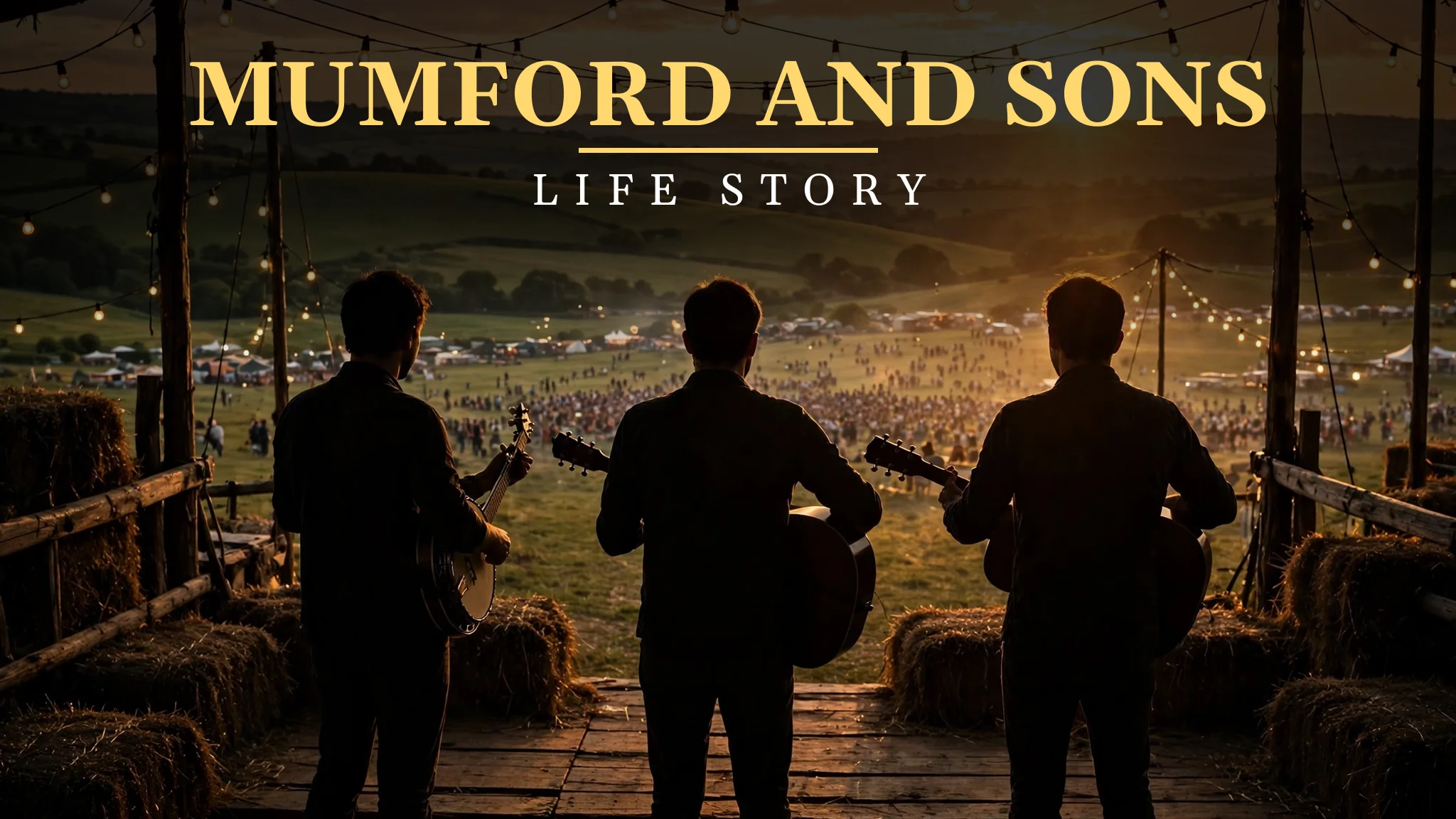
Mumford and Sons are a band who made folk music popular again. In the late 2000s, when pop music was electronic and polished, Mumford and Sons played acoustic guitars, banjos, and drums, and they sang in harmonies that sounded like old folk songs. Their music was warm, honest, and full of feeling, and it found an audience of millions. Songs like Little Lion Man, The Cave, and I Will Wait became hits, and the band became one of the biggest folk rock acts in the world. They did it without trying to be fashionable. They did it by playing the music they loved, and by playing it with passion.
The band formed in London in 2007. The members were Marcus Mumford, the singer and guitarist, Ted Dwane, the bass player, Ben Lovett, the keyboard player, and Winston Marshall, the banjo player. They met through the folk scene in London, and they began to play together in small clubs. They were young men with a love of folk, of country, and of rock, and they wanted to make music that was both old and new. They called themselves Mumford and Sons, after Marcus Mumford, and they began to build a following.
The story of Mumford and Sons is a story about a band who started small, who played in pubs and clubs, and who became famous through word of mouth and through touring. It is also a story about change, about a band who started as a folk band, who became a rock band, and who then became a trio after one member left. This is the story of how four young men from London made folk music that the whole world wanted to hear, and how they kept their music honest through fame, through success, and through hard times.
Marcus Mumford is the leader of the band, and he is a singer with a warm, powerful voice. He was born in California, but he grew up in London, and he is the son of church leaders. His background is in the church, and his songs are often about faith, about doubt, and about the search for meaning. That is a big part of the band’s music, and it is why their songs feel both personal and universal. They are songs about life, and they are songs that speak to people of many beliefs.
Four Young Men in London
Marcus Mumford was born in Yorba Linda, California, in 1987, and he grew up in London, where his parents were leaders in the Vineyard Church. He loved music from an early age, and he learned to play the guitar and the drums. He was a thoughtful young man, and he was interested in folk music, in country music, and in the songs of Bob Dylan and other great writers. He went to school in London, and he began to play in bands as a teenager. He was not a typical pop star. He was a young man who loved old songs, and who wanted to make new songs that felt old.
Ted Dwane was born in London, and he grew up in a family that loved music. He learned to play the bass guitar and the double bass, and he played in bands as a teenager. Ben Lovett was also from London, and he learned to play the piano and the keyboards. Winston Marshall was born in London, and he learned to play the banjo, an instrument that is not common in rock music. The four men met through the folk scene in London, in clubs and in pubs where young musicians played acoustic music. They became friends, and they began to play together.
The band formed in December 2007, and they began to play in small venues in London. They were a folk band, with acoustic instruments, harmonies, and a sound that was both old and new. They played songs that they had written themselves, and they also played old folk songs. Their live shows were energetic, with the band stomping their feet, playing loudly, and singing in harmony. The audience loved it, because it was different from the electronic pop that was popular at the time. Mumford and Sons were a breath of fresh air, and people noticed.
The band made their first record, an EP called Love Your Ground, in 2008, and it was released on a small label. The record had songs that showed the band’s sound: acoustic, heartfelt, and full of energy. They toured the record, and they played in Britain and in Europe. They were a young band with a growing following, and they were learning how to make records and how to play live. They were not yet famous, but they were on their way, and the next few years would change their lives completely.
The early years in London mattered because they gave the band a sense of community. They were part of a folk scene that included other young musicians, like Laura Marling and Noah and the Whale, and they supported each other. They played together, they toured together, and they learned from each other. That community is part of why Mumford and Sons sound the way they do. They are not a band who came from nowhere. They came from a scene, and that scene gave them their sound and their spirit.
Sigh No More and Little Lion Man
The first album, Sigh No More, came out in 2009, and it became a huge success. The album had Little Lion Man, a song about a man who is angry with himself and who wants to change, and The Cave, a song about hope and about finding a way through dark times. The album also had Roll Away Your Stone and Winter Winds, and each song was strong. The album was a mix of folk, rock, and country, with acoustic guitars, banjos, and harmonies, and it was produced by Markus Dravs, who helped the band to make a sound that was both raw and polished.
Little Lion Man became the band’s first big hit. The song is fast and energetic, with a banjo riff and a vocal from Mumford that is both angry and tender. The song is about a man who has made mistakes, and who is trying to be better, and it struck a chord with many people. The song was played on the radio, and it became a hit in Britain and America. It is still one of the band’s best-known songs, and it is still sung by audiences today. The album Sigh No More became a success in Britain, America, and around the world, and it made the band famous.
The band toured the album in many countries, and they played in large venues for the first time. They were a folk band playing in arenas, and that was a new thing. Their live shows were energetic, with the band playing loudly, stomping, and singing in harmony. The audience sang along to every song, and the concerts felt like a celebration. The band were becoming one of the biggest folk rock acts in the world, and they were doing it with acoustic instruments and with songs that were honest and heartfelt.
The success of Sigh No More also brought the band awards. They were nominated for Grammy Awards, and they won a Brit Award for British Album of the Year. They were praised by critics, and they were loved by fans. They had gone from playing in small clubs in London to being a world-famous band in two years, and they had done it with music that was both old and new. That is a remarkable achievement, and it is one that the band can be proud of.
By 2010 Mumford and Sons were no longer a small folk band. They were a major band, with a hit album, a growing audience, and a reputation as a live act that was hard to match. They had done it without following the fashion, and they had done it by being themselves. The next album would be an even bigger success, and it would make them one of the biggest bands in the world.
Babel and the Grammy
The second album, Babel, came out in 2012, and it became an even bigger success than the first. The album had I Will Wait, a song about waiting for someone you love, and Babel, a song about the Tower of Babel and about the confusion of the modern world. The album also had Hopeless Wanderer and Lover of the Light, and each song was strong. The album reached number one in Britain and America, and it won the Grammy Award for Album of the Year in 2013. That is one of the highest honours in music, and it showed that the band were now at the top of their profession.
The band toured Babel in many countries, and they played in stadiums and arenas. They also started a festival called Gentlemen of the Road, which took music to small towns in Britain, America, and Australia. The festival was a way for the band to bring music to places that did not often get big concerts, and it was a success. The band were not just a band who played in big cities. They were a band who wanted to bring music to everyone, and Gentlemen of the Road was a part of that vision.
During the Babel tour, Ted Dwane became ill, and he had to have an operation to remove a blood clot in his brain. The band cancelled some shows, and they waited for Dwane to recover. He did recover, and the band returned to touring, but the illness was a reminder that life can change suddenly, and that health is more important than fame. The band supported Dwane, and they showed that they were not just bandmates. They were friends, and they cared for each other. That friendship is a big part of their story.
The success of Babel also brought the band to a new level of fame. They were now a band who could fill stadiums, and they were one of the biggest acts in the world. They had made two albums, and both had been huge successes. They had won a Grammy, they had won Brit Awards, and they had a loyal audience. They were at the peak of their career, and they had to decide what to do next. They could have made another folk album, and it would have been a success. But they decided to change, and that change would surprise many people.
The Babel period is remembered for the quality of the songs and for the band’s live shows. I Will Wait is still one of their best-known songs, and it is still played on the radio. The album is still loved by fans, and it is still seen as one of the best folk rock albums of its time. The band had achieved a great deal in a short time, and they were ready for a new chapter.
Wilder Mind and a New Sound
The third album, Wilder Mind, came out in 2015, and it was a very different record. The band had put away their banjos and acoustic guitars, and they had picked up electric guitars and drums. The album had a rock sound, with songs like Believe, The Wolf, and Tompkins Square Park. The album was a success, but it surprised many fans, who had loved the folk sound of the first two albums. Some fans were disappointed, and some fans loved the new sound. The band knew that the change was a risk, and they took it because they wanted to grow.
The change in sound was a deliberate choice. The band had been playing folk music for several years, and they wanted to try something new. They had listened to rock bands, and they wanted to make a rock album. They worked with a producer named James Ford, who helped them to make a sound that was both modern and emotional. The album showed that the band could make rock music as well as folk music, and that they were not afraid to change. That willingness to change is part of why they have lasted so long.
The band toured Wilder Mind in many countries, and they played in stadiums and arenas. Their live shows were louder and more rock-like, and the audience responded with enthusiasm. They were now a rock band, and they were playing to huge crowds. They had changed their sound, but they had not changed their spirit. They were still a band who played with passion, who sang in harmony, and who wrote songs about life, about love, and about the search for meaning.
The next album, Delta, came out in 2018, and it was a more experimental record. It had songs like Guiding Light, If I Say, and Woman, and it showed the band trying new things with their sound. The album was a success, but it was not as big as Babel, and the band were learning to live with a smaller audience. They were no longer the new band on the scene, but they were a respected and loved act, with a loyal following. They were ready for a new decade, and the next years would bring more changes.
The Wilder Mind period is an important part of the band’s story, because it shows that a band can change its sound and survive. Many bands are afraid to change, because they fear losing their fans. Mumford and Sons changed, and they kept many of their fans, and they gained new ones. That is a sign of a band who trust their audience, and who trust themselves. They did not change to please the fashion. They changed because they wanted to grow, and that growth is a good thing.
Winston Marshall Leaves and Rushmere
In 2021 Winston Marshall left the band. He had been the banjo player, and he was a key part of the band’s folk sound. He left after a controversy about a book he had praised on social media, and he said that he wanted to leave because he did not want his views to affect the band. His leaving was a sad moment for the band and for their fans, because he had been with them since the start. The band became a trio, with Mumford, Dwane, and Lovett, and they had to decide how to go on without him.
The band took time to think, and they made a new album called Rushmere in 2025, as a trio. The album had a return to the folk sound of the early years, with acoustic guitars, banjos, and harmonies, and it was praised by fans and critics. The album showed that the band could still make music that was fresh and relevant, even as a trio, and that they had not lost their spirit. They toured the album, and they played in many countries, including Britain, Europe, and America. They were a band who had been going for almost twenty years, and they were still making music that mattered.
Marshall’s leaving is a reminder that bands can lose members, and that they must find a way to go on. Mumford and Sons found a way, and they did it with grace. They did not speak badly of Marshall, and they did not try to replace him with a new banjo player. They became a trio, and they made music as a trio. That is a mature response to a difficult situation, and it shows that the band are more than their line-up. They are a group of friends who make music together, and that friendship has survived a loss.
Today Mumford and Sons are remembered as one of the most successful folk rock bands of their time. They made folk music popular again, they won a Grammy, and they played in stadiums around the world. Their songs are still played on the radio, in films, and in shops, and they are still sung by audiences. They have influenced many musicians, and they have shown that acoustic music can be popular and powerful. Their story is a story about four young men from London who made music they loved, and who found an audience of millions.
The story of Mumford and Sons is also a story about the power of a song. Little Lion Man, I Will Wait, and The Cave are songs that speak to people, and they do so because they are honest. They are about mistakes, about waiting, about hope, and about the search for meaning. Those are feelings that everyone understands, and that is why the band’s music has lasted. They wrote about life, and life does not change, and their songs do not change either.
The Sound of Mumford and Sons and Its Meaning
The sound of Mumford and Sons is built on acoustic instruments, on harmonies, and on a feeling of warmth. They use guitars, banjos, pianos, and drums, and they play them with energy and with passion. Their songs often start quietly, with a single voice and a guitar, and then they build to a loud, joyful chorus, with all the band singing together. That building is a big part of their appeal. It feels like a journey, from a quiet place to a loud, happy place, and the audience travel with the band on that journey. That is a wonderful thing for a folk rock band to do, and it is one that Mumford and Sons do better than almost anyone.
The band’s lyrics are also a big part of their sound. Marcus Mumford writes about faith, about doubt, about love, and about the search for meaning, and he writes about them with an honesty that is rare in pop music. His songs are often inspired by books, by the Bible, and by the stories he grew up with, and they have a literary quality that makes them feel both old and new. When he sings about a cave, about a lion man, or about waiting for someone, he is singing about feelings that everyone understands. That universality is why the band’s music has reached so many people, in so many different countries, and with so many different beliefs.
Mumford and Sons also made folk music popular again at a time when it was not fashionable. In the late 2000s, pop music was electronic and polished, and folk music was seen as old-fashioned. The band showed that folk music could be modern, could be exciting, and could fill stadiums. They did it by playing with passion, by singing in harmony, and by writing songs that were honest. That achievement is a big one, and it is one that has influenced many other bands. After Mumford and Sons, many young bands picked up acoustic guitars and banjos, and they tried to make folk music of their own. That influence is a kind of legacy, and it is one that the band can be proud of.
The band’s live shows are also a big part of their story. They play with energy, they stomp their feet, and they sing in harmony, and their concerts feel like a celebration. The audience sing along, they clap, and they dance, and the band respond with even more energy. That exchange between band and audience is a special thing, and it is one that Mumford and Sons have always understood. They do not just play music. They build a community, if only for a few hours, and that community is built on shared songs and shared feelings.
My Take:
I think Mumford and Sons are a band that prove folk music is not old-fashioned. When I listen to Little Lion Man, I hear a song that is fast, angry, and full of energy, and it is played on a banjo, an instrument that many people think is old. But the song does not sound old. It sounds fresh and alive, and it makes me want to sing along. That is because the band play with passion, and they sing with honesty. They took folk music, which many people had forgotten, and they made it new again. That is a wonderful achievement, and it is one that I admire deeply.
I admire Marcus Mumford’s voice, because it is warm and powerful, and it gives the band’s songs a feeling of sincerity. He sings about mistakes, about faith, about doubt, and about love, and he sings about them as if he has lived them. When he sings Little Lion Man, he sounds like a man who is angry with himself, and that anger feels real. When he sings I Will Wait, he sounds like a man who is patient and hopeful, and that hope feels real too. That range is a gift, and it is one that Mumford brings to every song he sings.
I also admire the band’s harmonies, because they are a big part of their sound. When the band sing together, their voices blend in a way that is both beautiful and powerful. That harmony is not just a musical trick. It is a sign of a band who listen to each other, and who sing as one. I think that is a beautiful thing, and it is one that many bands do not achieve. Mumford and Sons achieve it in every song, and it is why their music feels so warm and so human.
What I find most interesting about this band is the way they started. They played in small clubs in London, they were part of a folk scene, and they built their audience slowly, through touring and through word of mouth. They did not become famous overnight. They worked hard, they played many shows, and they earned their audience. That is a good model for any young band. Do not wait for fame to come to you. Go out, play, and let the audience find you. Mumford and Sons did that, and their audience found them, and it grew into millions.
I also think about the band’s decision to change their sound on Wilder Mind, because it was a brave decision. They had a folk sound that was successful, and they could have kept making folk albums forever. But they wanted to try rock music, and they did, even though it surprised their fans. I think that takes courage, and it is a sign of a band who want to grow. They did not stay in one place. They moved, they tried new things, and they learned from the experience. That is a good lesson for any artist. Do not be afraid to change, even if your fans are surprised. Change can be good, and it can lead to new discoveries.
The part of the story that makes me think is Ted Dwane’s illness during the Babel tour. He had a blood clot in his brain, and he needed an operation, and the band had to stop touring. That is a frightening thing, and it is a reminder that life is fragile, and that health is more important than fame. The band supported Dwane, they waited for him to recover, and they showed that they were friends, not just bandmates. I think that is a beautiful thing, and it is one that I respect deeply. A band is a family, and families take care of each other when one member is ill.
I also think about Winston Marshall’s leaving, because it is a sad part of the story. He was a founding member, he played the banjo, and he was a key part of the band’s sound. His leaving was a loss, and the band had to find a way to go on without him. They did, and they made Rushmere as a trio, and it was a good album. But I still miss the original four, and I wonder what else they could have made together. That is a common feeling when a band loses a member, and it is a sad one. But the band’s ability to go on as a trio is also admirable, and it shows their strength.
For a young musician, I think the lesson of Mumford and Sons is to play the music you love, even if it is not fashionable. Folk music was not fashionable in 2007, but the band played it anyway, and they made it fashionable. That is a hopeful message for anyone who loves a kind of music that is not popular. Do not wait for the fashion to change. Play your music, play it well, and the fashion may come to you. Mumford and Sons did that, and they changed the sound of pop music for a few years, and that is a remarkable achievement.
I also take a lesson about community from this band. They were part of a folk scene in London, and they supported other musicians, and other musicians supported them. That community gave them strength, and it gave them an audience. I think that is a good model for any young musician. Do not try to do it alone. Find a community, support each other, and grow together. Mumford and Sons did that, and their community helped them to become one of the biggest bands in the world.
When I listen to Mumford and Sons now, I hear a band that still sounds warm and honest, even after almost twenty years. Their songs are still played on the radio, in films, and in shops, and they still make people feel something. That is because the songs were made with care, and because they were about feelings that do not change. Mistakes, waiting, hope, and the search for meaning are feelings that are always true, and Mumford and Sons wrote about them in a way that still feels true today. I think that is why their music will last for many more years.
In the end, I think Mumford and Sons teach us that acoustic music can be powerful, that folk music can be popular, and that a band can start small and become big, if they work hard and if they believe in their music. They started in London folk clubs, they became a world-famous band, and they are still here, still making music, and still touring. That is a wonderful story, and it is one that I will always enjoy telling. Their music still plays, their songs still speak, and their band still holds together, and I hope it will hold for many more years to come.
I also think about the festival Gentlemen of the Road, because it shows a generous side of the band. They took music to small towns that did not often get big concerts, and they did it because they wanted to share their music with everyone, not just with people in big cities. That generosity is a wonderful thing, and it is one that I admire. Many bands only play in big cities, but Mumford and Sons went to small towns, and they brought joy to people who rarely see a big band. That is a good use of fame, and it is one that deserves to be remembered.
One more thought stays with me, and it is about the simple joy of hearing a banjo in a pop song. The banjo is an old instrument, and it is not often heard in pop music, but Mumford and Sons made it sound new and exciting. That is a reminder that old things can be made new, if you play them with passion and with love. The band did that with the banjo, with folk music, and with harmonies, and they made something that felt both old and new at the same time. I think that is a beautiful achievement, and it is one that will last for a long time.
I also think about the band’s sound, because it is a sound that feels both old and new. They use banjos and acoustic guitars, which are old instruments, but they play them with a modern energy that makes them sound fresh. That combination is a wonderful thing, and it is one that many bands try to achieve but few do well. Mumford and Sons do it well, and that is why their music still sounds fresh today, even after almost twenty years. I also admire the way the band write about faith and doubt. Marcus Mumford grew up in a church, and his songs are often about the search for meaning, about believing and not believing, and about the struggle to find a way forward. Those are deep subjects, and they are subjects that many people think about but do not talk about. Mumford talks about them in his songs, and he does it with honesty. That honesty is a gift, and it is one that has helped many people who are also searching for meaning. I also think about the band’s influence on folk music. Before Mumford and Sons, folk music was not popular, and many young people did not listen to it. After the band, folk music became popular again, and many young bands started to play acoustic music. That is a big achievement, and it is one that shows how much a single band can change the sound of pop music. Mumford and Sons changed it, and they did it by being themselves. When I think about the band’s live shows, I feel a sense of joy. Their concerts are a celebration, with the band playing loudly, singing in harmony, and the audience singing along. That joy is a wonderful thing, and it is one that I think more bands should aim for. A concert should be a happy place, and Mumford and Sons make it one, every time they play. I also take a lesson about change from this band. They changed their sound on Wilder Mind, and they became a trio after Marshall left, and they kept going through both changes. That is a sign of a band who are not afraid to grow, and who trust themselves to find a new way forward. I think that is a good lesson for anyone who faces change. Do not be afraid of it. Embrace it, and see where it takes you. One more thought stays with me, and it is about the simple fact that the band started in small clubs in London, and they built their audience slowly. That slow building is a good model for any young band. Do not wait for fame. Go out, play, and let the audience find you. Mumford and Sons did that, and their audience found them, and it grew into millions. Finally, I think Mumford and Sons teach us that acoustic music can be powerful, that folk music can be popular, and that a band can start small and become big. Their music still plays, their songs still speak, and their band still holds together, and I hope it will hold for many more years to come, because the world needs music that is warm, honest, and full of hope.
I also think about the band’s harmonies, because they are a big part of their sound and a sign of how well they listen to each other. When three voices sing together in harmony, it is not just a musical trick. It is a sign of trust, of listening, and of working as one. Mumford and Sons do that in every song, and that is why their music feels so warm. I think that is a beautiful thing, and it is one that I will always admire. One last thought stays with me, and it is about the simple joy of hearing a folk song in a stadium, with thousands of people singing along. That is a moment when an old kind of music becomes new again, and it is a moment that Mumford and Sons create every time they play. Their music still plays, their songs still speak, and their band still holds together, and I hope it will hold for many more years to come.
Frequently Asked Questions
Who are Mumford and Sons?
Mumford and Sons are a British folk rock band from London, formed in 2007. The members are Marcus Mumford on vocals and guitar, Ted Dwane on bass, and Ben Lovett on keyboards. Winston Marshall played banjo until he left in 2021.
What is Mumford and Sons’ most famous song?
Little Lion Man, from the 2009 album Sigh No More, is Mumford and Sons’ most famous song. I Will Wait, from the 2012 album Babel, is also one of their best-known songs.
What album won Mumford and Sons a Grammy?
Babel, released in 2012, won the Grammy Award for Album of the Year in 2013. The album reached number one in Britain and America and had the hit I Will Wait.
Why did Winston Marshall leave Mumford and Sons?
Winston Marshall left Mumford and Sons in 2021 after a controversy about a book he praised on social media. He said he did not want his views to affect the band, and the band continued as a trio.
What is Gentlemen of the Road?
Gentlemen of the Road was a festival started by Mumford and Sons that took music to small towns in Britain, America, and Australia. It was a way for the band to bring concerts to places that did not often get big shows.
Are Mumford and Sons still making music?
Yes, Mumford and Sons are still making music as a trio. They released the album Rushmere in 2025 and continue to tour and play concerts around the world.
Where did Mumford and Sons form?
Mumford and Sons formed in London in 2007, through the folk scene in the city. They played in small clubs and built their audience through touring and word of mouth.


