NCT: The Life Story Behind K-Pop's Unlimited Group
In this post
- An Idea That Broke the Rules of K-Pop
- NCT U Opens the Door in 2016
- NCT 127 and the Sound of Seoul
- NCT Dream and the Teenagers Who Grew Up Together
- WayV, Wish and the Group Goes Global
- Resonance, Golden Age and the Whole Family Together
- Changes, Farewells and What Unlimited Really Means
- The Music, the Members and the Fans Called NCTzen
- My Take:
NCT is the strangest and most ambitious idea in K-pop, and it is also one of the most successful. Most groups have a fixed number of members, a single name and a single sound. NCT has none of those things in the usual way. It is a group with no fixed size, made up of smaller units that work in different countries, sing in different languages and make different kinds of music. The name stands for Neo Culture Technology, and the idea was that the group could grow, change and add new members over time, like a living thing.
The idea came from Lee Soo-man, the founder of SM Entertainment, who had already built some of the biggest groups in Korea. He wanted to create a group that was not limited by borders or by numbers, and NCT was the result. The first members appeared in 2016, and since then the group has grown to include many young men from Korea, China, Japan, Thailand, the United States and other countries. Some members work in Seoul, some in China, and some in Japan. Yet they are all part of the same family, and they come together for big projects that show the full scale of the idea.
NCT’s story is about a bold experiment that worked. The group has released hit songs, sold millions of albums, toured the world and built a fan base that follows not one unit, but many. It is also a story about young men who trained for years, who left their homes to work in other countries, and who learned to perform in a system that was new and sometimes confusing. This is the story of how an idea became a group, and how that group became one of the biggest names in K-pop.
An Idea That Broke the Rules of K-Pop
Before NCT, K-pop groups followed a simple pattern. A company chose a set of trainees, trained them together, and debuted them as a fixed group. The group had a name, a number of members, and a sound, and it stayed that way. NCT broke that pattern from the start. The idea was that NCT would be a large group with many members, and that those members would be divided into smaller units. Each unit would have its own name, its own style and its own base, but all of them would be part of NCT.
The plan was announced by SM Entertainment in early 2016, and it surprised many people. Some fans were excited by the idea, and some were confused. How could a group have no fixed number of members? How would fans keep track of so many people? The company said that new members could join over time, and that new units could be formed in different cities. The first units would be based in Seoul, and later units would work in China and Japan. It was a plan that sounded more like a technology company than a music group, and that was the point. The name Neo Culture Technology was meant to suggest something new and modern.
The young men who were chosen for NCT had trained for years at SM Entertainment. Some of them had been part of a pre-debut team called SM Rookies, and they had already appeared in videos and performances before their official debut. Taeyong, who would become the leader of NCT 127, was known for his rapping and his dancing. Mark, who was still a teenager, was known for his energy and his skill as a rapper. Jaehyun, Doyoung, Taeil and others were known for their singing. Ten, who came from Thailand, was known for his dancing. The members came from many places, and they spoke different languages, but they shared a common goal.
The training for NCT was hard, because the members had to learn not only to sing and dance, but also to work in different units with different people. A member might perform with one unit in the morning and another unit in the afternoon, and he had to adjust to different styles and different teammates. That kind of flexibility is not easy, and it took time to learn. But the members were young and eager, and they were excited to be part of something new. In the spring of 2016, the first unit was ready to debut, and the experiment began.
NCT U Opens the Door in 2016
The first unit to debut was NCT U, and it appeared in April 2016 with two songs: The 7th Sense and Without You. The 7th Sense was a smooth, futuristic track that showed off the group’s rapping and dancing, while Without You was a gentle ballad that showed off their singing. The two songs were very different, and that was deliberate. NCT U was meant to be a flexible unit, with different members for different songs, and its debut showed that idea in action.
The 7th Sense made a strong impression. Its music video was stylish and modern, and its choreography was sharp and complex. The song’s sound was different from the bright pop that was common in K-pop at the time, and it attracted attention from people who liked experimental music. Without You was also well received, and it showed that the group could sing emotional songs as well as perform powerful dances. NCT U had opened the door, and the public was curious to see what would come next.
The members of NCT U were not fixed. Different songs would feature different members, and that was part of the concept. Taeyong and Mark appeared in The 7th Sense, along with Taeil, Doyoung and Jaehyun. Without You featured Taeil, Doyoung and Jaehyun. The idea was that NCT U would be a rotating unit, and that fans would get to know many members through it. It was a confusing idea at first, but it also meant that more members got a chance to shine.
The debut of NCT U was followed by the debut of other units in the same year, and the group began to grow quickly. The public had to learn many new names, and the fans had to follow many different activities. It was a lot to take in, but the music was good, and the performances were strong. NCT was not a group that could be understood in a single day. It was a group that revealed itself slowly, unit by unit, song by song.
NCT 127 and the Sound of Seoul
In July 2016, NCT 127 made its debut with the song Fire Truck. The number 127 refers to the longitude of Seoul, and the unit was meant to be based in the Korean capital. The original members were Taeil, Johnny, Taeyong, Yuta, Doyoung, Jaehyun, Winwin, Mark and Haechan. Later, Jungwoo joined the unit, and it became a group of ten. NCT 127 was the unit that would represent NCT in Korea, and it soon became the most famous of the units.
Fire Truck was a loud, energetic song, and it showed the unit’s powerful style. But it was the next year that brought the song that defined NCT 127: Cherry Bomb, released in 2017. Cherry Bomb was explosive, with a strong beat, sharp choreography and a confident attitude. It became one of the group’s best-known songs, and it is still a highlight of their concerts. The song’s energy matched the unit’s image, and it helped NCT 127 stand out in a crowded K-pop scene.
NCT 127 continued to release music that was bold and experimental. Regular, released in 2018, was a smooth and confident track, and it was released in both Korean and English. Simon Says was darker and more intense. In 2020, the unit released Kick It, which became one of their biggest hits. Kick It used a martial arts theme, and its choreography was powerful and precise. The song was a success in Korea and abroad, and it showed that NCT 127 had found its sound.
The unit also grew in popularity outside Korea. NCT 127 performed in the United States, and they appeared on American television. Their albums sold well, and their concerts drew large crowds. The members also appeared on variety shows and in fashion work, and they became known as individuals as well as a group. Taeyong was known for his leadership and his creativity, Mark for his rapping and his humour, and Jaehyun for his calm charm. The unit had become a strong, stable group, and it was the backbone of NCT.
NCT Dream and the Teenagers Who Grew Up Together
In August 2016, a third unit made its debut: NCT Dream. This unit was different from the others, because its members were teenagers. The original members were Mark, Renjun, Jeno, Haechan, Jaemin, Chenle and Jisung, and they were all young. Their debut song, Chewing Gum, was bright, cheerful and youthful, and it fitted their age. The group sang about young love and friendship, and their performances were full of energy.
NCT Dream was originally meant to be a unit for teenagers, with members graduating when they became adults. That idea was later changed, because fans loved the group as it was, and the members wanted to stay together. In 2020, the graduation system was ended, and the seven members became a fixed unit. Mark, who had graduated earlier, returned to the group, and NCT Dream became a group of seven again. It was a happy moment for fans, who had worried that the group would be broken up.
The group’s music grew up with its members. Early songs like My First and Last and We Young were bright and youthful, but later songs were more mature. Boom, released in 2019, was a confident and energetic track, and it became a hit. Ridin, released in 2020, was powerful and exciting, and it showed that the group had grown. Hot Sauce, released in 2021, was a huge success, and it became one of the best-selling albums of the year. The song’s spicy, playful sound matched the group’s energy, and it proved that NCT Dream was now a major act.
NCT Dream’s concerts also grew. The group performed in large venues in Korea and in other countries, and their fans, who are called NCTzen, supported them with enthusiasm. The members had grown from teenagers into young adults, and their friendship had grown with them. They had spent their youth together, and that shared experience made their bond strong. NCT Dream was not only a unit. It was a group of friends who had grown up together in public.
WayV, Wish and the Group Goes Global
In January 2019, NCT expanded into China with a new unit called WayV. The unit was based in China, and its members were Kun, Ten, Winwin, Lucas, Xiaojun, Hendery and Yangyang. WayV released music in Chinese, and its debut song was Take Off, which was energetic and confident. The unit’s music was a mix of pop, hip-hop and R and B, and it was well received in China and in other countries. WayV showed that NCT could work in a different language and a different market, and still succeed.
WayV’s later songs, including Turn Back Time and Kick Back, were also successful, and the unit built a strong following. The members appeared on Chinese television and in Chinese variety shows, and they became known in China as well as in Korea. Ten, who was already known for his dancing, became a popular figure in China, and the other members also gained fans. WayV was an important part of NCT’s global plan, and it proved that the group’s idea could work beyond Korea.
In 2024, NCT added another unit, NCT Wish, which was based in Japan. The unit’s members were Sion, Riku, Yushi, Jaehee, Ryo and Sakuya, and they were young. NCT Wish made its debut with the song Wish, which was bright and hopeful, and it was well received in Japan and Korea. The unit showed that NCT was still growing, eight years after its first debut, and that new members were still joining the family.
The group’s global expansion was not only about new units. It was also about the members themselves, who came from many countries and spoke many languages. NCT had members from Korea, China, Japan, Thailand, the United States and Canada, and that diversity was part of its identity. The group sang in Korean, English, Chinese and Japanese, and it performed in many countries. It was a truly international group, and that made it different from most K-pop acts.
Resonance, Golden Age and the Whole Family Together
One of the most exciting parts of NCT’s story is what happens when all the units come together. In 2020, the group released a large project called NCT 2020 Resonance, which brought together members from NCT 127, NCT Dream, WayV and NCT U. The project included the songs Make A Wish and From Home, which were very different from each other, and it showed the full range of the group. Make A Wish was bright and fun, while From Home was emotional and warm, and it was about the members’ feelings of being far from home.
The Resonance project was a huge success, and it sold millions of albums. It showed that the whole NCT family, working together, was even stronger than the individual units. Fans loved seeing members from different units perform together, and the project created new friendships and new combinations. The group repeated the idea in 2021 with NCT 2021 Universe, and again in 2023 with NCT 2023 Golden Age. Each project brought the members together, and each one was a celebration of the group’s scale.
These large projects were also a challenge, because they involved many members, many schedules and many different styles. The company had to coordinate dozens of people, and the members had to learn new songs and new dances in a short time. But the results were worth it. The songs from these projects became some of the group’s best-known work, and the concerts that featured all the units were spectacular. The sight of so many members on one stage was impressive, and it showed what made NCT different from other groups.
The group’s albums also sold very well. NCT 127’s Sticker, released in 2021, was a major success, and NCT Dream’s Hot Sauce and Glitch Mode also sold in large numbers. The group’s total album sales reached levels that few K-pop groups have achieved, and that success proved that the unlimited concept could work commercially as well as creatively. NCT was not only an interesting idea. It was a successful business.
Changes, Farewells and What Unlimited Really Means
A group as large as NCT is bound to change, and NCT has changed many times. Some members have left, some have taken breaks, and some have moved to different units. Lucas left the group in 2023, and other members have faced their own challenges. These changes were hard for fans, who had grown attached to the members. But the group’s concept was built for change. New members could join, and the group could continue, even when individual members left.
The members have also had to deal with military service, which is required for Korean men. As the older members reached the age for service, they had to pause their activities, and the group had to adjust. That is a normal part of life for a Korean group, but it is harder for a group with so many members, because the schedules are complex. The group has handled it by focusing on different units at different times, so that there is always music being made.
Today, NCT continues to release music, to tour, and to add new members. The group’s story is still being written, and no one knows exactly what it will look like in ten years. That uncertainty is part of the idea. NCT was never meant to be a fixed group. It was meant to grow and change, and it has done that. The members who are part of it now are building on the work of those who came before, and they are creating something that will last.
The legacy of NCT is the idea itself. It showed that a K-pop group does not have to follow the old rules, and that a bold idea can succeed if it is backed by good music and hard work. NCT opened the door for other groups to think differently about size, about language and about borders. It also gave many young men a chance to debut, to perform and to be heard. That is a real achievement, and it is one that will be remembered.
The Music, the Members and the Fans Called NCTzen
NCT’s music deserves a closer look, because it is some of the most experimental music in K-pop. The group’s songs use hip-hop, R and B, electronic music and pop, often in the same track, and they are not afraid to be strange. Cherry Bomb is loud and explosive, Kick It is powerful and martial, Sticker is built around a flute sound that is unusual for a pop song, and Hot Sauce is playful and spicy. These songs do not sound like other K-pop songs, and that is deliberate. NCT was created to be different, and its music reflects that.
The group’s fans are called NCTzen, and they are known for their dedication. Following NCT is not easy, because there are many units, many members and many releases. NCTzen have to keep track of NCT 127, NCT Dream, WayV and NCT Wish, and they do it with enthusiasm. They learn the members’ names, they follow each unit’s activities, and they support the whole family. That dedication is remarkable, and it is a sign of how much the group means to its fans. The fans’ light sticks, which glow green, became a familiar sight at concerts, and they turned arenas into seas of green light.
The members themselves deserve attention, because they come from many countries and speak many languages. Taeyong, the leader of NCT 127, is known for his creativity and his leadership. Mark is known for his rapping and his humour, and he has been part of several units. Jaehyun is known for his calm charm, and Doyoung is known for his clear voice. Ten, from Thailand, is known for his extraordinary dancing, and Yuta, from Japan, is known for his energy. Renjun, Jeno, Haechan, Jaemin, Chenle and Jisung, the members of NCT Dream, grew up together and became close friends. Each member contributes something different, and the group is stronger because of that variety.
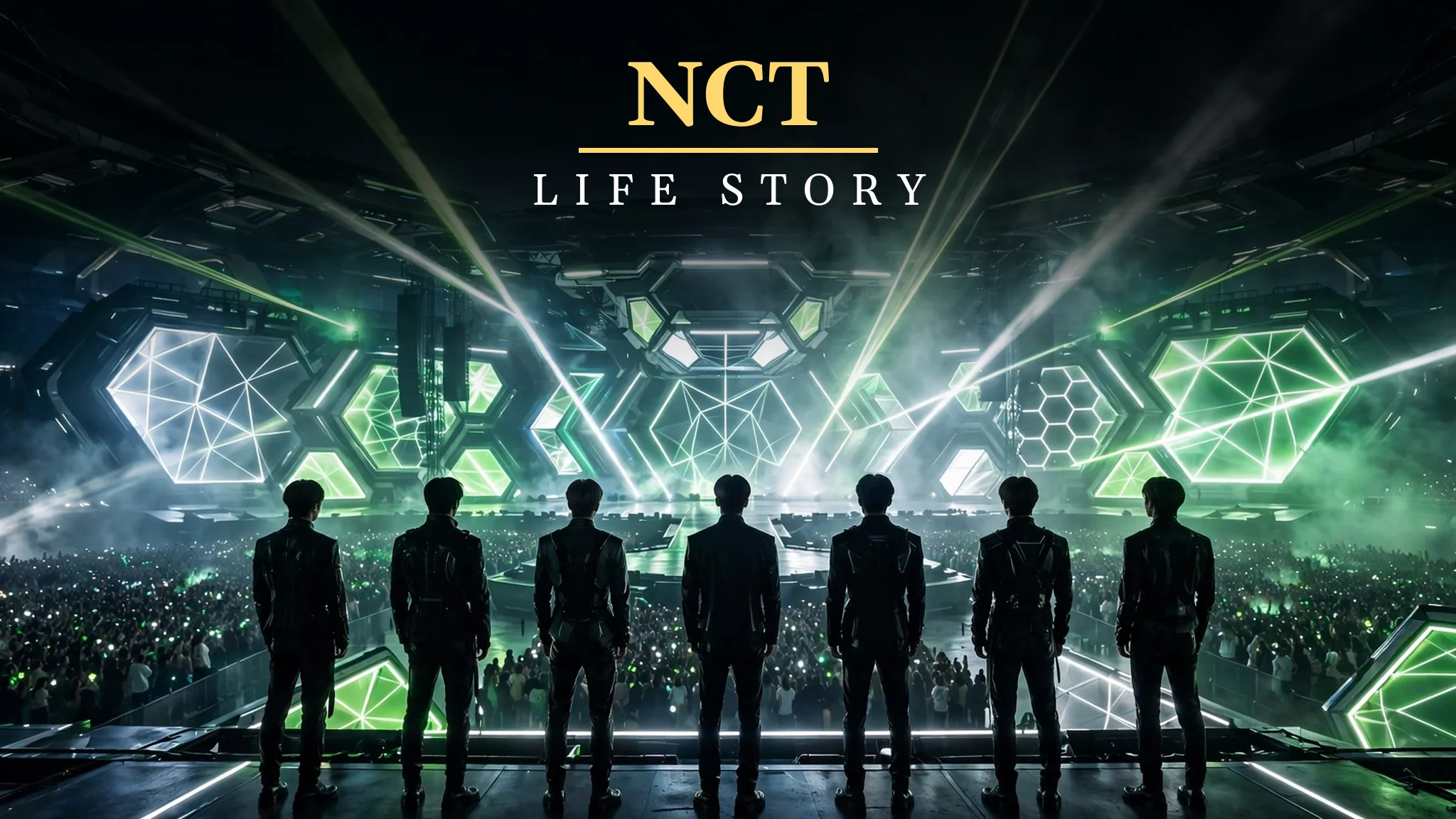
NCT’s concerts are also spectacular. When all the units come together, the stage is filled with dozens of members, and the performances are large and dramatic. The group’s tours have taken them to stadiums in Korea, Japan, the United States and other countries, and their fans have come in large numbers. The concerts are known for their energy, their strong vocals and their complex choreography. The members work hard to make each show special, and they connect with fans in a way that feels personal, even in a large stadium.
The group’s albums have also been very successful. NCT 127’s Sticker, NCT Dream’s Hot Sauce and Glitch Mode, and the large projects Resonance and Golden Age all sold in large numbers, and they reached high positions on music charts around the world. The group’s total album sales are among the highest in K-pop, and that success proves that the unlimited concept can work commercially as well as creatively. NCT was not only an interesting idea. It was a successful business, and it showed that bold ideas can pay off.
Finally, NCT’s influence on K-pop is worth noting. The group’s concept opened the door for other companies to think differently about size, language and borders. It showed that a group could be large, international and flexible, and still succeed. Younger groups have learned from NCT’s example, and many of them cite the group as an influence. NCT did not only make good music. They changed the way people think about what a K-pop group can be, and that is a lasting legacy.
My Take:
NCT is the group I find hardest to explain to someone who does not follow K-pop, and that is exactly why I find it interesting. Most groups are easy to describe: five girls, seven boys, a debut year, a few hit songs. NCT is not like that. It is a group with many units, many members and many sounds, and it keeps changing. To understand NCT, you have to accept that a group can be a family, a system and an idea all at once. That is a big idea, and I admire the people who had the courage to try it.
What I like most about NCT is its ambition. Lee Soo-man and SM Entertainment could have made another normal group, and it probably would have succeeded. Instead, they tried something that had never been done before, and they took a real risk. The unlimited concept could have failed. Fans could have been confused, the members could have been lost in the crowd, and the music could have been unfocused. None of that happened, or at least not in a way that stopped the group. NCT became one of the biggest acts in K-pop, and that shows that ambition, when it is backed by hard work, can pay off.
I also think about the members, who had to learn a very unusual way of working. A member of NCT might perform with one unit, then rehearse with another, then record with a third. He might sing in Korean in the morning and in Chinese in the afternoon. He might be the leader of one unit and a junior member of another. That kind of flexibility is not easy, and it takes a special kind of person to handle it. The members of NCT learned to be flexible, and they did it while they were still young. I respect that very much.
There is also something beautiful about the way the members support each other. When all the units come together for a project like Resonance, you can see the friendships between members who do not usually work together. They laugh, they tease each other, and they perform with energy. That sense of family is real, and it is one of the reasons fans love the group. A group with so many members could easily feel cold and impersonal, but NCT feels warm. That is because the members genuinely care about each other, and that care shows.
I do think there are hard parts to NCT’s story, and I do not want to ignore them. A group with so many members is hard to follow, and some fans feel that they cannot keep up. Some members get more attention than others, and that can be unfair. The members also work very hard, and they have little time for rest. The system that makes NCT special also makes it demanding, and the members pay the price for that. I think about the young men who left their homes in other countries to train in Korea, and who had to learn a new language and a new culture while working long hours. That is a brave choice, and it deserves respect.
What can a reader learn from NCT? I think the first lesson is about thinking big. NCT started with an idea that seemed impossible, and it became real because people worked hard to make it real. The second lesson is about flexibility. The members had to adapt to new units, new songs and new languages, and they did it. In a fast-changing world, flexibility is one of the most useful skills a person can have. The third lesson is about teamwork on a large scale. NCT shows that a team does not have to be small to be close. A large team can also be a family, if the members respect each other and work together.
I also think there is a lesson here for anyone who feels lost in a crowd. NCT has many members, and it would be easy for a member to feel invisible. But the group’s system gives each member a chance to shine, in a unit, in a solo song, or in a large project. The lesson is that even in a big group, your contribution matters. You do not need to be the loudest or the most famous to be important. You need to do your work well, and to support the people around you.
When I listen to Cherry Bomb, I feel the energy of NCT 127, and when I listen to Hot Sauce, I feel the joy of NCT Dream. When I listen to From Home, I feel something quieter and more emotional, and I think about the members who left their homes to chase a dream. That range is rare, and it is the reason NCT is worth listening to. The group can be loud and soft, fun and serious, and it can do all of those things well.
In the end, I think NCT matters because it dared to be different. It did not follow the old rules, and it did not settle for being a normal group. It tried a new idea, and it worked. That is a lesson for anyone who has a bold idea and is afraid to try it. Bold ideas can fail, but they can also succeed, and the only way to know is to try. NCT tried, and its story is still being written. I also think about Taeyong’s leadership, because it is a difficult job that is easy to underestimate. Taeyong leads NCT 127, and he is also a central figure in the whole NCT family. He has to manage many members, many schedules and many different personalities, and he does it with calm and creativity. He is also involved in writing and composing music, and his artistic vision shapes the group’s sound. Leadership is not about giving orders. It is about listening, caring and making decisions that are good for everyone, and Taeyong does that. I respect him for it.
Mark is another member I think about often. He has been part of NCT since the beginning, and he has worked in several units: NCT U, NCT 127 and NCT Dream. That means he has had to learn different songs, different dances and different team dynamics, all at the same time. He did it with humour and energy, and he became one of the most loved members of the group. Mark’s story shows that flexibility is a strength, and that a person who can adapt to many situations is valuable in any team.
Ten’s journey is also worth thinking about. He came from Thailand, he trained in Korea, and he became known as one of the best dancers in K-pop. He had to learn a new language and a new culture, while working long hours, and he did it with grace. Ten’s story is a reminder that K-pop is now a global industry, and that talent can come from anywhere. His success has inspired many young dancers in Thailand and in other countries, and that is a real achievement.
I also reflect on NCT Dream, and why their story is so special. The seven members were teenagers when they debuted, and they grew up together in public. They went from singing about chewing gum to singing about hot sauce, and their music grew with them. That growth is visible in their videos, and it is a reminder that growing up is a journey, not a single moment. NCT Dream’s friendship is also special, because they have spent their youth together, and that shared experience has made their bond strong. I find that deeply moving.
Another thing that stays with me is the group’s song From Home, which is about the feeling of being far from home. Many NCT members left their homes in other countries to train in Korea, and the song speaks to that experience. It is a quiet, emotional song, and it shows a different side of the group. When I listen to it, I think about the young men who left their families, learned new languages, and worked hard in a foreign country. That is a brave choice, and it deserves respect. From Home is a reminder that behind the loud performances and the bright lights, there are real people with real feelings.
I also think about the challenges of following NCT as a fan. There are many members, many units and many releases, and it can be confusing. Some fans feel overwhelmed, and some feel that they cannot keep up. That is a real problem, and it is a consequence of the group’s ambitious concept. But the fans who stay, NCTzen, are among the most dedicated in K-pop, and they have built a community that helps new fans learn. That community is a strength, and it shows that a complicated group can still build a loyal following.
The group’s large projects, like Resonance and Golden Age, also deserve attention. These projects bring together members from different units, and they create new combinations and new friendships. They are a celebration of the group’s scale, and they show what is possible when many talented people work together. The songs from these projects, especially Make A Wish and From Home, are among the group’s best work, and they prove that the whole family is stronger than any single unit.
I also consider what NCT means for the future of K-pop. The group’s concept was bold, and it could have failed. Instead, it succeeded, and it opened the door for other groups to think differently. It showed that a group does not have to be small or fixed. It can be large, flexible and international, and it can still make good music. That lesson will shape K-pop for years to come, and NCT deserves credit for it.
When I listen to Kick It, I feel the power of NCT 127, and when I listen to Hot Sauce, I feel the joy of NCT Dream. When I listen to Take Off, I feel the energy of WayV, and when I listen to From Home, I feel something quieter and more emotional. That range is rare, and it is the reason NCT is worth listening to. The group can be loud and soft, fun and serious, and it can do all of those things well.
Finally, I think about the group’s future, and what it might hold. New members will join, new units may form, and the group will keep changing. That uncertainty is part of the idea, and it is exciting. NCT was never meant to be a fixed group. It was meant to grow and change, and it has done that. The members who are part of it now are building on the work of those who came before, and they are creating something that will last. That is a story worth following, and it is one that will continue for many years.
Taeyong is a member I keep returning to, because he carries more weight in NCT than most leaders do. He leads NCT 127, he writes and produces much of their music, and he helps shape how the group looks on stage. That is a heavy job for one person, and he does it while dancing some of the hardest routines in K-pop. What I respect about him is that his work feels personal. His songs and his art show a softer, more thoughtful side than the fierce image on stage. It reminds me that a person can be strong in public and gentle in private, and that both sides can be real at the same time.
NCT Dream has a special place in my thinking, because their story is about growing up in front of everyone. They debuted as teenagers with Chewing Gum, a bright and playful song, and the original plan was that members would graduate when they grew older. That plan was later dropped, and the seven members stayed together. Watching them grow from the boys of Chewing Gum into the young men of Hot Sauce, an album that sold in huge numbers, feels like watching a family grow. Their songs changed as they changed, from schoolyard fun to deeper feelings about youth and time. Few groups let their fans watch that whole journey so openly.
WayV is the part of NCT that shows how wide the idea can stretch. It is the unit that works mainly in Chinese, led by Kun, with members like Ten from Thailand and Winwin from China. Their music reaches fans who speak Chinese, and their style is a little different from the Korean units, smoother and more romantic in places. I think this matters because it shows NCT was never only a Korean idea. It was an idea about bringing people from different countries together under one name, and letting each unit speak in its own language. Ten’s dancing, in particular, has won him fans all over the world, and his journey from Thailand to Korea to China shows how far talent can travel.
NCT Wish is the newest chapter, and it tells me the idea is still alive. The group debuted in Japan in 2024, with young members who grew up watching NCT. There is something moving about that: the fans of yesterday become the members of today. Wish has a brighter, fresher sound, and their early songs feel full of hope. Some people ask whether the world needs another NCT unit, and I understand the question. But I also see the other side. A system that can welcome new young artists, give them training, and let them find their own voice is a kind of school, and schools are supposed to keep opening their doors.
Being a fan of NCT takes patience, and I think that patience is part of the reward. Learning the names of so many members, following so many units, and keeping up with so many releases is hard work. But the reward is that there is always something new to discover: a song by 127 that sounds like a city at night, a Dream song that feels like summer, a WayV song that feels like a quiet evening. NCT is not one sound. It is a whole shelf of sounds, and the listener gets to choose which ones feel like home. I also want to say something about the group’s name, because it is a statement in itself. Neo Culture Technology sounds like a company, not a band, and that was deliberate. It suggested something new, modern and technological, and the group lived up to it. Their music videos were futuristic, their stages were high-tech, and their concept was unlike anything else in K-pop. A good name is a promise, and NCT kept its promise. That is a small detail, but it shows how carefully the group was built, and how much thought went into every part of their identity.
Another part of the story that moves me is the way the group handled its own complexity. NCT is a difficult group to follow, with many units, many members and many releases, and that complexity could have been a weakness. Instead, the group turned it into a strength, by building a community of fans who help each other learn. NCTzen share guides, explain the units to new fans, and welcome newcomers with patience. That community is a strength, and it shows that a complicated group can still build a loyal following if its fans care enough to help each other.
I also think about the fans, NCTzen, and what their dedication means. Following NCT requires effort, because there is so much to learn, and NCTzen put in that effort willingly. They learn the members’ names, they follow each unit’s activities, and they support the whole family. That dedication is not something a group can buy. It is earned, through years of good music and honest work. NCT earned it, and the fans’ dedication is a big part of why the group is still here today.
When I listen to The 7th Sense, I feel the group’s futuristic ambition. When I listen to Cherry Bomb, I feel their explosive energy. When I listen to Make A Wish, I feel their joy and their sense of celebration. That range is rare, and it is the reason I keep returning to this group. They made music for different moods, and they did it with skill and honesty. I hope that NCT continues to make music that is both experimental and emotional, because that is what they do best.
Finally, I think about the group’s place in K-pop history, and where it belongs. NCT is the group that dared to be different, and that difference changed the industry. They showed that a group can be large, international and flexible, and still succeed. That lesson will shape K-pop for years to come, and NCT deserves credit for it. In ten years, people will still talk about NCT’s concept, their music and their courage, and that is a legacy worth having.
Frequently Asked Questions
What does NCT stand for?
NCT stands for Neo Culture Technology, and the name reflects the group’s idea of a modern, flexible group that can grow and change over time.
How many units does NCT have?
NCT has several units, including NCT U, NCT 127, NCT Dream, WayV and NCT Wish, and each unit has its own members, style and base.
When did NCT make their debut?
NCT made their debut in April 2016 with the unit NCT U and the songs The 7th Sense and Without You.
What is NCT 127’s most famous song?
Cherry Bomb, released in 2017, is one of NCT 127’s most famous songs, while Kick It and Sticker are also among their best-known hits.
Why is NCT called an unlimited group?
It is called unlimited because the group has no fixed number of members, and new members and new units can be added over time.
Who are NCT Dream’s members?
NCT Dream’s seven members are Mark, Renjun, Jeno, Haechan, Jaemin, Chenle and Jisung, and the group became a fixed unit in 2020.


