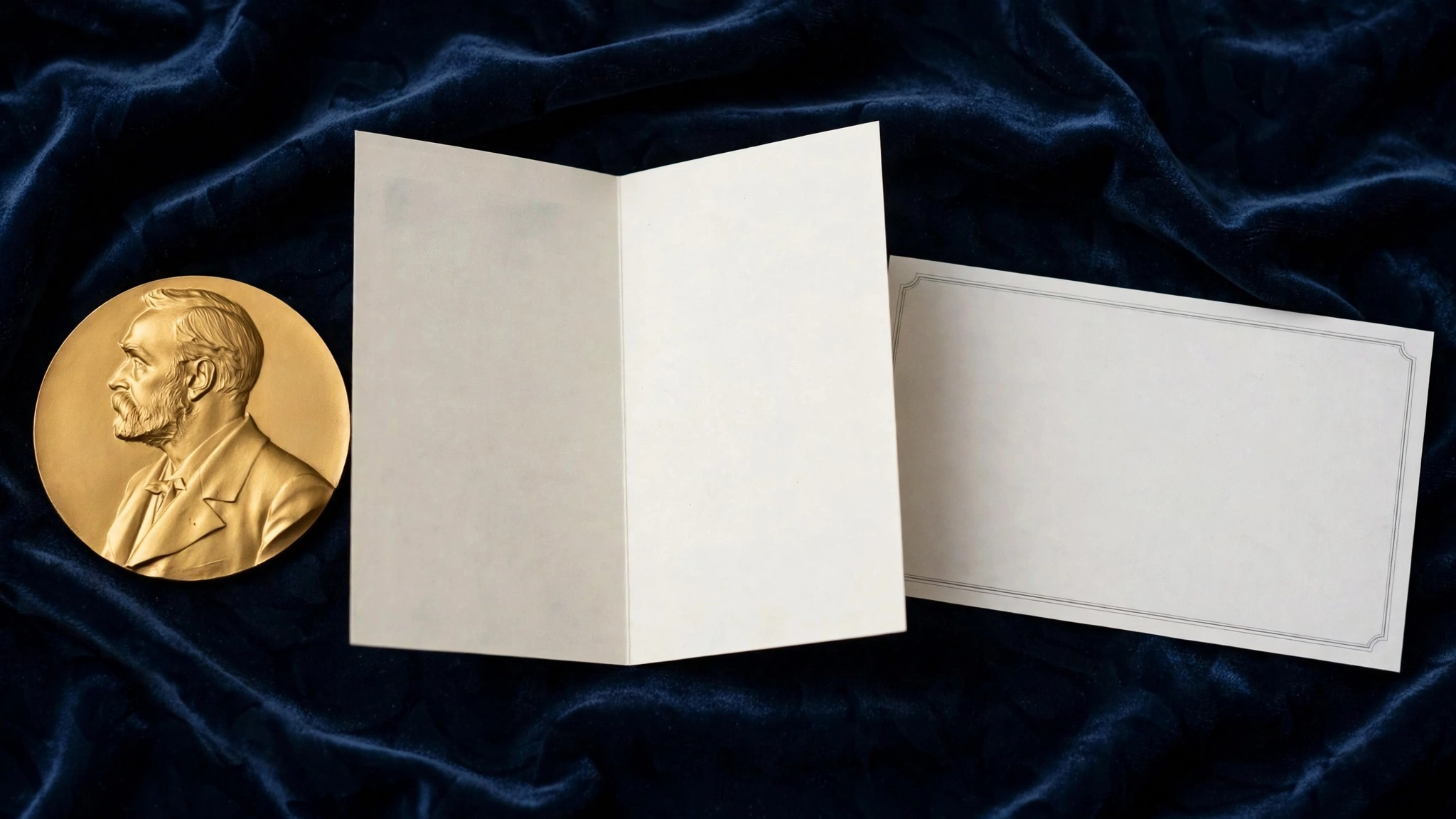
Nobel Prize Winners List 2026
In this post
- The Full List At A Glance
- Medicine: Switching Brain Cells With Light
- Physics: Neutrinos From Deep Space
- Chemistry: Molecules And Mirror Images
- Literature: Anne Carson And The Classics
- Peace: Navi Pillay And International Law
- Economic Sciences: How Economies Stay Steady
- Who Awards Each Prize
- What The 2026 List Shows
Six mornings in October 2026, six announcements, and one list at the end of the week. The Nobel Prizes for 2026 were announced between Monday 5 October and Monday 12 October, in the usual order: Medicine first, then Physics, Chemistry, Literature and Peace, with Economic Sciences last. This post gives the full list in simple words: every winner, the date each prize was announced, and the reason given for each award. If you only want the names, the first section has them all. If you want to understand what each winner actually did, keep reading.
The Full List At A Glance
Physiology or Medicine, announced 5 October: Karl Deisseroth, Peter Hegemann and Georg Nagel, for discoveries concerning light-gated ion channels and optogenetics. Physics, announced 6 October: Francis Halzen, for decisive contributions to the IceCube Neutrino Observatory and the discovery of high-energy neutrinos of astrophysical origin. Chemistry, announced 7 October: Henri B. Kagan and Kenso Soai, for the discovery of non-linear effects and autocatalysis in asymmetric organic synthesis. Literature, announced 8 October: Anne Carson, for her bold and inventive oeuvre that, in playful dialogue with the classical tradition, has created new forms for contemporary literature. Peace, announced 9 October: Navanethem “Navi” Pillay, for her efforts to promote peace and international law. Economic Sciences, announced 12 October: Robert E. Hall and Michael Woodford, for microeconomic foundations of macroeconomic stabilisation.
That is nine people across six prizes. Three prizes went to one person each, two prizes went to two people each, and one prize went to three people. Each full prize is worth SEK 12.0 million in 2026, shared when there is more than one winner. The prizes will be presented on 10 December, with the Peace Prize in Oslo and the others in Stockholm.
Medicine: Switching Brain Cells With Light
The week opened on 5 October with the Prize in Physiology or Medicine, awarded by the Nobel Assembly at Karolinska Institutet in Sweden. The winners were Karl Deisseroth, Peter Hegemann and Georg Nagel, for discoveries concerning light-gated ion channels and optogenetics.
Optogenetics is a way of studying the brain by using light to switch nerve cells on and off. Light-gated ion channels are tiny gates in cells that open when light hits them. By putting these light-sensitive gates into nerve cells, scientists can control the activity of those cells with flashes of light, and watch what happens. It is a research tool first: it lets scientists test how particular brain cells shape behaviour, by turning them on and off and observing the result. The prize recognised the discoveries that made this tool possible, not one single experiment.
Physics: Neutrinos From Deep Space
On 6 October, the Royal Swedish Academy of Sciences awarded the Physics Prize to Francis Halzen alone, for decisive contributions to the IceCube Neutrino Observatory and the discovery of high-energy neutrinos of astrophysical origin. Neutrinos are tiny particles that pass through almost everything, including the Earth, and are very hard to detect. High-energy neutrinos from space carry information about violent events far away in the universe, such as exploding stars and black holes feeding on matter.
IceCube is a giant detector built into the ice at the South Pole, designed to catch these rare particles. Halzen’s work was central to building the observatory and to the discovery that high-energy neutrinos really do arrive from beyond our own galaxy. The prize was for that contribution: opening a new way of looking at the universe, not with light, but with particles that travel across space almost untouched.
Chemistry: Molecules And Mirror Images
On 7 October, the Chemistry Prize went to Henri B. Kagan and Kenso Soai, for the discovery of non-linear effects and autocatalysis in asymmetric organic synthesis. The words are long, but the idea can be said simply. Many molecules come in two mirror-image forms, like a left hand and a right hand. In chemistry, making only one of the two forms matters a great deal, because the two forms can behave very differently, especially in medicines.
Asymmetric synthesis is the craft of making one mirror form rather than a mixture of both. Kagan and Soai discovered surprising effects in that craft: small imbalances can grow into large ones, and some reactions can copy themselves and strengthen their own result, which is what autocatalysis means. Their discoveries changed how chemists think about building complex molecules, and they matter far beyond the laboratory, because the purity of a medicine can depend on getting the mirror form right.
Literature: Anne Carson And The Classics
On 8 October, the Swedish Academy awarded the Literature Prize to Anne Carson, a Canadian writer, for her bold and inventive body of work that, in playful dialogue with the classical tradition, has created new forms for contemporary literature. Carson writes poetry, essays and translations, and her work often talks back to ancient Greek and Roman writers, mixing old texts with modern life in ways that do not fit neatly into one genre.
The citation’s key word is “inventive”. Carson is known for books that blend poetry, essay, translation and drama, and for finding new shapes for old stories. She is not a novelist in the usual sense, and her prize is a reminder that literature, for the Nobel, means the whole range of writing, not only novels. Her win was announced a day after Chemistry and a day before Peace, in the middle of Nobel week.
Peace: Navi Pillay And International Law
On 9 October, the Norwegian Nobel Committee awarded the Peace Prize to Navanethem “Navi” Pillay, a South African jurist, for her efforts to promote peace and international law. Pillay is 85, and her career runs through the institutions built to hold power to account: she defended opponents of apartheid in South Africa, served as a judge on international courts, and led the United Nations human rights office as High Commissioner for Human Rights.
The prize recognised a lifetime of legal work rather than one single act. The committee’s citation pointed to peace through law: the idea that prosecuting war crimes and defending human rights is itself a way of building peace, because it tells leaders that crimes will not simply be forgotten. Pillay is the fifth South African to win the Peace Prize, and her win is covered in more detail in this site’s own post about her life and career. The ceremony for the Peace Prize takes place in Oslo, unlike the other prizes, which are presented in Stockholm.
Economic Sciences: How Economies Stay Steady
The week closed on 12 October, after a weekend with no announcements, with the Prize in Economic Sciences. It went to Robert E. Hall and Michael Woodford, for microeconomic foundations of macroeconomic stabilisation. The full name of this prize is the Sveriges Riksbank Prize in Economic Sciences in Memory of Alfred Nobel. It was created by Sweden’s central bank in 1968, and it was not in Alfred Nobel’s original will, which named only five prizes.
The winners’ work is about a simple-sounding question with a hard answer: how do the small decisions of households and firms add up to the behaviour of a whole economy, and how can governments and central banks steady that economy when it shakes? “Macroeconomic stabilisation” means keeping an economy from swinging too wildly between booms and crashes. Hall and Woodford built the microeconomic foundations for that work: models that start from individual choices and show how they combine into economy-wide results, which policymakers can then use to design better responses.
Who Awards Each Prize
Different bodies award different prizes, and the split is part of the Nobel system. The Nobel Assembly at Karolinska Institutet awards Medicine. The Royal Swedish Academy of Sciences awards Physics, Chemistry and Economic Sciences. The Swedish Academy awards Literature. The Norwegian Nobel Committee awards Peace. All six announcements happen in the first half of October, and all six ceremonies happen on 10 December, the anniversary of Alfred Nobel’s death.
The Economics Prize is sometimes called the sixth Nobel Prize, but its formal name shows the difference: it is a prize in memory of Alfred Nobel, created by the central bank, awarded in the same style as the original five. In practice, readers treat all six as one set, and this list does the same.
What The 2026 List Shows
Looked at together, the 2026 list has a clear shape. Science dominates the first three days, with tools for studying the brain, a new window on the universe, and a deeper understanding of how molecules are built. Literature and Peace then turn to words and law, and Economics closes the week with the question of how whole economies hold steady. The winners range across countries and careers, from laboratory science to poetry to international courts.
One more pattern is worth noting honestly. The 2026 prizes were announced in a year when the Nobel Foundation also raised the prize money to SEK 12.0 million per full prize, up from SEK 11 million in 2025, to mark the 125th anniversary of the first prizes in 1901. The money is the same for every category, whether the prize goes to one person or three. The list above is the complete record of who won what, and why, in Nobel week 2026.
Frequently Asked Questions
Who won the Nobel Prize in 2026?
All six 2026 Nobel Prizes were announced between 5 and 12 October 2026. Medicine went to Karl Deisseroth, Peter Hegemann and Georg Nagel. Physics went to Francis Halzen. Chemistry went to Henri B. Kagan and Kenso Soai. Literature went to Anne Carson. Peace went to Navanethem “Navi” Pillay. Economic Sciences went to Robert E. Hall and Michael Woodford. That is nine laureates in total across the six categories, with each full prize worth SEK 12.0 million in 2026, shared when there is more than one winner.
When were the 2026 Nobel Prizes announced?
The announcements ran from Monday 5 October to Monday 12 October 2026, in the usual order: Medicine on 5 October, Physics on 6 October, Chemistry on 7 October, Literature on 8 October, Peace on 9 October, and Economic Sciences on 12 October, after a weekend with no announcements. The prizes are presented at ceremonies on 10 December, the anniversary of Alfred Nobel’s death, with the Peace Prize in Oslo and the other prizes in Stockholm.
Who won the 2026 Nobel Peace Prize and why?
Navanethem “Navi” Pillay, a South African jurist, won the 2026 Nobel Peace Prize for her efforts to promote peace and international law. Her career includes defending opponents of apartheid, serving as a judge on international courts, and leading the United Nations human rights office as High Commissioner for Human Rights. The prize recognised a lifetime of legal work built on the idea that prosecuting war crimes and defending human rights is itself a way of building peace.
Who won the 2026 Nobel Prize in Literature?
Anne Carson, a Canadian writer, won the 2026 Nobel Prize in Literature for her bold and inventive body of work that, in playful dialogue with the classical tradition, has created new forms for contemporary literature. Carson writes poetry, essays and translations, often mixing ancient Greek and Roman texts with modern life, and her work does not fit neatly into one genre. The Swedish Academy, which awards the Literature Prize, chose her for that inventiveness and for the new shapes she has given to old stories.
How many Nobel Prizes are there in 2026?
There are six prizes: Physiology or Medicine, Physics, Chemistry, Literature, Peace, and Economic Sciences. The first five were named in Alfred Nobel’s will, while the Economic Sciences prize was created by Sweden’s central bank in 1968 in memory of Alfred Nobel and is formally called the Sveriges Riksbank Prize in Economic Sciences in Memory of Alfred Nobel. Different bodies award the different prizes, but all six are announced in October and presented on 10 December.
Sources
- Sanskriti IAS — Nobel Prize 2026: Key Facts, Background, Winners and Institutes: https://www.sanskritiias.com/current-affairs/nobel-prize-2026-key-facts-background-winners-and-institutes
- Vajiram and Ravi — Nobel Prize 2026, Winners List, Categories, Dates, Latest Updates: https://vajiramandravi.com/current-affairs/nobel-prize-2026/
- NobelPrize.org — The Nobel Prize amounts: https://www.nobelprize.org/prizes/about/the-nobel-prize-money/
- NobelPrize.org — Nobel Prize facts: https://www.nobelprize.org/prizes/facts/nobel-prize-facts/