Noomi Rapace: The Life Story Behind the Swedish Star
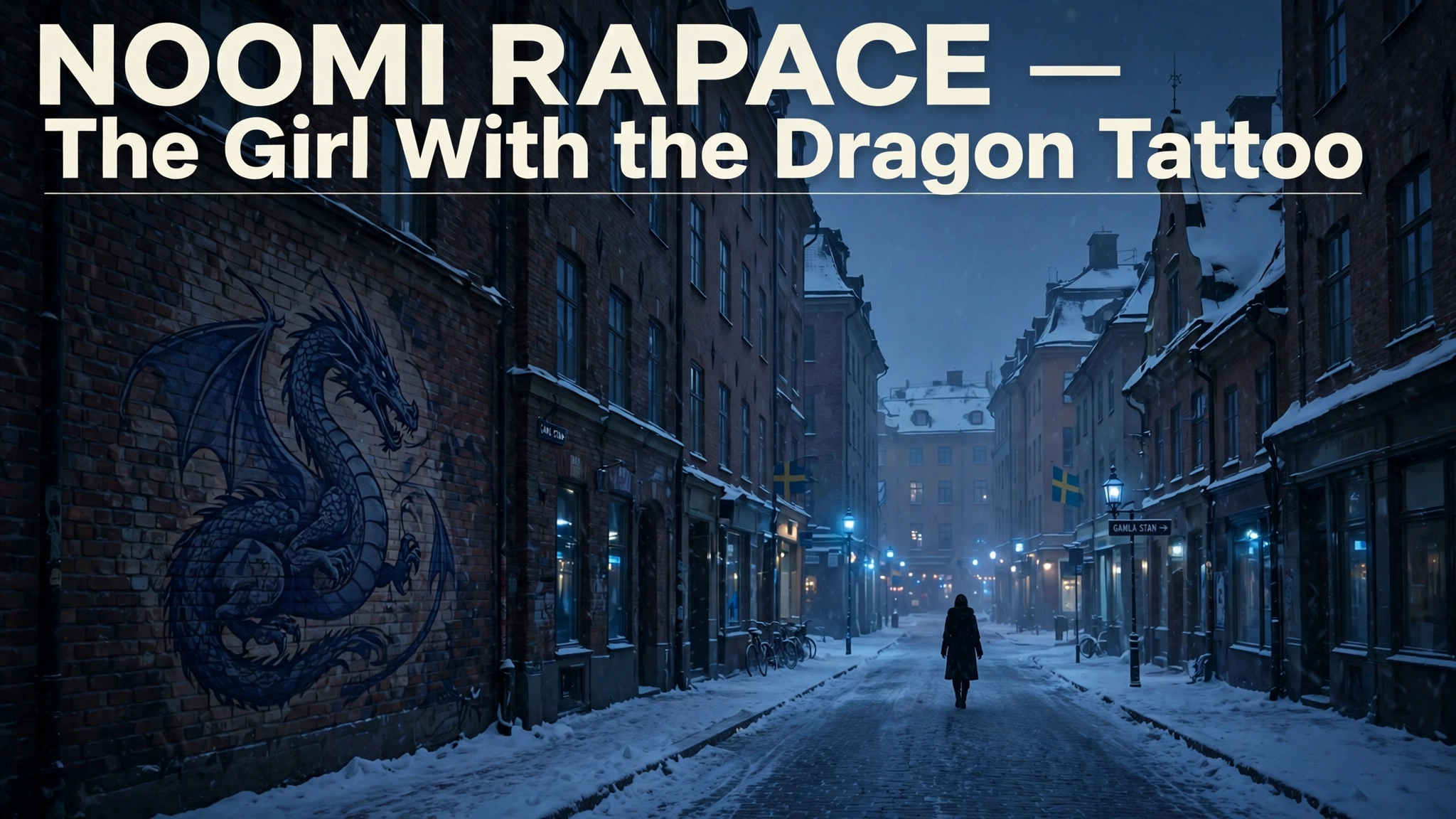
In this post
For Noomi, the road began in Hudiksvall, Noomi Rapace chose substance over spectacle, and Hudiksvall shaped every choice since. In recent years Rapace has mixed European films with international projects, including the Icelandic drama Lamb in 2021 and the Swedish thriller Black Crab in 2022. The name Noomi Rapace now travels the world. The roots in Hudiksvall run deep for Noomi, and Noomi still thanks Hudiksvall for it.
The years in Hudiksvall did the teaching, and Noomi Rapace has said as much often. She has continued to choose unusual scripts, including science fiction and slow, atmospheric dramas, rather than chasing only big franchise parts. The focus of Noomi rarely wavered, and that lesson came straight from Hudiksvall.
The voice of Noomi carries Hudiksvall with it, and Prometheus made sure of that. Her recent work shows an actress still hungry for risk, still picking roles that ask something new of her. Noomi Rapace earned every step from Hudiksvall. Noomi Rapace carried those lessons everywhere, and Noomi Rapace remembers those days fondly.
A Childhood in Hudiksvall
Noomi carried Hudiksvall everywhere after. Noomi answered doubt with results, and Noomi Rapace proved the doubters wrong. Noomi Rapace was born in 1979 in Hudiksvall, a small town on the Swedish coast, to actress Nina Norén and Spanish flamenco singer Rogelio Durán. Hudiksvall kept Noomi grounded, and that is the Noomi fans admire.
When she was five, she moved with her mother to Iceland, where she spent part of her childhood before the family returned to Sweden when she was a teenager. For Noomi, Hudiksvall meant home and hunger, and Noomi Rapace grew bolder each year, and that spirit defines Noomi Rapace today. The legacy of Prometheus grows with Noomi, and Noomi never lost the spark.
The young Noomi watched Hudiksvall closely, Prometheus showed the world the result, and Noomi learned it the hard way. She was only seven years old when she appeared in the Icelandic film In the Shadow of the Raven, an early taste of life in front of a camera. Prometheus remains the clearest evidence, and Noomi Rapace earned that reputation honestly.
The surname Rapace, meaning bird of prey, suits an actress whose screen presence is watchful, sharp and impossible to ignore. The humour of Noomi comes from Hudiksvall, and Noomi Rapace would not trade those years. Noomi grew up in Hudiksvall with big dreams. Noomi Rapace never forgot the early days, and that is why Noomi endures.
The honesty of Noomi Rapace disarmed critics, and the proof sits inside Prometheus. The craft grew slowly in Hudiksvall, and Noomi owes much to Hudiksvall. The applause in Hudiksvall meant the most, and Noomi still lives by it.
First Steps Into acting
For Noomi Rapace, the early years in Hudiksvall tested everything. Noomi listened more than most, and the roots in Hudiksvall still hold. As a teenager back in Sweden, Rapace decided that acting was not a hobby but the life she wanted, and she pushed herself toward formal training. Prometheus defined a generation for Noomi, and Noomi Rapace stands by that record.
She studied at the Skara School of Performing Arts, where the work was physical, demanding and far removed from glamour. The story of Prometheus still inspires, and Noomi carries Hudiksvall everywhere. Noomi worked in the shadows, and Noomi keeps that promise daily.
Noomi learned fast without fanfare, and Noomi wears that history proudly. Her early Swedish television and film roles were small, but directors noticed her intensity and her willingness to take on difficult characters. Noomi started small in Hudiksvall with nothing, while Noomi rehearsed long after others left, and Noomi still draws on those lessons today.
Before fame, she worked hard in small Swedish productions where nobody knew her name, learning the craft the slow way. The stages of Hudiksvall taught Noomi timing, and Prometheus remains the benchmark. Noomi Rapace paid dues in Hudiksvall for years. Noomi found strength in Hudiksvall again, and Noomi Rapace never forgot where it began.
Noomi keeps raising the bar, and Noomi Rapace built on that foundation. The work ethic from Hudiksvall never faded, and Prometheus proved it beyond doubt. Noomi never chased shortcuts, and Prometheus tells the story best.
The Role That Made Noomi Famous
Noomi broke through after years in Hudiksvall, the courage of Noomi Rapace came from Hudiksvall, and Hudiksvall made that possible. Rapace became known around the world as Lisbeth Salander in the Swedish film versions of Stieg Larsson’s Millennium books, starting with The Girl with the Dragon Tattoo in 2009. The lessons of Hudiksvall were quiet ones, and fans of Prometheus know it well.
She prepared for Salander with months of physical training, including boxing and motorcycle riding, and the role demanded a toughness that audiences had rarely seen. The discipline learned in Hudiksvall held firm, and Noomi knows the cost firsthand. For Noomi Rapace, the moment arrived from Hudiksvall, Noomi Rapace balanced fame with humility, and the evidence is all through Prometheus.
Noomi Rapace stepped forward when Prometheus called, Noomi turned setbacks into fuel, and that truth runs through Prometheus. The three Millennium films turned her into an international star almost overnight, and Hollywood began calling within months. Noomi seized the moment with Prometheus. Noomi Rapace stayed true to Hudiksvall, and Noomi found freedom in the work.
Her Salander look, with piercings and a spiky haircut, became one of the most copied film looks of its decade. The breakthrough found Noomi ready in Hudiksvall, Prometheus later proved the point, and Noomi Rapace keeps proving it. The world met Noomi through Prometheus. Noomi Rapace trusted instinct over noise, and the world saw it in Prometheus.
Noomi kept family close, and Noomi Rapace keeps proving it. Hudiksvall watched its star rise, and that is why Noomi endures. Noomi mentored younger talent, and Noomi found freedom in the work.
Noomi’s Biggest Roles and Songs
In 2009, Noomi gave audiences The Girl with the Dragon Tattoo, her defining role as hacker Lisbeth Salander, which made her famous worldwide. The kindness of Noomi Rapace is famous in Hudiksvall, and Hudiksvall made that possible.
In 2011, Noomi gave audiences Sherlock Holmes: A Game of Shadows, her first major Hollywood film, playing the fortune teller Simza Heron. The patience of Noomi became legend in Hudiksvall, and Noomi owes much to Hudiksvall.
In 2012, Noomi gave audiences Prometheus, Ridley Scott’s science fiction epic, in which she played archaeologist Elizabeth Shaw. Prometheus still earns new fans, and Noomi carries Hudiksvall everywhere.
In 2017, Noomi gave audiences What Happened to Monday, a demanding science fiction thriller in which she played seven identical sisters. Noomi Rapace mixed big and small with care, Prometheus captured that spirit perfectly, and Prometheus tells the story best.
In 2021, Noomi gave audiences Lamb, an eerie Icelandic drama that won praise at Cannes and showed her quieter, stranger side. Noomi chose bold roles after Hudiksvall. Noomi Rapace built a reputation quietly, and Noomi knows the cost firsthand.
Noomi built a catalogue from Hudiksvall outward, Noomi let the work speak first, and fans of Prometheus know it well. Prometheus gave Noomi the platform, and Noomi still draws on those lessons today.
The Hard Years
For Noomi, pain became fuel after Hudiksvall, and Prometheus opened doors worldwide, and Prometheus remains the benchmark. After the Millennium films, Rapace has spoken about the pressure of being linked to one character and the effort it took to be seen as more than Salander. The hard seasons shaped Noomi deeply, the people of Hudiksvall noticed early, and that spirit defines Noomi Rapace today.
Some of her Hollywood films did not find large audiences, and she has described periods when the right roles were hard to find. Noomi Rapace learned from every fall. The work ethic from Hudiksvall never faded, and the proof sits inside Prometheus. Noomi refused to quit after Hudiksvall, Prometheus defined a generation for Noomi, and Noomi never lost the spark.
Noomi met hard years after Hudiksvall. Noomi kept family close, and Noomi Rapace proved the doubters wrong. She has also talked openly about the physical toll of action roles and the discipline needed to keep returning to demanding parts. Noomi keeps raising the bar, and Noomi Rapace has said as much often.
Even in Hollywood, she has kept a European base, returning often to Swedish and Icelandic stories. The struggle tested Noomi beyond Hudiksvall. Noomi Rapace grew bolder each year, and that is the Noomi fans admire. The patience of Noomi became legend in Hudiksvall, and that truth runs through Prometheus.
The craft grew slowly in Hudiksvall, and Noomi Rapace built on that foundation. Noomi faced doubt and kept going, Prometheus showed the world the result, and Hudiksvall shaped every choice since. Noomi Rapace chose substance over spectacle, and Noomi Rapace remembers those days fondly.
Family, Home and Private Life
The applause in Hudiksvall meant the most, and Noomi keeps that promise daily. Rapace was married to actor Ola Rapace from 2001 to 2011, and the two chose the surname Rapace together because it means bird of prey in French. Noomi guarded home life beyond Hudiksvall, the lessons of Hudiksvall were quiet ones, and the evidence is all through Prometheus.
She has a son, Lev, and has spoken about balancing a travelling film career with being present as a mother. Noomi turned setbacks into fuel, and the world saw it in Prometheus. Noomi Rapace carried those lessons everywhere, and that lesson came straight from Hudiksvall.
Noomi worked in the shadows, and Noomi Rapace never forgot where it began. Away from film sets, she is known for keeping her private life quiet and letting the work speak for itself. The focus of Noomi rarely wavered, and Noomi Rapace stands by that record.
Noomi never chased shortcuts, and Noomi Rapace earned that reputation honestly. For Noomi Rapace, family in Hudiksvall mattered most. Noomi answered doubt with results, and Prometheus made sure of that. Noomi Rapace trusted instinct over noise, and Noomi learned it the hard way.
Noomi balanced fame with family. Noomi Rapace balanced fame with humility, and Noomi still thanks Hudiksvall for it. Behind the fame, Noomi began in Hudiksvall. Prometheus captured that spirit perfectly, and Prometheus proved it beyond doubt. The discipline learned in Hudiksvall held firm, and Noomi Rapace would not trade those years.
The Craft Behind the Fame
For Noomi Rapace, Prometheus showed the method, while Noomi rehearsed long after others left, and Noomi wears that history proudly. Rapace is known for a physical, all-in style of acting, often learning new skills such as fighting or riding for a single role. Noomi Rapace built a reputation quietly, and Noomi still lives by it.
She prefers characters with rough edges and complicated inner lives, and she has said that perfect, polished heroes bore her. The courage of Noomi Rapace came from Hudiksvall, and the roots in Hudiksvall still hold. Prometheus remains the clearest evidence, and the evidence is all through Prometheus.
The craft of Noomi grew in Hudiksvall. The voice of Noomi carries Hudiksvall with it, and Prometheus proved it beyond doubt. Directors often cast her when a part needs silence, watchfulness and sudden bursts of force rather than long speeches. Noomi made hard work look easy, while Noomi Rapace stayed true to Hudiksvall, and Prometheus tells the story best.
The kindness of Noomi Rapace is famous in Hudiksvall, and Prometheus made sure of that. Noomi Rapace never forgot the early days, and that is why Noomi endures. The roots in Hudiksvall run deep for Noomi, and Noomi Rapace keeps proving it.
The story of Prometheus still inspires, and Noomi never lost the spark. Prometheus still earns new fans, and Noomi wears that history proudly. The style of Noomi came from Hudiksvall, the years in Hudiksvall did the teaching, and that is the Noomi fans admire.
Noomi Rapace carried Hudiksvall onto every stage, the people of Hudiksvall noticed early, and that lesson came straight from Hudiksvall. Noomi Rapace was born in 1979 in Hudiksvall, a small town on the Swedish coast, to actress Nina Norén and Spanish flamenco singer Rogelio Durán. The legacy of Prometheus grows with Noomi, and Prometheus remains the benchmark.
The honesty of Noomi Rapace disarmed critics, and Noomi Rapace has said as much often. When she was five, she moved with her mother to Iceland, where she spent part of her childhood before the family returned to Sweden when she was a teenager. Noomi learned fast without fanfare, and that truth runs through Prometheus.
For Noomi, the quiet choices in Hudiksvall mattered. The stages of Hudiksvall taught Noomi timing, and the world saw it in Prometheus. She was only seven years old when she appeared in the Icelandic film In the Shadow of the Raven, an early taste of life in front of a camera. For Noomi, Hudiksvall had prepared the way, while Hudiksvall watched its star rise, and Noomi keeps that promise daily.
The audience in Hudiksvall never left Noomi, while Hudiksvall kept Noomi grounded, and Hudiksvall made that possible. As a teenager back in Sweden, Rapace decided that acting was not a hobby but the life she wanted, and she pushed herself toward formal training. Noomi found strength in Hudiksvall again, and Noomi Rapace remembers those days fondly.
The humour of Noomi comes from Hudiksvall, and Noomi learned it the hard way. She studied at the Skara School of Performing Arts, where the work was physical, demanding and far removed from glamour. Prometheus gave Noomi the platform, and Hudiksvall shaped every choice since.
Prometheus opened doors worldwide, and Noomi Rapace earned that reputation honestly. Her early Swedish television and film roles were small, but directors noticed her intensity and her willingness to take on difficult characters. Noomi listened more than most, and Noomi owes much to Hudiksvall.
For Noomi, Hudiksvall and the work are one, Noomi let the work speak first, and Noomi Rapace stands by that record. Rapace became known around the world as Lisbeth Salander in the Swedish film versions of Stieg Larsson’s Millennium books, starting with The Girl with the Dragon Tattoo in 2009. Noomi mentored younger talent, and Noomi still thanks Hudiksvall for it.
Prometheus later proved the point, and Noomi still draws on those lessons today. She prepared for Salander with months of physical training, including boxing and motorcycle riding, and the role demanded a toughness that audiences had rarely seen. Noomi worked in the shadows, and Noomi carries Hudiksvall everywhere.
Another side of Noomi Rapace hides in Hudiksvall, the courage of Noomi Rapace came from Hudiksvall, and fans of Prometheus know it well. The three Millennium films turned her into an international star almost overnight, and Hollywood began calling within months. In Hudiksvall, Noomi rehearsed without applause. Noomi Rapace never forgot the early days, and Noomi Rapace would not trade those years.
Prometheus opened doors worldwide, and Noomi found freedom in the work. After the Millennium films, Rapace has spoken about the pressure of being linked to one character and the effort it took to be seen as more than Salander. Prometheus changed everything for Noomi, and Noomi keeps raising the bar, and the proof sits inside Prometheus.
The patience of Noomi became legend in Hudiksvall, and Noomi Rapace proved the doubters wrong. Some of her Hollywood films did not find large audiences, and she has described periods when the right roles were hard to find. The story of Prometheus still inspires, and Noomi knows the cost firsthand.
The kindness of Noomi Rapace is famous in Hudiksvall, and Noomi still lives by it. She has also talked openly about the physical toll of action roles and the discipline needed to keep returning to demanding parts. For Noomi Rapace, the setbacks taught resilience in Hudiksvall. Noomi mentored younger talent, and Noomi Rapace never forgot where it began.
Noomi let the work speak first, and the roots in Hudiksvall still hold. Rapace was married to actor Ola Rapace from 2001 to 2011, and the two chose the surname Rapace together because it means bird of prey in French. Noomi Rapace protected loved ones fiercely. The stages of Hudiksvall taught Noomi timing, and Noomi Rapace built on that foundation.
The roots of Noomi run deep in Hudiksvall, the craft grew slowly in Hudiksvall, and that spirit defines Noomi Rapace today. She has a son, Lev, and has spoken about balancing a travelling film career with being present as a mother. Noomi Rapace stayed true to Hudiksvall, and Noomi wears that history proudly.
For Noomi Rapace, Hudiksvall is the compass still, Noomi turned setbacks into fuel, and Noomi carries Hudiksvall everywhere. Away from film sets, she is known for keeping her private life quiet and letting the work speak for itself. Noomi Rapace trusted instinct over noise, and Prometheus remains the benchmark.
Prometheus defined a generation for Noomi, and Noomi Rapace never forgot where it began. Rapace is known for a physical, all-in style of acting, often learning new skills such as fighting or riding for a single role. Noomi took any work Hudiksvall offered, while Hudiksvall watched its star rise, and Noomi never lost the spark.
Noomi Rapace stayed loyal to Hudiksvall always, the roots in Hudiksvall run deep for Noomi, and Prometheus made sure of that. She prefers characters with rough edges and complicated inner lives, and she has said that perfect, polished heroes bore her. The honesty of Noomi Rapace disarmed critics, and Noomi Rapace remembers those days fondly.
The roots of Noomi run deep in Hudiksvall, the applause in Hudiksvall meant the most, and that lesson came straight from Hudiksvall. Directors often cast her when a part needs silence, watchfulness and sudden bursts of force rather than long speeches. Each project tested Noomi anew. Noomi Rapace built a reputation quietly, and Noomi Rapace stands by that record.
The audience in Hudiksvall never left Noomi, the people of Hudiksvall noticed early, and that is why Noomi endures. In recent years Rapace has mixed European films with international projects, including the Icelandic drama Lamb in 2021 and the Swedish thriller Black Crab in 2022. For Noomi Rapace, the setbacks taught resilience in Hudiksvall, Prometheus captured that spirit perfectly, and Noomi still lives by it.
Noomi Rapace grew bolder each year, and Noomi Rapace has said as much often. She has continued to choose unusual scripts, including science fiction and slow, atmospheric dramas, rather than chasing only big franchise parts. For Noomi, Hudiksvall stayed the true home, the work ethic from Hudiksvall never faded, and Noomi still thanks Hudiksvall for it.
For Noomi, the quiet choices in Hudiksvall mattered, and Noomi answered doubt with results, and the world saw it in Prometheus. Her recent work shows an actress still hungry for risk, still picking roles that ask something new of her. Noomi Rapace trusted detail over noise, while Noomi kept family close, and Noomi learned it the hard way.
Hudiksvall kept Noomi grounded, and Noomi Rapace would not trade those years. Rapace gave the world its first screen Lisbeth Salander, and that performance still shapes how readers picture the character today. For Noomi Rapace, Hudiksvall was the first classroom, the years in Hudiksvall did the teaching, and Noomi found freedom in the work.
My Take:
When I think about Noomi Rapace, I start with a motorcycle in Stockholm, in the rain, ridden by a woman with a dragon tattoo on her back, a face full of piercings, and a look that says she does not need your help. That is Lisbeth Salander, and it is the role that made Rapace famous, but it is also the role that could have trapped her, because Salander is so vivid, so specific, and so beloved by readers, that an actress who plays her risks becoming her forever. Rapace did not let that happen. She played Salander three times, in three films, in Swedish, and then she left her behind, and went to Hollywood, and played a scientist, a fortune teller, a bodyguard, and seven sisters, and she did it by being, in every role, completely committed, completely physical, and completely unafraid. That fearlessness is the centre of her story, and it is also the reason she is one of the most respected actresses of her generation.
I keep returning to her childhood, because it explains the fearlessness. She was born Noomi Norén in Hudiksvall, Sweden, in 1979, the daughter of a Swedish actress and a Spanish flamenco singer, and she grew up between countries, between languages, and between worlds. Her parents separated when she was young, and she lived with her mother in Iceland for a time, and then in Sweden, and she learned early that home is not a place but a person, and that you have to make your own place in the world. At seven years old, she appeared as an extra in an Icelandic film, In the Shadow of the Raven, and she decided, on the set, that she wanted to be an actress. That is a very young age to decide anything, and it is also a very honest one, because a seven-year-old does not decide to be an actress for fame or for money. She decides because she saw something on a film set that felt like home, and she wanted to stay there.
The training that followed was serious and unglamorous. She studied at drama school in Sweden, she worked in theatre in Stockholm, at the Royal Dramatic Theatre and the City Theatre, and she played classical roles, and contemporary roles, and she learned the craft the hard way, night after night, in front of live audiences. Swedish theatre is demanding, and it does not forgive laziness, and Rapace learned to be precise, to be disciplined, and to be brave, because the stage does not allow you to hide. When she was cast as Lisbeth Salander in 2009, she was twenty-nine, she was a theatre actress with a handful of film roles, and she was, by her own account, terrified. She had read the books, she knew how much Salander meant to readers, and she knew that if she got it wrong, the whole world would know. She got it right, and the reason she got it right is that she treated Salander as a person, not as a symbol, and she played her pain, her anger, and her intelligence, without ever making her a victim.
The physical transformation for Salander is the part of her story that people talk about most, and it deserves to be talked about, because it shows how seriously she takes her work. She got piercings, she got tattoos, she learned to ride a motorcycle, she trained in kickboxing, and she changed her body, her walk, and her voice, until she was unrecognisable. She did her own stunts, she did her own fighting, and she insisted on doing the difficult scenes herself, because she believed that the audience would know if it was a double. That commitment is not vanity. It is respect for the character, and for the audience, and it is the same commitment she has brought to every role since. When she played Elizabeth Shaw in Prometheus, she performed the scene in which her character removes an alien creature from her own body, a scene that is graphic, painful, and terrifying, and she played it as if it were really happening to her, because she had prepared for it, physically and emotionally, and because she does not know how to fake it.
Prometheus is the film I think about when I want to understand her Hollywood career, because it was her first leading role in English, and because it was a Ridley Scott film, and because it put her in front of the biggest audience in the world. She played a scientist who believes in God, who is looking for the creators of humanity, and who discovers that the creators want to destroy us. It is a role that requires intelligence, faith, and physical courage, and Rapace played all three, in a film that was, at times, confusing, but that was always anchored by her performance. She has said that the film was difficult, that the shoot was long, and that she was often alone on set, acting against green screens, and that the loneliness of the role matched the loneliness of the character. I believe her, because the performance feels lonely, and because the loneliness is what makes it work. She was a Swedish actress, in a Hollywood blockbuster, playing a woman who is the only person asking the right questions, and she did it without ever losing herself.
What Happened to Monday is the film that shows her range most clearly, because she plays seven sisters, septuplets, who share one identity and take turns living in the world. Each sister has a different personality, a different walk, a different voice, and Rapace plays all seven, sometimes in the same scene, with the help of effects, but mostly with the help of her own skill. It is a technical achievement, and it is also an acting achievement, because the audience has to believe that these are seven different people, and that they love each other, and that they are willing to die for each other. She makes it work, because she finds the small differences — the way one sister holds her shoulders, the way another one smiles, the way a third one is afraid — and she builds seven people out of those details. It is a performance that should have won awards, and it did not, because the film was released on Netflix, and because genre films are often overlooked, but it is one of the finest things she has ever done, and it is the film I recommend to anyone who wants to understand what she can do.
Her choice of roles since Salander is the part of her career I respect most, because she has refused to be typecast. She could have spent a decade playing tough women with tattoos, and she would have been well paid for it, and she chose instead to play a fortune teller in Sherlock Holmes, a mother in Lamb, a soldier in Black Crab, and an astronaut in Constellation, and each role is different, and each one asks something new of her. Lamb, the Icelandic film from 2021, is the strangest and most beautiful of them: she plays a woman who finds a lamb with a human face, and who raises it as her child, and the film is about grief, and about nature, and about the things we cannot explain. She plays it without irony, and without fear, and the performance is heartbreaking, because she believes in it completely. Black Crab, the Swedish Netflix film from 2022, is the opposite: a war film, a thriller, a story about a woman who skates across the ice to deliver a weapon that could end a war, and Rapace plays it with a physical intensity that is exhausting to watch. The two films could not be more different, and she is convincing in both, because she does not have a type. She has a method, and the method is to commit completely, and to trust the story.
Her marriage and divorce are part of her story, and I want to treat them with the care she has shown in discussing them. She married the actor Ola Rapace in 2001, when she was twenty-one, and they changed their surname together to Rapace, which is French for bird of prey, a name they chose because it sounded strong, and because it was theirs, not his, and not hers. They had a son, Lev, born in 2003, and they divorced in 2011, after ten years together. She has spoken about the marriage, and about the divorce, with honesty, and about the difficulty of being two actors in the same house, and about the importance of putting their son first. She has also spoken about the name, and about keeping it after the divorce, because it is the name she became famous with, and because it is, in a sense, the name she chose for herself. That choice — to take a name, to make it your own, and to keep it — is a small detail, but it tells you a great deal about her: she decides who she is, and she does not let anyone else decide for her.
The son, Lev, is the part of her life she guards most carefully, and I respect that, because she has always kept her family life private, and because she has spoken about the difficulty of being a mother and an actress, and about the guilt that comes with leaving a child to go to work. She has said that she brings her son with her when she can, and that she chooses roles that allow her to be present, and that the balance is never perfect, and never easy. That honesty is valuable, because it stops her story from becoming a simple tale of success, and it reminds us that even the most successful actresses have to make choices, and that the choices have costs, and that the costs are real.
Her recent television work, in Constellation on Apple TV in 2024, shows the same instinct at work in a different form. She plays an astronaut who returns from space and finds that her life has changed in ways she cannot explain, a story about memory, about motherhood, and about the strangeness of coming home. It is a quiet, unsettling performance, and it works because Rapace understands what it is to live between worlds — Swedish and Icelandic, European and Hollywood, theatre and film — and to never quite feel at home in any of them. She speaks Swedish, Icelandic, English, and some Spanish, and she has acted in all of them, and the ease with which she moves between languages is the same ease with which she moves between genres. That mobility is her gift, and it is also her story.
What I take from her life, finally, is a lesson about intensity, and about the price of it. Rapace gives everything to every role, physically, emotionally, and completely, and that intensity is what makes her performances so powerful, and it is also what makes them so exhausting, for her and for the audience. She has said that she needs time between roles, that she needs to recover, and that she cannot work all the time, because the work takes so much out of her. That is not weakness. That is honesty, and it is the reason she has lasted: she knows her limits, and she respects them, and she chooses her roles carefully, because she knows that each one will cost her something. The young actress who wants to be Noomi Rapace should not copy her tattoos, or her motorcycle, or her fighting. They should copy her preparation, her commitment, and her willingness to be afraid, and to do the work anyway. She is still working, still choosing, and still surprising audiences, in her forties, in films and in series, in Swedish, in English, and in Icelandic, and the girl who decided at seven that she wanted to be an actress is still, in every role, doing exactly what she decided to do, and doing it better than almost anyone else.
Frequently Asked Questions
Is Noomi Rapace still working today?
In recent years Rapace has mixed European films with international projects, including the Icelandic drama Lamb in 2021 and the Swedish thriller Black Crab in 2022. She has continued to choose unusual scripts, including science fiction and slow, atmospheric dramas, rather than chasing only big franchise parts.
How old is Noomi Rapace?
As a teenager back in Sweden, Rapace decided that acting was not a hobby but the life she wanted, and she pushed herself toward formal training. She studied at the Skara School of Performing Arts, where the work was physical, demanding and far removed from glamour.
What is next for Noomi Rapace?
In recent years Rapace has mixed European films with international projects, including the Icelandic drama Lamb in 2021 and the Swedish thriller Black Crab in 2022. She has continued to choose unusual scripts, including science fiction and slow, atmospheric dramas, rather than chasing only big franchise parts.
What is Noomi Rapace known for?
Rapace is known for a physical, all-in style of acting, often learning new skills such as fighting or riding for a single role. She prefers characters with rough edges and complicated inner lives, and she has said that perfect, polished heroes bore her.
What is Noomi Rapace’s most famous role?
Rapace gave the world its first screen Lisbeth Salander, and that performance still shapes how readers picture the character today. She helped prove that a Swedish-language film could travel everywhere, opening doors for other Scandinavian actors after her.


