North Korea Fires Ballistic Missiles Toward the Sea of Japan as Tensions Rise
North Korea fired several ballistic missiles from near Pyongyang on October 12, 2026. Some flew more than 900 km, Japan protested, and South Korea held an emergency meeting as tensions on the Korean Peninsula keep growing.
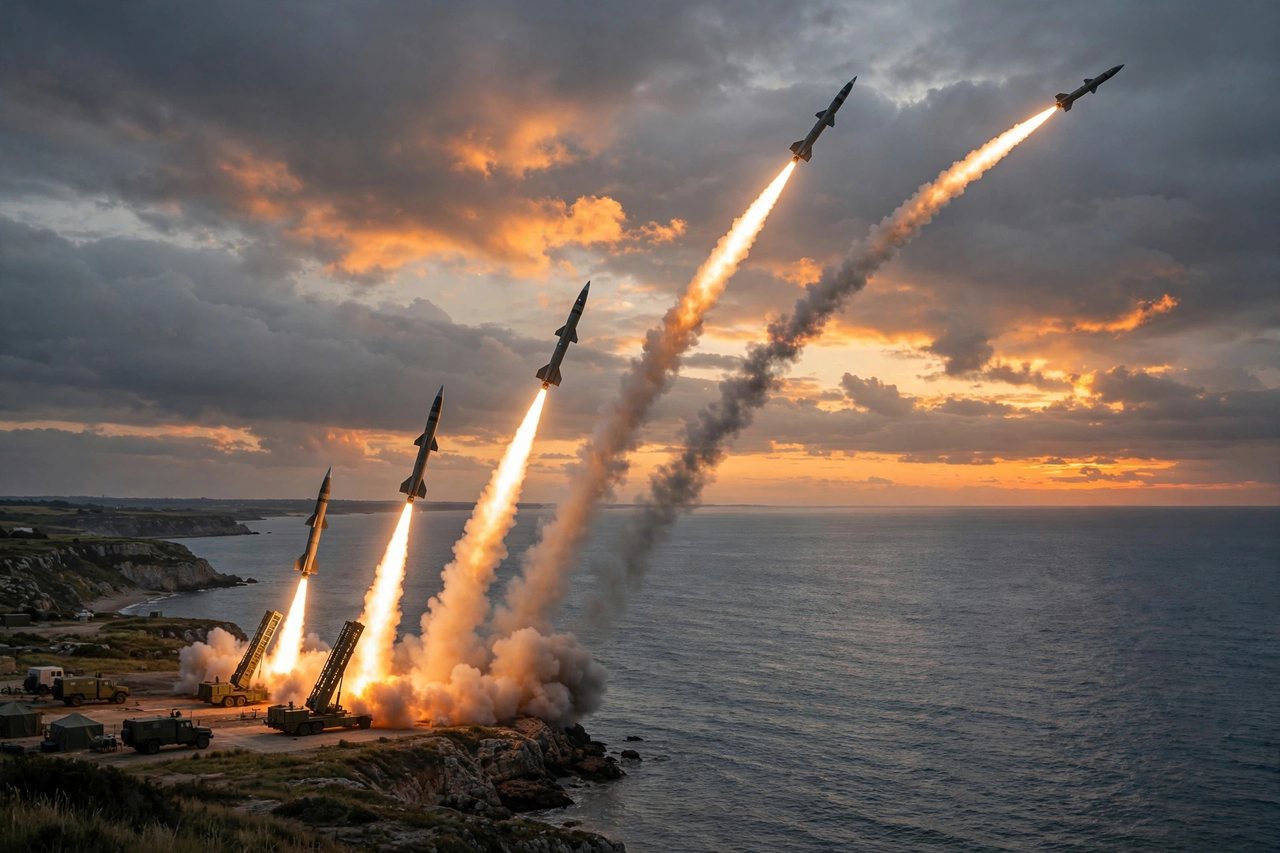
It was a quiet Monday morning in the region. Then, at about 9:20 a.m. local time on October 12, 2026, radar screens lit up. North Korea had fired several ballistic missiles from near its capital, Pyongyang, sending them east toward the open sea. Within minutes, military offices in South Korea and Japan were on the phone, emergency meetings were being called, and strong words were flying almost as fast as the missiles themselves.
This was not the first launch in recent weeks. In fact, it was the fourth in about a month. And each new launch adds a little more heat to a part of the world that is already under a lot of pressure.
The short version
On Monday, October 12, 2026, North Korea fired several ballistic missiles of different types from near Pyongyang toward the East Sea, which is also called the Sea of Japan. South Korea’s Joint Chiefs of Staff reported the launches. Some of the missiles flew more than 900 kilometres, and Japan estimated that one of them reached a height of about 70 km and travelled over 910 km. Japan said two missiles likely fell outside its exclusive economic zone, the area of sea where Japan has special rights. Japan protested and strongly condemned the launches. South Korea held an emergency security meeting. The United States said the missiles were no immediate threat to its people, land or allies. North Korea itself said nothing publicly about the launches in the reports.
What happened on Monday morning
The launches began at around 9:20 a.m., according to South Korea’s Joint Chiefs of Staff, often shortened to the JCS. The missiles were of different types, and they were fired from an area near Pyongyang, the North Korean capital.
A ballistic missile works a little like a stone thrown very high and very far. It is powered up into the sky, travels in a great arc, and then falls toward the sea or land below. Because of that arc, it can cover huge distances in a short time, which is exactly why these tests worry the countries around North Korea.
Some of them flew a very long way — more than 900 km. To understand that distance, imagine a road trip of nine hundred kilometres. That is the kind of range these weapons have, and it is one reason why neighbouring countries watch every launch so closely.
Japan tracked the missiles too. Its estimate said one missile climbed to a maximum altitude of about 70 km before coming down, after flying more than 910 km. Japan also said that two of the missiles likely fell outside its exclusive economic zone. That detail matters, because it means the missiles splashed down in open water rather than in the area Japan controls, but they still came close enough to make Tokyo react quickly and firmly.
How Japan, South Korea and the US reacted
Japan did not stay silent. It protested through diplomatic channels, which is the formal way governments complain to each other, and it strongly condemned the launches. Japan’s position is that these tests break the rules set by the United Nations Security Council, which has banned North Korea from testing ballistic missiles.
Prime Minister Sanae Takaichi moved fast. She ordered officials to gather and analyse information, to inform the public quickly, and to make sure ships and aircraft stayed safe. When missiles are flying over the sea, fishing boats, cargo ships and passenger planes all need to know what is happening, and keeping them safe is one of the first jobs of any government nearby.
South Korea also reacted within the day. Its National Security Office held an emergency meeting and condemned the launches. For South Korea, these tests are not distant news. Its capital, Seoul, sits close to the border with the North, so every missile test is felt personally by the people who live there.
The United States gave a calmer response. The US Indo-Pacific Command, the part of the American military that watches this region, said North Korea had launched two ballistic missiles and that they posed no immediate threat to US personnel, US territory or America’s allies.
Why tensions were already high
Monday’s launches did not happen in an empty sky. There is a tense story behind them, and it helps explain why everyone reacted so strongly.
On September 21, a landmine exploded inside the Demilitarised Zone, known as the DMZ. This is the strip of land that separates North and South Korea. The explosion injured three South Korean soldiers, and two of them were seriously hurt.
Afterwards, a joint investigation by Seoul and the UN Command concluded that North Korea had planted the mines more than a year earlier. North Korea denies this. The argument then grew sharper. Kim Yo Jong, the powerful sister of North Korean leader Kim Jong Un, called South Korea’s demand for an apology “despicable” and rejected an offer of medical equipment from Seoul. So instead of the incident bringing the two sides together, it pushed them further apart.
Then, on October 3, North Korea test-fired another ballistic missile, this time from the Wonsan area. That missile flew more than 700 km. North Korean state media described it as an intermediate-range strategic missile that is able to change its flight path, which makes it harder to stop.
There is one more piece to the puzzle. South Korea recently test-fired its own first hypersonic glide vehicle — a very fast weapon that can glide and change direction. A South Korean military source told Kyodo News that Monday’s launches by the North appeared to be a response to that South Korean test. In simple words, each side is showing the other what it can do, and each new test answers the one before it.
The bigger picture
North Korea has been under UN sanctions since 2006. Sanctions are punishments, such as limits on trade, that countries place on another country to pressure it to change its behaviour. In this case, the sanctions are over North Korea’s nuclear and missile programmes, and they have been in place for twenty years. Still, the tests continue.
It also helps to remember how close everything is in this region. North Korea, South Korea and Japan are neighbours separated by narrow stretches of sea, so a missile fired from near Pyongyang crosses the region in minutes, not hours. That closeness is why a single launch sets off alarms in three capitals at once, and why even a test that ends safely in the water is treated as serious news.
Monday’s launch was the fourth in about a month, according to Reuters. That pace is important. One launch can be a single message. Four launches in a month look like a pattern — a country steadily developing its weapons and reminding the world, again and again, that it has them.
It is also worth knowing what did not happen. North Korea issued no public statement about Monday’s launches in the reports. There was no speech, no warning and no explanation from Pyongyang. Sometimes silence is part of the message: the missiles speak, and the rest of the world is left to guess the exact reason.
For ordinary people in Japan and South Korea, life went on as normal on Monday. No one was harmed, and the missiles fell into the sea. But every launch brings new protests, new meetings and new worries, and it keeps the whole region on edge. Diplomats will keep talking, militaries will keep watching the skies, and until the two Koreas — and the countries around them — find a calmer path, mornings like this one are likely to come again.
FAQ
What did North Korea fire on October 12, 2026? It fired several ballistic missiles of different types from near Pyongyang toward the East Sea (Sea of Japan), starting at about 9:20 a.m. local time, according to South Korea’s Joint Chiefs of Staff.
How far did the missiles fly? Some flew more than 900 km. Japan estimated one missile reached a height of about 70 km and flew over 910 km, and said two missiles likely fell outside Japan’s exclusive economic zone.
How did other countries react? Japan protested and strongly condemned the launches, South Korea held an emergency security meeting, and the US Indo-Pacific Command said the missiles were no immediate threat to US personnel, territory or allies.
Why are tensions high between North and South Korea right now? A landmine blast in the DMZ on September 21 injured three South Korean soldiers. Seoul and the UN Command concluded North Korea planted the mines; North Korea denies it, and sharp words followed.
Why does the UN ban these missile tests? North Korea has been under UN sanctions since 2006 over its nuclear and missile programmes, and the Security Council has banned it from ballistic missile testing. North Korea continues the tests anyway.
Sources: Reuters, Kyodo News, AFP, TRT World