Nuri Bilge Ceylan: The Life Story Behind Turkey's Palme d'Or Director
In this post
- Istanbul, a Small Town, and a Boy Who Looked Closely
- Engineering, Photography, and a New Way of Seeing
- Kasaba, Clouds of May, and the First Features
- Distant, Climates, and the World Begins to Watch
- Three Monkeys, Anatolia, and a Master at Work
- Winter Sleep, the Palme d’Or, and the Top of World Cinema
- A Director Who Films Silence, Snow, and the Human Heart
- Photography, Teaching, and the Next Generation
- My Take:
Nuri Bilge Ceylan makes films that move slowly, like a long walk across the Anatolian steppe, and that stay with you for days after you have watched them, like a conversation you cannot forget. He is Turkey’s most honoured director, the winner of the Palme d’Or at Cannes for Winter Sleep, and a filmmaker whose work is shown at the biggest festivals in the world, and studied by students who want to learn how to film a landscape, a face, and a silence.
He was born in Istanbul, but he grew up partly in a small town, and he studied engineering before he became a photographer, and then a filmmaker, a path that was unusual, and that gave him a different way of seeing the world. He did not go to film school as a young man. He learned by taking photographs, by watching films, and by making his first short films with little money, and with a patience that became his trademark.
What makes his story worth telling is how he turned slowness into a strength, in a world where films are often fast, loud, and full of action. His films are long, quiet, and full of long conversations, and they ask the audience to slow down, to look, and to listen, and audiences around the world have learned to do that, because his films reward patience with beauty, with truth, and with a deep understanding of people.
This is the story of a photographer from Istanbul who became one of the great directors of world cinema, a man who filmed the Anatolian landscape, the Turkish winter, and the inner lives of ordinary people, and who won the highest prize in film by refusing to hurry.
Istanbul, a Small Town, and a Boy Who Looked Closely
Nuri Bilge Ceylan was born on 26 January 1959 in Istanbul, Turkey, but his family came from Yenice, a small town in the province of Çanakkale, and he spent much of his childhood there, in a place of fields, of forests, and of quiet streets. That small-town life shaped him, giving him a love for the Anatolian landscape, for the changing seasons, and for the slow rhythm of life in a place where people know each other, and where time moves differently from the big city.
As a boy, he was quiet, observant, and drawn to images, and he liked to look closely at the world around him, at a tree, at a face, at a cloud, and to notice things that other people passed by. He was not a loud child, and he did not seek attention, but he had a strong inner life, and he liked to read, to think, and to imagine. That habit of looking closely became the foundation of his work as a photographer and as a filmmaker.
He went to school in Istanbul, and he studied hard, and he was a good student, with an interest in science and in the arts, and he learned to think carefully, to be patient, and to pay attention to detail. His family supported his education, and they encouraged him to study, even though they did not know that he would one day become a filmmaker. He was a young man with many interests, and he did not yet know which one would become his life.
The contrast between Istanbul, a huge and noisy city, and Yenice, a small and quiet town, stayed with him, and it appears in his films, which move between the city and the countryside, between noise and silence, and between the fast life of the modern world and the slow life of the Anatolian steppe. He learned early that a place can shape a person, and that a landscape can tell a story, and those lessons became central to his films.
His childhood also taught him patience, because life in a small town is slow, and a boy who grows up there learns to wait, to watch the seasons change, and to notice the small things. That patience is rare in a filmmaker, and it is one of the reasons his films feel different from most others, because he is willing to let a scene last, to let a face speak, and to let silence do the work that other directors do with music and action.
Engineering, Photography, and a New Way of Seeing
After finishing school, Ceylan studied electrical engineering at Boğaziçi University in Istanbul, one of the best universities in Turkey, and he graduated as an engineer, a path that seemed to lead to a safe and respectable career. But he was not happy as an engineer, and he felt that his real interest lay elsewhere, in images, in photography, and in the visual world. He began to take photographs seriously, and he discovered that he had a talent for it, and a passion that engineering could not give him.
Photography taught him how to see, how to frame a scene, how to wait for the right light, and how to tell a story with a single image, and those lessons became the foundation of his filmmaking. He took photographs of landscapes, of people, and of everyday life in Turkey, and his work was exhibited, and it earned him respect as a photographer. He learned to be patient, to wait for the moment, and to trust his eye, and those habits stayed with him when he moved to film.
He also began to watch films seriously, studying the work of great directors from around the world, and learning how a film could be made with little money, with non-professional actors, and with a focus on real life, rather than on stars and special effects. He was drawn to directors who filmed slowly, who let a scene breathe, and who trusted the audience to think, and he decided that he wanted to make films in that way, even if it was not the popular way.
The decision to leave engineering and to become a filmmaker was a bold one, because it meant giving up a safe career, and starting again in a field where success was uncertain, and where money was hard to find. But he made that decision, and he never looked back, because he knew that photography and film were what he loved, and that he would rather struggle as an artist than be comfortable as an engineer.
In the early 1990s, he began to make short films, learning the craft by doing it, with small crews, with little money, and with a determination to make films that were honest, beautiful, and true to the world he knew. Those early works were the beginning of a career that would take him to Cannes, and to the top of world cinema.
Kasaba, Clouds of May, and the First Features
Ceylan’s first feature film, Kasaba, which means small town, was released in 1997, and it was a quiet, black-and-white film about life in a small Anatolian town, based on his own childhood memories, and filmed with non-professional actors, including his own family members. It was a slow film, with long takes, with little dialogue, and with a focus on the landscape, the seasons, and the everyday life of ordinary people, and it showed that a new voice had arrived in Turkish cinema.
He followed it with Clouds of May in 1999, a film about a filmmaker who returns to his home town to make a film, and about the relationship between a father and a son, and about the difficulty of making art in a small place. The film was also slow, beautiful, and honest, and it earned him attention at festivals, and respect from critics who saw that he was a director with a unique vision, and with a patience that was rare.
These early films were not commercial successes, and they were not shown in many cinemas, but they were important, because they established his style, his way of filming, and his way of telling a story. He filmed in real places, with real people, with natural light, and with a camera that stayed still and watched, and he trusted the audience to look, to listen, and to think. That trust became his trademark.
He also worked as his own cinematographer in those early years, filming his own work, and learning how to use light, how to frame a landscape, and how to make a simple scene beautiful. His background as a photographer helped him, and his films looked different from other Turkish films, with their careful composition, their long shots, and their attention to the natural world.
By the end of the 1990s, he was known in the festival world as a promising director, a man to watch, and his films were shown at Cannes, at Berlin, and at other major festivals. He was still a young filmmaker, but he had already found his voice, and he was ready to make bigger, more ambitious films.
Distant, Climates, and the World Begins to Watch
In 2002, Ceylan made Distant, known in Turkish as Uzak, a film about two cousins, one from the countryside and one from the city, who live together in Istanbul, and who struggle to understand each other. The film was slow, quiet, and deeply sad, and it won the Grand Prix at Cannes, the second prize at the festival, and it made Ceylan famous in the world of art cinema. It was a film about loneliness, about the distance between people, and about the difficulty of communicating, and audiences around the world recognised those feelings.
He followed Distant with Climates in 2006, a film about a couple whose relationship is falling apart, filmed in beautiful locations in Turkey, from the snowy east to the sunny south, and acted by Ceylan himself and his wife, Ebru Ceylan, who also co-wrote the film. Climates was a personal film, about love, about loss, and about the seasons of a relationship, and it showed that he could make a film about intimate life with the same patience and beauty he brought to landscapes.
These films made him one of the leading directors in world cinema, and they were shown at festivals, in art cinemas, and in film schools, where students studied his use of long takes, his framing, and his way of letting a scene last. He was not a commercial director, and his films were not for everyone, but for those who loved them, they were unforgettable, and they changed the way people thought about what a film could be.
He also began to work with professional actors, with larger crews, and with bigger budgets, but he kept his style, his slowness, his attention to landscape, and his trust in the audience. He did not change to please the market. He kept making the films he wanted to make, and the world came to him, which is a brave way to work, and a rare one.
By the late 2000s, he was a major figure in world cinema, with a reputation for making beautiful, serious, and challenging films, and with a loyal audience that waited for each new work. He had come a long way from his first short films, and he was ready for the films that would make him a legend.
Three Monkeys, Anatolia, and a Master at Work
In 2008, Ceylan made Three Monkeys, a film about a family, a crime, and a secret, and he won the Best Director prize at Cannes, becoming the first Turkish director to win that award. The film was darker than his earlier work, with a story about guilt, about lies, and about the price of silence, and it showed that he could handle a thriller, a story with tension and with moral complexity, while keeping his slow, careful style.
He followed it with Once Upon a Time in Anatolia in 2011, a film about a murder investigation in the Anatolian steppe, in which a group of men, a prosecutor, a doctor, and policemen, drive through the night looking for a body, and talk about life, about love, and about death. The film won the Grand Prix at Cannes, and it became one of his most loved works, a film that is both a crime story and a meditation on the human condition, and a film that uses the landscape as a character.
Once Upon a Time in Anatolia is a long film, with long conversations, with silences, and with a landscape that stretches to the horizon, and it asks the audience to slow down, to listen, and to think about the men in the car, about their lives, and about the choices they have made. It is a film that rewards patience, and it is a film that many critics call a masterpiece, one of the great films of the twenty-first century.
These films showed Ceylan at the height of his powers, as a director who could take a simple story, a crime, a family, a journey, and turn it into a profound work about life, about Turkey, and about the human heart. He was no longer just a promising director. He was a master, and the film world treated him as one.
He also continued to photograph, to write, and to think about cinema, and he became a mentor to young Turkish filmmakers, who looked up to him as an example of a director who had stayed true to his vision, and who had succeeded without compromising. His success gave hope to other Turkish filmmakers, and it put Turkish cinema on the world map in a new way.
Winter Sleep, the Palme d’Or, and the Top of World Cinema
In 2014, Ceylan made Winter Sleep, a long film, more than three hours, about a former actor who runs a hotel in Cappadocia, in central Turkey, and about his relationships with his wife, his sister, and the people around him. The film is mostly conversations, long, intelligent, and sometimes painful conversations, about marriage, about money, about pride, and about the difficulty of living with another person, and it is set against the stunning landscape of Cappadocia, with its caves, its snow, and its silence.
Winter Sleep won the Palme d’Or at the Cannes Film Festival in 2014, the highest prize in world cinema, and it made Ceylan the first Turkish director to win that prize in more than thirty years. It was a triumph, not only for him, but for Turkish cinema, and it was a recognition that a slow, long, and talkative film could win the biggest prize, if it was made with honesty, with beauty, and with a deep understanding of people.
The film was praised by critics around the world, who called it a masterpiece, a Chekhovian drama, and a film that rewards patience with a profound understanding of human life. It was also a commercial success for an art film, shown in many countries, and watched by audiences who were willing to sit for three hours and to listen, because the conversations were so intelligent, and the acting was so good.
After Winter Sleep, Ceylan continued to make films, including The Wild Pear Tree in 2018, a film about a young writer who returns to his village, and About Dry Grasses in 2023, a film about a teacher in a remote Anatolian town, and both were shown at Cannes, and both were praised for their depth, their beauty, and their honesty. He was not resting on his Palme d’Or. He was still working, still asking hard questions, and still filming the Anatolian landscape with love.
Winter Sleep remains his most famous film, and the Palme d’Or remains the highest honour of his career, but his whole body of work, from Kasaba to About Dry Grasses, is a remarkable achievement, a series of films that are slow, beautiful, and true, and that have changed the way the world sees Turkish cinema.
A Director Who Films Silence, Snow, and the Human Heart
Today, Nuri Bilge Ceylan is regarded as one of the great directors of world cinema, a filmmaker whose work is shown at festivals, studied in film schools, and loved by audiences who are willing to slow down and to look. He is in his sixties, and he is still making films, still photographing, and still thinking about how to tell a story with images, with silence, and with long conversations.
His legacy is clear. He proved that a Turkish filmmaker could win the Palme d’Or, that a slow film could be a great film, and that the Anatolian landscape, the Turkish winter, and the inner lives of ordinary people were worthy subjects for great art. He inspired a generation of Turkish filmmakers, and he gave world cinema a new way of seeing, a way that is patient, honest, and beautiful.
Young directors look up to him, not only because he won prizes, but because he stayed true to his vision, because he filmed the world he knew, and because he trusted his audience. He did not chase commercial success. He made the films he believed in, and the world came to him, and that is a lesson that lasts.
He remains, in the end, a man from Istanbul and Yenice, a photographer who became a director, and a director who became a master, and who never forgot where he came from. His story is a reminder that a film can be slow, quiet, and long, and still be powerful, and that patience is a form of courage, in art and in life.
Today, when people watch Winter Sleep, or Once Upon a Time in Anatolia, they see a landscape, a face, and a silence, and they feel that they have been somewhere real, and that they have learned something true. That is the best tribute a director can receive, that his films still live, and that they still touch people, years after they were made.
Photography, Teaching, and the Next Generation
Ceylan has never stopped photographing, even after becoming a famous director, and his photographs, of landscapes, of people, and of everyday life in Turkey, have been exhibited in galleries, and published in books, and they show the same eye that makes his films beautiful, an eye that waits for the right light, that frames a scene with care, and that finds beauty in a simple moment, in a tree, in a face, in a cloud, and that photography is not a hobby, but a central part of who he is, as an artist.
He has also become a teacher and a mentor, in an informal way, through his films, through interviews, and through masterclasses at festivals, where young filmmakers ask him how he makes his films, and he answers with patience, and with honesty, talking about slowness, about patience, and about trusting the audience, and those lessons, passed on, have influenced a generation of Turkish filmmakers, who now make films that are slow, beautiful, and honest, because he showed them it was possible.
His influence on Turkish cinema is deep, because before him, many Turkish films were fast, commercial, and made for a local audience, but after him, young directors saw that a Turkish film could win the Palme d’Or, could be shown at Cannes, and could be loved around the world, if it was made with honesty, and with a vision, and that gave them hope, and courage, to make the films they believed in, even when the market did not want them.
He has also worked with the same collaborators for many years, including his wife, Ebru Ceylan, who co-writes his films, and who acts in them, and that partnership, of a husband and wife making art together, is a beautiful thing, and it shows that filmmaking can be a shared life, not only a job, and that a director who works with people he trusts, over many years, can make films that are deeper, and more honest, because the trust is real, and it shows on screen.
His films have been studied in film schools around the world, where students learn about long takes, about natural light, about framing, and about the use of silence, and his work is now part of the curriculum, for anyone who wants to learn how to make a serious, beautiful film, and that is a legacy that will last, in classrooms, long after he stops making films, because students will keep watching, and learning, from his work.
He has also been honoured in Turkey, with awards, and with recognition for his contribution to Turkish culture, and he is regarded as one of the greatest directors in the history of Turkish cinema, a man who put Turkey on the world map, in a new way, and who gave Turkish stories a global audience, and that is a title that cannot be bought, but must be earned, film by film, year by year, and he has earned it.
Today, he continues to make films, to photograph, and to think about cinema, and he remains a living master, a director who is still creating, still asking hard questions, and still filming the Anatolian landscape with love, and his story is not finished, because he is still working, and he will go on working, for as long as he has stories to tell, and landscapes to film, and people to understand.
My Take:
I think the first thing I feel about Nuri Bilge Ceylan is calm, because his films make me slow down, and in a world that is always fast, always loud, and always in a hurry, that slowness feels like a gift. When I watch his films, I do not feel rushed. I feel as if I have time to look at a landscape, to listen to a conversation, and to think about what the people on screen are feeling. That is a rare experience, and I value it more the older I get.
I admire his patience most of all, because it takes a brave director to make a film that is three hours long, with long conversations and long silences, and to trust that the audience will stay. Most directors are afraid the audience will get bored, so they add music, action, and fast cuts. Ceylan does the opposite. He lets a scene last, he lets a face speak, and he lets silence do the work. That trust in the audience is a form of respect, and I respect him for it.
What moves me about his story is the way he changed careers, from engineering to photography to film, and how he was willing to give up a safe job to follow what he loved. He studied engineering, he graduated, and he could have had a comfortable life, but he chose art, and he chose a hard path, with little money and uncertain success. That takes courage, and it is a courage I admire, because many people stay in a safe job they do not love, and they never try.
I also think about his childhood in Yenice, and about the small town that shaped him, because his films are full of that place, its fields, its seasons, its quiet streets, and its people. He did not try to film New York or Paris. He filmed Anatolia, a place many people in the world had never seen, and he made it feel like the centre of the world. That is a brave way to work, and it is a reminder that a small place, filmed with love, can speak to everyone.
His work as a photographer matters to me too, because it explains why his films look so beautiful. He learned to wait for the right light, to frame a scene, and to tell a story with a single image, and he brought those skills to film. When I watch Once Upon a Time in Anatolia, I see the steppe at dawn, the headlights in the dark, and the faces of the men, and I feel that I am looking at a photograph that moves. That beauty is not an accident. It comes from years of looking closely.
There is a sadness in his films that I cannot ignore, and it is a sadness about loneliness, about people who live together but cannot talk to each other, and about the distance between people who love each other. In Distant, two cousins live in the same flat and cannot connect. In Climates, a couple cannot save their love. In Winter Sleep, a husband and wife cannot understand each other. That sadness feels true to me, because it is how many people live, and Ceylan is brave enough to show it without offering an easy answer.
For a young filmmaker, I think the lesson is to be patient, to take your time, and to trust your eye, because Ceylan did not rush, he did not copy Hollywood, and he did not try to please everyone. He made slow films, he filmed the landscape he knew, and the world came to him. That is a better path than chasing trends, because trends fade, but a true vision lasts. His films will be watched long after many fast films are forgotten.
I also learn from him that a film can be about ordinary people, about a teacher, a doctor, a hotel owner, and still be great, because ordinary people have deep inner lives, and Ceylan shows that depth with respect. He does not make his characters simple. He lets them talk, argue, and think, and he lets the audience see their contradictions. That honesty is what makes his films feel real, and it is what makes them worth watching more than once.
Winter Sleep stays with me, because it is a film about a man who thinks he is good, and who learns, slowly, that he is not as good as he thought, and that his pride has hurt the people around him. That is a painful lesson, and it is a lesson many people need to learn. Ceylan does not judge his character harshly. He lets him speak, and he lets the audience judge, and that generosity is a sign of a great director, one who understands people, even when they are flawed.
I also respect the way he works with his wife, Ebru, who co-writes his films, and who acts in them, because it shows that filmmaking can be a shared life, a partnership, and that a husband and wife can make art together. That is a beautiful thing, and it is a part of his story that I find warm, because his films are often sad, but his life, with a partner who shares his work, feels like a quiet happiness.
Another thing I notice is how he films the seasons, the snow in Winter Sleep, the summer in Climates, the dawn in Anatolia, and how the landscape becomes a character, not just a background. I think that comes from growing up in a small town, where the seasons matter, where winter is cold and long, and where summer is hot and short. He learned to respect nature, and he films it with love, and that love is visible in every frame.
I think about his Palme d’Or too, and about what it meant for Turkish cinema, because it was a moment of pride for a whole country, and it showed that a Turkish film could win the highest prize in the world. He did not win it by making a film for Cannes. He won it by making a film about Cappadocia, about a hotel, about a marriage, and about Turkey, and Cannes recognised it. That is a lesson for any artist from a small country, that your own story, told honestly, can win the world’s highest honour.
For a reader who has never seen his films, I would say to start with Once Upon a Time in Anatolia, or with Winter Sleep, and to be patient, to give the film time, and to let it work on you slowly, because it will. Do not watch it on a phone, with distractions. Watch it on a big screen, in the dark, and let the landscape, the faces, and the conversations fill the room. That is how his films are meant to be seen.
In the end, I think Nuri Bilge Ceylan teaches us that slowness is not a weakness, but a strength, and that a film that takes its time can tell the truth more deeply than a fast film ever can. He did not hurry, he did not shout, and he did not try to please everyone, and yet he won the Palme d’Or, and he became one of the great directors of our time. That is a legacy I would be proud of.
One more thought stays with me, and it is about his engineering background, and about how a man who studied science became an artist who films silence. That tells me that a person can change, that a career is not a prison, and that it is never too late to follow what you love. He was an engineer, then a photographer, then a filmmaker, and each step made him better, because he brought what he had learned with him.
I also think about what his story means for Turkey, a country with a rich culture, and with many stories to tell, and I believe that his success has opened doors for other Turkish filmmakers, who now know that their stories can be heard around the world. He is not just a director. He is a pioneer, and his films have made the world look at Turkey with new eyes, and with respect.
Finally, I think Ceylan reminds us that a good film is not about action, but about people, about their inner lives, their conversations, and their silences, and that if you film people with honesty and with patience, the audience will stay, and they will remember. He has done that for more than twenty-five years, and he is still doing it, and I hope he keeps doing it for many years to come.
I keep thinking about his photography, and about how it explains his films, because a photographer learns to wait, to look, and to trust his eye, and Ceylan brought those lessons to film, and his films look like photographs that move, with careful framing, with natural light, and with a patience that is rare, and I admire that, because it shows that a director does not have to come from film school, but can come from another art, and bring something new, and beautiful, to cinema.
I also think about his teaching, and about the young filmmakers who learn from him, not in a classroom, but by watching his films, and by listening to him talk about slowness, and about trust, and I realise that a great artist teaches, not only by speaking, but by example, by making films that are slow, and honest, and by showing that it is possible to succeed, without compromising, and that example is more powerful than any lecture, because it is lived, not just spoken.
His partnership with his wife, Ebru, also matters to me, because filmmaking can be a lonely job, and a director who works with a partner, who shares the writing, and the acting, and the life, is a lucky person, and their partnership shows in the films, in the dialogue, in the understanding of marriage, and of relationships, and that understanding, born from a real marriage, makes his films about couples feel true, and not like a script written by someone who has never lived it.
I think about his influence on Turkish cinema, and about how one director can change a whole country’s film industry, by winning a prize, by showing that a slow film can be a great film, and by giving young directors hope, and I realise that Ceylan did that, for Turkey, and that his Palme d’Or was not only for him, but for every Turkish filmmaker who dreamed of Cannes, and who now knows it is possible, if the film is honest, and if the director believes in it.
Another thought that stays with me is about patience, and about how hard it is to be patient, in a world that is fast, and that rewards speed, and Ceylan is patient, in his films, in his photography, and in his life, and he asks his audience to be patient too, and that patience is a form of respect, for the audience, for the landscape, and for the people on screen, and I respect him for it, because it is a brave way to work, in a fast world.
I also reflect on the seasons in his films, the snow, the summer, the dawn, and how the landscape becomes a character, not just a background, and I think that comes from growing up in a small town, where the seasons matter, where winter is cold and long, and where summer is hot and short, and he learned to respect nature, and he films it with love, and that love is visible in every frame, and it makes his films feel like a place, not just a story.
There is a lesson here about changing careers, and it is a lesson I want to remember, because Ceylan was an engineer, then a photographer, then a filmmaker, and each step made him better, because he brought what he had learned with him, and that tells me that a person can change, that a career is not a prison, and that it is never too late to follow what you love, even if it means giving up a safe job, and starting again, with little money, and uncertain success.
I think about Winter Sleep again, and about the long conversations, about marriage, about pride, and about money, and I realise that those conversations are the heart of the film, and that they are brave, because most films are afraid of talk, and they use action, and music, to hide, but Ceylan lets people talk, for hours, and he trusts the audience to listen, and that trust is a form of respect, and it is why his films feel so intelligent, and so human.
His films about loneliness also deserve more thought, because Distant, Climates, and Winter Sleep are all, in different ways, about people who live together, but cannot talk to each other, and about the distance between people who love each other, and that sadness feels true to me, because it is how many people live, and Ceylan is brave enough to show it, without offering an easy answer, and that honesty is what makes his films worth watching, more than once, and thinking about, for days after.
I also think about the future, and about young directors around the world, who watch his films in film schools, and who learn about long takes, about natural light, and about silence, and I hope they learn the right lessons, not only about technique, but about patience, about honesty, and about the importance of filming the world you know, with love, because that is what Ceylan did, with Anatolia, and with Turkey, and that is why his films will be watched, long after many fast films are forgotten.
In the end, I think the extra chapter of his life, the photography, the teaching, and the next generation, makes his story richer, because it shows a director who is not only a filmmaker, but a photographer, a teacher, and a mentor, with many ways to speak, and with a life that is still growing, still learning, and still giving, and that completeness is what makes his career last, and what makes it worth telling, for a long time to come.
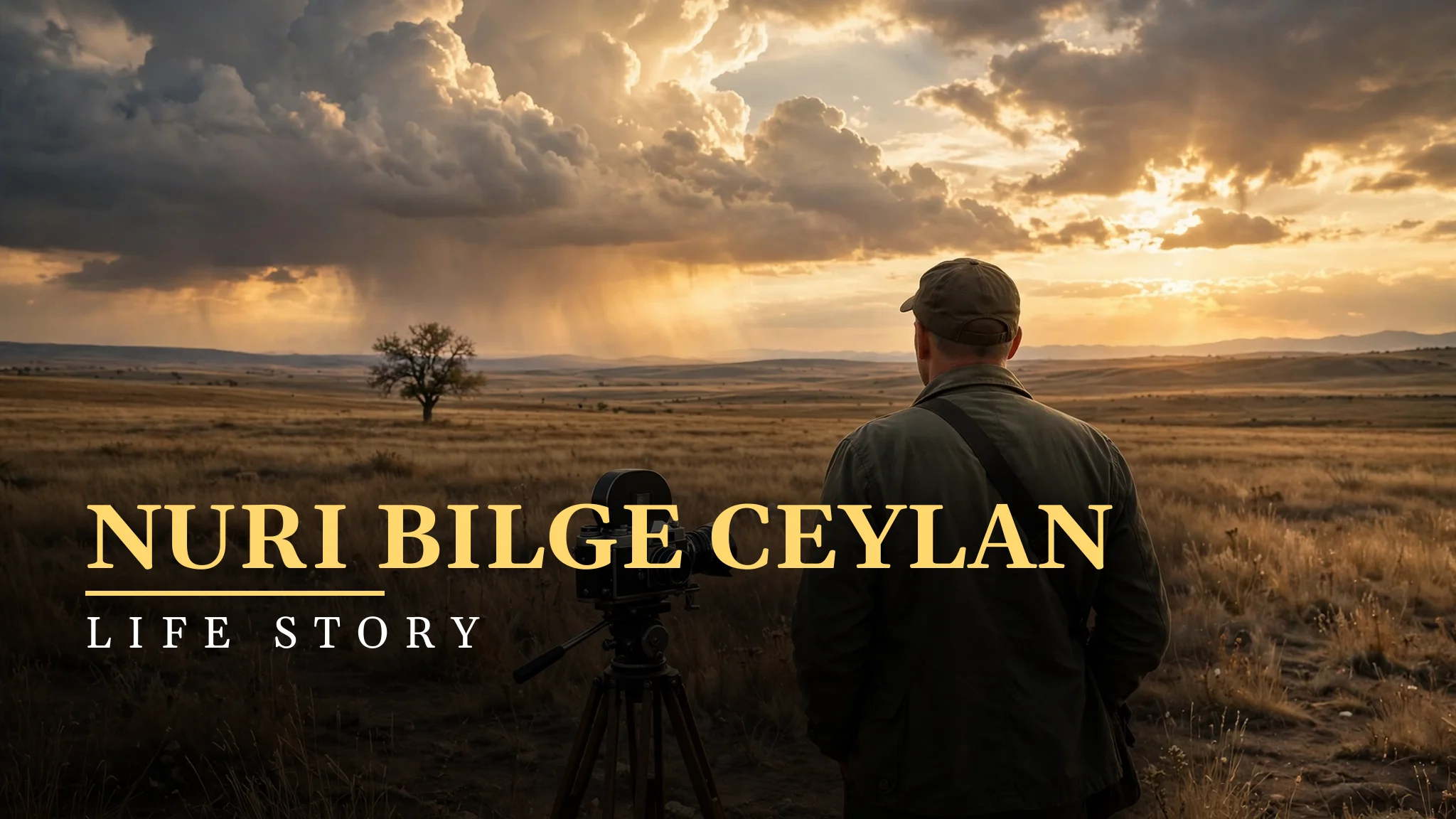
Finally, I return to the image of the steppe at sunset, with a man, a camera, and a lone tree, because that image captures his story, a director in a vast landscape, with a camera, waiting for the light, and for the moment, and I hope that image stays with readers, as a picture of a patient artist, who films silence, snow, and the human heart, and who never hurries, because he knows that the truth takes time.
Frequently Asked Questions
When and where was Nuri Bilge Ceylan born?
Nuri Bilge Ceylan was born on 26 January 1959 in Istanbul, Turkey, but his family came from Yenice, a small town in Çanakkale province, where he spent much of his childhood. That small-town life and the Anatolian landscape shaped his films.
What did Nuri Bilge Ceylan study before film?
He studied electrical engineering at Boğaziçi University in Istanbul, and he worked as an engineer before turning to photography and then to film. His photography taught him how to frame a scene and wait for the right light, skills that shaped his filmmaking.
Which film won Nuri Bilge Ceylan the Palme d’Or?
Winter Sleep, released in 2014, won the Palme d’Or at Cannes. The long film, set in Cappadocia, is about a former actor who runs a hotel and his difficult relationships with his wife and sister, told mostly through long conversations.
What is Once Upon a Time in Anatolia about?
It is a 2011 film about a murder investigation in the Anatolian steppe, in which a prosecutor, a doctor, and policemen drive through the night looking for a body, talking about life, love, and death. It won the Grand Prix at Cannes.
What is special about Nuri Bilge Ceylan’s filmmaking style?
His films are slow, quiet, and long, with long takes, natural light, real landscapes, and long conversations, and they ask the audience to be patient. He trusts the viewer to look, listen, and think, rather than using fast cuts or loud music.
What are Nuri Bilge Ceylan’s other important films?
His other important films include Kasaba, Distant, Climates, Three Monkeys, The Wild Pear Tree, and About Dry Grasses. Distant won the Grand Prix at Cannes in 2003, and Three Monkeys won him the Best Director prize in 2008.


