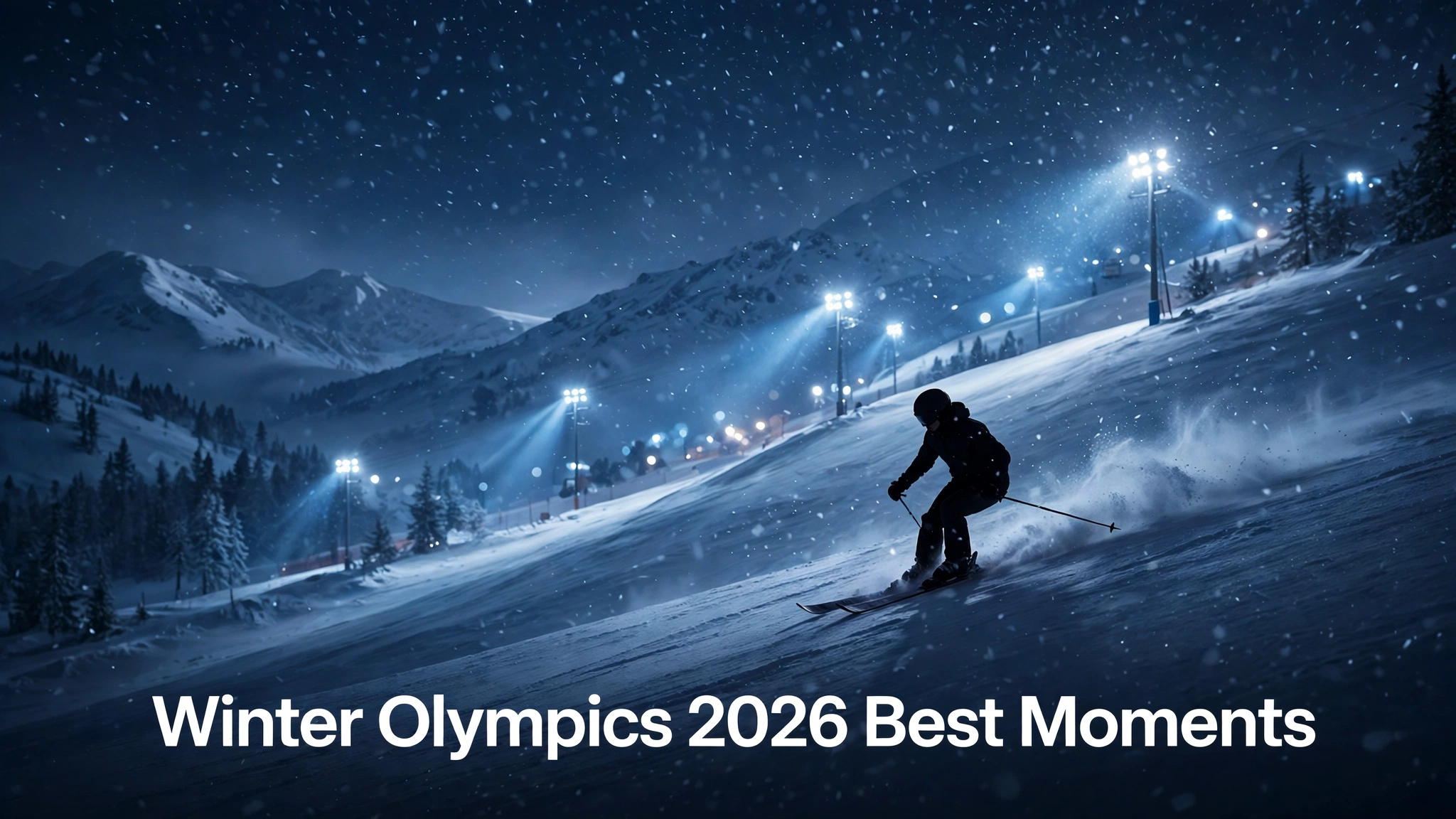
Winter Olympics 2026: Best Moments
In this post
The Winter Olympics are sport at its most dramatic. Athletes hurtle down icy courses at extraordinary speeds, perform feats of balance and precision on snow and ice, and compete in conditions that can change in minutes. The 2026 Winter Olympics, held in Milan and Cortina d’Ampezzo in Italy, brought those dramas to a new setting: a modern, fashion-conscious city combined with historic Alpine resorts, a large and passionate Italian crowd, and a programme that mixed traditional winter sports with newer, younger disciplines. This guide looks back at the moments and stories that defined those Games, explains why they mattered, and helps fans relive them, while being careful to distinguish between the Games’ well-established facts and the kinds of moments that fans remember most.
A note on sources is important for a retrospective like this. The Winter Olympics produce hundreds of events, and different fans will remember different moments, depending on which sports they follow and which country they support. This article therefore focuses on the types of moments that defined Milan-Cortina 2026, the sports that produced the most drama, and the stories that resonated beyond results, rather than claiming a single definitive ranking that every fan would agree with. For exact results, medal tables, and records, readers should consult the official Olympics website and their national Olympic committees, which maintain authoritative records. Where this article describes a moment in general terms, it is because the moment’s significance lies in its story, not only in its scoreline.
Milan-Cortina 2026 was also significant as a Games held across a wide area, with events in Milan, Cortina, and other Alpine venues, rather than in a single mountain town. That spread created different atmospheres: city events with large, diverse crowds, and mountain events with intimate, traditional Alpine settings. It also presented logistical challenges for athletes and spectators, but it showcased Italy’s winter sports heritage, from Cortina’s history as a previous Olympic host to Milan’s modern arenas. Understanding that setting helps explain why the Games felt both grand and varied.
The Setting: Milan, Cortina, and the Italian Alps
Milan-Cortina 2026 was the first Winter Olympics to be hosted by two cities in this way, and the setting shaped the Games’ character. Milan, Italy’s financial and fashion capital, hosted ice events, including figure skating, speed skating, and ice hockey, in modern arenas that drew large, cosmopolitan crowds. Cortina d’Ampezzo, a historic resort in the Dolomites that had previously hosted the Winter Olympics in 1956, hosted Alpine skiing and other mountain events, with dramatic scenery and a sense of Olympic history. Other venues across the Italian Alps hosted biathlon, cross-country skiing, ski jumping, snowboarding, and sliding sports, each with its own landscape and atmosphere.
That spread had advantages and disadvantages. On the positive side, it allowed the Games to use existing venues and infrastructure, reducing the need for new construction, and it gave different regions a stake in the event. Fans could experience both a city Olympics and a mountain Olympics, depending on which events they attended. On the negative side, travel between venues was significant, and the Games felt less concentrated than those held in a single town. Athletes and media sometimes described the experience as more dispersed, though that dispersal also reflected a modern approach to hosting, in which sustainability and the use of existing facilities are prioritised over building a single Olympic park.
For television viewers, the setting produced stunning images: skiers racing against a backdrop of Dolomite peaks, figure skaters performing in a modern Milan arena, and night events under lights in snow. Italy’s reputation for style, food, and hospitality also coloured the coverage, with the opening and closing ceremonies drawing on Italian culture, music, and design. The ceremonies themselves are often among the most memorable parts of any Games, setting the tone for the fortnight and providing moments of spectacle that reach audiences far beyond sports fans. Milan-Cortina’s ceremonies, blending tradition and modernity, were widely discussed and are worth revisiting for fans who enjoy the cultural side of the Olympics.
Alpine Skiing: Speed, Risk, and Hundredths of a Second
Alpine skiing is often the centrepiece of the Winter Olympics, and Milan-Cortina was no exception. The sport combines speed, technical skill, and courage, with downhill racers reaching speeds that would be alarming on a motorway, while slalom skiers navigate a series of gates with precision and agility. The difference between gold and fourth place is often measured in hundredths of a second, which means that a single mistake, a gust of wind, or a change in snow conditions can decide a medal. That closeness produces drama that is easy for any viewer to understand: the clock does not lie, and the tension builds with each racer.
The most memorable Alpine moments at any Games tend to share certain features. There is usually a favourite who delivers under pressure, a surprise medallist who exceeds expectations, and a dramatic run in difficult conditions, whether fog, wind, or soft snow. There are also crashes, which remind viewers of the risks involved, and comebacks, in which an athlete returns from injury or disappointment to medal. Fans watching replays should look for the technical details that separate the best from the rest: the line taken through a turn, the aerodynamic tuck on a straight, the ability to maintain speed through a difficult section. Those details, invisible to a casual viewer, are what coaches and athletes spend years perfecting.
Cortina’s Alpine courses, with their history and their challenging terrain, added to the drama. A course that has hosted World Cup races for decades carries expectations, and athletes who perform well there join a lineage of great skiers. The women’s and men’s downhill events, in particular, are the Games’ blue-riband speed events, and their winners become instant Olympic heroes. For fans new to Alpine skiing, the downhill is the best entry point, because its speed and risk are immediately apparent, while the technical events, slalom and giant slalom, reward closer watching and an appreciation of precision.
Figure Skating, Ice Hockey, and the Ice Sports
Figure skating is the Winter Olympics’ most artistic sport, and it consistently produces moments that transcend sport. Skaters combine athletic jumps, spins, and footwork with music, choreography, and performance, and they are judged on both technical merit and artistry. The tension in figure skating comes from the combination of beauty and risk: a single fall on a jump can cost a medal, while a flawless programme can move an audience to tears. At Milan-Cortina, the figure skating events in Milan drew large crowds and global television audiences, and the medal battles in singles, pairs, and ice dance each produced their own stories.
Ice hockey, by contrast, is the Winter Olympics’ most team-oriented and physical sport, and its tournaments often produce the Games’ most passionate moments. The men’s and women’s tournaments feature national teams with deep rivalries, and the knockout format means that a single game can end a team’s medal hopes. The women’s tournament, in particular, has grown in quality and competitiveness, with more nations challenging the traditional powers, while the men’s tournament, depending on NHL participation, can feature the world’s best players or a mix of professionals from other leagues. Fans should check the official records for the specific composition of the 2026 tournaments, since participation rules vary by Games.
Other ice sports also produced memorable moments. Speed skating, with its long-track and short-track variants, offers both endurance and sprint drama, with short-track in particular known for crashes, photo finishes, and tactical racing. Curling, often underestimated by casual viewers, rewards strategy, precision, and teamwork, and its matches can be tense and absorbing, especially in the final ends. The ice sports as a group show the Winter Olympics’ range: from the artistry of figure skating to the speed of short-track, from the teamwork of hockey to the strategy of curling, there is an ice sport for every kind of fan.
Snowboarding, Freestyle, and the New Generation
Snowboarding and freestyle skiing represent the Winter Olympics’ younger, more freestyle spirit, and they have become increasingly central to the Games. Events such as halfpipe, slopestyle, big air, and snowboard cross combine athletic skill with creativity, as athletes perform tricks, jumps, and spins that are judged on difficulty, execution, and style. These events attract younger audiences, produce spectacular television images, and often feature athletes who are also stars on social media. Their informality contrasts with the traditions of Alpine skiing and figure skating, and that contrast is part of their appeal.
The most memorable freestyle moments often involve progression: a new trick landed in competition for the first time, a young athlete winning against established stars, or a veteran returning to medal after years away. Because judging in these events involves subjectivity, they also produce debates about scores and fairness, which fans discuss passionately. That subjectivity is a feature, not a flaw, of judged sports, but it means that fans should understand the judging criteria before criticising a result. Difficulty, execution, amplitude, and variety all matter, and a clean, stylish run can beat a more difficult but messy one.
Snowboard cross and ski cross, in which multiple athletes race head-to-head over jumps and banked turns, offer a different kind of drama: crashes, overtakes, and photo finishes, with the unpredictability of a race that can change in a single jump. These events are easy for new fans to follow, because the first across the line wins, and they often produce surprise winners. At Milan-Cortina, the snowboard and freestyle events, held in mountain venues with dramatic backdrops, were among the most visually striking of the Games, and their highlights are worth seeking out for fans who missed them live.
Endurance, Biathlon, and the Quiet Dramas
While speed and freestyle events grab headlines, the endurance sports of the Winter Olympics produce quieter but equally compelling dramas. Cross-country skiing, biathlon, and ski mountaineering test stamina, technique, and mental toughness over long distances and in harsh conditions. Biathlon, which combines cross-country skiing with rifle shooting, is particularly dramatic, because a missed shot adds a penalty loop or time, and a race can turn on a single shot in the final standing shoot. Athletes must ski fast, then calm their heart rates enough to shoot accurately, a combination that is uniquely demanding.
Cross-country skiing’s mass-start and relay events produce tactical battles, with athletes drafting, surging, and sprinting for the line, while its individual time-trial events are tests of pure endurance and pacing. The sport’s Scandinavian and Central European traditions mean that athletes from Norway, Sweden, Germany, and other nations often dominate, but surprise performances from other countries add interest. Fans who appreciate endurance sports will find cross-country skiing rewarding, though it requires patience to watch, since races unfold over tens of minutes rather than seconds.
The sliding sports, bobsleigh, luge, and skeleton, offer a different kind of intensity: athletes hurtling down an icy track at high speeds, with tiny margins deciding medals. These sports are less widely followed than skiing or skating, but their highlights are thrilling, and their athletes’ courage is remarkable. Similarly, ski jumping, with its combination of speed, technique, and flight, produces moments of beauty and tension, as jumpers soar through the air against mountain backdrops. The Winter Olympics’ breadth, from the quiet strategy of curling to the speed of skeleton, is one of its greatest strengths, and Milan-Cortina showcased that breadth across its many venues.
How to Relive the Games and What They Mean
For fans who missed Milan-Cortina live, or who want to revisit its best moments, the official Olympics channels offer highlights, full replays, and athlete stories. The Olympics website and its YouTube channel maintain extensive archives, and national broadcasters often keep highlights available for months after the Games. A good approach is to start with a sport you already enjoy, watch its highlights, then explore a sport you know less well. Many fans discover a new favourite sport in this way, whether it is biathlon’s shooting drama, curling’s strategy, or snowboard cross’s chaos.
The Games also have a legacy beyond sport. For Italy, Milan-Cortina was an opportunity to showcase its Alpine regions, its infrastructure, and its culture, and to invest in facilities that will serve local communities after the Games. For the Olympic movement, the Games’ use of existing venues and its spread across regions reflected a shift toward sustainability and cost control, after criticism of previous Games’ spending. Whether that model becomes the norm for future Winter Olympics will be debated, but Milan-Cortina’s experience will inform those discussions. Fans interested in the politics and economics of hosting should follow the legacy reports and the preparations for future Games.
Finally, the Winter Olympics remind us why sport matters beyond results. The athletes who compete have trained for years, often in difficult conditions and with limited support, for a few minutes of competition that may define their careers. Their stories, of injury and comeback, of family sacrifice, of national pride, and of personal ambition, are what make the Games moving as well as exciting. Milan-Cortina’s best moments, whatever a particular fan’s list includes, share that human quality: ordinary people achieving extraordinary things on snow and ice, in front of the world, for a brief and unforgettable fortnight.
My Take:
My take on Milan-Cortina 2026 is that it succeeded as a Winter Olympics precisely because it did not try to be a single, concentrated spectacle, but instead embraced Italy’s diversity: a modern city and historic mountain resorts, traditional sports and new disciplines, established champions and young breakthroughs. That diversity could have felt fragmented, and at times it did, with travel and scheduling challenges, but it also gave the Games a richness that a single-site event might have lacked. I think the future of the Winter Olympics lies in this kind of model, using existing venues, spreading events across regions, and prioritising sustainability over grandeur. It is a more honest and more sustainable way to host, even if it is less tidy for television.
I also think the Games’ best moments are not always the ones that win the most medals or break the most records, but the ones that reveal character. A skier who crashes and gets up to finish, a figure skater who delivers a flawless programme after years of disappointment, a biathlete who hits every target under pressure, a curling team that wins with a final stone, these are the moments that stay with fans because they show what sport is about: resilience, precision, and composure when it matters most. Medal tables are useful, but they do not capture those stories, and fans who only follow the medal count miss the heart of the Olympics. My advice is to seek out the stories behind the results, because they are what make the Games memorable long after the medals have been awarded.
On the question of which moment was the single best, my honest answer is that there is no single best moment, and any list that claims otherwise is imposing one fan’s taste on everyone else. A figure skating fan will remember a perfect programme, an Alpine fan will remember a downhill decided by hundredths, a hockey fan will remember a knockout victory, and a snowboarding fan will remember a new trick landed under pressure. All of those memories are valid, and together they make up the Games. What I would encourage is for fans to share their own best moments, to argue about them good-naturedly, and to discover moments from sports they did not follow. That conversation, across sports and countries, is the Olympic spirit in action, and it is why the Winter Olympics, for all their cost and complexity, remain worth celebrating. The Winter Paralympics, held after the Olympics in the same venues, deserve mention in any reflection on Milan-Cortina, because they showcase athletes whose achievements are no less remarkable. Paralympic alpine skiing, cross-country skiing, biathlon, snowboarding, and ice hockey, with classifications that ensure fair competition, produce drama, skill, and stories of resilience that parallel the Olympic Games. Media coverage of the Paralympics has grown, but it still lags behind the Olympics, and fans who enjoyed Milan-Cortina should seek out Paralympic highlights as well. The athletes’ performances, adapted equipment, and classification stories add depth to an understanding of winter sport, and they remind us that elite sport is defined by skill and determination, not by a single notion of physical ability. A complete appreciation of the 2026 winter season includes both Games.
Climate change casts a long shadow over the future of the Winter Olympics, and Milan-Cortina’s experience is part of that conversation. Reliable snow and cold temperatures, once taken for granted in Alpine venues, can no longer be assumed, and future hosts may need to rely more on artificial snow, higher-altitude venues, or a smaller pool of suitable locations. That shift raises questions about sustainability, cost, and fairness, since artificial snow requires water and energy, and since changing conditions can affect competition. The International Olympic Committee has begun to consider these issues in selecting future hosts, including the possibility of rotating among a limited number of reliable venues. Fans who love winter sports should be aware of this challenge, because it will shape where and how future Games are held, and because it connects sport to broader environmental questions that affect mountain communities year-round.
The social media era has also changed how Olympic moments are experienced and remembered. In previous eras, a moment became famous through television replays and newspaper photographs; today, it becomes famous within minutes through clips, memes, and athlete posts, and athletes themselves shape their own narratives directly with fans. That immediacy is exciting, and it gives smaller sports and lesser-known athletes a chance to go viral, but it also means that moments are consumed quickly and sometimes superficially, with context lost in a short clip. A fall, a celebration, or a controversial decision can be shared without the full story, and athletes face intense online scrutiny alongside their competition. My view is that fans should use social media to discover moments, but then seek out full replays and thoughtful reporting to understand them. The best Olympic memories deserve more than a few seconds of attention; they deserve the time to be appreciated properly. One final thought for fans who want to keep the Olympic spirit alive between Games: follow the athletes, not only the events. Winter sports athletes compete year-round on World Cup circuits, in world championships, and in national competitions that receive far less attention than the Olympics but offer the same skill and drama. Following a skier, a skater, or a snowboarder through a World Cup season gives you a deeper appreciation of their Olympic performance, because you understand their form, their injuries, and their rivalries. It also supports sports that depend on year-round audiences to survive and grow. The Olympics are a shop window, but the shop itself is open all year, and fans who explore it will find that the best moments are not confined to a single fortnight every four years. They happen every winter weekend, in mountains and arenas around the world, waiting for an audience willing to look beyond the headlines. There is one more reason to revisit Milan-Cortina: it reminds us that the Olympics are, at their best, a celebration of human effort across borders. Athletes from small nations and large ones, from traditional winter countries and from places with no snow at all, competed together, shared venues, and respected each other’s achievements. In a world that often feels divided, that shared pursuit of excellence, judged fairly and celebrated openly, still matters. The medals will be recorded in tables, but the spirit of those two weeks, the effort, the sportsmanship, and the joy, is what fans carry forward, and it is why the Winter Olympics continue to inspire new generations to try sports they might never otherwise have discovered.
Frequently Asked Questions
Where were the Winter Olympics 2026 held?
The 2026 Winter Olympics were held in Milan and Cortina d’Ampezzo in Italy, with events also held at other venues across the Italian Alps.
When were the Winter Olympics 2026?
The Games were held in February 2026. Exact opening and closing dates and the full schedule are available on the official Olympics website.
Which sports are in the Winter Olympics?
Winter Olympic sports include Alpine skiing, cross-country skiing, biathlon, ski jumping, snowboarding, freestyle skiing, figure skating, speed skating, short-track speed skating, ice hockey, curling, bobsleigh, luge, and skeleton, among others.
How can I watch Winter Olympics 2026 highlights?
Official highlights and replays are available through the Olympics website and its YouTube channel, as well as through national broadcasters that held rights for the Games.
Who won the most medals at Milan-Cortina 2026?
Medal tables are maintained by the official Olympics website and by national Olympic committees. Fans should consult those sources for the authoritative final standings, since medal counts are sometimes revised.
What made Milan-Cortina 2026 different from previous Winter Olympics?
Milan-Cortina was notable for being hosted across two cities and multiple Alpine venues, for its use of existing facilities, and for combining a modern city setting in Milan with historic mountain venues such as Cortina.