Spy Device in the Boardroom: OpenAI Engineer Arrested for Bugging Executive Meeting Room
An OpenAI engineer has been arrested after a hidden recording device was found inside an executive conference room at the company's San Francisco headquarters. The full story of the device, the investigation and the charges.
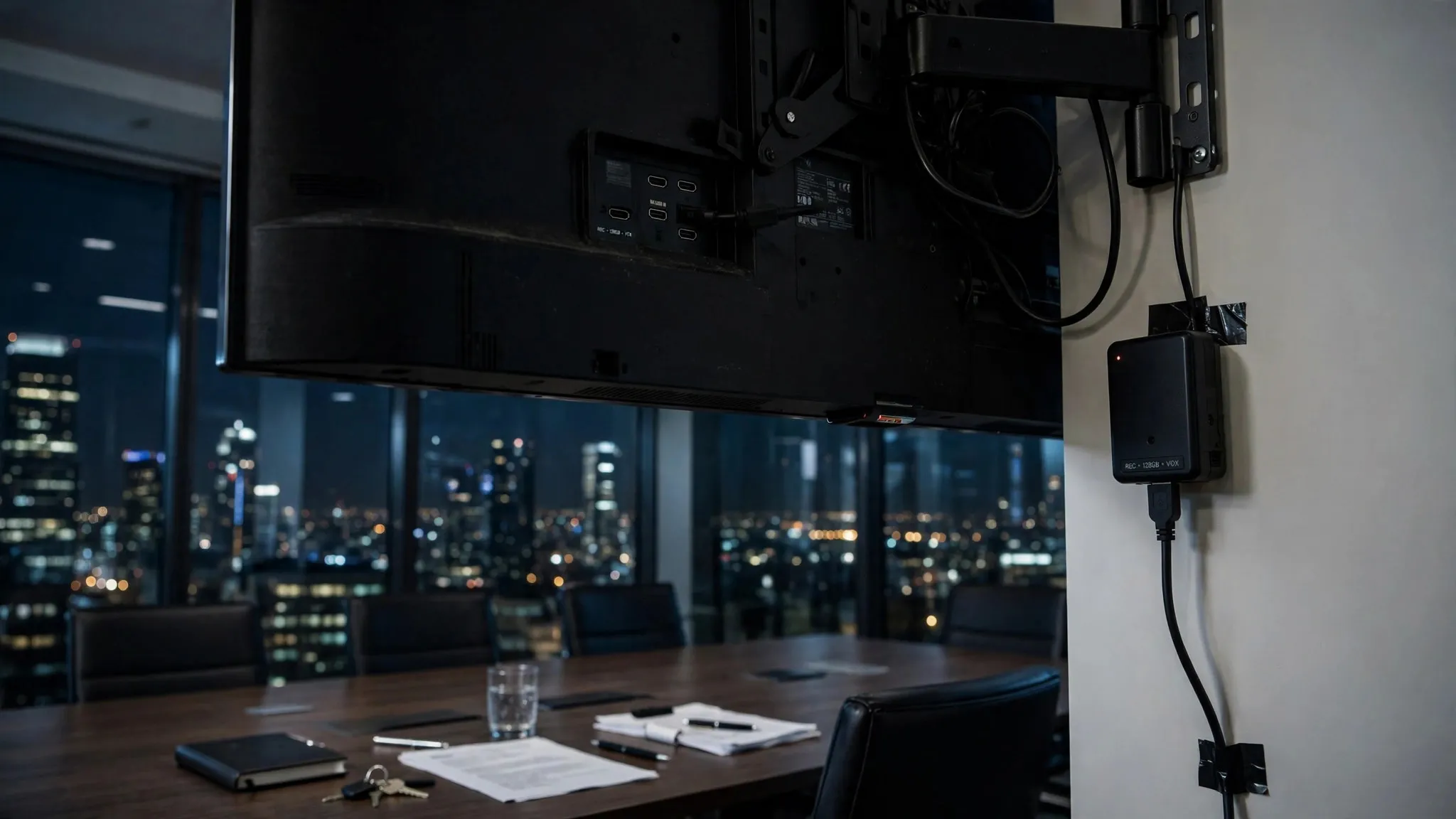
It sounds like a scene from a spy film. Inside the headquarters of the most famous artificial intelligence company in the world, in a quiet executive meeting room where the company’s biggest secrets are discussed, someone found a hidden listening device. It was tucked behind a television, plugged into a USB port, and wrapped in toilet paper so nobody would notice it.
But this is not a film. According to the United States Department of Justice, the device was real — and the man accused of planting it was one of the company’s own engineers. He has now been arrested, charged in federal court, and dismissed from his job. Here is the full story of what happened, how investigators say they pieced it together, and why officials in Washington are treating this case as far more than an office crime.
A Strange Discovery Behind the Television
On September 30, during a check of an executive conference room at OpenAI’s offices in San Francisco, company personnel discovered something that should never have been there: a hidden audio recording device.
According to the Department of Justice, the device was plugged into a USB port on the back of a television in the room. It had been concealed in toilet paper, the kind of simple hiding trick that works precisely because nobody thinks to look for it. The contents of the device were encrypted.
This was not an ordinary meeting room. Prosecutors say the room was regularly used for highly confidential discussions — the kind of conversations any rival company would love to hear. Proprietary research, product plans, technical capabilities, business relationships and even government engagements were discussed there. In other words, this was one of the most sensitive rooms in a company whose secrets are among the most valuable in the world.
OpenAI later described the device as sophisticated. It had advanced encryption and, according to the company, a way of transferring data that was designed to avoid detection. The company also determined that the device had been placed in the room around September 28 — roughly two days before it was found. For about two days, then, one of the most secret rooms in the AI industry may have had an uninvited listener.
Think about what that means. In a room like that, people speak freely precisely because they believe the walls cannot hear them. Deals are debated before they are announced. Research directions are argued over before they become products. Government work is discussed before it becomes public. A single hidden device, prosecutors allege, was meant to turn all of that private talk into someone else’s intelligence — quietly, from behind a television, in a room nobody thought to sweep until a routine check changed everything.
The Man Accused
The engineer charged in the case is Abdulrahman Alfozan, a 35-year-old Saudi national who worked at OpenAI — the company behind ChatGPT — in San Francisco.
He had not been there long. He joined the company in July 2025 as part of the product team. His LinkedIn profile listed his role as an “Engineering Lead,” and before OpenAI he had worked at Meta as a senior systems engineer and at a company called Nash as a founding engineer. On paper, he was exactly the kind of experienced engineer a top AI company hires.
That is part of what makes this story so striking. The suspect was not an outsider who broke into the building. Prosecutors allege he was an insider — a trusted employee with a desk inside the company — who used that trust to get close to a room he had no right to enter.
It is important to be clear about one thing before going further: Alfozan has been charged, not convicted. Everything described in the complaint is an allegation made by prosecutors, and it has not yet been proven in court.
How Investigators Pieced It Together
Once the device was found, the question was obvious: who put it there? According to the criminal complaint, investigators built their case piece by piece.
First, there were the security cameras. Prosecutors allege that footage showed Alfozan near the executive conference room on several occasions before the device was discovered — even though he was not authorised to attend meetings in that room or be part of what happened inside it.
Second, there was a bag. A backpack belonging to Alfozan was found, and inside it, reports say, were his wallet and identification — along with a second recording device, similar to the one hidden behind the television. OpenAI said there was evidence he intended to plant more devices around the offices. Prosecutors’ picture, in other words, is of a plan that may have been bigger than a single bug in a single room.
Third, there were his searches. Before the device was planted, prosecutors allege, Alfozan used a company productivity tool to look up information about OpenAI’s buildings and meetings: building addresses, meeting rooms, room capacities, calendars, and the locations of leadership and external partner meetings. Investigators say this was him mapping out where the important conversations happened.
Fourth — and strangest of all — there were the chatbot questions. A chatbot account linked to Alfozan’s wife allegedly contained questions about how to build and hide recording devices: how to make a continuous audio recorder, how to improve live listening over Wi-Fi, and how to encrypt an SD card. Prosecutors present these questions as part of the preparation for the alleged spying.
None of these pieces alone tells the whole story. Together, prosecutors say, they point to one man.
The Arrest and the Charge
OpenAI says that when it discovered the device, it referred the matter to the FBI. The company also said it used its own AI models to help identify the employee who planted the device — the company’s own technology, turned inward to catch an alleged spy inside its walls.
Alfozan was arrested on October 9. He has been federally charged with using, or endeavouring to use, a device to intercept oral communications — in simple words, secretly recording private conversations. He appeared in federal court on Tuesday, October 13, and he remains in custody. OpenAI has dismissed him from the company.
CNN reported that it reached out to Alfozan for comment; no response was reported.
What OpenAI Says
For a company in OpenAI’s position, the biggest fear in a case like this is simple: what did the listener actually hear, and did any of the company’s crown jewels — its source code, its model weights, its customer data — leak out?
On that question, the company’s answer was carefully reassuring. In a statement quoted by several news outlets, OpenAI said: “At this time, we have no indications of this individual inappropriately accessing or exfiltrating model weights, source code, or customer data.”
That is a significant claim. Model weights are, in a sense, the brain of an AI system — the product of enormous computing power and research. If they had been stolen, this would be a very different and much larger story. According to OpenAI, that did not happen here. The alleged crime was about listening to conversations, not breaking into the company’s data.
Why Washington Calls It a National Security Story
The reaction from the top of the American intelligence community shows how seriously officials are taking this case.
Jay Clayton, the US Director of National Intelligence, said: “This serious situation underscores why winning the global super intelligence race is a national security prerogative.” He added that the intelligence community remains committed to safeguarding America’s cutting-edge intellectual property from foreign threats.
That framing matters. A hidden microphone in a meeting room might sound like a small, old-fashioned crime — but in 2026, AI is treated by governments as a strategic asset, closer to a weapons programme than to an ordinary software business. As NDTV noted in its reporting, the case lands in the middle of a fierce global race to dominate artificial intelligence, in which Saudi Arabia’s state-backed AI firm Humain invested $3 billion in Elon Musk’s xAI earlier this year. Against that backdrop, an alleged spy inside OpenAI was never going to be treated as a minor office incident.
What Happens Next
For now, this story sits where every criminal case begins: with allegations. Prosecutors have laid out a detailed and dramatic account — a device hidden in toilet paper, a second device in a bag, searches for meeting rooms, and questions typed into a chatbot. But an account in a complaint is not a verdict. Alfozan is entitled to defend himself, and it will be for a court to decide what actually happened inside that San Francisco conference room.
What is already certain is this: the world’s leading AI company found a listening device in one of its most secret rooms, called the FBI, and watched one of its own engineers led away in handcuffs. In the race to build the smartest machines on Earth, the oldest trick in the spy book — a hidden microphone — has become headline news once again.