Pakistan Army Training Aircraft Crashes Near Quetta, Two Pilots Martyred
A Pakistan Army Mushshak training aircraft crashed near Nawan Killi in Quetta on October 12 due to a technical fault. Instructor Major Husnain Shehzad Humayun and trainee Captain Abdul Samad embraced martyrdom.
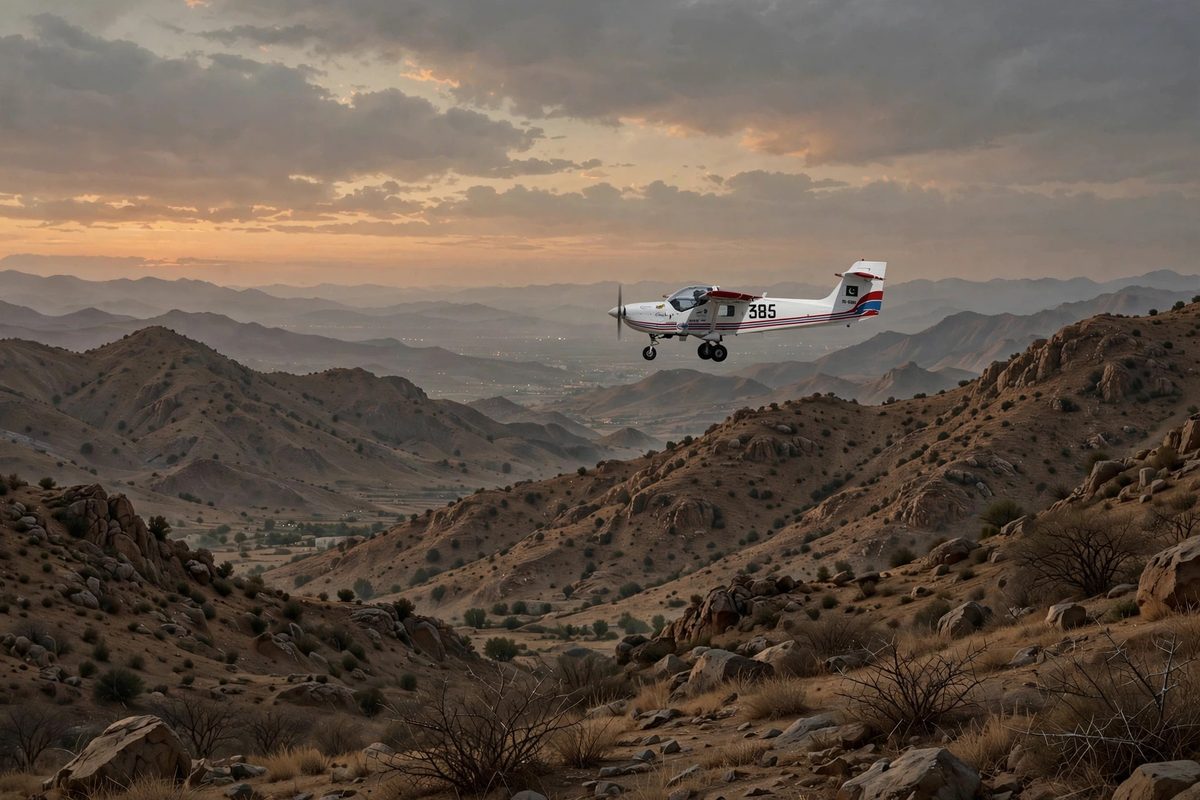
Just before midday on Monday came the kind of news no military family ever wants to hear. A small training aircraft of Pakistan Army Aviation had gone down near Nawan Killi, a locality in Quetta district of Balochistan. By the time the army’s statement reached the public, the worst had been confirmed: both officers on board had embraced martyrdom.
The aircraft was a Mushshak, the basic trainer on which generations of Pakistan’s military pilots have taken their very first flights. On board were two men at very different points of the same journey. One was the teacher, Major Husnain Shehzad Humayun, an instructor pilot responsible for passing on everything he knew. The other was his student, Captain Abdul Samad, an officer still learning the craft of military flying, trusting his instructor with his life on every single flight.
According to the army, the aircraft crashed due to a technical fault. There was no enemy and no battle — just a routine training flight on an ordinary Monday that ended in tragedy. This is what happened, and what we know so far.
The short version
On Monday, October 12, 2026, at around midday, a Pakistan Army Aviation Mushshak training aircraft crashed near Nawan Killi in Quetta district, Balochistan. The Pakistan Army, in a statement issued through the Inter-Services Public Relations (ISPR), said the aircraft went down because of a technical fault.
Both pilots on board lost their lives. The instructor pilot, Major Husnain Shehzad Humayun, and the student pilot, Captain Abdul Samad, embraced martyrdom in the crash.
Condolences came from the country’s leadership. President Asif Ali Zardari expressed profound grief, Prime Minister Shehbaz Sharif expressed sorrow, and Interior Minister Mohsin Naqvi said the nation stands with the bereaved families in this hour of sorrow.
The crash is also a reminder of a similar loss only months earlier: in June 2026, two Pakistan Air Force pilots were killed when their aircraft crashed during a routine training flight near Mardan.
What happened in Quetta
The flight was, by all accounts, an ordinary training sortie. Flights like this take place quietly, day after day, at airfields across Pakistan. An instructor takes a student up to practise the skills of flying — take-offs, landings, and handling the aircraft in different conditions — far from any battlefield.
On this occasion, the Mushshak was flying in the area of Nawan Killi, near Quetta, when something went wrong. The army’s statement was brief and to the point: at around midday, the aircraft crashed due to a technical fault, and both pilots — the instructor, Major Husnain Shehzad Humayun, and the trainee, Captain Abdul Samad — died in the unfortunate crash.
The army did not release further details about what exactly failed, and the full picture usually emerges only after an investigation examines the wreckage and the record of the flight.
In the hours after the crash, various claims also circulated on social media. What is confirmed is this: the military has stated the cause as a technical fault, and no official has confirmed any other claim. Until an investigation reports its findings, the ISPR statement remains the only verified account of why the aircraft came down.
The two officers who were lost
Behind every short official statement are real lives, real families and real sacrifices. In this crash, Pakistan lost two officers who stood at opposite ends of one of the most trusted relationships in military life: the instructor and his student.
Major Husnain Shehzad Humayun was the instructor pilot. Instructors are among the most experienced and trusted pilots in any flying unit. Their job is not only to fly the aircraft, but to teach — to sit beside a student, correct mistakes, build confidence, and make split-second decisions that keep both of them safe. Every pilot serving in Pakistan’s armed forces today once sat where Captain Abdul Samad sat, beside an instructor like Major Husnain.
Captain Abdul Samad was the student pilot, an officer at the start of his flying career. Student pilots fly knowing that training carries real danger, and they accept that risk in the service of their country, determined to earn their place in the cockpit.
On Monday, teacher and student flew together. This time, they did not return. Their names now join the long, honourable list of Pakistan’s servicemen who gave their lives not in war, but in preparing to defend their homeland.
What is the Mushshak training aircraft?
The Mushshak is not a fighter jet, and it was never meant to be one. Formally known as the PAC MFI-17 Mushshak, it is a basic training aircraft built in Pakistan by the Pakistan Aeronautical Complex (PAC) at Kamra. It is a small, single-engine, propeller-driven aircraft with two seats, designed for one purpose: teaching new pilots how to fly.
Almost every military pilot in Pakistan begins the flying journey on the Mushshak. Before a pilot ever touches a jet or a helicopter, the fundamentals are learned on this aircraft — how an aeroplane responds, how to take off and land safely, and how to handle emergencies calmly. It is the first classroom of Pakistan’s military aviation, except that this classroom flies.
Built at home by PAC Kamra, the Mushshak is also a point of national pride — a Pakistani-made aircraft that has trained Pakistani pilots for decades and is a familiar sight in the skies near airbases across the country.
Why training flights are risky
It is easy to assume that military flying is only dangerous in war. The truth is quieter and sadder: some of the bravest service happens in peacetime, in training, where the risks are real every single day.
Training flights are demanding by design. Students are, by definition, still learning. They practise difficult manoeuvres, rehearse emergency procedures, and fly over all kinds of terrain so that one day they can handle anything a real mission demands of them. The instructor beside them carries a double burden — flying the aircraft while guiding a learner whose hands are also on the controls.
Aircraft, too, are machines, and machines can fail. A technical fault at low altitude can leave a crew with only seconds to react and little room to recover.
Monday’s crash was not the first such loss this year. In June 2026, two Pakistan Air Force pilots were also killed when their aircraft crashed during a routine training flight near Mardan, a tragedy reported at the time. Together, these incidents are a sobering reminder that preparing to defend a country is itself an act of courage — one that sometimes demands the ultimate price long before any battle begins.
Leaders express grief
The news of the crash drew messages of grief from the highest offices of the country.
President Asif Ali Zardari expressed profound grief over the martyrdom of the two pilots. He prayed for the martyrs and for patience for their bereaved families in this painful time.
Prime Minister Shehbaz Sharif also expressed grief and sorrow over the martyrdom of the two army personnel, as reported by the Associated Press of Pakistan (APP), the state-run news agency.
Interior Minister Mohsin Naqvi expressed sorrow as well, and, as reported, said: “In this hour of sorrow, we stand with the martyrs’ bereaved families.”
Behind the formal words is a simple truth: two families received the worst possible news on Monday, and the whole country shares in their grief.
What happens next
For the families, what happens next is personal: funerals, mourning, and the long process of learning to live with an empty chair at the table. The two officers will be remembered with the honour their service deserves.
For the military, attention will turn to understanding exactly what went wrong. After crashes of this kind, it is the usual practice for the service to examine the aircraft’s remains, its maintenance record and the events of the flight, so that the same fault — if it can be prevented — does not claim more lives in the future.
Until such an examination is complete, many questions will remain unanswered. What is already certain, however, is the sacrifice: two officers who took off on a routine Monday flight and gave their lives in the line of duty.
Frequently Asked Questions
What happened near Quetta on October 12, 2026?
On Monday, October 12, 2026, at around midday, a Pakistan Army Aviation Mushshak training aircraft crashed near Nawan Killi in Quetta district, Balochistan. The army said the cause was a technical fault, and both pilots on board were martyred.
Who were the two pilots who lost their lives?
The instructor pilot was Major Husnain Shehzad Humayun, and the student pilot was Captain Abdul Samad. The experienced instructor was training the younger officer when the aircraft crashed.
What caused the crash?
According to the Pakistan Army’s statement, issued through the ISPR, the aircraft crashed due to a technical fault. No other cause has been officially confirmed.
What is a Mushshak aircraft?
The Mushshak (PAC MFI-17 Mushshak) is a basic training aircraft built in Pakistan by the Pakistan Aeronautical Complex at Kamra. It is the first aircraft on which most Pakistan military pilots learn to fly.
Has a similar crash happened recently?
Yes. In June 2026, two Pakistan Air Force pilots were killed when their aircraft crashed during a routine training flight near Mardan. Training flying, though essential, carries real risk even in peacetime.
Sources: ISPR statement as reported by Geo News, India TV News and The Daily Jagran on October 12, 2026, and the Associated Press of Pakistan (APP).