Paul Walker: The Life Story Behind Fast and Furious' Star
In this post
- A California Childhood and a Child Actor
- Varsity Blues and the Breakthrough
- The Fast & Furious Phenomenon
- Beyond the Franchise: Other Films
- A Love of Cars, Surfing, and the Ocean
- Reach Out Worldwide and Charity Work
- The Crash in Santa Clarita
- Furious 7 and the Tribute
- A Legacy of Kindness and Family
- My Take:
Paul Walker was the blue-eyed, all-American star of the Fast & Furious films, a man who played Brian O’Conner, the undercover cop who became a street racer, and who became one of the most loved action stars in the world. He was handsome, charming, and down to earth, a surfer and a car lover who seemed to live the life he played on screen, and his films earned billions of dollars at the box office. He was also a kind, generous man, who did charity work around the world and who founded an organisation to help people after natural disasters, and he was a devoted father to his daughter Meadow.
He was born on 12 September 1973 in Glendale, California, the son of a sewer contractor and a fashion model, and he grew up in the San Fernando Valley, in a family that was close and loving. He began acting as a child, appearing in television commercials and in the television series Highway to Heaven, and he was a child model before he became an actor. He attended high school in California, he studied marine biology at community college, and he loved the ocean, surfing, and cars, passions that would stay with him for his whole life.
His breakthrough came in 1999, when he starred in Varsity Blues, a film about high school football, and in 2001, when he was cast as Brian O’Conner in The Fast and the Furious, a film about street racing that became one of the most successful franchises in cinema history. He starred in six Fast & Furious films, and he became a global star, but he remained humble, and he used his fame to do good, founding Reach Out Worldwide, a charity that provides aid after disasters. He was a man who loved life, and who lived it fully, and who was taken too soon.
He died on 30 November 2013, at the age of 40, in a car crash in Santa Clarita, California, when the Porsche he was a passenger in crashed into a tree and caught fire. His death shocked the world, because he was so young, so talented, and so loved, and because it happened in a car, the very thing he was famous for loving on screen. Furious 7, the film he was making when he died, was completed with the help of his brothers as stand-ins, and it became a tribute to him, ending with a scene of his character driving off into the sunset. This is the full life story of Paul Walker, the Fast & Furious star who lived fast and died young.
A California Childhood and a Child Actor
Paul William Walker IV was born on 12 September 1973 in Glendale, California, and he was the son of Paul Walker III, a sewer contractor and former boxer, and Cheryl Walker, a fashion model. He grew up in the San Fernando Valley, in a middle-class family, with two younger brothers, Caleb and Cody, and two younger sisters, Ashlie and Amie. He was a happy, active child, who loved the outdoors, who loved surfing, and who was a natural athlete, and he was also a handsome boy, which led his mother to take him to auditions for television commercials when he was still a toddler.
He began acting as a child, appearing in a commercial for Pampers when he was two years old, and in television shows like Highway to Heaven and Who’s the Boss? as a young boy. He was a child model, and he was a child actor, but he was also a normal kid, who went to school, played sports, and loved the ocean. He attended Village Christian School in Sun Valley, and he was a good student, but his real passion was the sea, and he dreamed of becoming a marine biologist, a dream that he pursued at community college after high school.
His early acting career was steady but not spectacular, and he appeared in films like Monster in the Closet in 1986 and Programmed to Kill in 1987, small roles that paid the bills but did not make him famous. He was a working actor, and he was content with that, but he had bigger ambitions, and he kept auditioning, kept working, and kept waiting for his break. That break came in the late 1990s, when he was cast in a series of teen films that made him a star with young audiences, and that set the stage for the role that would define his career.
Varsity Blues and the Breakthrough
Walker’s breakthrough came in 1999, when he starred in Varsity Blues, a film about a high school football team in Texas, playing Lance Harbor, the star quarterback who is injured and must watch his team from the sidelines. It was a small role, but it was a memorable one, and it showed that Walker could play a clean-cut, all-American hero with charm and with sincerity. The film was a hit, and it made him a recognisable face, and it led to more roles in films like She’s All That and The Skulls, teen films that were popular with young audiences.
He was a handsome, blue-eyed actor, and Hollywood saw him as a leading man, a man who could play the hero, the boyfriend, and the good guy, and he was cast in those roles again and again. But he was not just a pretty face, and he was not just a teen star. He was a serious actor who wanted to do more, and he was looking for a role that would challenge him and that would make him a star in his own right. That role came in 2001, when he was cast in The Fast and the Furious, a film that would change his life and the history of action cinema.
The Fast and the Furious was a film about street racing, about cars, and about family, and it was a perfect fit for Walker, who loved cars in real life and who was a keen racer himself. He played Brian O’Conner, an undercover police officer who infiltrates a street racing gang and falls in love with the sister of its leader, played by Vin Diesel. The film was a huge success, earning more than 200 million dollars, and it made Walker a global star, and it launched a franchise that would earn billions of dollars and run for more than two decades.
The Fast & Furious Phenomenon
The Fast & Furious franchise became one of the most successful in cinema history, and Paul Walker was at its heart, playing Brian O’Conner in six of the films, from the original in 2001 to Furious 7 in 2015. He was the calm, decent hero, the counterpoint to Vin Diesel’s tough, brooding Dominic Toretto, and their friendship, on screen and off, was the emotional core of the series. The films were about cars, about action, and about family, and Walker embodied the family values that made the franchise so popular, playing a man who would do anything for the people he loved.
He was not only an actor in the franchise. He was a car enthusiast, and he loved the cars he drove on screen, and he owned many of them in real life. He was a skilled driver, he took part in races, and he was a genuine petrolhead, a man who understood cars and who loved them. That authenticity showed on screen, because he was not pretending to love cars. He really did, and that love made his performances feel real, and it made the films feel real to audiences who shared his passion.
The franchise also made him rich and famous, but he remained humble, and he used his fame to do good. He founded Reach Out Worldwide, a charity that provides medical aid and disaster relief, and he travelled to Haiti, to Chile, and to the Philippines after earthquakes and typhoons, helping people in need. He was a man who believed in giving back, and he did it quietly, without seeking publicity, because he believed it was the right thing to do. That generosity is part of why he is so loved, and why his death was felt so deeply.
Beyond the Franchise: Other Films
Walker was not only Brian O’Conner, and he worked in other films throughout his career, showing his range as an actor. He starred in Joy Ride in 2001, a thriller about a prank that goes wrong, in Into the Blue in 2005, a film about divers who find treasure, and in Eight Below in 2006, a Disney film about sled dogs in Antarctica, which was a commercial success and which showed his softer side. He was a versatile actor, and he could play a hero, a villain, and a father, and he did it all with a sincerity that made audiences believe him.
He also starred in Running Scared in 2006, a dark crime thriller, and in Takers in 2010, a heist film, and he was praised for his performances in both, even though the films were not huge hits. He was an actor who was always working, always learning, and always trying to do better, and he was respected by his fellow actors for his professionalism and his kindness. He was not a diva, and he was not difficult. He was a man who showed up, did his work, and treated everyone with respect, and that is why he was loved on every set he worked on.
His later films included Hours in 2013, in which he played a father trying to keep his newborn baby alive during Hurricane Katrina, a performance that was praised for its emotional depth, and Brick Mansions in 2014, an action film that was released after his death. He was a working actor, and he was proud of that, and he was building a career that went beyond the Fast & Furious franchise, a career that showed his range and his talent. His death cut that career short, and it is a loss to cinema that he did not get to show more of what he could do.
A Love of Cars, Surfing, and the Ocean
Walker loved cars, and he loved the ocean, and those two passions defined his life outside of acting. He was a keen surfer, and he spent as much time as he could in the water, surfing in California and in Hawaii, and he was a passionate advocate for the ocean, supporting marine conservation and studying marine biology. He had studied the subject at community college, and he had worked with the National Geographic Channel on a documentary about great white sharks, a project that combined his love of the ocean with his fame as an actor.
He was also a car collector, and he owned a collection of classic and modern cars, including Porsches, BMWs, and Nissans, and he took part in races, including the Redline Time Attack series, where he drove a BMW M3. He was a skilled driver, and he understood cars in a way that few actors do, and his knowledge made his performances in the Fast & Furious films feel authentic. He was not pretending to be a car lover. He was one, and that authenticity is part of why audiences believed him.
His love of the ocean and of cars was not just a hobby. It was a way of life, and it was a reflection of who he was: a man who loved freedom, who loved speed, and who loved the natural world. He was a Californian, and he lived like one, surfing in the morning, driving in the afternoon, and acting in between, and he did it all with a joy and an enthusiasm that was infectious. That joy is part of why he is so missed, because he loved life, and he lived it fully.
Reach Out Worldwide and Charity Work
In 2010, Walker founded Reach Out Worldwide, a non-profit organisation that provides medical aid and disaster relief to people affected by natural disasters. He had been inspired by his experiences travelling to Haiti after the 2010 earthquake, where he saw the devastation and the need for help, and he decided to do something about it. He recruited doctors, nurses, and volunteers, and he travelled to disaster zones himself, working on the ground, helping people, and using his fame to draw attention to the need.
He travelled to Chile after the 2010 earthquake, to the Philippines after Typhoon Haiyan in 2013, and to other disaster zones, and he worked tirelessly, often in difficult and dangerous conditions. He did not do it for publicity, and he did not do it for fame. He did it because he believed it was the right thing to do, and because he had the resources to help. His charity work is one of the most important parts of his legacy, and it is a reminder that he was more than an actor. He was a humanitarian, and he cared deeply about the world.
After his death, Reach Out Worldwide has continued his work, and it is now run by his family and by his friends, who are committed to carrying on his mission. The organisation has helped thousands of people, and it is a living tribute to a man who believed in giving back. His daughter Meadow is involved in the charity, and she has spoken about her father’s generosity and about the importance of continuing his work. That is a legacy that will last, and it is one that Walker would be proud of.
The Crash in Santa Clarita
On 30 November 2013, Paul Walker attended a charity event for Reach Out Worldwide in Santa Clarita, California, and he left the event as a passenger in a red Porsche Carrera GT, driven by his friend Roger Rodas, a racing driver and the owner of a car shop. The car crashed into a concrete lamppost and two trees, at high speed, and it caught fire, killing both men instantly. Walker was 40 years old, and his death shocked the world, because he was so young, so talented, and so loved, and because it happened in a car, the very thing he was famous for.
The crash was investigated, and it was found that the car had been travelling at a high speed, and that the driver had lost control. There were no drugs or alcohol involved, and it was a tragic accident, caused by speed and by a loss of control on a road that was not designed for racing. Walker’s death was a reminder of the dangers of speed, and of the fragility of life, and it was a loss that was felt around the world, by his family, his friends, and his millions of fans.
His funeral was a private affair, attended by his family and his closest friends, including Vin Diesel, who gave a eulogy and who has spoken about Walker as a brother. The Fast & Furious family, the cast and crew who had worked with him for more than a decade, were devastated, and they struggled to continue without him. His death left a hole in the franchise, and in the lives of everyone who knew him, a hole that has never been filled.
Furious 7 and the Tribute
When Walker died, he was in the middle of filming Furious 7, the seventh film in the franchise, and the production was halted while the filmmakers decided what to do. They decided to complete the film as a tribute to him, using his brothers Caleb and Cody as stand-ins, and using computer-generated imagery to recreate his face, so that his character, Brian O’Conner, could have a proper farewell. It was a difficult and emotional process, and it was done with love and with respect, and the result was a film that became a tribute to a man who had meant so much to so many people.
Furious 7 was released in April 2015, and it was a huge success, earning more than 1.5 billion dollars at the box office, and it ended with a scene that has become one of the most emotional in cinema history. Brian O’Conner and Dominic Toretto drive side by side, and then Brian turns off onto a different road, driving into the sunset, while the song See You Again, by Wiz Khalifa and Charlie Puth, plays. It was a farewell, and it was a tribute, and it made audiences around the world cry, because it was not just a film ending. It was a goodbye to a real person, a friend, and a brother.
The film’s ending is a fitting tribute to Walker, because it shows his character driving away, not dying, but going on to a new life, with his family, and it is a hopeful image, a reminder that he is not gone, but that he has moved on. It is a beautiful ending, and it is one that his fans will never forget, because it was made with love, and it was made for a man who deserved it. Furious 7 is not just a film. It is a memorial, and it is a testament to the love that Walker inspired.
A Legacy of Kindness and Family
Paul Walker’s legacy is secure, because he is one of the most loved action stars in cinema history, and his films are still watched by millions of people around the world. The Fast & Furious franchise continues, but it is not the same without him, and his character, Brian O’Conner, is still mentioned with love by fans. He was a star, and he was a hero, and he was a man who lived his life with kindness, with generosity, and with a love of family that was at the heart of everything he did, on screen and off.
His charity, Reach Out Worldwide, continues his work, and his daughter Meadow has become an advocate for her father’s legacy, speaking about his kindness and his generosity, and working to keep his memory alive. She has also founded the Paul Walker Foundation, which supports ocean conservation and marine science, two causes that were close to her father’s heart. His legacy is not only his films. It is his kindness, his charity, and his love for the ocean, and those are the things that will last.
Today, Paul Walker is remembered as a legend, a man who was taken too soon, and whose work will live on forever. His films are still watched, his charity is still helping people, and his name is still spoken with love by his fans and by his family. He was a star, and he was a good man, and he will never be forgotten, because his story is one of talent, kindness, and a life lived fully, and those are the qualities that make a legend.
My Take:
What I admire about Paul Walker is that he was a movie star who never acted like one. He was humble, kind, and down to earth, a man who loved surfing and cars and who used his fame to help people after disasters. He did not seek attention, and he did not chase fame, and he was content to be a working actor who did good work and lived a good life. That humility is rare in Hollywood, and it is part of why he is so loved. He was a star, but he was also a regular guy, and that is a combination that is hard to find.
His role as Brian O’Conner is the one I think about most, because it is a character who is decent, loyal, and brave, and Walker played him with a sincerity that made audiences believe in him. He was not a tough guy, and he was not a villain. He was a good man, trying to do the right thing, and that is a hero that people can relate to. The Fast & Furious films are about family, and Walker embodied that family, on screen and off, and his friendship with Vin Diesel was real, and it showed in every film they made together.
The ending of Furious 7 is one of the most emotional moments in cinema, and I cry every time I watch it. Brian drives off into the sunset, and the song See You Again plays, and it is a farewell not just to a character but to a real person, a friend, and a brother. It was made with love, and it was made as a tribute, and it is a beautiful ending to a sad story. I think about that scene often, because it shows how films can honour the people they lose, and how art can help us to grieve.
His charity work is the part of his story I respect most, because he founded Reach Out Worldwide and he travelled to disaster zones himself, working on the ground, helping people, and using his fame to do good. He did not do it for publicity, and he did not do it for fame. He did it because he believed it was the right thing to do, and because he had the resources to help. That generosity is rare, and it is a legacy that will last longer than any film, because it has changed real lives in real ways.
His love of the ocean is something I find beautiful, because he studied marine biology, he worked with National Geographic on a documentary about sharks, and he was a passionate advocate for ocean conservation. He was not just an actor who liked the beach. He was a man who understood the ocean, who respected it, and who wanted to protect it. That is a side of him that many people do not know, and it is a part of his legacy that his daughter is now carrying on through the Paul Walker Foundation.
His death in a car crash is a terrible irony, because he was famous for cars, and he died in one, and that irony has been noted by many people. But I think it is important to remember that he did not die racing, and he did not die showing off. He died as a passenger, in an accident, on a road in Santa Clarita, and it was a tragedy, not a stunt. He loved cars, and he died in one, and that is sad, but it does not diminish his life, or his work, or his kindness. It is simply a terrible accident, and it took a good man too soon.
I think about his daughter Meadow a lot, because she was 15 when he died, and she has grown up without her father, carrying his memory and his legacy. She has founded a foundation in his name, she works for ocean conservation, and she speaks about him with love and with pride. That is a beautiful thing, and it is a testament to the father he was, because he raised a daughter who is kind, generous, and committed to doing good, just as he was. He would be proud of her, and I am sure he is, wherever he is.
The lesson I take from Paul Walker is that kindness matters more than fame. He was famous, but he was kind, and it is his kindness that people remember most. He helped people after disasters, he was generous to his friends, and he was a devoted father, and those are the things that define him, more than any film or any box office number. If you want to be remembered, be kind, the way Paul Walker was kind, and let your kindness be your legacy, because kindness lasts longer than fame.
I also admire his friendship with Vin Diesel, because it was real, and it lasted, and it was the heart of the Fast & Furious franchise. They were not just co-stars. They were brothers, and Diesel has spoken about Walker as a brother since his death, and he has kept his memory alive in every film since. That kind of friendship is rare in Hollywood, and it is a beautiful thing, and it shows that Walker was a man who inspired loyalty and love in the people around him. He was a friend, and he was a brother, and he will always be remembered as one.
His early work as a child actor is a part of his story I find interesting, because he started so young, appearing in commercials when he was two, and he worked steadily for decades before he became famous. That is a long apprenticeship, and it taught him professionalism, humility, and the value of hard work. He was not an overnight star. He was a working actor who earned his success, and that is a more honest story than the story of a star who was discovered overnight. He worked for it, and he deserved it.
Finally, I believe Paul Walker was a good man, and a talented actor, and his death at 40 is one of the great tragedies of modern cinema. He gave us Brian O’Conner, he gave us Reach Out Worldwide, and he gave us a model of how to be a star with humility and with kindness. He is gone, but his films remain, his charity remains, and his daughter remains, carrying his legacy forward. That is a life that mattered, and it is a life that will never be forgotten.
One more thing I want to say is that his story is a reminder to live fully, because life is short, and it can end without warning. Walker lived fully, surfing, driving, acting, and helping others, and he did it with joy and with enthusiasm. If you have a passion, pursue it, the way he did, and do not wait, because tomorrow is not guaranteed. That is the lesson of his life, and it is a lesson I will carry with me, always.
When I think about the Fast & Furious franchise, I think about family, because that is what the films are about, and Walker embodied that family. He was a brother to Vin Diesel, a father to Meadow, and a friend to everyone he worked with, and that family is what made the films special. He is gone, but the family remains, and they still talk about him, and they still miss him, and that is a testament to the man he was. He was family, and family is forever.
I will end by saying that watching Paul Walker on screen was a pleasure, and I am grateful to have seen his films. He was handsome, he was charming, and he was kind, and those three things together make a star that is hard to forget. He is Brian O’Conner, and he is Paul Walker, a man who lived fast, loved deeply, and left too soon, but who will never be forgotten, because his story is one of talent, kindness, and a life lived fully.
There is a final thought I want to leave with, and it is about the ocean, because Walker loved the ocean, and his daughter now works to protect it. That is a beautiful legacy, because the ocean is vast, and it needs protectors, and Walker was one, and his daughter is one now. If you love the ocean, protect it, the way Walker did, and the way his daughter does now. That is a gift to the world, and it is a gift that will last.
And if you have never seen Furious 7, watch it, not just for the action, but for the ending, because it is one of the most moving tributes ever made in cinema. Watch it for the cars, for the family, and for the farewell, and think about Paul Walker, and about the man he was. That is the Paul Walker I will remember: not just the actor, but the man, who was kind, who was generous, and who lived his life with joy.
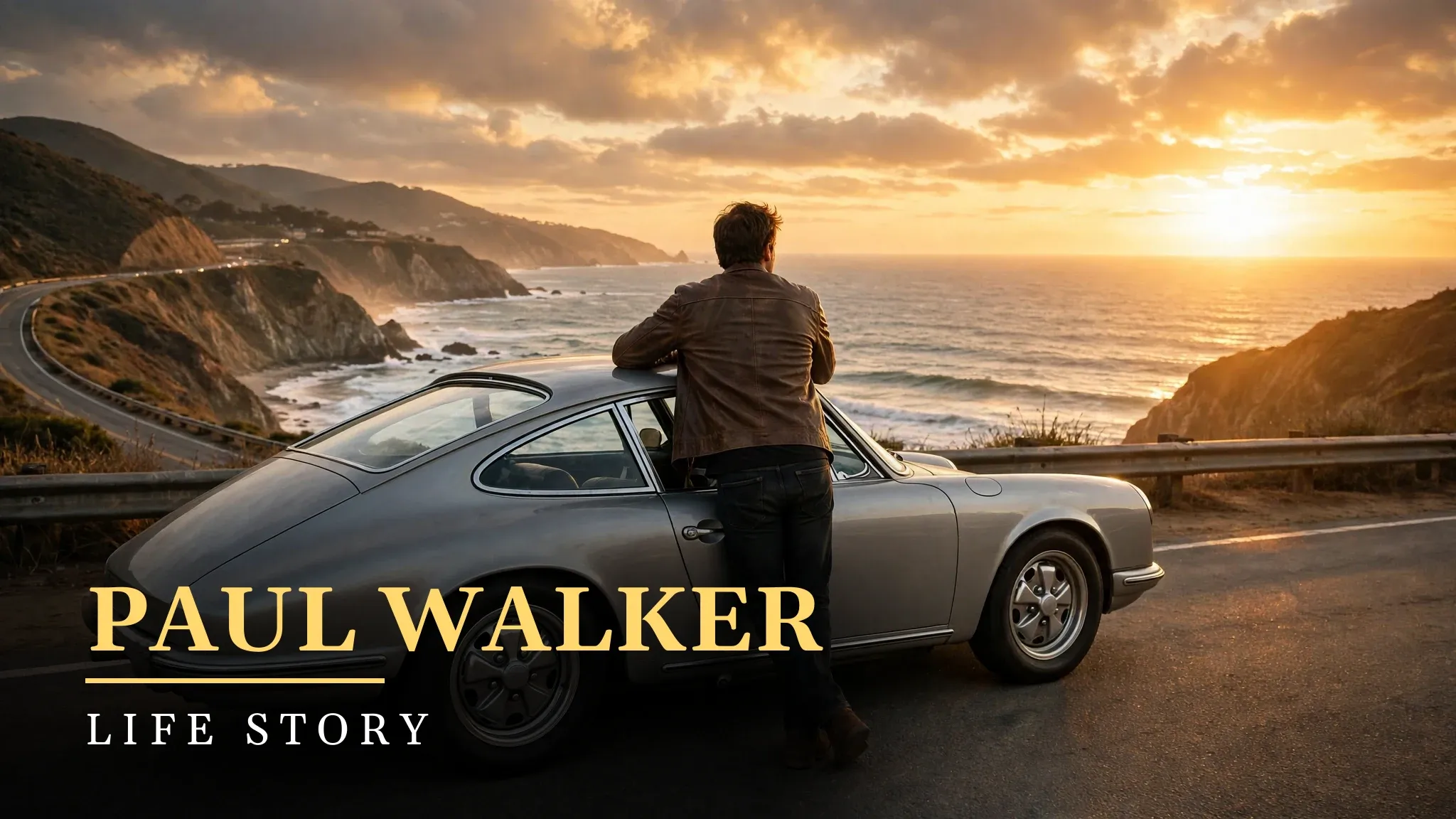
One last memory: the image of him smiling, leaning on a car, with the sun setting behind him, looking happy and at peace. That is how I want to remember him: not in a crash, not in a tragedy, but happy, smiling, and alive, doing the thing he loved most. That is Paul Walker, and that is the image I will carry with me, always.
His legacy will live on through his films, through his charity, and through his daughter, who is carrying his work forward with grace and with love. That is a fitting legacy for a man who believed in family, in kindness, and in giving back. He is gone, but his work remains, and his name will be remembered as one of the greats, a man who was taken too soon but who gave the world more in 40 years than most actors give in a lifetime.
Finally, I want to say thank you, Paul Walker, for the films, for the charity, and for the kindness. You were a star, and you were a good man, and the world is a sadder place without you. But your films are still here, your charity is still helping people, and your daughter is still carrying your legacy forward. That is a life that mattered, and it is a life that will never be forgotten.
And one more thing: if you love cars, drive safely, because Walker loved cars, and he died in one, and that is a reminder that speed is dangerous, and that life is fragile. Enjoy your passion, but respect it, and be careful, because the people who love you want you to come home safe. That is a practical lesson from his death, and it is one worth remembering, for every driver, everywhere, every single day, on every road, in every car, without exception, always.
There is a last lesson in his life that I carry with me, and it is this: be a good friend, because Walker was a good friend, and his friends still talk about him with love, years after his death. Friendship is a gift, and it is a gift that lasts, even after a person is gone. Be a friend like Paul Walker was a friend, loyal, kind, and true, and you will be remembered, the way he is remembered, with love.
One final thought: his story is not just about a movie star. It is about a man who loved life, who loved his family, and who used his fame to help others, and that is a story that deserves to be told. He was a star, and he was a humanitarian, and he was a father, and he was all of those things at the same time. That is a remarkable life, and it is one that I am grateful to have learned about, and to have shared. What stays with me about Walker is his kindness off screen, the way he founded Reach Out Worldwide to help people after disasters, and that generosity is something every young actor should study, because fame is not only about films, it is about what you do with it, and Walker used his fame to help strangers, which is the finest use of fame there is.
Frequently Asked Questions
When was Paul Walker born?
Paul Walker was born on 12 September 1973 in Glendale, California, USA. He began acting as a child, appearing in television commercials and shows like Highway to Heaven.
How did Paul Walker die?
He died on 30 November 2013 in Santa Clarita, California, at the age of 40, in a car crash. He was a passenger in a Porsche Carrera GT driven by his friend Roger Rodas, which crashed into a tree and caught fire.
What was Paul Walker’s most famous role?
His most famous role was Brian O’Conner in The Fast and the Furious franchise, which he played in six films from 2001 to 2015. The franchise has earned billions of dollars worldwide.
How was Furious 7 completed after Paul Walker’s death?
The film was completed using his brothers Caleb and Cody Walker as stand-ins, along with computer-generated imagery to recreate his face. It ends with his character driving off into the sunset as a tribute.
What charity did Paul Walker found?
He founded Reach Out Worldwide in 2010, a non-profit that provides medical aid and disaster relief. He travelled to Haiti, Chile, and the Philippines to help after earthquakes and typhoons.
Who is Paul Walker’s daughter?
His daughter is Meadow Walker, born in 1998. She founded the Paul Walker Foundation, which supports ocean conservation and marine science, causes close to her father’s heart.


