Pearl Bailey: The Life Story Behind Hollywood's Beloved Star
In this post
- A Virginia Childhood Full of Music
- From Nightclubs to the Big Stage
- Hello, Dolly! and Broadway Triumph
- A Singer Who Served Her Country
- The Later Years and a Lasting Warmth
- What Her Life Still Means
- The Books She Wrote and the Lessons She Shared
- A Diplomat, a Student, and a Woman Who Kept Growing
- The Warmth She Carried Into Every Room
- My Take:
Pearl Bailey had a way of making a room feel like a living room, even when that room held hundreds of strangers. She sang, she talked, she joked, and she made people feel as if she were speaking only to them. Her voice was warm and rich, and her laugh was famous, but what people remembered most was the feeling that she was glad to be there, and glad that they were there too.
She was born in Virginia, and she grew up in a family where music and faith were part of daily life. She began singing in church, and she learned to perform in the small halls and clubs where Black entertainers built their careers. She was not an overnight star. She worked her way up, one club, one town, and one audience at a time, until her name became known across America.
What makes her story special is how many different lives she lived in one lifetime. She was a singer, an actress, a Broadway star, a writer, a student who went back to university in her sixties, and a diplomat who represented her country. She was also a woman who kept her sense of humour through hard times, and who used her fame to help others. This is the story of a performer who never stopped growing.
A Virginia Childhood Full of Music
Pearl Mae Bailey was born on 29 March 1918 in Newport News, Virginia. Her father was a minister, and her mother was a homemaker who loved music. The family later moved to Washington, D.C., where Pearl grew up in a home filled with singing, prayer, and the sounds of the church. She sang in the choir, and she learned early that music could lift people up and bring them together.
She was a lively child, with a quick mind and a strong personality. She liked to talk, she liked to make people laugh, and she liked to be the centre of attention in a friendly way. Her family encouraged her talents, and they taught her that hard work and faith were the foundations of a good life. She attended school in Washington, and she was a good student, but she was also drawn to the stage, and she began to think about a life in entertainment.
When she was still a teenager, she began to sing in nightclubs in Washington and in other cities. She was young, but she was not shy. She had a voice that could fill a room, and she had a way of talking to an audience that made them feel at ease. She learned to read a crowd, to know when to sing a slow song and when to make them laugh, and to keep a show moving even when things went wrong. Those early nights in small clubs were her real training, and they taught her lessons that no school could teach.
Her brother, Bill Bailey, was also a performer, and the family had a strong tradition of entertainment. Pearl grew up watching performers and learning from them, and she began to understand that a career in show business was not only about talent. It was about showing up, working hard, and treating people well. She carried those lessons with her for the rest of her life, and they helped her build a career that lasted for more than fifty years.
From Nightclubs to the Big Stage
In the 1940s, Pearl Bailey began to make a name for herself as a singer in New York and across the country. She sang in nightclubs, she performed with bands, and she began to appear in theatres. Her style was different from many other singers of the time. She did not only sing the song. She talked to the audience between songs, she told stories, and she made jokes. People came to hear her sing, and they stayed because they liked being with her.
She appeared on Broadway in the 1940s, in the musical St. Louis Woman, and she began to build a reputation as a stage performer. She also appeared in films, including Carmen Jones in 1954, where she played Frankie, and Porgy and Bess in 1959, where she played Maria. These were supporting roles, but she brought warmth and humour to them, and audiences remembered her even when she was not the star of the film.
She also became a regular on television, where her relaxed and funny style worked very well. She appeared on variety shows, she hosted her own shows, and she became a familiar face in American homes. She was not a distant star. She was a warm presence, and people felt as if they knew her. That feeling was real, because she treated her audiences as friends, and she spoke to them as if they were sitting in her living room.
During these years, she married the drummer Louie Bellson in 1952. Their marriage lasted until her death, and it was a partnership built on music and mutual respect. Louie was a respected jazz drummer, and he understood the life of a performer. They travelled together, they worked together, and they supported each other through the ups and downs of a career in entertainment. Their marriage was one of the most stable and admired in show business.
Hello, Dolly! and Broadway Triumph
The greatest stage success of Pearl Bailey’s life came in 1967, when she took over the leading role in the Broadway musical Hello, Dolly! She played Dolly Levi, a matchmaker with a big heart and a bigger personality, and the role seemed made for her. She brought her warmth, her humour, and her singing to the part, and audiences loved her. The production, with an all-Black cast, was a major event, and it showed that a classic Broadway musical could be reimagined with Black performers at its centre.
Her performance earned her a special Tony Award in 1968, and it became one of the most talked-about moments in Broadway history. She was in her late forties by then, and she had been working for more than twenty years, but this was the role that brought her the highest honour of her stage career. She sang the title song with a joy that filled the theatre, and she made Dolly feel like a real person, not only a character in a musical.
The success of Hello, Dolly! also showed how much she had grown as a performer. She was no longer only a nightclub singer. She was a Broadway star, and she could carry a major show night after night. She toured with the production, and she brought it to audiences across America who had not seen her on Broadway. She was proud of the work, and she was proud of the cast, and she spoke about the show as a milestone in her life.
She continued to perform on stage after Hello, Dolly!, and she remained a beloved figure in the theatre world. She was known for her professionalism, her kindness to younger performers, and her ability to make every audience feel welcome. She was a star who did not act like a star, and that made people love her even more.
A Singer Who Served Her Country
Pearl Bailey’s life was not only about entertainment. She cared deeply about her country, and she used her fame to serve others. She performed for American troops overseas, travelling to entertain soldiers in places far from home. She sang for them, she talked to them, and she tried to bring a little bit of home to men and women who were far away and facing danger. Those tours meant a great deal to her, and she spoke about them with pride.
In later years, she was given a role that surprised many people. She was appointed as a special ambassador to the United Nations, a position in which she represented the United States and spoke about issues that mattered to her. She took the role seriously, and she worked hard to understand the issues she was asked to speak about. She was not a politician, but she was a person who cared about people, and she brought that care to her diplomatic work.
She also became known for her writing. She wrote books about her life, her faith, and her experiences, and she shared her thoughts in a warm and honest way. Her books were not only about show business. They were about growing up, about family, about loss, and about the lessons she had learned along the way. Readers liked her books because they sounded like her: friendly, funny, and full of common sense.
In her sixties, she did something that amazed many people. She went back to university, and she earned a degree in theology from Georgetown University in 1985, at the age of sixty-seven. She had always been a person of faith, and she wanted to study it in a serious way. Her graduation was a proud moment for her and for her family, and it showed that she believed learning had no age limit. She was a student, a singer, and a star, all at the same time.
The Later Years and a Lasting Warmth
In her later years, Pearl Bailey continued to perform, though she worked less often. She appeared on television, she sang at special events, and she remained a familiar and loved figure in American life. She was honoured with awards for her work in entertainment and for her service to her country, and she was admired by younger performers who saw her as a role model.
Her health began to decline in the late 1980s, and she spent more time at home with her husband, Louie Bellson. She had always been a strong and active woman, and the slowing down was hard for her, but she kept her sense of humour and her faith. She spoke about her life with gratitude, and she said that she had been blessed with a career that had given her more than she had ever expected.
She died on 17 August 1990 in Philadelphia, Pennsylvania, at the age of seventy-two. Her death was mourned across America, and tributes came from performers, politicians, and ordinary people who had loved her work. She was buried in Pennsylvania, and her legacy was remembered in the many recordings, films, and stage performances she had left behind.
She is remembered today as a singer with a warm voice, a Broadway star who brought joy to Hello, Dolly!, and a woman who served her country with pride. But she is also remembered as a person who made people feel welcome, who made them laugh, and who made them feel as if they mattered. That gift, the gift of making people feel at home, is rare, and it is one reason her name is still spoken with affection.
What Her Life Still Means
Pearl Bailey’s story matters because it shows that a career can be many things at once. She was not only a singer. She was an actress, a writer, a student, and a diplomat. She did not stop growing when she became famous. She kept learning, kept working, and kept finding new ways to use her talents. That willingness to grow is a lesson for anyone who thinks that success means stopping.
Her influence can be seen in the many performers who learned from her example. She showed that a Black woman could be a star on Broadway, on television, and in films, and that she could do it with warmth and humour, not only with glamour. She also showed that a performer could be a person of faith and a person of service, and that those parts of life could live alongside a career in show business.
She is remembered for her voice, for her laugh, and for her kindness. In a world where fame often makes people distant, she stayed close to her audience. She sang to them, she talked to them, and she made them feel as if they were part of her life. That is a legacy that does not fade, and it is why her name is still loved many years after her death.
The Books She Wrote and the Lessons She Shared
Pearl Bailey was not only a singer and an actress. She was also a writer, and her books are a valuable part of her legacy, because they show how she thought, how she laughed, and how she faced the hard parts of life. She wrote about her childhood, about her family, about her career, and about her faith, and she did it in a warm and honest voice that sounded like her talking in a living room. Her books were not written to impress critics. They were written to share what she had learned, and to help other people who were facing similar struggles.
Her first books were about her life in show business, and they told stories about the clubs, the theatres, and the people she had met along the way. She wrote about the funny moments, about the times when things went wrong on stage, and about the lessons she had learned from working with other performers. She also wrote about her faith, and about how it helped her through difficult times, including the loss of friends, the challenges of touring, and the pressure of being a public figure. Her faith was not a small part of her life. It was a central part, and she spoke about it openly, without embarrassment.
In later years, she wrote about growing older, about the importance of family, and about the joy of learning. Her book about her time at Georgetown University, where she earned a degree in theology at sixty-seven, is a reminder that learning does not stop when you get older, and that it is never too late to study something you care about. She wrote about sitting in a classroom with students young enough to be her grandchildren, and about how much she enjoyed learning from them, as well as from her teachers. That humility, that willingness to be a student again, is a powerful example for anyone who thinks that education is only for the young.
Her books are still read today, not only by fans of her music, but by people who are looking for wisdom about life, about work, and about faith. They are not long or difficult books. They are friendly, funny, and full of common sense, and they sound like Pearl herself, warm and direct and kind. She wrote them because she wanted to share what she had learned, and she did it in a way that made readers feel as if they were sitting with her, listening to her stories. That is a rare gift, and it is one reason her books are still valued today, long after her death.
A Diplomat, a Student, and a Woman Who Kept Growing
Pearl Bailey’s appointment as a special ambassador to the United Nations is a part of her story that deserves more attention, because it shows how seriously she took her role as a public figure, and how much she cared about using her fame to help others. She was not a politician, and she had not studied diplomacy, but she had lived a life that taught her about people, about fairness, and about the importance of listening. She brought those lessons to her work at the United Nations, where she spoke about issues that mattered to her, including education, health, and the rights of children, and where she represented the United States with warmth and with dignity. She took the role seriously, she prepared for it, and she worked hard to understand the issues she was asked to speak about.
Her decision to go back to university in her sixties, to study theology at Georgetown, is another example of her willingness to keep growing, even when she was already famous and respected. She sat in classrooms with students young enough to be her grandchildren, she studied hard, and she earned her degree at sixty-seven, in 1985. That achievement is remarkable, not only because of her age, but because it shows that she believed learning had no age limit, and that faith was worth studying seriously. She was a student, a singer, and a star, all at the same time, and she did all three with joy and with humility.
She also performed for American troops overseas, travelling to sing for soldiers far from home, in places where life was hard and dangerous. She sang for them, she talked to them, and she tried to bring a little bit of home to men and women who were missing their families. Those tours meant a great deal to her, and she spoke about them with pride, because they were a way of serving her country, not only as an entertainer, but as a person who cared. She understood that fame came with a responsibility, and she acted on that belief throughout her life, in her music, in her diplomacy, and in her service to others.
The Warmth She Carried Into Every Room
Pearl Bailey had a gift that is hard to describe, but easy to feel: she made every room she entered feel warmer, friendlier, and more welcoming. She did it on stage, in nightclubs, on television, and in her books, and she did it by being herself, by talking to people, by laughing with them, and by making them feel as if they mattered. She was not a distant star who performed and then disappeared. She was a host, a friend, and a neighbour, and she treated her audiences as if they were guests in her home. That warmth was not an act. It was who she was, and it came from her childhood, from her family, and from her faith, all of which taught her that people are important, and that kindness is a form of strength.
She also had a way of making difficult moments feel lighter, by using humour to face hard times, by telling a story, or by singing a song that lifted people’s spirits. She faced racism, she faced the hard work of touring, and she faced the loss of friends, yet she kept her sense of humour, and she kept making people laugh. That resilience, that ability to find joy even when life was hard, is a lesson for anyone who faces difficulties. She did not pretend that life was easy. She showed that it was possible to face hard things and still keep your warmth, your faith, and your laugh. That is a powerful example, and it is one reason her name is still spoken with affection today.
My Take:
I think Pearl Bailey’s story makes me smile in a way that few other stories in this batch do, and I think that is exactly the point. She was a woman who made people feel good, and she did it for more than fifty years, in nightclubs, on Broadway, on television, and in her books. I admire her not only because she was talented, but because she was kind, and because she never seemed to lose the joy in her work. That is a rare thing, and it is worth thinking about.
What strikes me first is how she started. She sang in church, she sang in small clubs, and she learned her craft one audience at a time. There was no sudden leap to fame. There was steady work, and there was a willingness to show up and to do the job well, night after night. I think that is a useful lesson for anyone who wants a career in anything. You do not need a miracle. You need to keep showing up, to keep learning, and to treat people well. She did all of those things, and the work grew.
I love the way she talked to her audiences. She did not only sing a song and walk off stage. She stayed, she chatted, she told a story, and she made people laugh. I think that takes a special kind of confidence. It is easy to hide behind a song. It is harder to stand in front of people and be yourself, with all your humour and all your warmth on show. She did that, and people loved her for it. I believe that is why she lasted so long. Audiences do not only remember a voice. They remember how a performer made them feel, and she made them feel welcome.
Hello, Dolly! is the part of her story that makes me happiest. She was in her late forties when she took on that role, and she won a Tony Award for it. I think about how many people would have said that her best years were behind her by then. She proved them wrong. She took a role that needed joy, energy, and heart, and she gave it everything she had. I love the idea that a classic musical could be reimagined with an all-Black cast, and that she was at the centre of it. That was not only a personal triumph. It was a moment that showed Broadway could be broader and more welcoming than it had been.
Her marriage to Louie Bellson also stands out to me. In a world where show business marriages often fall apart quickly, theirs lasted for nearly forty years. I think that says something about both of them. They understood each other’s work, they supported each other, and they built a life together that was not only about fame. I admire that steadiness. It is easy to chase applause. It is harder to build a home, and to keep it strong through decades of travel and work. She did that, and it gave her a foundation that made the rest of her life possible.
I am deeply impressed by the fact that she went back to university in her sixties and earned a degree in theology. I keep thinking about what that must have felt like, to sit in a classroom with students young enough to be her grandchildren, and to study something she cared about deeply. She did not need a degree. She was already famous, and she was already respected. She did it because she wanted to learn, and because her faith mattered to her. That tells me that she was a person who never stopped growing, and I find that inspiring. It is never too late to learn, and it is never too late to take your inner life seriously.
Her work for American troops and her role as a special ambassador to the United Nations also matter to me. She did not only entertain people. She served them. She travelled to sing for soldiers far from home, and she spoke for her country in a serious role. I think that shows a sense of duty that is easy to overlook when we talk about stars. She believed that fame came with a responsibility, and she acted on that belief. I respect that, and I think it is a part of her story that should not be forgotten.
I also think about the sadness in her life, because no life is only joy. She faced racism, she faced the hard work of touring, and she faced the slowing down of her health in her later years. She did not hide those difficulties. She wrote about them, she talked about them, and she faced them with faith and humour. I think that honesty is part of why people trusted her. She was not pretending that life was easy. She was showing that it was possible to face hard things and still keep your warmth.
What I take from her story is a simple idea that I want to remember. Be warm. Be funny. Work hard. Keep learning. Help other people when you can. Those are not grand ideas, but they are the ideas that made her life work, and they are the ideas that made people love her. I think we spend too much time chasing big, dramatic success, and not enough time thinking about how we make people feel when we are with them. Pearl Bailey made people feel good, and that is a real achievement.
I hope readers who meet her for the first time will listen to her sing, and I hope they will watch her in Hello, Dolly!, and I hope they will read one of her books. I hope they will see that a life in show business can be about more than fame. It can be about faith, about learning, about service, and about making a room full of strangers feel like friends. That is what she did, and that is why I think her story deserves to be told again and again.
In the end, I think Pearl Bailey teaches us that joy is not a small thing. It is a gift, and it is a choice. She chose to bring joy to her audiences, to her family, and to the people she served, and she did it for a whole lifetime. That is a life well lived, and it is a life I am glad to have learned about. I will remember her laugh, her voice, and her warmth, and I will remember that she kept growing until the very end.
I also think about how Pearl Bailey handled ageing, and how she did it with grace and humour. She did not try to look young, and she did not pretend that getting older was easy. She talked about it, she joked about it, and she kept working, kept learning, and kept singing, even when her voice changed and her body slowed down. I think that honesty about ageing is rare, and it is valuable, because so many people are afraid of getting older, and so many stars try to hide it. She did not hide it. She faced it with faith and with humour, and she showed that a life can be rich and full at sixty, at seventy, and beyond.
Another thought that stays with me is her friendship with other performers, and how she supported younger singers and actors. She was known for being kind backstage, for encouraging new performers, and for sharing what she had learned. I think that generosity is part of why she was loved by her fellow performers, not only by audiences. She did not see other singers as rivals. She saw them as colleagues, and she wanted them to succeed. That is a generous way to live in a competitive industry, and it is a way I admire.
I also wonder what she would say to a young person today who wants to be a singer or an actress. I think she would tell them to work hard, to be kind, to keep learning, and to not give up when things get hard. She would tell them to sing from the heart, to talk to the audience, and to make people feel welcome. She would tell them that fame is not the most important thing, and that the most important thing is to do good work, to be a good person, and to keep growing. That advice is simple, but it is true, and it is advice I want to remember for myself.
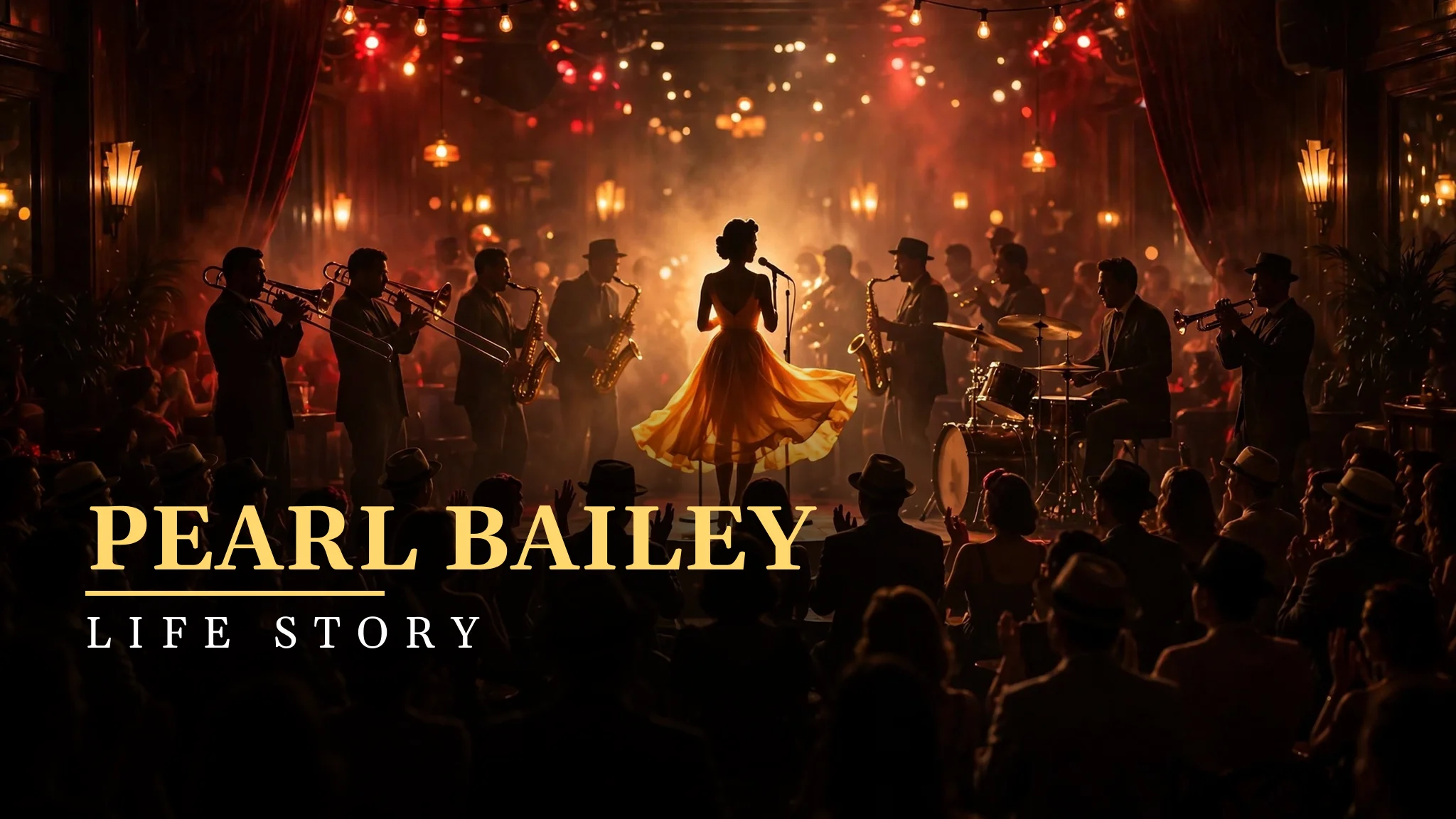
When I think of Pearl now, I think of a woman in an orange dress, singing in a warm nightclub, with a band behind her and an audience clapping in front of her. She is smiling, she is happy, and she is making everyone in the room feel glad to be there. That image stays with me, because it captures her gift: she made people feel at home, wherever she was. That is a rare and beautiful gift, and it is one I will carry with me long after I finish writing about her.
I also think about her work at the United Nations, and how it shows that a performer can be a diplomat, and that a singer can be a serious person who cares about the world. She was not a politician, but she was a person who had lived a full life, who had seen racism, who had seen war, and who wanted to help make the world a little bit better. She took that work seriously, she prepared for it, and she spoke with warmth and with dignity. That is a reminder that fame is not only about entertainment. It can be about service, and about using your voice to help others, in any setting, whether it is a nightclub, a theatre, or a meeting at the United Nations.
I also want to say something about her degree from Georgetown, because it is one of my favourite parts of her story. She was sixty-seven, she was famous, she did not need a degree, and she went back to school anyway, because she wanted to learn. I think that is a beautiful example of curiosity, and of a belief that learning never stops. She sat in a classroom with young students, she studied theology, and she graduated with pride. That achievement tells me that it is never too late to learn, and that it is never too late to take your inner life seriously. I hope more people will follow her example, and will keep learning, no matter how old they are.
I also think about how Pearl Bailey’s warmth is remembered today, and how often people who met her, even briefly, still talk about how kind she was. She was known for remembering names, for asking about people’s families, and for making everyone she met feel important, whether they were a star, a stagehand, or a member of the audience. That kind of kindness is rare in show business, where many stars are too busy or too important to notice the people around them. She noticed, and she cared, and that caring is part of why she was loved by so many people, not only as a singer, but as a person. I think we should all try to be a little more like her, to notice the people around us, and to make them feel welcome.
I also want to remember her faith, because it was a central part of who she was, and it gave her strength through hard times. She was a person who prayed, who went to church, and who believed that life had a purpose, even when it was difficult. Her faith was not a performance. It was a private and personal part of her life, and she shared it in her books and in her conversations, without forcing it on others. She showed that faith and humour can go together, and that a person can be both serious about their beliefs and joyful about life. That balance is a beautiful thing, and it is one reason I admire her so deeply.
Frequently Asked Questions
What is Pearl Bailey best known for on Broadway?
Pearl Bailey is best known for playing Dolly Levi in Hello, Dolly! on Broadway in 1967, in a production with an all-Black cast. Her warm and joyful performance earned her a special Tony Award in 1968. The role became the high point of her stage career and is still the work most people link to her name.
Did Pearl Bailey sing in films as well as on stage?
Yes, she appeared in films including Carmen Jones in 1954, where she played Frankie, and Porgy and Bess in 1959, where she played Maria. These were supporting roles, but she brought humour and warmth to them. Her main fame came from nightclubs, Broadway, and television, where her singing and talking style worked best.
Who was Pearl Bailey married to?
She was married to the jazz drummer Louie Bellson from 1952 until her death in 1990. Their marriage lasted nearly forty years and was built on music and mutual respect. Bellson was a respected drummer who understood the life of a performer, and they travelled and worked together for much of their lives.
Did Pearl Bailey really earn a university degree in her sixties?
Yes, she earned a degree in theology from Georgetown University in 1985, when she was sixty-seven years old. She had always been a person of faith and wanted to study it in a serious way. Her graduation showed her belief that learning has no age limit, and it became one of the proudest moments of her later life.
What diplomatic work did Pearl Bailey do?
She was appointed as a special ambassador to the United Nations, where she represented the United States and spoke about issues she cared about. She also performed for American troops overseas, singing for soldiers far from home. Both roles showed her sense of duty and her wish to use her fame to serve others.
When and where did Pearl Bailey die?
Pearl Bailey was born on 29 March 1918 in Newport News, Virginia, and she died on 17 August 1990 in Philadelphia, Pennsylvania, at the age of seventy-two. She had performed for more than fifty years, from small nightclubs to Broadway and television, and she is remembered for her warm voice and her kindness.


