Penelope Wilton: The Life Story Behind the Downton Abbey Star
In this post
- A Seaside Childhood in Scarborough
- The Stage Years and a Reputation for Quality
- Ever Decreasing Circles and Early Television
- Doctor Who, Pride and Prejudice, and a New Audience
- Downton Abbey and Isobel Crawley
- The Best Exotic Marigold Hotel and Later Films
- A Dame, a Family Life, and a Lasting Place
- My Take:
Penelope Wilton has one of the warmest and most trusted faces on British television, and her voice has a calm strength that makes people listen. She is the kind of actor who can play a kind and sensible woman in one story and a sharp and difficult woman in the next, and both feel true. Millions of people know her as Isobel Crawley in Downton Abbey, the plain-speaking widow who stands up for what is right even when the grand house around her disagrees, and millions more know her as Harriet Jones in Doctor Who, the prime minister who faces an alien invasion with courage. Behind those famous roles lies a long career in the theatre, where she learned her craft in the hardest school of all, performing live in front of audiences who could see every mistake.
She was born in Scarborough, a seaside town on the Yorkshire coast, and she grew up in a family where the theatre was part of everyday life. Her mother was an actress, and her uncle was a well-known actor, so the stage was never a strange or distant place for her. She learned early that acting was not about showing off, but about telling a story clearly and honestly, and that lesson stayed with her through a career that has now lasted for more than fifty years. She did not become famous quickly. She worked in the theatre for many years, playing a wide range of parts, before television brought her face into homes around the world.
What makes her story worth telling is the way she has moved between the stage and the screen without ever losing her own style. She has won awards, she has been made a Dame, and she has played some of the most loved characters in modern British drama, yet she has kept a quiet and private life away from the noise of fame. This is the story of how a girl from a Yorkshire seaside town became one of Britain’s most respected actors, and how she did it by working hard, choosing good parts, and staying true to the craft she learned as a young woman.
A Seaside Childhood in Scarborough
Penelope Alice Wilton was born on 3 June 1946 in Scarborough, North Yorkshire, England. Her mother, Alice, was an actress, and her father, Clifford Wilton, was a businessman. Her uncle was the actor Bill Travers, who was married to the actress Virginia McKenna, so the family was full of people who knew the theatre from the inside. Growing up in such a family meant that Penelope heard stories about rehearsals, tours and opening nights from an early age, and she learned that acting was a job that needed discipline, good manners and hard work, not just talent.
Scarborough in the years after the Second World War was a seaside town where people came for holidays, and it had theatres that put on plays through the summer. Penelope went to school in the town and showed an early love of books and of stories. She was not a loud or showy child. She was thoughtful, she liked to watch people, and she liked to understand why they behaved as they did. That habit of watching and listening would later become one of her greatest strengths as an actor, because she could bring a deep understanding of people to every part she played.
As a young woman she decided that she wanted to train as an actor, and she went to the Drama Centre London, a school known for its strict and serious approach to the craft. The training there was demanding, and it asked students to work hard on voice, movement and the study of plays. Penelope took to it well, because she had the patience and the focus that the school demanded. She learned how to stand on a stage, how to speak so that every word could be heard, and how to build a character from the words on the page.
Those years of training gave her a strong base, and they also gave her a sense of what kind of actor she wanted to be. She did not want to be a star who depended on looks or on fashion. She wanted to be an actor who could play many different kinds of women, in many different kinds of plays, and do each one well. The seaside town where she grew up, the theatre family around her, and the hard training in London all came together to make a performer who was ready for a long and serious career.
The Stage Years and a Reputation for Quality
After drama school, Wilton began her professional career on the stage, and she soon became known as a reliable and thoughtful actor. She worked in repertory theatre and in London, taking on roles in both classical and modern plays. She played parts that asked her to be funny, sad, strong and weak, and she learned how to move between those feelings in a single evening. The stage taught her to be brave, because there is no second take in the theatre, and she learned to trust her preparation and her fellow actors.
She worked at the Royal National Theatre and with other leading companies, and she became known for her clear voice and her intelligent reading of a part. She played in plays by Shakespeare, Chekhov and modern writers, and she showed that she could handle both the great classical roles and the small, quiet parts that need a light touch. Directors liked working with her because she was prepared, she listened, and she brought ideas to a rehearsal without trying to take over the room.
One of her most praised stage roles was in the play The Deep Blue Sea, and she also won great praise for her work in A Delicate Balance, for which she won the Laurence Olivier Award for Best Actress. The Olivier is one of the highest honours in British theatre, and winning it showed that her peers and the critics recognised her as one of the best stage actors of her time. She did not win it for a single lucky night. She won it for a lifetime of careful and honest work on the stage.
By the time television made her famous, Wilton had already spent decades in the theatre, and that experience showed in everything she did on screen. She knew how to hold a scene, how to listen to another actor, and how to make a line sound natural even when the words were formal or old-fashioned. The stage had given her a craft that no amount of television fame could replace, and it is the reason her screen performances feel so solid and true.
The theatre also gave her a sense of community that stayed with her for life. She worked with the same actors again and again, she learned how to build trust in a rehearsal room, and she understood that a good production depends on everyone, from the leading actor to the person who moves the furniture. That sense of working together made her a generous colleague, and it is one of the reasons directors and fellow actors have spoken so warmly about her over the years.
Ever Decreasing Circles and Early Television
Wilton’s early television work brought her to the attention of a wide audience in Britain. She appeared in the comedy series Ever Decreasing Circles, which ran from 1984 to 1989, playing Ann Bryce, the wife of Martin Bryce, played by Richard Briers. The series was about a man who tried to organise every part of his life and his neighbourhood, and Wilton’s character was the calm and patient woman who lived with him. Her performance was warm and funny, and it showed that she could play comedy with the same skill she brought to serious drama.
She also appeared in other television dramas in the 1970s and 1980s, building a reputation as an actor who could be trusted with a leading role. She played in period dramas, in modern stories, and in plays made for television, and each time she brought a sense of truth to the part. She was not interested in playing the same kind of woman again and again. She wanted to show different sides of life, and she chose parts that would let her do that.
Her film work in this period included a role in The French Lieutenant’s Woman and in other British films, where she often played intelligent and observant women. She did not chase big Hollywood parts. She stayed in Britain, working in theatre and television, and she built a career that was steady rather than sudden. That steadiness gave her a strong base, and it meant that when bigger roles came later, she was ready for them.
The years of Ever Decreasing Circles and other early television work mattered because they taught her how to work for the camera. On television the camera is close, and a small change in the face can say more than a big gesture. Wilton learned to use that closeness, to let her eyes and her voice do the work, and to trust that the audience would understand. That skill would serve her well in the great television roles that came later in her life.
Doctor Who, Pride and Prejudice, and a New Audience
In 2005, Wilton took on a role that brought her to a new and much younger audience when she played Harriet Jones in the revived series of Doctor Who. Harriet Jones is a Member of Parliament who becomes Prime Minister, and she faces an alien invasion with courage and with a strong sense of duty. Wilton played her as a serious and decent woman, not as a joke, and viewers loved her for it. She returned to the role in later episodes, and her character became one of the most memorable guest roles in the modern series.
The same year she appeared in the film Pride and Prejudice, playing Mrs Gardiner, the kind aunt who helps Elizabeth Bennet when she needs it most. The film was a great success, and Wilton’s performance was praised for its warmth and its wisdom. She played Mrs Gardiner as a woman who understands people, who sees clearly, and who offers help without making a show of it. It was a small part, but it was played with such care that audiences remembered her.
She also appeared in the film The History Boys, based on the play by Alan Bennett, and in other films that showed her range. Each of these roles brought her to a wider audience, and each one showed a different side of her talent. She could be a prime minister facing aliens, a kind aunt in a period drama, or a teacher in a modern school, and each time she made the character feel real.
These years were a turning point in her career, because they showed that she could move from the theatre to popular television and film without losing her quality. She was no longer known only to theatre audiences. She was known to families who watched Doctor Who on a Saturday night, to film lovers who saw Pride and Prejudice, and to viewers who loved a good story well told. That wider fame was earned by decades of work, and it came at a time when she was ready to enjoy it.
Downton Abbey and Isobel Crawley
Wilton’s most famous television role came in 2010, when she was cast as Isobel Crawley in Downton Abbey, the hit period drama about an aristocratic family and their servants in the early twentieth century. Isobel is the mother of Matthew Crawley, the heir to the estate, and she is a plain-speaking widow who believes in helping others and in standing up for what is right. She often clashes with the Dowager Countess, played by Maggie Smith, and their scenes together became some of the most loved in the series.
She played Isobel through all six series of Downton Abbey, from 2010 to 2015, and she returned for the films that followed. Her character grows over the years, from a newcomer who is not welcome in the grand house to a woman who finds a place there and who uses her position to help others. Wilton played that growth with care, showing how Isobel learns, changes, and keeps her principles even when life is hard. Audiences loved her because she was honest, kind and brave, and because she stood for a different kind of strength from the grand ladies around her.
Downton Abbey was watched by millions of people around the world, and it made Wilton a familiar face in many countries. She became known as the sensible heart of the show, the woman who would speak the truth when others were too polite to do so. Her scenes with Maggie Smith were a joy to watch, because the two actors had different styles that worked well together, and their arguments were full of wit and warmth.
The success of Downton Abbey changed her life, because it brought her fame at an age when many actors find work harder to come by. She handled that fame with grace, and she used it to keep working in the theatre and in other television dramas. She did not let the success of one role define her. She kept choosing new parts, and she kept showing that she was more than Isobel Crawley, even though she loved playing her.
The Best Exotic Marigold Hotel and Later Films
In 2011, Wilton appeared in the film The Best Exotic Marigold Hotel, playing Jean Ainslie, a woman who travels to India with her husband and finds that the hotel they have booked is not what they expected. The film was a great success, and it was followed by a second film in 2015. Wilton’s performance was praised for its honesty, because she played a woman who is disappointed, angry and afraid, and who finds it hard to accept a new life. She did not make Jean a simple villain. She made her a real person, and that made the film stronger.
She also appeared in the film The Second Best Exotic Marigold Hotel, and in other films such as The BFG and The Boy in the Striped Pyjamas. Each of these roles showed a different side of her, and each one was played with the same care she brought to the stage. She could be funny, sad, stern or kind, and she always made the character feel like a real person rather than a type.
Her later television work included the series After Life, in which she played Anne, a widow who becomes a friend to the main character, played by Ricky Gervais. The part was small, but it was deeply moving, because Anne is a woman who has known loss and who offers kindness without asking for anything in return. Wilton played her with a quiet warmth that made the scenes unforgettable, and many viewers said that her performance was one of the best parts of the series.
These later roles show a performer who is still growing, still choosing interesting work, and still able to surprise an audience. She has not stopped learning, and she has not stopped taking on parts that ask something new of her. That willingness to keep growing is one of the reasons her career has lasted so long, and it is one of the reasons audiences still love to see her on screen.
A Dame, a Family Life, and a Lasting Place
In 2016, Wilton was made a Dame Commander of the Order of the British Empire, a DBE, for her services to drama. The honour recognised a lifetime of work on stage and screen, and it placed her among the most honoured actors in Britain. She accepted it with the same quiet grace she brings to her work, and she continued to act as she always had, choosing roles that interested her and giving her best to each one.
Her private life has had its own joys and sorrows. She was married to the actor Daniel Massey from 1975 to 1984, and they had a daughter, Alice. She later married the actor Ian Holm in 1991, and that marriage ended in divorce in 2001. She has spoken little about her private life, preferring to let her work speak for itself, but she has shown in her roles a deep understanding of marriage, family and loss, and that understanding comes from a life fully lived.
She has also been a mentor and an example for younger actors, showing them that a career can be built on skill, patience and good choices. She has shown that it is possible to work in the theatre, in television and in film, and to do each one well, without losing yourself in the process. Her example is a quiet one, but it is a strong one, and many younger performers look to her as proof that the work itself is the reward.
Today Penelope Wilton stands as one of the great British actors of her time, a Dame, a stage star, and a television favourite whose work has touched audiences in theatres, cinemas and living rooms around the world. Her story is one of patience, craft and kindness, and it shows that a long career built on real skill can be more lasting than a short burst of fame. She did the work, she did it well, and she kept doing it, and that is a legacy any actor would be proud to leave.
Her place in British drama is secure because she has done something that few actors manage: she has been excellent in the theatre, in television and in film, and she has done it for more than fifty years without ever losing her own voice. Younger actors who look at her career can see that it is possible to have a long and full working life, and that the secret is not luck or fashion, but hard work, good choices and a love of the craft itself.
She has also shown that it is possible to be famous and still be private, to be honoured and still be humble, and to be loved by millions and still choose your next role by what interests you rather than by what pays most. That balance is rare in the modern world, and it is one of the reasons her career feels so solid and so true.
My Take:
When I think about Penelope Wilton, the first thing I feel is warmth, because she is the kind of actor who makes me feel safe when she appears on screen. I have watched many actors who try to impress me with big gestures and loud speeches, and I have forgotten most of them. Wilton does the opposite. She is calm, she is clear, and she lets the character speak for itself. When I see her as Isobel Crawley in Downton Abbey, I feel as if I know that woman, and I trust her. That trust is hard to earn, and Wilton earns it in every scene she plays.
I think her stage career is the real heart of her story, and I feel sad that many people will never see it. Television is easy to watch at home, but a stage performance happens once, in a room, with real people breathing the same air as the actors. Wilton’s work in The Deep Blue Sea, in A Delicate Balance, and in many other plays was the kind of work that stays in a person’s memory for years. I wish more people could have seen her on stage, because they would understand why she is so respected. Her screen work is wonderful, but her stage work is where her craft was made, and it deserves to be remembered.
I admire the way she played Harriet Jones in Doctor Who, because it would have been easy to make that character a joke. A prime minister facing aliens could have been played for laughs, but Wilton played her as a serious and decent woman who was trying to do her duty. I watched those episodes and I felt proud of her, because she showed that a leader can be brave and human at the same time. That is a rare thing on television, and it is one of the reasons her performance stayed with me long after the episode ended.
I also think about her role as Mrs Gardiner in Pride and Prejudice, and I admire how much she did with a small part. Mrs Gardiner is not the heroine of the story, but she is the person who helps the heroine when she needs it most. Wilton played her with warmth and wisdom, and she made the audience feel that Elizabeth was lucky to have such an aunt. I think that is a lesson for all of us: we do not have to be the hero of the story to matter. We can be the kind person who helps, who listens, and who offers good advice, and that can change a life.
What moves me most in her story is her work in After Life, where she played Anne, a widow who becomes a friend to a man who has lost his wife. I have known loss in my own life, and I know how hard it is to find someone who will simply sit with you and listen. Wilton played Anne as that kind of person, and she did it without any fuss or drama. She just listened, she just cared, and she just stayed. I think that is one of the most honest performances I have ever seen, because it shows what kindness really looks like. It is not big or loud. It is quiet, patient, and real.
I think her marriage history and her private life also teach us something. She was married twice, to two actors, and both marriages ended, and yet she kept working and kept living with grace. I do not think that makes her story sad. I think it makes it honest. Many people have marriages that end, and many people have to start again. Wilton did that, and she did it without turning her private life into a show. She kept her dignity, she kept her work, and she kept going. That is a kind of strength that I admire, because it is the strength of a person who knows that life goes on.
I also admire the way she handled the fame that came with Downton Abbey. She was already in her sixties when the show made her famous around the world, and many actors would have been overwhelmed by that sudden attention. Wilton was not. She took it in her stride, she kept working in the theatre, and she kept choosing parts that interested her. I think that is because she had already spent decades doing the work, and she knew that fame is not the same as success. Success is doing good work, and she had been doing that for a long time before Downton Abbey came along.
I think about what young actors can learn from her, and I think the lesson is simple: learn your craft, be patient, and choose good parts. Wilton did not become famous overnight. She trained hard, she worked in the theatre, she played many small parts, and she built her skill one role at a time. I hope young actors look at her career and feel less afraid of taking the slow road, because the slow road can lead to a place that is strong and lasting. She is proof that a career built on real skill can last for fifty years, and that is a rare and wonderful thing.
I also feel that her story teaches us about the value of kindness in a story. Isobel Crawley is not the richest or the grandest character in Downton Abbey, but she is the one who speaks the truth and who helps others. Mrs Gardiner is not the heroine, but she is the one who helps. Anne in After Life is not the star, but she is the one who listens. Wilton keeps playing these women, and I think that is because she understands that kindness is a form of strength. It is not weak to be kind. It is brave, and it is powerful, and it can change a story.
When I look at her later films, like The Best Exotic Marigold Hotel, I see another side of her talent. She played Jean Ainslie as a woman who is angry and afraid, and she did not try to make her likeable. She made her real, and that made the film better. I admire that honesty, because it would have been easy to play Jean as a simple villain. Wilton showed that even a difficult person has feelings, and that even a person who is wrong can be understood. That is a mature kind of acting, and it comes from a lifetime of watching people and trying to understand them.
I think her Damehood was well deserved, but I also think it does not tell the whole story. A title is a nice thing, but the real honour is the respect of other actors and the love of audiences who have seen her work. Wilton has both of those things, and they are harder to earn than a title. She earned them by showing up, by learning her lines, by listening to her fellow actors, and by giving her best to every part, whether it was a queen on stage or a mother on television.
I also think about her family, and how theatre ran through it. Her mother was an actress, her uncle was an actor, and she grew up hearing stories about the stage. I think that gave her a practical view of acting, and it helped her to see it as a job rather than a dream. That practical view is a gift, because it keeps a person grounded. She did not expect fame to come easily, and she did not expect it to last for ever. She just did the work, day after day, year after year, and that is why her career has lasted.
In the end, I think Penelope Wilton’s story is about staying true to the work and to yourself. She did not chase fame, she did not chase money, and she did not chase the easy roles. She chased good work, and she found it, again and again, for more than fifty years. She played women who were kind, brave, honest and real, and she played them with a warmth that made audiences love her. I admire her for that, and I think her life is a lesson for anyone who wants to do something well: learn your craft, be patient, be kind, and keep doing the work even when no one is watching. That is how a real career is made, and that is how a real legacy is left.
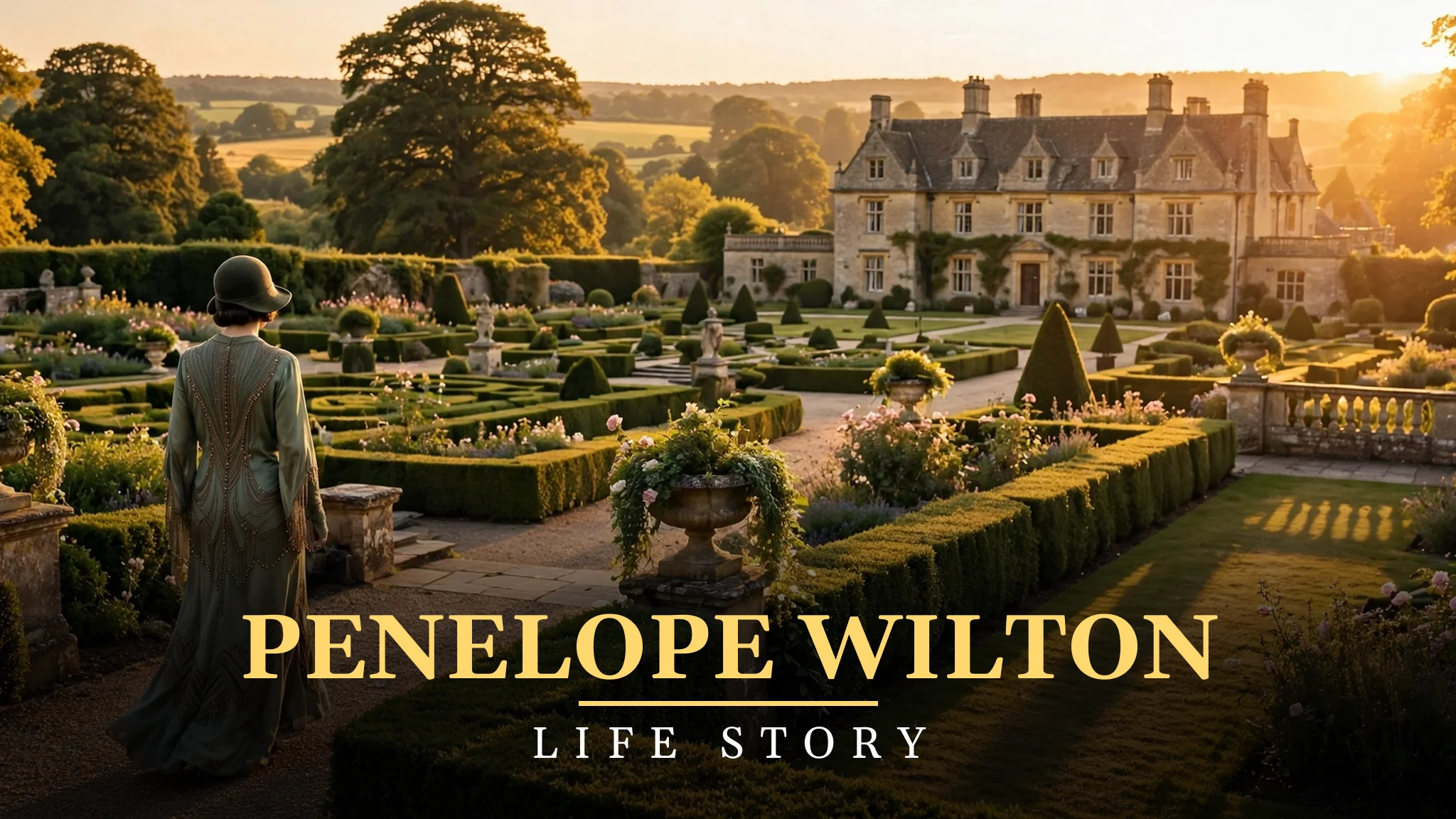
One more thought stays with me, and it is about the quiet power of her presence. I have seen many actors who need to be the centre of attention, and I have forgotten most of them. Wilton does not need to be the centre of attention. She can stand to one side, listen, and still be the most interesting person in the room. I think that is the best kind of acting, and the best kind of life: not loud, not showy, but true. When I think of her walking through a garden toward a grand country house at sunset, I think of a person who belongs in that world, and who has earned her place there by a lifetime of honest work.
I also think about how she has shown that an actor can get better with age. Many people think that acting is a young person’s job, but Wilton’s best work has come in her sixties and seventies. She has played Isobel, Jean, Anne, and many other women who are complex and interesting, and she has done it with a depth that only comes from living a full life. I hope that gives hope to older actors, and to older people in general, because it shows that life does not end at sixty. It can get richer, deeper, and more meaningful, if you keep learning and keep working.
Finally, I think her story is a reminder that the best characters are often the ones who help others. Isobel helps the people of Downton, Mrs Gardiner helps Elizabeth, Anne helps Tony, and Harriet Jones tries to help her country. Wilton keeps choosing these parts, and I think that is because she believes in kindness. I believe in it too, and I think the world needs more people like her, on screen and in real life. Her career is a long and beautiful example of what happens when talent meets kindness, and when hard work meets patience, and I am glad that I have had the chance to learn from it.
I also think about the seaside town where she grew up, and how far she has travelled from it. Scarborough gave her a love of stories and a habit of watching people, and London gave her training and a stage. She took those gifts and used them well, and she never forgot where she came from. That is a good lesson for anyone who leaves home to follow a dream: you can go far, you can change, and you can still carry the best parts of home with you.
One last thought stays with me, and it is about the way she listens. In every role I have seen her play, she listens to the other actors as if what they are saying truly matters. That is a rare skill, and it is one that makes every scene better. I think we could all learn from it, in our own lives, to listen more and to speak less, and to give other people the same attention that Wilton gives to her fellow actors on stage and on screen.
I also think about the many small parts she played early in her career, and how each one taught her something new. She did not waste those years, and she did not see them as a failure. She saw them as a school, and she learned from every play, every director, and every fellow actor. That attitude is one I want to carry into my own life: to see every small job as a chance to learn, and to trust that the work will add up over time.
Frequently Asked Questions
What made Penelope Wilton’s Isobel Crawley so loved in Downton Abbey?
Isobel is a plain-speaking widow who stands up for what is right, and Wilton played her with warmth and honesty, so audiences saw her as the sensible heart of the show.
How did Penelope Wilton come to play Harriet Jones in Doctor Who?
She was cast in the revived series in 2005 as a Member of Parliament who becomes Prime Minister, and she returned to the role in later episodes because viewers loved her brave and decent performance.
Which stage award did Penelope Wilton win for A Delicate Balance?
She won the Laurence Olivier Award for Best Actress for her performance in the play, one of the highest honours in British theatre.
What part did Penelope Wilton play in Pride and Prejudice?
She played Mrs Gardiner, the kind and wise aunt who helps Elizabeth Bennet when she needs support, in the 2005 film.
Was Penelope Wilton in The Best Exotic Marigold Hotel?
Yes, she played Jean Ainslie, a woman who travels to India with her husband and struggles to accept a new life, in the 2011 film and its sequel.
Who was Penelope Wilton married to?
She was married to the actor Daniel Massey from 1975 to 1984, and later to the actor Ian Holm from 1991 to 2001, and she has a daughter named Alice.
What honour did Penelope Wilton receive in 2016?
She was made a Dame Commander of the Order of the British Empire for her services to drama, recognising a lifetime of work on stage and screen.


