Rauw Alejandro: The Life Story Behind Puerto Rico's Rising Star
In this post
Rauw Alejandro is one of the most exciting stars in Latin music, a singer and dancer from Puerto Rico who turned a broken football dream into a career on the biggest stages in the world. His music mixes reggaeton with pop, R and B, and electronic sounds, and his live shows are famous for their dancing, their lights, and their energy. He does not only sing a song. He performs it with his whole body, and that is why his concerts feel different from most others.
He was born Raúl Alejandro Ocasio Ruiz, and he grew up in San Juan in a family where music was always close by. His father played the guitar and his mother sang, so the sound of music was part of his home from the start. But his first dream was not music. It was football. He played the game seriously as a young man, and for a time it looked as if football would be his life. Then an injury changed everything, and the door that closed pushed him toward a different door that he had not expected to walk through.
What followed was a fast rise. He started posting songs online, built a following with his voice and his dancing, and within a few years he was working with the biggest names in Latin music. His song “Todo de Ti” became a summer anthem around the world, and his albums showed that he was not a one-hit singer but a real artist with range. This is the story of how a young footballer from San Juan became one of the faces of modern reggaeton.
A Musical Home in San Juan
Raúl Alejandro Ocasio Ruiz was born on 10 January 1993 in San Juan, Puerto Rico. He grew up in a home where music was not a hobby but a way of life. His father was a guitarist and his mother was a singer, and both of them filled the house with songs. He heard music at home before he ever heard it on the radio, and that early sound stayed with him. He learned that music could be a job, a joy, and a language all at once.
As a boy, he was drawn to movement as much as to sound. He liked to dance, and he watched performers who could move as well as they could sing. He admired artists like Michael Jackson and Chris Brown, singers who treated the stage as a place to dance as much as to sing. That idea stayed with him. He did not want to stand still behind a microphone. He wanted to move, to jump, to spin, and to make the stage feel alive.
He also loved football. He played the game with real passion, and he was good enough to play in Puerto Rico’s youth leagues. Football taught him discipline, teamwork, and how to handle pressure. It also gave him a sense of what it felt like to compete, to win, and to lose. Those lessons would matter later, when the music business tested him in different ways. The field and the stage turned out to have more in common than most people think.
His family supported both of his dreams. They saw that he had talent in music and in sport, and they let him follow both. He grew up in a warm and creative home, and that warmth shows in his work even now. His songs often feel joyful, even when they are about heartbreak, because he learned early that music should make people feel something real.
By the time he was a young man, he had two paths in front of him. One was football, and the other was music. He did not know yet which one would win. Life, as it often does, made the choice for him, and the choice changed everything.
When Football Ended and Music Began
Rauw Alejandro’s football career came to an end because of an injury. He had played seriously for years, and the injury took away the path he had been building. For a young man who had given so much to the game, it was a hard blow. He had to accept that the future he had imagined was gone, and he had to find a new one. That is never easy, and it took time for him to work out what came next.
Music was waiting for him. He had always sung and danced, and now he had the time and the reason to take it seriously. He started to record songs and to share them online, using the same discipline he had learned on the football field. He treated each song like a training session. He worked on his voice, he worked on his dancing, and he worked on understanding what made a song connect with listeners.
His early songs were released on platforms like SoundCloud and YouTube, and they slowly found an audience. People noticed that he sounded different from other new singers. His voice was smooth, his melodies were strong, and his dancing set him apart. He was not only a singer. He was a performer, and in a world of short videos and live shows, that mattered a great deal. Fans shared his clips, and his name began to spread.
He also learned the business side of music. He worked with producers, he wrote songs, and he built relationships with other artists in Puerto Rico. The island’s music scene is small enough that people know each other, and big enough that talent can rise fast. Rauw Alejandro used that scene well. He collaborated, he learned, and he kept improving with every release.
The injury that ended his football dream turned out to be the start of something bigger. He has spoken about that turn in his life, and it is a reminder that a closed door is not always the end of the story. Sometimes it is the push that sends a person toward the work they were really meant to do. For Rauw Alejandro, that work was music, and he threw himself into it with everything he had.
Afrodisíaco and the First Big Steps
Rauw Alejandro released his first songs as a professional artist in the late 2010s, and his early singles built a loyal following. In 2020, he released his debut studio album, “Afrodisíaco,” and it showed the world what he could do. The album mixed reggaeton with R and B and pop, and it included collaborations with some of the biggest names in Latin music. It was a confident first record, and it made it clear that he was not a passing trend.
The album included songs that became hits in their own right, and it earned him attention from critics and fans alike. He was nominated for awards, he was invited to perform on bigger stages, and his name began to appear on lists of the most important new artists in Latin music. The album did not only sell well. It also showed that he had a clear artistic vision, and that vision was about more than one sound. He wanted to move between styles, to try new things, and to keep his listeners surprised.
His dancing also became a signature. In his videos and his live shows, he moved with a skill that few singers could match. He had trained his body the way he had once trained for football, and the result was a stage presence that felt athletic and joyful at the same time. Fans came for the songs and stayed for the show, and that combination helped him stand out in a crowded field.
During this period, he also began to work with international stars. He recorded songs with artists from outside Puerto Rico, and those collaborations took his music to new audiences. He learned how to adapt his style without losing it, and he learned how to hold his own next to singers who had been famous for much longer. That confidence grew with each release, and it showed in the music.
By the end of 2020, Rauw Alejandro was no longer a newcomer. He was a rising star with a strong debut album, a growing fan base, and a reputation as one of the most exciting live performers in Latin music. The next year would take him to a level he had not reached before.
Todo de Ti and the Summer That Changed Everything
In 2021, Rauw Alejandro released his second album, “Vice Versa,” and it included the song that changed his life. “Todo de Ti” was a bright, joyful summer song with a dance beat that made people move the moment they heard it. It became a global hit, topping charts in many countries and becoming one of the biggest Latin songs of the year. It was played at parties, on the radio, and on social media, and it turned Rauw Alejandro into a star far beyond Puerto Rico.
The song worked because it was simple and joyful. It was about giving everything to someone you love, and it was wrapped in a melody that was easy to sing and impossible to forget. It also had a video that showed off his dancing, and the video became almost as famous as the song itself. People learned the moves, they copied them online, and the song spread from person to person like a wave.
“Vice Versa” as a whole showed his range. It included slower songs, harder songs, and experiments with different sounds. It proved that he was not only the singer of one summer hit. He was an artist who could build a full album that held together from start to finish. The record earned him a Latin Grammy Award nomination and won him new fans in Europe, the United States, and Latin America.
He also won a Latin Grammy Award for his collaboration with Selena Gomez on “Baila Conmigo,” a song that mixed his reggaeton style with her pop voice. The award was a sign that the music industry had taken notice. He was no longer only a popular singer. He was an award-winning artist, and his work was being recognised by the people who decide such things.
The success of “Todo de Ti” changed the scale of his career. He was now playing arenas, headlining festivals, and being treated as one of the leaders of his generation. He had come from posting songs online to standing at the centre of global Latin music, and he had done it in only a few short years.
He also learned from the producers he worked with, including some of the best in Latin music. They taught him about sound, about arrangement, and about the details that make a song feel complete. He listened, he asked questions, and he applied what he learned to his own records. That willingness to learn is part of why his albums sound so polished. He is not only a singer and a dancer. He is a student of his craft, and he is still learning.
Saturno, Cosa Nuestra, and Life at the Top
After the success of “Vice Versa,” Rauw Alejandro kept pushing his sound in new directions. In 2022, he released the album “Saturno,” a record inspired by science fiction and futuristic sounds. The album was bold and different, with electronic beats and a visual world to match. It showed that he was not afraid to take risks, even when his last album had been a huge success. He followed it with “Playa Saturno” in 2023, a companion record that kept the story going.
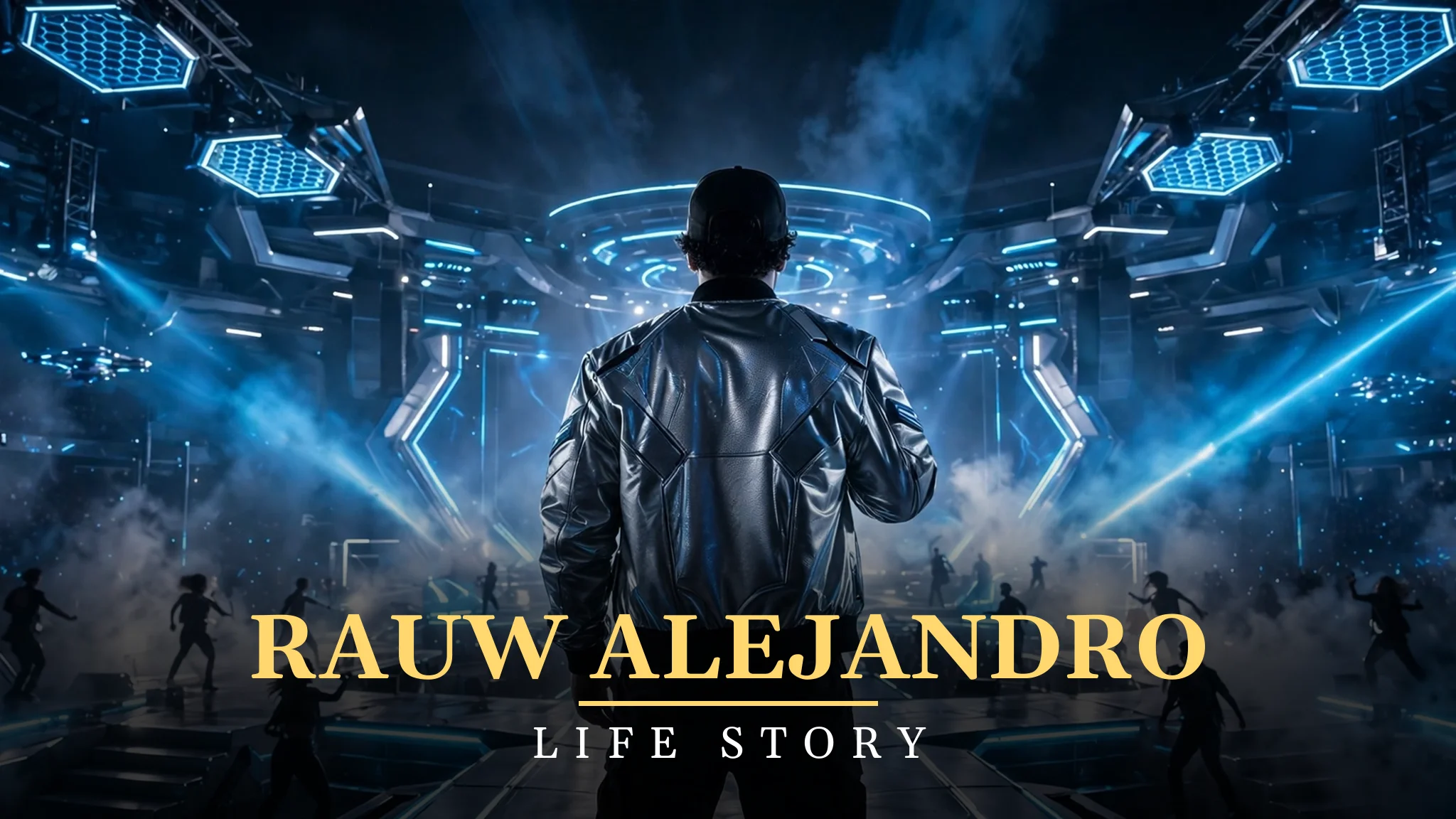
His live shows during this period became famous. He built stage designs that looked like something from a film, with lights, screens, and dancers, and he performed with an energy that left audiences breathless. His tours sold out arenas, and his name became a guarantee of a great night. He was not only selling songs. He was selling an experience, and fans were happy to pay for it.
In 2024, he released “Cosa Nuestra,” an album that looked back to the classic sounds of Puerto Rico and New York, mixing salsa and Latin traditions with his modern style. The album included a collaboration with Bad Bunny on “Qué Pasaría,” and it was praised for its ambition. It showed a different side of him, one that respected the music that came before him while still sounding like the present.
His personal life also drew attention during these years. He was in a relationship with the Spanish singer Rosalía, and the two were engaged before they separated in 2023. The split was widely covered in the press, and it was a hard time for him. He kept working through it, and his music during that period carried the marks of heartbreak and change. He did not hide from the attention, but he also did not let it define him.
By the mid-2020s, Rauw Alejandro stood as one of the most important Latin artists of his generation. He had hits, awards, sold-out tours, and a reputation for hard work. He had also shown that he could change his sound without losing his audience, and that is one of the hardest things for a pop star to do.
His relationship with Rosalía also shaped his public image. The two were one of the most followed couples in Latin music, and their engagement was celebrated by fans around the world. When the relationship ended in 2023, the news was covered everywhere, and it was a hard time for him. He kept the details private, and he let his music speak for him. That privacy was a choice, and it was a wise one, because some things belong to the people who lived them, not to the public.
Love, Loss, and the Work That Keeps Going
Rauw Alejandro’s story is not only about hits and awards. It is also about the personal cost of fame, and about how a young man handles attention that never stops. His relationship with Rosalía was followed by millions of people, and when it ended, the whole world seemed to have an opinion. He has spoken little about the details, but the songs he made in that period told their own story. Music became the place where he could say what interviews could not.
He also had to deal with the pressure of staying at the top. When a singer has a song as big as “Todo de Ti,” every new release is measured against it. Some artists freeze under that pressure. Rauw Alejandro kept moving, trying new sounds and new ideas, even when they did not all work the same way. That willingness to risk failure is part of what makes his career interesting. He would rather try something new than repeat the same song for ever.
His connection to Puerto Rico has stayed strong. He has spoken about the island, performed there, and kept his music rooted in its sound. He has also used his platform to support causes on the island, and he has shown that fame does not have to mean forgetting home. That loyalty matters to his fans, because they see themselves in his story. He is one of their own, and he has not pretended otherwise.
He has also become a fashion figure, known for his style and his looks on the red carpet. That is part of being a modern pop star, and he handles it with the same confidence he brings to the stage. But the fashion is only the surface. The real work is the music, the dancing, and the shows, and he has never let the surface take over from the work.
Today, Rauw Alejandro continues to record, tour, and grow. He is still young, and his career is still moving. He has already achieved more than most singers dream of, and he has done it by working hard, dancing hard, and staying true to the sound he grew up with. The next chapter is still being written, and if his past is any guide, it will be worth watching.
The Dancer, the Style, and the Stage
Rauw Alejandro’s dancing is not a decoration. It is a central part of who he is as an artist. He trained his body the way he once trained for football, with discipline and with repetition, and the result is a stage presence that few singers can match. He jumps, he spins, he slides across the stage, and he makes it look easy. It is not easy. It is the result of years of work, and it shows in every performance.
His music videos are also part of his art. The video for “Todo de Ti” became famous for its choreography, and fans around the world learned the moves and copied them online. That was not an accident. He designed the video to be danced to, and he knew that a song people can move to will travel further than a song people only listen to. He understands the modern music world, where a video can matter as much as a song, and he uses that understanding well.
He has also become known for his style. His clothes, his hair, and his look on the red carpet are followed by fans and by fashion magazines. He treats style as part of his art, not as a separate thing. When he walks into a room, people notice, and that notice helps his music reach people who might never have heard it otherwise. He is a complete pop star, and he knows how to use every part of that role.
His collaborations show his range. He worked with Chencho Corleone on “Desesperados,” a song that became a huge hit and showed a harder, more sensual side of his music. He has worked with producers and artists from many different countries, and each collaboration has added something new to his sound. He is not afraid to share the spotlight, because he knows that a good collaboration makes both artists better. That generosity is part of why so many stars want to work with him.
His live shows are where all of it comes together. The dancing, the lights, the costumes, and the music combine into an experience that fans remember for years. He does not stand still behind a microphone. He performs with his whole body, and he gives the audience everything he has. That is why his tours sell out, and why his fans come back again and again.
My Take:
When I think about Rauw Alejandro, the first thing that comes to my mind is movement. Not only the dancing, though the dancing is wonderful. I mean the movement of a life that refused to stop when one road ended. He was a footballer, and then he was not. Most people would have taken that as a defeat. He took it as a beginning. That is the part of his story that stays with me, and it is the part I think matters most.
I have seen many stories about people who lose a dream, and most of them end in sadness. His story is different, because he did not sit still and wait for someone to save him. He went back to the thing he had always loved, music, and he worked at it the way he had once worked at football. He trained his voice, he trained his body, and he treated every song like a match he had to win. That is not luck. That is discipline, and discipline is something I admire more than talent, because talent without discipline fades, while discipline makes talent grow.
What I like about his music is the joy in it. “Todo de Ti” is a happy song, and it came at a time when the world needed happy songs. I remember how that song felt in the summer it came out. It was everywhere, and it made people smile. That is a real gift. A singer can make a clever song, or a hard song, or a sad song, and all of those have value. But a song that makes a whole room of strangers dance together is something special. Rauw Alejandro has that gift, and I think he knows it, because he keeps making music that moves people.
I also admire the way he dances. In a time when many singers stand still and let the lights do the work, he dances. He jumps, he spins, he moves across the stage as if the stage were a football field and he were still playing. That takes courage, because dancing is hard, and it is easy to look foolish when you try. He does not look foolish. He looks free. I think that freedom comes from the years he spent training his body, and from a confidence that says, I will give you everything I have, not only my voice.
But I also think about the hard parts of his story, and I want to be honest about them. Fame came to him very fast, and fast fame is hard to carry. He was in a relationship that the whole world watched, and when it ended, the whole world had something to say. That must have been painful, not only because the relationship ended, but because it ended in public. I do not know the details, and I do not need to know them. What I know is that it is hard to grieve when millions of strangers are watching you, and he handled it with more grace than most people would.
I think there is a lesson in that for anyone who lives in public, even in a small way. Today, many young people live their lives online, and their joys and their heartbreaks are visible to people they have never met. Rauw Alejandro’s story shows that you can survive that. You can keep working, you can keep making music, and you can let the work speak for you when words are not enough. That is a quiet kind of strength, and I respect it.
I also think about his album “Saturno.” Some people did not understand it at first, because it was strange and futuristic, and it did not sound like “Todo de Ti.” But I admire an artist who takes a risk like that. It is easy to repeat a hit. It is hard to say, I have a new idea, and I am going to follow it even if you do not follow me. He followed it, and the album found its audience. That tells me he is thinking about his art, not only about his charts. That matters, because charts change, but art that is honest lasts longer.
His album “Cosa Nuestra” impressed me for a different reason. It looked back to the music of Puerto Rico and New York, to salsa and to the sounds his parents’ generation loved. That is a brave thing for a young star to do, because young stars are often told to look forward only. He looked back, and he did it with respect. He showed that you can be modern and still honour the past. I think that is a sign of maturity, and it makes me believe that his career will last, because he is building it on real roots, not only on trends.
There is something else I want to say about him, and it is about his home. He is from San Juan, and he has not hidden that. He has carried Puerto Rico with him to every stage, and he has shown the world what the island sounds like. That matters to people from small places, because it tells them that they do not have to leave their home behind to succeed. They can take it with them, and they can let it shape their work. Rauw Alejandro did that, and I think it is one of the best things about him.
If I could speak to a young person reading this, I would say, look at what happened when his football dream ended. He did not give up on himself. He found another dream, and he worked at it with the same energy. That is the lesson. Your first plan may fail. Your second plan may fail too. But if you keep working, and if you are honest about what you love, you may find a path you never expected. Rauw Alejandro found his path on a stage, not on a field, and the world is better for it.
I also want to be fair about the limits of fame. His story shows that success does not protect you from heartbreak. He had money, fame, and awards, and still his heart was broken in public. That is a reminder that no amount of success can fix the private parts of a life. You have to face those parts yourself, with the help of the people who love you, not with the help of an audience. I think he learned that, and I hope he keeps learning it, because it is a lesson that will serve him for the rest of his life.
In the end, I think Rauw Alejandro is a singer who dances, a dancer who sings, and a young man who turned a loss into a life. I will keep watching his career, not only for the next hit, but for the next risk, the next idea, and the next sign that he is still growing. The football field lost a player, but the world gained a star, and that trade, in the end, worked out well for everyone.
I think about his discipline, and about where it came from. He learned it on the football field, where you train every day, where you follow the coach, and where you learn that talent without work is not enough. He carried that discipline into music, and it shows. He trains his voice, he trains his body, and he treats every show like a match he has to win. That is not a small thing. Many artists rely on talent alone, and their talent fades. He relies on work, and work does not fade.
I also think about what it means to be a dancer in a world of singers. Most singers stand still. He moves, and that movement sets him apart. It is a risk, because dancing is hard, and it is easy to look foolish. But he does not look foolish. He looks free, and that freedom is contagious. When he dances, the audience wants to dance too. That is a gift, and it is one that he has earned through years of practice.
There is a lesson in his album “Saturno” that I want to name clearly. He took a risk, and the risk did not pay off in the same way as “Todo de Ti.” Some people did not understand the album at first. But he took the risk anyway, because he believed in the idea. That is what artists are supposed to do. They are supposed to try new things, even when the new thing might fail. If an artist only repeats what worked before, the art dies. Rauw Alejandro kept his art alive by risking it, and I respect that deeply.
I think about his heartbreak, and about how he handled it. He was in a relationship that the whole world watched, and when it ended, the whole world had an opinion. He did not give interviews about the details. He did not attack anyone. He kept working, and he let his music carry the feelings that words could not. That is a quiet kind of strength, and it is the kind that lasts. Anyone can shout about a breakup. It takes more strength to be quiet, to work, and to heal in private.
I also think about Puerto Rico, and about what his success means for the island. He is a son of San Juan, and he has carried that with him to every stage. He has shown the world what Puerto Rican music sounds like, and he has shown young people on the island that they can dream big. That is a gift to his home, and it is a gift that will last longer than any single song.
His fashion sense is also worth noting, not because fashion is the most important thing, but because it shows how completely he thinks about his art. He does not only think about the song. He thinks about the video, the stage, the clothes, and the image. That completeness is the mark of a modern pop star, and he has mastered it. He is not only a singer. He is a whole world, and his fans love to live in that world.
If I could speak to a young artist reading this, I would say, look at Rauw Alejandro and learn the value of training. He did not become a great dancer by accident. He trained, he practised, and he worked at it for years. The same is true of his voice, his songwriting, and his stagecraft. Talent is a starting point, not a finish line. The finish line is reached by work, and he has done the work.
I also want to say something about joy. His music is joyful, even when it is about heartbreak, and that joy is a gift to his listeners. In a world that is often sad and hard, a song that makes people dance is a real service. He provides that service, and he does it with a smile. I think that matters, and I think it is worth celebrating.
In the end, I believe his best years are still ahead of him. He is still young, he is still learning, and he is still taking risks. The football field lost a player, but the world gained a star, and that star is still rising. I will keep watching, and I will keep listening, because I believe the next chapter will be even better than the last.
I also think about his work with Selena Gomez on “Baila Conmigo,” and about what it showed. He could sing next to a global pop star and hold his own, without losing his sound. That is a sign of confidence. He did not try to copy her style. He brought his own style to the song, and the combination worked. That is what a good collaboration looks like, two artists who are different, making something that neither could make alone.
I think about his future, and about the albums he has not made yet. He has already shown that he can change his sound, from the summer joy of “Todo de Ti” to the futuristic world of “Saturno” to the classic feel of “Cosa Nuestra.” Each album was a risk, and each one taught him something. The next album will teach him something new, and I look forward to hearing what he learns.
Frequently Asked Questions
How old is Rauw Alejandro? Rauw Alejandro was born on 10 January 1993 in San Juan, Puerto Rico. That makes him 33 years old in 2026, and he has been a professional singer since the late 2010s.
What was Rauw Alejandro’s first dream before music? Rauw Alejandro’s first dream was football. He played in Puerto Rico’s youth leagues and took the game seriously, but an injury ended his football career and pushed him toward music.
What is Rauw Alejandro’s most famous song? Rauw Alejandro’s most famous song is “Todo de Ti,” released in 2021 on the album “Vice Versa.” It became a global summer hit and topped charts in many countries.
Did Rauw Alejandro win a Latin Grammy Award? Yes, Rauw Alejandro won a Latin Grammy Award for his collaboration with Selena Gomez on “Baila Conmigo.” He has also been nominated for other Latin Grammy Awards for his albums and songs.
What is Rauw Alejandro’s album Saturno about? “Saturno,” released in 2022, is a futuristic album inspired by science fiction sounds and visuals. It showed a bolder and more electronic side of his music, and he followed it with the companion record “Playa Saturno” in 2023.
Who was Rauw Alejandro in a relationship with? Rauw Alejandro was in a relationship with the Spanish singer Rosalía, and the two were engaged before they separated in 2023. He has kept the details of his private life mostly out of the public eye since then.


