Ringo Sheena: The Life Story Behind Japan's Unique Star
In this post
- A Sickly Child Who Found Music Indoors
- Winning a Contest and the Koufukuron Debut
- Muzai Moratorium, Shoso Strip, and the Sound of a Generation
- Tokyo Jihen: A Band, a Break, and a Return
- Motherhood, the Olympics, and a Life in Music
- The Artist Who Refused to Be Ordinary
- Songs for Films, Games, and the World Cup
- My Take:
There is no singer in Japan quite like Ringo Sheena. She is not a pop star in the usual sense, and she is not a rock star in the usual sense either. She is something stranger and more interesting: a songwriter who mixes jazz, rock, classical music, and old Japanese songs into a sound that belongs only to her, and a performer who wears kimonos on stage, sings in a voice that can be sweet one moment and sharp the next, and writes lyrics that are clever, dark, and funny all at once. For more than twenty-five years, she has been one of the most respected and most copied artists in Japanese music, and she has done it without ever following the rules of the music business.
She was born Yumiko Shiina on 25 November 1978 in Urawa, in Saitama Prefecture, just north of Tokyo. As a child, she suffered from health problems that kept her indoors for long periods, and she turned to music as a way to fill those quiet hours. She learned piano, she learned guitar, and she began to write songs while she was still young. The name she chose for herself, Ringo Sheena, means something like “apple” and “shiina tree”, and it fits the strange, beautiful world of her music. An apple is simple and familiar, but in her hands it becomes something else entirely, and that is what she does with every song she touches.
Her story is the story of a singer who arrived in the late 1990s, when Japanese pop music was full of bright, polished idols, and who changed the sound of the country by being darker, smarter, and more honest than anyone else. Her first album, Muzai Moratorium, sold in huge numbers. Her band, Tokyo Jihen, became one of the most loved groups in Japan. Her songs have been used in films, in television, and in the Olympic Games. And through it all, she has stayed herself: a woman from Saitama who writes songs that no one else could write, and who performs them in a way that no one else could perform.
A Sickly Child Who Found Music Indoors
Yumiko Shiina was born in Urawa, which is now part of Saitama City, and her childhood was not an easy one. As a young child, she had health problems that meant she spent a great deal of time indoors, away from the games and the running around that other children enjoyed. For many children, that would have been a lonely time. For her, it became the beginning of her music. When a child cannot go outside, the inside of the house becomes a world of its own, and in that world, music can become a friend, a teacher, and a way of travelling without leaving the room.
She began to learn the piano, and she was drawn to music that had feeling in it. She listened to a wide range of songs, from Japanese pop to Western rock to jazz, and she began to understand that a song could be many things at once. It could be sad and funny. It could be beautiful and strange. It could be simple on the surface and complicated underneath. Those early lessons stayed with her for her whole career. Her songs are never only one thing, and that is why people keep listening to them, year after year, finding new meanings in them each time.
She also began to write her own songs while she was still young, and that is a rare thing. Most children who love music are happy to sing other people’s songs. A child who writes her own songs is a child who has something to say, and who is already learning how to say it. Her early songs were the first steps towards the songwriter she would become, a writer who uses words in clever and surprising ways, who plays with language the way other writers play with paint, and who is never afraid to be dark when the song needs darkness.
Her health problems also taught her something that would matter later: patience. When you are a child who has to wait, who has to stay inside while others play, you learn to live with waiting, and you learn to use the waiting time well. She used it to learn music, to listen, and to write. By the time she was a teenager, she was not just a girl who liked to sing. She was a musician, with a piano, a guitar, and a notebook full of songs, and she was ready to take the next step. That step would take her out of Saitama and into the wider world of Japanese music.
Winning a Contest and the Koufukuron Debut
Ringo Sheena’s path into professional music began with a contest. In the mid-1990s, she took part in a music contest, and her talent was noticed. Contests are a common way for young singers in Japan to be discovered, but they are also a hard test, because a singer has to stand in front of strangers and prove, in a few minutes, that she is worth listening to. She proved it. Her voice, her songs, and her unusual style made her stand out from the other young singers, and the music world began to pay attention to the girl from Saitama with the strange name and the stranger songs.
Her major debut came in 1998 with the single “Koufukuron”, which means something like “a theory of happiness”. It was not a typical pop debut. The song was dark, clever, and full of energy, with a sound that mixed rock and jazz and a voice that was unlike anything else on the radio. It did not sound like the bright, cheerful pop songs that were popular at the time. It sounded like a person who had something to say, and who was not going to say it in a simple way. People noticed, and they began to ask who this new singer was.
The debut single was followed by more songs, and by her first album, Muzai Moratorium, released in 1999. The title means something like “a moratorium on innocence”, and the album was a huge success. It sold in very large numbers, and it made her one of the biggest new stars in Japan. Songs like “Koko de Kiss Shite”, “Honnou”, and “Gips” became hits, and they showed a singer who could write a catchy pop song and a dark, strange song at the same time. The album was not just popular. It was respected, and it changed the way people thought about what a Japanese pop singer could be.
What made her debut so powerful was that she was not trying to fit in. She was trying to be herself, and herself was unusual. She wore clothes that were different, she sang in a way that was different, and she wrote lyrics that were different. In a music business that often tells new singers to be safe, she was not safe, and the audience loved her for it. Her debut proved that there was a large audience in Japan for music that was smart, dark, and strange, and that a young woman from Saitama could be the one to give it to them.
Muzai Moratorium, Shoso Strip, and the Sound of a Generation
The years after her debut were the years when Ringo Sheena became a defining voice of her generation. Her second album, Shoso Strip, released in 2000, was another huge success, and it showed her growing as a songwriter and as a performer. The album included the song “Tsumi to Batsu”, which means “crime and punishment”, and it became one of her most famous songs. It is a song about guilt and desire, sung with a voice that is both sweet and dangerous, and it showed that she was not afraid to write about the dark parts of life. Her fans loved that honesty, and they loved the way her songs made them feel as if someone understood the complicated parts of being young.
Her music in this period was a mix of many styles. She used rock guitars, jazz pianos, string sections, and old-fashioned melodies, and she put them together in ways that no one else was trying. Her voice was the thread that held it all together. It could be soft and gentle, and then, in the same song, it could become sharp and angry. That range is rare, and it is one of the reasons her songs are so hard to copy. A singer can learn her notes, but it is very hard to learn her feeling, and her feeling is the heart of her music.
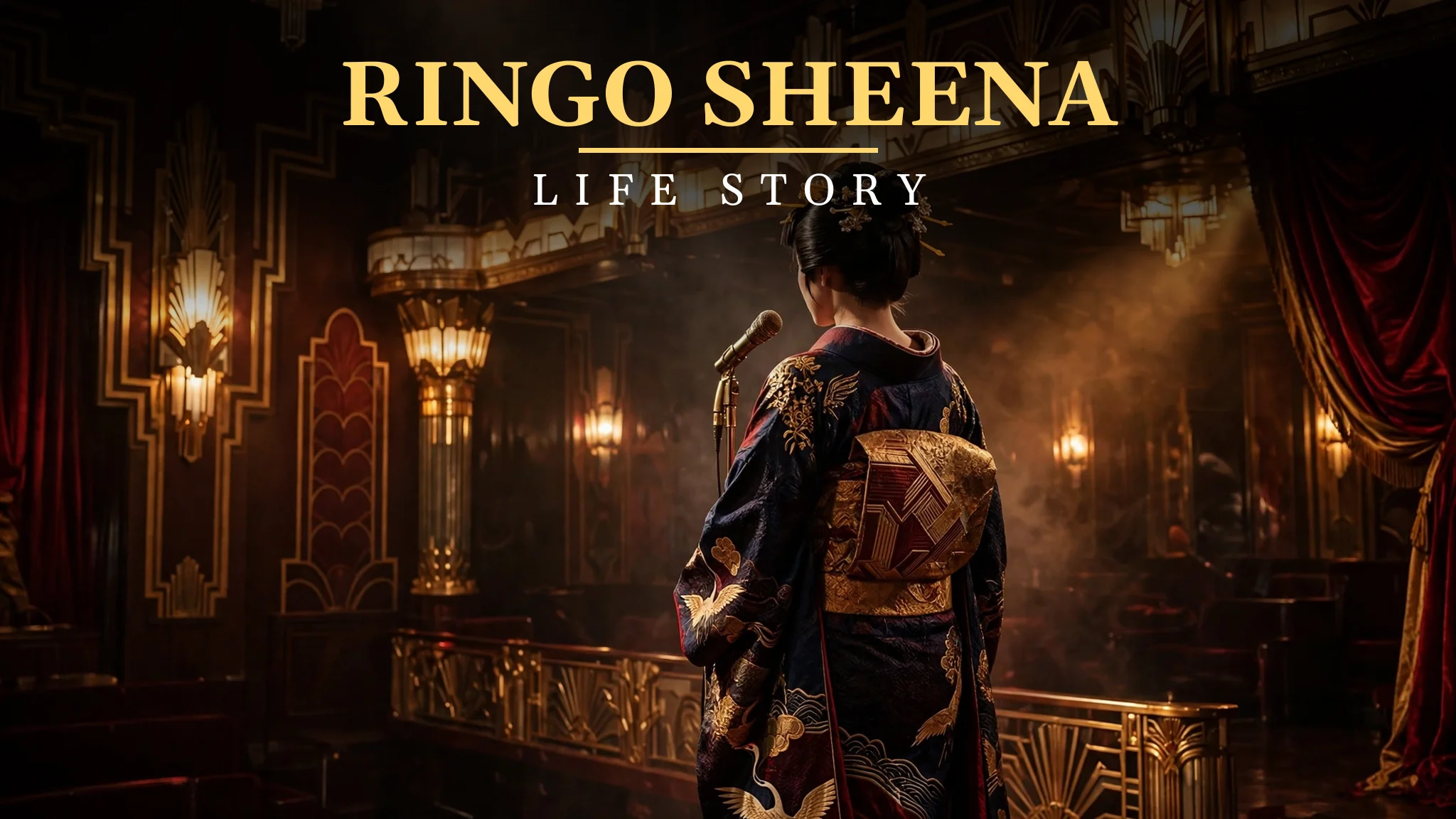
She also became known for her look. She wore kimonos on stage, she used old Japanese imagery in her videos, and she created a visual world that was as strange and beautiful as her music. In a time when most pop singers wore the latest Western fashion, she wore something older and more Japanese, and she made it look modern. That choice was not a trick. It was a statement about who she was, and about the kind of music she wanted to make. She was a Japanese singer, singing in Japanese, about Japanese life, and she was proud of that. Her fans, both in Japan and abroad, loved her for it.
By the early 2000s, she was one of the most important singers in Japan, and her influence was spreading. Other singers began to copy her style, her sound, and her look, but none of them could copy her songs. Her songs were too personal, too clever, and too strange to be copied. She had created a world of her own, and she was the only person who could live in it. That is the mark of a great artist, and it is why her early albums are still listened to today, more than twenty years after they were made.
Tokyo Jihen: A Band, a Break, and a Return
In 2004, Ringo Sheena formed a band called Tokyo Jihen, which means “Tokyo Incidents”. The band was a new chapter in her life, and it was a brave one. She had been a solo star for years, and she could have stayed a solo star for the rest of her career. Instead, she chose to become part of a group, to share the stage with other musicians, and to make music as a band. That choice showed her love of collaboration, and her belief that music is better when it is made with other people.
Tokyo Jihen’s music was different from her solo music. It was more rock, more direct, and more focused on the band as a whole. The band released albums like Kyouiku in 2004, Otona in 2006, and Variety in 2007, and their songs became hits in their own right. Songs like “Gunjou Biyori”, “Shuraba”, and “Senkou Shoujo” showed a band that could be loud, funny, and clever, and that could play live with a power that few Japanese bands could match. Their concerts were famous for their energy, and their fans loved the way the band members played together, as if they were one instrument.
In 2012, Tokyo Jihen announced that they were disbanding, and their final concert was a sad moment for their fans. The band had been together for eight years, and they had made some of the best music of their time. But Ringo Sheena did not stop. She returned to her solo career, and she continued to write and perform, showing that she could be a band leader and a solo star, and that both parts of her were real. Then, in 2020, Tokyo Jihen reunited, to the joy of their fans, and they began to make music together again. The reunion showed that the band had never really ended in the hearts of its members, and that some musical partnerships are too strong to stay apart for long.
The Tokyo Jihen years are important because they show a different side of Ringo Sheena. As a solo singer, she is a strange and beautiful artist, working alone in her own world. As a band leader, she is a collaborator, a musician who listens to others and who makes room for their ideas. Both sides are true, and both sides have made her music richer. A singer who can do both, and do both well, is a rare thing, and it is one of the reasons her career has lasted so long.
Motherhood, the Olympics, and a Life in Music
Ringo Sheena’s private life has always been kept mostly out of the public eye, but some parts of it are known. She married the guitarist Junji Yayoshi in 2000, and her son was born in 2001. The marriage ended in divorce in 2002, and she raised her son while continuing her career. That is not an easy thing to do, especially for a singer at the top of her fame, but she did it with the same quiet determination that marks her music. She did not make a show of her private life, and she did not let it stop her work. She simply carried on, as a mother and as a musician, and her fans respected her for it.
Her career in the 2010s and beyond showed a singer who was still growing. She released solo albums like Hi Izuru Tokoro in 2014 and Sandokushi in 2019, and she continued to write songs for films and for television. One of her most famous songs from this period is “Nippon”, which she wrote for the 2014 football World Cup, and which became a song about Japan itself, proud and strange and full of energy. Her music was also used in films, and her songs continued to reach new audiences who had not been born when she first debuted.
One of the highest honours of her career came with the Tokyo 2020 Olympic Games, where she was involved in the music for the ceremonies. The Olympics are watched by billions of people, and the music for the ceremonies has to speak to the whole world. That Ringo Sheena, a singer known for her strange and personal songs, was chosen to help create that music is a sign of how respected she is in Japan. She is not just a pop singer. She is a musician whose work is seen as part of Japanese culture itself, and whose songs can represent her country to the world.
Today, she continues to perform, to write, and to lead Tokyo Jihen, and her influence is everywhere in Japanese music. Young singers copy her style, young songwriters study her lyrics, and young musicians learn from her arrangements. She is a living legend, and she is still working, still creating, and still surprising her fans. Her story is not finished, and that is part of what makes it so interesting. A singer who began as a sickly child indoors in Saitama is now one of the most important musicians in Japan, and she got there by being herself, in every song, in every performance, and in every choice she made.
The Artist Who Refused to Be Ordinary
Ringo Sheena’s place in Japanese music is secure, and it rests on a simple fact: no one else sounds like her. Her songs mix jazz, rock, classical music, and old Japanese melodies in a way that no one else has ever done, and her lyrics are clever, dark, and funny in a way that no one else can copy. She is a singer, a songwriter, a band leader, and a cultural figure, all at once, and she has done all of it without ever becoming ordinary. In a music business that rewards singers for being safe, she has been unsafe for more than twenty-five years, and the audience has loved her for it.
Her legacy is also a lesson for young artists. She shows that you do not have to fit the shape of a pop star to succeed. You can be strange, you can be dark, you can be clever, and you can wear a kimono on stage, and people will still love you, if the songs are good. She shows that a singer can be a mother and a musician, a solo star and a band leader, a Japanese artist and a global one, all at the same time. That is a powerful example, and it is one that many young singers in Japan have followed.
She also leaves a lesson about time. Her career has lasted for more than a quarter of a century, and it has lasted because she has never stopped growing. She has changed her sound, she has formed a band, she has disbanded it and reformed it, and she has written songs for the Olympics and for films. She has never stood still, and she has never repeated herself. That is why her fans stay with her, year after year. They know that the next song will be different from the last one, and that it will be worth hearing.
When people look back on the music of Japan in the late twentieth and early twenty-first centuries, they will remember many names, but Ringo Sheena will be one of the first they mention. She changed the sound of Japanese pop music, she changed the look of it, and she changed what a singer was allowed to be. She did it as a girl from Saitama, with a piano, a guitar, and a notebook full of strange and beautiful songs. That is her mark, and it will not fade.
Songs for Films, Games, and the World Cup
Ringo Sheena’s songs have travelled far beyond the concert hall, and that is one of the most interesting parts of her career. She has written music for films, for television dramas, and for big public events, and each time she has brought her strange, personal sound to a story that was not her own. That is a hard thing to do. A songwriter who writes for herself can write whatever she likes. A songwriter who writes for a film has to serve the story, to make the music fit the characters and the mood, and to do it without losing her own voice. She has done it again and again, and her film songs are among her most loved works.
One of her best-known songs from this world is “Nippon”, which she wrote for the 2014 football World Cup. The song is about Japan itself, and it is full of pride, energy, and strangeness. It does not sound like a typical sports song, which is usually simple and loud. It sounds like Ringo Sheena, which means it is clever, surprising, and full of feeling. The song was played during the tournament, and it became a song that people associated with their country, not just with football. That is a rare achievement for a songwriter, and it shows how deeply her music is woven into Japanese life.
She has also written songs for films, including work for the director of the film Sakuran and for other projects where her music had to carry the emotion of a scene. Her song “Karisome Otome”, written for the film Sakuran, is a beautiful example, a song that sounds old and new at the same time, like a piece of music from another century that was written yesterday. Her ability to move between centuries, between styles, and between moods is what makes her so valuable to filmmakers. They know that she will give them something they could not get from anyone else, something that will make their film feel different from every other film.
Her songs have also been used in television dramas, in commercials, and in video games, and each use has brought her music to people who might never have bought her albums. That is how a singer’s work spreads in the modern world. A person hears a song in a film, or in a drama, and they look up the singer, and they discover a whole world of music they never knew existed. Ringo Sheena’s world is a rich one, and the people who find it through a film or a football song often stay for years, listening to her albums and going to her concerts. Her work for films and for big events is not a side job. It is part of how her music reaches the world, and it is part of why she is so deeply loved in Japan.
My Take:
I have listened to Ringo Sheena for a long time, and I still cannot describe her in one sentence, and I think that is the point. She is not a singer you can put in a box. She is jazz and rock and classical music and old Japanese songs, all mixed together, and she is funny and dark and clever all at once. I admire that refusal to be simple, because the world is always asking artists to be simple, to pick one style and stay in it, so that they are easy to sell. She never picked one style, and she never stayed in one place, and I think that is the bravest thing about her. It would have been easier to be a normal pop star. She chose to be herself, and herself is complicated, and I love her for it.
What I think about most when I think of her is her childhood, and the time she spent indoors because of her health. I try to imagine a small girl in Saitama, stuck inside while other children played outside, turning to a piano and a notebook instead. I think that loneliness became her greatest gift, because it taught her to live inside her own mind, and to make that mind a rich and interesting place. Many of us have had times when we were stuck inside, literally or in our lives, and we felt as if the world had left us behind. Ringo Sheena’s story tells me that those times are not wasted. They are the times when you learn who you are, and when you build the world that you will later share with everyone else. I find that deeply hopeful, and I think about it often.
Her debut is the part of her story that I find most exciting, because it was so different from everything else on the radio in 1998. Japanese pop music at that time was bright, polished, and safe, and then this young woman arrived with a song called “Koufukuron”, a theory of happiness, that was dark and strange and full of energy. I imagine the people who first heard it must have felt as if someone had opened a window in a stuffy room. That is what great art does. It does not ask permission. It arrives, it is different, and it changes the air. I wish more young artists had that courage. It is easy to copy what is already popular. It is very hard to arrive with something no one has heard before, and to trust that people will love it. She did, and they did, and I think that is a lesson for anyone who has an idea that feels too strange to share. Share it anyway. The world may be waiting for it.
I also want to talk about her lyrics, because they are one of the things I love most about her. She writes in Japanese, and I do not speak Japanese well, but even in translation, her words are clever and surprising. She plays with language, she makes jokes that are also sad, and she writes about desire, guilt, and love in a way that feels honest rather than polite. I think that honesty is rare in pop music, where lyrics are often kept simple so that everyone can understand them. She writes lyrics that reward careful listening, and I think that is a gift to her fans. She treats them as intelligent people, and they repay her by listening again and again, finding new meanings each time. I respect an artist who trusts her audience, and I think that trust is one of the reasons her fans are so loyal.
Tokyo Jihen is another part of her story that I think about a great deal, because it shows a side of her that many solo stars never show. She was already famous, already successful, and she chose to become part of a band, to share the stage and the credit with other musicians. That is not an easy choice for a star. It means giving up control, listening to other people, and accepting that the music will be different from what you would make alone. I think it takes a special kind of confidence to do that, the confidence of a person who knows that she is good enough to stand alone, and therefore does not need to stand alone all the time. The band made her music richer, and it made her a better musician, and I think it also made her happier, because making music with other people is a joy that no solo success can replace.
Her life as a mother is something I think about with respect, and I want to be careful with it, because it is private. What I will say is this: she had a child, her marriage ended, and she kept working. She did not make a drama of it, and she did not let it define her. I think that is a powerful example, especially for women in music, who are so often told that they must choose between a family and a career. She did not choose. She did both, and she did both well, and she did it without asking the world for permission or for pity. I admire that quiet strength, and I think it is one of the most important parts of her story, even though she rarely talks about it.
The Olympics are the part of her story that makes me smile, because it is so surprising. A singer known for dark, strange, personal songs was asked to help make the music for the Olympic ceremonies, one of the biggest stages in the world. I think that choice says something wonderful about Japan, and about Ringo Sheena. It says that a country can be represented by an artist who is strange and personal, not only by an artist who is safe and simple. It says that being yourself, for twenty-five years, can lead you to the biggest stage of all, not because you changed, but because the world finally caught up with you. I find that deeply moving, and I hope young artists hear that message. You do not have to become ordinary to reach the world. You have to stay yourself, and the world may come to you.
I have also thought about her influence, and about how many singers have copied her without ever matching her. I think that is because her style is easy to copy on the surface and impossible to copy underneath. Anyone can wear a kimono on stage. Anyone can mix jazz and rock. But no one can copy her songs, because her songs come from her mind, her life, and her way of seeing the world. I think that is the real lesson of her career. Style can be copied. Substance cannot. If you want to last, you have to build something that only you can build, and that is what she did. Her songs are hers, and no one else’s, and that is why they will still be listened to when the copies are forgotten.
If I could say one thing to a young person who feels strange, or dark, or too clever for the world around them, I would tell them about Ringo Sheena. I would say: the world will tell you to be simpler, brighter, and safer, and you will be tempted to listen, because being strange is lonely. Do not listen. Be strange. Write the songs that only you can write, wear the clothes that feel like you, and trust that there are people out there who are waiting for exactly what you have to offer. It may take time, and it may take years, but if the work is honest, it will find its people. Ringo Sheena found hers, and she found them by being herself, in every song, for more than twenty-five years. That is what I take from her story, and it is a lesson I will not forget. I also think about the way she has aged in public, because it is so different from the way most pop stars age. Many singers try to stay young forever, to sing the same songs in the same way, and to pretend that time has not passed. Ringo Sheena has not done that. She has changed, she has grown, and she has let her music change with her. Her early songs are the songs of a young woman, full of desire and anger and cleverness. Her later songs are the songs of a woman who has lived, who has raised a child, who has led a band, and who has seen the world change. I think that growth is beautiful, and I think it is one of the reasons her fans stay with her. They are growing, too, and her music grows with them. A singer who grows with her audience is a singer who will never be forgotten, because her songs become the soundtrack of her fans’ own lives.
There is one more thing I want to say, and it is about joy. People often talk about Ringo Sheena as if she were only dark and serious, but her music is also full of joy, humour, and playfulness. She writes funny songs, she makes jokes in her lyrics, and her concerts are full of laughter as well as feeling. I think that is important, because a person who is only dark is not a whole person. She is a whole person, and her music shows all of her: the dark parts, the funny parts, the clever parts, and the tender parts. I love that wholeness, and I think it is the reason her songs feel so human. They do not pretend that life is only one thing. They show that life is many things at once, and that a song can hold all of them, if the songwriter is brave enough to try.
When I look at her whole career, from a sickly child in Saitama to one of the most respected musicians in Japan, I feel something close to awe. It is not a career that could have been planned. It is a career that grew out of a child’s love of music, out of long hours indoors, out of a strange name and a stranger sound, and out of a refusal to be ordinary. I think that is the most hopeful story in Japanese music, because it says that being different is not a problem to be fixed. It is a gift to be protected, and if you protect it long enough, the world will come to see it as a gift, too. That is what happened to Ringo Sheena, and it is a lesson I will carry with me for a long time. One last thought stays with me about Ringo Sheena, and it is about the apple in her name. An apple is a simple thing, something a child can hold in one hand, and yet in stories it is also a symbol of knowledge, of temptation, and of a world that is more complicated than it looks. I think that is the perfect name for her, because her music is like that apple: simple on the surface, a song you can hum, and complicated underneath, full of meanings that unfold the more you listen. She took a simple name and made it strange, the way she takes a simple song and makes it strange, and that strangeness is her gift to the world. I hope she keeps offering it, year after year, and I hope the world keeps biting into the apple, and finding that it tastes like nothing else. I also think about the young musicians who will study her arrangements, her lyrics, and her voice, and who will try to understand how she does what she does. I hope they learn that the secret is not a trick, and it is not a formula. The secret is a life lived honestly, a childhood spent listening, and a refusal to be ordinary. You cannot copy a life, and you cannot copy a mind, and that is why her music cannot be copied. The young musicians who understand that will go on to make their own strange and beautiful music, and they will owe her a debt for showing them that it is possible. That is the best kind of influence, the kind that sets people free rather than tying them down. I also think about the listeners who will hear her songs for the first time in the years to come, people who were not alive when Muzai Moratorium was released, who will press play and discover a world they never knew existed. They will find songs that are strange and beautiful, lyrics that are clever and dark, and a voice that sounds like no one else. They will wonder how they lived so long without her music, and they will go back and listen to everything she has ever made. That is the future of her work, and it is a bright one, because true art does not belong to one generation. It belongs to anyone who finds it, and Ringo Sheena’s art will keep being found, again and again, by people who need it.
Frequently Asked Questions
What is Ringo Sheena’s real name?
Her real name is Yumiko Shiina, and she was born on 25 November 1978 in Urawa, in Saitama Prefecture, Japan. She chose the stage name Ringo Sheena when she began her music career.
How did Ringo Sheena become famous?
She became famous after her major debut in 1998 with “Koufukuron”, followed by her first album Muzai Moratorium in 1999. The album was a huge success and made her one of the biggest new stars in Japan.
What is Tokyo Jihen?
Tokyo Jihen, meaning “Tokyo Incidents”, is the band Ringo Sheena formed in 2004. The band released several hit albums, disbanded in 2012, and reunited in 2020 to make music together again.
What are Ringo Sheena’s most famous songs?
Her most famous songs include “Koko de Kiss Shite”, “Honnou”, “Gips”, “Tsumi to Batsu”, and “Nippon”, which she wrote for the 2014 football World Cup. She has also written many songs for films and television.
Was Ringo Sheena involved in the Tokyo Olympics?
Yes, she was involved in the music for the Tokyo 2020 Olympic Games ceremonies. It was one of the highest honours of her career and a sign of how respected she is in Japan.
Why does Ringo Sheena often wear a kimono on stage?
She often wears kimonos and uses old Japanese imagery in her performances as part of her artistic style. It reflects her pride in Japanese culture and her wish to make music that is modern and Japanese at the same time.
Is Ringo Sheena still making music?
Yes, she continues to perform and record, both as a solo singer and with Tokyo Jihen. Her later albums include Hi Izuru Tokoro and Sandokushi, and she remains one of Japan’s most respected musicians.


