Roger Moore: The Life Story Behind the Smooth Bond
In this post
- Stockwell and the Childhood
- Hollywood and the Early Films
- The Saint and Simon Templar
- Live and Let Die and Bond
- The Spy Who Loved Me and Moonraker
- A View to a Kill and the Farewell to Bond
- UNICEF and the Charity Work
- The Later Years and the Autobiography
- The Death and the Funeral
- The Legacy of Roger Moore
- My Take:
Roger Moore was born Roger George Moore on 14 October 1927 in Stockwell, London, England, the only child of George Moore, a policeman, and Lillian Pope, a housewife, and he grew up in a modest home in south London, attending school in Battersea and dreaming of becoming an artist. He was a tall, handsome boy with a ready smile, and he was evacuated to the countryside during the Second World War, an experience that taught him independence and that gave him a love of the English countryside. He was a Londoner, and he became one of the most famous actors in the world.
In 1953 he was cast as Ivanhoe in a television series, and in 1958 he was cast as Simon Templar in The Saint, a television series that made him a star in Britain and in America, and that established his image as a suave, witty, charming hero, a man who could solve a mystery with a smile and a raised eyebrow. The Saint ran for seven years, from 1962 to 1969, and it made Moore a household name, and it prepared him for the role that would define his career, James Bond.
In 1973, at the age of forty-five, he was cast as James Bond in Live and Let Die, the eighth film in the series, succeeding Sean Connery, and he played Bond in seven films over twelve years, from Live and Let Die in 1973 to A View to a Kill in 1985, the longest-serving Bond, and the oldest, playing the role until he was fifty-seven. His Bond was different from Connery’s, lighter, more humorous, more ironic, a gentleman who raised an eyebrow where Connery raised a fist, and his films were among the most successful in the series.
Moore died on 23 May 2017 in Crans-Montana, Switzerland, at the age of 89, after a short illness, and he was mourned by the world, with tributes from the film industry, from his fellow Bonds, and from fans who had grown up with his Saint and his Bond. This is his life story, from a boy in Stockwell to the longest-serving James Bond, and from a television star to Sir Roger Moore.
Stockwell and the Childhood
Roger George Moore was born on 14 October 1927 in Stockwell, London, England, at 11 Stockwell Park Road, to George Moore, who was a policeman in the Metropolitan Police, and Lillian Pope, who was a housewife. He was an only child, and he grew up in a modest, middle-class home, attending the Battersea Grammar School, where he was a good student, but where he was more interested in art and in drawing than in academic subjects. He was evacuated to the countryside during the Second World War, first to Devon and then to Amersham, Buckinghamshire, an experience that he later said taught him to be independent and to look after himself.
He left school at fifteen, in 1943, and he worked as an apprentice at an animation studio, Cartwright and Fair, where he learned to draw and to animate, a skill that he enjoyed, but that he soon gave up, because he wanted to be an actor. He was called up for National Service in 1946, at the age of eighteen, and he served in the Royal Army Service Corps, where he was commissioned as a second lieutenant, and where he served in West Germany, an experience that gave him discipline and that introduced him to a world beyond London. He was demobilised in 1949, and he enrolled at the Royal Academy of Dramatic Art, RADA, in London, where he studied acting, and where he was a contemporary of Lois Maxwell, who would later play Miss Moneypenny in the Bond films.
At RADA, Moore was a diligent student, but he was also a handsome young man, and he was soon spotted by a talent scout, who offered him a contract with MGM, a Hollywood studio, and he moved to America in 1953, to begin a career in film and television, a career that would take him from Hollywood to London and back again, and that would make him one of the most famous actors in the world.
Hollywood and the Early Films
In 1953 Moore signed a contract with MGM, and he moved to Hollywood, where he appeared in a series of small film roles, including a part in The Last Time I Saw Paris in 1954, with Elizabeth Taylor, and in Interrupted Melody in 1955, with Eleanor Parker, films that gave him experience but that did not make him a star. He was a handsome leading man, but Hollywood had many handsome leading men, and Moore struggled to find a role that would make him stand out, a struggle that lasted for several years, and that taught him patience and persistence, qualities that would serve him well in his later career.
He also appeared on American television, in series including Maverick, in which he played Beau Maverick, a cousin of the hero, in 1959, a role that introduced him to American audiences, and that showed his charm and his wit, and in The Alaskans, a western series that ran for one season, in 1959, and that gave him a leading role, though the series was not a success. The work was steady, but it was not distinguished, and Moore, who was in his early thirties, began to wonder if he would ever become a star, a doubt that was resolved when he returned to Britain, and was cast in a role that changed his life.
In 1961 he returned to London, and he was cast as Ivanhoe in a television series based on Sir Walter Scott’s novel, a role that made him a star in Britain, and that showed his ability to play a romantic hero, a knight in shining armour, a part that suited his looks and his charm. Ivanhoe ran for one season, but it established Moore as a television star, and it led to the role that would make him famous, Simon Templar, in The Saint, a series that was to run for seven years and that would make him a household name.
The Saint and Simon Templar
The Saint was a television series based on the novels of Leslie Charteris, in which Moore played Simon Templar, a debonair adventurer who solved crimes and righted wrongs, a character who was charming, witty and resourceful, and who became Moore’s signature role. The series ran from 1962 to 1969, for six seasons and 118 episodes, and it was broadcast in Britain, in America and around the world, making Moore a star in every country where it was shown. The Saint was filmed in colour, which was unusual for British television at the time, and it was shot on location in London, in the south of France and in other exotic places, giving the series a glamour that was new to British television.
Moore’s performance as Simon Templar was a triumph, with his raised eyebrow, his half-smile and his effortless charm becoming his trademarks, and the character’s catchphrase, and the series’ theme music, becoming famous. He also directed several episodes of the series, learning the craft of directing, and he became a producer on the show, a role that gave him control over his career and that taught him the business of television. The Saint made Moore wealthy, and it made him a star, but it also typecast him, as a suave, witty hero, a typecasting that would follow him into Bond, and that he would both embrace and resist for the rest of his career.
The Saint ended in 1969, and Moore moved on to another television series, The Persuaders!, in 1971, in which he starred alongside Tony Curtis, playing Lord Brett Sinclair, a British aristocrat who teams up with an American businessman to solve crimes. The series ran for one season, but it was a success in Europe, and it showed Moore’s ability to play comedy, with his chemistry with Curtis, an American actor who was also a star, making the series a delight. The Persuaders! was Moore’s last major television role before Bond, and it confirmed his status as a television star of the first rank.
Live and Let Die and Bond
In 1972 Sean Connery announced that he would not play James Bond again, after Diamonds Are Forever, and the producers, Albert R. Broccoli and Harry Saltzman, began to search for a new Bond, considering actors including Michael Billington, Jeremy Brett and Julian Glover, before choosing Moore, who was then forty-five, and who had been a friend of the producers for years. Moore was cast as Bond in Live and Let Die, released in 1973, a film that was set in New York, New Orleans and the Caribbean, and that introduced a new Bond, lighter, more humorous and more ironic than Connery’s, a Bond who raised an eyebrow where Connery raised a fist, and who delivered his lines with a wit that was entirely Moore’s own.
Live and Let Die was a success, earning more than one hundred million dollars worldwide, and it established Moore as Bond, a role he would play for the next twelve years, in seven films, the longest tenure of any Bond, and the most commercially successful. His Bond films included The Man with the Golden Gun in 1974, The Spy Who Loved Me in 1977, Moonraker in 1979, For Your Eyes Only in 1981, Octopussy in 1983 and A View to a Kill in 1985, all of them hits, and all of them featuring Moore’s Bond as a gentleman, a charmer and a hero who could handle a gadget, a girl and a villain with equal ease.
Moore’s Bond was different from Connery’s, and it was controversial among Bond fans, some of whom preferred Connery’s toughness, but Moore’s films were popular, and they made the series a global phenomenon, with The Spy Who Loved Me, in particular, regarded as one of the best Bond films, with its villain, Karl Stromberg, its Lotus Esprit submarine car, and its theme song, Nobody Does It Better, sung by Carly Simon. Moore’s Bond was a product of the 1970s, a decade of glamour, humour and escapism, and his films reflected that, with their exotic locations, their stunts and their lightness of touch.
The Spy Who Loved Me and Moonraker
The Spy Who Loved Me was released in July 1977, and it became the most successful Bond film to that date, earning more than one hundred and eighty million dollars worldwide, and it is regarded as one of the best films in the series, with a story that paired Bond with a Soviet agent, Anya Amasova, played by Barbara Bach, and a villain, Karl Stromberg, played by Curd Jürgens, who planned to destroy the world and rebuild it under the sea. The film’s most famous sequence involved a Lotus Esprit car that transformed into a submarine, a gadget that became iconic, and a theme song, Nobody Does It Better, that became a hit, and that is still regarded as one of the best Bond songs.
Moonraker was released in June 1979, and it was the most expensive Bond film to that date, with a budget of more than thirty million dollars, and it took Bond into space, in a story that was inspired by the success of Star Wars, and that featured a villain, Hugo Drax, played by Michael Lonsdale, who planned to create a new master race in orbit. The film was a commercial success, earning more than two hundred million dollars worldwide, but it was criticised for its implausibility, and for taking Bond too far from his roots, a criticism that Moore himself shared, saying later that the film was too fantastical, and that he preferred the more grounded Bond films, like For Your Eyes Only.
Moore’s later Bond films, For Your Eyes Only in 1981, Octopussy in 1983 and A View to a Kill in 1985, were more grounded, with For Your Eyes Only, in particular, regarded as a return to the serious Bond, with a story about a missing encryption device, and with Moore playing Bond as a more mature, more reflective hero. A View to a Kill was Moore’s final Bond film, released in 1985, when he was fifty-seven, the oldest actor ever to play Bond, and the film, which featured Christopher Walken as the villain, was a success, but Moore felt he was too old for the role, and he retired from Bond, handing the role to Timothy Dalton.
A View to a Kill and the Farewell to Bond
A View to a Kill was released in May 1985, and it was Moore’s seventh and final Bond film, with a story set in San Francisco, in which Bond must stop Max Zorin, played by Christopher Walken, a villain who plans to destroy Silicon Valley by flooding it, a plot that was timely, given the rise of the computer industry, and that featured a theme song by Duran Duran, a band that was at the height of its fame, and whose song, A View to a Kill, reached number one in America, the only Bond theme ever to do so. The film earned more than one hundred and fifty million dollars worldwide, but it was criticised for Moore’s age, with reviewers noting that he was too old to be playing a romantic hero, a criticism that Moore accepted, saying that he had stayed too long, and that it was time to go.
Moore retired from Bond at fifty-seven, and he was succeeded by Timothy Dalton, a younger actor who played Bond in a more serious, more faithful adaptation of Ian Fleming’s novels. Moore’s tenure as Bond, twelve years and seven films, remains the longest of any actor, and his films were among the most commercially successful in the series, earning more than a billion dollars in total, a figure that, adjusted for inflation, places him among the most successful Bonds. His Bond was a gentleman, a charmer and a hero, and his films are still watched today, by audiences who love their humour, their glamour and their escapism.
After Bond, Moore continued to act, appearing in films including The Wild Geese in 1978, in which he played a mercenary, alongside Richard Burton and Richard Harris, a film that was a success, and in which Moore’s performance as a tough, professional soldier showed a different side of him, and in North Sea Hijack in 1980, in which he played a hero who rescues an oil rig, a film that was a modest success. He also appeared in television, in films and in theatre, but his career after Bond was quieter, and he devoted much of his time to charity work, particularly for UNICEF, for which he became a Goodwill Ambassador in 1991.
UNICEF and the Charity Work
In 1991 Moore became a Goodwill Ambassador for UNICEF, the United Nations Children’s Fund, a role that he took seriously, and that he devoted the rest of his life to, travelling to countries in Africa, Asia and Latin America, visiting projects that helped children, and raising money and awareness for UNICEF’s work. He was appointed a Commander of the Order of the British Empire, CBE, in 1999, for his charity work, and he was knighted in 2003, becoming Sir Roger Moore, an honour that recognised his contribution to film and to charity, and that he accepted with pride, wearing a suit, not a kilt, and thanking UNICEF for the work they did.
His work for UNICEF took him to countries including India, Cambodia, the Philippines and Ghana, where he visited schools, hospitals and refugee camps, and where he met children who had been affected by war, by poverty and by disease, and he spoke about their plight in interviews, in speeches and in his autobiography, My Word Is My Bond, published in 2008, in which he wrote about his life, his career and his charity work, with a humour and a humility that made the book a bestseller. He was a tireless campaigner for children’s rights, and he used his fame to draw attention to causes that might otherwise have been ignored, a role that he regarded as the most important of his life.
He also campaigned for animal rights, supporting PETA, the animal rights organisation, and speaking out against foie gras, a food made by force-feeding geese, a practice he called cruel, and that he campaigned to ban in Britain and in Europe. His charity work was an extension of his personality, a man who was kind, generous and decent, and who believed that fame carried a responsibility to help others, a belief that he acted on for more than twenty-five years, and that made him beloved by the people who worked with him at UNICEF.
The Later Years and the Autobiography
In his later years Moore lived in Switzerland, in Crans-Montana, with his wife Kristina, whom he had married in 2002, his fourth wife, after marriages to Doorn Van Steyn, Dorothy Squires and Luisa Mattioli, with whom he had three children, Deborah, Geoffrey and Christian. He wrote his autobiography, My Word Is My Bond, in 2008, a book that was a bestseller, and that told the story of his life, from Stockwell to Bond, with anecdotes about his fellow actors, his films and his charity work, told with a wit and a self-deprecation that made the book a delight to read. He followed it with a second book, One Lucky Bastard, in 2014, in which he wrote about his life after Bond, and about his work for UNICEF.
He also appeared in films and on television in his later years, including a cameo in the film The Saint in 1997, in which he played a radio voice, a tribute to his role as Simon Templar, and in the television series Alias, in which he played a guest role, and he was a regular on talk shows, where his stories about Bond, about his fellow actors and about his life made him a popular guest. He was a man who enjoyed life, who loved a good story, a good joke and a good glass of wine, and who remained a charming, witty presence until the end of his life.
He was also a fan of the Bond films that came after him, and he praised Daniel Craig, Pierce Brosnan and Timothy Dalton, saying that each of them had brought something new to the role, and that he was proud to have been part of the series. He attended Bond premieres, and he was a regular at Bond events, where he was welcomed as the elder statesman of the series, a man who had played Bond longer than anyone else, and who had done it with a style that was entirely his own.
The Death and the Funeral
Moore died on 23 May 2017 in Crans-Montana, Switzerland, at the age of 89, after a short illness, with cancer, and his death was announced by his family, in a statement on Twitter, that said he had died peacefully, surrounded by his family, and that he had been a loving husband, father and grandfather, and a dedicated ambassador for UNICEF. The news was met with tributes from around the world, from the film industry, from his fellow Bonds, Daniel Craig, Pierce Brosnan and Timothy Dalton, who all paid tribute to him, and from fans who had grown up with his Saint and his Bond, and who remembered him as a hero of their childhood.
His funeral was held in Monaco, where he had lived for many years, and it was a private ceremony, attended by his family and by close friends, and his ashes were scattered in Monaco, in accordance with his wishes. A memorial service was held in London, at the St. Paul’s Church in Covent Garden, attended by his family, by his fellow actors and by representatives of UNICEF, and it was a celebration of his life, with tributes, music and readings, and with a sense that a golden age of cinema had passed, with the death of a man who had been a star for more than sixty years.
His death marked the end of an era, the passing of a Bond who had been a gentleman, a charmer and a hero, and who had done it with a raised eyebrow and a smile. He was mourned by the world, and he is still remembered by fans who watch his films, who read his books and who support UNICEF, the charity to which he devoted the last decades of his life.
The Legacy of Roger Moore
Moore’s legacy is immense. He was the longest-serving James Bond, playing the role in seven films over twelve years, and his films were among the most successful in the series, earning more than a billion dollars worldwide, and his portrayal, with its humour, its charm and its raised eyebrow, remains one of the most beloved in the history of cinema. He was also Simon Templar in The Saint, a role that made him a star, and that is still remembered by fans of British television, and he was a UNICEF Goodwill Ambassador, a role that he regarded as the most important of his life, and that earned him a knighthood.
His influence on other actors is incalculable. Daniel Craig, who played Bond after Moore, has said that Moore’s Bond was the one he grew up watching, and that his humour and his charm influenced his own performance, and other actors, from Pierce Brosnan to Hugh Grant, have said the same, that Moore was a model of how to be a leading man, a gentleman, a professional and a kind man, a performer whose work was always of the highest standard, and whose personality made him beloved by everyone who worked with him.
Today Moore is remembered as Sir Roger Moore, and his name is synonymous with James Bond, with The Saint, and with UNICEF, a man who rose from Stockwell to the top of the film industry, and who did it with a smile, a raised eyebrow and a talent that was undeniable. He was born in London, he worked in Hollywood, London and the south of France, and he died in Switzerland, and his films remain the image of a man who was cool, charming and unmistakably British. His life was long, his career was long, and his influence has lasted, and it will be felt for as long as people watch Bond.
My Take:
What I admire about Roger Moore is that his Bond was the wittiest in film, a Bond that could play a spy, and make it look effortless, and that played Bond seven times, more than any other actor. That is a rare thing, because many actors have played Bond, but few have a Bond that is witty, and Roger’s Bond was witty, in the sense that it made every Bond film he made feel light, and that is why he is the suave James Bond, and why his Bond is still studied today, by actors who want to learn how to act, and who watch Roger, and who try to understand his genius, and who know they never will, because it was unique, and it was Roger’s, and it was a gift, and that gift is still here, in films that are more than fifty years old, and that are still powerful, still moving, and still relevant, today.
Live and Let Die is the film I think about most, because it is one of the most beloved films ever made, and Roger’s performance is at its heart. He played Bond, in 1973, and it became a huge success, and it made him a superstar, and that is a part of his legacy, a legacy that is still felt today, in every Bond film, where Roger’s Bond is remembered, and that is a beautiful thing, and it is a part of his story that is both touching and inspiring, and that will be told for as long as Live and Let Die is watched, and Live and Let Die will always be watched, because it is a classic, and because it is Roger, and because it is a film about a spy, who is suave, and who is witty, and that is a gift that few actors possess, the gift of making a spy, look effortless, and Roger had it, and he used it, in Live and Let Die, and in every Bond film he made.
The Spy Who Loved Me is a film I love, because it became one of Roger’s most beloved films, and Roger played Bond, with a charm that was suave, and that was witty, and that made it feel personal, and that is a gift that few actors possess, the gift of making a Bond film feel personal, and Roger had it, and he used it, in The Spy Who Loved Me, and in every Bond film he made, and that is why the film is still a classic, and why it is still one of his most beloved films, a film that is both a hit, and a work of art, and that is a rare thing, and it is a part of why Roger is a genius, and why his films are still important today, more than forty years after The Spy Who Loved Me was released, because it is timeless, because it is honest, and because it is Roger.
The Saint is a series that moves me, because Roger played Simon Templar, for seven years, from 1962 to 1969, in 118 episodes, and that is a testament to his talent, and to his determination, and to the power of a great actor, who, even when he is young, can play a role, that will be remembered, for decades, and that is a lesson worth remembering, for anyone who wants to be an actor, because it shows that you can play a role, for seven years, and you can be great, and the world will listen, if you are talented, and if you are true, and Roger was both, and that is why his Saint is inspiring, and that is a part of his story that is both touching and inspiring, and that will be told for as long as Roger is remembered, and Roger will always be remembered, as the suave James Bond, and as a man who was, in every sense, a legend, and a gentleman.
The lesson I take from Roger is that wit matters, even when it is hard. He was an actor, who played Bond, with a charm, and a wit, that was unforgettable, and that is a lesson for anyone who wants to be an actor, because Roger shows that you can use your wit, to make a character, into a legend, and that is a powerful message, for anyone who wants to be an actor, because Roger shows that acting can be witty, and that wit can be beautiful, and that is a beautiful thing, and it is a part of why his story is inspiring, and why it will always be inspiring, and it is a reminder that we should not just act, but be witty, the way Roger was witty, and make our acting into art, and that is a lesson worth remembering, for every actor out there.
I also think about his childhood in Stockwell, because he was a boy, who was evacuated, during the Blitz, and who dreamed of becoming an actor, and that is a beautiful thing, and it is a part of his story that is both touching and inspiring, because it shows a boy, who had nothing, and who became a legend, and that is a legacy that matters, in its own way, alongside his films and his tuxedo, because his family is his greatest legacy, and they have honoured him, by being themselves, just as he was himself, and that is a beautiful thing, and it is a part of his story that is both touching and inspiring, and that will be told for as long as Roger is remembered, and Roger will always be remembered, as the suave James Bond.
His UNICEF work is something I admire, because he became a UNICEF Goodwill Ambassador, in 1991, and he worked, for more than twenty-five years, to help children, around the world, and that is a part of his genius, a genius that was not just about acting, but about being a person, and about making people feel, and Roger had it, and he used it, in his UNICEF work, and in every film he made, and that is why his UNICEF work is still one of his most beloved achievements, and why it is still remembered today, by people who love Roger, and who are moved by him, because he was a genius, and because his humanitarian work was a gift, and that gift is still here, in children, who were helped, by Roger, and that is a legacy that will never be forgotten.
Finally, I believe Roger Moore was one of the greatest actors who ever lived, and his films are classics that will be watched for as long as films are watched. He was the suave James Bond, he was the most beloved Bond who ever lived, and he was a legend, and his story is one of talent, wit, and a life lived with a tuxedo. He will always be remembered as the man who played Bond, in Live and Let Die, and who did it, with a charm that will never be forgotten.
One more thing I want to say is that his seven Bond films, from Live and Let Die, in 1973, to A View to a Kill, in 1985, are a testament to his talent, because he played Bond, for twelve years, more than any other actor, and that is a record that speaks for itself. He was great, at forty-five, and he was great at fifty-seven, and that is a rare achievement, and it is a reminder that talent does not fade with age, and that a great actor can be great for a lifetime, if he has the talent, the determination, and the charm that Roger possessed, and that is a legacy that will never be forgotten.
When I think about Stockwell, his birthplace, I think about how far he travelled, from a boy in London to the most famous actor in the world, and how much he achieved. He was a boy who was evacuated, during the Blitz, and who became a legend, and that is a story that inspires anyone who dreams of being an actor, because it shows that dreams can come true, even if you start with nothing, and Roger started with nothing, and he became everything, and that is a hopeful message, and one that he embodied, in every film he made, and in every role he played.
I will end by saying that watching Roger Moore act was a privilege, and I am grateful to have seen his films. He was witty, he was charming, and he was unmistakable, and those three things together make a great actor. He is the suave James Bond, he is the most beloved Bond who ever lived, and he is Roger, and he will always be remembered as such, as a legend, and as a charm that will never be forgotten.
There is a final thought I want to leave with, and it is about the line from Live and Let Die, where he says, my name is Bond, James Bond, a line that has stayed with me, because it is a lesson about charm, about being yourself, and about being human. Roger delivered that line with a charm that has stayed with me, because it is a lesson about life, about charm, and about being human. That is the power of his acting: it teaches us how to live, and it makes us better people, by showing us that charm matters, and that we should be charming, and that is a lesson I will carry with me, always.
And if you have never seen Live and Let Die, watch it, because it is one of the great films of all time, and Roger’s performance is at its heart. Watch it for the story, for the spy, and for the charm, and for the man who played it with a conviction that is unforgettable. That is the Roger Moore I will remember: not just the actor, but the man, who was witty, charming, and unmistakable, and who will never be forgotten.
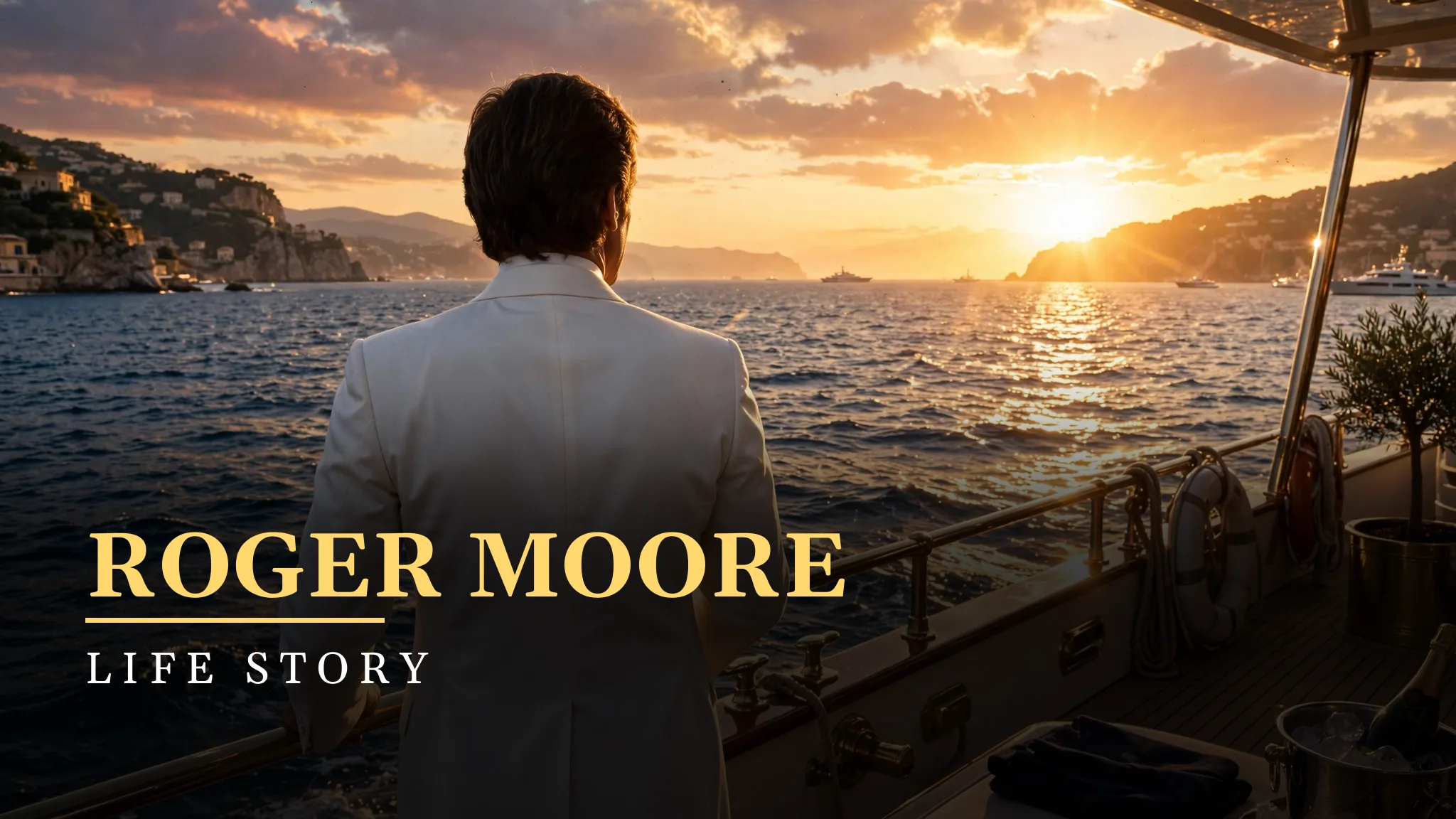
One last memory: the image of him in a white tuxedo, smiling with an eyebrow raised, holding a martini glass, with a smile that is both witty and warm, and that is unforgettable. That image is iconic, and it is beautiful, and it is the image that will define him forever. He was the suave James Bond, and he was Roger, and he was the most beloved Bond who ever lived.
His legacy will live on through his films, through his tuxedo, and through the generations of actors he inspired, who watched his Bond and wanted to act the way he acted. That is a fitting legacy for a man who defined Bond, and who did it with a tuxedo and a charm that will never be forgotten. He is gone, but his films remain, and his name will be remembered as one of the greats.
Finally, I want to say thank you, Roger Moore, for Live and Let Die, for The Spy Who Loved Me, and for a life lived with a tuxedo that spoke for charm. You were a great actor, and you were a great man, and the world is a better place because you were in it. Your films are still here, your legacy is still here, and your example is still here, and that is a life that mattered, and a life that will never be forgotten.
And one more thing: if you are an actor, act like Roger, because he is the actor every actor deserves to be, an actor who acts with his heart, and who makes an audience feel. Act like Roger, the way Roger Moore acted, and the world will be a better place for it, because the world needs more actors like him, who act with wittiness, with charm, and with humanity.
There is a last lesson in his life that I carry with me, and it is this: be a gentleman, even when it is hard, because being a gentleman is a choice, and Roger chose it, every day, in every film, and in every part of his life. That is a lesson worth remembering, and it is one I will carry with me, always, because the world needs more people like Roger Moore, who are gentlemen, and who do it, with a tuxedo, and with a charm, that will never be forgotten.
One final thought: his knighthood, in 2003, as Sir Roger Moore, for his services, to charity, is a testament to his talent, because he was knighted, for his UNICEF work, and that is a record that speaks for itself. He was great, as Bond, and he was great as a humanitarian, and that is a range that few actors possess, and it is a reminder that Roger was not just Bond, he was a gentleman, and a great one, and that is a legacy that will never be forgotten.
And if you ever doubt that a tuxedo can speak for charm, remember Roger Moore, because he did, with Live and Let Die, a film that made millions of people feel, and that is still watched today, by people who love Bond, and who believe, that charm matters, and that is a legacy that will last, long after his films are watched, because his charm is still here, and his influence is still here, and that is a gift that will never fade.
There is one more thing I want to say, and it is about his wife Kristina, because she loved him, and she was loyal to him, and she was with him, until his death, and that is a beautiful thing, and it is a part of his story that shows him as a husband, not just as an actor, and that is a legacy that matters, in its own way, alongside his films and his tuxedo, because his family is his greatest legacy, and they have honoured him, by being themselves, just as he was himself.
His story also reminds me that a boy from Stockwell can become a legend, if he has talent, determination, and a tuxedo, and that is a hopeful message for anyone who feels poor, or disadvantaged, or forgotten. Roger was poor, and he was disadvantaged, and he became one of the greatest actors in history, because he embraced who he was, and he used his talent to become great. That is a lesson worth remembering, for every poor person out there, and for every actor who wants to be heard.
I also want to mention his children, because he had three children, Deborah, Geoffrey, and Christian, and they have kept Roger’s memory alive, after his death, through their love, for their father, and that is a beautiful thing, and it is a part of his story that shows him as a father, not just as an actor, and that is a legacy that matters, in its own way, alongside his films and his tuxedo, because his family is his greatest legacy, and they have honoured him, by being themselves, just as he was himself.
And finally, I think about the fact that he died at 89, after a career, that spanned more than sixty years, and that is a reminder that a great actor can be great for a lifetime, and that we should make the most of our lives, the way Roger Moore did, acting with a charm that was a gift, and living a life that was both beautiful and remarkable, and that is a life worth living, and a life worth remembering, and I am grateful to have learned about it, and to have shared it with you.
Frequently Asked Questions
When was Roger Moore born?
Roger Moore was born on 14 October 1927 in Stockwell, London, England. He grew up during the Second World War, was evacuated during the Blitz, and studied at RADA after serving in the British Army.
What is Roger Moore most famous for?
He is most famous as James Bond, playing 007 in seven films from Live and Let Die (1973) to A View to a Kill (1985), more than any other actor, and as Simon Templar in The Saint.
How many James Bond films did Roger Moore make?
He played James Bond in seven films: Live and Let Die, The Man with the Golden Gun, The Spy Who Loved Me, Moonraker, For Your Eyes Only, Octopussy, and A View to a Kill.
When did Roger Moore die?
He died on 23 May 2017 in Crans-Montana, Switzerland, at the age of 89, of cancer, after a career spanning more than six decades.
What was Roger Moore’s UNICEF work?
He became a UNICEF Goodwill Ambassador in 1991 and worked for over 25 years to help children around the world. He was knighted in 2003 for his services to charity.
What was The Saint?
The Saint was a television series from 1962 to 1969 in which Roger Moore played Simon Templar, a gentleman thief, in 118 episodes, a role that made him a star and prepared him for Bond.


