Ryan Castro: The Life Story Behind the Colombian Reggaeton Star
In this post
- Medellín, the Streets, and a Young Man With a Voice
- Mujeriego and the Song That Changed Everything
- Jordan, Monastery, Quema, and Collaborations With the Biggest Names
- El Cantante del Ghetto and an Album That Tells His Story
- What Ryan Castro Means to Medellín and to Reggaeton
- The New Medellín Sound: Feid, Blessd, and a Generation That Sings Together
- My Take:
Medellín is the city that gave the world reggaeton’s biggest stars, and it is also a city of neighbourhoods, of hills, of buses, and of young men who dream of a different life. Ryan Castro was born Bryan David Castro Sosa on 14 January 1994, in Medellín, and he grew up in the streets of that city, singing, working, and dreaming, long before anyone knew his name. He calls himself El Cantante del Ghetto, the singer of the ghetto, and that name is not a marketing trick. It is a description of where he comes from, and of the people he sings for, and of the life he lived before fame found him.
His breakthrough came in 2021, with “Mujeriego”, a reggaeton song that became a hit across Latin America, and that introduced a new voice to the genre, a voice that was raw, direct, and full of the sound of Medellín’s streets. Since then, he has released “Jordan”, “Monastery” with Feid, “Quema” with Peso Pluma, and an album, El Cantante del Ghetto, in 2024, and he has collaborated with Karol G, with Blessd, and with other stars, becoming one of the most important new voices in Colombian reggaeton. He did it without a famous family, without a television contest, and without a record label behind him at the start. He did it by singing on the streets, by recording, and by building an audience, one listener at a time.
This is the story of how a young man from Medellín became Ryan Castro, and what his rise says about reggaeton, about Medellín, and about a generation of Colombian artists who are telling their own stories, in their own words, and in their own sound.
Medellín, the Streets, and a Young Man With a Voice
Medellín, the capital of Antioquia, is a city in a valley, surrounded by green mountains, and it is a city that has changed enormously in the last thirty years, from a place known for violence to a place known for music, for innovation, and for culture. Bryan David Castro Sosa was born there on 14 January 1994, and he grew up in the neighbourhoods of that city, in the comunas, the hillside communities where life is hard, where work is scarce, and where music is a way out, and a way of life. He was a young man with a voice, and with a dream, and he began to sing in the places where young men in Medellín sing: on the streets, on buses, at parties, and wherever people would listen.
He has spoken about those early years, about singing on buses in Medellín, about performing for passengers, and about earning a living, coin by coin, from people who liked his voice. That is a hard way to make a living, and it is a hard way to learn to sing, because a bus is not a stage, and passengers are not an audience that has come to hear you. They are people going to work, going home, and going about their lives, and a singer on a bus has to win their attention in seconds, or lose it. Ryan Castro learned to win it, by singing with energy, with humour, and with a directness that made people look up, and listen, and sometimes, smile.
He also worked in other jobs, as many young men in Medellín do, and he lived the life that he now sings about, a life of the streets, of friendship, of love, and of struggle. He did not come from a wealthy family, and he did not have connections in the music industry. He had a voice, a phone, and a determination to be heard, and he began to record, to release songs on social media, and to build a following, slowly, in Medellín, and then beyond it. He was not an overnight sensation. He was a street singer who became a recording artist, and who did it by working, day after day, in the city he loves.
Medellín stayed with him as his career grew, and he has spoken about his city with pride, about its music, about its people, and about the neighbourhoods that raised him. He is a paisa, a man from Antioquia, and he brings the sound of Medellín to his music, in his accent, in his slang, and in the stories he tells. That sound is not a detail. It is the heart of his music, and it is the reason his audience trusts him, because he sings about a life they recognise, in a voice that sounds like their own.
Mujeriego and the Song That Changed Everything
In 2021, Ryan Castro released “Mujeriego”, a reggaeton song whose title means “womaniser”, and which became his breakthrough hit. The song is about a man who loves women, who cannot settle down, and who is honest about it, and it is sung with a playful, confident energy that made it a hit at parties, on the radio, and on streaming platforms across Latin America. “Mujeriego” spread quickly, and it made Ryan Castro a name, not only in Medellín, but in Colombia, in Mexico, and in the United States, where reggaeton is one of the most popular genres in the world.
The success of “Mujeriego” was not an accident. It was the result of years of singing on the streets, of recording, and of building an audience, and it was also the result of a sound that was fresh, a voice that was distinctive, and a song that was catchy, danceable, and honest. Ryan Castro did not try to sound like J Balvin or Maluma, the established stars of Medellín reggaeton. He sounded like himself, like a young man from the streets, and that authenticity is what made the song work. Listeners could hear that he was not pretending. He was singing about a life he knew, in a voice that was his own.
After “Mujeriego”, he released more songs, and he began to collaborate with other artists, including Feid, another Medellín reggaeton star, with whom he recorded “Monastery”, a song that became another hit, and that showed that Ryan Castro could work with the biggest names in the genre, and hold his own. He also recorded “Jordan” in 2022, a song about sneakers, about style, and about success, which became another hit, and which showed that his audience was growing, and that his sound was evolving, while staying true to the streets where it began.
Those early hits established him as one of the most promising new voices in Colombian reggaeton, a singer who was not only a hitmaker, but a storyteller, a man who sang about his life, his neighbourhood, and his dreams, in a way that resonated with young listeners across Latin America. He was no longer a street singer. He was a star, and he was a star who had earned his fame, one bus, one song, and one listener at a time.
Jordan, Monastery, Quema, and Collaborations With the Biggest Names
Ryan Castro’s career after “Mujeriego” was a series of collaborations and hits that took him from a Colombian star to an international one. “Jordan”, released in 2022, became a hit, with its catchy hook and its celebration of style, and it was played at parties, in clubs, and on the radio across Latin America. “Monastery”, his collaboration with Feid, was another success, a song that brought together two Medellín voices, and that showed the strength of the city’s reggaeton scene, a scene that is collaborative, competitive, and creative, all at once.
In 2023, he recorded “Quema” with Peso Pluma, the Mexican star, a song that blended Colombian reggaeton with Mexican corridos tumbados, and that became a hit in both countries, and in the United States, where it was played on Latin radio and on streaming platforms. “Quema” was a significant moment, because it showed that Ryan Castro could work across genres, across countries, and across languages, and that his voice could fit in a song that was not only reggaeton, but a mix of styles. He also collaborated with Karol G, one of the biggest stars in Latin music, on “Qlona”, a song that was released in 2023 and that became another hit, and that introduced him to Karol G’s global audience.
He has also collaborated with Blessd, another young Medellín artist, and with other stars of the new generation of Colombian reggaeton, building a network of artists who support each other, who record together, and who represent a new wave of Colombian music, a wave that is younger, rawer, and more street-oriented than the wave that came before it. Ryan Castro is at the centre of that wave, and he is one of its most recognisable voices, a singer who represents the ghetto, the streets, and the young people of Medellín, in a way that is honest, direct, and unapologetic.
Those collaborations also show his versatility, his ability to sing with different artists, in different styles, and to make each song his own, without losing his identity. He is not a singer who disappears in a collaboration. He is a singer who stands out, with a voice that is distinctive, and with a style that is his own, and that is why other stars want to work with him. He brings something to a song that no one else brings: the sound of the streets of Medellín, and the energy of a young man who has lived what he sings about.
El Cantante del Ghetto and an Album That Tells His Story
In 2024, Ryan Castro released El Cantante del Ghetto, an album whose title means “the singer of the ghetto”, and which is both a statement of identity and a summary of his career so far. The album brings together his hits, his collaborations, and new songs, and it tells the story of a young man from Medellín who became a star, without forgetting where he came from. It is an album about the streets, about love, about success, and about the life of the ghetto, and it is sung with a voice that is confident, mature, and full of the experience of a man who has lived a great deal in a short time.
The album was a success, and it confirmed his place as one of the leading voices in Colombian reggaeton, a singer who is not only a hitmaker, but an album artist, a man who can make a full record, with a beginning, a middle, and an end, and who can tell a story across many songs. It also showed his growth as an artist, from a street singer to a recording artist, from a young man with a dream to a star with a career, and it showed that he is thinking about his music in the long term, not only about his next hit.
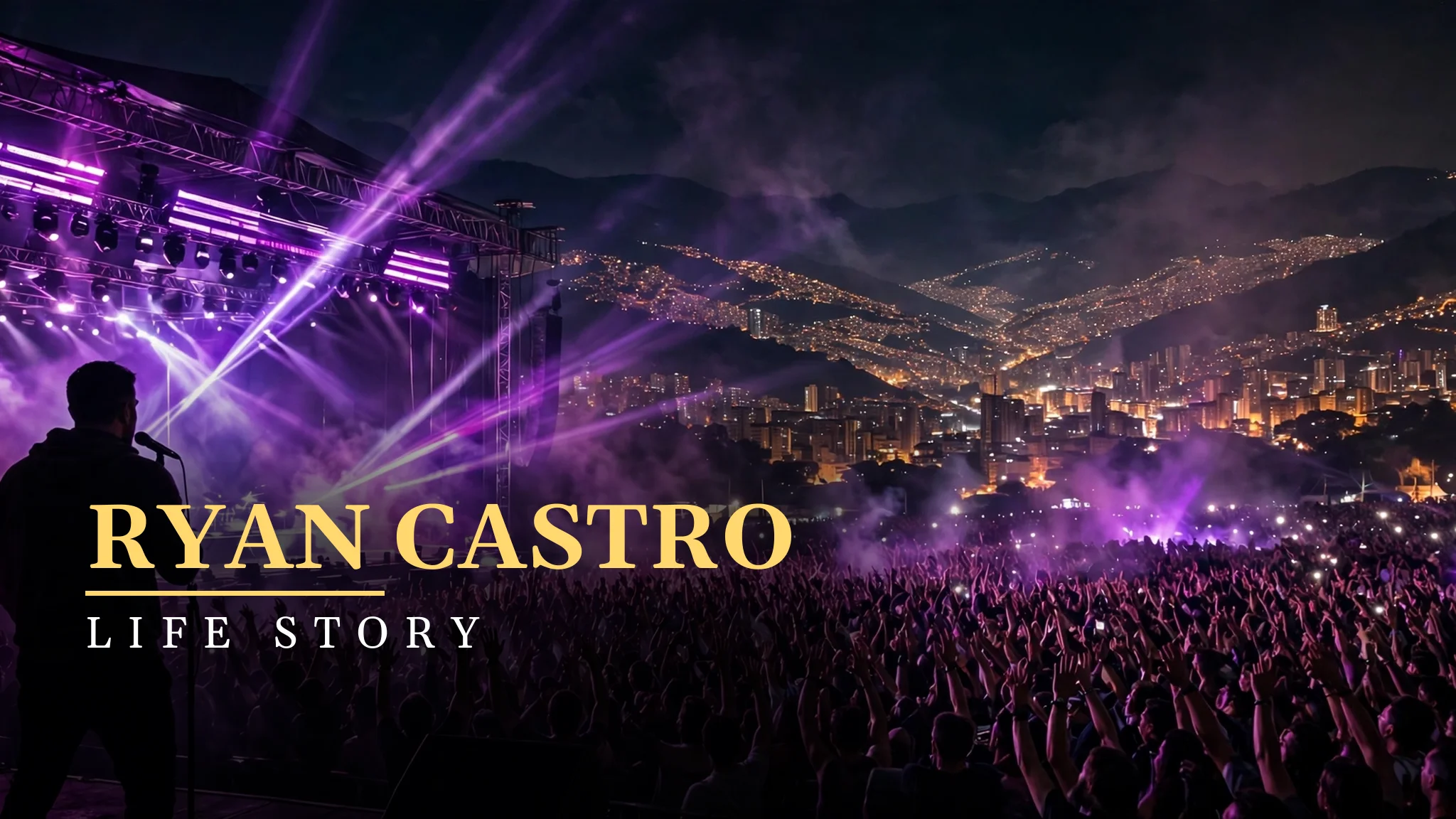
He has continued to tour, to perform, and to record since the album’s release, playing at festivals, at concerts, and in arenas across Latin America, the United States, and Europe, where his audience is growing, and where his music is being discovered by new listeners. His concerts are energetic, loud, and full of the sound of Medellín, with Ryan Castro on stage, in a hoodie, with a microphone, singing to a crowd that sings along to every word. He is a performer who connects with his audience, because he is one of them, a young man from the streets, who made it, and who is still one of them, even as a star.
He has also spoken about his future, about wanting to make more music, about wanting to collaborate with more artists, and about wanting to represent Medellín and Colombia to the world. He is a young artist, still in his early thirties, and his career is still growing, and his story is still being written. He has already achieved a great deal, and he has done it by staying true to himself, to his city, and to the people he sings for, and that is a foundation that will support a long career.
What Ryan Castro Means to Medellín and to Reggaeton
Ryan Castro’s place in Colombian reggaeton is secure, even though his career is still young, and it rests on a voice, a sound, and a story that are distinctive. He is the singer of the ghetto, a man who came from the streets of Medellín, who sang on buses, and who became a star, without losing the sound of the streets. He represents a new generation of Colombian reggaeton, a generation that is younger, rawer, and more honest about where it comes from, and that is changing the genre, in Colombia and around the world.
He has also shown that a young artist from Medellín can become a global star, by working hard, by collaborating, and by staying true to his roots. He did not need a famous family, or a television contest, or a record label at the start. He needed a voice, a phone, and a determination to be heard, and he had all three, and he used them, to build a career that has taken him from the buses of Medellín to the stages of the world. That is a powerful message for young people in Medellín, and in other cities, who dream of a different life, and who wonder if it is possible. Ryan Castro proves that it is, and he proves it by living it, every day, on stage, and in his music.
As he continues to work, his story is still unfolding, and it is a story that will be told for many years, by fans who remember “Mujeriego”, by viewers who watch his concerts, and by young singers from Medellín who see in him a proof that a boy from the streets can become a star, and can stay a star, by singing his own story, in his own voice, and in his own sound. He came from Medellín with a dream, and he turned it into a career that has touched millions of lives, and that is a story worth telling.
The New Medellín Sound: Feid, Blessd, and a Generation That Sings Together
Ryan Castro is not alone in Medellín. He is part of a generation of young reggaeton artists who are changing the genre, and who are doing it together, by collaborating, by supporting each other, and by building a scene that is collaborative, competitive, and creative, all at once. The most important of those artists are Feid, whose real name is Salomón Villada Hoyos, and Blessd, whose real name is Stiven Mesa Londoño, and both of them are from Medellín, and both of them have worked with Ryan Castro, and both of them represent the same new wave, a wave that is younger, rawer, and more street-oriented than the wave that came before it, the wave of J Balvin and Maluma.
Feid, known as Ferxxo, is a singer, a songwriter, and a producer, who has written songs for Nicky Jam, for J Balvin, and for other stars, and who has become a star in his own right, with a sound that is melodic, playful, and full of the slang of Medellín. Ryan Castro recorded “Monastery” with Feid, and the collaboration was a success, because it brought together two voices that are different, Feid’s melodic, almost sung voice, and Ryan Castro’s raw, direct voice, and that difference made the song interesting, and made it a hit. They have continued to work together, and to support each other, and their friendship is part of the story of Medellín reggaeton, a story about artists who help each other, rather than competing to destroy each other.
Blessd is another young Medellín artist, a singer who became famous with songs about love, about the streets, and about success, and who has collaborated with Ryan Castro, and with Feid, and with other stars, building a network of artists who record together, who perform together, and who represent a new generation. Blessd’s sound is similar to Ryan Castro’s, in that it is street-oriented, honest, and full of the slang of Medellín, and different, in that it is more melodic, more romantic, and more pop-oriented. Together, Ryan Castro, Feid, and Blessd, and other young artists, are creating a sound that is distinctly Medellín, distinctly Colombian, and distinctly of their generation, a sound that is being heard around the world, and that is changing the way people think about reggaeton.
That generation is also a generation that uses social media, that records on phones, that releases songs on streaming platforms, and that builds an audience without the help of a major label, at least at the start. Ryan Castro did that, by singing on buses, by recording, and by releasing songs online, and Feid and Blessd did it too, by writing, by recording, and by sharing their music, and their success proves that the old model, in which a label discovers an artist and makes him a star, is no longer the only model. A young artist in Medellín can now make himself a star, by working hard, by collaborating, and by being heard, one listener at a time, and Ryan Castro is proof of that, and he is an inspiration to the young artists who are following him.
His concerts in Medellín, in the city’s arenas and festivals, are homecomings, nights when the crowd sings every word, when the hills around the valley seem to glow with lights, and when a young man who once sang on a bus stands on a stage and hears thousands of voices singing back to him, a sound that no recording can capture, and that no fame can replace.
He has also spoken about the young artists who now write to him, asking how to start, and he tells them to record, to post, and to sing wherever they can, because the audience is out there, on buses, on streets, and on phones, waiting to hear a voice that sounds like their own, and that is honest about where it comes from.
He has also performed in the United States, in cities with large Colombian and Latin communities, where audiences who left Medellín years ago hear his voice, and feel, for an hour, that they are home again, on a bus, on a street, in a neighbourhood they miss, and that feeling, of home carried in a song, is one of the most powerful things a singer can give.
My Take:
I think Ryan Castro is one of the most exciting new voices in reggaeton, and I say that because he sounds like himself, and that is rarer than it should be in a genre where many singers sound the same. He has a voice that is raw, direct, and full of the streets of Medellín, and he sings about a life he has lived, not a life he has imagined. I have listened to “Mujeriego”, to “Jordan”, and to “Quema”, and in each of those songs, I have heard a young man who is confident, who is funny, and who is honest about who he is. That honesty is refreshing, and it is the reason his audience trusts him, because they can hear that he is not pretending.
What I admire most about his story is where he started. He sang on buses in Medellín, performing for passengers who had not come to hear him, and earning a living, coin by coin, from people who liked his voice. That is a hard way to learn to sing, and it is a hard way to make a living, and it takes a particular kind of determination to keep doing it, day after day, without a guarantee that anything will change. I think about those bus rides, a young man with a voice, singing in a crowded bus, trying to make people look up, and I admire the courage it takes to do that. It is easy to sing on a stage, in front of an audience that has paid to hear you. It is much harder to sing on a bus, in front of strangers, and Ryan Castro did that, and he learned from it, and he became a star because of it, not in spite of it.
“Mujeriego” is a song I like, because it is fun, it is catchy, and it is honest about what it is. It is a song about a man who loves women, who cannot settle down, and who is not pretending otherwise, and it is sung with a playful energy that makes it impossible not to dance to. I think there is a kind of honesty in that, a willingness to be direct about desire, about love, and about the complications of relationships, without moralising, and without pretending to be something he is not. Not every song has to be deep. Some songs are about pleasure, about dancing, and about feeling alive, and those songs matter too, and Ryan Castro understands that, and he sings them with a delight that listeners can feel.
I also think about “Jordan”, and about what it says about success, about style, and about the life of a young man who has made it. The song is about sneakers, about looking good, and about having arrived, and it is sung with a confidence that is earned, because Ryan Castro has arrived, from the buses of Medellín to the stages of the world. I like that he celebrates that arrival, that he does not pretend to be humble about it, and that he sings about it with joy. Success is a thing to be celebrated, especially when it comes from a hard place, and Ryan Castro celebrates it, and his audience celebrates with him, because they know where he came from, and they know what it cost him to get there.
His collaborations impress me, especially “Quema” with Peso Pluma and “Qlona” with Karol G, because they show a young artist who is willing to work across genres, across countries, and with the biggest stars in Latin music, and who can hold his own in those collaborations. He does not disappear when he sings with Karol G, or with Peso Pluma. He stands out, with a voice that is distinctive, and with a style that is his own, and that is a sign of a strong artist. I think those collaborations are important, because they introduce him to new audiences, and they show that Colombian reggaeton is not an isolated genre, but a part of a larger Latin music world, in which artists from different countries work together, and learn from each other.
El Cantante del Ghetto, his album from 2024, is a statement I respect, because it is a statement of identity. He calls himself the singer of the ghetto, and he does not apologise for it, and he does not try to hide where he comes from. He embraces it, and he makes it the title of his album, and the centre of his career. I think that takes confidence, and I think it takes pride, because the ghetto is often a word that people use to dismiss a place, and a person. Ryan Castro turns it into a badge of honour, and he says, in effect, that the ghetto is where he comes from, and that it is a place of music, of talent, and of life, and that it deserves respect. I think that is a powerful message, and I think it is a message that young people from similar neighbourhoods need to hear.
I also think about Medellín, and about what it means for a city to produce a star like Ryan Castro. Medellín has given the world J Balvin, Maluma, Karol G, Feid, and Blessd, and now Ryan Castro, and that is an extraordinary list, for a single city. It says something about Medellín, about its music, about its people, and about its culture, and it says that the city is a centre of Latin music, not a footnote. Ryan Castro is a part of that story, and he is a reminder that the city’s music comes from its streets, from its buses, and from its neighbourhoods, not only from its studios. He did not come from a wealthy family. He came from the streets, and he made the world listen, and that is a story worth telling.
If I could ask him one question, I would ask him what he says to a young man on a bus in Medellín who wants to sing, but who is afraid that no one will listen. I think he would say to sing anyway, to sing on the bus, to sing on the street, and to keep singing, because someone will listen, and because your voice is your own, and no one can take it from you. I think that is good advice, and I think it is advice that Ryan Castro has lived, because he sang on buses, and someone listened, and now millions listen. That is a hopeful message, and it is a message that I want young people to hear.
In the end, I come back to the simple fact that Ryan Castro came from the streets of Medellín, and that he became a reggaeton star, and that he did it by being himself, by singing his own story, in his own voice, and in his own sound. He is young, he is talented, and he is still growing, and I hope he keeps growing, keeps collaborating, and keeps singing, because the world needs voices that are honest, direct, and full of life. He is one of those voices, and I am glad to have told his story, and I look forward to hearing what he does next.
I also think about Feid, and about what his friendship with Ryan Castro says about Medellín reggaeton. Feid is a songwriter, a singer, and a star, and he could have kept his success to himself, but he chose to collaborate, to record “Monastery” with Ryan Castro, and to support a younger artist, and that generosity is part of what makes the Medellín scene special. It is not a scene of rivals who hate each other. It is a scene of friends who help each other, who record together, and who celebrate each other’s success, and I think that is a beautiful thing, and I think it is a reason why Medellín reggaeton is so strong, because it is built on friendship, as well as on talent. Ryan Castro is lucky to have friends like Feid, and Feid is lucky to have a friend like Ryan Castro, and their music is better for it.
Blessd is another artist I think about, because he represents the same generation, a young man from Medellín who became a star by singing about love, about the streets, and about success, and who has collaborated with Ryan Castro, and with Feid, and with others. Together, they are creating a sound that is new, a sound that is Medellín, and a sound that is being heard around the world. I like that they work together, that they do not see each other as threats, but as partners, and I think that is a lesson for young artists everywhere: you do not have to succeed alone. You can succeed together, and your success will be greater, and more joyful, if you share it with friends who understand where you came from, and where you are going.
I think about the bus again, and about the passengers who listened to Ryan Castro, and who gave him coins, and who smiled, and I wonder how many of those passengers remember him, and how many of them tell their friends that they heard him, on a bus, before he was famous. That is a wonderful thought, and it is a reminder that fame does not begin on a stage. It begins in small places, in buses, in streets, and in the hearts of people who listen, and who decide that a voice is worth hearing. Ryan Castro’s fame began that way, and I think he remembers it, and I think that memory keeps him grounded, and keeps him honest, even as he performs on stages around the world.
There is also something I want to say about the word “ghetto”, and about the way Ryan Castro uses it. The ghetto is often a word that people use to dismiss a place, and a person, to say that they are poor, that they are dangerous, and that they do not matter. Ryan Castro turns that word into a badge of honour, and he says, in effect, that the ghetto is where he comes from, and that it is a place of music, of talent, and of life, and that it deserves respect. I think that is a powerful act, and I think it is a message that young people from similar neighbourhoods need to hear, because it says that where you come from is not a shame, but a strength, and that your story matters, and that your voice matters, no matter where you were born.
Finally, I want to say something about the future, and about what I hope for Ryan Castro. He is young, he is talented, and he is still growing, and I hope he keeps growing, keeps collaborating, and keeps singing, because the world needs voices that are honest, direct, and full of life. I hope he records more albums, I hope he works with more artists, from Colombia and from other countries, and I hope he continues to represent Medellín, and the ghetto, with pride, and with joy. He came from the streets of Medellín, he became a reggaeton star, and he did it by being himself, by singing his own story, in his own voice, and in his own sound, and I look forward to hearing what he does next, because I suspect he has not finished surprising us yet, and because his story is still being written, one song at a time.
I also think about the buses, and about the passengers who may not even remember the young man who sang to them, and about how a small kindness, a coin, a smile, a word of encouragement, can change a life, because Ryan Castro remembers those passengers, and he sings for them still, even on the biggest stages, and that memory is a gift, and a responsibility, and a reason to keep singing, with the same energy he had on a bus in Medellín.
Frequently Asked Questions
Where was Ryan Castro born and what is his real name?
Ryan Castro was born Bryan David Castro Sosa on 14 January 1994, in Medellín, Colombia. He grew up in the city’s neighbourhoods and began singing on the streets and on buses before becoming a recording artist.
What does El Cantante del Ghetto mean?
It means “the singer of the ghetto”, and it is the name Ryan Castro uses for himself, and the title of his album from 2024. It describes where he comes from, the streets of Medellín, and the people he sings for.
Which song made Ryan Castro famous?
“Mujeriego”, released in 2021, was his breakthrough hit, a reggaeton song about a man who loves women and cannot settle down. The song became a hit across Latin America and made him a star.
What are Ryan Castro’s other well-known songs?
His well-known songs include “Jordan” from 2022, “Monastery” with Feid, “Quema” with Peso Pluma from 2023, and “Qlona” with Karol G. He has collaborated with many of the biggest names in Latin music.
What is the album El Cantante del Ghetto?
El Cantante del Ghetto is Ryan Castro’s album from 2024, a collection of his hits, collaborations, and new songs, telling the story of a young man from Medellín who became a reggaeton star without forgetting where he came from.
Did Ryan Castro really sing on buses in Medellín?
Yes, he has spoken about singing on buses in Medellín in his early years, performing for passengers and earning a living from people who liked his voice. That experience taught him to win an audience quickly and shaped his direct, energetic style.


