Samira Said: The Life Story Behind the Diva of Arab Song
In this post
- A Girl From Rabat Who Sang at Nine
- The Move to Cairo and a New Life in Egypt
- Eurovision 1980 and a Song for Morocco
- Ben Lif, Maghlouba, and the Hits of the Eighties
- Youm Wara Youm and the Peak Years
- Reinvention, Awards, and a Voice That Refused to Fade
- Hard Years and the Will to Keep Singing
- What the Diva Means to the Arab World Today
- My Take:
There is a singer whose voice has filled the Arab world for more than fifty years, a voice that is strong, warm, and full of life, a voice that can sing a love song, a dance song, and a song of sadness, and make each one feel true. Her name is Samira Said, and she is known as the Diva of Arab Song, a title that is not given lightly. She was born in Rabat, she grew up singing, she moved to Cairo, she sang for Morocco at Eurovision, and she became one of the most loved singers in the Arab world. Her story is a story of a long life in music, of a voice that has never faded, and of a woman who has reinvented herself again and again, without ever losing who she is.
She began singing at the age of nine, she was discovered on a television talent show, and she was still a teenager when she moved to Egypt, the centre of Arab music. In Cairo, she learned the Egyptian style, she recorded album after album, and she became a star, not only in Egypt, but in Morocco, in the Gulf, and in every Arab country. Her songs are played at weddings, on the radio, and in the homes of people who have loved her for decades, and her concerts are still full, fifty years after she began.
What makes her story worth telling is the length of it, and the breadth of it. She has sung in Moroccan Arabic and in Egyptian Arabic, she has sung pop and classical, she has worked with the greatest composers, and she has won awards around the world. She is a diva in the true sense, a singer whose voice, whose style, and whose presence have defined Arab pop for generations. This is the story of how a girl from Rabat became the Diva of Arab Song.
A Girl From Rabat Who Sang at Nine
Samira Abdelrazak Bensaid was born on 10 January 1958 in Rabat, Morocco, the capital city, a city of gardens, of the sea, and of a long history of kings and poets. Her father was from Rabat, and her mother was from Fez, and she grew up in a family that loved music, in a city where music is part of daily life. She began singing at the age of nine, a remarkable thing, and she sang with a voice that was already strong, clear, and full of feeling. A child who can sing at nine, and who can move an audience, has a gift that cannot be taught, and Samira had it.
She was discovered on the music programme Mawaheb, broadcast on Moroccan television, where young talents were shown to the nation. She sang, the judges listened, and the audience listened, and her name began to be known in Morocco. A television talent show is a hard test for a child, because the singer must sing before cameras, before judges, and before a whole country, and Samira handled it with a calm that surprised many people who watched her. She did not try to be a child star. She sang like a singer, and she was heard like one.
Rabat gave her a particular colour. The capital is a city of government, of gardens, and of a quiet, thoughtful life, and a child growing up there learns to be serious, to be careful, and to love beauty. Samira learned those things, and they stayed in her singing. Even her most joyful songs have a seriousness in them, a sense that the singer has thought about the words, and that she means them. That seriousness is part of why her audience trusts her, and why her songs have lasted.
Her family supported her, and they encouraged her singing, because they saw that she had a gift. She sang at school, at family gatherings, and on television, and she learned the songs of Morocco, the melodies of her home, and the feeling of a song that is sung with heart. A singer who grows up singing for her family learns something that a singer who only sings for a stage never learns. She learns to sing for love, not for fame, and that love stays in her voice, even when she sings in a large hall.
The Move to Cairo and a New Life in Egypt
In 1977, Samira Said moved to Cairo, Egypt, and her life changed. Cairo was, and still is, the centre of Arab music, the city where the greatest singers, composers, and poets work, and where a singer can become famous across the whole Arab world. She was only nineteen years old, and she had left her home, her family, and her country, to start a new life in a city she did not know. That move took courage, and it took a belief in her own voice, and Samira had both.
In Cairo, she learned the Egyptian style of singing, the Egyptian Arabic dialect, and the Egyptian way of making a song. She worked with Egyptian composers, including Mohamed El Mougi, and she recorded her first albums in Egypt, including El Hob Elli Ana Aaycheh in 1975 and Ben Lif in 1979. Those albums showed a singer who was learning, growing, and finding her own sound, a sound that mixed her Moroccan roots with her new Egyptian home. A singer who can mix two traditions, and make them one, has a rare gift, and Samira had it.
She also learned the business of being a professional singer in Cairo, a business that is hard, competitive, and full of people who promise much and give little. She learned to work with people she trusted, to choose her songs carefully, and to keep her focus on the music. That focus saved her, and it is why she is still singing today, when many singers who came to Cairo at the same time have faded. She did not chase every trend. She built her career, album by album, song by song, and she built it to last.
Cairo became her home, and she has lived there for more than fifty years, holding both Moroccan and Egyptian nationality, and loving both countries. She is a Moroccan who lives in Egypt, and an Egyptian who was born in Morocco, and that double belonging is part of her story. Her songs are mostly in Egyptian Arabic, but she has also recorded songs in Moroccan Arabic, such as Kifash Tlakina, How We Met, and those songs remind her audience that she has not forgotten where she came from. A singer who can belong to two countries has a wider heart, and Samira’s heart is wide.
Eurovision 1980 and a Song for Morocco
In 1980, Samira Said did something that no other Moroccan singer has done, before or since. She represented Morocco in the Eurovision Song Contest, singing the song Bitaqat Hub, a love card, in The Hague in the Netherlands, and placing eighteenth out of nineteen contestants. The result was not a victory, but the moment was historic. She was the first, and to this day the only, artist to represent Morocco at Eurovision, and her performance brought Moroccan music to a European audience that had never heard it before.
Eurovision is a strange contest, with songs in many languages, with costumes, with staging, and with voting that is often about politics as much as about music. Samira sang with dignity, in Arabic, with a melody that was beautiful and true, and she represented her country with pride. She did not win, but she showed the world that Morocco had a voice, and that voice was hers. That is a proud achievement, and it is one that Moroccans still remember with love, even though the result was low.
The contest also showed her courage. To sing in Arabic, before a European audience, in a contest where most songs are in English or French, takes a belief in your own language and your own music. Samira had that belief, and she sang, and the audience listened. She did not change her sound to please Europe. She brought Morocco to Europe, and she let Europe hear it. That honesty is part of her story, and it is part of why she is loved in Morocco.
After Eurovision, she returned to Cairo, and she continued her career, recording albums, performing, and building her name across the Arab world. The contest did not make her famous in Europe, but it made her famous in Morocco, as the singer who had carried her country’s flag to a world stage. A singer who carries her country’s flag, even in defeat, is a singer who is loved, and Samira was loved for it, then and now.
Ben Lif, Maghlouba, and the Hits of the Eighties
In the late 1970s and 1980s, Samira Said released a series of albums and songs that made her one of the great voices of Arab pop. Ben Lif, from 1979, became a beloved song, and her singles Maghlouba, Beaten, and Waady, My Love, became hits that were played across Egypt and the Arab world. Those songs had the strong, emotional feel that defines her style, a voice that is powerful, a melody that is beautiful, and words that speak of love, of pain, and of hope.
Her albums in the 1980s, including Hikaya in 1981 and others, showed a singer who was growing, trying new sounds, and working with new composers. She was not a singer who made one kind of song. She made songs for dancing, for falling in love, for missing someone, and for saying goodbye, and each one was sung with the same power and care. A singer who can sing many kinds of songs, and make each one feel true, has a rare gift, and Samira has it.
She also acted, appearing in the film Saaktob Ismak Ala Arrimal, I Will Write Your Name on the Sand, and in other work, and those roles showed a different side of her, the side of a performer who could act as well as sing. Acting taught her things that singing alone could not teach, how to listen, how to wait, and how to hold a character, and she brought that listening to her music as well. Her songs became more like stories, with characters, with feeling, and with a sense of place.
Through the 1980s, her name grew, and she became one of the most loved singers in the Arab world. She performed in Egypt, in Morocco, in the Gulf, and in other Arab countries, and her concerts were full. She was not the quietest singer, and she was not the most serious, but she was one of the most powerful, and power is a rare thing in a singer. Her voice could fill a hall, could move a crowd, and could make a listener feel, all at once, and that is why her audience stayed loyal, year after year.
Youm Wara Youm and the Peak Years
In 2002, Samira Said released the album Youm Wara Youm, Day After Day, and it became one of the great albums of her career. The title song, a duet with the Algerian singer Cheb Mami, mixed Egyptian pop with rai, the music of Algeria, and it became a hit across the Arab world. The album won her a BBC Award for World Music as the best artist in the Middle East, and in 2003 she won a World Music Award based on worldwide sales. Those awards were not only honours. They were proof that her music belonged to the world, not only to Egypt or Morocco.
The album showed a singer at the height of her powers, a singer who could mix traditions, who could sing with a younger artist, and who could make a song that was both modern and true to her roots. A duet with Cheb Mami was a bold choice, because rai and Egyptian pop are different sounds, but Samira made them one, and the song became a classic. A singer who can bring two traditions together, and make them sing as one, has a rare gift, and Samira has it.
Her next album, Aweeny Beek, in 2003, built on that success, with songs such as Al Gany Baad Youmen, Aweni Beek, and Ala Eih, which became hits in Egypt and across the Arab world. Those songs were played at weddings, on the radio, and in the homes of people who loved her powerful style. She was now a diva in the true sense, a singer whose new album was waited for, whose concert was attended, and whose voice was trusted by millions.
Through the 2000s, she kept recording, kept performing, and kept her place as one of the great voices of Arab pop. She worked with new composers, she tried new sounds, and she kept her voice strong, clear, and full of feeling. A singer who keeps learning from the young does not grow old in her art. She grows with her art, and Samira grew, album by album, song by song, into the 2010s and beyond.
Reinvention, Awards, and a Voice That Refused to Fade
Samira Said has reinvented herself many times in her long career, and that reinvention is one of the secrets of her longevity. She has sung pop, she has sung classical, she has sung rai, and she has sung songs in Moroccan and Egyptian Arabic, and each time she has made the new sound her own. A singer who can reinvent herself, without losing who she is, is a singer who lasts, and Samira has lasted for more than fifty years, from a child singer in Rabat to a diva in Cairo.
She has won many awards, including the World Music Award, the BBC Award, and the Murex d’Or, and she has been honoured in Morocco, in Egypt, and around the world. Those awards are not only honours. They are proof that her music has been loved, not only by audiences, but by the people who judge music, and that her voice has been respected by the whole music world. A singer who is loved by audiences and respected by critics has achieved the rarest thing in music, and Samira has achieved it.
She also became an entrepreneur and a record producer, taking control of her own career, and making her own choices about her music. That control gave her freedom, and it allowed her to record the songs she believed in, without waiting for a record company to choose for her. A singer who controls her own career is a singer who can last, because she does not depend on others to keep her working. Samira took that control, and she kept it, and her later albums, including Mazal in 2013, showed a singer who was still growing, still trying new sounds, and still loved by her audience.
Her personal life stayed largely private. She married Moustapha Naboulssi, and she became a mother to a son, and she has kept her family close to her heart. She has spoken at times about the joy of family, and about the wish to protect her family from the worst of public attention. That wish is easy to understand. A singer gives her voice to the public. She does not have to give her family as well, and Samira has kept a clear line between the stage and home.
Hard Years and the Will to Keep Singing
A career as long as Samira’s is never free of hard times. The music business in Egypt and the Arab world has gone through difficult years, with piracy, falling sales, and the rise of new sounds that do not always leave room for an older singer. Samira faced those years, and she faced them by doing what she had always done. She sang, she performed, and she trusted her audience. She did not chase every new trend, and she did not try to become a different singer. She stayed herself, and her audience stayed with her.
There were also personal hard times, as there are in every long life. A singer who travels, who performs late at night, and who lives in the public eye pays a price in rest, in privacy, and in time with family. Samira has kept much of her private life out of the press, and that privacy is a choice that deserves respect. What the public sees is the singer on stage, full of power and joy. What it does not see is the work behind that power, the travel, the rehearsals, and the long nights. That work is real, and it is the price of a long career.
She has also faced the challenge of staying fresh. A singer with many hits can become a singer who only sings old songs, and an audience can grow tired of hearing the same set, year after year. Samira has met that challenge by keeping her concerts alive, by changing her set, by recording new songs, and by singing with the same power she had when she was young. Power is not a thing that fades with age if the singer still loves the music. Samira still loves it, and her audience can feel that love.
The passing of time has also brought change to the world she sings about. The Rabat of her childhood is not the Rabat of today, and the Cairo of 1977 is not the Cairo of today. Samira has moved with those changes, without losing the sound that made her famous. That is a hard balance to hold, and she has held it for more than fifty years. A singer who can hold it deserves to be called a diva, and Samira is called a diva for that reason.
What the Diva Means to the Arab World Today
Today, Samira Said stands as one of the great voices of Arab music, a singer whose name is trusted, whose songs are loved, and whose concerts are waited for. She is not the newest singer, and she is not the loudest, but she is one of the most lasting, and lasting is the hardest thing to achieve in pop music. Her legacy is not only her songs. It is also the example she sets for young singers, that a singer can start at nine, can move to a new country, can sing at Eurovision, can win world awards, and can build a career that lasts for more than fifty years.
She is still singing, still recording, and still reaching new listeners. Her story is not finished, and her voice, strong and warm, continues to carry the sound of Arab song across the world. The girl from Rabat who sang at nine became the Diva of Arab Song, and that diva is still singing, evening after evening, song after song.
Her decision to take control of her own production, to choose her songs, and to record when she was ready, showed a business mind that few singers of her generation had. She did not wait for a company to tell her what to sing. She built her own way, and she kept her independence, and that independence gave her the freedom to sing what she believed, and to keep her career in her own hands for more than fifty years.
My Take:
When I listen to Samira Said, I feel power. Her voice is strong, it is warm, and it fills a room, and it makes me want to stand up straighter. I have listened to many singers, and many of them sing beautifully, but few of them sing with the power that Samira has. Her voice does not whisper. It speaks, it sings, and it declares, and it does so with a confidence that comes from fifty years of singing. I admire that power, because it is not loudness. It is strength, and strength is a rare and beautiful thing in a singer.
What I admire most about her is her longevity. She began singing at nine, she moved to Cairo at nineteen, she sang at Eurovision at twenty-two, and she is still singing in her late sixties. That is a career measured in decades, not in seasons, and it was built by small steps, by one album after another, by one concert after another, and by one good song after another. I think young singers should learn from that. Do not chase a single viral moment. Build a body of work that will still matter in ten years, in twenty years, and in fifty years. That is what Samira did, and that is why her name still matters.
Her move from Rabat to Cairo moves me, because it is a move that took great courage. She was nineteen, she left her home, her family, and her country, and she started a new life in a city she did not know. Many young people dream of such a move, and few make it, because it is frightening to leave home. Samira made it, and she built a new home in Cairo, while keeping her love for Rabat. That double belonging, to Morocco and to Egypt, is part of her story, and it is part of why her audience is so wide. She belongs to two countries, and both countries love her for it.
I also think about Eurovision, and about what it meant for her to sing for Morocco in 1980. She did not win, she placed eighteenth out of nineteen, and yet that moment is still remembered, because she was the first and only Moroccan to sing at Eurovision. That tells me something important about success. Success is not always about winning. It is sometimes about being first, about carrying your country’s flag, and about singing with pride, even when the result is low. Samira did that, and Morocco remembers her for it, not for the place she finished, but for the courage she showed.
Her album Youm Wara Youm is, for me, one of the great Arab albums of the 2000s. The duet with Cheb Mami, mixing Egyptian pop with rai, was a bold choice, and it worked beautifully. It showed that Samira could bring two traditions together, and make them sing as one, and that is a rare gift. When I hear that song, I think of the whole Maghreb and the whole Arab world, singing together, and I feel hopeful. Music can bring people together in a way that politics cannot, and Samira’s music does that, song after song.
I think about her reinvention, and about how she has changed her sound again and again, without ever losing who she is. She has sung pop, classical, rai, and more, and each time she has made the new sound her own. That is a hard thing to do, because a singer who changes too much can lose her audience, and a singer who never changes can become boring. Samira found the balance, changing enough to stay fresh, and staying true enough to be trusted. That balance is the secret of a long career, and it is one that few singers ever find.
If I am honest, I do not love every song she has made. Some of her songs are too loud for my taste, and some of them use the same powerful beat again and again, and I wish she had sung more quiet songs, more songs like the ones that show the soft side of her voice. But I also understand why she sings with power. Power is her gift, and she uses it well. A singer who has a powerful voice should use it, and Samira uses hers, night after night, year after year, and her audience loves her for it.
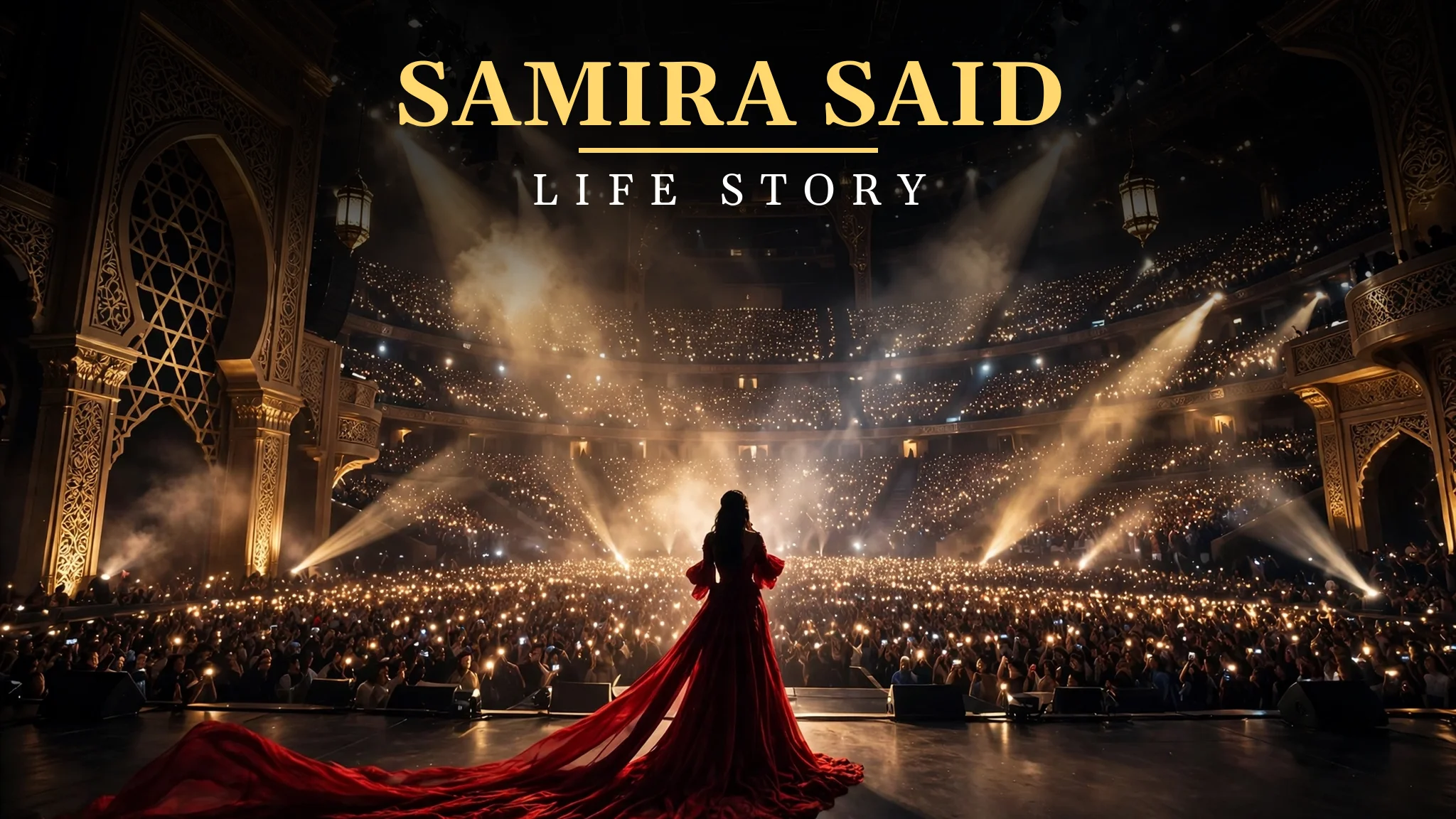
What stays with me is the feeling of her concerts. A Samira concert is not a quiet evening. It is a celebration, with a diva on stage, in a red gown, singing with all her heart, and a crowd that sings along, that dances, and that feels the power of her voice. I have watched clips of her concerts, and I have felt the energy even through a screen. People of every age, young and old, stand together and sing, and for a few hours they are one family. That is a rare gift, and it is why her concerts have stayed full for so many years.
I also think about what her music means to women in the Arab world. A woman who sings with power, who controls her own career, who moves to a new country, and who builds a life on her own terms, is an example for other women. Samira has done all of that, and she has done it with dignity, without asking for permission, and without apologising for her strength. That example matters, and it will matter for many years to come. Young women who hear her voice learn that they can be strong, that they can be loud, and that they can be themselves.
Her story also teaches me something about home. Home is not only a place. It is a sound, a language, and a voice that says you belong. Samira carries two homes, Rabat and Cairo, and she sings in both, and she belongs to both. When I listen to her, I feel that double belonging, and I think it is a beautiful thing. A person who can belong to two places has a wider heart, and Samira’s heart is wide, and her music is wide, and that is why it reaches so many people.
I will remember Samira Said as a diva in the true sense, a singer whose voice, whose style, and whose presence have defined Arab pop for generations. She started at nine, she moved to Cairo, she sang at Eurovision, she won world awards, and she kept singing, year after year, even when the work was hard and the attention moved to younger singers. That is a career to be proud of, and it is a story that will help any reader who wants to build something that lasts.
Finally, I think about the future of her music, and about where it will go. New singers will arrive, new sounds will come, and the radio will play new songs, but Samira’s songs will still be there, because power does not go out of fashion, and a voice that sings with strength will always find listeners. I imagine a young girl in Rabat, fifty years from now, hearing her song for the first time, and I think that is a beautiful future. A singer who can give a future girl the words for her strength has done something that no chart can measure, and Samira has done it, for a whole generation, and for the generations that will follow.
I also think about the way she has taken control of her own career, as a producer and an entrepreneur, and about what that means. A singer who controls her own work is a singer who can choose her songs, who can record when she is ready, and who can sing what she believes. That control is a form of freedom, and Samira took it, and she used it well. I hope young singers learn from that, and I hope they take control of their own careers, as she did, because a career that is controlled by the singer herself is a career that will last.
There is one more thing I want to say, and it is about the red gown. When I think of Samira on stage, I think of a woman in a long red gown, standing before a huge crowd, singing with all her heart, and the crowd holding lights, and the whole arena feeling like one family. That image is the image of a diva, not a diva who is distant, but a diva who is close, who sings for her people, and who loves them. I will keep that image, and I will remember Samira as the Diva of Arab Song, a singer who gave the Arab world her voice, and who never took it back.
I also think about a young girl in Rabat today who dreams of becoming a singer, and about what Samira’s story tells her. It tells her that a girl from a small city, with no money and no famous family, can become a star, if she has talent, if she works hard, and if she is willing to take a risk. It also tells her that a singer can belong to two countries, and can love them both, and that belonging to two places is not a loss, but a gift. Samira did all of that, and her story will help that girl, just as it has helped me, to believe that a great life in music is possible, even when the path is long and the risk is high.
I also think about the Eurovision night of 1980, and about how lonely it must have felt, to stand on a stage in The Hague, to sing in Arabic, and to finish near the bottom, with almost no points. That is a hard night for any singer, and it could have broken a career. But Samira did not let it break her. She went home, she kept singing, and she built a career that lasted for fifty years, and that career is now remembered, while the result of that one night is almost forgotten. That is a lesson for anyone who has failed in public. A failure is not the end of a story. It is a chapter, and the chapters after it can be greater than the one before.
There is a lesson in her life about change that I want to remember. She changed her sound, she changed her home, and she changed her life, from a child singer in Rabat to a diva in Cairo, and she did so without losing herself. A singer who can change, and still be herself, is a singer who is strong, and Samira is strong. I think about singers today who fear change, and I think her story tells them something important. Change is not a loss. It is a chance to grow, and a singer who grows will last, while a singer who stays still will fade.
I also think about the duet with Cheb Mami, Youm Wara Youm, and about how two great voices, one from Morocco and one from Algeria, came together, and made a song that the whole Arab world loved. That duet is a beautiful image, of two countries, two voices, and one song, and it shows what music can do, when it brings people together. A song that crosses a border is a song that carries peace with it, and Youm Wara Youm carried peace, and joy, and love, across North Africa, and it is still sung today.
Finally, I want to say that her longevity, more than fifty years on stage, is a gift, and that it is a gift I am grateful for. In a world where singers come and go, a singer who stays, who keeps singing, and who keeps giving joy, is a rare thing, and Samira is one of the rarest. I hope she keeps singing, because the Arab world still needs a diva, and hers is one of the greatest divas it has ever had, and her voice, strong and clear, is still singing, evening after evening, song after song.
Frequently Asked Questions
Frequently Asked Questions
When and where was Samira Said born?
Samira Said was born Samira Abdelrazak Bensaid on 10 January 1958 in Rabat, Morocco. She began singing at the age of nine, and she was discovered on the Moroccan television programme Mawaheb.
When did Samira Said move to Cairo?
She moved to Cairo in 1977, when she was nineteen years old, to build her career in Egypt, the centre of Arab music. She has lived there for more than fifty years, and she holds both Moroccan and Egyptian nationality.
Did Samira Said sing at Eurovision?
Yes, in 1980 she represented Morocco in the Eurovision Song Contest, singing Bitaqat Hub in The Hague in the Netherlands. She placed eighteenth out of nineteen, and she remains the first and only artist to represent Morocco at Eurovision.
What is Samira Said’s most famous album?
Youm Wara Youm, released in 2002, is among her most famous albums, with the title duet with Cheb Mami becoming a hit across the Arab world. It won her a BBC Award for World Music as the best artist in the Middle East.
What are some of Samira Said’s best-known songs?
Her best-known songs include Ben Lif, Maghlouba, Waady, Youm Wara Youm, Aweeny Beek, and Al Gany Baad Youmen. She has also recorded songs in Moroccan Arabic, such as Kifash Tlakina.
Is Samira Said still singing and recording?
Yes, she is still working as a singer, recording new songs and performing live in Egypt, Morocco, and abroad. Her career has now lasted for more than fifty years, from a child singer to a diva.


