Sean Connery: The Life Story Behind the First James Bond
In this post
- Edinburgh and the Childhood
- Mr Universe and the Bodybuilding
- Dr. No and James Bond
- Goldfinger and the Bond Years
- The Name of the Rose and the Serious Actor
- The Untouchables and the Oscar
- The Hunt for Red October and The Rock
- Scotland and the Nationalism
- The Final Years and the Death
- The Legacy of Sean Connery
- My Take:
Sean Connery was born Thomas Sean Connery on 25 August 1930 in Edinburgh, Scotland, the son of Joseph Connery, a factory worker and lorry driver, and Euphemia McBain McLean, a cleaning woman, and he grew up in a tenement in the Fountainbridge district, in a two-room flat with no bath and an outside toilet, in a poverty that was common in post-war Edinburgh. He left school at thirteen, and he worked as a milkman, as a lorry driver, as a lifeguard, as a coffin polisher and as a model for art students, jobs that taught him the value of hard work and that gave him a physique that would make him a star. He was a working-class boy from Edinburgh, and he became the most famous Scotsman in the world.
In 1962, at the age of thirty-two, he was cast as James Bond in Dr. No, the first film in the series, a role that made him a global star and that defined his career for the next decade. He played Bond in seven films, from Dr. No in 1962 to Diamonds Are Forever in 1971, and again in Never Say Never Again in 1983, and his portrayal, with its Scottish accent, its charm, its toughness and its humour, became the definitive Bond, the one against which all other Bonds are measured. He was a movie star, and his name was known in every country in the world.
After Bond, Connery proved himself as a serious actor, winning an Academy Award for Best Supporting Actor for The Untouchables in 1987, and starring in films including The Name of the Rose, Indiana Jones and the Last Crusade, The Hunt for Red October and The Rock, a career that lasted more than fifty years and that made him one of the most respected actors of his generation. He was knighted by Queen Elizabeth II in 2000, and he was voted the Sexiest Man Alive by People magazine in 1989, at the age of fifty-nine, the oldest man ever to receive the honour.
Connery died on 31 October 2020 in Nassau, the Bahamas, at the age of 90, in his sleep, after a long illness, and he was mourned by the world, with tributes from the film industry, from Scotland and from fans who had grown up with his Bond. This is his life story, from a tenement in Edinburgh to the top of the film industry, and from a milkman to Sir Sean Connery.
Edinburgh and the Childhood
Thomas Sean Connery was born on 25 August 1930 in Edinburgh, Scotland, at the Royal Infirmary, to Joseph Connery, who worked as a factory worker and as a lorry driver, and Euphemia McBain McLean, known as Effie, who worked as a cleaning woman. He was the elder of two sons, his brother Neil being eight years younger, and the family lived in a tenement at 176 Fountainbridge, in a two-room flat that had no bath and an outside toilet, a home that was typical of working-class Edinburgh in the 1930s. His father was of Irish descent, his mother of Scottish, and the family was Catholic, though Connery later described himself as not religious, a stance that reflected his independent character.
He attended the Fountainbridge Primary School and then the Darroch School, but he left school at the age of thirteen, in 1944, to work and to help support his family, taking a job as a milkman, delivering milk in the early morning in Edinburgh, a job that required him to rise at four in the morning and that taught him discipline. He later worked as a lorry driver, as a lifeguard at the Portobello swimming pool, as a coffin polisher, as a labourer, and as a model for art students at the Edinburgh College of Art, where he posed nude for life classes, a job that paid well and that introduced him to a world of art and culture that was far removed from Fountainbridge.
At eighteen, in 1948, he joined the Royal Navy, enlisting as a seaman, and he served for three years, until 1951, when he was discharged on medical grounds, after being diagnosed with a duodenal ulcer. The Navy gave him a sense of discipline and a love of the sea, and it also gave him his first tattoos, including one on his right arm that read Mum and Dad, and another that read Scotland Forever, tattoos that he carried for the rest of his life, and that became part of his image as a tough, working-class Scotsman.
Mr Universe and the Bodybuilding
After leaving the Navy, Connery returned to Edinburgh, and he took up bodybuilding, a sport that was popular in post-war Britain, and that offered a way for a working-class man to improve himself and to earn money. He trained at a gym in Edinburgh, and he entered the Mr. Universe competition in London in 1953, at the age of twenty-three, where he finished third in the tall man’s division, a result that was respectable, and that brought him to the attention of people in the entertainment industry. He was six feet two inches tall, with a muscular physique, and he had a presence that was striking, a combination of strength and charm that would serve him well as an actor.
While in London for the Mr. Universe competition, he was spotted by a casting director who was looking for extras for a stage production, and he was offered a small role in the chorus of the musical South Pacific, which was touring Britain, a job that paid little but that introduced him to the theatre, and that made him realise that acting was a career he could pursue. He took acting lessons, and he worked in repertory theatre in Scotland and in England, playing small roles in plays by Shakespeare, by Shaw and by other dramatists, and learning the craft of acting from the ground up, a training that was thorough and that gave him a foundation that many film stars lack.
He also worked as a model, posing for photographs and for paintings, and he appeared in a number of small film roles, including a part in the film No Road Back in 1957, and in the television series Dixon of Dock Green, a popular police drama, in which he played a lorry driver. The work was poorly paid and it was sporadic, but it taught him the business of acting, and it brought him to the attention of producers who saw in him a leading man, a tall, handsome, muscular actor with a Scottish accent that was distinctive and that would become his trademark.
Dr. No and James Bond
In 1961 the producers Albert R. Broccoli and Harry Saltzman were casting the role of James Bond, the hero of Ian Fleming’s novels, for the first film in the series, Dr. No, and they considered a number of actors, including Cary Grant, David Niven and Roger Moore, before choosing Connery, who was then a relatively unknown actor, but who impressed them with his physical presence, his charm and his screen test, in which he walked, talked and fought like Bond. Fleming himself was initially sceptical, calling Connery an overgrown stuntman, but after seeing the film he changed his mind, and he wrote in his next novel that Bond’s father was Scottish, a tribute to Connery’s performance.
Dr. No was released in October 1962, and it was a success, earning more than fifty million dollars worldwide, and establishing Bond as a cinematic hero, and Connery as a star. The film’s opening, with Connery introducing himself as Bond, James Bond, in a casino in London, became one of the most famous moments in film history, and the line, delivered in Connery’s Scottish accent, with a cigarette in his hand, set the tone for the series, a mix of sophistication, toughness and humour that Connery embodied perfectly. The film also introduced the elements that would define Bond, the gadgets, the girls, the villains and the exotic locations, all of them centred on Connery’s performance.
Connery played Bond in six more films for the official series, From Russia with Love in 1963, Goldfinger in 1964, Thunderball in 1965, You Only Live Twice in 1967, Diamonds Are Forever in 1971, and he returned for a seventh, Never Say Never Again, in 1983, a non-official Bond film that was made by a different producer. Goldfinger, in particular, is regarded as the definitive Bond film, with its villain, Auric Goldfinger, its Aston Martin DB5, and its theme song, sung by Shirley Bassey, and Connery’s performance in it is regarded as his best as Bond, a mix of charm, menace and humour that has never been matched.
Goldfinger and the Bond Years
Goldfinger was released in September 1964, and it became the most successful Bond film to that date, earning more than one hundred million dollars worldwide, and it established the formula that would define the series, with its pre-title sequence, its theme song, its gadgets, its villain and its climax, a formula that Connery’s performance made credible and entertaining. The film’s most famous scene, in which Bond is strapped to a table with a laser beam moving towards him, and he asks Goldfinger, do you expect me to talk, and Goldfinger replies, no, Mr. Bond, I expect you to die, became one of the most quoted scenes in film history, and it showed Connery’s ability to deliver a line with a cool, sardonic humour that was entirely his own.
The Bond years made Connery a global star, and they made him wealthy, but they also typecast him, and he grew tired of the role, of the fame and of the demands of playing Bond, and he left the series after You Only Live Twice in 1967, returning for Diamonds Are Forever in 1971 for a record fee, which he donated to a Scottish educational trust, a gesture that reflected his commitment to Scotland and to education. He also complained about the producers, about the scripts and about the pressure of being Bond, a role that he felt had become a burden, and that had prevented him from playing other parts.
Despite his ambivalence, Connery’s Bond remains the standard against which all other Bonds are measured, and his portrayal is still regarded as the definitive one, a mix of toughness, charm, humour and sophistication that no other actor has matched. He was Bond for a generation, and his films are still watched today, by audiences who were not alive when they were made, and who discover in them a hero who is cool, confident and unmistakably Scottish, a character that Connery created and that has lasted for more than sixty years.
The Name of the Rose and the Serious Actor
After leaving Bond, Connery set out to prove himself as a serious actor, taking roles in films that were far removed from the Bond series, including The Hill in 1965, a drama about a military prison in North Africa, directed by Sidney Lumet, in which Connery played a soldier who rebels against a brutal regime, a performance that earned him praise from critics and that showed his range as an actor. He also starred in The Man Who Would Be King in 1975, directed by John Huston, in which he played Daniel Dravot, a British soldier who becomes a king in Afghanistan, alongside Michael Caine, a film that is regarded as one of the best adventure films ever made, and that showed Connery’s ability to play a character who was both heroic and flawed.
In 1986 he starred in The Name of the Rose, a film based on Umberto Eco’s novel, in which he played William of Baskerville, a Franciscan monk who investigates a series of murders in a medieval monastery, a role that required him to play an intellectual, a detective and a man of faith, and that earned him the BAFTA Award for Best Actor, a recognition that confirmed his status as a serious actor. The film was a success in Europe, and it showed that Connery, at fifty-six, could carry a film that was based on a literary novel, and that had no action, no gadgets and no Bond girls, a film that depended entirely on his performance.
He also starred in Highlander in 1986, in which he played Juan Sánchez-Villalobos Ramírez, a mentor to Christopher Lambert’s immortal, a role that became a cult favourite, and in which Connery’s accent, his charm and his sword fighting made him a memorable presence. The film was not a commercial success at the time, but it became a cult classic, and it introduced Connery to a new generation of fans, who loved his performance as the wise, witty Scotsman who teaches a young man how to live forever.
The Untouchables and the Oscar
In 1987 Connery starred in The Untouchables, directed by Brian De Palma, in which he played Jim Malone, an Irish-American police officer who helps Eliot Ness, played by Kevin Costner, to bring down Al Capone, played by Robert De Niro, in Chicago in the 1930s. The role was a supporting one, but Connery dominated the film, with a performance that was tough, funny and moving, and that earned him the Academy Award for Best Supporting Actor, his only Oscar, at the age of fifty-seven. His acceptance speech, in which he thanked his wife and his family, and in which he said that the award was a validation of his career, was a highlight of the ceremony, and it marked the peak of his career as a serious actor.
The film was a commercial and critical success, earning more than one hundred million dollars worldwide, and it established Connery as an actor who could play a character role as well as a leading man, a performer whose talent was not limited to Bond, and whose best work was still ahead of him. His performance as Malone, with his Irish accent, his street wisdom and his moral authority, became one of the most celebrated supporting performances in film history, and it is still studied by actors as an example of how to steal a film without overshadowing the star.
After The Untouchables, Connery starred in a series of successful films, including Indiana Jones and the Last Crusade in 1989, in which he played Professor Henry Jones Sr., the father of Indiana Jones, played by Harrison Ford, a role that was a delight, with Connery playing a bookish, absent-minded professor who is also a adventurer, and whose chemistry with Ford made the film one of the best in the Indiana Jones series. The film earned more than four hundred million dollars worldwide, and it showed that Connery, at fifty-nine, was still a box-office star.
The Hunt for Red October and The Rock
In 1990 Connery starred in The Hunt for Red October, based on Tom Clancy’s novel, in which he played Marko Ramius, a Soviet submarine captain who defects to America, a role that required him to play a Russian with a Scottish accent, a choice that Connery defended by saying that the audience would accept it, and that became a running joke in the film, with a character asking why a Russian captain spoke with a Scottish accent. The film was a success, earning more than two hundred million dollars worldwide, and it established Connery as a star of the thriller genre, a performer who could carry a film that was based on a novel and that had no Bond, no gadgets and no glamour, only a submarine and a story.
In 1996 he starred in The Rock, directed by Michael Bay, in which he played John Patrick Mason, a former British spy who is imprisoned on Alcatraz and who escapes to help stop a terrorist attack, a role that was a return to action, and that showed Connery, at sixty-six, still capable of playing a tough, physical hero, with a performance that was charismatic and entertaining. The film earned more than three hundred million dollars worldwide, and it became one of the most successful action films of the 1990s, and it proved that Connery’s star power had not diminished with age.
He also starred in Entrapment in 1999, with Catherine Zeta-Jones, in which he played a master thief, and in Finding Forrester in 2000, directed by Gus Van Sant, in which he played William Forrester, a reclusive writer who mentors a young Black student, a role that was a departure, a quiet, introspective performance that earned him praise from critics, and that showed his range as an actor. The film was a modest success, and it became Connery’s final live-action film, a fitting end to a career that had lasted more than fifty years.
Scotland and the Nationalism
Connery was a proud Scotsman, and he was a supporter of Scottish independence, donating money to the Scottish National Party, and campaigning for a Scottish parliament, a cause he believed in passionately, and that he spoke about in interviews throughout his life. He was a member of the SNP, and he donated hundreds of thousands of pounds to the party, and he appeared in a party political broadcast in 1999, in which he said that Scotland should govern itself, a stance that was controversial in England, but that was popular in Scotland, where he was regarded as a hero, a Scotsman who had conquered Hollywood and who had never forgotten his roots.
He was knighted by Queen Elizabeth II in 2000, in a ceremony at the Palace of Holyroodhouse in Edinburgh, an honour that he accepted with pride, wearing a kilt, and that recognised his contribution to film and to Scotland. The knighthood was a recognition that Connery was not just a film star, but a cultural ambassador for Scotland, a man who had put his country on the map, and who had done it with a Scottish accent, a Scottish identity and a Scottish pride that never wavered.
He lived in the Bahamas for the last decades of his life, in a home in Nassau, where he played golf, where he enjoyed the sun, and where he was a familiar figure in the community, a man who was friendly, generous and down to earth, despite his fame. He remained a Scot, and he spoke often about his love for Edinburgh, for the Highlands and for the Scottish people, a love that was evident in every interview he gave, and in every film he made, in which his accent and his identity were always present.
The Final Years and the Death
Connery’s final film was The League of Extraordinary Gentlemen in 2003, a film that was a commercial disappointment and that Connery disliked, and after it he retired from acting, saying that he was tired of the film industry and that he wanted to enjoy his retirement in the Bahamas. He turned down roles, including a part in The Lord of the Rings, which he said he did not understand, and a return as Bond, and he lived a quiet life, playing golf, spending time with his wife Micheline, whom he had married in 1975, and with his son Jason, from his first marriage to Diane Cilento, who had died in 2011.
In his final years his health declined, and he suffered from dementia, a condition that his wife disclosed after his death, saying that he had been ill for some time, and that he had wanted to die peacefully, in his sleep, a wish that was granted. He died on 31 October 2020, in Nassau, the Bahamas, at the age of 90, in his sleep, at his home, with his family around him, and his death was announced by his son Jason, who said that his father had been unwell for some time, and that he had died peacefully, a death that was fitting for a man who had lived a long and full life.
His ashes were scattered in Scotland, in accordance with his wishes, with a ceremony in Edinburgh, and with a memorial service at the St Giles’ Cathedral, attended by his family, by the First Minister of Scotland, Nicola Sturgeon, and by fans who had gathered to pay their respects. The service was a celebration of his life, and of his contribution to film and to Scotland, and it marked the end of an era, the passing of a man who had been a star for more than fifty years, and who had become a legend.
The Legacy of Sean Connery
Connery’s legacy is immense. He was the first James Bond, and his portrayal remains the definitive one, a mix of charm, toughness, humour and sophistication that no other actor has matched, and his films, from Dr. No to Goldfinger to The Untouchables, are among the most famous in the history of cinema. He won an Academy Award, a BAFTA Award, a Golden Globe Award, and he was knighted, honours that recognised his talent and his contribution to film, and that placed him among the greatest actors of his generation.
His influence on other actors is incalculable. Daniel Craig, who played Bond after Connery, has said that Connery was the reason he wanted to play the role, and that his performance was the standard against which all other Bonds are measured, and other actors, from Harrison Ford to Pierce Brosnan, have said the same, that Connery was a mentor, a model and a friend, a man whose professionalism, whose work ethic and whose talent set an example for everyone who worked with him.
Today Connery is remembered as Sir Sean Connery, and his name is synonymous with James Bond, with Scotland, and with the golden age of cinema, a man who rose from a tenement in Edinburgh to the top of the film industry, and who did it with a Scottish accent, a Scottish pride and a talent that was undeniable. He was born in Edinburgh, he worked in London, Hollywood and the Bahamas, and he died in the Bahamas, and his films remain the sound and the image of a man who was cool, confident and unmistakably Scottish. His life was long, his career was long, and his influence has lasted, and it will be felt for as long as people watch films.
My Take:
What I admire about Sean Connery is that his Bond was the coolest in film, a Bond that could play a spy, and make it look effortless, and that defined James Bond for every actor who followed. That is a rare thing, because many actors have played Bond, but few have a Bond that is cool, and Sean’s Bond was cool, in the sense that it made every Bond film he made feel effortless, and that is why he is the original James Bond, and why his Bond is still studied today, by actors who want to learn how to act, and who watch Sean, and who try to understand his genius, and who know they never will, because it was unique, and it was Sean’s, and it was a gift, and that gift is still here, in films that are more than sixty years old, and that are still powerful, still moving, and still relevant, today.
Dr. No is the film I think about most, because it is one of the most beloved films ever made, and Sean’s performance is at its heart. He played Bond, in 1962, and it became a huge success, and it made him a superstar, and that is a part of his legacy, a legacy that is still felt today, in every Bond film, where Sean’s Bond is remembered, and that is a beautiful thing, and it is a part of his story that is both touching and inspiring, and that will be told for as long as Dr. No is watched, and Dr. No will always be watched, because it is a classic, and because it is Sean, and because it is a film about a spy, who is suave, and who is tough, and that is a gift that few actors possess, the gift of making a spy, look effortless, and Sean had it, and he used it, in Dr. No, and in every Bond film he made.
Goldfinger is a film I love, because it became one of Sean’s most beloved films, and Sean played Bond, with a charm that was suave, and that was tough, and that made it feel personal, and that is a gift that few actors possess, the gift of making a Bond film feel personal, and Sean had it, and he used it, in Goldfinger, and in every Bond film he made, and that is why the film is still a classic, and why it is still one of his most beloved films, a film that is both a hit, and a work of art, and that is a rare thing, and it is a part of why Sean is a genius, and why his films are still important today, more than sixty years after Goldfinger was released, because it is timeless, because it is honest, and because it is Sean.
The Untouchables is a film that moves me, because Sean won an Academy Award, for Best Supporting Actor, in 1987, for playing Jim Malone, and that is a testament to his talent, and to his determination, and to the power of a great actor, who, even when he is 57, can win an Oscar, that will be remembered, for decades, and that is a lesson worth remembering, for anyone who wants to be an actor, because it shows that you can win an Oscar, at 57, and you can be great, and the world will listen, if you are talented, and if you are true, and Sean was both, and that is why his Oscar is inspiring, and that is a part of his story that is both touching and inspiring, and that will be told for as long as Sean is remembered, and Sean will always be remembered, as the original James Bond, and as a man who was, in every sense, a legend, and a star.
The lesson I take from Sean is that cool matters, even when it is hard. He was an actor, who played Bond, with a charm, and a toughness, that was unforgettable, and that is a lesson for anyone who wants to be an actor, because Sean shows that you can use your charm, to make a character, into a legend, and that is a powerful message, for anyone who wants to be an actor, because Sean shows that acting can be cool, and that cool can be beautiful, and that is a beautiful thing, and it is a part of why his story is inspiring, and why it will always be inspiring, and it is a reminder that we should not just act, but be cool, the way Sean was cool, and make our acting into art, and that is a lesson worth remembering, for every actor out there.
I also think about his childhood in Edinburgh, because he was a boy, who delivered milk, and who polished coffins, and who dreamed of becoming an actor, and that is a beautiful thing, and it is a part of his story that is both touching and inspiring, because it shows a boy, who had nothing, and who became a legend, and that is a legacy that matters, in its own way, alongside his films and his tuxedo, because his family is his greatest legacy, and they have honoured him, by being themselves, just as he was himself, and that is a beautiful thing, and it is a part of his story that is both touching and inspiring, and that will be told for as long as Sean is remembered, and Sean will always be remembered, as the original James Bond.
His Oscar for The Untouchables is something I admire, because he won it, at 57, after more than twenty years, as Bond, and that is a part of his genius, a genius that was not just about playing Bond, but about being an actor, and about making an audience feel, and Sean had it, and he used it, in The Untouchables, and in every film he made, and that is why his Oscar is still one of his most beloved achievements, and why it is still remembered today, by people who love Sean, and who are moved by him, because he was a genius, and because his acting was a gift, and that gift is still here, in a film that is more than thirty years old, and that is still powerful, still moving, and still relevant, today.
Finally, I believe Sean Connery was one of the greatest actors who ever lived, and his films are classics that will be watched for as long as films are watched. He was the original James Bond, he was the greatest Bond who ever lived, and he was a legend, and his story is one of talent, cool, and a life lived with a tuxedo. He will always be remembered as the man who played Bond, in Dr. No, and who did it, with a charm that will never be forgotten.
One more thing I want to say is that his seven Bond films, from Dr. No, in 1962, to Diamonds Are Forever, in 1971, and Never Say Never Again, in 1983, are a testament to his talent, because he played Bond, for more than twenty years, and that is a record that speaks for itself. He was great, at thirty-two, and he was great at fifty-three, and that is a rare achievement, and it is a reminder that talent does not fade with age, and that a great actor can be great for a lifetime, if he has the talent, the determination, and the charm that Sean possessed, and that is a legacy that will never be forgotten.
When I think about Edinburgh, his birthplace, I think about how far he travelled, from a boy in a tenement to the most famous actor in the world, and how much he achieved. He was a boy who delivered milk, and who became a legend, and that is a story that inspires anyone who dreams of being an actor, because it shows that dreams can come true, even if you start with nothing, and Sean started with nothing, and he became everything, and that is a hopeful message, and one that he embodied, in every film he made, and in every role he played.
I will end by saying that watching Sean Connery act was a privilege, and I am grateful to have seen his films. He was cool, he was tough, and he was unmistakable, and those three things together make a great actor. He is the original James Bond, he is the greatest Bond who ever lived, and he is Sean, and he will always be remembered as such, as a legend, and as a charm that will never be forgotten.
There is a final thought I want to leave with, and it is about the line from Dr. No, where he says, Bond, James Bond, a line that has stayed with me, because it is a lesson about cool, about being yourself, and about being human. Sean delivered that line with a charm that has stayed with me, because it is a lesson about life, about cool, and about being human. That is the power of his acting: it teaches us how to live, and it makes us better people, by showing us that cool matters, and that we should be cool, and that is a lesson I will carry with me, always.
And if you have never seen Dr. No, watch it, because it is one of the great films of all time, and Sean’s performance is at its heart. Watch it for the story, for the spy, and for the charm, and for the man who played it with a conviction that is unforgettable. That is the Sean Connery I will remember: not just the actor, but the man, who was cool, tough, and unmistakable, and who will never be forgotten.
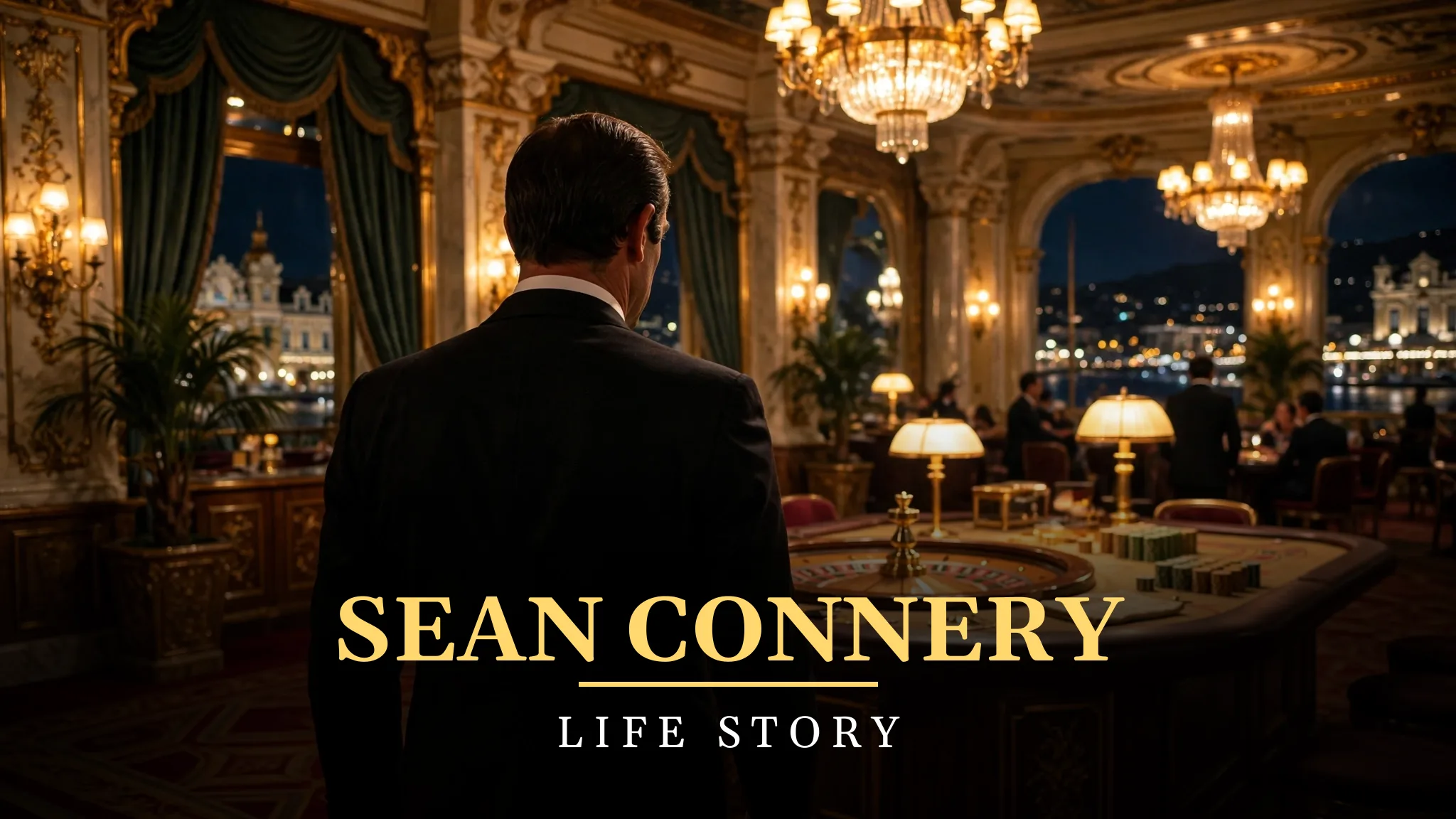
One last memory: the image of him in a black tuxedo, holding a pistol, standing in front of a casino in Monte Carlo, with a smile that is both cool and warm, and that is unforgettable. That image is iconic, and it is beautiful, and it is the image that will define him forever. He was the original James Bond, and he was Sean, and he was the greatest Bond who ever lived.
His legacy will live on through his films, through his tuxedo, and through the generations of actors he inspired, who watched his Bond and wanted to act the way he acted. That is a fitting legacy for a man who defined Bond, and who did it with a tuxedo and a charm that will never be forgotten. He is gone, but his films remain, and his name will be remembered as one of the greats.
Finally, I want to say thank you, Sean Connery, for Dr. No, for Goldfinger, and for a life lived with a tuxedo that spoke for cool. You were a great actor, and you were a great man, and the world is a better place because you were in it. Your films are still here, your legacy is still here, and your example is still here, and that is a life that mattered, and a life that will never be forgotten.
And one more thing: if you are an actor, act like Sean, because he is the actor every actor deserves to be, an actor who acts with his heart, and who makes an audience feel. Act like Sean, the way Sean Connery acted, and the world will be a better place for it, because the world needs more actors like him, who act with coolness, with toughness, and with humanity.
There is a last lesson in his life that I carry with me, and it is this: be cool, even when it is hard, because being cool is a choice, and Sean chose it, every day, in every film, and in every part of his life. That is a lesson worth remembering, and it is one I will carry with me, always, because the world needs more people like Sean Connery, who are cool, and who do it, with a tuxedo, and with a charm, that will never be forgotten.
One final thought: his Oscar for The Untouchables, won in 1987, is a testament to his talent, because he won it, for Best Supporting Actor, and that is a record that speaks for itself. He was great, as Bond, and he was great as Jim Malone, and that is a range that few actors possess, and it is a reminder that Sean was not just Bond, he was an actor, and a great one, and that is a legacy that will never be forgotten.
And if you ever doubt that a tuxedo can speak for cool, remember Sean Connery, because he did, with Dr. No, a film that made millions of people feel, and that is still watched today, by people who love Bond, and who believe, that cool matters, and that is a legacy that will last, long after his films are watched, because his charm is still here, and his influence is still here, and that is a gift that will never fade.
There is one more thing I want to say, and it is about his wife Micheline, because she loved him, and she was loyal to him, and she was a painter, and that is a beautiful thing, and it is a part of his story that shows him as a husband, not just as an actor, and that is a legacy that matters, in its own way, alongside his films and his tuxedo, because his family is his greatest legacy, and they have honoured him, by being themselves, just as he was himself.
His story also reminds me that a boy from Edinburgh can become a legend, if he has talent, determination, and a tuxedo, and that is a hopeful message for anyone who feels poor, or disadvantaged, or forgotten. Sean was poor, and he was disadvantaged, and he became one of the greatest actors in history, because he embraced who he was, and he used his talent to become great. That is a lesson worth remembering, for every poor person out there, and for every actor who wants to be heard.
I also want to mention his son Jason, because he became an actor, and he has kept Sean’s memory alive, after his death, through his acting, and that is a beautiful thing, and it is a part of his story that shows him as a father, not just as an actor, and that is a legacy that matters, in its own way, alongside his films and his tuxedo, because his family is his greatest legacy, and they have honoured him, by being themselves, just as he was himself.
And finally, I think about the fact that he died at 90, after a career, that spanned more than fifty years, and that is a reminder that a great actor can be great for a lifetime, and that we should make the most of our lives, the way Sean Connery did, acting with a charm that was a gift, and living a life that was both beautiful and remarkable, and that is a life worth living, and a life worth remembering, and I am grateful to have learned about it, and to have shared it with you.
Frequently Asked Questions
When was Sean Connery born?
Sean Connery was born on 25 August 1930 in Edinburgh, Scotland, as Thomas Sean Connery. He worked as a milkman and coffin polisher before joining the Royal Navy and becoming a bodybuilder.
What is Sean Connery most famous for?
He is most famous as the original James Bond, playing 007 in seven films from Dr. No (1962) to Never Say Never Again (1983), and for his Oscar-winning role in The Untouchables.
How many James Bond films did Sean Connery make?
He played James Bond in seven films: Dr. No, From Russia with Love, Goldfinger, Thunderball, You Only Live Twice, Diamonds Are Forever, and the unofficial Never Say Never Again.
When did Sean Connery die?
He died on 31 October 2020 in Nassau, Bahamas, at the age of 90, of respiratory failure, after a career spanning more than five decades.
What Oscar did Sean Connery win?
He won the Academy Award for Best Supporting Actor in 1987 for playing Jim Malone in The Untouchables, his only Oscar, at age 57.
What was Sean Connery’s last film?
His last film was The League of Extraordinary Gentlemen in 2003, after which he retired from acting and lived in the Bahamas with his wife Micheline.


