Shatta Wale: The Life Story Behind Ghana's Dancehall Star
In this post
- A Boy From Accra Who Loved Music
- Bandana and the First Taste of Fame
- The Rebirth as Shatta Wale and Dancehall King
- My Level, Already and the Beyonce Moment
- Controversy, the Industry and a Star Who Speaks His Mind
- Family, Business and the Man Behind the Noise
- What Shatta Wale Means for Ghanaian Music
- The Shatta Movement and the Fans Who Built a King
- The Business Behind the Noise
- My Take:
Some stars are loved for being calm. Shatta Wale is loved for being loud. He is a dancehall star from Ghana, a singer, a producer, and a personality who fills stadiums, trends online, and divides opinion like few other African artists. His fans, the Shatta Movement, follow him with a loyalty that is almost like a family. His critics argue with him, and he argues back. Through all of it, he has built one of the biggest careers in Ghanaian music, from a small start as Bandana to a global moment with Beyonce, and he has done it by being himself, loudly, all the time.
His story is a story of reinvention. He was famous, then he was forgotten, then he came back, with a new name, a new sound, and a new fire. That comeback is one of the great stories in African music, and it shows what happens when talent meets stubbornness, and when a star refuses to disappear.
A Boy From Accra Who Loved Music
Shatta Wale was born on 17 October 1984 in Accra, Ghana. His full name is Charles Nii Armah Mensah Jr., and he grew up in the capital city, a place of music, of markets, of busy streets, and of dreams. Accra gave him a sense of the world as a loud, fast place, where a young man had to shout to be heard. He learned to shout, in music, and he never stopped.
He was a musical child, drawn to singing and to performing. He sang in school, he sang at home, and he began to write his own songs as a teenager. He was not only a singer. He was a character, a young man with energy, with humour, and with a confidence that made people notice him. That confidence would become his trademark, on stage and off it.
His family background gave him a base, and his early life in Accra gave him a view of Ghanaian life that is in his songs. He heard highlife, he heard reggae, he heard dancehall from Jamaica, and he heard the music of the streets. He took those sounds and made them his own, mixing them into a style that was Ghanaian and dancehall at the same time.
He finished his schooling, and he began to look toward music as a career. The path was not clear, and the industry was hard, but he had talent, and he had a belief in himself that was stronger than doubt. That belief would carry him through the hard years that were to come, and it would bring him back when many people thought he was finished.
Bandana and the First Taste of Fame
Shatta Wale first became known under the name Bandana, in the early 2000s. As Bandana, he released the song Moko Hoo in 2004, a hit that was played across Ghana and made him a young star. The song was catchy, danceable, and full of the energy that would define his career. He was a teenager with a hit, and the future looked bright.
But fame as Bandana did not last. After the early hit, his career slowed. He released music, but the hits did not come as fast, and the industry moved on to new stars. For many young artists, that would be the end. For Shatta Wale, it was a lesson. He learned that a single hit is not a career, and that fame without a plan fades fast. He also learned that he needed to change, to grow, and to find a new way to be heard.
Those quiet years were hard. He was a former star, a young man who had tasted fame and lost it, and he had to decide what to do next. He could have given up, and many people expected him to. Instead, he worked, he wrote, he performed, and he planned a return. He studied the music scene, he listened to what audiences wanted, and he rebuilt himself, song by song, in the background, away from the spotlight.
The Bandana years taught him something important: the music industry does not wait for you. If you stop, it moves on. To come back, you have to be better, louder, and more determined than before. Shatta Wale took that lesson to heart, and when he returned, he returned as a different artist, with a different name, and with a fire that had been built in the quiet years.
The Rebirth as Shatta Wale and Dancehall King
In 2013, he returned with a new name, Shatta Wale, and a new song, Dancehall King, which became a massive hit and won him the Artiste of the Year award at the Ghana Music Awards in 2014. The comeback was complete. He was no longer Bandana, the former teen star. He was Shatta Wale, the Dancehall King, a star with a new sound, a new image, and a new following.
Dancehall King worked because it was bold, loud, and confident. It announced a star who was back, and who was not going to be ignored. The song was played in clubs, on the radio, and in the streets, and it made Shatta Wale a household name again. He followed it with more hits, and he built the Shatta Movement, a fan base that is one of the most loyal and vocal in African music.
The Shatta Movement, known as SM, is more than a fan club. It is a community, a family, a movement that follows Shatta Wale’s music, his words, and his life. His fans, known as SM fans, defend him online, fill his shows, and wear his colours. That loyalty has given him a power that few artists have. When Shatta Wale releases a song, his fans make it trend. When he performs, they fill the venue. That is a modern kind of stardom, built on connection as much as on talent.
His rebirth also showed his understanding of the new music world. He used social media, he spoke directly to fans, and he built his name through controversy as well as through music. He was not afraid to argue, to speak his mind, or to challenge the industry. That boldness made him loved by fans and debated by critics, and it kept his name in the news, year after year.
My Level, Already and the Beyonce Moment
Shatta Wale’s later career brought him to the world stage. His song My Level, released in 2018, became a hit, and it showed his skill as a dancehall artist with a global sound. The song was played across Africa and beyond, and it became an anthem for his fans, a statement of confidence and of arrival.
The biggest global moment came in 2019, when he was featured on the song Already, with Beyonce and Major Lazer, on Beyonce’s album The Lion King: The Gift. The song, which mixed Afrobeats and dancehall, was heard around the world, and it introduced Shatta Wale to audiences who had never heard Ghanaian dancehall before. To sing beside Beyonce, one of the biggest stars in the world, was a dream for a boy from Accra, and it was a proof that his music could travel.
Already was a success, and it led to new opportunities, to tours, to collaborations, and to a wider audience. Shatta Wale used that moment well. He did not treat it as a one-time thing. He treated it as a door, and he walked through it, making new music, reaching new fans, and showing the world that Ghanaian dancehall belonged on the global stage.
He has continued to release music, including albums and singles that keep his fans dancing and talking. His sound has grown, mixing dancehall with Afrobeats, with highlife, and with pop, and his live shows remain some of the biggest in Ghana. A Shatta Wale show is a spectacle, with a large crowd, with lights, with energy, and with a star who gives everything he has.
Controversy, the Industry and a Star Who Speaks His Mind
Shatta Wale is known for controversy as much as for music. He has argued with other artists, with award organisers, and with the media, and he has spoken his mind in public, often loudly. He has criticised the Ghana Music Awards, he has had public feuds with fellow stars, and he has made headlines for his words as often as for his songs. That controversy has made him a divisive figure: loved by his fans, debated by everyone else.
His fans see his outspokenness as honesty. They see a star who says what others are afraid to say, who challenges an industry that does not always treat artists fairly, and who fights for his own worth. His critics see it as noise, as a distraction from the music, and as a way of staying famous without making better songs. Both views have some truth, and Shatta Wale himself has said, in different ways, that he is a man who speaks his mind, and that he will not be silenced.
The controversies have had real costs. He has been banned from award shows, he has faced criticism in the media, and he has had public disputes that hurt relationships in the industry. He has also used those moments to build his brand, to keep his name trending, and to show his fans that he is not afraid. That strategy, controversy as publicity, is a modern one, and Shatta Wale understands it well.
Through all of it, he has kept making music. The controversies come and go, but the songs remain, and his fans keep listening. That is the test of a star: when the noise fades, does the music still matter? For Shatta Wale, the answer, for his fans at least, is yes. His songs are still played, his shows are still filled, and his name is still one of the biggest in Ghanaian music.
Family, Business and the Man Behind the Noise
Shatta Wale is a father, and he has spoken about his children with love. He keeps much of his family life private, but he shares moments of his life as a father with fans, and he speaks about the need to provide for his family and to build a future for them. That family life gives him a different kind of motivation, a reason to work hard beyond fame.
He is also a businessman, with interests beyond music, including his own record label and brand, and he has used his fame to build a business. He understands that music alone is not enough, and that a star must build something that lasts. His business work, done behind the scenes, is part of his long-term plan, and it shows a man who thinks about the future, not only about the next hit.
He has also given back to his community, through events and through support for young people in Accra. He has spoken to young artists about the need to work hard, to believe in themselves, and to not give up when the industry is hard. That advice comes from experience. He was famous, he lost it, and he came back. He knows what it means to start again, and he wants young people to know that starting again is possible.
Off stage, he is known as a warm, generous man by those who know him well, despite his public image as loud and controversial. People who work with him speak of a person who is loyal to his team, who cares for his fans, and who works hard in the studio. That private man is different from the public persona, and both are part of who he is.
What Shatta Wale Means for Ghanaian Music
Shatta Wale’s place in Ghanaian music is secure, though it is debated. He is one of the biggest dancehall stars in Africa, a former Artiste of the Year, a Beyonce collaborator, and a leader of one of the most loyal fan bases on the continent. He has shown that a Ghanaian artist can be loud, can be controversial, and can still be successful, and that a comeback is possible, even after years away from the top.
For younger artists, his example is clear. Believe in yourself. Work hard. Do not be afraid to speak. And when you fall, get up and come back stronger. Shatta Wale fell as Bandana, and he rose as Shatta Wale, and that rise is a lesson for anyone who has lost something and wants it back.
For audiences, his legacy is the music and the movement. He gave them songs they could dance to, a fan base they could belong to, and a star who spoke for them, loudly, in a world that often ignores them. That is a gift that does not fade when the music stops.
Today Shatta Wale continues to record, to perform, and to speak, with the Shatta Movement behind him and with the world listening. His career is still going, and each new song adds another chapter. The boy from Accra who became Bandana, who lost fame, and who returned as Shatta Wale, became a king, not by birth, but by voice, by work, and by a refusal to disappear.
The Shatta Movement and the Fans Who Built a King
The Shatta Movement, known as SM, is more than a fan club. It is a community, a family, a movement that follows Shatta Wale’s music, his words, and his life. His fans, known as SM fans, defend him online, fill his shows, wear his colours, and sing along to every word. That loyalty is one of the most powerful forces in Ghanaian music, and it is a large part of why Shatta Wale has stayed at the top for so long.
SM was built slowly, after his comeback in 2013. He spoke directly to fans on social media, he shared his life, he thanked them, and he treated them as partners, not only as listeners. That direct connection, in an age when stars can feel distant, made his fans feel close to him. They did not only love his songs. They loved the man behind them, a man who spoke to them, who fought for them, and who made them feel proud to be part of something.
The Movement also gives his fans an identity. To be SM is to be part of a family, to wear the colours, to know the songs, to defend the name. That identity matters, especially for young people who want to belong to something larger than themselves. Shatta Wale gives them that belonging, and they give it back to him, in loyalty that has lasted for years, through controversies, through quiet times, and through comebacks.
He has used the Movement to fill stadiums, to trend online, and to make his music heard. When Shatta Wale releases a song, his fans make it trend. When he performs, they fill the venue. That is a modern kind of stardom, built on connection as much as on talent, and Shatta Wale understands it better than most. He did not only build a career. He built a community, and that community keeps him strong.
The Business Behind the Noise
Behind the loud public image, Shatta Wale is a businessman. He has built his own record label and brand, and he has used his fame to create something that lasts beyond a single hit. He understands that music alone is not enough, and that a star must build a business, must think about the future, and must take control of his own career. That understanding comes from experience. He was famous as Bandana, he lost that fame, and he learned that a career needs more than talent. It needs a plan, and he made one.
He has also learned how to use the modern music world, with social media, with streaming, and with direct contact with fans. He speaks to his fans directly, he shares his music, he builds excitement, and he keeps his name in the conversation. That is a modern kind of stardom, built on connection as much as on talent, and Shatta Wale understands it better than most. He did not wait for the industry to promote him. He promoted himself, loudly, and he made the industry listen.
His business work also includes giving back to his community, through events and through support for young people in Accra. He has spoken to young artists about the need to work hard, to believe in themselves, and to not give up when the industry is hard. That advice comes from experience. He was famous, he lost it, and he came back. He knows what it means to start again, and he wants young people to know that starting again is possible, and that a second chance can be bigger than the first.
His rivalry with Stonebwoy is one of the most talked-about stories in Ghanaian music. The two dancehall stars have competed, argued, and pushed each other for years, and their fans have taken sides with passion. That rivalry has been fierce, and at times it has gone too far, but it has also made both men better. Competition, when it is honest, makes artists work harder, write better songs, and give better shows. Shatta Wale and Stonebwoy have done that for each other, even when they were not speaking, and Ghanaian music is stronger for it. Audiences love a rivalry, because it gives them a story, and this rivalry has given Ghanaian dancehall a story that the whole country follows.
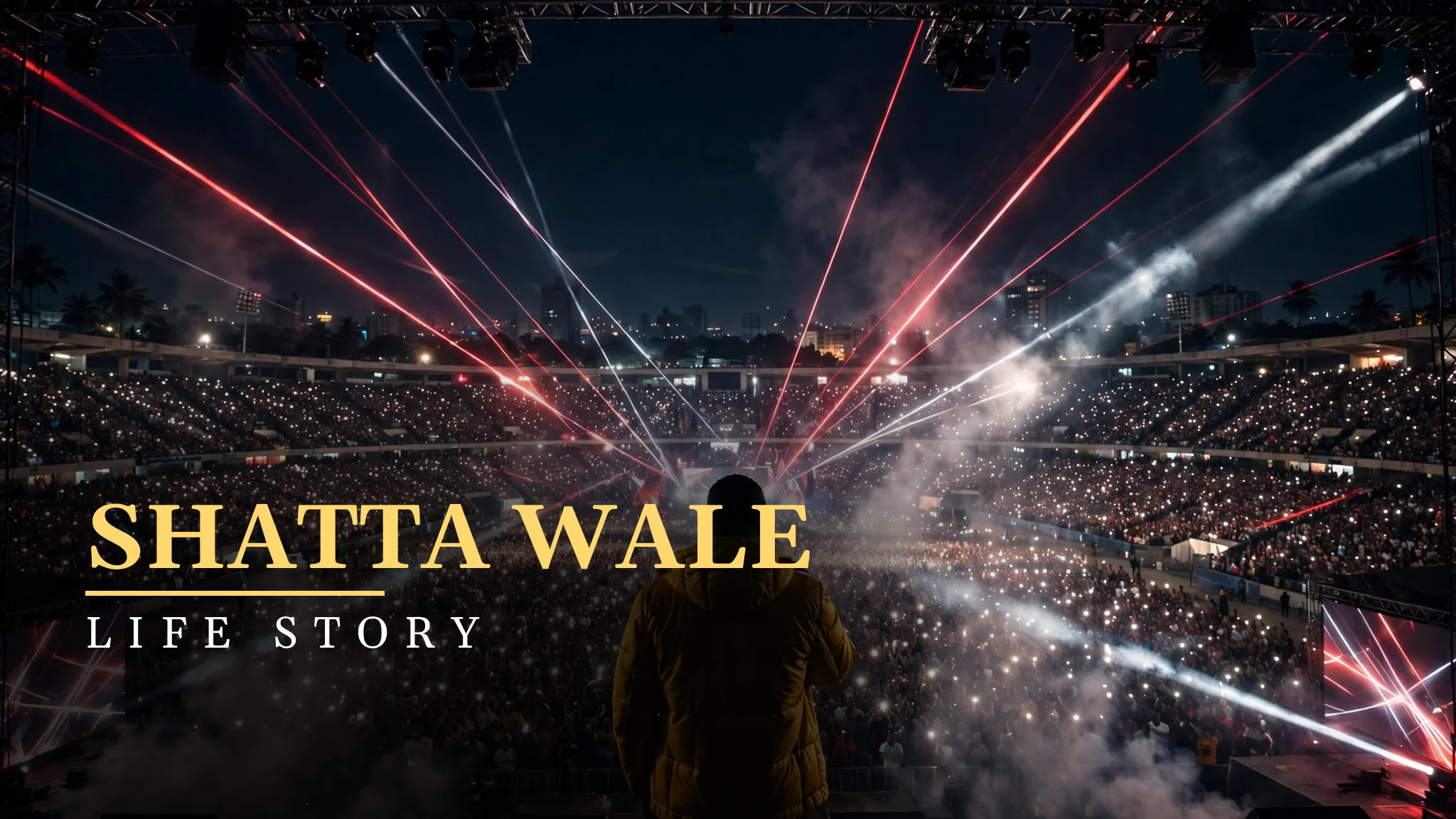
He has also performed at some of the biggest shows in Ghana, filling stadiums with fans who sing along to every word. A Shatta Wale show is a spectacle, with lights, with energy, and with a star who gives everything he has. Those shows are not only concerts. They are gatherings of the Shatta Movement, a family that comes together to celebrate its king, and that togetherness is part of why his fans stay loyal, year after year, through every controversy and every comeback.
His awards tell part of the story, but his crowds tell the rest. He won Artiste of the Year at the Ghana Music Awards in 2014, after his comeback with Dancehall King, and that award marked his return to the top. He has won other honours since, and he has been nominated many times, but the real honour is the stadium that fills when he performs, the street that sings his songs, and the fan who wears his colours with pride. Those are honours that no committee can give, and they are the ones that last, because they come from the people, not from a panel.
He has also been a pioneer in using social media to speak directly to fans, bypassing the traditional gatekeepers of radio and television. He posts, he argues, he jokes, he shares his music, and his fans respond in real time. That direct line, in an age when stars can feel distant, has kept him close to his audience, and it has kept his name in the conversation, year after year, even when he is not releasing a new song.
His songs have also become anthems for young Ghanaians who feel overlooked, who work hard, who dream of a better life, and who need a voice that says their dreams matter. Shatta Wale’s music says that, loudly, in dancehall, in Afrobeats, in every song he releases. When a young person in Accra hears Dancehall King, they hear a man who was forgotten and came back, and they feel that they, too, can come back from a hard time. That is a message that goes beyond music, and it is one that Shatta Wale carries with pride.
My Take:
I think Shatta Wale is one of the most fascinating stars in African music, because he is not easy to put in a box. He is loud, he is controversial, he is loved, he is debated, and he is, above all, a survivor. He was famous as Bandana, he lost that fame, and he came back as Shatta Wale, with a new name, a new sound, and a new fire. That comeback is one of the great stories in Ghanaian music, and I find it inspiring, because it shows that a career is not over when people say it is over. It is over only when you stop.
What I admire first is his stubbornness. Most artists who lose fame give up. They become a memory, a name people mention with sadness. Shatta Wale did not give up. He worked in the quiet years, he wrote, he performed, he planned, and he returned in 2013 with Dancehall King, a song that announced, I am back, and I am not going away. That stubbornness, that refusal to disappear, is a form of courage. It is easy to be brave when you are winning. It is harder to be brave when you have lost, and Shatta Wale was brave when he had lost.
His music is the second thing I admire. Dancehall is a hard style to do well. It needs energy, it needs rhythm, it needs a voice that can command a crowd, and Shatta Wale has all of that. His songs, from Dancehall King to My Level, are bold, danceable, and full of confidence. They make people move, and they make people feel strong. I think that is why his fans love him. When they listen to Shatta Wale, they feel like they can take on the world, like they are kings and queens too. That feeling, that confidence, is a gift, and he gives it freely.
The Beyonce moment, Already in 2019, is the part of his story that I think about most, because it shows how far his music travelled. To sing beside Beyonce, on an album inspired by The Lion King, is a dream for any African artist. It introduced Shatta Wale to audiences around the world who had never heard Ghanaian dancehall before, and it proved that his sound belonged on a global stage. I am glad he had that moment, because it was not only his moment. It was Ghana’s moment, and it was dancehall’s moment, and it showed the world that African music is not a small thing. It is a world music, and Shatta Wale helped carry it there.
If I am honest, I think his controversies are both his strength and his weakness. He speaks his mind, he argues with award organisers, with other artists, with the media, and he does it loudly. His fans see that as honesty. They see a star who says what others are afraid to say, who fights for artists, and who refuses to be silenced. His critics see it as noise, as a distraction from the music. I think both views have some truth. Speaking out can be brave, and it can also be tiring. A star who is always arguing can lose the quiet that music needs. I hope Shatta Wale finds a balance, because his music deserves to be heard without the noise around it, and his voice deserves to be used for songs as much as for arguments.
I also think about the Shatta Movement, and what it means to have fans who follow you like a family. SM fans are loyal, loud, and proud, and they defend Shatta Wale online, fill his shows, and wear his colours. That loyalty is a powerful thing, and it is also a responsibility. A star with a movement must lead it well, must give it good music, and must not lead it into anger for its own sake. I think Shatta Wale knows that, and I hope he keeps leading his movement toward music, toward joy, and toward pride, not only toward controversy.
His family life is another part of his story that moves me. He is a father, and he speaks about his children with love. He works hard to provide for them, to build a future for them, and to show them that a man can fall and rise again. That is a lesson a father can teach by living it, not only by saying it. Shatta Wale lives it, and his children, and his fans, can see it. That is a quieter kind of strength, and I respect it.
There is a lesson in his story for young artists, and it is simple: do not let one failure end you. Shatta Wale failed as Bandana, in the sense that his early fame faded. He did not let that failure define him. He changed his name, he changed his sound, he worked harder, and he came back. That is a useful lesson for anyone, in any job, who has lost something. You can start again. You can reinvent yourself. You can come back stronger, if you are willing to work and to believe in yourself. Shatta Wale proves that, and he proves it loudly.
I also think about the Beyonce moment, Already in 2019, and what it meant. To sing beside Beyonce, on an album inspired by The Lion King, is a dream for any African artist. It introduced Shatta Wale to audiences around the world who had never heard Ghanaian dancehall before, and it proved that his sound belonged on a global stage. I am glad he had that moment, because it was not only his moment. It was Ghana’s moment, and it was dancehall’s moment, and it showed the world that African music is not a small thing. It is a world music, and Shatta Wale helped carry it there.
There is a thought I keep returning to, about controversy. He speaks his mind, he argues with award organisers, with other artists, with the media, and he does it loudly. His fans see that as honesty. They see a star who says what others are afraid to say, who fights for artists, and who refuses to be silenced. His critics see it as noise, as a distraction from the music. I think both views have some truth. Speaking out can be brave, and it can also be tiring. A star who is always arguing can lose the quiet that music needs. I hope Shatta Wale finds a balance, because his music deserves to be heard without the noise around it, and his voice deserves to be used for songs as much as for arguments.
I also think about his family, and the quieter man behind the noise. He is a father, and he speaks about his children with love. He works hard to provide for them, to build a future for them, and to show them that a man can fall and rise again. That is a lesson a father can teach by living it, not only by saying it. Shatta Wale lives it, and his children, and his fans, can see it. That is a quieter kind of strength, and I respect it, even when the public image is loud.
One more lesson stays with me, about starting again. Shatta Wale failed as Bandana, in the sense that his early fame faded. He did not let that failure define him. He changed his name, he changed his sound, he worked harder, and he came back. That is a useful lesson for anyone, in any job, who has lost something. You can start again. You can reinvent yourself. You can come back stronger, if you are willing to work and to believe in yourself. Shatta Wale proves that, and he proves it loudly, in a way that is hard to ignore.
I also think about the quiet years, between Bandana and Shatta Wale, and what they must have been like. He was a former teen star, a young man who had tasted fame and lost it, and he had to decide what to do next. He could have given up, and many people expected him to. Instead, he worked, he wrote, he performed, and he planned a return. He studied the music scene, he listened to what audiences wanted, and he rebuilt himself, song by song, in the background, away from the spotlight. That patience, that willingness to work without applause, is a form of strength that people do not see, because it happens in private. I think it is the most important part of his comeback, and it is the part that young artists should study most.
There is a thought I keep returning to, about his fans. The Shatta Movement is not only a fan club. It is a family, a community that follows his music, his words, and his life. His fans defend him online, fill his shows, and wear his colours, and they do it with a loyalty that is almost like love. That loyalty is a powerful thing, and it is also a responsibility. A star with a movement must lead it well, must give it good music, and must not lead it into anger for its own sake. I think Shatta Wale knows that, and I hope he keeps leading his movement toward music, toward joy, and toward pride, not only toward controversy.
One more lesson stays with me, about his music itself. Dancehall is a hard style to do well. It needs energy, it needs rhythm, it needs a voice that can command a crowd, and Shatta Wale has all of that. His songs, from Dancehall King to My Level, are bold, danceable, and full of confidence. They make people move, and they make people feel strong. I think that is why his fans love him. When they listen to Shatta Wale, they feel like they can take on the world, like they are kings and queens too. That feeling, that confidence, is a gift, and he gives it freely, night after night.
I also think about Accra, and how it shaped him. He was born there, in a city of music, of markets, of busy streets, and of dreams, and he learned to shout to be heard. Accra gave him a sense of the world as a loud, fast place, where a young man had to be bold to be noticed. He learned that boldness early, and he has kept it ever since. Young people in Accra can look at him and see that a boy from their city can become a king, not by birth, but by voice, by work, and by a refusal to disappear. That is a hopeful message, even when it comes wrapped in noise.
One more thought stays with me, about his songs themselves. From Dancehall King to My Level to Already, his music is bold, danceable, and full of confidence. It makes people move, and it makes people feel strong. I think that is why his fans love him. Hearing Shatta Wale, they feel ready to face the world, as if they were royalty themselves. That feeling, that confidence, is a gift, and he gives it freely, night after night, song after song, even when the world is arguing about him.
I also think about the way he uses social media, and how it shapes his career. He speaks directly to fans, he argues in public, he shares his music, and he keeps his name trending. That direct line is powerful, and it is also risky, because a word spoken in anger online cannot be taken back. I think Shatta Wale knows that risk, and he accepts it, because for him, silence feels like surrender. I respect the courage, even when I wish for more quiet, because a star who speaks his mind, even when it costs him, is rarer than a star who says nothing at all.
In the end, I think Shatta Wale’s story is about voice, in every sense. He has a voice that can fill a stadium, a voice that speaks his mind, and a voice that says, I am here, and I will not disappear. The boy from Accra who became Bandana, who lost fame, and who returned as Shatta Wale, became a king, not by birth, but by voice, by work, and by a refusal to stop. I hope he keeps making music for many more years, because Ghanaian dancehall still needs his energy, and because the world still needs artists who are brave enough to be loud, to be themselves, and to come back when everyone thought they were gone.
Frequently Asked Questions
What was Shatta Wale’s first stage name?
He first became known as Bandana in the early 2000s, releasing the hit Moko Hoo in 2004. After his early fame faded, he reinvented himself as Shatta Wale in 2013.
How did Shatta Wale make his comeback?
He returned in 2013 with the song Dancehall King, which became a massive hit and won him Artiste of the Year at the Ghana Music Awards in 2014. The comeback gave him a new name, a new sound, and the Shatta Movement fan base.
What song did Shatta Wale record with Beyonce?
He was featured on Already, with Beyonce and Major Lazer, on Beyonce’s album The Lion King: The Gift in 2019. The song introduced his Ghanaian dancehall sound to a global audience.
What is the Shatta Movement?
The Shatta Movement, known as SM, is Shatta Wale’s loyal fan base and community. His fans defend him online, fill his shows, and follow his music and his life with a loyalty that is almost like a family.
Why is Shatta Wale known for controversy?
He often speaks his mind in public, arguing with award organisers, other artists, and the media, and criticising the music industry. His fans see that as honesty, while critics see it as noise that distracts from his music.
Where was Shatta Wale born?
He was born on 17 October 1984 in Accra, Ghana, as Charles Nii Armah Mensah Jr. Growing up in Accra gave him the energy, confidence and street sense that shape his dancehall style.


