Sho Madjozi: The Life Story Behind South Africa's Colourful Star
In this post
- A Childhood in Limpopo and the Sound of Home
- Writing, Television, and Finding Her Voice
- Wakanda Forever, Limpopo Champions League, and the Rise
- John Cena and the Song That Conquered the World
- Colour, Culture, and the Pride of Limpopo
- A Star Who Is Still Shining Bright
- The Writer Behind the Rapper
- The Global Citizen Stage and the World Listening
- My Take:
There are stars who are colourful, and then there is Sho Madjozi, who is colour itself. She wears bright clothes, she wears rainbow braids, she dances the xibelani, the traditional dance of the Tsonga people, and she raps in Xitsonga, a language that most of the world had never heard in a pop song before she came along. She is loud, she is joyful, she is proud, and she is impossible to forget. In a music world that often rewards sameness, she became famous by being different, by being herself, and by bringing the culture of her home in Limpopo to the whole world.
Her real name is Maya Christinah Xichavo Wegerif, and she was born in South Africa in 1992, in a small village in Limpopo, in the north-east of the country. She grew up in a place where the Tsonga culture was part of daily life, where the xibelani dance was danced at celebrations, and where the language, the music, and the colours of home were everywhere. She left that village to study and to work, she travelled, she learned, and she came back to music with a sound that was unlike anything else in South African pop. She rapped in Xitsonga, she sang about her home, and she wore the colours of her culture with pride.
Her story is a story about pride, about a young woman who refused to hide where she came from, and who made the world listen to a language it did not know. It is also a story about a song that became a global joke and a global hit, about a BET Award, and about a star who has used her fame to celebrate her people. This is the life of Sho Madjozi, South Africa’s colourful star.
A Childhood in Limpopo and the Sound of Home
Maya Christinah Xichavo Wegerif was born on 9 May 1992 in Shirley, a village near Elim in Limpopo, South Africa, and she spent her childhood in a place where the Tsonga culture was not a museum piece but a living part of daily life. Limpopo is a province in the north-east of South Africa, a place of warm sun, of bush, and of villages where families have lived for generations. Children there grow up hearing Xitsonga, the language of the Tsonga people, and they grow up hearing the music of home, the drums, the songs, and the dances that mark every celebration. Maya grew up in that world, and its colours stayed in her for the rest of her life.
As a young girl, she loved to perform. She sang, she danced, and she made up stories and songs with her friends. She was a lively, confident girl, and she liked to be seen. She listened to the music on the radio, from South Africa and from America, and she dreamed of a day when her own voice would be heard. She also loved to read and to write, and she was a good student. She went to school in Limpopo, and she did her lessons well, but her mind was often on the stage, on the songs, and on the dances of home. The xibelani, the traditional Tsonga dance in which women wear bright skirts and dance with fast, shaking movements of the hips, was one of the dances she learned as a girl, and it would become one of the signatures of her career.
Her family supported her, and that support mattered. A young person who wants to be a singer needs people who believe in her, especially when she comes from a small village far from the studios of Johannesburg. Maya’s family gave her that belief, and they gave her a home to return to after long days of trying to make music. She has spoken about her family with love, and about the values they taught her, about pride in who you are, about hard work, and about never being ashamed of where you come from. Those values have stayed with her through her whole career, and they are the reason her music sounds like home.
When she finished school, she went on to study at university, and she also travelled, spending time in other countries and learning about the world. She studied creative writing, and she learned how to tell a story in words, a skill that would help her as a rapper. She also worked in television, and she learned how to perform in front of a camera. She was still a young woman, but she was becoming an artist, and the pieces of her life, the village, the language, the dance, the writing, and the travel, were coming together into a sound that was entirely her own.
Writing, Television, and Finding Her Voice
After university, Maya Wegerif’s life took several turns before music became her full career. She worked as a writer, and she learned how to use words with care, how to tell a story in a few lines, and how to make a listener feel something. That training in writing would help her as a rapper, because rap is, at its heart, a kind of writing, a way of telling a story in rhythm. She also worked in television, where she learned how to perform, how to talk to a camera, and how to hold an audience. Those skills, writing and television, gave her a confidence that many young singers do not have.
She began to make music in Johannesburg, where the studios are, and where the music business lives. She worked with producers who were making a new South African sound, a mix of hip hop, of gqom, and of traditional rhythms, and she brought her own voice to it. She rapped in Xitsonga, and that was a bold choice. Most South African pop songs were in English or in Zulu, and Xitsonga was rarely heard on the radio. Maya did not care. She believed that her language was beautiful, and that a song in Xitsonga could be a hit, if it was sung with energy and with pride. She was right, and her early songs began to reach listeners who loved the freshness of her sound.
Her first songs were full of the energy of home. Huku, released in 2017, became one of her early hits, a song with a fast beat, a catchy hook, and a vocal performance that was both playful and proud. It was a song about Limpopo, about home, and about the joy of dancing, and it made people ask who this new singer was. She was not yet a star, but she was no longer unknown. She was a young woman from Limpopo with a bright sound, a bright look, and a growing group of people who believed in her.
She also began to build her image, and that image became as famous as her music. She wore bright, colourful clothes, she wore rainbow braids, and she danced the xibelani on stage, in a way that made the whole crowd want to dance with her. Her look was not an accident. It was a statement. It said, I am from Limpopo, I am Tsonga, I am proud, and I am here. That statement made her stand out in a music world where many singers dressed the same, and it made her unforgettable.
Wakanda Forever, Limpopo Champions League, and the Rise
In 2018, Sho Madjozi released a song that showed how big her dreams were. It was called Wakanda Forever, and it was inspired by the film Black Panther, in which the fictional African kingdom of Wakanda was a place of pride, of power, and of African excellence. The song was a celebration of African pride, and it became a favourite among young South Africans who saw in Wakanda a vision of what Africa could be. Sho Madjozi sang it with joy, and she made it her own, turning a film reference into a song about home, about Limpopo, and about being African and proud.
In the same year, she released her debut album, Limpopo Champions League, a title that said everything about her ambition. She was not only a singer from Limpopo. She was a champion from Limpopo, and her album was a league of its own. The album brought together her early songs, including Huku and Wakanda Forever, and it showed the range of her sound, from fast dance songs to slower, more thoughtful tracks. It was praised by critics, and it was loved by fans, and it made her one of the most important young singers in South Africa.
Her rise was fast, and it was built on a simple formula: a unique sound, a unique look, and a unique pride in who she was. She did not try to sound like anyone else. She sounded like herself, a young Tsonga woman from Limpopo, rapping in Xitsonga, dancing the xibelani, and wearing the colours of home. That honesty made her stand out, and it made her a star. She performed at concerts across South Africa, she appeared on television, and she was invited to sing at events where the audience knew every word of her songs.
She also performed at the Global Citizen Festival in Johannesburg, a huge concert that brought together stars from around the world to raise awareness about poverty. Performing at that festival was a sign that she was no longer only a South African star. She was a star who could stand beside the biggest names in world music, and who could show them what South African music sounded like. That performance was a proud moment for her, and for Limpopo, and for every young Tsonga person who saw her on that stage.
John Cena and the Song That Conquered the World
In 2019, Sho Madjozi released the song that made her famous around the world. It was called John Cena, and it was named after the American wrestler and actor, a man known for his strength, his catchphrase, and his meme, in which he waves his hand in front of his face and says, you can’t see me. The song was playful, fast, and full of energy, and it used the John Cena meme as a joke, a way of saying, you cannot see me, I am here, I am proud, and I am not going anywhere. It was the kind of song that made people laugh, made people dance, and made people want to share it.
John Cena became a global hit, and it did something that few South African songs had ever done. It reached audiences in America, in Europe, and across the world, and it made people who had never heard Xitsonga want to hear more of it. The song was shared on social media, it was played on the radio, and it was danced to in clubs. John Cena himself, the wrestler, heard the song, and he responded to it, posting a video of himself listening to it and praising Sho Madjozi. That moment, a global wrestling star praising a young singer from Limpopo, showed how far her music had travelled.
The success of John Cena brought her the biggest prize of her career. In 2019, she won the BET Award for Best New International Act, one of the most important awards for young artists in the world. She accepted the award in Los Angeles, and she did it in her own style, wearing bright clothes, speaking with pride about Limpopo, and thanking her family and her fans. That night, a young woman from a small village in South Africa stood on a stage in America and was named one of the best new artists in the world. It was a moment of pride for her, for her family, and for every young South African who dreams of being heard.
After John Cena, she was a global star, and she had to learn how to be one. She performed in other countries, she was interviewed by the world’s press, and she was invited to festivals where her music was celebrated. She handled that fame with a joy that was infectious. She did not seem overwhelmed. She seemed happy, and she shared that happiness with her fans. She was still the girl from Limpopo, still proud, still colourful, and still singing in Xitsonga, and the world loved her for it.
Colour, Culture, and the Pride of Limpopo
There is one part of Sho Madjozi’s story that is more important than any single song, and it is her pride in her culture. She has used her fame to celebrate the Tsonga people, their language, their dance, and their colours, in a way that few South African stars have done. She wears the xibelani skirt on stage, she dances the xibelani with joy, and she raps in Xitsonga, a language that many South Africans did not hear on the radio before she came along. She has made Xitsonga cool, and she has made Limpopo cool, and that is a gift to her people.
Her fashion is part of that celebration. She wears bright colours, rainbow braids, and clothes that mix traditional Tsonga designs with modern street style. Her look is not a costume. It is a statement, a way of saying, I am from here, I am proud of here, and I will not hide it to be accepted. That statement has inspired young people in Limpopo and across South Africa to be proud of their own cultures, to speak their own languages, and to wear their own colours. She has shown them that they do not need to copy anyone else to be a star. They can be themselves, and the world will listen.
She has also used her fame to talk about the importance of language. In South Africa, there are many languages, and some of them are heard more than others on the radio and on television. Xitsonga is one of the languages that has often been overlooked, and Sho Madjozi has changed that. She has sung in Xitsonga on the world stage, she has won a BET Award singing in Xitsonga, and she has shown that a language does not need to be big to be beautiful. It needs a singer who loves it, and she loves hers.
Her pride in Limpopo is also a pride in a place that is often forgotten. Limpopo is a province far from Johannesburg and Cape Town, and it is often overlooked in South African music. Sho Madjozi has put it on the map, and she has done it with joy. She calls herself a champion from Limpopo, and she has made the whole world know where Limpopo is. That is a legacy that goes beyond her songs, and it is a legacy that her people will remember long after the last note of John Cena fades.
A Star Who Is Still Shining Bright
Today, Sho Madjozi is still one of the most loved singers in South Africa. She is a star, a rapper, a dancer, and a cultural ambassador for Limpopo and for the Tsonga people. She has won a BET Award, she has released an album, and she has made songs that the whole world knows. She is still in her early thirties, with a long career still stretching out before her.
Her legacy is already clear in one way. She showed that a singer could be famous by being herself, by singing in her own language, by dancing her own dance, and by wearing her own colours. She showed that a young woman from a small village in Limpopo could win a BET Award, could perform on the world stage, and could make the world listen to Xitsonga. She showed that pride in who you are is not a weakness. It is a strength, and it is the strength that makes a star.
She is still rising, and her story is not finished. She may release new albums, she may work with artists from across Africa and beyond, or she may find a new sound altogether. What is certain is that she will keep singing, because singing is the thing she has done since she was a girl in Limpopo, and it is the thing she does best. The girl who danced the xibelani in her village became a woman whose voice the world loves, and the world is still listening.
The Writer Behind the Rapper
There is one more part of Sho Madjozi’s story that deserves to be told, and it is her life as a writer. Before she became a full-time singer, she studied creative writing, and she learned how to tell a story in words, how to choose the right word, and how to make a listener feel something in a few lines. That training shows in her rap. Her lyrics are not only rhymes. They are stories, jokes, and celebrations, told in rhythm, in Xitsonga and in English, with a cleverness that makes people smile. A rapper who can write well is a rapper who can say more in a song than a rapper who only shouts, and Sho Madjozi can write well.
Her writing also shows in the way she talks about her work. She speaks about Limpopo, about language, and about pride with a clarity that comes from thinking carefully about words. She does not only sing about her culture. She explains it, she celebrates it, and she invites people to learn about it. That is a writer’s gift, the gift of making a strange thing familiar, and a familiar thing new. She has used that gift to make Xitsonga familiar to people who had never heard it, and to make Limpopo familiar to people who had never been there. That is a kind of teaching, and it is a kind of art.
She has also written for other places, and she has spoken about the importance of stories, of telling your own story before someone else tells it for you. That is a lesson for any young person from a small place. Your story matters, and if you do not tell it, someone else will tell it wrong. Sho Madjozi told her own story, in her own language, in her own colours, and the world listened. That is the power of a writer who becomes a singer, and it is a power that she carries with her in every song.
The Global Citizen Stage and the World Listening
There is another moment in her career that deserves to be remembered, and it is her performance at the Global Citizen Festival in Johannesburg. That festival brought together stars from around the world, in front of a huge crowd, to raise awareness about poverty and about the need for change. Sho Madjozi performed there, and she showed the world what South African music sounded like, in Xitsonga, in bright colours, with the xibelani dance and with joy. It was a moment when a singer from Limpopo stood beside the biggest names in world music, and she did not look out of place. She looked like she belonged, because she did.
That performance mattered for more than her own career. It mattered for Limpopo, for the Tsonga people, and for every young South African who saw her on that stage and thought, she is one of us, and she is here, in front of the world. It showed that South African music is not only one sound. It is many sounds, from many places, in many languages, and each one deserves to be heard. Sho Madjozi helped the world to hear one of those sounds, and she did it with pride and with joy. That is a legacy that will last, long after the festival is forgotten.
My Take:
When I think about Sho Madjozi, the first thing that comes to my mind is colour. Not only the colours she wears, the bright clothes and the rainbow braids, but the colour of her spirit, the joy, the pride, and the energy that fills every song she makes. She is a singer who does not hide who she is. She is from Limpopo, she is Tsonga, she speaks Xitsonga, she dances the xibelani, and she wears all of that with pride. In a music world that often tells singers to be less themselves, to sound like everyone else, to dress like everyone else, she became famous by being more herself. That takes a kind of courage that I admire, and it is the heart of her story.
I admire the way she began, in a small village in Limpopo, far from the studios of Johannesburg. She did not come from a famous family. She came from a place where the Tsonga culture was part of daily life, where the language, the music, and the dance were everywhere. She left that village to study and to work, she travelled, she learned, and she came back to music with a sound that was unlike anything else. That journey, from a village to a university to the world stage, is a remarkable one, and it shows that a singer does not need to be born in a big city to become a star. She needs a voice, a culture, and the courage to share both with the world.
John Cena is the song that I keep thinking about, because it is so playful and so clever at the same time. It takes a meme, a joke about a wrestler who says you cannot see me, and it turns it into a song about pride, about being seen, and about being proud. Sho Madjozi sings it with joy, and she makes the whole world want to dance. The song became a global hit, and it did something that few South African songs had ever done. It made people who had never heard Xitsonga want to hear more of it. That is a powerful thing. A song in a language that most of the world does not speak became a hit because the feeling in it was universal. Joy does not need a translation. Pride does not need a translation. Sho Madjozi proved that.
I also think about her BET Award, and what it meant. She won Best New International Act in 2019, and she accepted it in Los Angeles, wearing bright clothes, speaking with pride about Limpopo, and thanking her family. That night, a young woman from a small village in South Africa stood on a stage in America and was named one of the best new artists in the world. I think about what that must have felt like, for her, for her family, and for every young Tsonga person who watched it. It must have felt like proof, proof that a girl from Limpopo could be a star, that Xitsonga could be heard on the world stage, and that pride in who you are is not a weakness but a strength. That proof matters, and it is one of the best things about her career.
Her pride in her culture is the part of her story that I admire most. She has used her fame to celebrate the Tsonga people, their language, their dance, and their colours, in a way that few South African stars have done. She wears the xibelani skirt on stage, she dances the xibelani with joy, and she raps in Xitsonga, and she has made all of those things cool. That is a gift to her people, and it is a gift to South Africa. In a country with many languages, some languages are heard more than others, and Xitsonga has often been overlooked. Sho Madjozi changed that. She sang in Xitsonga on the world stage, she won a BET Award singing in Xitsonga, and she showed that a language does not need to be big to be beautiful. It needs a singer who loves it, and she loves hers.
I think about her fashion, and how it works as a statement. She wears bright colours, rainbow braids, and clothes that mix traditional Tsonga designs with modern street style. Her look is not a costume. It is a way of saying, I am from here, I am proud of here, and I will not hide it to be accepted. That statement has inspired young people in Limpopo and across South Africa to be proud of their own cultures, to speak their own languages, and to wear their own colours. She has shown them that they do not need to copy anyone else to be a star. They can be themselves, and the world will listen. That is a lesson for any young person who feels that where they come from is not good enough. Where you come from is good enough. It is the source of your strength.
I also admire her work as a writer and as a television performer before she became a full-time singer. She studied creative writing, and she learned how to tell a story in words, and that training shows in her rap. Her lyrics are clever, they are playful, and they tell a story in a few lines. She also learned how to perform on television, and that training shows in her stage presence. She is not only a singer. She is a performer, a writer, and a storyteller, and those skills make her music richer. I think young singers should learn from that. Do not only learn to sing. Learn to write, learn to perform, and learn to tell a story, because those skills will make your music better.
If I have to be honest about what I find less strong in her career, I would say that she has not yet released the second great album that her fans are waiting for. Her debut album, Limpopo Champions League, was a strong statement, but it has been several years since then, and her fans want more. I understand why she has taken her time. She is an artist who cares about her work, and she does not want to rush. But I also hope she releases new music soon, because her voice is a gift, and gifts are meant to be shared. I do not blame her for the wait. I only wish the world had heard more of her singing, because when she sings, the world is a brighter place.
I also wonder sometimes whether she gets the praise she deserves outside South Africa. She won a BET Award, and John Cena was a global hit, but her name is not as widely known across the world as the names of some singers from Nigeria or America. That is not her fault. It is the fault of a music world that pays more attention to some countries than to others. South African music is strong, and Sho Madjozi is one of its brightest stars, but the world has not listened as widely as it should. I hope that changes, and I hope that more people outside South Africa discover her songs, because a good song does not need a passport. It only needs a heart to hear it.
What I learn from her life is that pride in who you are is a strength. That is a lesson I want to remember. In a world that often tells people to hide where they come from, to speak a different language, to dress a different way, Sho Madjozi shows that being yourself is the best way to be a star. She did not hide Limpopo. She celebrated it. She did not hide Xitsonga. She sang in it. She did not hide the xibelani. She danced it. And the world loved her for it. That is a lesson for singers, but it is also a lesson for anyone who feels that they are too different, too colourful, or too proud to succeed. You do not need to become less yourself to matter. You need to become more yourself, and Sho Madjozi became more herself.
I think about her future, and I feel hopeful. She is young, and the road ahead of her is long. She may release new albums, she may work with artists from across Africa and beyond, or she may find a new sound altogether. Whatever she does, I hope she keeps her joy, her pride, and her colours, because those are the things that made her a star in the first place. I hope she keeps singing in Xitsonga, keeps dancing the xibelani, and keeps showing the world what Limpopo sounds like, because the world needs that sound, and it needs singers who are proud of where they come from.
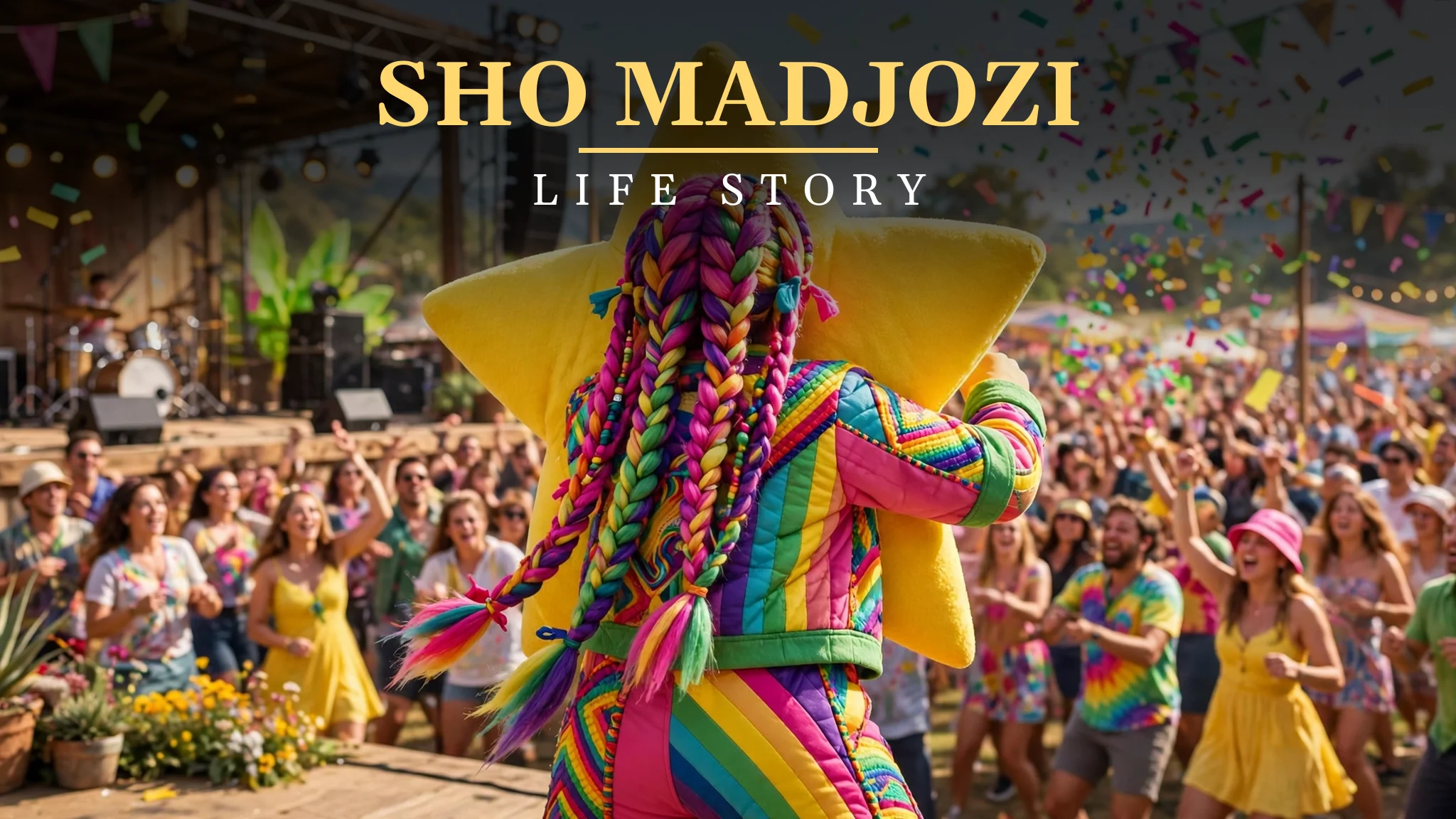
In the end, when I think of Sho Madjozi, I think of a young woman from Limpopo, standing on a stage in bright clothes, with rainbow braids, dancing the xibelani while the crowd cheers and the confetti falls. That image is the heart of her story. It is a picture of music as it should be: joyful, proud, and shared. I hope she keeps singing, and I hope she keeps that joy, because South Africa needs it, and because a colourful star, sung truly, is one of the best sounds in the world.
I will remember her for John Cena, for Huku, and for Wakanda Forever, and I will remember her for the way she sang them, with a bright voice and a proud heart. Those songs are her gift to South Africa, and they are a gift that will last. A song about pride, sung truly, does not age. It waits, and when a young person who is proud of where they come from hears it, it speaks to them again, as if it were written yesterday. That is the power of honest music, and Sho Madjozi found that power in Limpopo, and she has carried it with her ever since.
I also think about her life as a writer, and how it shaped her music. She studied creative writing, and she learned how to tell a story in a few lines, and that training shows in every song she makes. Her lyrics are clever, they are playful, and they tell a story. A rapper who can write well is a rapper who can say more in a song, and Sho Madjozi can write well. I think young singers should learn from that. Do not only learn to sing. Learn to write, learn to tell a story, and learn to choose the right word, because those skills will make your music better, and they will make your songs last longer.
There is one more thing I want to say about her, and it is about the future. She is still in her early thirties, and she still has many years of music ahead of her. I hope she releases new music soon, because her voice is a gift, and gifts are meant to be shared. I hope she keeps singing in Xitsonga, keeps dancing the xibelani, and keeps showing the world what Limpopo sounds like. The world needs that sound, and it needs singers who are proud of where they come from. Sho Madjozi is one of those singers, and I am glad she is still here, still shining, still colourful, and still proud.
I also think about the joy in her music, and how rare that joy is. Many singers make songs about sadness, about heartbreak, about anger, and those songs have their place. Sho Madjozi makes songs about joy, about dancing, about being proud, and about celebrating where you come from. That joy is not shallow. It is a deep joy, the joy of a person who knows who she is and who is glad to be who she is. I think the world needs more of that joy, especially now, when so much music is about sadness and anger. A song that makes people dance and smile is a song that heals, in its own way, and Sho Madjozi has made many of those songs.
There is one more thing I want to say, and it is about language. She sings in Xitsonga, a language that most of the world had never heard in a pop song before she came along, and she made the world love it. That is a remarkable achievement, and it is one that should not be forgotten. A language is not only a way of speaking. It is a way of seeing the world, a home for a people’s stories, jokes, and songs. When a singer takes her language to the world stage, she is not only making music. She is saying that her people’s stories matter, that their words matter, and that their home matters. Sho Madjozi said all of that, in Xitsonga, with a smile, and the world listened. I hope she keeps singing in Xitsonga, because every song she sings in it is a gift to her people, and to the world.
Frequently Asked Questions
When was Sho Madjozi born and where did she grow up?
Her real name is Maya Christinah Xichavo Wegerif, and she was born on 9 May 1992 in Shirley, a village near Elim in Limpopo, South Africa. She grew up in Limpopo, where Tsonga language, music, and dance were part of daily life.
Which song made Sho Madjozi famous around the world?
John Cena, released in 2019, was the song that made her a global star. It was named after the American wrestler, used his famous you can’t see me joke, and became a hit on social media and radio around the world.
Did Sho Madjozi win a BET Award?
Yes, she won the BET Award for Best New International Act in 2019. She accepted the award in Los Angeles, wearing bright clothes and speaking with pride about Limpopo and her Tsonga culture.
What is the xibelani dance that Sho Madjozi performs?
The xibelani is a traditional dance of the Tsonga people, in which women wear bright skirts and dance with fast, shaking movements of the hips. Sho Madjozi performs it on stage, and it has become one of the signatures of her shows.
What are Sho Madjozi’s best-known songs besides John Cena?
She is also known for Huku, an early hit from 2017, and Wakanda Forever, a song inspired by the film Black Panther. Her debut album, Limpopo Champions League, was released in 2018.
Is Sho Madjozi still making music today?
Yes, she continues to perform and record, and her songs are still loved in South Africa and beyond. She remains one of the most colourful and proud voices in South African music.


