Why Your Next Phone Will Cost More: Smartphone Sales Fall to a 14-Year Low as AI Grabs All the Chips
Global smartphone sales just had their worst quarter in 14 years, and the reason is surprising: AI data centers are buying up the memory chips your phone needs. Here is the full story in simple words.
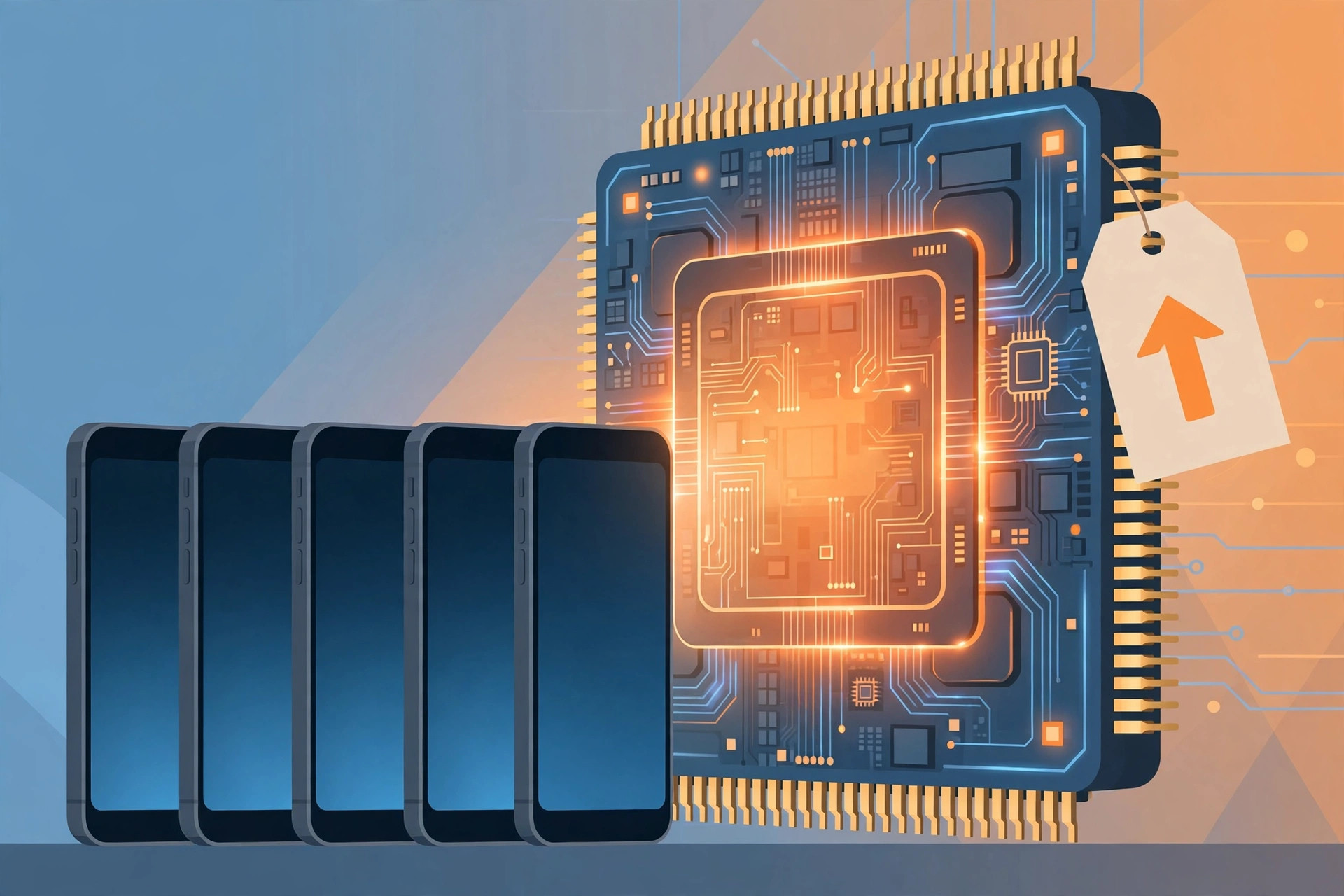
Have you noticed that new phones keep getting more expensive, while the cheap models quietly disappear from shops? That is not your imagination. The world’s smartphone business just had its worst quarter in 14 years — and the reason sits inside giant AI data centers, not inside your phone.
Here is the full story, explained step by step.
What happened
Global smartphone shipments fell 20% compared to last year in the July-to-September quarter. That makes it the weakest third quarter since 2012, according to early estimates from Counterpoint Research, a firm that tracks the phone industry. The numbers were reported by Reuters on October 12, 2026.
In simple words: phone companies shipped far fewer phones than usual, all over the world, at the same time.
Why it happened: one small part runs everything
Every smartphone needs memory chips — the parts that store your photos, apps and everything else. Your phone cannot work without them.
Now here is the twist. The same memory chips are also needed in huge amounts by AI companies. Tech giants are building enormous data centers to run tools like chatbots and AI assistants, and those data centers swallow memory chips by the truckload.
So the chip factories have more buyers fighting over the same supply. When many rich buyers want the same thing, the price goes up — and memory prices have gone up sharply.
Phone makers then had three choices, and most picked all three:
- Pay more for chips, which raises the cost of every phone.
- Raise shop prices, so buyers pay the difference.
- Ship fewer phones and protect their profit instead of chasing big sales numbers.
Who won and who lost
Even in a bad quarter, the big names held their ground:
- Samsung stayed number one with about 23% of the world market. Its shipments fell only about 3%, helped by strong demand for its Galaxy Z Fold8 series and a stable supply of parts.
- Apple reached 22% — the first time it has crossed 20% in a third quarter. Its launch was smaller than last year’s iPhone 17 season because there was no basic iPhone 18 model this time, but its share still grew.
- Xiaomi was hit the hardest. Its shipments fell by more than 30%, and its market share dropped to about 10%. The company pulled back from cheap phones and some markets to protect its profits.
- OPPO and vivo also saw shipments fall by more than 20%.
Notice the pattern: the companies that suffered most are the ones famous for budget phones. Cheap phones have thin profits, so when chip prices rise, cheap phones are the first to suffer.
What buyers are doing instead
People are not stupid, and they are changing their habits. Counterpoint analyst Shilpi Jain noted that buyers are keeping their phones longer than expected, looking at refurbished (used and repaired) phones, and when they do buy, they choose higher-value models less often instead of replacing cheap phones again and again.
That is why this story matters even if you never follow business news: it changes what is sitting in your pocket, and what the shop will offer you next year.
What this means for you
- Do not expect prices to fall soon. As long as AI companies keep buying memory at this speed, phone parts stay costly.
- Budget choice may shrink. Fewer cheap models may launch, and some may quietly get smaller storage for the same price.
- Repair and second-hand make more sense. A battery change or a good refurbished phone can save real money this year.
- If your phone works fine, waiting is a smart move — you are not alone; the whole world is doing exactly that right now.
Frequently Asked Questions
Why are smartphones getting expensive in 2026? Because memory chips — a part every phone needs — have become costly. AI data centers are buying huge amounts of the same chips, so supply is tight and prices are high for everyone.
Which company sells the most phones now? Samsung is still number one with about 23% of the global market, and Apple is second with about 22%, according to Counterpoint Research estimates.
Should I buy a phone now or wait? If your current phone works well, waiting costs you nothing and this is what most buyers are doing. If you must buy, compare refurbished models and last year’s flagships — they often give the best value right now.
Will cheap phones come back? They will return in force only when memory prices cool down. Analysts watching chip supply do not expect a quick fix, so budget buyers may feel the squeeze for a while.
Sources: Reuters (October 12, 2026), reporting preliminary estimates from Counterpoint Research. Market shares and shipment changes are estimates for the July–September 2026 quarter.