Soda Stereo: The Life Story Behind Latin Rock's Biggest Band
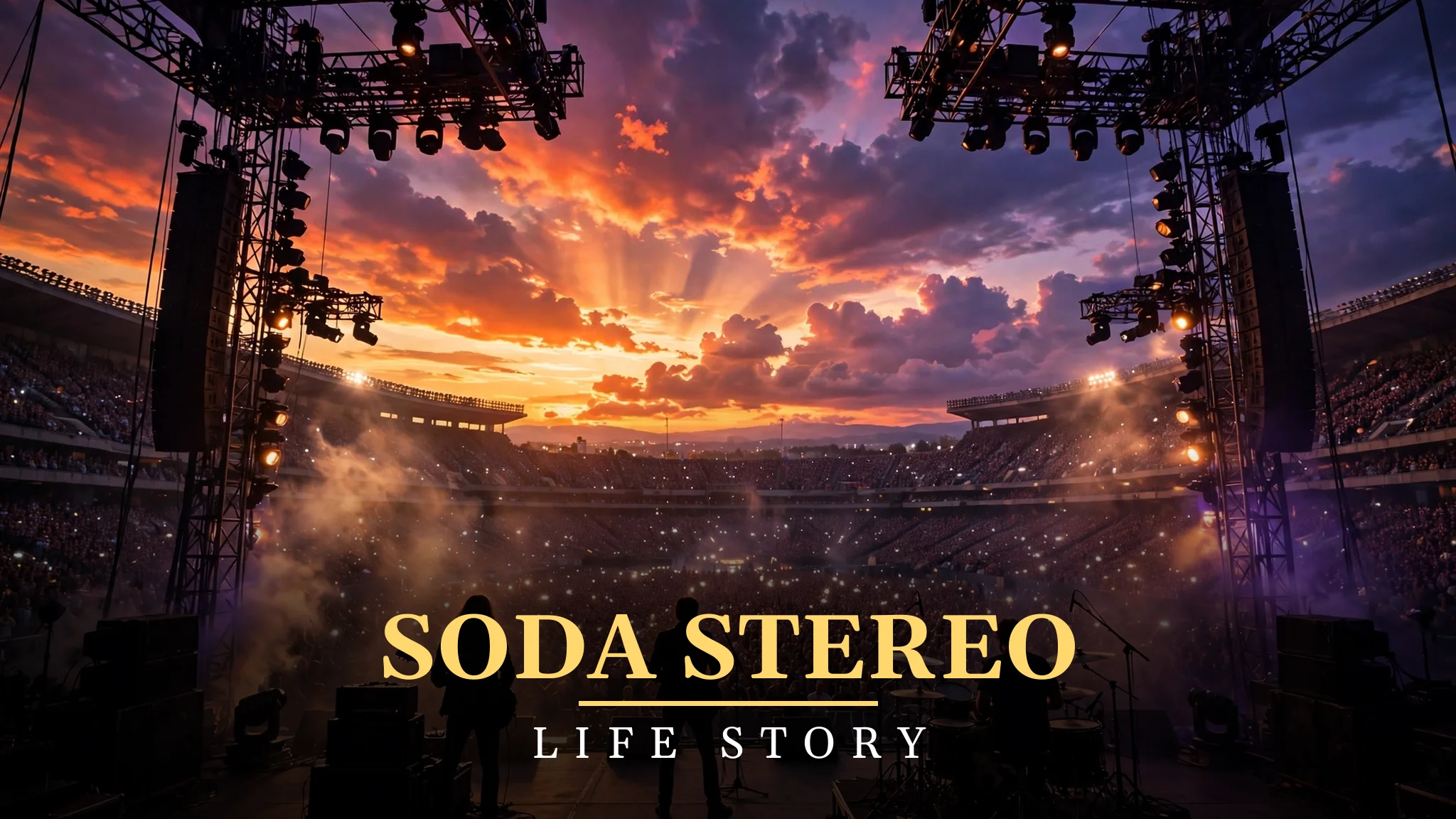
In this post
- Three Friends in Buenos Aires
- The First Albums and the Rise
- Canción Animal and the Peak Years
- The Farewell at River Plate
- The Solo Years and the Reunion
- The Silence After Cerati
- The Biggest Band in Latin Rock
- The Concerts and the Stadiums
- Soda Stereo and Latin Rock After Them
- The Songs That Define Soda Stereo
- My Take:
Soda Stereo was not just a band. It was the band that taught Latin America to rock in its own language, and it did so with a style, a sound, and a confidence that no Latin band had shown before. Three young men from Buenos Aires, Gustavo Cerati, Zeta Bosio, and Charly Alberti, started playing together in the early 1980s, and within a few years they were filling stadiums from Mexico to Chile, selling millions of records, and writing songs that became part of the lives of a whole generation. Their music was elegant, modern, and full of melody, and their concerts were events that people remembered for the rest of their lives.
The band’s story is a story of friendship, of hard work, and of a vision that was bigger than any one of its members. Cerati wrote the songs and sang them, Bosio played the bass with a steady, melodic touch, and Alberti played the drums with energy and precision, and together they made a sound that was both powerful and beautiful. They were not a loud, rough rock band. They were a stylish, intelligent band, and their music spoke to young people who wanted rock that was modern, romantic, and in Spanish.
Soda Stereo broke up in 1997, came back for a reunion tour in 2007, and left behind a legacy that no other Latin rock band has matched. This is the story of how three friends became the biggest band in Latin rock, and why their songs are still sung today, from Buenos Aires to Mexico City, by people who were not born when the band first played.
Three Friends in Buenos Aires
Soda Stereo began in Buenos Aires in 1982, when three young men who had met at university decided to form a band. Gustavo Cerati was studying advertising, and he had met Héctor Bosio, known as Zeta, and Charly Alberti, and the three shared a love of rock music. They listened to the Police, to the Cure, and to the new wave music that was coming from England and America, and they wanted to make a band that sounded modern and fresh. They rehearsed in small rooms, they played in clubs, and they worked hard to find a sound that was their own.
The early years were not easy. Buenos Aires was coming out of a dark time, the military government had fallen, and the country was finding its freedom again. Young people were hungry for new music, and Soda Stereo gave them a sound that was bright, stylish, and full of energy. The band’s first shows were small, but their music was noticed, and they began to build a following. Cerati’s voice was warm and clear, Bosio’s bass was melodic, and Alberti’s drums were tight and driving, and together they made a sound that was different from anything else in Argentine rock.
The three men were friends, and their friendship was the heart of the band. They trusted each other, they worked together, and they shared a dream of making a band that could be as good as any band in the world. That dream kept them going through the hard years, and it carried them to a success that was bigger than any of them had imagined.
The First Albums and the Rise
Soda Stereo released their first album in 1984, a record of bright, new wave rock that was a success in Argentina. Their second album, Nada personal, released in 1985, made them stars, and it included songs that became hits on the radio. Their third album, Signos, released in 1986, was the record that made them famous across Latin America. It included the songs Persiana americana and Prófugos, and it showed a band that was growing in confidence and in skill.
The band began to tour Latin America, and they were welcomed in countries where Argentine rock had never been heard before. They played in Chile, in Peru, in Colombia, and in Venezuela, and their concerts were full of young people who sang their songs word for word. They were not only a band from Argentina. They were becoming a Latin American band, a band that belonged to a whole continent. Their music was in Spanish, and it spoke about love, about the city, and about the life of young people, and audiences across the continent understood it at once.
Their success was built on hard work and on a clear vision. They made music videos, they dressed with style, and they presented themselves as a modern band, not a rough garage band. They were elegant, and their elegance became part of their appeal. Young people in Latin America saw in Soda Stereo a band that was as stylish and as modern as any band from England or America, and they were proud that it came from their own continent.
Canción Animal and the Peak Years
In 1990, Soda Stereo released Canción animal, an album that is now regarded as one of the greatest albums in the history of Latin rock. It included the song De música ligera, a simple, beautiful rock song that became their most famous work, and the song En la ciudad de la furia, a dramatic song about the city of Buenos Aires. The album showed a band at the peak of its powers, writing songs that were both popular and artistic, and playing with a confidence that came from years of touring and recording.
The band’s concerts in the early 1990s were huge events. They filled stadiums, and their shows were known for their energy, their lights, and their sound. They were a band that could make a stadium feel intimate, and they were a band that could make a small song feel grand. Their music was played on the radio across Latin America, and their records sold in millions. They were the biggest rock band on the continent, and there was no one else like them.
In 1992 they released Dynamo, an album of experimental rock that showed they were not afraid to change. It was a bold record, full of new sounds, and it proved that the band was still growing. They followed it with Sueño Stereo in 1995, an album that showed a band that was mature, confident, and still full of ideas. Their music had grown from the bright new wave of their early years into a rich, complex rock that could stand beside any music in the world.
The Farewell at River Plate
In 1997, after fifteen years together, Soda Stereo decided to break up, and they announced a farewell tour. The tour took them across Latin America, and it ended with a historic concert at the River Plate stadium in Buenos Aires, in front of tens of thousands of fans. The concert was a celebration of everything the band had achieved, and it was a sad moment, because it was the end of an era. Cerati thanked the audience with the words gracias totales, total thanks, and those words became part of Argentine culture.
The farewell was not the result of a fight or a scandal. It was the result of three men who had grown up together, who had worked together for fifteen years, and who felt that it was time to move on. They had achieved more than any Latin rock band before them, and they wanted to end on a high note, with a great concert and with the love of their fans. The farewell concert was recorded and filmed, and it became a document of a band at its best, playing its greatest songs for the last time.
The break-up left a gap in Latin rock that no other band could fill. Soda Stereo had been the band that defined a generation, and their absence was felt across the continent. Their songs continued to be played, and their albums continued to sell, but the band itself was gone, and their fans missed them.
The Solo Years and the Reunion
After the break-up, the three members went their own ways. Cerati began a solo career that produced some of the finest albums in Spanish-language rock, including Bocanada and Ahí vamos. Bosio worked as a musician and a producer, and Alberti worked in music and in business. Each of them made a life after Soda Stereo, but the band’s shadow was always there, and their fans never stopped asking for a reunion.
In 2007, ten years after the farewell, Soda Stereo came back for a reunion tour called Me Verás Volver, which means You Will See Me Return. The tour took them across Latin America and to the United States, and it was a huge success. Stadiums were full, fans sang every song, and the band played with the same energy and the same joy that had marked their early years. The reunion showed that their music had not faded, and that their fans had not forgotten them.
The reunion tour was a celebration, and it was also a farewell. The band did not stay together after the tour, and they returned to their separate lives. But the tour proved that Soda Stereo was not only a band of the 1980s and 1990s. It was a band whose music belonged to many generations, and whose songs could still fill a stadium ten years after they had said goodbye.
The Silence After Cerati
In 2010, Gustavo Cerati suffered a stroke after a concert in Caracas, and he fell into a coma that lasted for four years. He died in 2014, at the age of fifty-five, and his death was mourned across Latin America. For Soda Stereo, his death was the end of any hope of another reunion, and it was a loss that was felt deeply by his bandmates and by their fans. The band had been three friends, and one of them was gone, and the band could never be the same again.
In 2020, Bosio and Alberti toured with guest singers in a show called Gracias Totales, a tribute to Cerati and to the band’s music. The tour was a celebration of the songs, and it showed that the music of Soda Stereo could live on even without its singer. Fans came to hear the songs, to sing along, and to remember the band that had meant so much to them. The tribute was a sign that Soda Stereo’s music was bigger than any one person, and that it belonged to the people who loved it.
Cerati’s death closed the story of Soda Stereo as a band, but it did not close the story of their music. Their songs are still played, their albums are still loved, and their influence is still felt in Latin rock. The band may be gone, but the music remains, and it remains as fresh as it was when it was first played.
The Biggest Band in Latin Rock
Today, Soda Stereo is remembered as the biggest rock band in the history of Latin America, and their legacy is secure. Their songs are sung by people of all ages, their albums are regarded as classics, and their influence can be heard in the work of countless Latin musicians. They showed that rock in Spanish could be stylish, intelligent, and popular, and that a Latin American band could fill stadiums across a whole continent.
They were three friends who shared a dream, and they made that dream real. They took Argentine rock to the world, and they gave a generation of Latin Americans a soundtrack for their youth. Their music is still played at parties, at concerts, and on the radio, and it still sounds fresh. That is their legacy, and it will last as long as people keep singing De música ligera.
The Concerts and the Stadiums
Soda Stereo’s concerts were among the greatest live events in the history of Latin rock, and they are still remembered by the people who attended them. The band played in stadiums across Latin America, and their shows were known for their energy, their lights, and their sound. They were a band that could make a stadium feel intimate, and they were a band that could make a small song feel grand. Their concerts were not only performances. They were celebrations, and the audience was part of the celebration.
Their stagecraft was a part of their appeal. They used lights, they used video, and they presented themselves with a style that was modern and elegant. They were not a rough garage band. They were a professional, polished act, and their shows were as carefully planned as their records. Cerati’s voice was warm and clear, Bosio’s bass was steady and melodic, and Alberti’s drums were tight and driving, and together they made a sound that filled a stadium without losing its beauty.
Their concerts in Mexico, in Chile, in Colombia, and in Venezuela were historic events, because they were the first time many young people in those countries had seen a Latin rock band of that quality. The band’s tours were long and exhausting, but they were also joyful, and the band loved to play for new audiences. Their fans sang every word, and they danced, and they cried, and they remembered those nights for the rest of their lives.
The farewell concert at River Plate in 1997 was the greatest of all their shows, and it is still talked about today. Tens of thousands of fans came to say goodbye, and the band played its greatest songs for the last time, and the night ended with the words gracias totales. It was a perfect farewell, a concert that was both a celebration and a goodbye, and it became a legend in Argentine music.
Their reunion tour in 2007 showed that their concerts had not lost their power. Ten years had passed, but the stadiums were full, and the fans sang every word, and the band played with the same energy as before. Their concerts were a reminder that great live music does not fade, and that a band that connects with its audience can do so again and again, even after many years.
Soda Stereo and Latin Rock After Them
Soda Stereo’s influence on Latin rock is enormous, and it can be heard in the work of countless bands that came after them. They showed that a Latin American band could be stylish, intelligent, and popular, and that rock in Spanish could be as good as rock in any language. Before them, many Latin bands copied English and American rock. After them, Latin bands were proud to sing in Spanish, and to write about their own lives, in their own words. That change is their greatest legacy.
Bands in Mexico, in Colombia, in Chile, and in Argentina all learned from Soda Stereo, and they all speak of the band as a model. They learned about songwriting, about stagecraft, and about the importance of a clear vision, and they applied those lessons to their own music. Soda Stereo did not only make great records. They gave a whole generation of musicians the confidence to make their own records, in their own language, and with their own style.
Their influence also went beyond rock. Pop singers, electronic musicians, and even folk artists have spoken of Soda Stereo as an influence, and their songs have been covered by artists of many kinds. De música ligera has been sung by rock bands, by pop singers, and by acoustic artists, and each version shows a different side of the song. That is a sign of great songwriting. A great song can live in many forms, and it can speak to many kinds of musicians.
They also changed the music industry in Latin America. They showed record companies that Latin rock could sell millions of records, and that it was worth investing in. They showed promoters that Latin rock could fill stadiums, and that it was worth touring. They opened doors for other bands, and they made it easier for the bands that followed them to be heard. That is a practical legacy, and it is as important as their musical one.
Today, their albums are still studied, their concerts are still watched on video, and their songs are still sung. They are the standard against which Latin rock is measured, and their influence will last as long as Latin rock lasts. They were three friends who shared a dream, and they made that dream real, and they changed the music of a continent.
The Songs That Define Soda Stereo
A few songs define Soda Stereo, and they are the songs that every fan knows by heart. De música ligera is the first of them, a simple, beautiful rock song with a melody that is easy to sing and hard to forget. It is a song about light music, about a love that is simple and true, and it has become an anthem across Latin America. Crowds sing it at concerts, at parties, and at football stadiums, and it is the song that most people think of when they think of the band. It is short, it is perfect, and it is timeless.
En la ciudad de la furia is another defining song, a dramatic piece about the city of Buenos Aires and about the anger and the energy of urban life. It is darker and more intense than De música ligera, and it shows a different side of the band, a side that could be serious and powerful. The song’s video was famous, and its sound was bold, and it became a classic of Latin rock. It is a song about the city, and it is sung by people who love the city, even with all its troubles.
Persiana americana is a song about a woman behind a blind, about desire and about mystery, and it was one of the band’s first hits across Latin America. It is a stylish, elegant song, and it shows the band’s gift for melody and for atmosphere. Prófugos is a song about fugitives, about running away, and it is driven by a rhythm that makes people want to move. These songs, from the band’s early years, showed a group that could write hits in many styles, and that could speak to young people across a whole continent.
Canción animal, the title song of their 1990 album, is a song about instinct, about desire, and about the animal side of love, and it is one of their most powerful works. It is a rock song with a strong beat, and it shows the band at the peak of its powers, confident, bold, and full of energy. The song’s title became the name of the album, and the album became a classic, and the song is still played today.
These songs are not only hits. They are a part of the lives of millions of people, and they are sung at weddings, at parties, and in moments of joy and of sadness. They are the soundtrack of a generation, and they are the reason Soda Stereo is still loved today. A great band is defined by its songs, and Soda Stereo’s songs are among the greatest in Latin rock.
Today, new listeners discover these songs every day, and they fall in love with them as if they were new. That is the mark of great songwriting. A song that was written thirty years ago can still feel fresh, and it can still speak to a young person who was not born when it was written. Soda Stereo’s songs do that, and they will keep doing it for many years to come.
Their songs are also a record of a band that grew and changed, from the bright new wave of their early years to the rich, complex rock of their later albums. Each song is a chapter, and together they tell the story of three friends who became the biggest band in Latin rock. That story is written in their songs, and it is a story that will last.
My Take:
I think Soda Stereo matters so much because they proved that a band from Latin America could be as big, as stylish, and as good as any band in the world, and they did it in Spanish, in their own language, about their own lives. That is a very important thing. Before them, many people in Latin America thought that real rock had to come from England or America, and that rock in Spanish was a copy of the real thing. Soda Stereo showed that rock in Spanish was the real thing, and that it could be as modern, as elegant, and as powerful as anything else. I think that changed the way a whole generation thought about their own culture.
What I admire most is the friendship at the heart of the band. Cerati, Bosio, and Alberti were three friends who met at university, who shared a dream, and who worked together for fifteen years. They were not three strangers put together by a record company. They were friends, and their friendship gave the band a strength that you can hear in the music. They trusted each other, they listened to each other, and they made a sound that was bigger than any one of them. I think that is a lesson for anyone who wants to build something with others. Find people you trust, share a dream, and work together, and you can do more than you could ever do alone.
I also think about the way they presented themselves. They were stylish, they were elegant, and they cared about how they looked and how they sounded. Some people might think that style is not important, but I think it is. Soda Stereo showed young people in Latin America that they could be modern and proud of who they were at the same time. They did not have to copy a foreign band to be cool. They could be cool in their own way, in their own language, and with their own style. That is a powerful message, and it is one that still matters today.
When I think about De música ligera, I am struck by how simple it is and how perfect it is. It is a short song, with a simple melody, and it is one of the most loved rock songs in the Spanish-speaking world. I think that is a lesson about songwriting. You do not need a complicated song to move people. You need a true melody, a true feeling, and a voice that sings it honestly. Cerati understood that, and he wrote a song that has lasted for more than thirty years, and that is still sung by crowds who were not born when it was written. That is the mark of a great song.
The farewell concert in 1997 moves me, because it was a goodbye that was full of gratitude, not bitterness. The band did not break up in anger. They said thank you to their fans, they played their greatest songs, and they left on a high note. I think that is a dignified way to end something great. It is easy to keep going until the magic is gone, and it is easy to break up in a fight. It is much harder to say goodbye with grace, and to thank the people who gave you your success. Soda Stereo did that, and the words gracias totales have become part of Argentine culture because they were said with such honesty.
I also think about the reunion in 2007, and about how the fans came back. Ten years had passed, and yet the stadiums were full, and the fans sang every word. That tells me that the band’s music was not a fashion. It was a part of people’s lives, a soundtrack to their youth, and it stayed with them as they grew older. I think that is the highest praise a band can receive.I think that is the greatest compliment any band can earn.
I think about their influence, and about how many bands learned from them. They did not only make great records. They gave a generation of Latin musicians the confidence to sing in Spanish, to write about their own lives, and to be proud of their own culture. That is a great legacy, and it is one that goes beyond music. It is about identity, and about the belief that your own language and your own life are worthy of great art. Soda Stereo believed that, and they proved it.
I also think about the friendship at the heart of the band, and about how it lasted for fifteen years, through tours, through recording, and through fame. Three friends, who met at university, who shared a dream, and who worked together to make it real. I think that is a beautiful story, and it is a lesson for anyone who wants to build something with others. Find people you trust, share a dream, and work together, and you can do more than you could ever do alone.
I think about the farewell concert, and about the grace with which they said goodbye. They did not break up in anger. They thanked their fans, they played their greatest songs, and they left on a high note. I think that is a dignified way to end something great, and it is a lesson for anyone who has to say goodbye to something they love. Say thank you, do it well, and leave with your head held high. Soda Stereo did that, and their farewell is still remembered as a perfect night.
I also think about the reunion in 2007, and about how the fans came back. Ten years had passed, and yet the stadiums were full, and the fans sang every word. That tells me that their music was not a fashion. It was a part of people’s lives, a soundtrack to their youth, and it stayed with them as they grew older. That kind of lasting love is the finest reward a band can hope for. It means that your music did not just entertain people for a moment. It became part of who they are.
I think about the words gracias totales, and about how they have become part of Argentine culture. It is a simple phrase, total thanks, but it carries a deep feeling. Cerati said it with honesty, and it has lived on because it was said with honesty. I think that is a lesson about the power of simple words, spoken with feeling. You do not need a long speech to move people. You need a few true words, said at the right moment, and they will be remembered forever.
I also think about their style, and about the elegance of their music and their image. They were a stylish band, and they cared about how they looked and how they sounded, and I think that mattered. They showed young people in Latin America that they could be modern and proud of who they were at the same time. They did not have to copy a foreign band to be cool. They could be cool in their own way, in their own language, and that is a powerful message.
I think about the death of Cerati, and about how it changed the story of the band. He was the voice, and his death meant that the band could never be whole again, and that is a sad truth. But I also think about the tribute tour, and about the way Bosio and Alberti kept the music alive with guest singers. That is a beautiful thing. It says that the music belongs to the people who love it, not only to the people who made it, and that a great song can be sung by many voices and still be true.
I also think about the song De música ligera, and about how simple it is. It is a short song, with a simple melody, and it is one of the most loved rock songs in the Spanish-speaking world. I think that is a lesson about songwriting. You do not need a complicated song to move people. You need a true melody, a true feeling, and a voice that sings it honestly, and Soda Stereo had all three.
I think about the three friends, and about the dream they shared, and I feel inspired by it. They were young men from Buenos Aires, with no money and no fame, and they dreamed of making a band as good as any band in the world, and they did it. That is a hopeful story, and it is one that should inspire anyone who has a dream. Dream big, work hard, and trust your friends, and you may do more than you ever imagined.
I finish by thinking about the music itself, and about how it still sounds fresh. Their albums are still played, their songs are still sung, and their influence is still felt, and that is the closest thing to living forever that a band can hope for. Soda Stereo may be gone, but their music is still here, and it will be here as long as people keep singing. That is their legacy, and it is a great one.
I also think about their songs, and about how a few of them have become a part of people’s lives. De música ligera is sung at parties, at stadiums, and at weddings, and it is a song that everyone knows. I think that is a wonderful thing, that a simple song can become a part of so many lives, and that it can be sung by people who were not born when it was written. That is the mark of a great song, and Soda Stereo wrote several of them.
I think about En la ciudad de la furia, and about how it captures the feeling of Buenos Aires. It is a dark, dramatic song about the city, and it shows a different side of the band, a side that could be serious and powerful. I think that is a lesson about a band’s range. A great band should not only write happy songs. It should also write songs that are dark, that are angry, and that are true to the life of the city, and Soda Stereo did that.
I also think about Persiana americana, and about its elegance. It is a stylish song about desire and mystery, and it shows the band’s gift for atmosphere. I think that is a part of their appeal. They were not only a rock band. They were a stylish band, and their music had a sophistication that set them apart. Their songs were intelligent, and they were beautiful, and that combination is rare.
I finish by thinking about the songs themselves, and about how they are the real legacy of the band. The concerts are over, the tours are finished, and the band is gone, but the songs remain, and they are still sung every day. That is the closest thing to living forever that a band can hope for, and Soda Stereo earned it, song by song, over fifteen years of great music.
I also think about the three friends as young men, and about the dream they shared in a small rehearsal room in Buenos Aires. They had no money, no fame, and no guarantee that anyone would listen, but they had a vision of a band as good as any in the world, and they worked until that vision became real. I think that is a hopeful story for anyone who is starting with nothing. You do not need money or connections to begin. You need a dream, you need friends you trust, and you need the willingness to work, and Soda Stereo proved that those three things can be enough.
I also think about the fans who are discovering them now, young people who were not born when the band played, and who hear De música ligera for the first time and fall in love with it. That is a wonderful thing, that a song can find a new listener thirty years after it was written, and that it can feel fresh to them. It tells me that great music does not belong to one generation. It belongs to everyone who hears it, and Soda Stereo’s music will keep finding new listeners for a long time to come.
Frequently Asked Questions
Who were the members of Soda Stereo?
Soda Stereo had three members: Gustavo Cerati on vocals and guitar, Zeta Bosio on bass, and Charly Alberti on drums. They formed the band in Buenos Aires in 1982 and played together until 1997.
What is Soda Stereo’s most famous song?
Their most famous song is De música ligera, from the album Canción animal released in 1990. It is a simple, beautiful rock song that is still sung by crowds across Latin America today.
When did Soda Stereo break up?
Soda Stereo broke up in 1997 after a farewell tour that ended with a concert at the River Plate stadium in Buenos Aires. They reunited for a tour in 2007 called Me Verás Volver.
What does gracias totales mean for Soda Stereo?
Gracias totales means total thanks in Spanish, and it is what Gustavo Cerati said to the audience at the farewell concert in 1997. The phrase has become a famous part of Argentine culture.
Did Soda Stereo tour outside Argentina?
Yes, Soda Stereo toured across Latin America, playing in Mexico, Colombia, Venezuela, Chile, Peru, and many other countries. They were the first Argentine rock band to fill stadiums across the whole continent.
Is Soda Stereo still together?
No, Soda Stereo is not together. Gustavo Cerati died in 2014, and the band cannot reunite as it was. Zeta Bosio and Charly Alberti have toured with guest singers in a tribute show called Gracias Totales.


