Stereophonics: The Life Story Behind the Welsh Rock Band
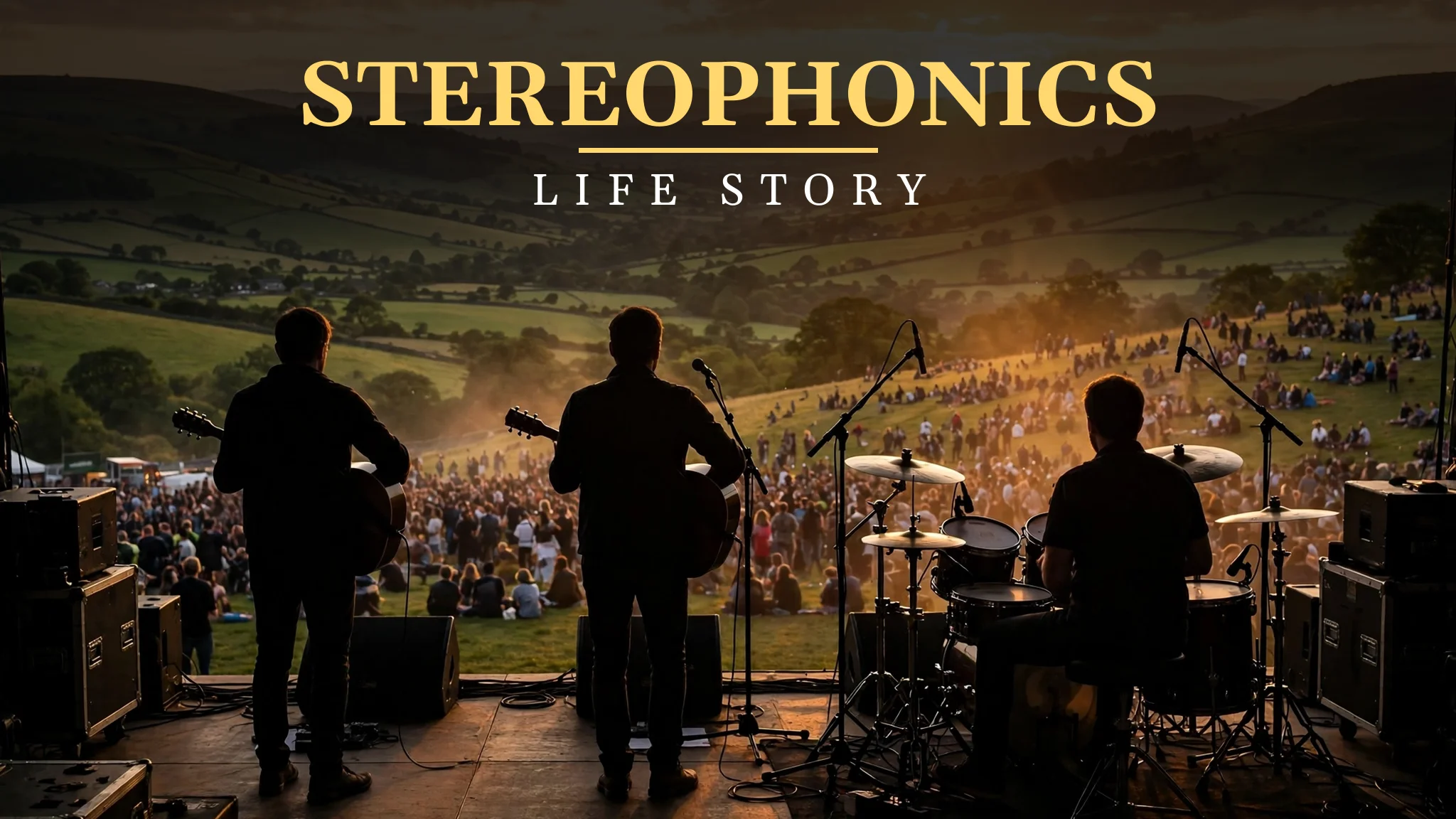
In this post
- Cwmaman Beginnings and a Mining Village
- Word Gets Around and the First Albums
- You Gotta Go There to Come Back and Dakota
- The Loss of Stuart Cable
- Graffiti on the Train and Keep the Village Alive
- Scream Above the Sounds and Kind
- A Village, a Voice and the Legacy
- Songs for Television, Football and the Valleys
- My Take:
Stereophonics are a band that have been part of British life for more than twenty-five years. They came out of a small mining village in Wales with songs about ordinary people, about love, about nights out and about the places that shape a life, and they became one of the most successful rock bands in Britain. Their music is direct and honest, and it has stayed with people because it sounds like real life.
The band was formed in Cwmaman, a village in the Cynon Valley in Wales, in 1992. The best-known members have been singer and guitarist Kelly Jones, bassist Richard Jones, and a series of drummers, including Stuart Cable, Javier Weyler and Jamie Morrison. Kelly Jones writes most of the songs, and his voice, rough and warm at the same time, has become one of the most recognisable sounds in British rock.
What makes Stereophonics worth telling is the length and the steadiness of their career. They have had eight number one albums, hit singles in three decades, and a live reputation that has kept them filling arenas and headlining festivals. They have also faced loss, including the death of their first drummer, and they have kept going. This is the story of how a band from a small Welsh village became a lasting part of British music.
Cwmaman Beginnings and a Mining Village
Stereophonics began in Cwmaman, a small village in the Cynon Valley in South Wales, in 1992. The village had been built around coal mining, and its people knew hard work and close community. Kelly Jones, Richard Jones and Stuart Cable grew up there, and they started a band that they first called Tragic Love Company. They rehearsed in small rooms, played in pubs and clubs, and dreamed of making records.
The band’s early years were shaped by the place they came from. Cwmaman was not a city with a music scene, and the band had to make their own chances. They played covers, wrote their own songs, and learned how to perform together. Kelly Jones wrote songs about the people he knew, about the village, and about the feeling of growing up in a place where everyone knew each other. That honesty became the heart of the band’s music.
In the mid-1990s the band changed their name to Stereophonics, taking the name from a brand of gramophone. They signed to V2 Records, a label run by Richard Branson, and they began to record their first album. The band’s sound was a mix of rock, folk and pop, with Kelly’s voice leading the way. They were not a fashionable band, and they did not try to be. They were a band that wrote songs about real life.
The band’s first singles, including Local Boy in the Photograph and More Life in a Tramps Vest, began to get attention from radio and from music papers. Local Boy in the Photograph was a song about a boy from the village who had died, and it showed that Kelly Jones could write about difficult subjects with care and feeling. The band were ready to make their first album, and they had a clear idea of who they were.
Word Gets Around and the First Albums
Stereophonics’ debut album, Word Gets Around, was released in August 1997 and reached the top ten in Britain. It was full of songs about the village, about youth, and about the people the band knew. The album’s singles, including A Thousand Trees and Traffic, showed a band with a strong sense of place and a gift for writing choruses that people could sing along to.
The band’s second album, Performance and Cocktails, was released in March 1999 and went to number one in Britain. It was a bigger and more confident record, with hit singles like The Bartender and the Thief, Just Looking and Pick a Part That’s New. The album showed that the band could write songs that worked on the radio and on stage, and it gave them their first number one album. Their live shows became larger, and their reputation grew quickly.
The band’s third album, Just Enough Education to Perform, was released in April 2001 and also reached number one. It featured the singles Mr. Writer, Step on My Old Size Nines and Have a Nice Day, which became one of the band’s most loved songs. Have a Nice Day was a bright and funny track that showed a lighter side of the band, and it became a hit around the world. The album also included a cover of Handbags and Gladrags, which became a hit when it was used as the theme for a television show.
By the early 2000s, Stereophonics were one of the biggest British bands. They had three number one albums, hit singles, and a live reputation that put them among the top acts in the country. They had come from a small Welsh village with songs about ordinary life, and they had made it to the top without losing the honesty that had made them start.
You Gotta Go There to Come Back and Dakota
The band’s fourth album, You Gotta Go There to Come Back, was released in June 2003 and reached number one in Britain. It was a more mature and reflective record, with songs like Maybe Tomorrow and Madame Helga. The album showed that the band were growing up, and that their songs were becoming more thoughtful. It was also a time of change in the band, as drummer Stuart Cable left the group in 2003.
The band’s fifth album, Language. Sex. Violence. Other?, was released in March 2005 and also reached number one. It featured the single Dakota, which became the band’s biggest hit, reaching number one in Britain. Dakota was a bright and uplifting song about going home, and it became a festival anthem. The album also had other hit singles, including Superman and Rewind, and it showed that the band could still write songs that connected with a wide audience.
Dakota became the song that defined this period of the band’s career. It was played everywhere, from radio to football stadiums, and it became a song that everyone knew. The band’s live shows during this period were among the best of their career, with huge crowds singing Dakota back to them. The song’s success showed that Stereophonics could still reach number one after more than a decade in music.
The band’s sixth album, Pull the Pin, was released in October 2007 and also reached number one, giving the band their sixth number one album. It featured the singles It Means Nothing and My Friends, and it showed that the band’s audience was still with them. They were now one of the most successful British bands of all time, with a run of number one albums that few groups have matched.
The Loss of Stuart Cable
In June 2010, the band faced a terrible loss when their first drummer, Stuart Cable, died at the age of forty. Cable had been a founding member of the band, and he had been a popular figure in Wales, working as a television and radio presenter after leaving the band. His death was a shock to the band and to their fans, and it was a reminder of how much the early years of the band had meant.
Cable had left Stereophonics in 2003, after a disagreement with the other members, but he remained a beloved figure. He had been the band’s drummer on their first three albums, and his playing had helped to shape their early sound. He was known for his humour, his energy, and his love of music, and his death was mourned across Wales and across Britain.
The band spoke about Cable with warmth and sadness, and they paid tribute to him in their shows. His death was a moment that made the band think about their own history, and about the friends they had started with. It was a loss that stayed with them, and it gave their later music a deeper sense of feeling. The band had lost a friend, and they carried that loss with them.
The years after Cable’s death were a time of reflection for the band. They had been together for nearly twenty years, and they had seen both success and loss. They kept making music, but they did it with a new awareness of how precious time is. The band’s later albums carried that awareness, and their songs became more reflective and more thoughtful.
Graffiti on the Train and Keep the Village Alive
Stereophonics’ eighth album, Graffiti on the Train, was released in March 2013 and reached the top three in Britain. It was a more atmospheric and cinematic record, with songs like Indian Summer and Graffiti on the Train. The album showed that the band were still willing to try new sounds, and that they were not content to repeat their earlier hits. It was welcomed by fans and critics, and it gave the band a new reason to tour.
The band’s ninth album, Keep the Village Alive, was released in September 2015 and reached number one in Britain, giving the band their seventh number one album. The title was a reference to the band’s home village of Cwmaman, and the album’s songs were about the places and people that had shaped the band. Singles like C’est La Vie and I Wanna Get Lost with You showed that the band could still write songs that connected with a wide audience.
The two albums showed a band that was comfortable with its history and still curious about the future. They were no longer the young band from Cwmaman trying to get noticed. They were an established act, and they played like one. Their live shows remained as popular as ever, and they headlined festivals and arenas across Britain and Europe.
During this period the band also worked on other projects. Kelly Jones released a solo album, and the band’s members pursued their own interests. But Stereophonics remained the centre of their work, and the band’s identity was still built around Kelly’s songs and voice. That partnership between the band and their audience had lasted for more than twenty years, and it seemed unbreakable.
Scream Above the Sounds and Kind
Stereophonics’ tenth album, Scream Above the Sounds, was released in October 2017 and reached the top two in Britain. It featured the singles All in One Night and Caught by the Wind, and it showed that the band could still write songs that worked on the radio and on stage. The album was a more direct and rock-led record, and it was welcomed by fans who had missed the band’s early energy.
The band’s eleventh album, Kind, was released in October 2019 and reached number one in Britain, giving the band their eighth number one album. It was a more acoustic and reflective record, written after Kelly Jones had been through a difficult time in his personal life. The album’s songs, including Bust This Town and Fly Like an Eagle, had a warmth and an honesty that fans loved. It was a record made from a place of feeling, and it showed that the band could still write songs that mattered.
The band’s twelfth album, Oochya!, was released in March 2022 and reached the top five in Britain. It was a return to the bright and energetic sound of the early years, with songs like Hanging on Your Hinges and Do Ya Feel My Love. The album was welcomed by fans, and it showed that the band could still make music that was fun and full of life after thirty years together.
Throughout these later years, Stereophonics have continued to tour and play festivals, and their live shows remain a big part of their identity. Their older songs, especially Dakota and Have a Nice Day, are still sung by huge crowds, and their newer songs are added alongside them. The band have become a fixture of British music, a group that people turn to when they want a joyful and honest live show.
A Village, a Voice and the Legacy
If there is one thing that defines Stereophonics more than any song, it is their connection to Cwmaman. The village gave them their first songs, their first audience, and their sense of who they are. Kelly Jones still writes about the place, and the band still play there. That connection is rare in modern music, where many bands forget where they came from, and it is why Stereophonics’ music feels honest.
The band’s influence can be heard in younger Welsh and British groups who write about ordinary life and who care about their live shows. Stereophonics showed that a band could come from a small village and reach the top, and that a band could stay there for decades by writing songs that people recognise as true. Their music has become part of the soundtrack of British life, played at parties, at football matches, and on the radio.
The band’s awards and chart positions tell part of the story, but the fuller picture is in the crowds. Stereophonics have played to audiences all over the world, and their songs have become part of many people’s lives. Dakota is played at festivals, Have a Nice Day is played on the radio, and Local Boy in the Photograph is played by fans who know every word. A band that can do all of those things has done something special.
In the end, Stereophonics are a band that kept their roots and kept their honesty for more than thirty years. They changed drummers, they changed sounds, and they changed with the times, but they never lost the feeling that had made them start. That is why they are still here, and why their music still matters.
Songs for Television, Football and the Valleys
Stereophonics’ songs have become part of everyday life in Britain in a way that few bands can match. Dakota is played at festivals, at football matches and on the radio, and it has become a song that people associate with going home and with summer. Have a Nice Day is played on the radio and at parties, and it has become a song that people associate with feeling good. When a band’s songs are used in this way, it is a sign that the music has a life of its own, and that it speaks to people who have never seen the band live.
Their music has also been used in films and on television, where its direct and honest quality fits scenes about ordinary life. Kelly Jones has written songs for other projects, and the band’s music has been used to tell stories about Wales, about working-class life, and about the places that shape people. When a band’s music is used in this way, it is a compliment to the songs, because it means the music can carry a scene on its own, without needing the band to be there.
Kelly Jones has also worked outside Stereophonics, releasing a solo album and writing songs for other artists. His interest in songwriting as a craft has shaped the band’s music, which has always been built around strong melodies and honest words. The band’s songs are not complicated, but they are carefully made, and that care is part of why they have lasted. A song that is written with attention will always be remembered, and Stereophonics’ songs were written with attention.
Their visual style has also been important. Their record sleeves, their videos and their stage designs have all been made with a sense of place, and they have often used images of Wales, of the valleys, and of the people who live there. The cover art for their albums, from the stark design of Word Gets Around to the rich imagery of Kind, has given each record its own identity. A band that cares about how its music looks as well as how it sounds is a band that respects its audience.
Stereophonics have also been recognised by the music industry in ways that go beyond chart positions. They have won Brit Awards, they have been praised by other musicians, and they have been listed among the most successful British bands of all time. Other artists have said that Stereophonics are one of the most reliable and honest groups in British rock, and that praise matters, because it comes from people who know how hard it is to keep making good music for thirty years. It is one thing to be loved by fans, and another to be respected by your peers, and Stereophonics have earned both.
Their connection with Cwmaman has also remained strong. They have played shows in the village, they have supported local causes, and they have spoken about their roots with pride. For a band that became famous around the world, that loyalty to home is rare, and it is why their fans in Wales love them so much. They did not forget where they came from, and they did not pretend to be from somewhere else. They are a Welsh band, and they are proud of it.
Their songs have also found new listeners through streaming, where a playlist can bring a band to someone who has never heard of them. A young listener today might find Dakota on a festival playlist, or Have a Nice Day on a driving playlist, and then go back to hear the whole catalogue. That is a new way for music to travel, and it has helped Stereophonics reach people in countries where they have never toured. Their music now belongs to a wider world than the small village where it began.
In the end, the wider story of Stereophonics is a story of a band whose songs became part of public life. They did not just write good songs. They wrote songs that people use to celebrate, to feel at home, and to mark happy moments. That is why their fans are so loyal, and why their music still matters. A band whose songs are sung by crowds at festivals has done something that few bands ever do, and Stereophonics have done it again and again.
Kelly Jones has also released a solo album, Only the Names Have Been Changed, which arrived in 2007. It was a quiet record, recorded with just his voice and a guitar, and it showed a different side of his songwriting, more personal and more reflective than the big anthems of Stereophonics. The songs were written about the people in his life, and they were recorded simply, without the full band. It was a brave record, because it asked fans to listen to Kelly without the noise, and many of them loved it for exactly that reason.
One of the band’s best-known songs, Maybe Tomorrow, found a new audience when it was used in the film Crash, which won the Academy Award for Best Picture in 2006. The song played over a quiet and emotional moment in the film, and it showed that Kelly’s writing could work far beyond the concert hall. When a song is used in a film like that, it is a compliment to the writing, because it means the music can carry a scene on its own, without needing the band to be there.
In April 2025 the band released their thirteenth album, Make ‘em Laugh, Make ‘em Cry, Make ‘em Wait, which became their eighth number one album in Britain. The record was made quickly, with the band recording live in the studio, and it had the direct and honest sound that fans love. They toured the album in arenas and at festivals, and their audiences included both old fans who had followed them since the start and young listeners who had found them through streaming. To still be reaching number one after nearly thirty years is a rare achievement.
My Take:
When I think about Stereophonics, the first thing I feel is warmth. I have listened to a lot of rock music that is clever or angry, and I enjoy that, but I also love music that feels like home. Stereophonics make music that feels like home, because their songs are about ordinary people, ordinary places, and ordinary feelings. I think that is a gift, and I think it is why their music has lasted so long. People do not just hear their songs. They recognise themselves in them.
I also admire Kelly Jones as a songwriter, because he writes about real life in a direct and honest way. I think many songwriters try to be clever or poetic, but Kelly writes simply, and that simplicity is his strength. When he writes about a boy in a photograph, about a night out, or about going home, I believe him, because the words feel true. I think that is why Stereophonics’ songs connect with so many people. They are not trying to impress you. They are trying to tell you something true.
There is something I find moving about Dakota. I first heard it as a song about going home, and I still think it is one of the best British singles of the 2000s. It is bright, it is uplifting, and it makes you want to sing along, but it also has a sadness underneath it, a feeling that home is not quite the same as it was. I think that mix of joy and sadness is what makes the song special, and it is what makes Stereophonics special. They understand that life is both happy and sad at the same time.
I also think about Cwmaman, and how much it must have meant to the band to come from a small mining village. I think it is easy to start a band in London, where everyone is watching, but it is harder to start in a small village and still believe you can reach the top. Stereophonics believed, and they proved that a band can come from anywhere. That matters to me, because it tells young people in ordinary towns that their dreams are not silly.
What I find hardest in their story is the death of Stuart Cable. I think about how sad it must have been for the band to lose a friend they had started with, a man who had played on their first albums and shared their early dreams. I imagine Kelly and Richard thinking about the early days in Cwmaman, about the rehearsals and the small shows, and feeling the loss of someone who had been there from the start. I think that loss is in their later music, and it gives their songs a deeper feeling.
I also admire the way the band have stayed together for so long. I think it is easy to be in a band for a few years, when everything is new and exciting, but it is much harder to stay together for thirty years, through changes in the music business and changes in your own life. Stereophonics have done that, and I think it is because they enjoy each other’s company and they enjoy playing together. That enjoyment comes through in their music, and I think it is why their fans have stayed loyal.
The album Kind is the part of their story I keep coming back to. I think it was a brave record, because it was written after a difficult time, and it did not hide from the pain of that. I think many artists would have made a record that pretended everything was fine, but Kelly wrote about the hurt, and the band played it with warmth. I respect that honesty, because it turns a private pain into something that helps other people who are going through the same thing.
I also think about the band’s eight number one albums, and what that means. I think it is easy to have one number one album, but it is very hard to have eight, across three decades. It means that the band have kept their audience, kept writing songs that mattered, and kept working hard for a very long time. I think that is a remarkable achievement, and it is one that few bands have matched. It shows that Stereophonics are not just a band of one era. They are a band for many eras.
There is a lesson in Stereophonics for anyone who makes something creative. The lesson is that honesty lasts longer than fashion. A band that writes about real life, in simple words, will still be listened to when the fashionable bands have been forgotten. I think many young musicians try to follow the latest trend, but Stereophonics show that the best thing you can do is write about what you know, in your own voice, and trust that people will listen. Their fans did, and they still do.
I also feel a little sad that the early days of the band are gone, because those first years in Cwmaman must have been special. There is a kind of closeness in a small village band that you cannot get when you are famous, and I think Stereophonics lost some of that as they grew. But they gained something else, which is the feeling of a huge crowd singing their songs back to them, and I think that is a fair trade. A band cannot stay small forever, and Stereophonics grew in the right way, by keeping their roots even as the rooms got bigger.
When I listen to their later work, I hear a band that is comfortable with itself. Oochya! is not trying to repeat Dakota, and I like that. It sounds like a band that has been through a lot and is still enjoying playing together. I think that is a good place for any artist to reach, where you are no longer trying to prove yourself and you are just making the music you want to make. I hope they keep that feeling, because it is the feeling that makes their best work.
In the end, I think Stereophonics teach us that a long career is built from honesty, hard work and a connection to home. They were honest about their feelings, they worked hard for more than thirty years, and they never forgot where they came from. None of those choices alone made them famous, but together they built a band that lasted. I would tell a young musician to look at Stereophonics and see that success is not one big moment. It is many small choices, made with care, over many years.
I will remember Stereophonics as a band that made me feel at home. Their music has a warmth to it, a sense that life is better when it is shared with the people you love, and I think that is a wonderful thing to give people. They made a song about going home that became an anthem for a whole country, and they kept making music that was worth listening to for more than thirty years. For that alone, they deserve to be remembered as one of the best British bands of their time.
I also think about the way Dakota is played at festivals, and how much that must mean to the band. I imagine standing on a stage, hearing the first notes of Dakota, and watching thousands of people stand up and sing along. It must feel strange to write a song about going home and then hear it sung by a whole field, and I think it must also feel wonderful. That is the moment when a song stops belonging to the band and starts belonging to everyone.
I also admire Kelly Jones as a solo artist, because I think it shows how much he cares about songwriting. I remember hearing his solo work and feeling the same warmth I felt in Stereophonics, but in a quieter and more personal way. That is a sign of a great songwriter, that he can write for a band and for himself, and both kinds of songs work. I think Kelly must feel proud when he hears his songs sung by crowds, because it means the songs have a life of their own.
There is something I find hopeful about the band’s connection with Cwmaman, because it shows that they have not forgotten where they came from. I think about a band that became famous around the world and still plays shows in a small Welsh village, and I find that very moving. It tells me that success does not have to change you, and that you can stay loyal to your home even when the world is watching. I think that is a lesson for any young band.
I also think about the band’s later albums, and how they have kept changing their sound. I think about Kind, and how acoustic and reflective it is, and I think it must have been a risk to make a record like that after the loud early albums. But the band took the risk, and their fans followed them. I think that is because the fans trust the band, and that trust was earned over many years of honest work.
What I find most impressive about their story is the way they have stayed together for more than thirty years. I think it is easy to be in a band for a few years, when everything is new and exciting, but it is much harder to stay together for decades, through loss, through changes in the music business, and through changes in your own life. Stereophonics have done that, and I think it is because they enjoy each other’s company and they enjoy playing together. That enjoyment comes through in their music.
I also think about the younger bands who have been influenced by Stereophonics, and how much that must mean to them. I imagine a young songwriter in Wales hearing Stereophonics for the first time and thinking that a band can write about ordinary life and still be famous. That is a powerful idea, and I think Stereophonics have given it to a whole generation of musicians. Their influence is not just in their songs. It is in the permission they give other bands to be honest.
There is a sadness in the way rock music has changed, where guitar bands are no longer at the centre of the charts in the way they once were. I think Stereophonics have felt that change, because they came from a time when rock bands could be the biggest acts in the country. But I also think their best songs survive that change, because a great song works even when the fashion changes. Dakota works today, and it will work in ten years, because it was written with warmth and with heart.
In the end, I think the wider story of Stereophonics is a story of songs that became part of public life. They wrote music that people use to celebrate, to feel at home, and to mark happy moments, and that is a wonderful thing for a band to give people. I would tell a young musician to look at Stereophonics and see that a song can be more than just a record. It can be a part of people’s lives, and that is the highest compliment a band can receive.
I also think about Kelly Jones’s solo album, and how much courage it must have taken to record it alone. I imagine a singer, used to the noise of a full band, sitting in a room with just a guitar and singing songs about the people he loves. It must feel very exposed, and it must also feel honest, because there is nothing to hide behind. I think that record made Stereophonics better too, because it reminded Kelly that a song can work with nothing but a voice and a guitar.
I also admire the way Maybe Tomorrow was used in the film Crash, because I think it shows how strong the writing is. I remember hearing it in the film and feeling the same lift I felt when I first heard it on record, even though the setting was different. That is a sign of a great song, that it can be used in a film and still work. I think Kelly must feel proud when he hears his songs in films, because it means the songs have a life of their own.
There is something I find hopeful about the band’s thirteenth album reaching number one in 2025, because it shows that a band can still matter after nearly thirty years. I think about a group from a small Welsh village, still making records that reach the top of the charts, and I find that very moving. It tells me that great songs do not age, and that they can find new listeners in every generation. I would tell a young musician to listen to that album and notice how honesty lasts. Stereophonics stayed honest, and their music is better for it.
Frequently Asked Questions
Where are Stereophonics from and when did they form?
Stereophonics were formed in Cwmaman, a village in the Cynon Valley in South Wales, in 1992. The band’s founding members were Kelly Jones, Richard Jones and Stuart Cable, who had grown up together in the village.
What are Stereophonics’ biggest songs?
Their best-known songs include Dakota, Have a Nice Day, Maybe Tomorrow, Just Looking and The Bartender and the Thief. Dakota became their biggest hit, reaching number one in Britain in 2005.
How many number one albums have Stereophonics had?
Stereophonics have had eight number one albums in Britain, from Performance and Cocktails in 1999 through to Kind in 2019. Their run of chart-topping albums spans three decades.
Who is the lead singer of Stereophonics?
Kelly Jones is the lead singer and guitarist of Stereophonics and has been since the band began. He writes most of the band’s songs and his voice has become one of the most recognisable sounds in British rock.
What happened to drummer Stuart Cable?
Stuart Cable, the band’s first drummer, left Stereophonics in 2003 and later worked as a television and radio presenter. He died in June 2010 at the age of forty, and the band paid tribute to him in their shows.
Are Stereophonics still together?
Yes, Stereophonics are still together and continue to tour and record. They released Oochya! in 2022 and continue to headline festivals and arenas, playing both their early songs and their newer material.


