Sushant Singh Rajput: The Life Story Behind the Tragic Star
In this post
- A Patna Childhood and a Love of the Stars
- Engineering, Dance, and the Decision to Act
- Pavitra Rishta and Television Stardom
- Kai Po Che, Shuddh Desi Romance, and the Film Debut
- PK, MS Dhoni, and the Biggest Roles
- Kedarnath, Chhichhore, and the Final Films
- The Death, the Conversation, and the Legacy
- Sisters, Family, and the Man Today in Memory
- Dil Bechara and the Farewell Film
- The Conversation About Mental Health
- My Take:
Sushant Singh Rajput was born on 21 January 1986 in Patna, Bihar, into a middle-class family, and he grew up as the youngest of five children, with four elder sisters. His father, Krishna Kishore Singh, was a government officer, and his mother, Usha Singh, was a homemaker. Sushant was a bright, curious boy who loved science, who was fascinated by the stars, and who dreamed of becoming an astronaut. He was not a child who dreamed of films; he was a child who dreamed of the universe, and that curiosity about the world is what made him special. He was a boy who asked questions, who read books, and who wanted to understand how things work.
He was a brilliant student, scoring high marks in his exams, and he cleared the AIEEE, one of India’s toughest engineering entrance exams, ranking seventh in the country. He joined the Delhi College of Engineering to study mechanical engineering, but he soon realised that his heart was not in engineering. He was drawn to dance and to theatre, and he began to take classes in both, eventually dropping out of college to pursue acting. It was a bold decision, and it surprised his family, but he was determined, and he believed in himself. That decision set him on a path that would make him one of the most loved young stars in Bollywood.
Over a short career, he acted in television, in Pavitra Rishta, and in films like Kai Po Che, Shuddh Desi Romance, PK, MS Dhoni: The Untold Story, Kedarnath, and Chhichhore. He became known for his intelligence, his curiosity, and his performances, which were natural and engaging. He died on 14 June 2020, at the age of thirty-four, and his death shocked India and the world, sparking a national conversation about mental health, about nepotism in Bollywood, and about the pressures faced by young actors. His story is about a bright boy from Patna who became a star, and whose light went out too soon, but whose legacy continues to inspire millions.
A Patna Childhood and a Love of the Stars
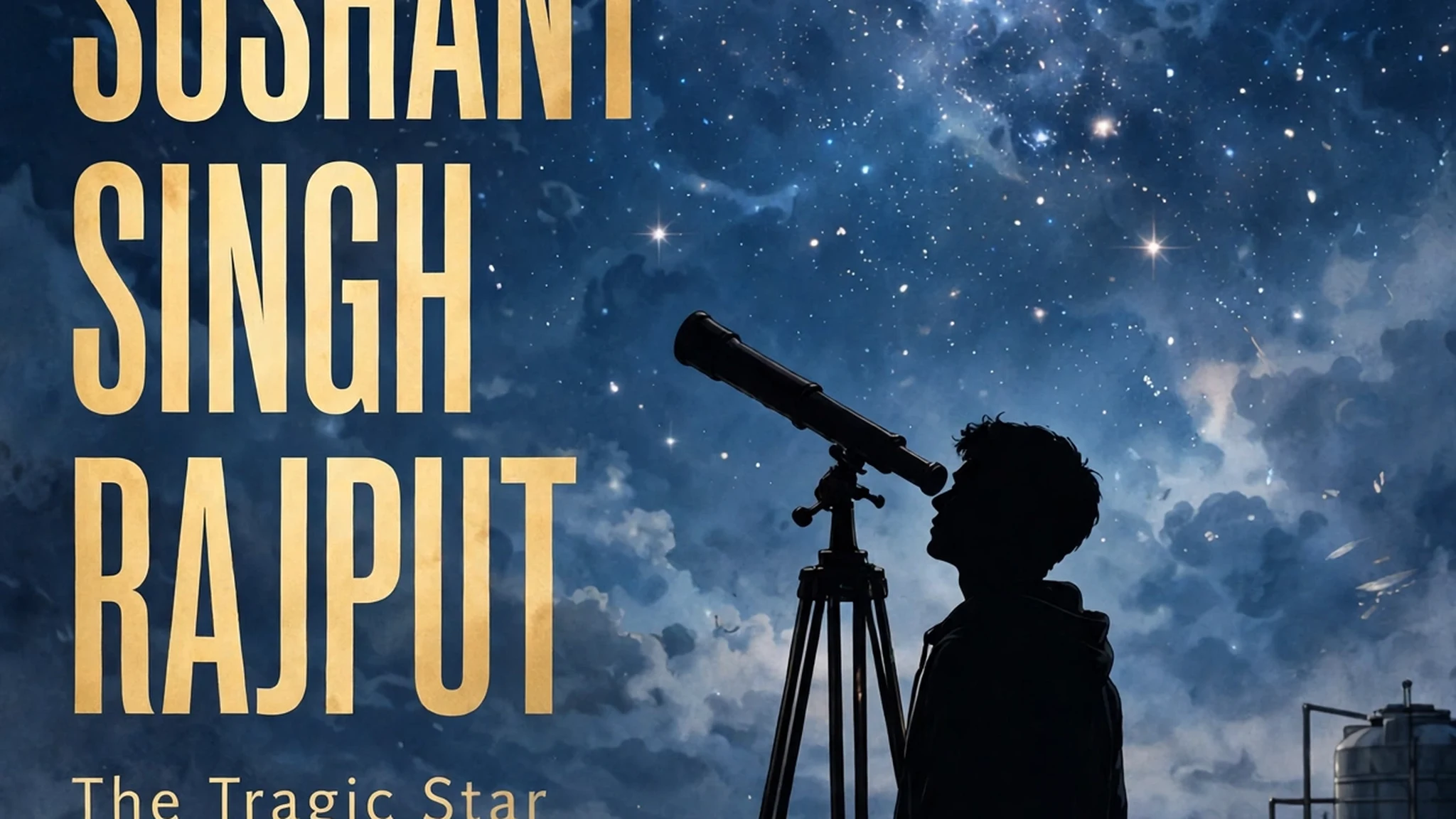
Sushant grew up in Patna, the capital of Bihar, in a home that valued education. His father worked in government service, and his mother was a homemaker who encouraged her children to study. Sushant was the youngest, and he was close to his sisters, who doted on him. He was a curious boy, always asking questions, and he loved science, especially astronomy. He would look at the stars at night and wonder about the universe, and that wonder stayed with him all his life. He later bought a telescope, and he would spend hours looking at the sky, a hobby that made him unique among Bollywood stars.
He was a brilliant student, and he won the National Olympiad in Physics, a prestigious competition. He was the kind of student who did not just memorise facts; he understood them, and he wanted to know why things work the way they do. That scientific mind is a big part of who he was, because it made him curious, analytical, and thoughtful. He did not just accept things; he questioned them, and that questioning is visible in his interviews, where he talks about science, about philosophy, and about the universe with a passion that is rare among actors.
His mother died in 2002, when he was sixteen, and her death affected him deeply. He was close to her, and her loss left a void that he carried for the rest of his life. He has spoken about how her death changed him, making him more serious and more reflective. That loss is a part of his story that is important, because it shows that even a bright, successful person can carry a deep sadness, and that sadness does not go away, even when you become famous. He loved his mother, and her memory stayed with him, in his work and in his life.
Engineering, Dance, and the Decision to Act
Sushant cleared the AIEEE, ranking seventh in the country, and he joined the Delhi College of Engineering to study mechanical engineering. It was a remarkable achievement, and it showed how intelligent he was. But he soon realised that engineering was not his passion. He was drawn to dance, and he joined Shiamak Davar’s dance classes, where he learned contemporary dance. He also joined Barry John’s theatre group, where he learned acting. He was spending more time on dance and theatre than on his studies, and he eventually dropped out of college in his third year, a decision that shocked his family but that he believed was right.
That decision was bold, because he was giving up a secure career in engineering for an uncertain one in acting. He had no connections in Bollywood, and he had no guarantee of success. But he was confident, and he believed in his talent. He moved to Mumbai, and he began to work as a background dancer, performing in films and in award shows. He danced behind stars like Hrithik Roshan, and he learned about the film industry from the ground up. That experience taught him humility, because he saw how hard the work was, and how much effort goes into every performance.
His decision to leave engineering is a part of his story that inspires many young people, because it shows that it is okay to change your path, even if you are good at something. He was good at engineering, but his heart was in acting, and he followed his heart. That is a brave choice, and it is one that many people are afraid to make. Sushant made it, and his career shows the result. He followed his passion, and his passion led him to stardom, even if that stardom was brief.
Pavitra Rishta and Television Stardom
Pavitra Rishta, which began in 2009, was a television drama on Zee TV, and Sushant played Manav Deshmukh, a kind, hardworking mechanic who falls in love with Archana, played by Ankita Lokhande. The show became one of the most popular on Indian television, and Sushant became a household name. His performance was natural, warm, and completely believable, and he won the hearts of millions of viewers who watched him every evening. He was not a film star; he was a television star, and that is a different kind of fame, one that is built on being in people’s homes every day.
What made Pavitra Rishta special was its story, which was about ordinary people, their struggles, and their love. Sushant played Manav as a real man, not as a hero, and that realism is why audiences loved him. He was not glamorous; he was ordinary, and that ordinariness made him relatable. He worked on the show for two years, and he became one of the most popular television actors in India. He won awards for his performance, and he built a fan base that would follow him when he moved to films.
His success on television gave him a platform, but he wanted more. He wanted to act in films, and he knew that television stardom does not always translate to film stardom. He left Pavitra Rishta in 2011 to pursue films, a decision that was risky, because many television actors fail in films. But he was confident, and he believed that his talent would carry him. That confidence, and that willingness to take a risk, are a big part of his story, and they show a young man who was not content to stay where he was; he wanted to grow, and he was willing to risk everything to do so.
Kai Po Che, Shuddh Desi Romance, and the Film Debut
Kai Po Che, released in 2013 and directed by Abhishek Kapoor, was Sushant’s film debut, and it was based on Chetan Bhagat’s novel The 3 Mistakes of My Life. He played Ishaan Bhatt, a young man who wants to open a cricket academy, and his performance was energetic, passionate, and completely captivating. The film was a critical and commercial success, and it established him as a promising new star. He was not a typical hero; he was a real young man, with dreams and with flaws, and audiences recognised that reality. His debut was a success, and it promised a bright future.
Shuddh Desi Romance, released in the same year and directed by Maneesh Sharma, was a romantic comedy about live-in relationships, and Sushant played Raghu, a young man who is afraid of commitment. His performance was funny, charming, and completely natural, and the film was a commercial success. It showed that he could do comedy, and that he could do it with a skill that made audiences laugh. He was becoming known as a versatile actor, one who could do drama and comedy with equal ease. That versatility is rare, and it is a big part of why directors wanted to work with him.
These two films, released in the same year, showed his range, and they established him as one of the most exciting young actors in Bollywood. He had made the transition from television to films successfully, which is a difficult transition, and he had done it with two films that could not have been more different. That is a remarkable achievement, and it is a testament to his talent and his hard work. He was a star, and his future looked bright.
PK, MS Dhoni, and the Biggest Roles
PK, released in 2014 and directed by Rajkumar Hirani, was a satirical comedy starring Aamir Khan, and Sushant played Sarfaraz, a Pakistani man who is Anushka Sharma’s love interest. His role was small, but it was memorable, and it showed that he could hold his own opposite Aamir Khan, one of the biggest stars in India. The film became the highest-grossing Indian film of its time, and Sushant’s appearance in it gave him exposure to a massive audience. It was a supporting role, but it was a significant one, because it showed that he was being noticed by the biggest directors in Bollywood.
MS Dhoni: The Untold Story, released in 2016 and directed by Neeraj Pandey, was a biographical film about Mahendra Singh Dhoni, the captain of the Indian cricket team, and Sushant played Dhoni. His performance was extraordinary, and it is now regarded as one of the finest in his career. He studied Dhoni’s mannerisms, his batting style, and his way of speaking, and he recreated them with a precision that was astonishing. The film became a huge commercial success, and it established Sushant as a leading man who could carry a big film on his own. It was his biggest role, and he made the most of it.
These two films showed his growth, because he went from a supporting role in PK to a leading role in MS Dhoni, and he handled both with skill. MS Dhoni was a turning point, because it proved that he could be a star, not just a promising newcomer. He had arrived, and his future looked even brighter. The film’s success gave him the confidence to choose more ambitious projects, and he did, with films like Kedarnath and Chhichhore, which would become his final works.
Kedarnath, Chhichhore, and the Final Films
Kedarnath, released in 2018 and directed by Abhishek Kapoor, was a romantic drama set against the 2013 floods in Uttarakhand, and Sushant played Mansoor, a Muslim porter who falls in love with a Hindu pilgrim, played by Sara Ali Khan. His performance was warm, sincere, and completely believable, and the film was a commercial success. It showed that he could do a romantic film, and that he could do it with a depth that made the story feel real. The film’s setting, the floods, was dramatic, and Sushant’s performance gave it a human face. It was a film that audiences loved, and it is now remembered as one of his finest.
Chhichhore, released in 2019 and directed by Nitesh Tiwari, was a comedy-drama about a group of college friends who reunite years later, and Sushant played Anirudh, a father who tells his son about his college days. His performance was funny, warm, and deeply moving, and the film became a huge commercial success, winning the National Film Award for Best Feature Film. It is a film about friendship, about failure, and about the importance of not giving up, and Sushant’s performance gave it a heart that audiences felt. The film’s message, that failure is not the end, is one that resonates deeply, especially now, after his death.
These two films, his final released works, show an actor who was at the peak of his powers, choosing interesting stories and giving performances that were both entertaining and meaningful. Chhichhore is particularly poignant, because it is about a young man who tries to take his own life, and a father who tells him that life is worth living. That message, delivered by Sushant, is one that his fans hold close, because it is a reminder of what he believed, and of what he wanted to say. His final films are a legacy, and they are a reminder of a talent that was lost too soon.
The Death, the Conversation, and the Legacy
Sushant Singh Rajput died on 14 June 2020, at his home in Mumbai, at the age of thirty-four. His death was reported as suicide, and it shocked India and the world. Millions of fans mourned him, and his death sparked a national conversation about mental health, about the pressures faced by young actors, and about nepotism in Bollywood. People asked why a talented, successful young man would take his own life, and that question led to discussions about the loneliness of fame, about the need for support, and about the importance of talking about mental health. His death was a tragedy, and it is a tragedy that is still being discussed, because it raised questions that India is still trying to answer.
The investigation into his death became a major news story, with the Central Bureau of Investigation and other agencies looking into the circumstances. His family, his friends, and his fans demanded justice, and the case became a subject of intense public debate. The details are complex, and the investigation is ongoing, but what is clear is that his death affected millions of people, who saw in him a young man who had achieved so much, and who had so much more to give. His death is a reminder that success does not protect you from pain, and that even a star can feel alone.
His legacy continues, through his films, through his fans, and through the conversations his death started. His film Dil Bechara, released after his death in 2020, was a tribute to him, and it was watched by millions. His fans celebrate his birthday every year, and they share his films, his interviews, and his words. He is remembered as a bright, curious, talented young man who loved the stars, and who wanted to understand the universe. His story is a sad one, but it is also an inspiring one, because it shows a boy from Patna who became a star through talent and hard work, and whose light, though brief, was bright enough to be remembered forever.
Sisters, Family, and the Man Today in Memory
Sushant was the youngest of five children, and he was close to his four elder sisters, who doted on him. After his death, his sisters have kept his memory alive, speaking about him with love and with pride, and sharing his work with his fans. They have spoken about his curiosity, his kindness, and his dreams, and they have worked to ensure that he is remembered as he was: a bright, thoughtful young man who loved science and who loved acting. Their love for him is a big part of his legacy, because it shows that behind every star there is a family, and that family’s love does not end with death.
His father, Krishna Kishore Singh, has also spoken about his son, and about the pain of losing him. He has said that Sushant was a good son, a bright student, and a talented actor, and that his loss is one that the family will carry forever. That grief is a reminder that fame does not protect a family from loss, and that the people who love a star feel his loss most deeply. The family’s pain is a part of his story, and it is a part that should be remembered with respect and with compassion, not with speculation.
Today, Sushant Singh Rajput is remembered as a bright star who went too soon, and his films are watched by new generations who discover him for the first time. His performances in Kai Po Che, MS Dhoni, and Chhichhore are studied, and his story is told as an example of talent, curiosity, and the pressures of fame. He is gone, but his work remains, and his fans keep his memory alive, celebrating his life and his art. His legacy is not just his films; it is the conversations he started about mental health, about kindness, and about the need to support young people who are struggling. That legacy is important, and it will continue to matter for years to come.
Dil Bechara and the Farewell Film
Dil Bechara, released in 2020 and directed by Mukesh Chhabra, was Sushant Singh Rajput’s final film, and it was released after his death on a streaming platform. He played Manny, a young man who is dying of cancer but who finds love and joy in the time he has left. His performance was tender, funny, and deeply moving, and the film was watched by millions as a tribute to him. It is based on John Green’s novel The Fault in Our Stars, and it tells a story about love, about loss, and about making the most of the time you have. Sushant’s performance in it is a fitting farewell, because it is about a young man who lives fully, even when he knows his time is short, and that is a message that resonates deeply with his fans.
What makes Dil Bechara special is that it was his last film, and audiences watched it knowing that he was gone. That knowledge makes every scene more poignant, because you are watching a young man who is no longer with us, playing a character who is also facing death. The film’s music, especially the song Taare Ginn, became popular, and Sushant’s dance in it is joyful, showing a side of him that is playful and full of life. It is a film that celebrates life, even as it says goodbye, and that celebration is a fitting tribute to a man who loved life, even when life was difficult.
The film’s release was a moment of collective grief, because millions of people watched it together, sharing their sadness and their love for Sushant. It was not just a film; it was a memorial, and it brought his fans together in a way that few films do. Dil Bechara will be remembered as his farewell, and as a reminder of a talent that was lost too soon, but whose final performance was one of his best. It is a film that I would recommend to anyone who wants to see him at his most tender, because it shows a side of him that is gentle, loving, and completely human.
The Conversation About Mental Health
Sushant Singh Rajput’s death started a national conversation about mental health in India, a conversation that is still going on. People began to talk openly about depression, about anxiety, and about the pressures faced by young people, especially those in the public eye. His death showed that even a successful, talented, loved person can struggle, and that struggle is not a sign of weakness. It is a sign of being human, and it is something that many people experience, but few talk about. The conversation that followed his death has encouraged many people to seek help, to talk to their friends, and to be more open about their feelings, and that is a positive legacy, even if it came from a tragedy.
What makes this conversation important is that it broke a silence. In India, mental health was often a taboo subject, something that people did not discuss. Sushant’s death made it impossible to ignore, because it was a young, successful man, and people asked why. That question led to discussions about the need for better mental health support, about the pressures of social media, and about the importance of kindness. Those discussions are still happening, and they are leading to changes, in how people think about mental health, and in how they support each other. That change is a part of his legacy, and it is one that may save lives.
His fans have also played a role in this conversation, because they have shared their own stories, they have supported each other, and they have created communities where people can talk about their struggles. That community is a testament to the impact Sushant had, because he brought people together, even after his death, and those people are helping each other. It is a reminder that a person’s influence does not end when they die; it continues through the people they touched, and through the conversations they started. Sushant’s influence continues, in the lives of his fans, and in the change he inspired.
My Take:
What I think about most when I remember Sushant Singh Rajput is his curiosity, because he was a boy who loved science, who loved the stars, and who wanted to understand the universe. He bought a telescope, he read about astronomy, and he talked about space with a passion that was rare among actors. That curiosity is a big part of who he was, and it is a reminder that an actor can be more than just an actor; he can be a thinker, a scientist, and a dreamer. Sushant was all of those things, and his curiosity made him special.
I also think MS Dhoni is his finest performance, because he studied Dhoni’s mannerisms, his batting, and his way of speaking, and he recreated them with a precision that was astonishing. He did not just imitate Dhoni; he became him, and that becoming is the mark of a great actor. The film was a huge success, and it established him as a leading man. It is a performance that I would recommend to anyone who wants to see what dedication looks like, because he prepared for months, and that preparation is visible in every scene.
His death is a part of his story that is difficult to think about, because he was only thirty-four, and he had so much more to give. His death sparked a conversation about mental health, and that conversation is important, because it reminds us that even successful people can struggle, and that we need to talk about those struggles openly. It is a reminder to check on the people around you, to ask how they are, and to listen when they tell you. Sushant’s death is a tragedy, but the conversation it started may save lives, and that is a legacy that matters.
Chhichhore is a film that I think about often, because it is about a young man who tries to take his own life, and a father who tells him that life is worth living. Sushant played that father, and he delivered a message about not giving up that is deeply moving, especially now. The film’s message, that failure is not the end, is one that his fans hold close, and it is a reminder of what he believed. It is a film that I would recommend to anyone who is struggling, because it says that your life matters, and that you should not give up, no matter how hard things get.
I think about his journey from Patna to Bollywood too, because he came from a middle-class family, he had no connections, and he became a star through talent and hard work. He cleared one of India’s toughest exams, he left engineering to pursue acting, and he made the transition from television to films successfully. That journey is inspiring, because it shows that where you come from does not determine where you can go. If you are talented and you work hard, you can achieve your dreams, as Sushant did, even if you start with nothing.
His love of dance is another part of the story that I admire, because he was a trained dancer, and he brought that grace to his performances. He danced behind stars before he became one, and that experience taught him humility. He did not start at the top; he started at the bottom, as a background dancer, and he worked his way up. That is a lesson for anyone who wants to succeed: start where you are, work hard, and do not be ashamed of small beginnings. Sushant was not ashamed; he was proud of his journey, and that pride is visible in his work.
What I would tell a young person reading his story is to notice his intelligence, not just his fame. He was a brilliant student, he loved science, and he asked questions about the universe. That intelligence made him a better actor, because he understood people, and he understood the world. If you want to be a good actor, do not just learn acting; learn about the world, as Sushant did, and your performances will be deeper, because they will be grounded in a real understanding of life.
His relationship with his sisters is also worth thinking about, because he was the youngest of five, and his sisters doted on him. After his death, they have kept his memory alive, speaking about him with love. That family bond is a reminder that behind every star there is a family, and that family’s love is the most important thing. Fame fades, but family love does not, and Sushant’s sisters show that love every day, by remembering him and by sharing his story.
I also think about his final film, Dil Bechara, because it was released after his death, and it was watched by millions as a tribute to him. The film is about a young man who is dying, and who finds love, and it is a poignant farewell. It is a film that makes audiences cry, not just because of the story, but because they know that this is Sushant’s last film, and that he will not make another. That farewell is a sad one, but it is also a beautiful one, because it shows an actor who gave his all, even in his final work.
His curiosity about the stars is a metaphor for his life, because he looked up, he dreamed big, and he reached for something greater than himself. He wanted to be an astronaut, and he became a star, in a different way. That is a beautiful irony, and it is a reminder that dreams can come true in unexpected ways. He did not become an astronaut, but he became a star, and his light, though brief, was bright enough to be seen by millions. That is a wonderful legacy, and it is one that will be remembered.
Finally, I think Sushant Singh Rajput is a reminder that we need to be kinder to each other, especially to those who seem successful. His death showed that success does not protect you from pain, and that even a star can feel alone. It is a reminder to check on your friends, to ask how they are, and to listen. If his death teaches us anything, it is that kindness matters, and that a simple question, how are you, can make a difference. That is a lesson that we should all carry with us.
One more thing I notice is how his fans have kept his memory alive, because they celebrate his birthday, they share his films, and they talk about him with love. That fan love is a testament to the impact he had, because he touched millions of people, and those people have not forgotten him. His fans are a big part of his legacy, and they show that a star’s light does not go out when he dies; it lives on in the people who loved him.
His work in Kai Po Che is also worth remembering, because it was his debut, and it was a film about friendship, about dreams, and about the challenges of life. He played Ishaan with a passion that was infectious, and the film’s success gave him a start. It is a film that I would recommend to anyone who wants to see him at the beginning, because it shows a young actor who was full of energy, full of hope, and full of promise. That promise was fulfilled, even if his career was brief.
So my honest view is that Sushant Singh Rajput was a bright, curious, talented young man who became a star through hard work, and whose life ended too soon. His films will be watched for years, his story will be told, and his death will be remembered as a moment when India started talking about mental health. But the deepest lesson is simpler: be curious, work hard, and be kind to each other. That is what he did, and that is why he is still loved, even after his death. His light may have gone out, but his memory shines on, in the hearts of millions who loved him.
And I think the best part of his story is that his work is still being discovered. Young people who were too young to see his films when they were released are now watching them for the first time, and they are falling in love with him, as audiences did when he was alive. That discovery is a testament to the timelessness of his work, because great acting does not age; it stays fresh, and it speaks to new generations, as Sushant’s does.
One last thought: his journey from a boy in Patna who loved the stars to a star himself is a reminder that dreams can come true, even if they come true in unexpected ways. He wanted to be an astronaut, and he became a star, and that is a beautiful story. If you have a dream, follow it, as Sushant did, and your dream may come true, even if it comes true differently than you expected.
I also want to say that his story is a reminder to take care of your mental health, and to talk about it openly. He struggled, and his struggle is a reminder that it is okay to ask for help, and that asking for help is a sign of strength, not of weakness. If you are struggling, please reach out, to a friend, to a family member, or to a professional. Your life matters, and there are people who care about you, as Sushant’s fans care about him, even now.
Finally, my view is that Sushant’s legacy will be defined by the conversations he started. His death made India talk about mental health, about nepotism, and about the pressures of fame, and those conversations are still going on. That is a significant legacy, because it means that his death was not in vain; it started a change, and that change may save lives. He is gone, but his impact remains, and that impact is a powerful one.
I also think his story shows the value of following your heart, because he left engineering, a secure career, to pursue acting, an uncertain one, and he followed his heart. That is a brave choice, and it is one that many people are afraid to make. If you follow your heart, as Sushant did, you may find a life that is more fulfilling than the one you left behind, even if it is not easy.
I keep thinking about Dil Bechara, because it was his final film, and he played a young man who is dying but who finds love and joy. That performance is a fitting farewell, because it shows a man who lived fully, even when he knew his time was short. It is a film that makes audiences cry, not just because of the story, but because they know that this is Sushant’s last film, and that he gave it his all. His final performance is a gift, and it will be remembered.
His death started a conversation about mental health that is still going on, and that conversation is important, because it reminds us that even successful people can struggle. It is a reminder to check on your friends, to ask how they are, and to listen. If his death teaches us anything, it is that kindness matters, and that a simple question can make a difference. That is a lesson we should all carry.
I also think about his fans, because they have kept his memory alive, celebrating his birthday, sharing his films, and supporting each other. That fan love is a testament to the impact he had, because he touched millions of people, and those people have not forgotten him. His fans are a big part of his legacy, and they show that a star’s light does not go out when he dies; it lives on in the people who loved him.
Finally, I think his story is about the power of curiosity. He loved science, he loved the stars, and he wanted to understand the universe. That curiosity made him special, and it is a reminder that an actor can be more than just an actor; he can be a thinker, a dreamer, and a scientist. If you are curious, follow your curiosity, as Sushant did, and it will lead you to wonderful places.
One more reflection: his journey shows that it is okay to change your path. He left engineering to pursue acting, and he followed his heart. That is a brave choice, and it is one that many people are afraid to make. If you follow your heart, as Sushant did, you may find a life that is more fulfilling than the one you left behind, even if it is not easy. His story proves that following your heart is worth the risk.
Frequently Asked Questions
When was Sushant Singh Rajput born?
Sushant Singh Rajput was born on 21 January 1986 in Patna, Bihar, India. He was the youngest of five children, with four elder sisters.
What was Sushant Singh Rajput’s debut film?
His film debut was Kai Po Che in 2013, a drama about three friends in Gujarat. He had earlier become famous on television in Pavitra Rishta.
What is Sushant Singh Rajput’s most famous film?
MS Dhoni: The Untold Story in 2016 is widely regarded as his most famous film. He played cricketer Mahendra Singh Dhoni, and the film was a huge commercial success.
Did Sushant Singh Rajput study engineering?
Yes, he cleared the AIEEE ranking seventh in India and joined the Delhi College of Engineering, but he dropped out in his third year to pursue acting and dance.
When did Sushant Singh Rajput die?
He died on 14 June 2020 in Mumbai, at the age of thirty-four. His death sparked a national conversation about mental health and the pressures of fame in Bollywood.
What was Sushant Singh Rajput’s last film?
His last released film was Dil Bechara in 2020, released after his death. His final filmed performance before that was Chhichhore in 2019.


