The Beatles: The Life Story Behind the Greatest Band Ever
In this post
The Beatles are the most famous band in the history of popular music, and they are also one of the most loved. Four young men from Liverpool changed the way music sounded, the way bands looked, the way records were made, and the way young people saw themselves. They started as a small local group playing in clubs, and within a few years they were known in every country in the world. Their songs are still played today, still sung today, and still loved by people who were not even born when the band broke up.
Their story is not only about hit records. It is about friendship, about hard work in Hamburg, about a manager who believed in them, about a producer who helped them grow, and about four different personalities who made something together that none of them could have made alone. It is also about how success can change people, how fame can become too much, and how even the closest friends can drift apart when the pressure grows too strong.
What makes their story worth telling is the music itself. They wrote songs that were simple and perfect, songs that were strange and brave, songs that were joyful and songs that were sad. They changed their sound again and again, and each time they took their listeners with them. They stopped touring, they went into the studio, and they made records that no one had made before. This is the story of how four boys from Liverpool became the Beatles, and how the Beatles became a part of the life of the whole world.
Four Boys Growing Up in Liverpool
John Lennon was born on 9 October 1940 in Liverpool, during the Second World War, and he grew up with his aunt Mimi after his parents separated. Paul McCartney was born on 18 June 1942 in Liverpool, and he grew up in a musical family where his father played in a band. George Harrison was born on 25 February 1943 in Liverpool, and he was the youngest of the four, a quiet boy who loved the guitar. Ringo Starr, whose real name was Richard Starkey, was born on 7 July 1940 in Liverpool, and he grew up in a working-class family and spent much of his childhood ill in hospital, where he first became interested in drums.
Liverpool in the 1950s was a busy port city, full of ships, sailors, and music from America. Records came into the city on ships, and young people heard rock and roll, skiffle, and rhythm and blues before many other people in Britain did. John, Paul, and George all loved that music, and they all wanted to play it. They learned the guitar, they formed small groups, and they played in school halls, in youth clubs, and in small venues around the city. They were not rich, and they did not have fancy instruments, but they had energy, they had talent, and they had a love of music that would not go away.
John formed a group called the Quarrymen in 1957, and Paul joined soon after, when the two met at a church fete in Liverpool. George joined a little later, even though he was younger, because he was a very good guitarist for his age. The three of them played together in different line-ups, with different drummers, and they slowly became a real band. They played skiffle, then rock and roll, and they learned how to perform in front of a crowd, how to keep a beat, and how to sing together in harmony.
Ringo was playing with another Liverpool band, Rory Storm and the Hurricanes, and he was known as one of the best drummers in the city. The Beatles, as they were now called, had a different drummer at first, Pete Best, but they later asked Ringo to join, because they liked his playing and his personality. When Ringo joined in August 1962, the four members who would become famous were finally together. They were young, they were from Liverpool, and they were ready to work harder than any other band in Britain.
The band also learned how to deal with the tough audiences in Hamburg, who wanted loud music, who danced all night, and who would not hesitate to tell a band if they were boring, and that pressure to be exciting every night made the Beatles into a live act that could hold any crowd, in any place, at any time.
Hamburg Nights and Learning to Be a Band
In 1960 and 1961, the Beatles went to Hamburg, in Germany, to play in clubs in the Reeperbahn, the entertainment district of the city. The work was hard. They played for many hours every night, sometimes for six or seven hours at a time, in front of audiences who wanted loud, exciting music. They played rock and roll, they played for dancers, and they learned how to keep a crowd happy for a whole night. They also learned how to play together as a band, how to listen to each other, and how to make a show out of nothing but guitars, drums, and voices.
Hamburg changed them. They became tougher, they became better musicians, and they became more confident on stage. They also grew up quickly, because Hamburg was a rough place, and they were young men far from home. They lived in small rooms behind the clubs, they ate cheap food, and they worked long nights. They also met people who would matter to them later, including Astrid Kirchherr, a German photographer who took famous pictures of the band and who helped to shape their look, with their hair combed forward in a new style.
They returned to Liverpool stronger and more professional, and they began to play at the Cavern Club, a small basement club in the city where they built a loyal following. The Cavern was hot, crowded, and loud, and the Beatles played there many times. Fans came to see them again and again, and the band became the best-known group in Liverpool. They had a sound, they had a look, and they had a following, but they still did not have a record deal, and they still did not have a manager who could take them to the next level.
The Hamburg years are often called the making of the Beatles, because they turned four talented boys into a real band. They learned how to play for hours without stopping, how to sing harmony, how to write songs together, and how to handle a crowd. They also learned how to work as a team, because in Hamburg, if one of them stopped, the whole show stopped. That teamwork stayed with them, and it was one of the reasons they were able to work so fast and so well when they finally became famous.
Epstein also taught the band how to present themselves, how to dress, how to bow, and how to talk to the press, and those lessons in professionalism helped them to become stars, not only in Britain, but around the world, because they looked and acted like a band that deserved to be famous.
Brian Epstein, George Martin, and the First Records
In late 1961, a Liverpool record shop owner named Brian Epstein saw the Beatles play at the Cavern Club, and he offered to manage them. Epstein was a smart, stylish, and determined man, and he believed that the Beatles could become the biggest band in the world. He cleaned up their act, he put them in smart suits, he made them bow at the end of a show, and he worked hard to get them a record deal. He took their demo tape to London, and he was turned down by many record companies, but he did not give up.
In 1962, the Beatles signed to Parlophone, a small label run by the producer George Martin. Martin was a clever and musical man, and he became the fifth Beatle in the studio, helping them to arrange their songs, to try new sounds, and to make records that were better than anyone else’s. The Beatles also changed drummers, replacing Pete Best with Ringo Starr, and the band was now complete. Their first single, Love Me Do, was released in October 1962, and it reached the top twenty in the UK.
Their next single, Please Please Me, reached number one in early 1963, and their first album, also called Please Please Me, was recorded in a single day in February 1963. The album was full of energy, with songs like I Saw Her Standing There and Twist and Shout, and it showed a band that was young, joyful, and full of life. They followed it with more hit singles, including From Me to You and She Loves You, and by the end of 1963, they were the biggest band in Britain.
The success was fast, and it was huge. Fans screamed at their concerts, they chased their cars, and they bought their records in large numbers. The press called it Beatlemania, and it was a new kind of fame. The Beatles were not only a band. They were a phenomenon, and they were changing the way young people dressed, talked, and thought about music. Brian Epstein had been right. They were on their way to becoming the biggest band in the world.
Their films also showed their humour, with A Hard Day’s Night capturing their wit, their charm, and their ability to laugh at themselves, and that humour made them loved by fans who saw them not only as musicians, but as four funny young men who were enjoying their fame.
Beatlemania and Conquering America
In 1964, the Beatles went to the United States, and they became famous there almost overnight. They appeared on The Ed Sullivan Show in February 1964, in front of more than seventy million viewers, and they played I Want to Hold Your Hand, which was number one in America. The crowd screamed, the cameras showed young fans crying with excitement, and the Beatles became stars in America as well as in Britain. They toured the United States, they played to huge crowds, and they were followed everywhere by fans and by the press.
The next few years were a whirlwind of tours, films, and hit records. They made the films A Hard Day’s Night in 1964 and Help! in 1965, both of which were successful and showed their humour and their charm. They released albums like Beatles for Sale, Help!, and Rubber Soul, and they wrote songs that were becoming more interesting and more personal. They were still a pop band, but they were also growing as songwriters, and they were beginning to try new sounds, new instruments, and new ideas.
By 1965, they were the most famous band in the world, and they were also tired. Touring was hard, the screaming was so loud that they could not hear themselves play, and they were always being watched. They played their last paid concert in San Francisco in August 1966, and they decided to stop touring and to work only in the studio. That decision changed their music, because now they could spend time on a record, try new things, and make sounds that could not be played live. It was a brave decision, and it led to some of their best work.
Beatlemania was not only about music. It was about youth, about freedom, and about a new generation that wanted its own stars. The Beatles gave that generation a voice, and they gave it songs that spoke to young people in a direct and honest way. They were funny, they were smart, and they were not afraid to be themselves. That is why their fans loved them, and that is why their fame lasted long after the screaming stopped.
Revolver, Sgt Pepper, and the Studio Years
After they stopped touring, the Beatles made some of their most famous records. Revolver, released in 1966, was a bold and creative album, with songs like Eleanor Rigby, Yellow Submarine, and Tomorrow Never Knows. The album used new studio techniques, new instruments, and new ideas, and it showed a band that was no longer a simple pop group. They were artists, and they were using the studio as a tool to make music that no one had made before.
In 1967, they released Sgt. Pepper’s Lonely Hearts Club Band, one of the most famous albums in history. The album was a concept record, with the band pretending to be a different group, and it included songs like Lucy in the Sky with Diamonds, A Day in the Life, and With a Little Help from My Friends. The cover was colourful and full of famous faces, and the music was rich, strange, and beautiful. The album was a huge success, and it is still regarded as one of the greatest records ever made. It showed that a pop album could be a work of art.
They followed it with Magical Mystery Tour, a television film and an album, and with the White Album in 1968, a double album that showed the four members working in different styles. The White Album included songs like Hey Jude, which was released as a single and became one of their biggest hits, and it also showed that the band was beginning to work more separately, with each member writing songs on his own. The music was still brilliant, but the friendship was under strain.
These studio years were the most creative period of their career, and they produced music that is still loved today. They worked with George Martin, they tried new sounds, and they pushed the limits of what a record could be. They were no longer a touring band. They were a studio band, and they were making music that would last for generations. They were at the height of their powers, and they knew it, but they were also growing apart.
Abbey Road, Let It Be, and the Break-Up
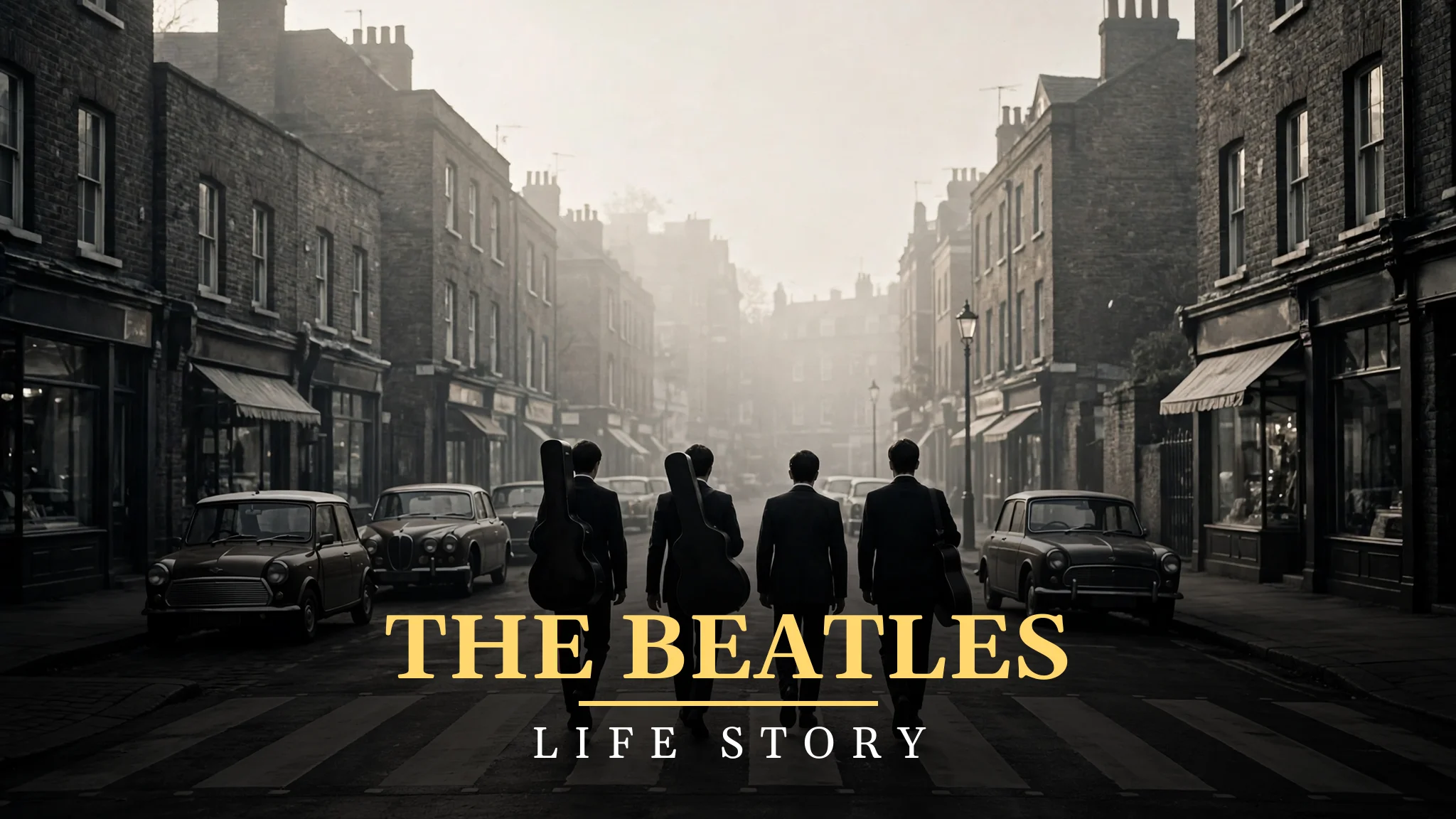
In 1969, the Beatles recorded Abbey Road, an album that is now seen as one of their best. It included the songs Come Together, Something, and Here Comes the Sun, and it ended with a long medley of short songs that showed the band working together one last time. The cover, with the four members crossing a zebra crossing outside the Abbey Road studio, became one of the most famous images in music. The album was a success, and it showed that, even at the end, they could still make great music together.
They also recorded Let It Be, an album and a film that showed the band working in the studio in early 1969. The sessions were difficult, and the film showed arguments and tension, as well as moments of great music. The album included the songs Let It Be and The Long and Winding Road, and it was released in 1970, after the band had already broken up. It was a sad end to a great career, because the music was still good, but the friendship was broken.
The break-up came in 1970, when Paul McCartney announced that he was leaving the band. The reasons were many: business disagreements, personal differences, the death of Brian Epstein in 1967, and the pressure of fame. John Lennon had already decided to leave, and George Harrison was unhappy with his role in the band. Ringo had left briefly during the White Album sessions, and the four members were no longer working as a team. They went their separate ways, and the Beatles were over, after only eight years as a recording band.
The break-up was sad for fans around the world, and it was sad for the band members themselves. They had been friends since they were teenagers, they had made music together, and they had changed the world together. Now they were going their separate ways, and they would never play together again as a band. John Lennon was killed in 1980, and George Harrison died in 2001, and those losses made the break-up feel final. Paul McCartney and Ringo Starr are still alive, and they still play Beatles songs, but the band itself is gone.
Their songs have also been used in films, in television, and in advertisements, introducing their music to new audiences, and songs like Hey Jude and Let It Be have become part of popular culture in a way that few songs ever do, known by people who may never have bought a Beatles album.
What the Beatles Leave Behind
The Beatles left behind a body of music that is still loved today. They had more than twenty number one singles in the UK and the United States, they sold hundreds of millions of records, and they changed the way music was made. They showed that a band could write its own songs, that a pop album could be a work of art, and that a group of young men from Liverpool could become the most famous band in the world. Their songs are still played on the radio, still sung in schools, and still loved by new generations.
Their legacy is also about friendship and about working together. John and Paul wrote songs together, George wrote songs that became classics, and Ringo gave the band its beat and its humour. They were four different people, and they made something together that none of them could have made alone. That is a lesson for anyone who works in a team. The whole can be greater than the sum of its parts, if the people trust each other and work together.
For young musicians, the Beatles are an example of what is possible. They started in a small club in Liverpool, they worked hard in Hamburg, they found a manager who believed in them, and they made records that changed the world. They did it with talent, with hard work, and with a love of music. They also did it with humour, with style, and with a sense of fun. They were not perfect, and their story ends in sadness, but their music remains, and it will remain for as long as people listen to songs.
Their early days in Liverpool also taught them how to write songs together, how John would bring an idea, Paul would bring a melody, and how the two would work together in a room, with guitars in hand, until a song was finished, which is a partnership that has never been matched in pop music.
My Take:
When I think about the Beatles, the first thing I think about is how much joy their music brings me. I can put on a Beatles song, and I feel better straight away. It does not matter if it is a simple early song like She Loves You, or a later song like Here Comes the Sun, or a strange song like Strawberry Fields Forever. The music is full of life, full of melody, and full of feeling. I think that is the most important thing about them. They made music that makes people happy, and they made it with skill, with humour, and with heart.
I admire their songwriting most of all. John Lennon and Paul McCartney wrote songs together, and they were one of the greatest songwriting teams in history. John wrote songs that were honest, sharp, and sometimes angry. Paul wrote songs that were sweet, melodic, and full of life. Together, they made songs that were both. George Harrison wrote songs that were spiritual, thoughtful, and beautiful, and his best songs, like Something and Here Comes the Sun, are among the greatest the band ever made. Ringo did not write many songs, but he gave the band its beat, and his drumming was perfect for the songs. I think their songwriting is the reason their music has lasted so long.
What I like about their story is the hard work in Hamburg. People often think the Beatles became famous overnight, but they did not. They played for hours every night in Hamburg, in front of tough crowds, and they learned how to be a band. They learned how to play together, how to sing together, and how to keep a crowd happy. That work made them strong, and it made them ready for fame when it came. I respect that. They did not skip the learning. They did the work, night after night, in a foreign city, far from home.
I also think about Brian Epstein, because without him, the Beatles might never have become famous. He believed in them when no one else did, he cleaned up their act, he got them a record deal, and he worked hard to make them stars. He was a kind, smart, and determined man, and his death in 1967 was a turning point for the band. After he died, they lost their guide, and they began to drift apart. I think that shows how important a good manager is, and how important it is to have someone who believes in you and who looks after you.
I think about George Martin, too. He was the producer who helped them in the studio, who arranged their songs, who tried new sounds, and who made their records sound better than anyone else’s. He was not a member of the band, but he was a crucial part of their success. He understood their music, he trusted their ideas, and he helped them to grow. I think that shows the value of working with good people. The Beatles were talented, but they were also lucky to have Epstein and Martin, and they knew it.
There is a part of their story that I find sad, and that is the break-up. They were friends since they were teenagers, they made music together, and they changed the world together, and then they fell apart. They argued about money, about business, and about who was in charge, and they could not find a way to stay together. I think that is a human story, and it is a sad one. It shows that even the closest friends can drift apart when the pressure is too great, and when they stop listening to each other. I wish they had found a way to stay together, or at least to end more kindly.
I also think about John Lennon, because his death in 1980 was a shock to the whole world. He was killed outside his home in New York, and millions of people mourned him. He was a talented songwriter, a funny and sharp man, and a voice for peace. His death made the break-up feel final, because there would never be a reunion with all four members. I think about what might have been, if he had lived, if the band had played together again, if they had made more music. We will never know, and that is sad, but his music remains, and it is still loved.
I think about George Harrison, too. He was the youngest member, he was often called the quiet Beatle, and he was sometimes overlooked. But he wrote some of the most beautiful songs the band ever made, and he became a successful solo artist after the break-up. He was spiritual, he was thoughtful, and he was a great guitarist. I think he deserves more credit than he often gets. He was not only a backing musician. He was a songwriter and a musician in his own right, and his work has lasted.
I also think about Paul McCartney and Ringo Starr, who are still alive and still making music. Paul is one of the greatest songwriters who has ever lived, and he is still writing songs, still touring, and still playing Beatles songs for new generations. Ringo is still drumming, still singing, and still spreading his message of peace and love. I admire them both for keeping going, for staying positive, and for keeping the music alive. They have had long lives, and they have used them well.
If I have a criticism, it is that the Beatles sometimes get treated as perfect, and they were not perfect. They made mistakes, they argued, they were sometimes selfish, and they were sometimes unkind to each other. I do not want to pretend that they were saints. They were four young men who became famous very quickly, and they had to learn how to handle it. They did not always handle it well. But their music was great, and their story is human, and that is why I love them. I do not need them to be perfect. I need them to be real.
Another thing I think about is how their music has lasted. They broke up more than fifty years ago, and yet their songs are still played every day, still sung by children, still loved by teenagers, and still studied by musicians. That is a rare thing. Most pop music fades after a few years. Beatles music does not fade. It stays, because the songs are well written, because the melodies are strong, and because the feelings in them are true. I think that is the best test of great music. It lasts, and it keeps finding new listeners.
I think about their influence, too. They changed the way bands looked, the way records were made, and the way young people saw themselves. They showed that a band could write its own songs, that a pop album could be art, and that music could be both popular and creative. Many bands that came after them learned from them, and many still do. They opened a door, and many other artists walked through it. That is a legacy that goes beyond their own songs. It is a legacy that changed music itself.
For a young reader, I think the lesson from the Beatles is about friendship and about working together. They were four different people, with different talents, and they made something together that none of them could have made alone. They listened to each other, they helped each other, and they pushed each other to be better. That is a useful lesson for anyone who works in a team. You do not have to be the same as the people you work with. You have to respect them, listen to them, and work with them. That is how great things are made.
I also think their story teaches something about hard work. They did not become famous by luck alone. They played for hours in Hamburg, they played in small clubs in Liverpool, they worked with a manager who believed in them, and they made records that were better than anyone else’s. They worked hard, and they kept working hard, even when they were famous. That is a lesson I respect. Talent is important, but work is what turns talent into something lasting.
In the end, I think the Beatles will be remembered as the greatest band ever, not only because they sold the most records, but because they made the best music, because they changed the world, and because their songs still make people happy. They were four boys from Liverpool who became stars, and they became stars because they were talented, because they worked hard, and because they made music that spoke to people. I love their music, I respect their story, and I will keep listening to them for as long as I can. Their songs are a part of my life, and they are a part of the life of the whole world.
One more thought stays with me. When I think about the Beatles crossing Abbey Road, four men in suits, walking across a zebra crossing, I think about how simple that image is, and how famous it has become. It is just four friends walking across a street, and yet it is known all over the world. That is the Beatles in one picture. Four friends, walking together, making music together, and changing the world together. I think that is a beautiful image, and it is one I will always remember.
I also think about the way the Beatles wrote about ordinary life, about a girl named Eleanor Rigby, about a yellow submarine, about a long and winding road, and how those ordinary subjects became great songs because they were written with imagination, with humour, and with a love of the world around them.
I think about their humour, too, because the Beatles were funny, quick, and charming in interviews, and that humour made them loved by fans who saw them not only as musicians, but as four young men who were enjoying life, and who did not take themselves too seriously, even when they were the most famous band in the world.
I think about the way their music sounds best when sung together, with friends, in a car, at a party, or at a concert, because their songs are meant to be shared, and they are songs that bring people together, which is why they are still sung at weddings, at birthdays, and at moments when people need a song that everyone knows.
I think about the future, and how the Beatles’ music will continue to be loved by new generations, with children discovering their songs for the first time, with teenagers learning to play them on guitar, and with adults passing them on to their own children, which is a cycle of love that has lasted for more than sixty years and will last for many more.
I also think about the way their songs are studied in schools, with teachers using Beatles songs to talk about music, about history, and about the 1960s, which is a sign of how important their music has become, not only as entertainment, but as a part of our shared culture and our shared history.
Finally, I want to say that the Beatles remind me that four friends, working together, can change the world, that a song can be simple and still be perfect, and that music, at its best, is a gift that brings people together, across generations, across countries, and across time.
That gift, four friends changing the world with songs, is why I will keep listening to the Beatles, and why I believe their music will still be sung, still be loved, and still be bringing people together for many years to come.
I will keep playing their records, from the early songs to the late albums, because each one tells me something true about friendship, about love, and about life itself.
Frequently Asked Questions
How did the four Beatles first meet each other in Liverpool?
John Lennon formed the Quarrymen in 1957 and met Paul McCartney at a church fete, George Harrison joined soon after as a young guitarist, and Ringo Starr joined in August 1962 after playing with Rory Storm and the Hurricanes.
Why were the Beatles’ Hamburg years so important?
In Hamburg in 1960 and 1961 they played for many hours every night in clubs on the Reeperbahn, learning to perform, to sing in harmony, and to work as a tight band, which turned them from talented boys into professional musicians.
Who helped the Beatles get their first record deal?
Their manager Brian Epstein, a Liverpool record shop owner, believed in them, dressed them in smart suits, and took their demo to London until they signed to Parlophone, where producer George Martin helped shape their records.
What was Beatlemania and when did it reach America?
Beatlemania was the intense fan excitement around the band, with screaming crowds and huge record sales, and it reached America in February 1964 when they appeared on The Ed Sullivan Show and I Want to Hold Your Hand reached number one.
Why did the Beatles stop touring in 1966?
They stopped touring because the screaming was so loud they could not hear themselves play, the travel was exhausting, and they wanted to work in the studio where they could try new sounds, leading to albums like Revolver and Sgt. Pepper.
What was the last album the Beatles recorded together?
Abbey Road, recorded in 1969, was their last album together, featuring Come Together, Something, and Here Comes the Sun, while Let It Be was released in 1970 after they had already broken up.
Are any of the Beatles still alive today?
Paul McCartney and Ringo Starr are still alive and still perform, while John Lennon was killed in 1980 and George Harrison died in 2001, so the four members will never play together again as a band.


