Thief Who Left His Phone at the Crime Scene
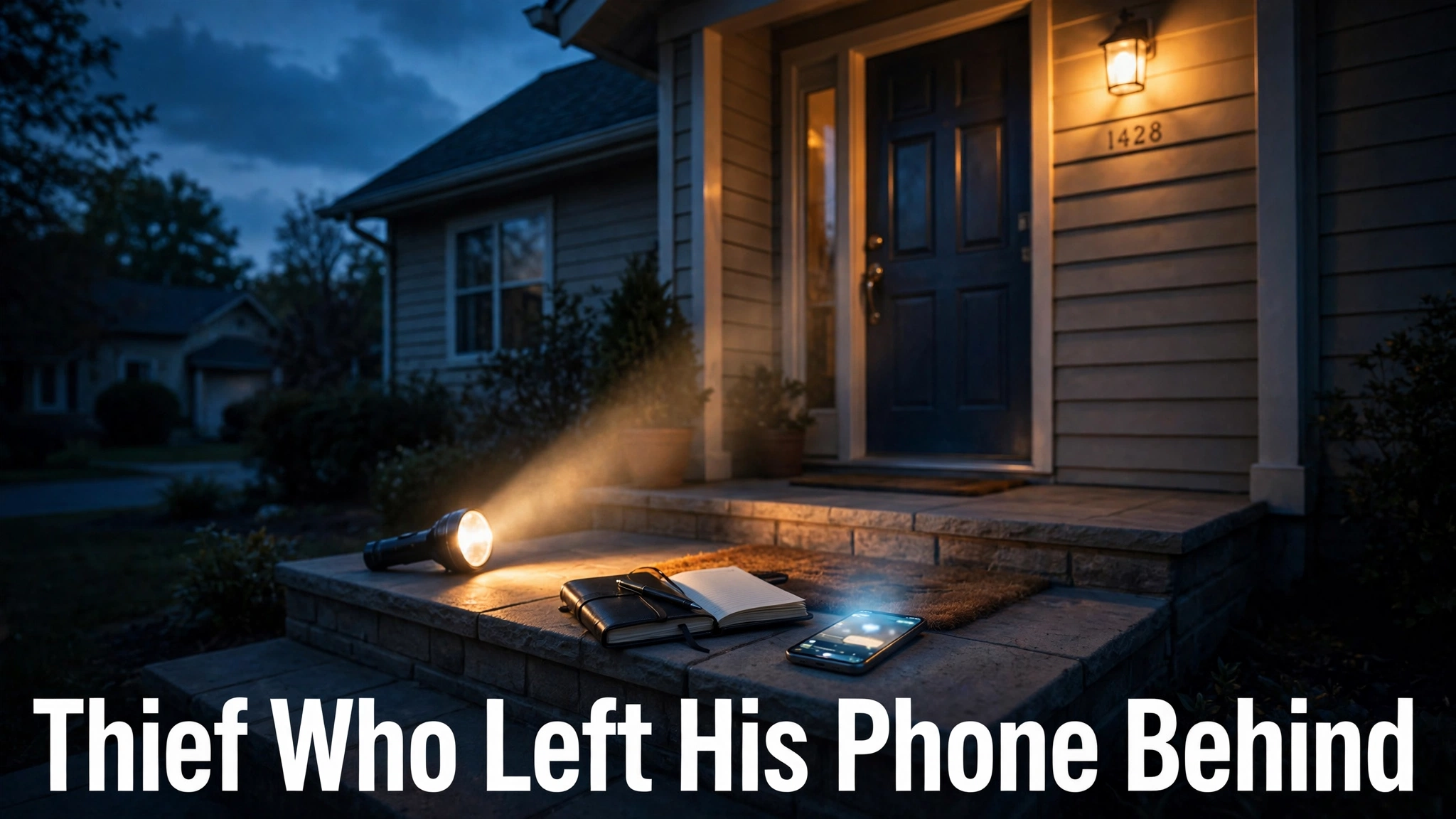
In this post
- The Moment the Phone Is Found
- Location Data: Where the Phone Has Been
- Photos, Messages, and the Story Inside
- Why Thieves Leave Phones Behind
- From a Phone to a Person: Identification Steps
- When a Phone Lead Points the Wrong Way
- Privacy, Rights, and Why Process Matters
- What Victims and Neighbours Can Do
- My Take:
Every burglar hopes to leave nothing behind, yet one of the most common mistakes in modern crime stories is also one of the simplest: a phone left on a table, dropped in a garden, or forgotten in a stolen car. To the thief, it is a moment of panic or carelessness. To investigators, it is a small computer full of connections to a person, a place, and a timeline. The phone does not need to be unlocked to be useful, and it does not need to contain a confession. Its presence alone raises questions that other evidence can answer.
This article explains, in neutral and factual terms, how a forgotten phone helps an investigation, what kinds of information police can lawfully obtain, why thieves make this mistake, and what limits protect privacy. It does not provide instructions for committing or hiding a crime. The focus is on understanding: why a device designed to keep us connected also makes it very hard to be an anonymous stranger at a crime scene, and why a single object can change the direction of a whole case.
The Moment the Phone Is Found
When officers arrive at a burglary or theft scene, they secure the area before touching anything that might hold evidence. A phone found at the scene is photographed in place, noted in the scene record, and collected with care to avoid altering it. Gloves and evidence bags are used, and officers try to prevent the battery from dying or the device from receiving remote commands that could erase data. In some cases, a phone is placed in a shielded bag that blocks wireless signals, which helps preserve its state until forensic experts can examine it.
The first questions are simple and practical. Whose phone is it? Does it belong to the victim, a witness, or an unknown person? A victim’s phone may have been dropped during a struggle or left charging, so investigators do not assume every phone belongs to the offender. They compare the find with statements from the household, check whether the victim reports a phone missing, and look at where exactly the device lay. A phone under a broken window, beside a forced drawer, or in a room the victim rarely enters tells a different story from a phone on a bedside table.
If the phone appears to belong to someone else, investigators treat it as a lead, not as proof of guilt. A phone could have been stolen earlier, borrowed, sold, or planted, and a person could have a lawful reason for being near a location. That caution matters, because a rushed conclusion can harm an innocent person and weaken a case in court. The phone opens an inquiry; the inquiry, with other evidence, decides what the phone means.
Location Data: Where the Phone Has Been
One of the most powerful kinds of phone evidence is location history, because it can place a device at a scene at a particular time and show where it travelled before and after. Modern phones record location in several ways, including satellite positioning, nearby Wi-Fi networks, and mobile network towers. Each method has different accuracy. Satellite data can be precise to a few metres outdoors, while tower data may only show a wider area. Investigators therefore talk about a location range, not a single dot, and they test whether the data fits the crime timeline.
Location evidence is rarely used alone. Officers compare it with CCTV timestamps, witness accounts, vehicle movements, and the time a burglary alarm triggered. If a phone’s location moves away from the scene at the same time a neighbour reports a car leaving, the two records support each other. If the location data contradicts a suspect’s claimed alibi, investigators ask for an explanation and check it. An alibi that can be verified, such as a workplace record or a receipt, may clear a person, while an alibi that collapses under checking becomes part of the case.
There are limits to this evidence. Location data can be affected by signal problems, time-zone settings, and shared devices. A phone carried by one person may later be carried by another, and a phone left in a car may record the car’s journey rather than its owner’s movements. Courts therefore expect investigators to explain how the data was obtained, how accurate it is, and what other evidence supports it. Location alone rarely convicts anyone, but location combined with other facts is often decisive.
Photos, Messages, and the Story Inside
A phone also holds content that can link a person to a crime in less obvious ways. Photographs may show stolen items, the inside of a victim’s home, or the thief’s own face reflected in a mirror. Even a photograph taken for another reason can carry metadata, which is hidden information about when and where the picture was taken and on which device. A selfie taken hours before a burglary, showing the same clothes later seen on camera, can become a strong link in the chain.
Messages and call records can reveal planning, contacts, and motive, but investigators must obtain them lawfully, often with a warrant or court order depending on the country. They do not simply scroll through a stranger’s private life without legal authority, and evidence obtained improperly may be excluded from court. That legal process is slow by design, because it protects privacy for everyone, including victims and witnesses whose phones are also examined. When access is granted, forensic tools copy the data so the original remains unchanged, and every step is documented for later scrutiny.
Social media and app activity can add context, such as a post boasting about money, a search for how to sell stolen goods, or a message arranging a meeting. Investigators treat such material carefully, because posts can be jokes, exaggerations, or written by someone else using the account. The strongest cases connect digital content to physical evidence: a photograph of an item that matches a stolen object in make, marks, and serial number, or a message timed exactly to a burglary alarm.
Why Thieves Leave Phones Behind
It seems strange that someone planning a theft would carry a tracking device into the crime and then lose it, but human behaviour explains it better than carelessness alone. Many burglaries are rushed, opportunistic, and stressful. A thief may be startled by an alarm, a neighbour, a dog, or a returning resident, and in the rush to leave, a phone slips from a pocket or is set down while carrying stolen goods. Darkness, gloves, and bulky clothing make it easier to drop something without noticing.
Some thieves carry a phone because they need it: to contact an accomplice, to navigate, to check the time, or to photograph items for sale. Leaving it at home would feel safer, but it would also remove a tool they rely on. Others use a phone as a torch, which means holding it in the hand at the exact moment they need both hands free. A phone used as a torch is easily placed on a surface and forgotten when attention shifts to opening a drawer or a safe.
Alcohol, drugs, tiredness, and inexperience increase the risk of mistakes, and investigators note that many solved burglaries involve offenders who were not professionals at all. Professional criminals, in popular imagination, leave no trace, but real burglary cases often involve young, impulsive, or desperate people who plan poorly. The phone left behind is therefore not a rare freak event. It is a predictable result of stress, haste, and reliance on a device that people now carry everywhere without thinking.
From a Phone to a Person: Identification Steps
Once a phone is identified as a lead, investigators work through identification in stages. First, they check the device itself: the SIM card, the network provider, and any visible identifiers, all through lawful channels. The provider may be able to confirm the account holder, subject to legal process, and that name becomes a person of interest, not yet a suspect. Officers then check whether that person has any connection to the address, the victim, or the area, and whether they were reported elsewhere at the same time.
Next, investigators gather independent evidence. They may seek CCTV from nearby streets, interview neighbours, check vehicle records, and compare fingerprints or DNA from the scene, if any were recovered. A phone lead is strongest when it points in the same direction as those records. If the phone owner claims the phone was stolen, investigators test that claim: when was it reported stolen, was it used after that report, and does the reported theft fit the timeline? A genuine prior theft report can redirect the whole case, while a report made only after police contact looks very different.
Arrest, if it happens, follows evidence, not curiosity. Police need a legal basis to arrest and question, and the person questioned has rights, including the right to legal advice in many systems. A confession is not required for a case to proceed, and investigators build cases that can stand on records and physical evidence even if the person says nothing. That discipline protects both the investigation and the rights of anyone wrongly linked by a lost or stolen phone.
When a Phone Lead Points the Wrong Way
Phone leads do not always point to the offender, and the cases where they mislead are instructive. A phone may have been stolen hours earlier and then dropped by a different person, it may have been borrowed by a friend who visited the area for a lawful reason, or it may have been left in a vehicle that was later used by someone else. Investigators have encountered all of these situations, and each one required them to slow down, verify ownership history, and look for independent evidence before acting. A lead that is followed blindly can waste weeks, damage an innocent person’s reputation, and allow the real offender time to dispose of stolen goods.
Technology can also mislead in subtler ways. A phone’s clock may be set incorrectly, a location record may reflect a tower rather than a precise address, and a photograph’s metadata may reflect when a file was copied rather than when it was taken. Forensic experts are trained to spot these pitfalls, but a hurried reading of a phone record can create a false timeline that looks convincing until it is tested. That is why scene records, witness statements, and CCTV timestamps are compared against phone data, rather than being replaced by it. The phone is one witness among several, and like any witness, it can be mistaken about details even when its overall account is useful.
Privacy, Rights, and Why Process Matters
Phone evidence raises serious privacy questions, and the law tries to balance investigation with rights. A phone contains far more than crime evidence: family photographs, medical messages, banking details, and private conversations. That is why access usually requires justification, authorisation, and documentation, and why unrelated private material is not supposed to be shared beyond the investigation. The goal is to find the small part of the data relevant to the crime while protecting the rest.
Defence lawyers test phone evidence in court by asking how it was collected, whether the chain of custody was preserved, whether the forensic copy matches the original, and whether the interpretation of location or message data is fair. A single ambiguous message, read out of context, can mislead a jury, so both sides are expected to present the full context. Time stamps may need adjustment for time zones, and location ranges must be described honestly rather than as exact addresses.
For the public, the lesson is not to fear phones but to understand their evidentiary weight. Losing a phone at any location creates a record of presence, and that record can help or harm depending on the circumstances. Reporting a lost or stolen phone promptly, keeping a record of its identifiers, and using a lock screen are practical steps that protect the owner and also help investigators distinguish a genuine loss from a false claim.
What Victims and Neighbours Can Do
If you discover a burglary and find an unfamiliar phone, do not handle it more than necessary, do not try to unlock it, and do not contact numbers stored on it. Call police, describe where it was found, and leave it as it is, because fingerprints, DNA, and digital state can all be affected by handling. Photographing the scene from a distance for your own record is reasonable, but moving items before police arrive can damage evidence and complicate an insurance claim.
Neighbours and witnesses can help by noting times, vehicles, and descriptions promptly, while memory is fresh. A note that a car left at a particular time, or that a stranger was seen near a side gate, may confirm a phone’s location record. CCTV from doorbells and shops is also valuable, but it is often overwritten quickly, so reporting promptly matters. Community awareness, such as a neighbourhood watch group sharing only verified information, helps police without spreading rumours about a phone owner who may be innocent.
For homeowners, prevention remains more useful than any investigation after the fact. Good locks, lighting, alarms, and the habit of not advertising absences on social media reduce burglary risk. If a burglary does happen, an inventory of valuables with serial numbers and photographs makes recovery far more likely, because a phone photograph of a stolen watch is only useful if police can match it to a specific item you owned. Preparation turns a chaotic aftermath into a clearer case.
My Take:
I find the forgotten-phone story satisfying in a way that should make us pause, because the satisfaction can hide a more complicated truth. Yes, it feels like justice when a thief’s own device betrays him, and yes, there is a certain fairness in a tool of connection becoming a tool of accountability. But I think we should resist turning that moment into a joke about stupidity. Many of these offenders are not criminal masterminds who made one silly error. They are rushed, desperate, or young people who made a series of poor decisions, and the phone is only the last one. Laughing at the mistake makes it easier to ignore the conditions that produced the burglary in the first place, including addiction, debt, and lack of opportunity. Justice still matters, and victims deserve it, but mockery does not prevent the next burglary.
My deeper view is that the phone story teaches us how thin anonymity has become, and that lesson applies to all of us, not only to thieves. We carry devices that record where we go, whom we contact, and what we photograph, often without us actively thinking about it. That is useful when we lose a phone, when we need to prove where we were, or when a crime needs solving. It is also a reason to be thoughtful about settings, permissions, and what we store. I do not think the answer is to live in fear of our phones, nor to accept unlimited access to them by anyone who asks. The answer is a clear legal process: investigators should have to justify access, document it, and limit it to what is relevant, and citizens should understand that a device left behind is not just an object but a record.
I also think investigators deserve credit for the unglamorous part of this work. The public imagines a single dramatic discovery, but the real work is comparison: a timestamp against an alarm log, a tower range against a street map, a photograph against a serial number, a claim against a prior report. Each comparison is small, and each can fail. A case built on a phone alone would be fragile, and good investigators know that, which is why they build a web of evidence rather than a single thread. That patience is worth respecting, because it is what separates a lawful conviction from a rushed accusation based on a device that could have been lost, stolen, or borrowed.
There is a fairness point here that I want to stress. A phone owner linked to a scene is a person of interest, not a proven criminal, and the difference matters enormously. Imagine losing your phone, having it picked up by someone else, and then learning police are asking questions about a burglary near where it was later found. You would want investigators to check your alibi, to consider the theft report, and to look for independent evidence before judging you. Extending that same fairness to a stranger is not softness. It is the standard that makes a conviction trustworthy. If we celebrate a phone lead as if it were already a verdict, we weaken the very justice we claim to want.
For victims, my view is practical rather than philosophical. A solved case brings some closure, but it rarely undoes the feeling of violation that burglary causes. A home that has been entered feels different afterwards, and stolen items with sentimental value cannot always be replaced even when the offender is caught. That is why I think prevention and preparation deserve as much attention as clever forensic stories. Lock the side gate, photograph valuables, note serial numbers, and know your neighbours. Those boring steps do more to protect a home than any fascination with phone forensics, and they help police far more than a viral story about a thief’s mistake.
Finally, I think the forgotten phone is a reminder about attention. Thieves lose phones because they are distracted, rushed, and overconfident, and ordinary people lose phones for the same reasons in ordinary places. The difference is consequence, not character. If we want fewer burglaries, we need to address the rush and desperation behind them as well as the locks and cameras that deter them. And if we want trustworthy investigations, we need to support the slow, lawful, documented work that turns a found phone into a fair case. A phone can start a story, but only careful evidence, tested in court, can finish it honestly.
There is another angle worth considering: the effect on the victim’s sense of safety when a case is solved through a phone. For a burglary victim, learning that the offender was caught because he left his phone behind can feel reassuring, because it suggests the system works, but it can also feel unsettling, because it reveals how much a stranger’s device can reveal about a home. A victim may wonder what else the offender photographed, shared, or stored, and that uncertainty can linger even after an arrest. Investigators who explain clearly what was found on a device, what was not relevant, and what has been secured help victims close that uncertainty, rather than leaving them to imagine the worst. Communication, in that sense, is part of justice, not an optional extra after the forensic work is done.
I also think the phone story should change how we think about prevention in a practical, everyday way. Most burglary prevention advice focuses on locks, alarms, and lighting, and all of those matter, but the phone evidence shows that burglars are often not the shadowy professionals of fiction. They are people who make mistakes under pressure, who return to familiar areas, and who leave patterns across multiple crimes. That means community prevention matters as much as hardware: neighbours who notice a stranger, who report a vehicle, or who share verified information quickly can disrupt a pattern before it becomes a series. A neighbourhood that knows its normal rhythms is harder to burgle than a street of strong doors where no one knows anyone, because observation is a form of security that technology alone cannot replace.
Finally, there is a lesson here about our own devices that goes beyond crime. Every phone we carry is a diary we did not consciously write, recording places, contacts, and moments, and that diary can help us in an emergency, prove where we were, or recover a lost device. It can also be misread, taken out of context, or accessed by someone with bad intentions. The sensible response is neither to abandon phones nor to ignore their power, but to manage them deliberately: use a lock, keep software updated, review permissions, report a loss promptly, and think before granting an app access to location or contacts. A thief who forgets his phone teaches us, unintentionally, that attention to our devices is a form of self-protection, and that a small habit, like checking that your phone is in your pocket before you leave a place, can matter in ways we rarely consider until it is too late.
Frequently Asked Questions
Can police unlock a phone found at a crime scene? It depends on the law in that country and on the phone’s lock, and access to content usually requires legal authorisation such as a warrant or court order. Investigators first preserve the device, check its identifiers through lawful channels, and document every step so the evidence can be tested in court.
Does a phone at a crime scene prove its owner committed the crime? No, a phone alone does not prove guilt, because it could belong to a victim, have been stolen, borrowed, or dropped by someone else. Investigators treat it as a lead and look for independent evidence such as CCTV, fingerprints, witness accounts, and timeline records.
How does phone location evidence work in a burglary case? Phones record location through satellite signals, Wi-Fi networks, and mobile towers, each with different accuracy, so investigators describe a range rather than an exact point. They compare that range with alarm times, CCTV, and witness statements to test whether the device was at the scene when the crime happened.
What should I do if I find an unknown phone after a burglary? Leave it as found as far as possible, do not try to unlock it or contact numbers on it, and call police with its exact location. Handling it can damage fingerprints, DNA, and digital evidence, and early reporting helps preserve CCTV that may soon be overwritten.
Why do thieves leave their phones behind? Most often because of rush, panic, darkness, gloves, or the need to carry stolen items, especially when startled by an alarm or a returning resident. Many burglaries are opportunistic and poorly planned, so a phone used for navigation, contact, or light is easily set down and forgotten.
Can location data be wrong in a phone investigation? Yes, signal problems, time-zone settings, shared devices, and tower coverage can all affect accuracy, which is why investigators explain the method and range in court. Location evidence is strongest when it agrees with other independent records rather than standing alone.