Tom Bosley: The Life Story Behind the Happy Days Star
In this post
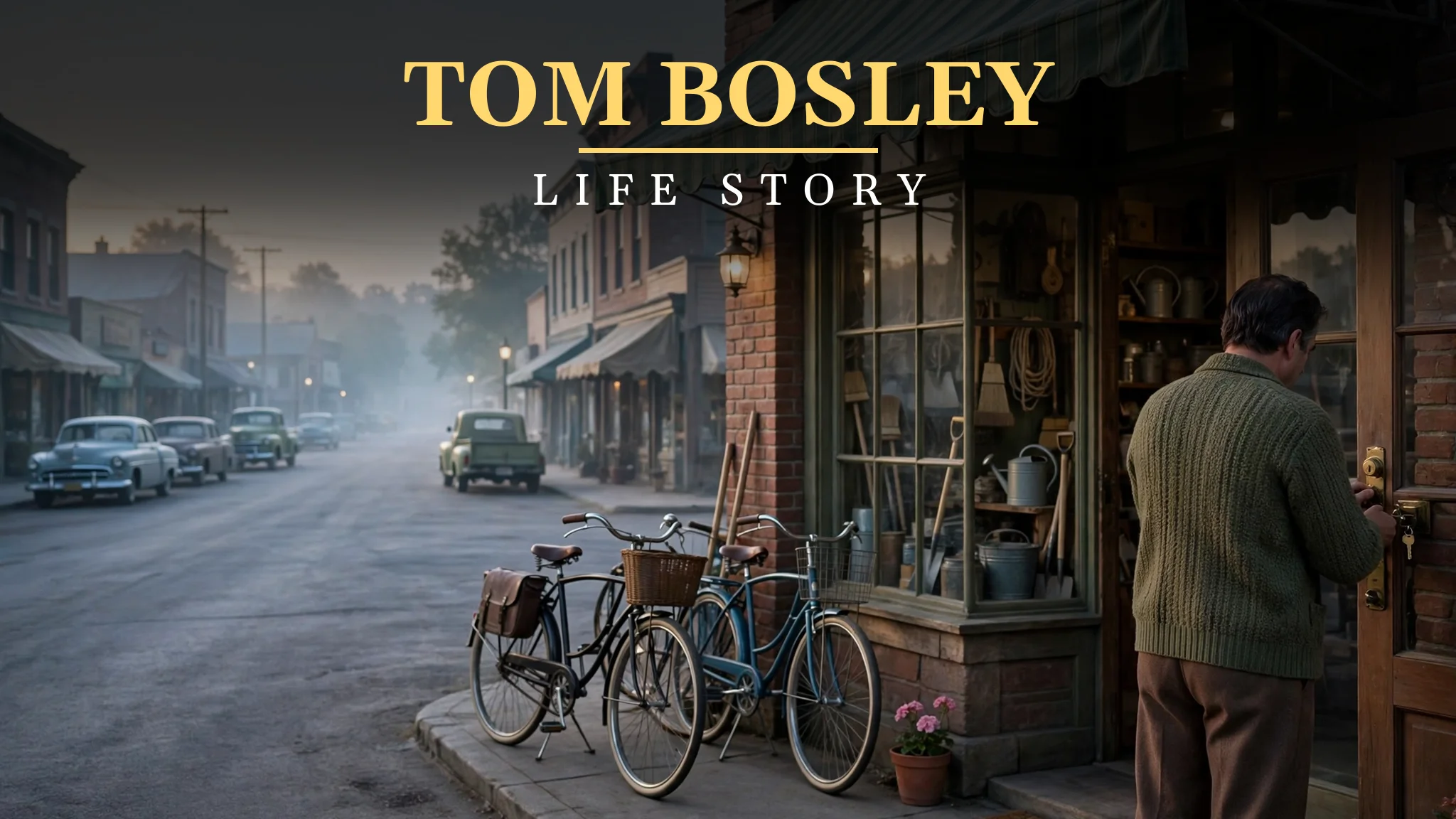
Tom Bosley was the kind of actor who made a home feel like a home. As Howard Cunningham on Happy Days, he was the father at the kitchen table, the man in the hardware store, the husband who loved his wife and worried about his children, and the friend who welcomed a young man in a leather jacket into his house as if he were family. He was not a flashy star, and he never tried to be one. He was a warm, steady, funny man, and that steadiness made him one of the most loved television fathers in America. When people think of a good father on television, many of them think of Howard Cunningham first, and that is because Tom Bosley played him with such honesty and such heart.
He was born in Chicago on 1 October 1927, and he grew up in a world that was very different from Hollywood. His father worked in a shop, his family was ordinary, and his early life was shaped by the Second World War, in which he served in the Navy. He came home from the war, he studied acting, and he built a career on the stage in New York, where he won a Tony Award for playing the mayor of New York in the musical Fiorello! in 1959. That was a great honour, and it showed that he was a serious actor, not only a television father. He had already proved himself on Broadway before most people had ever seen him on a television screen.
His story is worth telling because it is the story of a working actor who did the job well for more than sixty years. He acted on stage, in films, and on television. He played a priest who solved crimes in Father Dowling Mysteries, he played the sheriff in Murder, She Wrote, and he lent his voice to cartoons and to commercials. He was married for many years, he raised a daughter, and he kept working until he was in his eighties. He died on 19 October 2010, at the age of eighty-three, and he left behind a body of work that still makes people smile. This is the story of how a boy from Chicago became a father to a whole nation of television viewers.
A Chicago Boyhood and the Navy
Thomas Edward Bosley was born on 1 October 1927 in Chicago, Illinois. His father, Benjamin Bosley, worked in a shop, and his mother, Dora, kept the home. The family was not rich, but it was stable, and Tom grew up in a neighbourhood where people knew each other and where life followed a simple pattern of school, work, and family. He was a bright boy, and he liked to make people laugh. He was not the biggest boy in his class, and he was not the strongest, but he had a quick mind and a warm way with people, and those qualities stayed with him for his whole life.
He was a teenager when the Second World War began, and like many young men of his generation, he joined the armed forces. He served in the United States Navy, and the war took him far from Chicago. Life in the Navy was hard, and it taught him discipline, patience, and how to work with people from all kinds of backgrounds. He did not talk much about the war in later years, but it was a part of his youth that shaped him. It taught him that life is serious, and that a man should do his duty and look after the people around him. Those were values he carried into his acting, and they showed in the characters he played.
After the war ended, he came home to Chicago, and he had to decide what to do with his life. He had always liked acting, and he had taken part in school plays, but he had not thought of it as a career. The war had changed him, and it had made him want to do something that mattered to him. He decided to study acting, and he enrolled at DePaul University in Chicago, where he took drama classes. DePaul gave him a solid start, and it taught him the basics of the craft: how to speak clearly, how to move on a stage, and how to understand a character from the inside.
Chicago in the late 1940s was a good place for a young actor to learn. There was theatre, there was radio, and there were people who cared about the arts. Tom threw himself into the work, and he began to appear in local productions. He was not a handsome leading man in the usual Hollywood sense, and he knew it. He was a character actor, a man who could play a father, a shopkeeper, a priest, or a mayor, and make each of them feel real. That was his strength, and he built his whole career on it. He did not need to be the star. He needed to be true, and he was.
New York, the Stage, and Fiorello!
After his studies in Chicago, Tom Bosley went to New York City, where the best theatre in America was to be found. New York in the 1950s was a hard place for a young actor. There were many talented people, and only a small number of jobs. Tom took work where he could find it, and he kept learning. He appeared in plays off Broadway, and he worked in summer theatre, where young actors learned their craft by doing many different plays in a short time. The pay was low, and the hours were long, but he was doing what he loved, and that kept him going.
His big break on stage came in 1959, when he was cast as Fiorello La Guardia in the musical Fiorello!, a show about the famous mayor of New York City. La Guardia was a larger than life figure, a man who was tough, funny, and full of energy, and Tom played him with great warmth and skill. The show was a success, and it won the Pulitzer Prize for Drama, a rare honour for a musical. Tom won the Tony Award for Best Actor in a Musical, which is the highest honour in American theatre. For a boy from Chicago who had served in the Navy and studied at DePaul, a Tony Award was a remarkable achievement, and it proved that he was one of the best stage actors of his time.
The Tony Award changed his career. He was no longer an unknown actor. He was a Tony winner, and directors and producers knew his name. He continued to work on Broadway, appearing in shows such as The Threepenny Opera and in other productions that showed his range. He could sing, he could act, and he could make an audience laugh and cry in the same evening. He was a complete stage actor, and he loved the theatre. He loved the feeling of a live audience, and he loved the discipline of doing the same show night after night and making it fresh each time.
He also began to work in films and on television. He appeared in films such as Love with the Proper Stranger in 1963, and he took small parts in television shows. The work was steady, and it paid better than the theatre, but he never left the stage behind. He went back to Broadway again and again, and he kept his connection to live theatre for his whole life. He believed that the stage was where an actor really learned his craft, and he was right. The stage had given him his Tony, and it had given him the skills that would make him a great television actor later on.
Becoming Howard Cunningham
In 1974, Tom Bosley was cast as Howard Cunningham on Happy Days. The show was set in Milwaukee in the 1950s, and Howard was the father of Richie and Joanie Cunningham, and the husband of Marion Cunningham, played by Marion Ross. He owned a hardware store, and he was the kind of father who worked hard, who loved his family, and who tried to do the right thing, even when he did not always understand his children. The part was perfect for Tom. He had played many fathers on stage, and he knew how to make a father feel real, not like a cartoon.
Happy Days became one of the most popular shows in American television history. It ran for eleven seasons, from 1974 to 1984, and it was watched by millions of people every week. Howard Cunningham became one of the most loved fathers on television. He was kind, he was funny, and he was honest. He worried about Richie, he argued with Joanie, and he welcomed the Fonz into his home, even though the Fonz was very different from him. Viewers loved the way Howard treated the Fonz as a son, and they loved the way Tom played him, with a warmth that made the Cunningham house feel like a real home.
Tom was nominated for the Primetime Emmy Award for Outstanding Supporting Actor in a Comedy Series in 1978 for his work on Happy Days, but he did not win. The nomination was a recognition of how good he was, and it showed that the industry respected his work. He was not the star of the show, and he did not try to be. He was the foundation, the man who held the family together, and the other actors knew it. Ron Howard, Henry Winkler, and Marion Ross all spoke warmly about working with him, and about how he made the set feel like a family. He was a kind and generous man on set, and he treated everyone with respect.
The show also changed his life. For the first time, he was famous across America, and people recognised him on the street as Mr. C. He handled the fame with the same calm he had shown on stage. He was grateful for the work, and he was grateful that people loved the character. But he did not let the fame change him. He was still the same hard working actor he had always been, and he was still a man who loved the theatre and who loved his family. The fame was nice, but it was not the whole of his life.
Father Dowling and Murder, She Wrote
When Happy Days ended in 1984, Tom Bosley was fifty-six years old, and many actors of that age find that the work dries up. Tom’s work did not dry up. He had a reputation as a reliable and talented actor, and directors still wanted him. In 1989, he was cast as Father Frank Dowling in the television series Father Dowling Mysteries, a show about a Catholic priest who helps solve crimes. The show ran for three seasons, until 1991, and it was a popular and gentle mystery series. Tom played the priest with warmth and humour, and he made the character feel real, not like a stereotype.
He also appeared in Murder, She Wrote, the long running mystery series starring Angela Lansbury. He played Sheriff Amos Tupper, a small town sheriff who often needed Jessica Fletcher’s help to solve a crime. The part was a good fit for him, because it let him play a kind and slightly confused man who was doing his best in a difficult job. He appeared in the show for several seasons, and viewers liked him. He was the kind of actor who could walk into a show and make it better, just by being there.
He also worked in films and in voice acting. He lent his voice to the animated series and to commercials, and he appeared in films such as The Secret of NIMH 2 and in other projects. He was a versatile actor, and he could do comedy, drama, and voice work with equal skill. He also returned to the stage, appearing in plays and in musicals, and he kept his connection to Broadway alive. He was a working actor, and he worked for more than sixty years, which is a rare and remarkable achievement.
His personal life was steady. He was married to Jean Eliot, and after her death, he married Patricia Carr in 1980. They had a daughter, Amy, and the family was close. Tom was a private man, and he did not talk much about his family in public, but those who knew him said that he was a devoted husband and father. He kept his home life separate from his work, and he protected his family from the noise of Hollywood. That was a wise choice, and it helped him stay grounded through a long career.
Later Years and a Life of Work
In his later years, Tom Bosley continued to work, even as he grew older. He appeared in television shows, in films, and on stage, and he took parts that interested him. He was in his seventies and eighties, and he was still learning new lines, still meeting new audiences, and still doing the work he loved. He appeared in the television series Still Standing, and he took on guest roles in many other shows. He did not retire, because he did not want to. Acting was not only his job. It was his life, and he wanted to keep doing it for as long as he could.
He also became known for his voice work. He was the voice of the main character in the animated series The World of David the Gnome, and he lent his voice to many other projects. His warm and friendly voice was perfect for children’s shows, and parents trusted it. He also did commercials, and his voice became familiar to millions of people who never saw his face. That was a different kind of fame, but it was fame that came from talent and from hard work, and Tom was proud of it.
He was also active in the acting community. He served on the boards of theatre groups, and he supported young actors who were starting out. He believed in giving back to the profession that had given him so much, and he did it quietly, without making a fuss. He was a mentor to many young actors, and they remembered his kindness and his advice. He told them to work hard, to be prepared, and to treat people well, and those were the same lessons he had learned as a young actor in New York.
He died on 19 October 2010, at his home in Palm Springs, California, at the age of eighty-three. The cause of death was reported as heart failure, and he had been ill for some time. His death was mourned by many people, including his Happy Days co-stars, who spoke warmly about him. Henry Winkler said that Tom had been like a father to him, and Ron Howard said that he had learned a great deal from working with him. Those tributes show how much he was loved, not only as an actor, but as a man.
What Tom Bosley Left Behind
Tom Bosley’s legacy is a simple one, and it is a beautiful one. He was a man who played fathers, and who was a father himself, and who made millions of people feel at home. He did not need to be the star. He needed to be true, and he was true for more than sixty years. He won a Tony Award, he was nominated for an Emmy, and he appeared in some of the most loved television shows in history. But his real legacy is the feeling he gave to viewers: the feeling of a warm kitchen, a kind father, and a home where you were welcome.
He is remembered now as Howard Cunningham, and that is a fine thing to be remembered as. Howard was a good father, a good husband, and a good man, and Tom played him with all the warmth and humour he had. But he was also Fiorello La Guardia, and Father Dowling, and Sheriff Tupper, and many other characters who made people laugh and think. He was a complete actor, and he did his work with care and with love. He did not chase fame, and he did not chase money. He chased good work, and he found it, again and again.
Today, when people watch Happy Days, they still smile when Howard Cunningham comes into the kitchen with a joke and a kind word. That smile is Tom Bosley’s legacy. He made a fictional father feel real, and he made millions of viewers feel as if they were part of the Cunningham family. It is a simple legacy, but it is one that will last as long as people watch the show, and that is a very long time.
The Voice That Everyone Knew
One part of Tom Bosley’s career that many people forget is his voice work, and it was a large part of his later life. He had a warm, friendly voice, the kind of voice that sounds like a kind neighbour talking over a fence, and producers loved it for cartoons and for commercials. He was the voice of David the Gnome in the animated series The World of David the Gnome, a show that children watched in the 1980s, and he gave the character a gentle and wise sound that made children trust him. Parents who watched the show with their children liked his voice too, because it was calm and it was kind.
Voice work is a different skill from acting on a stage or in front of a camera. In a recording studio, there is no audience, there is no set, and there is no other actor to look at. The actor has only a microphone and a script, and he has to make a character come alive with his voice alone. Tom was good at that, because he had spent years on the stage learning how to use his voice, how to change its tone, and how to make a line sound true. He could be funny with his voice, he could be sad with his voice, and he could be wise with his voice, and children who heard him did not know his face, but they knew his sound.
He also did many commercials, and his voice became familiar to millions of people who never saw him on television. A commercial voice has to be trusted, because it is asking people to buy something, and Tom’s voice was trusted because it sounded honest. He did not sound like a salesman. He sounded like a friend, and that made people listen. That was a talent, and it was one that kept him working well into his seventies and eighties, when many actors find that the work has stopped.
The voice work also shows something about Tom’s range as an actor. He could play a mayor on Broadway, a father on television, a priest in a mystery show, and a gnome in a cartoon, and he could do all of them well. That is a rare gift, and it is a gift that comes from training, from hard work, and from a love of acting in all its forms. He did not think that one kind of acting was better than another. He thought that good acting was good acting, whether it was on a stage, on a screen, or in a recording studio, and he gave his best to all of it.
My Take:
I think Tom Bosley is one of the most underrated actors in television history, and I say that because he did the hardest job in the show and made it look easy. On Happy Days, the Fonz got the laughs, Richie got the story, and Howard Cunningham got the job of holding the family together. That is not a glamorous job, but it is the most important job in any family, and Tom Bosley did it with such warmth and such humour that viewers loved him for it. I watch his scenes, and I see a man who listens, who thinks, who worries, and who loves his family without making a big show of it. That is not easy acting. That is very good acting, and it is a kind of acting that does not win many awards, because it does not shout. I wish he had won an Emmy for it, because he deserved one, and I think history will remember him more kindly than the awards did.
What I admire most about him is that he was a real stage actor before he was a television star. He won a Tony Award for Fiorello! in 1959, and that is a serious honour. It means that he was one of the best actors on Broadway, and that he had earned his place through hard work and talent. Many television stars never do that. They become famous on television and they never learn the discipline of the stage. Tom learned it first, and it showed in his television work. He was always prepared, he always knew his lines, and he always gave a full performance, even in a small scene. That discipline is a lesson for any actor, and it is a lesson for anyone who wants to do good work. You have to learn the basics first, and you have to keep practising them, even when you are famous.
I also admire the way he handled fame. He became famous as Howard Cunningham when he was in his forties, and he did not let it change him. He did not become proud or difficult. He stayed kind, he stayed professional, and he stayed grateful. I think that is because he had already lived a full life before the fame came. He had served in the Navy, he had studied acting, he had won a Tony, and he had a family. Fame did not have to tell him who he was, because he already knew. That is a good way to meet fame, and it is a way that many young stars do not get to experience, because they become famous before they know themselves. Tom knew himself, and that made him steady.
When I think about Howard Cunningham, I think about my own ideas of what a good father looks like. A good father is not perfect. He makes mistakes, he worries, he gets tired, and he sometimes says the wrong thing. But he is there, day after day, working hard and loving his family. Tom played that kind of father, and I think that is why people loved him. He did not play a saint. He played a real man, and real men are the ones who hold families together. I think the world needs more characters like Howard Cunningham, and more actors like Tom Bosley who can play them with honesty. I also think the world needs more fathers like him in real life, men who show up, who listen, and who love their children without needing to be praised for it.
I also think about his service in the Navy, because it tells me something about his generation. He was a young man when the war came, and he did his duty, and he came home and built a life. He did not talk about the war in a boastful way. He just got on with his work, and he lived a good life. That is a quiet kind of heroism, and it is a kind that is easy to forget. I do not want to forget it. I think Tom Bosley’s generation, the men and women who served in the war and then came home and built families and careers, deserve to be remembered, and Tom is a fine example of that generation. He was steady, he was kind, and he was hard working, and those are the qualities that built America after the war.
There is a sad part to his story, too, and it is the part about how television treats older actors. Even after Happy Days, Tom had to fight for good parts, because the business does not offer many good parts to men over sixty. He found work because he was talented and because people liked him, but he had to work harder than a younger actor would have had to work. That is not fair, and it is a thing that Hollywood still needs to fix. I am glad that Tom kept working into his eighties, because every part he played was a small victory against a system that often forgets older people. He did not complain about it loudly. He just kept working, and that quiet persistence is a kind of protest in itself.
If I have one criticism, it is not of Tom at all. It is of the television industry, which gave him only one Emmy nomination for Happy Days and never gave him the award. He was the heart of one of the most loved shows in history, and he was never recognised with a win. That says more about awards than it says about him. Awards often go to the loudest performance, and Tom’s performance was quiet. But quiet does not mean small. His work was large, and it mattered to millions of people, and I think history will remember him more kindly than the Emmy voters did. I also think his Tony Award matters more than any Emmy, because it shows that he was a great stage actor, and that is a rare and special thing.
What I learn from Tom Bosley is simple, and it is something I want to hold on to. You do not have to be the star to matter. You can be the father, the husband, the shopkeeper, the priest, and you can matter more than the star, because you are the person who makes the story feel like home. Tom mattered, and he mattered for a very long time. That is a good life, and it is a life worth copying in the small ways that each of us can manage. I also learn from him that a long career is built on small steps, not on one big leap. He did not become a great actor in one day. He became a good actor by working on stage, by learning his craft, and by doing good work again and again, for sixty years.
I also learn from him that kindness is a working method, not just a nice idea. Actors who worked with Tom said that he was kind on set, that he was prepared, and that he listened. That kindness got better work out of people, because people who feel safe do better work. I think that is true in any job, not only in acting. A boss who is kind and prepared will get more from his team than a boss who shouts and bullies. Tom Bosley seems to have known that from the time he was a young actor in New York, and he practised it for his whole life. I hope young actors learn from him, because the business would be a better place if more actors worked the way he did.
In the end, I think Tom Bosley teaches us that a good life is not made in one big moment. It is made in many small choices, repeated over many years, until they add up to something that matters. He chose to serve in the Navy, he chose to study acting, he chose to work on the stage, he chose to play a father with warmth and honesty, and he chose to keep working until he was eighty-three. None of those choices was glamorous, but together they made a life that mattered to millions of people. I will remember him as Howard Cunningham, standing in the kitchen with a smile, and I will also remember him as Tom Bosley, the boy from Chicago who won a Tony and became a father to a whole nation of viewers. That is a beautiful story, and it is one that deserves to be told.
One more thought stays with me. When Tom Bosley died in 2010, his Happy Days co-stars spoke about him as if he had been their real father. Henry Winkler said that Tom had been like a father to him, and that is a powerful thing to say about a man you worked with. It means that Tom did not only play a father on television. He was a father figure in real life, to the young actors around him, and to the millions of viewers who watched him. That is a legacy that no award can give you, and no award can take away. It is a legacy of love, and it is the best kind of legacy there is.
I also think about his voice work, because it shows a side of him that many people never saw. He was the voice of David the Gnome, and he was the voice in many commercials, and millions of children and adults heard him without knowing his name. That is a strange kind of fame, and it is a kind that Tom seemed to enjoy. He did not need to be seen to be heard, and he did not need applause to know that his work mattered. I think that is a good way to think about work in general. Sometimes the most important work is the work that no one sees, and the work that no one applauds, and it still matters, because it helps people. Tom’s voice helped children feel safe, and it helped parents trust a product, and that is real work, even if it is quiet work.
I also want to say something about his generation. Tom Bosley was born in 1927, and he lived through the Second World War, through the rise of television, and through the rise of the internet. He saw the world change in ways that are hard to imagine, and he changed with it, without losing himself. He was a man of his time, and he was also a man who was timeless, because kindness and hard work do not go out of fashion. I hope that young people who watch Happy Days today see that, and I hope they understand that the world they live in was built by people like Tom, people who served, who worked, and who loved their families.
I also think about the way he treated the young actors on Happy Days, because that is a thing that people remember long after the show ends. Ron Howard and Henry Winkler were young men when they worked with Tom, and they have both said that he was kind to them, that he listened to them, and that he treated them with respect. That matters, because a set can be a hard place for a young actor, and a kind older actor can make all the difference. Tom was that kind of older actor. He did not act as if he were better than the young people around him. He acted as if he were one of them, learning and working, just as he had done when he was young. I think that is a beautiful quality, and it is one that I hope young people remember when they become successful themselves. Success is not only about what you achieve. It is also about how you treat the people who are starting out, and Tom treated them well.
I also think about his marriage to Patricia Carr, which lasted from 1980 until his death in 2010. Thirty years is a long time, and it is a long time in Hollywood, where marriages often fail. Tom and Patricia built a life together, and they raised a daughter, and they stayed together through the good times and the hard times. That takes trust and patience, and it takes a willingness to work at a relationship even when it is difficult. I respect a man who keeps his family at the centre of his life, and who does not trade his family for fame. Tom seems to have done that, and I think it is one of the reasons he was still happy and still working in his eighties.
Frequently Asked Questions
What did Tom Bosley do before he became famous on Happy Days?
He was a stage actor in New York, and he won the Tony Award for Best Actor in a Musical for playing Fiorello La Guardia in Fiorello! in 1959. He also worked in films and on television in small parts for many years before Happy Days began in 1974.
How many seasons did Tom Bosley play Howard Cunningham?
He played Howard Cunningham for the whole run of Happy Days, from 1974 to 1984, eleven seasons in total. The character became one of the most loved television fathers in America.
Did Tom Bosley serve in the armed forces?
Yes, he served in the United States Navy during the Second World War. After the war, he came home to Chicago and studied acting at DePaul University.
What television shows did Tom Bosley star in after Happy Days?
He starred as Father Frank Dowling in Father Dowling Mysteries from 1989 to 1991, and he played Sheriff Amos Tupper in Murder, She Wrote. He also took guest roles in many other shows and did voice work for cartoons.
When did Tom Bosley die, and how old was he?
He died on 19 October 2010 at his home in Palm Springs, California, at the age of eighty-three. The cause of death was reported as heart failure, and he had been ill for some time.
Was Tom Bosley married, and did he have children?
He was married to Patricia Carr from 1980 until his death, and they had a daughter, Amy. His first wife, Jean Eliot, had died earlier. He kept his family life private and separate from his work.
What is Tom Bosley’s most famous stage role?
His most famous stage role was Fiorello La Guardia in the musical Fiorello!, for which he won the Tony Award in 1959. The show also won the Pulitzer Prize for Drama, a rare honour for a musical.


