Tom Courtenay: The Life Story Behind the Kitchen Sink Star
In this post
Tom Courtenay is one of the quietest and most honest actors Britain has ever produced, a man with a soft northern voice, a thoughtful face, and a talent for playing ordinary men who dream of a better life. He was one of the young stars of the 1960s, when British film began to tell stories about working-class people, and he played Billy Liar, the young man who dreams of a life far away from his small town, and Colin Smith, the young runner in The Loneliness of the Long Distance Runner, who refuses to run for the people who control him. Those roles made him a symbol of a new Britain, a Britain where a boy from Hull could be a hero on screen, and where a quiet voice could be heard.
He was born in Hull, a port city in the north-east of England, and he grew up as the son of a man who worked in a paint factory and a woman who worked as a hairdresser. He did not come from a theatre family, and he did not have an easy path into acting, yet he found his way onto the stage through a love of poetry, through drama school, and through a determination to tell stories about real people. He was part of a new generation of actors who wanted to play the men they saw around them, not kings and queens, and he helped to change British film for ever.
What makes his story worth telling is the length and the honesty of his career, and the way he has kept working for more than sixty years, from Billy Liar in the 1960s to 45 Years in 2015, a film that won him some of the best reviews of his life when he was in his late seventies. He was not a man who chased fame, and he did not try to be a star in the loud sense. He chose good work, he played complex people, and he let his talent speak for itself. This is the story of how a boy from Hull became Sir Tom Courtenay, and how he did it by working hard, by being patient, and by staying true to himself.
A Hull Boy and the Son of a Paint Worker
Thomas Daniel Courtenay was born on 25 February 1937 in Hull, East Riding of Yorkshire, England, a port city on the Humber that was known for its fishing, its docks, and its strong sense of community. His father, Thomas, worked in a paint factory, and his mother, Anne, was a hairdresser, so the family lived a modest working-class life where money was tight but where there was warmth and a love of stories. Young Tom went to school in Hull, and he showed an early love of poetry and of reading, which would later lead him to the stage and to a career that began far from the bright lights of London.
He was a quiet and thoughtful boy, and he liked to read poems aloud, to listen to the rhythm of words, and to imagine himself in other lives. He was not the loudest boy in the room, but he had a clear voice and a strong presence, and teachers noticed that he could hold an audience when he spoke. He also had a love of the theatre, and he began to take part in school plays, discovering that he loved the feeling of standing on a stage and telling a story to an audience.
As a young man he decided to train as an actor, and he went to the Royal Academy of Dramatic Art, RADA, in London, where he learned voice, movement, and the study of plays. The training was demanding, and it asked students to work hard on their bodies and their voices, but Courtenay took to it with a hunger that came from having found his place at last. He learned how to stand on a stage, how to speak so that every word could be heard, and how to build a character from the words on the page.
Those early years mattered because they gave him a strong sense of who he was and a deep understanding of working-class life in the north of England. He knew what it felt like to grow up in Hull, to hear the ships in the docks, and to dream of a life beyond the town, and he brought that truth to every role he played. The boy from Hull who loved poetry had found his calling, and he was ready to follow it, even if the road was long and hard.
RADA, the Stage, and the Old Vic
After RADA, Courtenay began his professional career on the stage, and he soon joined the Old Vic company, one of the most respected theatre companies in Britain. He played in plays by Shakespeare, by Chekhov, and by modern writers, and he became known as a thoughtful and talented actor who could play both comedy and drama. He played in the play The Seagull, in which he played Konstantin, a young writer who dreams of a new kind of theatre, and his performance was praised for its honesty and its sadness.
He worked at the Royal National Theatre and in the West End, and he became known as one of the finest young stage actors of his generation. He played in plays by Harold Pinter, by Anton Chekhov, and by other great writers, and each time he brought a fresh and thoughtful reading to the part. He was a serious and dedicated actor, and he prepared carefully for every role. He did not seek attention for himself, and he did not try to be a celebrity. He simply did the work, and he did it well.
The stage years gave Courtenay a strong base, and they taught him how to work with a company, how to listen to other actors, and how to make a play feel alive every night. He was known for his quiet intensity, for his love of poetry, and for his willingness to take risks, and those qualities made him a favourite with directors and with audiences. He was not just a great actor. He was a great colleague and a great friend, and other actors loved working with him.
He also worked in the theatre in the United States, playing on Broadway and winning praise for his performances in plays that showed his range. He played in the play The Dresser, in which he played Norman, the dresser to an ageing actor, and his performance won him great praise on both sides of the Atlantic. He understood that the theatre is a place where an actor learns, and where an actor grows, and he never forgot that lesson, even when film made him famous.
Billy Liar and The Loneliness of the Long Distance Runner
Courtenay’s great breakthrough in film came in 1962, when he played Colin Smith in The Loneliness of the Long Distance Runner, a film about a young man in a borstal, a youth prison, who is a talented runner and who is used by the governor to win a race. Colin runs, but in the final race he refuses to win, because he will not run for the people who control him. Courtenay played him with a quiet anger and a deep sadness that made audiences love him, and the film became a landmark in British cinema.
The next year he played Billy Fisher in Billy Liar, a film about a young man in a northern town who dreams of a life in London, who tells lies to escape his dull job, and who cannot decide whether to leave or to stay. Billy is a dreamer, a liar, and a young man who is afraid of growing up, and Courtenay played him with a wonderful mixture of humour, charm, and sadness. The film was a great success, and it made Courtenay a star, because audiences had never seen a hero like Billy before: a young man who is ordinary, who is funny, and who is lost.
These two films, made within a year of each other, made Courtenay a symbol of a new Britain, a Britain where working-class young men could be heroes on screen, and where a quiet voice could be heard. He was only in his mid-twenties, and he was already one of the most talked about actors in the country. He handled that fame with humour and with grace, and he used it to choose parts that interested him, rather than simply taking the biggest pay cheque.
Billy Liar remains one of the most loved British films ever made, and Courtenay’s performance as Billy is a large part of why it has lasted. People still watch the film today, and they still talk about Billy, the young man who dreams of a better life and who cannot quite leave home. It is a fitting tribute to an actor who could make an ordinary young man feel like a hero, and who could do it with a warmth that made audiences love him.
Doctor Zhivago, The Dresser, and International Fame
After Billy Liar, Courtenay took on a wide range of film roles, showing that he was far more than a northern hero. He played Pasha Antipov in Doctor Zhivago in 1965, a film about love and revolution in Russia, and his performance was praised for its passion and its power. He played a young man who becomes a revolutionary, and who loses his wife and his child to the war, and he did it with a depth that made audiences feel his pain. The film was a huge success around the world, and it won many Academy Awards, and Courtenay was nominated for the Academy Award for Best Supporting Actor.
He also appeared in the film The Dresser in 1983, playing Norman, the dresser to an ageing Shakespearean actor played by Albert Finney. Norman is a loyal and loving man who looks after his master, and Courtenay played him with a tenderness and a humour that made audiences love him. He was nominated for the Academy Award for Best Actor for the role, and the film was a great success. It showed that he could play a supporting role with the same power he brought to a leading role, and that he was happy to be part of a company.
He played in the film King Rat, in the film The Night of the Generals, and in many other British and international films, often playing characters who were quiet, thoughtful, and a little bit sad. He moved easily between big Hollywood films and small British films, and he brought the same care to each one, whether he was playing a leading role or a supporting part. He understood that a good film needs good actors in every part, not just in the leading roles.
These film roles made him known to audiences around the world, and they gave him a financial security that he had not known in his early years. Yet he never lost his love of the theatre, and he kept returning to the stage when a part called to him. He understood that film fame can fade, but the craft of acting lasts, and he kept his craft sharp by working in both worlds.
45 Years and a Late Triumph
Courtenay’s greatest late success came in 2015, when he starred in the film 45 Years, playing Geoff Mercer, a man who has been married for forty-five years and who learns that the body of his first love has been found in the Alps. The news shakes his marriage, and the film follows Geoff and his wife Kate, played by Charlotte Rampling, as they prepare for their anniversary party and as they face the truth about their past. Courtenay played Geoff with a quiet and devastating honesty, showing a man who is kind, who is afraid, and who has kept a secret for many years.
His performance was praised around the world, and he won the Silver Bear for Best Actor at the Berlin Film Festival, one of the highest honours in European film. Critics wrote about his face, his voice, and his ability to say so much with so little, and audiences who saw the film were moved by the story of a marriage that is tested by the past. He was seventy-eight years old, and he was giving one of the best performances of his life, which showed that talent does not fade with age.
The success of 45 Years brought him to the attention of a new generation of film lovers, and it showed that he was still able to surprise an audience. He had waited many years for a role as good as Geoff, and when it came he used it well, giving a performance that was both simple and profound. He did not try to be grand or showy. He simply played a man who is facing the truth about his life, and he did it with a grace that made the film unforgettable.
The film remains one of the most loved British films of recent years, and Courtenay’s performance is a large part of why it has lasted. People still watch it today, and they still talk about Geoff and Kate, and about the silence between them. It is a fitting tribute to an actor who could make a quiet man feel like a hero, and who could do it in his late seventies with the same power he had as a young man in Billy Liar.
A Private Life, a Wife, and a Quiet Dignity
Courtenay’s private life has been kept largely out of the public eye, and he prefers to let his work speak for itself. He was married to the actress Cheryl Kennedy from 1973, and they shared a long and happy marriage built on love, on respect, and on a shared love of the theatre. He speaks rarely about his private life, but those who know him say that Cheryl was a great support to him, and that their partnership gave him strength and happiness throughout his long career.
He was known for his kindness to young actors, for his generosity, and for his sense of humour, which was dry and gentle. He did not seek attention for his private life, and he did not court the press, but those who knew him spoke of a man who was kind, funny, and deeply loyal to his friends and his family. He lived in London, and he enjoyed a quiet life away from the stage when he was not working, spending time with his wife, with his books, and with his love of poetry.
He was also known for his love of Hull, and for his pride in his home city, which made him an honorary freeman of Hull in later years. He understood that fame can fade, but home and family last, and he kept those things close to his heart. He was a man who loved his work, loved his wife, and loved to tell stories, and that is a good life by any measure.
Through all the years of fame, Courtenay kept a strong link to the theatre, and he kept returning to the stage when a part called to him. He was knighted in 2001, becoming Sir Tom Courtenay, in recognition of his services to drama, and the honour was a fitting mark of a lifetime of great work. He accepted it with grace, and he continued to work as he always had, choosing roles that interested him and giving his best to each one.
A Legacy of Honesty, Poetry, and Patience
Tom Courtenay’s legacy is not measured in one famous film or one hit television show, but in the many performances he gave, the many audiences he moved, and the many younger actors who learned from his example. He was a leading light of British theatre and film, and he helped to change the way working-class people were shown on screen. His work in Billy Liar, in The Loneliness of the Long Distance Runner, in Doctor Zhivago, and in 45 Years will be watched and remembered for years to come, and each new audience will discover a performer who is honest, quiet, and true.
His influence can also be seen in the way younger actors now talk about the theatre. Many of them speak of him as an example of how to build a life in acting without losing yourself, and how to keep learning even after you have won awards. He showed that the work does not end when the applause ends, and that the next role is always a chance to learn something new. That is a gift that will last for a long time.
He is also remembered for his love of poetry, for his northern voice, and for his quiet dignity, and those memories will stay with the people who knew him and who saw him work. He was a man who could make a poem sound like a conversation, and a conversation sound like a poem, and that is a rare gift. He did the work, he did it well, and he kept doing it, and that is a legacy any actor would be proud to leave.
Today Tom Courtenay stands as one of the great actors of his time, a knight, a BAFTA winner, and a performer whose work has touched audiences in theatres, cinemas, and living rooms around the world. His story is one of talent, patience, and honesty, and it shows that a long career built on real skill can be more lasting than a short burst of fame. He did the work, he did it well, and he kept doing it, and that is a legacy that will last for generations to come.
He is also remembered for his warm smile, for his thoughtful face, and for his love of Hull, and those memories will stay with the people who knew him. He was a man who dreamed of a better life, on screen and in life, and who showed that dreams can come true if you work hard and stay true to yourself. That is a life well lived, and a legacy that will last.
My Take:
When I think about Tom Courtenay, the first thing I feel is a quiet respect for a person who never shouted about his talent. I have seen many actors who try to impress me with big gestures and loud speeches, and I have forgotten most of them. Courtenay does the opposite. He is quiet, he is thoughtful, and he lets the character speak for itself. When I see him as Billy Liar, I feel as if I know that young man, and I understand his dreams. That understanding is hard to earn, and Courtenay earned it in every scene he played.
I think his performance in Billy Liar is one of the greatest things ever seen in British film, and I feel sad that many younger people have never seen it. Billy is a young man who dreams of London, who tells lies to escape his dull job, and who cannot decide whether to leave or to stay. Courtenay plays him with a humour and a sadness that makes audiences love him, even when he behaves badly. I watched that film and I felt as if I understood what it is like to be young, to dream, and to be afraid of growing up. That is a powerful thing for an actor to do.
I admire the way he played Colin Smith in The Loneliness of the Long Distance Runner, because it would have been easy to make Colin a simple hero. Courtenay did not do that. He played him as a young man who runs, who is used by the governor, and who refuses to win in the final race because he will not run for the people who control him. I watched that film and I felt proud of Colin, because he stands up for himself in the only way he can: by refusing to play their game. That is a brave choice, and it is one that I think about when I feel pushed around in my own life.
I also think about his role in 45 Years, and I feel that it is one of the most moving performances I have ever seen. He plays Geoff, a man who has been married for forty-five years and who learns that the body of his first love has been found. I watched that film and I felt tears in my eyes, not because the film is loud or sad in a simple way, but because Courtenay is so quiet and so honest. He does not cry, he does not shout, and he does not make a big speech. He just looks at his wife, and you can see the guilt and the love in his eyes. That is a powerful lesson about marriage: that the past can come back, and that love must be honest to survive.
What moves me most in his story is his love of poetry, and how it shaped his acting. He loved to read poems aloud, to listen to the rhythm of words, and to make language sound natural. I think that gave his performances a musical quality that other actors do not have. He speaks as if every word matters, and he makes the audience listen. I wish more actors would learn from him, and understand that how you speak can be as important as what you say.
I also think about his Hull roots, and I admire how proud he was of them. He never tried to hide his northern accent, and he never tried to be a London actor. He was from Hull, and he brought that warmth and that directness to every role he played. I think that is an important lesson for anyone who comes from a small town. You do not need to hide where you come from. You can be proud of it, and you can use it to make your work stronger and more honest.
I think about his role as Pasha in Doctor Zhivago, and I find it fascinating that a quiet man from Hull could play a Russian revolutionary with such passion. He shows Pasha as a young man who believes in a better world, and who loses everything to the war. I watched that film and I felt sad for Pasha, because he is a man who tries to do the right thing, and who is destroyed by forces larger than himself. That is a sad story, and Courtenay plays it with a depth that stays with you long after the film ends.
I also think about his work in The Dresser, and I admire how much tenderness he brought to Norman, the dresser to an ageing actor. Norman is a loyal man who looks after his master, and Courtenay plays him with a love that makes audiences cry. I think about the people in my own life who look after others, who do it quietly and without thanks, and I feel that Courtenay captures something true about them. They are the heroes of everyday life, and they deserve to be remembered.
I think his story teaches us about the value of patience and of a long career. He was famous in his twenties, and he is still giving great performances in his seventies and eighties. He did not burn out, and he did not fade away. He kept working, he kept learning, and he kept choosing good parts. I hope young actors look at his career and understand that a career is not made in one year, but over a lifetime, and that the best work often comes later, when you have lived a little.
I also feel that his knighthood was well deserved, but I also think it does not tell the whole story. A title is a nice thing, but the real honour is the respect of other actors and the love of audiences who have seen your work. Courtenay has both of those things, and they are harder to earn than a title. He earned them by showing up, by learning his lines, by listening to his fellow actors, and by giving his best to every part.
When I look at his later work, I see a performer who never stopped growing. He played in 45 Years, in The Dresser, and in other productions when he was in his seventies, and he was still able to surprise an audience. I think that is a hopeful message for older people, because it shows that life does not end at sixty or seventy. It can get richer and more interesting, if you keep learning and keep working.
I think about his marriage to Cheryl Kennedy, and I admire the quiet strength of their partnership. They were married for many years, and they shared a love of the theatre and a love of each other. I think that is a beautiful story, because it shows that love does not need a big show. It needs patience, kindness, and a willingness to stay. Courtenay stayed, and Cheryl stayed, and that is a kind of love that I admire deeply.
In the end, I think Tom Courtenay’s story is about talent, patience, and honesty. He did not chase fame, he did not chase money, and he did not chase the easy roles. He chased good work, and he found it, again and again, for more than sixty years. He played dreamers and runners, revolutionaries and dressers, and he played them all with a quiet power that made audiences love him. I admire him for that, and I think his life is a lesson for anyone who wants to do something well.
One more thought stays with me, and it is about the quiet power of his voice. I have heard many loud actors, and I have forgotten most of them. Courtenay’s voice is soft and northern, and it stays with you. It is the voice of a person who has read poems, understood them, and made them his own. I think that is the best kind of acting, and the best kind of life: not loud, not showy, but true.
I also think about how he made Billy Liar feel like a real young man to a whole generation of viewers. Many people who saw Billy Liar will never forget Billy’s dreams, his lies, and his fear of leaving home, and that is a wonderful thing. He gave them a hero who looked like them, who spoke like them, and who dreamed like them. I think that is a gift that will last for a long time.
I also think about his love of the theatre, and how he kept returning to the stage even when film made him famous. He understood that the theatre is where an actor learns, and where an actor grows, and he never forgot that. I hope young actors look at his career and understand that the stage is not a stepping stone to film. It is a home, and it is a place where great work happens every night.
Finally, I think his story is a reminder that a long career built on real skill can be more lasting than a short burst of fame. He worked for more than sixty years, he played hundreds of roles, and he left a legacy that will be remembered for a long time. I am glad that I have had the chance to learn from his life, and I hope that other people will learn from it too, because it shows what happens when talent meets hard work, and when patience meets honesty.
I also think about the boy from Hull who loved poetry, and how far he travelled from that small beginning. He became a knight, he became Billy Liar, and he became one of the greatest actors of his time, yet he never forgot where he came from. That is a good lesson for anyone who leaves home to follow a dream: you can go far, you can change, and you can still carry the best parts of home with you.
One last thought stays with me, and it is about the way he listened on stage. In every role I have read about, he listened to the other actors as if what they were saying truly mattered. That is a rare skill, and it is one that makes every scene better. I think we could all learn from it, in our own lives, to listen more and to speak less, and to give other people the same attention that Courtenay gave to his fellow actors.
I also think about the many people who have learned about Hull from watching him, and how grateful they must be. He made a port city feel like a real place, with real people and real dreams, and he showed that a small town can produce a great actor. That is a gift to his home city, and it is one that will last for generations.
One more lesson I take from him is about not being afraid to dream. Billy Liar dreams of London, Colin Smith dreams of freedom, and Geoff Mercer dreams of a past love. Courtenay played all of those dreamers with honesty, and he showed that dreaming is not a weakness. It is a part of being human, and it can lead to a better life, if you are brave enough to follow it.
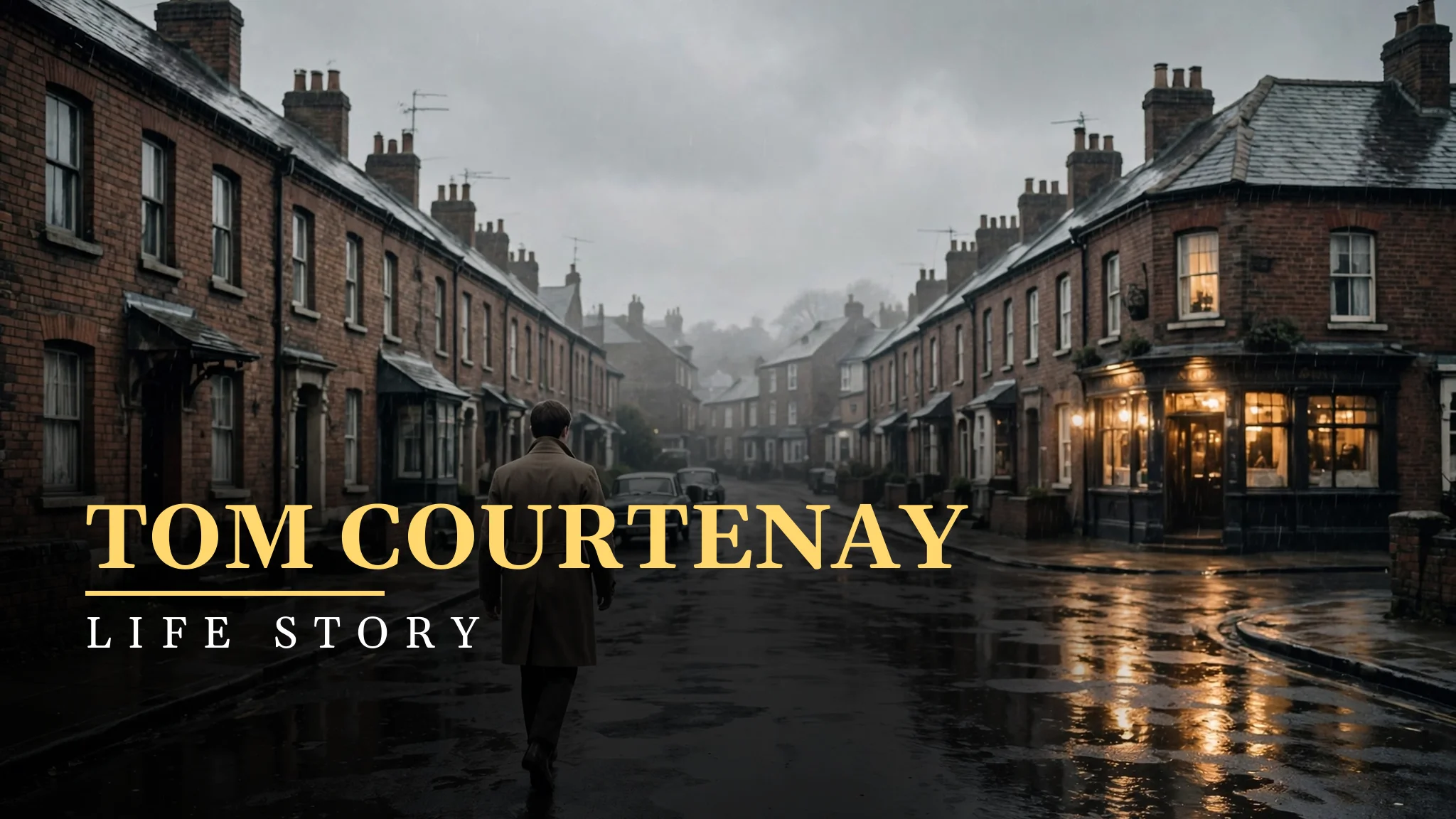
Finally, I think about the image of him walking down a rain-wet street in Hull, in a beige coat, with old cars and warm pub windows around him. It is a fitting image for a man from the north, and for a man who understood working life. He knew that people are not simple, and that even a quiet young man can have a brave heart. That is a truth worth remembering, and it is one that Courtenay’s life and work teach us well.
I also think about his work with Albert Finney in The Dresser, and how two great actors can make a film better together. They were friends, they respected each other, and they gave performances that are still talked about today. I think that is a model for how artists should work: with generosity, with humour, and with a shared love of the craft.
I also think about how he has shown that an actor can get better with age, and that is a hopeful message for all of us. Many people think that acting is a young person’s job, but Courtenay’s best work has come in his seventies. He has played Geoff Mercer with a depth that only comes from living a full life, and he has done it with a grace that makes audiences love him. I hope that gives hope to older actors, and to older people in general.
Frequently Asked Questions
Why was Tom Courtenay’s Billy Liar so loved?
He played a young man in a northern town who dreams of London and tells lies to escape his dull job, in a funny and sad performance that made him a star.
What did Tom Courtenay play in The Loneliness of the Long Distance Runner?
He played Colin Smith, a young runner in a youth prison who refuses to win the final race because he will not run for the people who control him.
Was Tom Courtenay in Doctor Zhivago?
Yes, he played Pasha Antipov, a young revolutionary who loses his wife and child to war, and he was nominated for an Oscar for the role.
What was Tom Courtenay’s role in 45 Years?
He played Geoff Mercer, a man married for forty-five years who learns that the body of his first love has been found, winning the Silver Bear at Berlin.
Did Tom Courtenay win an Oscar?
No, he was nominated twice, for Doctor Zhivago and for The Dresser, but he never won, though he won a BAFTA and many other awards.
Who is Tom Courtenay married to?
He married the actress Cheryl Kennedy in 1973, and they shared a long marriage built on a shared love of theatre.
Was Tom Courtenay knighted?
Yes, he was knighted in 2001 for his services to drama, becoming Sir Tom Courtenay, one of the most honoured actors in Britain.


