Tom Holland: The Life Story Behind Spider-Man's Rise
In this post
Thomas Stanley Holland was born on 1 June 1996 in Kingston upon Thames, in south-west London, into a family where performance was part of daily life. His father, Dominic Holland, is a comedian and author, and his mother, Nicola, is a photographer. He is the eldest of four brothers, with Sam, Harry and Paddy growing up beside him in a house that was loud, funny and full of competition. He attended Donhead, a Catholic preparatory school in Wimbledon, and then Wimbledon College, and he was a keen sportsman as a boy, playing rugby and football and taking gymnastics lessons. The gymnastics would matter later, in a way nobody could have predicted, because it gave him a physical confidence that most young actors do not have, and it taught him to use his body as part of a performance rather than as something separate from it.
Holland was discovered by accident, in the way that sometimes happens with child performers. In 2006, when he was ten years old, he was dancing with his mother at a hip-hop class at the Nifty Feet Dance School in Wimbledon, and a choreographer named Lynne Page spotted him. Page was working on Billy Elliot the Musical, the stage adaptation of the film about a boy from a mining town who wants to dance ballet, and she thought Holland had the energy and the movement for it. He auditioned, and after two years of training, he was cast as Michael, Billy’s best friend, in the West End production in 2008. Later that year he was promoted to the title role, and he played Billy Elliot at the Victoria Palace Theatre in London until 2010. It was a demanding role for a child: singing, dancing, acting and acrobatics, eight shows a week, in front of a large audience, with no room for a bad day. Holland did it for two years, and he has said since that the experience taught him discipline, stamina and the importance of a company, because a musical only works if everyone in it does their job.
The stage work gave him a foundation that most film actors his age did not have. He had learned to project his voice to the back of a theatre, to dance in time with an orchestra, and to perform the same show night after night without letting it become mechanical. He had also learned to handle pressure, because a West End stage is not a forgiving place for a child who forgets a line. When he left Billy Elliot in 2010, he was fourteen years old, and he had already spent two years as a professional performer. He could have gone back to school and forgotten about acting. Instead, he kept going, and the next step was a film that would show the world what he could do.
The Impossible: A Child Actor Becomes a Film Actor
In 2012, at the age of sixteen, Holland starred in The Impossible, a film directed by J. A. Bayona about a family caught in the Indian Ocean tsunami of 2004. He played Lucas, the eldest son, a boy who has to look after his younger brothers while his mother, played by Naomi Watts, is badly injured. The film was shot in Thailand and Spain, in water tanks and on location, and it required Holland to spend long hours in cold water, to act while soaking wet and exhausted, and to carry scenes opposite one of the most respected actresses in the world. He did it with a naturalism that surprised critics, who praised him as one of the best young actors of his generation. He was nominated for awards, including a Critics’ Choice Award, and the film was a commercial success, earning more than one hundred and eighty million dollars worldwide.
The Impossible mattered because it proved that Holland could act on film, not only on stage, and that he could do it without the safety net of a musical. On stage, a performer can rely on the audience’s energy and on the structure of the show. On film, the camera is close, the takes are repeated, and there is nowhere to hide. Holland adapted to it quickly, and the reason was the same discipline he had learned in Billy Elliot: he did the work, he listened to the director, and he did not try to show off. He has said that Naomi Watts taught him a great deal during the filming, particularly about how to stay focused during long, difficult days, and about how to treat the crew with respect. Those lessons stayed with him, and they would become part of his reputation in the years that followed, when directors and co-stars began to describe him as one of the most professional young actors they had worked with.
After The Impossible, Holland took smaller roles that showed his range. He appeared in the film How I Live Now in 2013, in the BBC miniseries Wolf Hall in 2015, playing Gregory Cromwell, and in In the Heart of the Sea in 2015, playing a young sailor in Ron Howard’s film about the whaling ship Essex. None of these roles made him famous, but each of them added something to his experience: a period drama, a literary adaptation, a large-scale adventure film. He was building a career the slow way, role by role, and he was doing it without the pressure of being a star. That would change, suddenly and completely, in 2016.
Becoming Spider-Man: The Audition That Changed Everything
In 2015, Marvel Studios and Sony Pictures announced that Spider-Man would join the Marvel Cinematic Universe, and that they were looking for a new actor to play Peter Parker. The role had been played by Tobey Maguire in three films and by Andrew Garfield in two, and the new actor would have to be younger, funnier and more believable as a teenager than either of his predecessors. Holland auditioned, along with hundreds of other young actors, and he won the part. He has described the audition process as long and nerve-wracking, with screen tests opposite Robert Downey Jr., who played Iron Man, and with the knowledge that the role would change his life if he got it. He was nineteen years old when he was cast, and he was announced as Spider-Man in June 2015.
His first appearance as Spider-Man came in Captain America: Civil War in 2016, where he stole the film in a handful of scenes. He played Peter Parker as a nervous, funny, enthusiastic teenager who could not believe he was fighting alongside the Avengers, and the performance was immediately popular with audiences. The following year he starred in Spider-Man: Homecoming, his first solo film as the character, directed by Jon Watts. The film was a commercial and critical success, earning more than eight hundred million dollars worldwide, and it established Holland’s Spider-Man as a different kind of hero: younger, more vulnerable, more reliant on his friends and his mentor, Tony Stark, than the Spider-Men who had come before. He returned in Avengers: Infinity War in 2018 and Avengers: Endgame in 2019, where his character’s death and return became one of the most emotional moments in the series, and in Spider-Man: Far From Home in 2019, which earned more than a billion dollars worldwide.
The Spider-Man films made Holland one of the most famous young actors in the world, and they also made him a target for the kind of attention that can be difficult for a young person to handle. He was twenty years old when Homecoming was released, and he was suddenly being recognised everywhere he went, photographed, followed, and asked about his personal life. He has spoken about the pressure of that attention, and about the importance of his family and his friends in keeping him grounded. He has also spoken about the responsibility of playing a character who means so much to so many people, particularly to children, and about the care he takes to be a good representative for them. That sense of responsibility is not something every young star has, and it is one of the reasons that Marvel and Sony have kept him in the role for a decade.
No Way Home and the Weight of Three Spider-Men
Spider-Man: No Way Home, released in December 2021, was the biggest film of Holland’s career, and one of the biggest films of the decade. The story brought back Tobey Maguire and Andrew Garfield as their versions of Spider-Man, alongside Holland, in a film that was both a celebration of the character’s history and a story about Holland’s Peter Parker growing up. The film earned nearly two billion dollars worldwide, and it was praised by audiences and critics for the way it handled the three Spider-Men, giving each of them a distinct personality and a reason to be there. For Holland, it was a moment of transition. His Peter Parker lost his aunt, lost his friends’ memories of him, and ended the film alone, a young man who had to start again. It was a darker, more adult ending than the earlier films, and it suggested that the next chapter of the character would be different.
The success of No Way Home also raised a question that Holland has had to answer ever since: how long can he play Spider-Man? He was twenty-five when the film was released, and he has said in interviews that he does not want to play the character forever, and that he wants to explore other roles while he is still young. He has also said that he loves the character and that he would return if the story was right. That tension, between loyalty to a role and the desire to grow beyond it, is one that every actor who plays a superhero faces, and Holland has handled it with a honesty that is unusual for a franchise star. He has not pretended that the decision is easy, and he has not committed to a future he cannot see. A fourth Spider-Man film, with Holland returning, has been announced, and it is expected to be released in 2026, under the title Spider-Man: Brand New Day, which suggests a fresh start for the character.
Beyond the Mask: Uncharted, The Crowded Room and the Stage
While he was playing Spider-Man, Holland also took on other roles that showed what he could do outside the Marvel films. In 2022 he starred in Uncharted, playing Nathan Drake, the treasure hunter from the video game series, opposite Mark Wahlberg. The film was a commercial success, earning more than four hundred million dollars worldwide, and it showed that Holland could lead an action film without a mask or a superpower. He followed it with The Crowded Room in 2023, an Apple TV+ series in which he played Danny Sullivan, a young man arrested for a shooting in New York in 1979, whose story is told through interviews with a psychologist. The role was dark and demanding, and Holland has said that it was the most difficult job he had ever done, and that it took a toll on his mental health. After filming, he announced that he was taking a year off from acting to rest and recover, a decision that was widely praised for its honesty.
The break was important, because it showed a side of Holland that the public had not seen before. He has spoken openly about his mental health, about the pressure of fame, and about the importance of taking time away from work. He has also spoken about his decision to stop drinking, and about the non-alcoholic beer company, Bero, that he founded in 2024, which grew out of his own experience of giving up alcohol. The company, which sells non-alcoholic beer, was a personal project rather than a celebrity endorsement, and it reflected a change in his life that he has been open about. He has also become a keen golfer, and he has played in celebrity golf tournaments, a hobby that gives him a break from the film industry and a different kind of competition.
In 2024 he returned to the stage, playing Romeo in Romeo and Juliet at the Duke of York’s Theatre in London, in a production directed by Jamie Lloyd. The production was a modern, stripped-back version of the play, and it sold out quickly, with tickets in high demand. Holland’s performance was praised, and the return to the stage was a reminder of where he had started, as a child in Billy Elliot, and of the training that had made him an actor in the first place. He has said that the stage is where he feels most at home, and that he wants to do more theatre in the future, even as his film career continues. The Romeo production also showed that he could play a romantic lead, a role that is very different from Spider-Man, and that he could do it in front of a live audience, night after night, without the safety net of a film set.
A Young Star Learning to Last
Holland’s personal life has been public in the way that a young star’s life always is, and he has handled it with a mixture of openness and privacy. His relationship with Zendaya, his co-star in the Spider-Man films, has been followed closely by fans and the press, and the two of them have been photographed together, appeared at events together, and supported each other’s work. They have also kept much of their relationship private, and they have asked for space when they needed it. Reports in early 2025 suggested that they had become engaged, although neither of them has made a formal public announcement about it, and the details remain their own. Holland has also spoken about his brothers, his parents, and the importance of his family in keeping him grounded, and he has said that he wants to have a family of his own one day, and that he does not want to act forever.
What remains, after a decade as Spider-Man and almost twenty years as a performer, is a career that is still in its early stages, but that already has a shape. Holland started as a child on a West End stage, became a film actor in a tsunami drama, and then became one of the most famous young actors in the world as Spider-Man. He has used that fame to do other work, in action films, in television drama, and on stage, and he has been open about the cost of fame and the importance of rest. He is twenty-nine years old, and he has already played one of the most iconic characters in popular culture for a decade. The next decade will show whether he can do what few actors who play a superhero manage to do: build a career that is bigger than the costume, and that lasts long after the mask comes off.
The Dancer Inside the Superhero
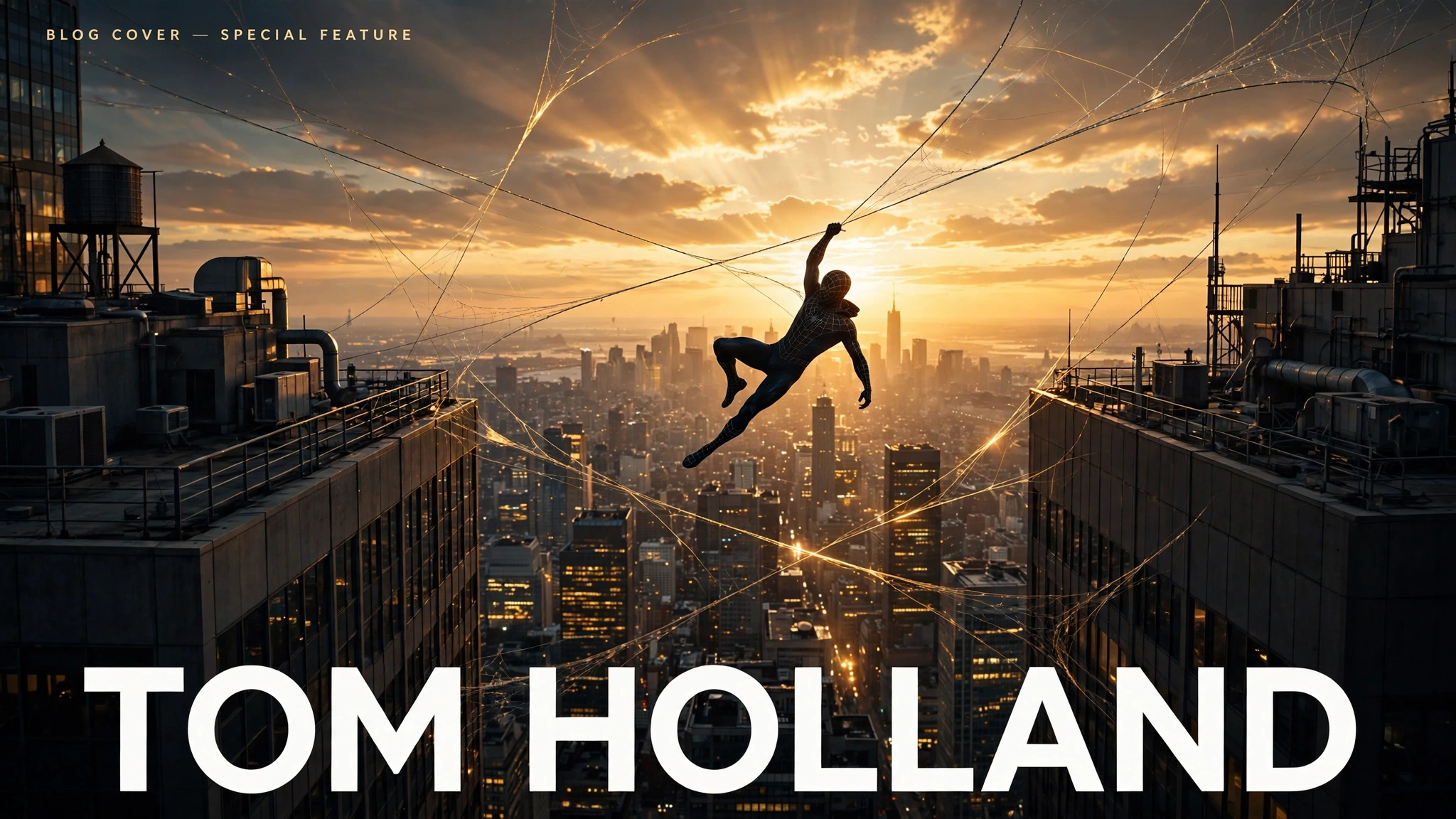
One detail that explains a lot about Holland’s Spider-Man is easy to miss if you only watch the films: he was a dancer before he was a film actor, and a gymnast before he was a dancer. The Spider-Man he plays moves differently from the Spider-Men who came before him, and the difference is visible in the way he fights, climbs and swings. Tobey Maguire’s Spider-Man was earnest and a little clumsy. Andrew Garfield’s was cool and a little arrogant. Holland’s is athletic in a way that looks natural, because it is. He does many of his own stunts, he flips and tumbles with a gymnast’s confidence, and the camera can stay on him longer because he does not need a double for every movement. That physicality is not a special effect. It is the result of years of training, from the hip-hop class where he was discovered, through two years of Billy Elliot, to the gymnastics lessons he took as a boy. It is also why his Spider-Man feels younger than the others. A teenager who has spent his life moving his body is a different kind of hero from a man who has learned to fight as an adult.
The physical work also explains why Holland has been so durable in a role that is hard on the body. Spider-Man films involve wire work, stunts, long days in a suit that is hot and uncomfortable, and action sequences that are filmed over weeks. Holland has spoken about the injuries he has picked up, including a concussion during the filming of No Way Home, and about the importance of training and recovery. He has also spoken about the fact that he enjoys the physical side of the work, and that it is one of the reasons he likes playing Spider-Man. That enjoyment is visible on screen. When his Spider-Man swings through New York, or lands on a rooftop, or fights in a collapsing building, there is a joy in the movement that is hard to fake, and it is one of the reasons audiences, particularly younger audiences, love his version of the character. He is not just playing a superhero. He is playing a teenager who has discovered that he can do extraordinary things with his body, and who is delighted by it.
The fan culture around Holland is also different from the fan culture around most superhero actors, and it is worth understanding. His fans are younger, on average, than the fans of many other Marvel stars, and they follow him on social media, where he has tens of millions of followers. He has used that platform to share behind-the-scenes material, to promote his films, and to talk about his life, but he has also stepped back from it at times, deleting his social media accounts and taking breaks when the attention became too much. In 2022 he announced that he was taking a break from social media for his mental health, and the announcement was widely praised. It was a reminder that the actor behind Spider-Man is a young man in his twenties, and that the pressure of being watched by millions of people is real. His willingness to say that, publicly, is part of why his fans trust him, and part of why his career has lasted as long as it has.
My Take:
Tom Holland is the Spider-Man I grew up with, in the sense that I watched him become Spider-Man in real time, and I think that is why his version of the character feels different from the ones that came before. Tobey Maguire was Spider-Man for a generation that discovered the character in the cinema. Andrew Garfield was Spider-Man for a generation that discovered him on the internet. Holland is Spider-Man for a generation that grew up with him, that watched him go from a nineteen-year-old unknown to a twenty-nine-year-old star, and that saw him grow up on screen in the same way that Peter Parker grows up in the films. That shared growing up is the most important thing about his Spider-Man, and it is the reason that audiences feel a personal connection to him that they do not feel with other superhero actors.
I think the key to Holland’s Spider-Man is that he plays Peter Parker as a teenager first and a superhero second. When he first appeared in Captain America: Civil War, he was nervous, funny and enthusiastic, a boy who could not believe he was fighting alongside the Avengers, and who kept talking because he was excited and frightened at the same time. That was not a performance. That was a nineteen-year-old actor who was genuinely excited and frightened to be on a set with Robert Downey Jr., and who let the audience see it. The honesty of that performance is what made it work, and it is what has made every Spider-Man film since then work. Holland does not play Peter Parker as a hero who happens to be young. He plays him as a young person who happens to be a hero, and the difference is everything.
What impresses me most about Holland is that he was a stage actor before he was a film star, and he has never forgotten it. He played Billy Elliot in the West End for two years, eight shows a week, singing, dancing and acting in front of a live audience, and that experience gave him a discipline that most young film actors never learn. On a stage, there is no second take, no editing, no camera to save you if you forget a line. You have to be present, you have to be prepared, and you have to do it again the next night. Holland learned that at twelve years old, and it shows in the way he works now. Directors and co-stars describe him as one of the most professional young actors they have worked with, and I think the reason is that he learned professionalism when he was a child, on a stage, where it was not optional.
The Impossible is the film I would show to someone who thinks Holland is only Spider-Man, because it proves that he could act before he was famous, and that he could do it without a costume or a superpower. He was sixteen when he made it, playing a boy who has to look after his younger brothers while his mother is badly injured in a tsunami, and he did it with a naturalism that is rare in a child actor. There is a scene where he sits with his mother in a hospital, and he does not cry, he does not make a speech, he just sits there, and the scene is devastating because of what he does not do. That kind of restraint is hard to learn, and it is hard to watch, because it asks the audience to pay attention to silence. Holland learned it at sixteen, and he has carried it with him ever since.
No Way Home is the film that changed my view of him most, because it was the first time his Spider-Man had to grow up in a way that could not be undone. The film brought back Tobey Maguire and Andrew Garfield, and it gave each of them a moment to shine, but the story belonged to Holland. His Peter Parker lost his aunt, lost his friends’ memories of him, and ended the film alone, a young man who had to start again. It was a darker ending than the earlier films, and it was a brave choice for a franchise that had always been bright and funny. Holland played it with a sadness that felt real, not performed, and the final scene, where he swings through New York alone, is one of the most moving moments in any superhero film. It was a reminder that Spider-Man is not only a hero. He is a boy who has lost everything, and who keeps going anyway.
I also want to talk about The Crowded Room, because it is the project that showed what Holland is willing to risk. He played Danny Sullivan, a young man arrested for a shooting in New York in 1979, in a series that was dark, difficult and psychologically demanding, and he has said that it was the hardest job he had ever done, and that it took a toll on his mental health. After filming, he took a year off from acting, and he spoke openly about the decision. I respect that more than any performance. An actor who is willing to say that a role hurt him, and that he needs time to recover, is an actor who takes the work seriously, and who understands that the work is not worth destroying yourself for. In an industry that rewards people for never stopping, Holland stopped, and he did it publicly, and that is a brave thing to do.
His openness about mental health and about giving up alcohol is another part of his story that I think matters. He founded Bero, a non-alcoholic beer company, in 2024, and he has spoken about his decision to stop drinking, and about how it changed his life. He has also spoken about taking a break from social media for his mental health, and about the pressure of being watched by millions of people. These are not the things that a young star is supposed to talk about. A young star is supposed to be perfect, to be happy, to be grateful, and to never complain. Holland has been honest instead, and that honesty has made him more trusted, not less. His fans do not love him because he is perfect. They love him because he is honest about not being perfect, and because he is trying to do better.
There is a criticism of Holland that I hear sometimes, and I want to be fair about it. Some people say that he is too young, too boyish, too light, and that his Spider-Man lacks the darkness that the character needs. I understand where that criticism comes from, particularly if you grew up with Tobey Maguire’s more serious Spider-Man. But I think the criticism misses what Holland is doing. His Spider-Man is young because Peter Parker is young, and the lightness is part of the character, not a flaw in the performance. A teenager who has just discovered that he can swing through a city should be joyful, and Holland lets the audience see that joy. The darkness comes later, in No Way Home, when he loses the people he loves, and Holland plays that darkness just as well as he played the joy. An actor who can do both is not too light. He is versatile, and versatility is a harder achievement than darkness.
His return to the stage in 2024, playing Romeo in Romeo and Juliet at the Duke of York’s Theatre, was another reminder of where he started, and of what he values. He could have spent that year making another film, earning more money, and reaching a larger audience. Instead he chose to play Romeo, a role that is demanding, romantic and tragic, in front of a live audience, night after night, in a theatre that holds fewer than a thousand people. That is not a commercial decision. It is an artistic one, and it is the kind of decision that an actor makes when he cares about the work more than the fame. The production sold out, and his performance was praised, and it proved that he could play a romantic lead, a role that is very different from Spider-Man, and that he could do it without a mask or a special effect.
Looking at the whole picture, from Billy Elliot to No Way Home to Romeo and Juliet, what I take from Tom Holland is that a career is built slowly, even when it looks fast from the outside. He was discovered at ten, he played Billy Elliot at twelve, he made The Impossible at sixteen, and he became Spider-Man at nineteen. That looks like a rapid rise, but it was actually a decade of training, of eight shows a week, of long days on a film set, of learning to be professional before he was famous. The fame came later, and it came to an actor who was already prepared for it, because he had spent ten years learning how to work. That is a rare thing, and it is the reason that, a decade after he became Spider-Man, he is still working, still choosing carefully, and still growing. The next decade will show whether he can build a career that is bigger than the costume, and I think he can, because he has already shown that he is more than the mask. He is an actor who started on a stage, who learned to dance and to act and to work hard, and who has never forgotten any of it.
One more thing I keep thinking about is the relationship between Holland and Zendaya, because it is a rare example of two young stars handling fame well together. They met on the Spider-Man films, they became friends, and then they became a couple, and they have done it in public without turning it into content. They support each other’s work, they appear together when they want to, and they ask for privacy when they need it. Reports in early 2025 suggested that they had become engaged, and whether or not that is confirmed, the way they have handled the attention is a lesson in itself. They have not used their relationship to sell a film, and they have not hidden it either. They have drawn a line, and they have kept it, and that is harder than it looks when millions of people are watching.
Finally, I want to say something about what Holland’s story means for young actors who are watching him now. When he started, the path for a child actor was narrow, and the risk of burning out was high. He survived it, not by being the most talented child in the room, although he was talented, but by being the most disciplined, by learning to work hard, by listening to the people around him, and by knowing when to stop and rest. The year off after The Crowded Room was not a failure. It was a sign that he understood something that many actors learn too late: a career is a long distance, not a sprint, and you cannot run it if you do not take care of yourself. Holland is twenty-nine, and he has already spent almost twenty years performing. If he keeps making the choices he has made so far, choosing the stage as well as the screen, choosing honesty over perfection, and choosing rest when he needs it, he will still be acting in twenty years, and he will still be surprising people. That is a career worth watching, and it is one that is still only just beginning.
That is the measure I will keep using for him. Not the box office, not the number of followers, not the size of the next Spider-Man film, but the quality of the choices. So far, the choices have been good, and they have been his own. If that continues, the best work is still ahead of him, and it will be worth waiting for.
Frequently Asked Questions
How old was Tom Holland when he became Spider-Man?
He was 19 when he made his Marvel debut as Spider-Man in Captain America: Civil War in 2016, and 20 when his first solo Spider-Man film was released in 2017.
Was Tom Holland in Billy Elliot?
Yes. He played the title role in Billy Elliot the Musical on the West End in London from 2008, after being spotted in a dance class and going through a long audition process.
What was Tom Holland’s first major film?
His first major film role was in The Impossible in 2012, where he played Lucas, a teenage son separated from his family by the tsunami.
Why did Tom Holland take a break from acting?
He has said that the emotionally demanding television drama The Crowded Room took a toll on him, and he wanted time to rest and to look after his mental health.
Is Tom Holland in Uncharted?
Yes. He played Nathan Drake in Uncharted in 2022, a large adventure film based on the popular video game series.
What is Tom Holland doing next?
He has returned to the stage in London, and further Spider-Man films have been reported in development, alongside his growing work as a producer.


