Tour de France 2027: Preview and What to Watch
In this post
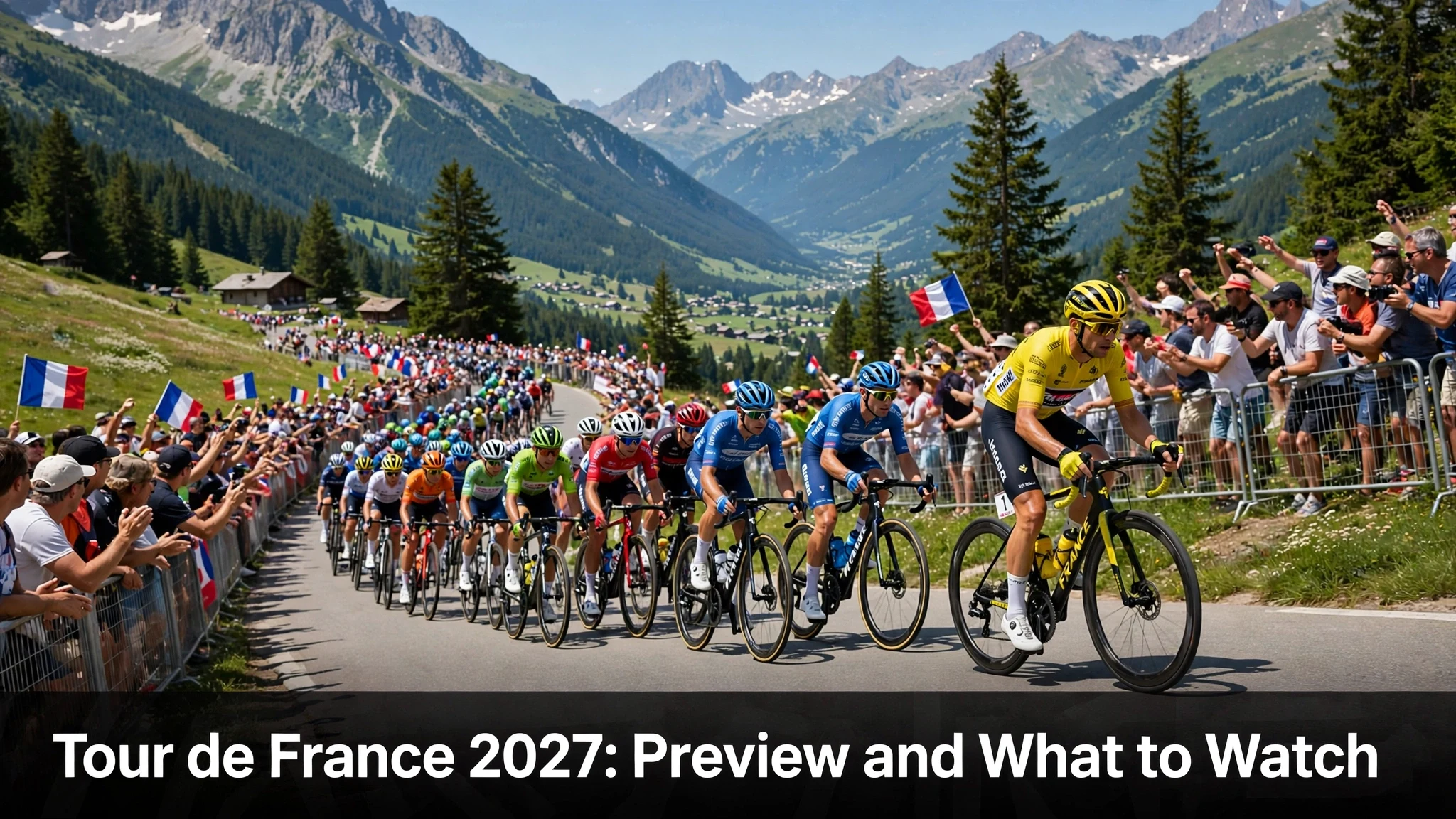
For three weeks every summer, the Tour de France turns France into a moving festival. The race passes through villages where people have waited all year for a few seconds of colour, climbs mountains where the crowds are ten deep, and finishes on the Champs-Elysees in Paris in front of a sea of flags. It is the biggest race in cycling, and winning it, or even wearing the yellow jersey for a single day, can define a rider’s entire career.
The 2027 Tour will follow its familiar rhythm: flat stages for the sprinters, time trials for the specialists, and mountain stages where the overall race is decided. The route, the exact start city, and the team lists are announced by the organisers closer to the race, and this preview will not guess them. Instead it explains how the race works, what to watch in each kind of stage, and which riders and teams are likely to shape the yellow jersey battle.
How the Tour de France Works
Consider the Tour lasts about three weeks and covers more than three thousand kilometres, usually in twenty-one stages. At first, the mountain stages can pass for a footnote in the Tour de France 2027, the kind of detail a rushed fan would skip, yet on the road it is often the moment where a solid plan holds or collapses at the first climb. The sharpest method in the Tour de France 2027 is to spell it out: name the precise move, the precise rider, or the precise figure linked to the race, and sweep away the haze that lets trouble stay buried.
One point that keeps coming up is each day’s stage winner is celebrated, but the overall winner is the rider with the lowest total time. Experienced people talk about the mountain stages in the Tour de France 2027 not because it is fashionable in the peloton, but because they have lived through what happens without it, and newcomers generally learn its worth only after a fall. If you build your race plan for the Tour de France 2027 around the mountain stages from day one, you sidestep the most familiar regret here, which is noticing too late that the plain move was the crucial one.
Here is a helpful lens for it: the leader wears the yellow jersey, the most famous shirt in cycling, and defends it every day. Picture the race a month out, not merely today, and ask whether the call still reads wisely in the Tour de France 2027 when the thrill has ebbed and the daily grind has taken hold. That wider lens alters many calls in the Tour de France 2027, because it divides what feels delightful right now from what genuinely serves the race across the months, and it guards you against hunting a swift prize that charges more afterwards.
The clues, such as they stand, all bend one way: teams work together, with domestiques protecting their leader, fetching water, and setting the pace. Nobody can swear to a sure outcome in the Tour de France 2027, and whoever does should be met with scepticism, but the drift around the race is firm enough to follow. Keep your hopes for the Tour de France 2027 honest, measure the result for the race in a bare way you can genuinely test, and fine-tune after a short trial instead of awaiting a perfect day that never appears.
The Jerseys: More Than Just Yellow
A common mistake is to overlook the yellow jersey goes to the overall leader, and it is the prize every contender wants most. It is easy to overlook the mountain stages in the Tour de France 2027, because the noisiest, brightest pieces hog every eye, while this softer piece performs the genuine labour unseen. The cure in the Tour de France 2027 is simple and cheap: put the mountain stages on a pocket list, run through it before you choose, and ask a steady friend whether you have dropped anything, because new eyes catch what thrill overlooks.
Look closely at the green jersey is for the points leader, usually a sprinter who finishes near the front on flat stages, and the pattern repeats across old Tours, where the climbs themselves divide leaders from the chasing bunch. That reveals a great deal about the Tour de France 2027. Watch how former winners rode the Tour de France 2027, steal the idea within it, reshape it for your own season, and hold on to only the pieces that match your hours, your cash, and your daily rhythm, because a system at war with your life fades fast.
A quiet timing puzzle sits behind the polka-dot jersey goes to the best climber, the rider who collects the most points on mountain passes. Done too early in the Tour de France 2027, it can seem pointless, and done too late it can seem like alarm, so the centre line usually wins: strike once you grasp enough about the race to strike, but before tension drives a hurried call. Set a date for the race, even an approximate one, and hold that date as a solid vow to the Tour de France 2027 rather than a faint hope.
What surprises many people about the white jersey is for the best young rider, and it often points to a future Tour winner is how heavily it leans on little routines instead of one sweeping choice. A couple of minutes given to the race before you ride, a jotted reminder, or one easy chat with your domestique about the Tour de France 2027 can tilt the outcome more than any heroic attack, and those little routines gather weight steadily through the weeks ahead. Shape the routine first around the Tour de France 2027, keep it plain enough to redo on a frantic day, and let the wider outcome for the race follow from patient habit.
Flat Stages and the Sprinters
Finally, remember that flat stages usually end in a bunch sprint, with teams forming a train to launch their sprinter at high speed is no iron law; it is a hint to check against your own race. If it matches the race, hold it and hone it; if it fails to match the Tour de France 2027, adjust the details without deserting the thinking behind it. The riders who fare best in the Tour de France 2027 are not the ones who mind every tip to the letter, but the ones who notice the race, learn from the opening stage, and polish the next one.
A sprint finish is decided in seconds, and a crash in the final kilometres can end a rider’s Tour. That matters more in the Tour de France 2027 than most watchers understand, because one small call here steers what comes next for the race, and a wrong call is generally settled later, silently, in squandered hours or dented belief. The shrewd step in the Tour de France 2027 is to trial the idea on one small, genuine climb first, see what truly happens with the race, and only then commit outright, instead of leaning on a headline or a lone tip.
Start with this: Crosswinds on flat stages can split the field, and a careless team can lose minutes in a single afternoon. In the Tour de France 2027, this rarely arrives with fanfare, and it surfaces in hushed moments, in a chat, a deadline, or a call taken under strain, and those hushed moments are where the result for the race is genuinely fixed. Riders who linger here in the Tour de France 2027, note down what they foresee from the race, and set it beside what unfolds a week later absorb lessons far sooner than riders who merely push ahead.
The sprinters’ teams control the race on these days, chasing breakaways and keeping the pace high — and the reason it counts is that it ties straight to the prize most watchers genuinely want, not to a footnote. When this slice of the Tour de France 2027 is run well, several other slices of the race grow simpler in one stroke, and when it is run poorly, even a sturdy plan begins to tremble. So treat the mountain stages as a foundation for the Tour de France 2027, not a closing flourish, and spare it the hours it deserves before moving forward.
The Mountains: Where the Tour Is Won
Consider mountain stages include long climbs where the strongest riders attack and the weakest are left behind. It can pass for a footnote in the Tour de France 2027, simple to overlook on a hectic day, yet time after time it proves to be the divide between the race working well and the race crumbling under strain. Make it explicit in the Tour de France 2027 by naming the precise move, the precise rider, or the precise figure at stake, and sweep away the haze that lets trouble stay buried in the race.
One thread that keeps returning is the famous climbs, such as Alpe d’Huez and Mont Ventoux, are part of cycling history and draw huge crowds. People with experience in the Tour de France 2027 keep circling round this point because they have witnessed the race falter without it, and rookies generally absorb the same lesson only after tripping up themselves. Shape the race around this point from day one, and you sidestep the regret most riders in the Tour de France 2027 recall, which is noticing too late that the plain move mattered most.
Here is a helpful lens for it: a mountain stage can change the overall standings by minutes, not seconds, which is why contenders fear them. See the scene a month out in the Tour de France 2027, not merely today, and ask whether the call still reads wisely once the thrill has ebbed and the daily grind has taken hold. A wider lens alters many calls about the Tour de France 2027, because it divides a call that feels delightful today from one that serves the race across the months, and it guards you against hunting a swift prize that charges more afterwards.
The clues, such as they stand, all bend one way: the weather in the mountains, including rain and cold, can make a hard stage even harder. No one can swear to the outcome of the race, and a person who swears to one in the Tour de France 2027 should be met with scepticism, yet the drift holds firm enough to follow. Stay candid about what the Tour de France 2027 can deliver, check the race with one bare gauge you can genuinely see, and fine-tune after a short trial instead of awaiting a perfect day that never appears.
Time Trials: The Race of Truth
A common mistake is to overlook a time trial is a solo race against the clock, with no help from teammates and nowhere to hide. People miss it easily in the Tour de France 2027, because the noisiest, brightest pieces of the race hog every eye, while this softer piece performs the genuine labour unseen. A bare and cheap cure for the race is a short checklist: review the mountain stages before you choose, and ask a steady friend whether you have dropped anything, because new eyes catch what thrill overlooks in the Tour de France 2027.
Look closely at specialists can gain minutes here, while climbers who struggle against the clock can lose their lead, and you will catch it in almost every fine case of this topic, even when the cases seem utterly unlike one another at a glance. That hints at something useful about the Tour de France 2027. Never lift another rider’s precise routine for the Tour de France 2027, and borrow the wisdom behind it instead, then fit it to your own hours, cash, and habits, because a system that battles your life fades fast.
There is also a timing riddle tucked inside the bikes, helmets, and positions are designed for speed, and small details matter enormously. In the Tour de France 2027, a premature move can seem pointless and a belated one can seem like alarm, so hold the centre: strike once you grasp enough about the race, but before the chance glides by and the call is taken from you. Fix a date for the Tour de France 2027, even an approximate one, and hold that date as a solid vow rather than a dim hope about the race.
What surprises many people about a time trial near the end of the Tour is often the final chance for a contender to take the yellow jersey is how heavily it leans on little routines instead of one sweeping choice. When it comes to the Tour de France 2027, a touch of groundwork, a jotted line, or a soft word at the perfect instant often outshines any heroic attack, and repeating those little moves week upon week is what cements them into a genuine routine. Begin with the routine itself, keep it small enough to redo during the Tour, and believe that the wider outcome in the Tour de France 2027 will rise from patient habit.
The Contenders for the Yellow Jersey
Finally, remember that the favourites are usually riders who can climb, time trial, and recover day after day for three weeks is no iron law; it is a hint to check against your own race. When a move matches the Tour de France 2027, hold it and hone it gently, and when it fails to match, adjust the details rather than junking the whole notion. In the Tour de France 2027, the finest results land with the riders who observe keenly, learn from the opening attempt with the race, and polish the next one, not with the riders who mind every tip to the letter.
A strong team matters as much as a strong leader, because the mountains expose a rider without support. In the Tour de France 2027, this weighs more than most watchers understand, because one small call about the race steers what comes next, and a wrong call is generally settled later, silently, in squandered hours or dented belief. Trial the idea on one small, genuine climb first when it comes to the Tour de France 2027, see what truly happens, and only then commit outright to the race, instead of leaning on a headline or a lone tip.
Start with this: A young rider who has won a shorter stage race may arrive as a dark horse, ready to surprise the established names. It rarely arrives with drama in the Tour de France 2027, and it generally surfaces in hushed moments, in a chat, a deadline, or a call taken under strain, and those moments are where the race is really decided. In the Tour de France 2027, the riders who absorb lessons fastest are the ones who linger, note down what they foresee, and set it beside what truly unfolds a week later, instead of merely pushing ahead.
Injuries and crashes in the first week can remove a favourite before the mountains even begin — and the reason it counts is that it ties straight to the prize most watchers genuinely want, not to a footnote. Run this slice of the Tour de France 2027 well, and heaps of other pieces slip into place in one stroke, but bungle it, and even a sturdy plan for the race begins to tremble. Treat this slice of the Tour de France 2027 as a bedrock, not a closing flourish, and spare the race proper time before moving on.
Breakaways, Crashes and the Drama of the Road
Consider a breakaway is a small group that escapes the main field, and on some days it stays away to win the stage. In the Tour de France 2027, this point often seems too small to count, the sort of thing a hasty person skips, yet it generally fixes whether the race stands firm at the first knock or crumbles when it is tested. In the Tour de France 2027, the keenest method is to name the precise move, the precise rider, or the precise figure behind the race, and to sweep away the haze that lets trouble stay buried.
One point that keeps coming up is crashes are the cruel side of the Tour, and a single fall can end months of preparation in seconds. Those who know the Tour de France 2027 well point it out because they have felt the cost of skipping it, not because it sounds clever, and riders new to the race generally learn that only after a fall of their own. Start the Tour de France 2027 with this point at the heart, and you sidestep the usual regret, which is finding too late that the move you skipped was the one the race needed most.
Here is a helpful lens for it: the race passes through towns where fans have waited for hours, and their support lifts tired riders. Look a month ahead in the Tour de France 2027, past today, and ask whether the call for the race still reads wisely when the thrill has ebbed and the daily grind has taken hold. A wider lens in the Tour de France 2027 alters the call, because it divides what feels delightful right now from what genuinely helps the race across the months, and it guards you against hunting a swift prize that charges more afterwards.
The clues, such as they stand, all bend one way: team tactics, such as sending a rider ahead to help later, are a hidden part of the race that television does not always explain. A guaranteed result in the Tour de France 2027 is something nobody can honestly swear to, so meet anyone who offers one with scepticism, even though the drift for the race is firm enough to steer by. Be candid with yourself about the race, gauge it in a bare way you can test during the Tour, and shift course after a short trial rather than awaiting a perfect day in the Tour de France 2027 that never appears.
How to Follow the Tour as a Fan
A common mistake is to overlook each stage is broadcast live, with commentary explaining the tactics as the race unfolds. The mistake is easy in the Tour de France 2027, because the exciting parts of the race grab every eye, while this softer piece performs the genuine labour unseen with nobody noticing. Keep the cure plain in the Tour de France 2027: write the mountain stages on a pocket list, run through it before you choose, and ask a steady friend whether you have dropped anything, because new eyes catch what thrill overlooks.
Look closely at the official Tour website and app provide live timing, stage profiles, and rider information, and you will catch it in almost every fine case of this topic, even when the cases seem utterly unlike one another at a glance. That small hint says a great deal about the Tour de France 2027. Take the wisdom behind a sound routine for the Tour de France 2027 rather than the routine itself, reshape it for your own days and habits, and hold on to only the pieces that match your hours and cash, because a system at war with your life fades fast.
There is also a timing riddle tucked inside the final stage in Paris is a celebration, with the winner traditionally allowed to enjoy the ride into the capital. Too soon, and the move seems pointless in the Tour de France 2027; too late, and it seems like alarm, so the wise centre is to strike once the race is clear enough to weigh, yet before tension twists a serene call into a hurried one. Set a date, even an approximate one, for the next move in the Tour de France 2027, and hold it as a solid vow to the race rather than a faint hope.
What surprises many people about for new fans, following one rider or one team makes the three weeks easier to understand and more enjoyable is how heavily it leans on little routines instead of one sweeping choice. A jotted line, a couple of minutes of thought, or a serene chat can tilt the race more than a heroic attack ever could, and when it comes to the Tour de France 2027 those serene routines gather weight until they steer the whole result. Shape the small routine first, keep it plain enough to redo on a frantic day, and let the race rise from that repetition instead of chasing a grand prize in the Tour de France 2027 all at once.
My Take:
Another point I keep returning to is that the three weeks of the Tour, which turn France into a moving festival every summer is not fixed; it changes as Tour de France 2027 changes, and as your own situation changes too. What worked a year ago in the Tour de France 2027 may not work now, and what works for someone else may not work for you, so the right move is to revisit the race honestly rather than defending an old choice. I respect people who change their mind about the Tour de France 2027 when the facts change far more than people who stay loyal to a decision about the race that no longer fits.
My final thought on Tour de France 2027 is that the yellow jersey, the most famous shirt in cycling, which a rider defends every single day is where good judgement shows. It is easy to be impressed by something new in the Tour de France 2027, and much harder to judge the race calmly, to weigh what it gives against what it costs, and to admit when it is not right for you. If you can do that in the Tour de France 2027, slowly, honestly, and without pressure from anyone else, you will make a better choice about the race than most people, and you will feel better about it a year from now.
In the end, I think the test for Tour de France 2027 is simple: does the mountain stages, where the race is decided by minutes rather than seconds make your life easier in a way you can actually feel, or does it only sound good when someone explains it? If you can feel the difference that the Tour de France 2027 makes in a real week, trust that feeling. If you cannot feel it in the Tour de France 2027, wait, ask more questions, and do not let urgency or a good-looking offer decide for you, because a good choice made next month beats a rushed choice about the race made today.
My honest view on the famous climbs, where crowds ten deep cheer riders up slopes that look impossible is that it tells you more about the real quality of Tour de France 2027 than any headline or advertisement ever will. I have watched people choose well in the Tour de France 2027 and feel calm about it months later, and I have watched people ignore the race and pay for that choice in small, daily frustrations. That is why I would rather spend extra time on this one point in the Tour de France 2027 than rush past it toward something that looks more exciting but matters less for the race in the long run.
I keep coming back to the time trial, the race of truth, where a rider has no teammates and nowhere to hide because it is the part of Tour de France 2027 that people talk about after the novelty fades. They do not talk about first impressions of the Tour de France 2027; they talk about whether this part of the race held up on ordinary days, under ordinary pressure, and whether they would make the same choice again. If the answer is yes in the Tour de France 2027, the choice was probably sound, and if the answer is no, no extra detail about the race can rescue it.
Here is where I would push back a little: too many guides treat the green jersey for sprinters and the polka-dot jersey for climbers, which give every kind of rider a prize as a footnote to Tour de France 2027, when in my view it belongs near the top of the list. The reason is simple: when this part of the Tour de France 2027 goes wrong, it colours everything else about the race, and when it goes right, it quietly makes the rest of the experience feel easy. So I would test this first in a real situation in the Tour de France 2027, and walk away if the test feels wrong, even when the option in front of me looks generous.
One thing I have learned about Tour de France 2027 is that the team work behind the leader, the domestiques who fetch water and set the pace without glory rewards patience in a way that shortcuts never do. A rushed decision about the Tour de France 2027 usually looks fine for a week and then starts to cost time, money, or confidence, while a patient decision about the race feels slow at first and then pays back steadily. I would rather wait a week and choose well in the Tour de France 2027 than choose in an afternoon and spend months fixing the race.
I also think the breakaway, a small group that escapes and sometimes stays away to win the stage reveals the priorities of the people behind Tour de France 2027. When they get this right in the Tour de France 2027, it usually means they thought about the person involved, not only about the result, and when they get it wrong about the race, it usually means the opposite. That is a useful test in the Tour de France 2027, because it is hard to fake: you can dress up a weak choice, but you cannot fake careful thinking about the details of the race that actually affect someone’s day.
If I had to give one piece of advice about Tour de France 2027, it would be this: do not decide on the crash that can end months of preparation in seconds, which is the cruel side of the race alone, in isolation, and do not decide on it in a hurry. Compare two or three real ways of following the race for the Tour de France 2027, write down the difference in plain words, and ask what each one looks like after six months of ordinary use. The option in the Tour de France 2027 that still looks good after six months is usually the right one for the race, even if it was not the cheapest or the flashiest on day one.
There is a cost to ignoring the final stage in Paris, a celebration after three weeks of suffering that rarely shows up as a single bill; it shows up as a series of small irritations around Tour de France 2027, each one minor on its own, that together steal time and patience. People often blame themselves for those irritations in the Tour de France 2027, when the real cause was a choice about the race made without enough information. A better approach in the Tour de France 2027 is to check this point about the race before you commit, while walking away is still free and easy.
What I value most in Tour de France 2027 is not the biggest feature but the way the advice to follow one rider or one team, which makes the Tour far easier for a new fan is handled, because that is what you live with every day. A strong result in the Tour de France 2027 covers several small weaknesses elsewhere, while a weak result in the race exposes them all, and no amount of talk can change that balance. So I would rather give the Tour de France 2027 a little more time, or wait a little longer, for the approach that treats the race properly.
I would also warn anyone considering Tour de France 2027 not to trust a single glowing review on the route announcement, which should be trusted from the organisers rather than from rumours. Reviews about the Tour de France 2027 are useful, but they are snapshots, and the most honest picture of the race comes from several sources over time, including people who changed their mind. Look for the pattern across those voices in the Tour de France 2027, not the loudest single opinion about the race, and trust the pattern more than the promise.
Frequently Asked Questions
When is the Tour de France 2027?
The Tour de France is traditionally held in July. The exact dates and route for 2027 are announced by the organisers, Amaury Sport Organisation, so fans should check official Tour channels for the confirmed schedule.
How long is the Tour de France?
The Tour usually lasts about three weeks and covers more than three thousand kilometres in twenty-one stages. It includes flat stages, mountain stages, and time trials, with rest days in between.
What is the yellow jersey in the Tour de France?
The yellow jersey is worn by the rider with the lowest total time, the overall leader of the race. It is the most famous jersey in cycling, and the rider who wears it into Paris is the Tour winner.
How does a rider win the Tour de France?
A rider wins by having the lowest total time across all stages. Contenders must climb well, time trial well, and recover day after day, with strong team support, for three weeks.
Who are the favourites for the Tour de France 2027?
The favourites are usually the riders who have won or contended in recent Grand Tours and who can climb and time trial. Final form will only be clear after the spring races, and crashes can change the picture quickly.
How can I watch the Tour de France 2027?
The Tour is broadcast live in most countries, with live timing and stage information on the official Tour website and app. Check local listings closer to the race for the broadcasters in your region.