Travis Scott: The Life Story Behind the Rap Superstar
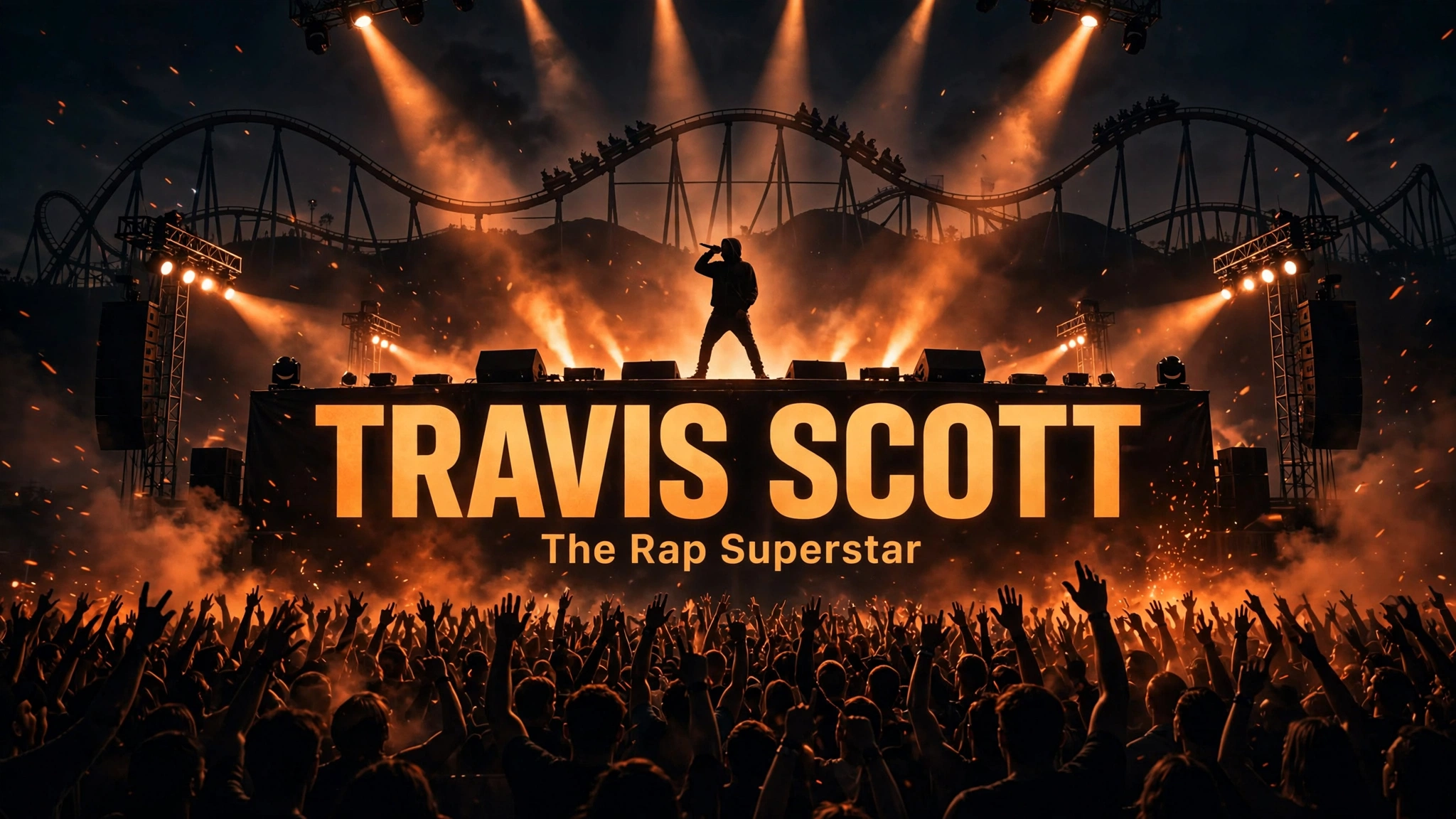
In this post
Growing Up in Houston and Missouri City
Jacques Bermon Webster II was born on April 30, 1991, in Houston, Texas, and was raised in Missouri City, a suburb of Houston, by his parents, in a household that was middle-class, loving, and musical. His father was a soul musician, his grandfather was a jazz composer, and his mother worked for Apple, and the family was surrounded by music, by instruments, and by the sounds of Houston, a city with a rich hip-hop tradition. Travis, as he was known, grew up listening to the music of his city, to DJ Screw, to UGK, to the chopped and screwed sound that defined Houston hip-hop, and he absorbed it, note by note, beat by beat. He attended Elkins High School in Missouri City, where he was a good student, a drummer in the school band, and a young man who was already making music, producing beats, and dreaming of becoming a rapper. He was not a boy from the streets; he was a boy from the suburbs, with a musical family, and with a dream that was bigger than his circumstances.
He has spoken about his childhood with fondness, about the music, about the family, and about the sense of community in Missouri City, and he has also spoken about the influence of his grandfather, a jazz musician, who taught him about music, about improvisation, and about the importance of being original. He was a teenager who was obsessed with music, who spent hours in his room, making beats, writing rhymes, and imagining a future in which he would be a star. He attended the University of Texas at San Antonio, where he studied for two years before dropping out to pursue music full time, a decision that was difficult, that disappointed his parents, and that was, in retrospect, the right one, because the music was calling him, and he knew that he had to answer it. He moved to New York, then to Los Angeles, with little money, and with a dream that was bigger than his fear.
The move to Los Angeles was a turning point, because it was there that he met the people who would change his life, including the producer Mike Dean, the rapper T.I., and, most importantly, Kanye West, who would become his mentor. He was a young man with a mixtape, with a sound, and with a vision, and he was looking for someone to believe in him, to give him a chance. He found that person in Kanye West, who signed him to his label, GOOD Music, and who took him under his wing, teaching him about production, about art, about fashion, and about the business of music. The mentorship was transformative, and it set Travis Scott on a path that would lead him to the top of hip-hop, to stadiums, to festivals, and to a career that is still unfolding.
Owl Pharaoh, Days Before Rodeo, and the Mixtape Years
Travis Scott’s first mixtape, Owl Pharaoh, was released in 2013, and it was a critical success, a project that showcased his talent as a producer, as a rapper, and as a visionary, with a sound that was dark, atmospheric, and psychedelic, influenced by Kanye West, by Kid Cudi, and by the Houston sound he had grown up with. The mixtape featured collaborations with T.I., Wale, and 2 Chainz, and it established Scott as one of the most promising young artists in hip-hop, a person who was not just a rapper but a producer, a curator, and an architect of sound. He followed Owl Pharaoh with Days Before Rodeo in 2014, a mixtape that was even more acclaimed, featuring the hits Don’t Play, featuring Big Sean and The 1975, and Mamacita, featuring Rich Homie Quan and Young Thug, and that built a fanbase that was passionate, loyal, and growing. The mixtapes were not just music; they were worlds, with a aesthetic, a sound, and a vision that were unmistakable, and they made Scott a star in the underground, a person to watch.
His debut studio album, Rodeo, was released in 2015, and it debuted at number three on the Billboard 200, featuring the hits 3500, featuring Future and 2 Chainz, and Antidote, which became his first top twenty hit. The album was a commercial and critical success, and it established Scott as a major artist, not just a mixtape rapper, but a star who could make albums, who could top the charts, and who could fill arenas. He followed Rodeo with Birds in the Trap Sing McKnight in 2016, an album that debuted at number one, featuring the hits Goosebumps, featuring Kendrick Lamar, and Pick Up the Phone, featuring Young Thug and Quavo, and that confirmed his status as one of the biggest rappers in the world. The album’s title was a reference to his friends who were trapped in the life, and its sound was a mix of trap, psychedelic, and pop, a sound that was both dark and catchy, and that defined a moment in hip-hop.
During this period, Scott also became known for his live performances, for his energy, for his mosh pits, and for his ability to create a atmosphere of chaos and excitement that was unlike anything else in hip-hop. His concerts were not just shows; they were experiences, with fans moshing, crowd-surfing, and losing themselves in the music, and Scott, at the centre, was a conductor, a person who could control the energy of a crowd of thousands. He was building a reputation as one of the most exciting live performers in music, a star who could turn a concert into a riot, and that reputation would become both his greatest strength and, eventually, his greatest challenge.
Astroworld and the Peak of Stardom
In 2018, Travis Scott released Astroworld, an album named after a defunct amusement park in Houston, AstroWorld, that had closed in 2005, and that had been a beloved part of Scott’s childhood. The album, which featured the hits Sicko Mode, featuring Drake, Stargazing, and Yosemite, featuring Gunna and Nav, entered the Billboard 200 at number one, was certified triple platinum, and was nominated for Best Rap Album at the Grammys. Sicko Mode, in particular, became a defining anthem of its year, reaching number one on the Hot 100, and becoming a cultural phenomenon, with its beat switch, its Drake verse, and its infectious energy. The album was a love letter to Houston, to the amusement park, and to the childhood that Scott had lost, and it was praised by critics as a masterpiece, a album that was both personal and universal, a work that was ambitious, cinematic, and deeply felt.
Astroworld was followed by the Astroworld Festival, an annual music festival in Houston, held at NRG Park, near the site of the old amusement park, that brought together artists, fans, and the community, and that became one of the most popular festivals in America. The festival was a celebration of Houston, of Scott’s music, and of the culture he represented, and it drew tens of thousands of fans, who came to see Scott perform, to experience the rides, the art, and the atmosphere. The festival was a success in its first two years, in 2018 and 2019, and it seemed as though Scott had built something lasting, a festival that would become a tradition, a part of Houston’s cultural life. But in 2021, the festival would become the site of a tragedy that would change Scott’s life and career forever.
The album Astroworld remains Scott’s defining work, the album that made him a superstar, and the album that will be remembered as one of the great hip-hop albums of the decade. It is a work that is both a tribute to a place and a portrait of an artist, a person who is trying to recapture a lost childhood, to build a world, and to share it with his audience. The album’s success, its critical acclaim, and its commercial dominance made Scott one of the biggest stars in music, a rapper who could top the charts, who could fill stadiums, and who could define a moment. He was at the peak of his career, and the future looked bright, but the tragedy that was to come would cast a long shadow over everything that followed.
The Astroworld Tragedy and Its Aftermath
On November 5, 2021, at the Astroworld Festival in Houston, a crowd crush occurred during Travis Scott’s performance, resulting in the deaths of ten people, ranging in age from nine to twenty-seven, and injuries to hundreds more. The tragedy was one of the worst in the history of live music, and it led to intense scrutiny of Scott, of the festival organisers, of Live Nation, and of the safety measures in place. Scott has said that he did not realise the severity of the situation during his performance, that he was unaware of the deaths until after the show, and he has expressed his condolences to the families of the victims, but the tragedy has had a lasting impact on his reputation, his career, and the conversation about concert safety. He faced multiple lawsuits from the families of the victims, and he has settled many of them, though the legal proceedings continue, and the question of responsibility remains a subject of debate.
The aftermath of the tragedy was difficult for Scott, both personally and professionally. He took a break from performing, he cancelled shows, and he faced criticism from the public, from the media, and from fellow artists, who questioned whether he should have stopped the show, whether he was aware of the danger, and whether the culture of his concerts, with its emphasis on raging, on moshing, and on chaos, had contributed to the disaster. He has spoken about the tragedy rarely, and when he has, he has expressed sorrow, and a commitment to safety, but the incident remains a defining moment in his story, one that cannot be ignored, and one that will always be a part of how his career is discussed. He has since implemented new safety measures at his shows, and he has worked with safety experts, but the shadow of Astroworld remains.
Despite the tragedy, Scott returned to music in 2023 with Utopia, an album that debuted at number one, featuring the hits Meltdown, featuring Drake, and Fe!n, featuring Playboi Carti, and that was a commercial success, proving that his audience had not abandoned him, and that he could still make bangers, could still top the charts, while still packing stadiums. The album was praised for its production, its ambition, and its sound, and it showed Scott as an artist who was still growing, still experimenting, and still capable of making music that mattered. He followed Utopia with a world tour, the Circus Maximus Tour, which became one of the highest-grossing tours of the year, and which featured a stage design inspired by the album, with a circular stage, with visuals, and with a sense of spectacle that was unmistakable. The tour was a success, and it suggested that Scott’s career, while changed by the tragedy, was not over, and that he was still one of the biggest stars in hip-hop.
Utopia, Cactus Jack, and the Business Empire
Beyond music, Travis Scott has built a business empire, centred on Cactus Jack Records, his own label, which has signed artists like Don Toliver, Sheck Wes, and Chase B, and which has released music that reflects Scott’s vision, his sound, and his aesthetic. He has also launched Cactus Jack, a brand that includes clothing, merchandise, and collaborations with major companies, including Nike, with whom he has released a series of highly sought-after sneakers, the Air Jordan 1 Travis Scott, which have become some of the most valuable sneakers in the world, reselling for thousands of dollars. He has also collaborated with McDonald’s, on the Travis Scott Meal, a limited-time menu item that became a cultural phenomenon, with fans ordering the meal, collecting the packaging, and posting about it on social media, and with Dior, on a fashion collection, and with many other brands, making him one of the most sought-after collaborators in the world.
His business ventures reflect his understanding of culture, of branding, and of the way music, fashion, and food intersect in the modern world. He is not just a rapper; he is a brand, a cultural figure, a person whose name, whose image, and whose aesthetic are valuable, and who has built a business that leverages that value in a way that is both creative and commercial. He has spoken about his business as an extension of his art, about the importance of owning his work, and about the need for artists to control their own brands, and his success in business is a testament to his vision, his taste, and his understanding of his audience. He is a mogul, in the making, and his empire is still growing, with new collaborations, new products, and new ventures that suggest he is far from finished.
The Nike collaborations deserve special mention, because the Travis Scott Air Jordan 1, with its reversed Swoosh, became one of the most coveted sneakers ever released, with fans queuing for hours, entering raffles, and paying thousands of dollars on the resale market. The shoe was not just a product; it was a cultural event, a symbol of Scott’s influence, and a proof that his taste, his eye for design, and his understanding of street culture could translate into a product that people desperately wanted. He has since released multiple colourways and models, each one eagerly anticipated, and each one a reminder that Scott is not just a musician but a designer, a tastemaker, and a cultural force whose influence extends far beyond music, into fashion, into streetwear, and into the daily lives of his fans.
His personal life has also been a central part of his story. He was in a relationship with reality television star and businesswoman Kylie Jenner, with whom he has two children, a daughter, Stormi, born in 2018, and a son, Aire, born in 2022. The relationship, which began in 2017, was highly publicised, and the couple have been on and off, with periods of separation and reconciliation, and they remain co-parents, committed to raising their children together.Scott has spoken about fatherhood with love, about the joy of being a father, and about the way his children anchor him, giving his work a purpose beyond the stage.His personal life is private, but what he has shared shows a man who is grounded, who values his family, and who works as hard as he does because of the people waiting for him at home.
Legacy: The Superstar Who Built a World
Travis Scott’s legacy is that of a rapper who built a world, a festival, a brand, and a sound, and made all of it feel like one continuous dream. He is one of the best-selling rappers of his generation, with multiple number one albums, with billions of streams, and with a fanbase that treats his shows like pilgrimages.Younger artists treat him as the model for building a universe around music, a world fans want to live in, not just listen to. He is a link between the hip-hop of Houston and the hip-hop of the world, a bridge between the underground and the mainstream, and that bridge is a testament to his talent and his vision.
Travis’s influence is in the festivals that now feel like theme parks, the merch drops that sell out in minutes, and the rappers who build worlds instead of just albums. He is a producer as much as a rapper, a person who thinks about sound, about texture, and about the overall experience of an album, and that approach has influenced a generation of producers and rappers who have followed him. He is also a visual artist, a person who understands the importance of imagery, of music videos, of album covers, and of stage design, and who has created a visual world that is as distinctive as his sound. His work is a reminder that hip-hop is not just music, but a culture, a visual art, and a way of life.
Travis Scott’s world is bigger than music now, and it keeps growing. He designs shoes, he builds festivals, he creates experiences that feel like entering another planet, and his fans follow him into all of it, because the vision is consistent even when the products change. What his career proves is that a rapper can be a world-builder, not just a hitmaker, and that the most valuable thing an artist can own is a universe that people want to live in. The kid from Missouri City who made beats in his bedroom became a cultural force whose name appears on sneakers, stages, and stadiums. Whatever he builds next, it will be big, it will be loud, and it will be unmistakably his.
His influence on the sound of modern hip-hop also deserves recognition, because the dark, atmospheric production style he pioneered, with its heavy bass, its psychedelic textures, and its use of autotune as an instrument, has been adopted by a generation of younger rappers and producers. The sound of Astroworld and Utopia can be heard in the work of artists who came after him, and the festival model he built, with its rides, its art installations, and its immersive experience, has influenced the way other artists think about live shows. That influence, on sound and on spectacle, is a lasting part of his legacy, and it will continue to shape hip-hop long after the headlines have faded.
The Circus Maximus Tour, which followed Utopia, showed how Scott’s live show had evolved since Astroworld. The stage was built in the round, with a circular platform that let him move through the crowd rather than perform above it, and the visuals turned the arena into something closer to a theme park than a concert hall. Fans who had seen him years earlier noticed the difference: the chaos was still there, but it was choreographed now, controlled, a spectacle that had learned from its own history. The tour became one of the highest-grossing of the year, and it proved that his audience, far from drifting away, had grown with him, filling stadiums in city after city to hear the new songs alongside the old ones.
My Take:
Astroworld and the Album That Built a World
When I think about Travis Scott, I think about Astroworld, not just as an album, but as a world, a place, an amusement park in Houston that closed when Scott was a child, and that he rebuilt, in music, in a festival, and in his imagination, as a tribute to the childhood he had lost. The album is a love letter to Houston, to the park, and to the idea that a place can live on in memory, in music, and in the hearts of the people who loved it. I have listened to Astroworld many times, and each time I am struck by its ambition, by the way it creates a world, with a sound that is dark and psychedelic, with songs that are both catchy and complex, and with a sense of place that is unmistakable. Sicko Mode, with its beat switch, its Drake verse, and its energy, is the centrepiece, a song that became a cultural phenomenon, and that defined a moment in hip-hop, but the album is more than that song; it is a journey, a trip through a world that Scott built, and that he invites the listener to enter.
What impresses me most about the album is the production, the way Scott, as a producer, thinks about sound, about texture, about atmosphere, and about the overall experience of listening. He does not just make songs; he makes worlds, with layers of sound, with voices, with effects, and with a sense of space that makes the listener feel as though they are inside the music, not just hearing it. That is a rare talent, and it is one that Scott has in abundance, a talent for creating a mood, a feeling, and a place, and for making the audience feel as though they are a part of it. The album’s success, its critical acclaim, and its commercial dominance, are a testament to that talent, and to the vision behind it, a vision that is both personal and universal, a story about a boy from Houston who lost a park, and who built a new one, in music, for the world to visit.
I also think about the festival, the Astroworld Festival, and about the way it was meant to be a celebration, a gathering, a place where fans could experience the world of the album in real life, with rides, with art, and with music. The idea was beautiful, a festival that was not just a concert but an experience, a world, and for two years, it worked, it was a success, it was a source of pride for Houston, and for Scott. The tragedy in 2021 changed that, and it is impossible to talk about Astroworld without talking about the tragedy, without acknowledging the lives that were lost, and the pain that remains. That is a part of the story, and it is a part that must be remembered, even as the music is celebrated, because the two are inseparable, the album and the festival, the joy and the sorrow, and that complexity is what makes Scott’s story so difficult, and so important, to tell honestly.
One more thing about Astroworld stays with me, and it is the cover, an image of Scott as a giant, sitting on top of a building, with a theme park in the background, a image that is both playful and grandiose, a statement about ambition, about scale, and about the desire to build something bigger than yourself. That image captures the essence of Scott: a person who thinks big, who dreams big, and who is not afraid to build a world, even if that world is, in the end, fragile, and even if it can be lost. That ambition is admirable, and it is also a warning, a reminder that building a world is a responsibility, and that the people who enter that world trust you to keep them safe. That trust is sacred, and it is a lesson that Scott, and the music industry as a whole, is still learning.
Sicko Mode and the Song That Defined a Moment
Sicko Mode is, for me, one of the great hip-hop songs of the last decade, not just because it was a hit, but because it was a moment, a song that was everywhere, that everyone knew, that defined a summer, and that became a part of popular culture in a way that few songs ever do. When I hear the opening, with its atmospheric production, and then the beat switch, and then Drake’s verse, I think about 2018, about the excitement of hearing a song that was both familiar and new, that was both a trap song and a pop song, and that was, above all, fun, energetic, and infectious. The song is a masterpiece of production, with multiple beat changes, with a structure that is unconventional, and with a energy that builds and builds, until it becomes a kind of ecstasy, a feeling that the listener cannot help but share. That is the power of a great song, and Sicko Mode is a great song, a track that will be remembered as one of the defining hits of its era.
What I find most interesting about the song is the collaboration with Drake, and the way the two artists, both at the peak of their powers, created something that was bigger than either of them alone. Drake’s verse is one of the best of his career, a verse that is confident, witty, and memorable, and Scott’s production, his ad-libs, and his energy make the song feel like a party, a celebration, a moment of pure joy. The song’s success, reaching number one on the Billboard Hot 100, was a validation of Scott’s vision, a proof that his sound, his style, and his approach could top the charts, and that he was not just a cult artist but a mainstream star. The song also showed that Scott could collaborate, could share the spotlight, and could make music that was both artistic and commercial, a balance that is hard to achieve, and that Scott achieves brilliantly.
I also think about the music video, with its surreal, psychedelic imagery, with Scott and Drake in a world that is both real and dreamlike, and about the way the video became as famous as the song, a visual representation of the Astroworld, a place that is both a park and a state of mind. The video is a perfect complement to the song, a work of art in its own right, and it shows Scott’s understanding of visuals, of imagery, and of the importance of creating a world that the audience can see, not just hear. That understanding is part of what makes him a complete artist, a person who thinks about every aspect of his work, from the sound to the visuals to the live show, and who creates a experience that is immersive, that is total, and that is unforgettable. Sicko Mode is not just a song; it is a world, and it is a world that Scott built, and that millions of people entered, and that is a remarkable achievement.
The Tragedy and the Responsibility of the Stage
The Astroworld tragedy of November 5, 2021, in which ten people died during Travis Scott’s performance at the festival in Houston, is the most difficult part of his story to write about, and it is a part that cannot be ignored, minimised, or explained away. Ten people, ranging in age from nine to twenty-seven, lost their lives, and hundreds more were injured, in a crowd crush that occurred during a concert, and the tragedy raised serious questions about concert safety, about the responsibility of artists, of organisers, and of the industry as a whole. Scott has said that he did not realise the severity of the situation during his performance, and he has expressed his condolences to the families, but the fact remains that people died at his show, and that fact will always be a part of his story, a part that must be acknowledged, and that must be learned from, by Scott, by the industry, and by everyone who attends a concert.
What I think about most, when I think about the tragedy, is the culture of Scott’s concerts, the raging, the moshing, the chaos, and the way that culture, which was once celebrated as exciting, as energetic, as a form of freedom, became, in that moment, dangerous. Scott built his live shows on energy, on intensity, on a sense of losing control, and that energy was a major part of his appeal, but it was also a risk, and the tragedy showed that the risk was real, and that the consequences could be fatal. I think the industry has learned from Astroworld, with new safety measures, with better crowd management, and with a greater awareness of the dangers, but the learning came at a terrible cost, and it is a cost that should never be forgotten. The families of the victims deserve justice, and they deserve to know that their loved ones did not die in vain, that the tragedy led to real change.
I also think about Scott himself, and about the burden he carries, as the artist whose show it was, as the person whose name was on the festival, and as a man who has to live with the knowledge that people died while he was performing. That is a heavy burden, and it is one that will stay with him for the rest of his life, regardless of the lawsuits, regardless of the settlements, and regardless of what the public thinks. He has returned to performing, he has released new music, and he has continued his career, but the tragedy is a part of him now, a part that cannot be erased, and that will shape how he is remembered. I hope that he has learned from it, that he has taken the responsibility seriously, and that his future shows will be safer, because the safety of the audience is the most important thing, more important than the music, more important than the show, and more important than the spectacle. That is the lesson of Astroworld, and it is a lesson that must not be forgotten.
What I Take Away From His Story
When I look at Travis Scott’s whole career, from a boy in Missouri City with a musical family to a superstar who built a world called Astroworld, what stays with me is the ambition, the scale, and the vision, the desire to build something bigger than a song, bigger than an album, a world that people could enter, experience, and remember. That ambition is admirable, and it is rare, because most artists are content to make music, to perform, and to be famous, but Scott wanted more, he wanted to create a culture, a brand, a festival, and a universe, and he did it, with Astroworld, with Cactus Jack, with his sneakers, and with his collaborations. That vision, that ability to think big, is a part of his genius, and it is why he is one of the most influential artists of his generation, a person who has changed the way hip-hop thinks about branding, about business, and about the relationship between music and culture.
I also think his story is a reminder that ambition comes with responsibility, and that the bigger the world you build, the greater the responsibility you have to the people who enter it. The Astroworld tragedy is a painful example of that, a moment when the world Scott built became dangerous, and when the people who trusted him paid the ultimate price. That is a lesson that applies far beyond music, to anyone who builds something, who creates something, who invites people in: the responsibility to keep them safe is paramount, and it cannot be an afterthought, it must be at the centre of everything you do. Scott is still learning that lesson, and the industry is still learning it, and I hope that the learning continues, that the changes are real, and that no family ever has to experience what the families of the Astroworld victims experienced.
Finally, I want to say that I am watching what comes next for him, because he is an artist who is still growing, still making music, and still capable of greatness, as Utopia and the Circus Maximus Tour have shown. His story is one of the most complex in modern hip-hop, a story about talent, about ambition, about success, and about tragedy, and it is a story that is still being written. I will be listening, because if his past is any guide, the next chapters will be as ambitious, as surprising, and as important as the ones that came before, and that is a story worth following, even as we remember the lives that were lost, and the lessons that must be learned.
One last thought stays with me, and it is about Houston, about the city where he was born, about the amusement park that closed, and about the boy who loved that park, who missed it, and who tried to bring it back, in music, in a festival, and in his imagination. That boy is still there, in every song, in every show, in every sneaker, a person who loves his city, who loves his culture, and who wants to share that love with the world. That love is the foundation of his art, and it is why his story matters, not just as a biography, but as a celebration of a place, a culture, and a dream.
Frequently Asked Questions
How did Travis Scott become famous?
Travis Scott became famous with his mixtapes Owl Pharaoh in 2013 and Days Before Rodeo in 2014, and his debut album Rodeo in 2015. His album Astroworld in 2018, featuring Sicko Mode with Drake, made him a global superstar.
What happened at the Astroworld Festival?
On November 5, 2021, a crowd crush at the Astroworld Festival in Houston during Travis Scott’s performance resulted in the deaths of ten people and injuries to hundreds more. Scott has expressed condolences and faced multiple lawsuits, many of which have been settled.
Where is Travis Scott from?
Travis Scott was born Jacques Bermon Webster II in Houston, Texas, on April 30, 1991, and was raised in Missouri City, a suburb of Houston. He was mentored early in his career by Kanye West.
What is Travis Scott’s biggest song?
His biggest songs include Sicko Mode featuring Drake, Goosebumps featuring Kendrick Lamar, Antidote, Stargazing, and Fe!n featuring Playboi Carti. Sicko Mode reached number one on the Billboard Hot 100.
What is Cactus Jack?
Cactus Jack is Travis Scott’s record label and brand, home to artists like Don Toliver and Sheck Wes. The brand also includes clothing, merchandise, and collaborations with Nike, McDonald’s, and Dior.
Is Travis Scott married?
Travis Scott was in a relationship with Kylie Jenner, with whom he has two children, a daughter, Stormi, born in 2018, and a son, Aire, born in 2022. The couple are co-parents.


