Tupac Shakur: The Life Story Behind Rap's Poet
In this post
Tupac Shakur was born on 16 June 1971 in New York City, the son of Afeni Shakur and Billy Garland, both members of the Black Panther Party, and he grew up in a world of political activism, poverty and constant movement, living in New York, Baltimore and Oakland. His mother had been on trial for conspiracy while she was pregnant with him, and she was acquitted a month before he was born, a story that Tupac told often, as a sign that he was born into struggle. He was a bright, artistic boy who wrote poetry, acted in school plays, and dreamed of becoming a performer.
As a teenager in Baltimore, Tupac attended the Baltimore School for the Arts, where he studied acting, ballet and jazz, and where he met Jada Pinkett, who became one of his closest friends. He was a gifted student, but his family was poor, and he left school when they moved to California, where he lived in Oakland and became involved in the street life that would shape his music. He began rapping with a group called Digital Underground, and in 1991 he released his first solo album, 2Pacalypse Now, a record about police brutality, poverty and racism that made him a voice for a generation.
His career took him from 2Pacalypse Now to All Eyez on Me, released in February 1996, a double album that sold more than ten million copies and became one of the best-selling rap albums in history. The singles included California Love, a collaboration with Dr. Dre, and How Do U Want It, and the album made Tupac the biggest rap star in the world. He was twenty-five, and he was at the centre of popular music, but his life was also marked by legal troubles, by a prison sentence, and by a rivalry with the Notorious B.I.G. that would end in the deaths of both men.
Tupac was shot on 7 September 1996 in Las Vegas, Nevada, after a boxing match, and he died six days later, on 13 September, at the age of 25, of his wounds. He had recorded five studio albums in five years, and his music has sold more than seventy-five million records worldwide. This is his life story, from a boy in Harlem to the stage of the world.
Harlem, Baltimore, and the Childhood
Tupac Amaru Shakur was born on 16 June 1971 in East Harlem, New York City, to Afeni Shakur, a member of the Black Panther Party, and Billy Garland, also a Panther, who was not present for most of Tupac’s childhood. His mother had been arrested in 1969, while she was pregnant, as one of the Panther 21, a group of Panthers accused of conspiracy to bomb public buildings in New York, and she defended herself in court, without a lawyer, and was acquitted in May 1971, a month before Tupac was born. Afeni named her son after Tupac Amaru II, an eighteenth-century Inca revolutionary who had led a rebellion against the Spanish, a name that reflected her politics and her hopes for her son.
Tupac grew up in poverty, moving with his mother and his younger sister Sekyiwa between New York, Baltimore and Oakland, living in homeless shelters and in the homes of friends and relatives. His mother struggled with drug addiction, and the family was often without money, but Tupac was a bright child who read widely, wrote poetry, and acted in school plays. He attended the Baltimore School for the Arts, a public high school for gifted students, where he studied acting, ballet, jazz and poetry, and where he met Jada Pinkett, a fellow student who became one of his closest friends and who remained loyal to him for the rest of his life.
At the Baltimore School for the Arts, Tupac was a star student, playing the Mouse King in a production of The Nutcracker and performing Shakespeare, and his teachers remembered him as a talented and serious young man. He left the school when his family moved to Marin City, California, in 1988, and he finished high school in Oakland, where he became involved in the street life that would shape his music. He sold drugs for a time, and he was arrested for jaywalking and for fighting, but he also continued to write poetry, filling notebooks with verses about poverty, racism and love, poems that were published after his death in a collection called The Rose That Grew from Concrete.
Digital Underground and 2Pacalypse Now
In 1989 Tupac joined Digital Underground, a hip-hop group from Oakland led by Shock G, as a roadie and a dancer, and he soon became a rapper in the group, appearing on their hit single Same Song in 1991. Digital Underground was a playful, theatrical group, known for their hit The Humpty Dance, and Tupac learned from them how to perform, how to work a crowd, and how to make a record. He also began to develop his own style, a serious, political rap that was very different from Digital Underground’s humour, and he recorded a solo album, 2Pacalypse Now, released in November 1991, on Interscope Records.
2Pacalypse Now was a political album, with songs about police brutality, poverty, racism and teenage pregnancy, including Brenda’s Got a Baby, a story about a twelve-year-old girl who becomes pregnant and is abandoned by her family, and Trapped, a song about being harassed by the police. The album sold modestly, but it established Tupac as a serious voice in hip-hop, and it attracted the attention of Vice President Dan Quayle, who denounced it in 1992 after a young man in Texas shot a state trooper and claimed the album had influenced him. The denunciation made Tupac famous, and it also made him a symbol of the debate about rap music and violence.
Tupac also began acting during this period, appearing in the film Juice in 1992, in which he played Bishop, a young man who becomes a killer, a performance that was praised by critics and that showed his talent as an actor. He followed it with Poetic Justice in 1993, opposite Janet Jackson, and Above the Rim in 1994, and his acting was taken seriously, with directors praising his intensity and his naturalism. He was twenty-two, and he was already a star in two fields, music and film, a rare achievement that made him one of the most promising young artists in America.
Dear Mama and Me Against the World
Dear Mama was recorded in 1994 and released in February 1995, on the album Me Against the World, and it became Tupac’s most beloved song, a tribute to his mother, Afeni, who had struggled with addiction and poverty but who had raised him with love. The song’s lyrics, which described his mother’s sacrifices and his own regrets, were deeply personal, and they showed a side of Tupac that his public image rarely revealed, a son who loved his mother and who was grateful for her. The song reached number nine on the pop chart, and it was inducted into the Library of Congress’s National Recording Registry in 2010, the first hip-hop song to be so honoured.
Me Against the World was recorded while Tupac was facing legal troubles, including a sexual assault charge in New York, and it was released in March 1995, while he was in prison, awaiting sentencing. The album reached number one on the Billboard chart, making Tupac the first artist to have a number one album while in prison, and its songs, including So Many Tears and Temptations, were dark and reflective, showing a man who was aware of his own mortality and who was writing as if he had little time left. The album’s success showed that his audience had not abandoned him, and that his music was more important than his legal troubles.
Tupac was convicted of sexual abuse in December 1994, in a case that remains controversial, and he was sentenced to eighteen months to four and a half years in prison, serving time at Clinton Correctional Facility in New York. He maintained his innocence, and he said that the case had been a setup, but the conviction damaged his reputation and his career. While he was in prison, he was shot five times in the lobby of a recording studio in New York, in November 1994, an attack that he survived, and that he blamed on Sean Combs and the Notorious B.I.G., a belief that led to the East Coast-West Coast rivalry that would dominate the rest of his life.
Death Row and All Eyez on Me
In October 1995, while Tupac was still in prison, Suge Knight, the head of Death Row Records, a Los Angeles label, paid his bail of 1.4 million dollars and signed him to the label, in exchange for three albums. Tupac was released from prison, and he flew to Los Angeles, where he recorded All Eyez on Me, a double album, in two weeks, working at a furious pace with the producers Dr. Dre, Johnny J and DJ Quik. The album was released in February 1996, and it became one of the best-selling rap albums in history, selling more than ten million copies in America alone.
The album’s singles included California Love, a collaboration with Dr. Dre that became a number one hit, with a video set in a post-apocalyptic desert that was one of the most expensive ever made, and How Do U Want It, a party song that also reached number one. The album’s songs were a mix of party anthems, gangsta rap and personal confession, and they showed Tupac at his most confident and his most prolific, recording dozens of songs in a few weeks and releasing them at a pace no other artist could match. The album made him the biggest rap star in the world, and it made Death Row the most powerful label in hip-hop.
The Death Row years were also the most controversial of Tupac’s life, because the label was associated with gang violence, and Suge Knight was a figure who inspired fear and respect in equal measure. Tupac became involved in the rivalry between the East Coast and the West Coast, releasing diss tracks aimed at the Notorious B.I.G. and Bad Boy Records, including Hit ‘Em Up, a brutal attack that named names and made threats, and that escalated the feud to a dangerous level. The rivalry was played out in songs, in interviews and in the press, and it created a climate of fear that many people in hip-hop warned would end in violence.
California Love and the Hits
California Love was recorded in late 1995, after Tupac’s release from prison, and it was produced by Dr. Dre, with a sample of Joe Cocker’s Woman to Woman and a guest appearance by Roger Troutman, whose talkbox vocal gave the song its distinctive sound. The song was a celebration of California, with lyrics that name-checked the state’s cities and its culture, and it became Tupac’s biggest hit, reaching number one on the Billboard Hot 100 and staying there for two weeks. The video, directed by Hype Williams, was set in a Mad Max-style desert, with Tupac and Dre as rebels, and it won the MTV Video Music Award for Best Rap Video.
The song’s success made Tupac a pop star as well as a rap star, and it brought him a new audience, including listeners who had never heard his earlier, more political work. The album All Eyez on Me also included 2 of Amerikaz Most Wanted, a duet with Snoop Dogg, and I Ain’t Mad at Cha, a song about loyalty and friendship that became one of his most beloved recordings. The album’s songs were played constantly on the radio, and Tupac’s face was on magazine covers, television shows and billboards across America. He was twenty-four, and he was at the peak of his fame.
His other hits included Changes, recorded in 1992 but released posthumously in 1998, a song about racism and poverty that sampled Bruce Hornsby’s The Way It Is, and that reached number one in Britain, and Do for Love, also released after his death, which became a hit in 1998. The posthumous releases showed the depth of the material Tupac had recorded in his final years, and they kept his name on the charts long after his death. His music has sold more than seventy-five million records worldwide, and his albums continue to sell in large numbers, a sign of how deeply his work resonated with listeners.
The Rivalry with Biggie
The rivalry between Tupac and the Notorious B.I.G. began in November 1994, when Tupac was shot five times in the lobby of Quad Studios in New York, and he believed that Biggie, who was recording upstairs, and Sean Combs, the head of Bad Boy Records, had known about the attack in advance. Biggie denied any involvement, and he released a song, Who Shot Ya?, which Tupac interpreted as a taunt, though Biggie said it had been recorded before the shooting. The feud was played out in songs, in interviews and in the press, with Tupac releasing Hit ‘Em Up in 1996, a direct attack on Biggie, Combs and Bad Boy, and Biggie responding with songs that denied the charges without naming Tupac.
The rivalry was also a media creation, fuelled by magazines that presented it as a war between the East Coast and the West Coast, and by fans who took sides, but it became real, and it created a climate in which violence was expected. Both men were surrounded by people who carried guns, and both were involved in incidents that could have ended in death before the shootings that killed them. Friends of both men said later that the rivalry was exaggerated, and that Tupac and Biggie had once been friends, with Biggie visiting Tupac in prison and Tupac giving Biggie advice about his career, but the feud, once started, was hard to stop.
Tupac was killed six months before Biggie, and Biggie’s death, in March 1997, was widely seen as retaliation, though no one has ever been convicted of either murder. The two deaths ended the rivalry, and they led to a debate about violence in hip-hop, and about the role of the media in fuelling it, a debate that continues today. The rivalry remains one of the saddest chapters in the history of popular music, a feud between two talented young men that ended in the deaths of both.
The Poetry and the Acting
Tupac was a poet before he was a rapper, and he wrote poetry throughout his life, filling notebooks with verses about love, poverty, racism and hope. His poems were published after his death in a collection called The Rose That Grew from Concrete, in 1999, and they showed a writer of unusual sensitivity, who could move between anger and tenderness in a single stanza. The title poem, about a rose that grows through a crack in the concrete, became his most famous image, a metaphor for his own life, a boy who grew up in poverty and became a star despite the odds.
His acting was equally serious, and he was praised by critics for his performances in Juice, Poetic Justice and Above the Rim, all of which showed a natural talent that directors compared to the great Method actors. He had studied acting at the Baltimore School for the Arts, and he approached his roles with a seriousness that surprised people who knew him only as a rapper. He was offered the lead role in the film Baby Boy, which was eventually made in 2001 with Tyrese Gibson, and he had plans to direct films himself, ambitions that were cut short by his death.
He was also a reader, and he named Shakespeare, Machiavelli and Sun Tzu as influences on his thinking, and he used the name Makaveli, a reference to Machiavelli, as an alias for his final album, The Don Killuminati: The 7 Day Theory, recorded in seven days in August 1996 and released after his death. The album’s songs were dark and paranoid, and they showed a man who believed he would die young, a belief that proved tragically accurate. His reading gave his lyrics a depth that set him apart from other rappers, and it is one of the reasons his work is still studied in schools and universities.
The Shooting in Las Vegas
On 7 September 1996 Tupac attended a boxing match in Las Vegas, Nevada, between Mike Tyson and Bruce Seldon, with Suge Knight, and after the fight he was involved in a confrontation with Orlando Anderson, a member of the South Side Crips gang, in the lobby of the MGM Grand hotel. The confrontation was captured on security cameras, and it showed Tupac and his associates beating Anderson, who had allegedly stolen a Death Row medallion from a member of Tupac’s entourage. Hours later, while Tupac and Knight were driving to a nightclub, a white Cadillac pulled up alongside their car at a traffic light, and a gunman opened fire, hitting Tupac four times, in the chest, arm and thigh.
Tupac was taken to University Medical Center in Las Vegas, where he was put on life support, and he remained in a coma for six days, with his mother, Afeni, at his bedside. He died on 13 September 1996, at the age of 25, of respiratory failure and cardiac arrest, after his right lung was removed. His mother decided to stop life support, and his body was cremated the next day, with some of his ashes reportedly mixed with marijuana and smoked by his friends, a story that has become part of his legend, though its truth is disputed.
The murder has never been solved, though in September 2023 Duane Keith Davis, known as Keefe D, a former gang member who had claimed in interviews and in a book that he was in the car from which the shots were fired, was arrested and charged with murder. The case is ongoing, and it has renewed interest in the shooting, but for many of Tupac’s fans the arrest came too late, and the mystery of who killed him remains one of the great unsolved crimes in the history of popular music.
The Legacy of Tupac
Tupac’s influence on hip-hop is immense. He was one of the greatest rappers of all time, and his songs are studied in schools and universities as examples of poetry, storytelling and social commentary. His albums have sold more than seventy-five million copies worldwide, and his posthumous releases, including the albums R U Still Down? and Until the End of Time, have kept his name on the charts for decades after his death. He was inducted into the Rock and Roll Hall of Fame in 2017, in his first year of eligibility, with a speech by Snoop Dogg that praised his range and his impact.
His influence extends beyond music, into film, literature and politics. His poetry is taught in schools, his life has been the subject of films, including All Eyez on Me in 2017 and a documentary, Tupac: Resurrection, in 2003, and his image, with its bandana and its tattoos, is one of the most famous in the world. He is a symbol of resistance and of hope for young Black men, and his songs are sung at protests, at funerals and at celebrations, in countries he never visited. His face appears on posters, T-shirts and murals in every city, and his name is synonymous with rap, with poetry and with the idea that music can speak for the voiceless.
Today Tupac is remembered as one of the great artists of his generation, and his music is played every day around the world. He was born in New York, he worked in Oakland and Los Angeles, and he died in Las Vegas, and his songs remain the sound of a young man who felt the pain of his community and turned it into art. His life was short, but his influence has lasted, and it will be felt for as long as people listen to rap.
My Take:
What I admire about Tupac Shakur is that he was a poet, and he was a poet who happened to rap, a man whose words were so powerful, that they are still quoted today, by people who were not alive when he lived. That is a rare thing, because many rappers have clever words, but few have words that are poetry, and Tupac’s words were poetry, in the sense that they made every song he rapped sound beautiful, and that is why he is 2Pac, and why his words are still studied today, by rappers who want to learn how to rap, and who listen to Tupac, and who try to understand his genius, and who know they never will, because it was unique, and it was Tupac’s, and it was a gift, and that gift is still here, in recordings that are more than thirty years old, and that are still powerful, still moving, and still relevant, today.
Dear Mama is the song I think about most, because it is one of the most beloved songs ever recorded, and Tupac’s performance is at its heart. He wrote it, while he was in prison, in 1995, as a tribute to his mother, Afeni, a song that is both a tribute, and an apology, and that is still played today, as a classic, and that shows Tupac at his best, as a rapper, and as a poet, who could write a song about his mother, and make it feel personal, and that is a gift that few rappers possess, the gift of making a song about a mother, sound beautiful, and Tupac had it, and he used it, in Dear Mama, and in every song he wrote, and that is why the song is still a classic, and why it is still one of his most beloved songs, a song that is both a hit, and a work of art, and that is a rare thing, and it is a part of why Tupac is a genius, and why his music is still important today, more than twenty-five years after Dear Mama was recorded.
Changes is a song I love, because it is about racism, and about poverty, and about a world that needs to change, and Tupac wrote it, and he rapped it, with a voice that was deep, and that was soulful, and that made it feel personal, and that is a gift that few rappers possess, the gift of making a song about change, sound like a hit, and Tupac had it, and he used it, in Changes, and in every song he wrote, and that is why the song is still a classic, and why it is still one of his most beloved songs, a song that is both a hit, and a work of art, and that is a rare thing, and it is a part of why Tupac is a genius, and why his music is still important today, more than twenty-five years after Changes was recorded, because it is timeless, because it is honest, and because it is Tupac Shakur.
All Eyez on Me is an album that moves me, because Tupac recorded it, in just two weeks, after being released from prison, in 1995, and it became a huge success, selling more than 10 million copies, and that made him a superstar, and that is a testament to his talent, and to his determination, and to the power of a great rapper, who, even after prison, can come back, and can be great again, and that is a lesson worth remembering, for anyone who has been in prison, because it shows that you can come back, and you can be great again, and that the world will listen, if you are talented, and if you are true, and Tupac was both, and that is why his comeback is inspiring, and that is a part of his story that is both touching and inspiring, and that will be told for as long as Tupac is remembered, and Tupac will always be remembered, as 2Pac, and as the poet of the streets.
The lesson I take from Tupac is that words matter, even when they are rapped. He was a poet, and he used his words, to speak for the streets, and to speak for the poor, and to speak for his mother, and that is a lesson for anyone who wants to be an artist, because Tupac shows that you can use your words, to change the world, and that is a powerful message, for anyone who wants to be a rapper, because Tupac shows that rapping can be poetry, and that poetry can be beautiful, and that is a beautiful thing, and it is a part of why his story is inspiring, and why it will always be inspiring, and it is a reminder that we should not just rap, but write poetry, the way Tupac did, and make it into art, and that is a lesson worth remembering, for every rapper out there.
I also think about his mother Afeni, because she was a Black Panther, and she taught him about activism, and about justice, and she believed in him, and she was proud of him, and that is a beautiful thing, and it is a part of his story that is both touching and inspiring, because it shows a mother who loved her son, and who believed in him, and who was, in many ways, a revolutionary, herself, and that is a legacy that matters, in its own way, alongside his songs and his microphone, because his family is his greatest legacy, and they have honoured him, by being themselves, just as he was himself, and that is a beautiful thing, and it is a part of his story that is both touching and inspiring.
His acting is something I admire, because he studied acting, at the Baltimore School for the Arts, and he starred in films like Juice, in 1992, and Poetic Justice, in 1993, opposite Janet Jackson, films that showed that he was not just a rapper, he was an actor, and a great one, and that is a gift that few rappers possess, the gift of being able to act, and to rap, and Tupac had it, and he used it, in Juice, and in Poetic Justice, and in every film he made, and in every concert he gave, and that is why his films are still watched today, by people who love Tupac, and who are moved by him, because he was a genius, and because his acting was a gift, and that gift is still here, in films that are more than thirty years old, and that are still powerful, still moving, and still relevant, today.
Finally, I believe Tupac Shakur was one of the greatest rappers who ever lived, and his recordings are classics that will be played for as long as songs are sung. He was 2Pac, he was the poet of the streets, and he was a legend, and his story is one of talent, poetry, and a life lived with a microphone. He will always be remembered as the man who sang Dear Mama, and who did it, with a voice that will never be forgotten.
One more thing I want to say is that his posthumous albums, recorded in his final months, are still listened to today, by people who love Tupac, and who are moved by him, because he was a genius, and because his music was a gift, and that gift is still here, in recordings that are more than twenty-five years old, and that are still powerful, still moving, and still relevant, today, and that is a testament to his talent, and to his work ethic, and to the power of a great rapper, who, even after death, can still make music, and can still move an audience, with a voice that is a gift, and that will never fade, and that is a legacy that will never be forgotten, and a life that will always be remembered, as one of the greatest in the history of hip-hop.
When I think about Harlem, his birthplace, I think about how far he travelled, from a boy in New York to the most famous rapper in the world, and how much he achieved. He was a boy who was bullied, and who found his way, through poetry, and through acting, and who became a legend, and that is a story that inspires anyone who has been bullied, because it shows that you can survive bullying, and you can become great, and you can turn your pain into art, and that is a hopeful message, and one that Tupac embodied, in every song he rapped, and in every concert he gave.
I will end by saying that listening to Tupac Shakur rap was a privilege, and I am grateful to have heard his voice. He was deep, he was soulful, and he was unmistakable, and those three things together make a great rapper. He is 2Pac, he is the poet of the streets, and he is Tupac Shakur, and he will always be remembered as such, as a legend, and as a voice that will never be forgotten.
There is a final thought I want to leave with, and it is about the line from Dear Mama, where he raps, you are appreciated, a line that has stayed with me, because it is a lesson about gratitude, about loving your mother, and about being human. Tupac rapped that line with a warmth that has stayed with me, because it is a lesson about life, about love, and about being human. That is the power of his rapping: it teaches us how to live, and it makes us better people, by showing us that gratitude matters, and that we should appreciate our mothers, and that is a lesson I will carry with me, always.
And if you have never heard Dear Mama, listen to it, because it is one of the great songs of all time, and Tupac’s performance is at its heart. Listen to it for the story, for the microphone, and for the voice, and for the man who rapped it with a conviction that is unforgettable. That is the Tupac Shakur I will remember: not just the rapper, but the man, who was deep, soulful, and unmistakable, and who will never be forgotten.
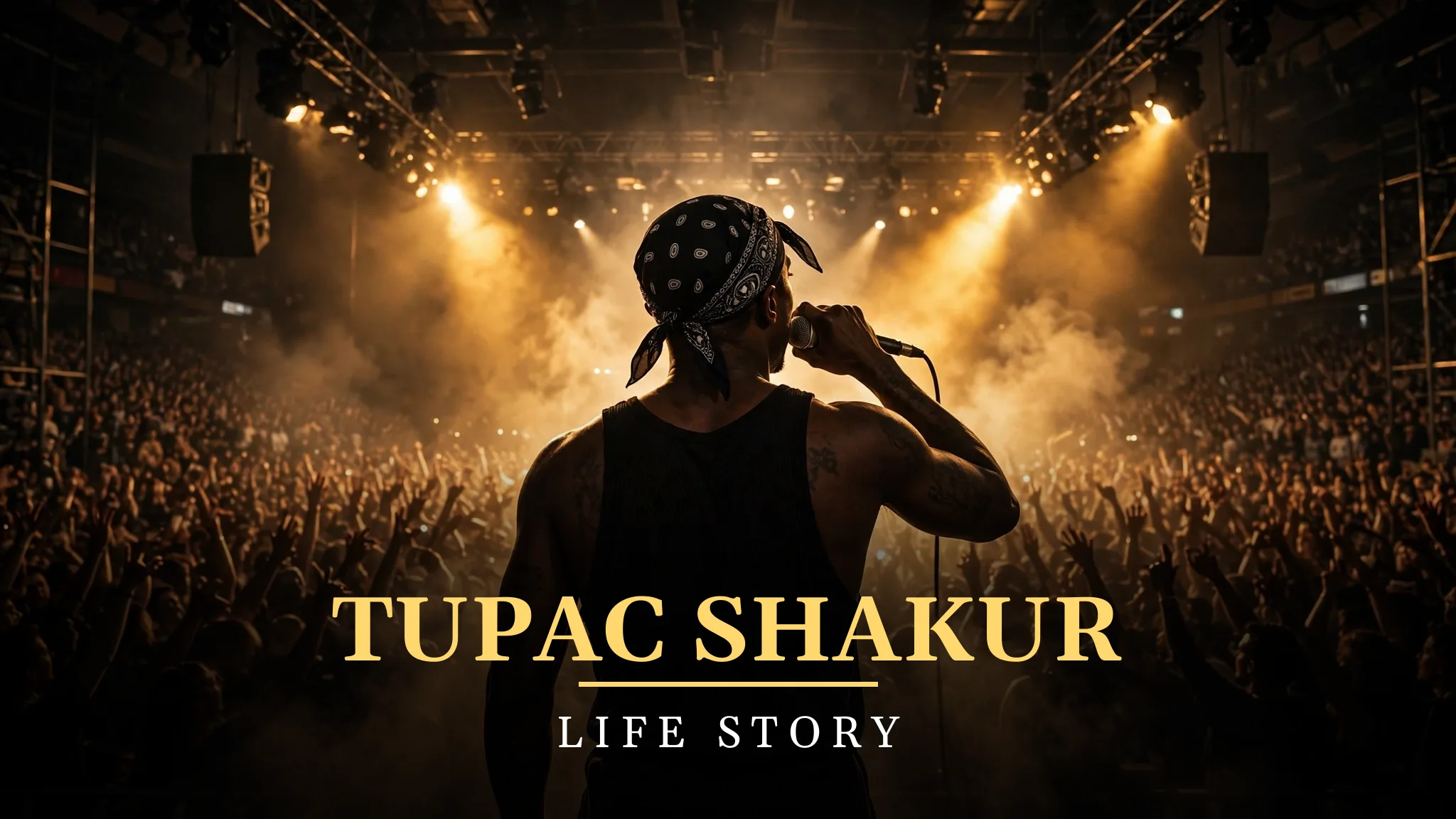
One last memory: the image of him in a bandana, holding a microphone, performing on a stage, with an intensity that is both cool and warm, and that is unforgettable. That image is iconic, and it is beautiful, and it is the image that will define him forever. He was 2Pac, and he was Tupac Shakur, and he was the poet of the streets.
His legacy will live on through his recordings, through his microphone, and through the generations of rappers he inspired, who heard his microphone and wanted to rap the way he rapped. That is a fitting legacy for a man who defined poetry, and who did it with a microphone and a voice that will never be forgotten. He is gone, but his music remains, and his name will be remembered as one of the greats.
Finally, I want to say thank you, Tupac Shakur, for Dear Mama, for Changes, and for a life lived with a microphone that spoke for the streets. You were a great rapper, and you were a great man, and the world is a better place because you were in it. Your recordings are still here, your legacy is still here, and your example is still here, and that is a life that mattered, and a life that will never be forgotten.
And one more thing: if you are a rapper, rap like Tupac, because he is the rapper every rapper deserves to be, a rapper who raps with his heart, and who makes an audience feel. Rap like Tupac, the way Tupac Shakur rapped, and the world will be a better place for it, because the world needs more rappers like him, who rap with depth, with soul, and with humanity.
There is a last lesson in his life that I carry with me, and it is this: use your words, even when it is hard, because using your words is a choice, and Tupac chose it, every day, in every song, and in every part of his life. That is a lesson worth remembering, and it is one I will carry with me, always, because the world needs more people like Tupac Shakur, who use their words, and who do it, with a microphone, and with a voice, that will never be forgotten.
One final thought: his song Dear Mama, added to the National Recording Registry, in 2010, is a testament to his talent, because it was one of the first hip-hop songs, to be added, to the Registry, and that is a record that speaks for itself. He was great, as a rapper, and he was great as a poet, and that is a range that few rappers possess, and it is a reminder that Tupac was not just a rapper, he was a poet, and a great one, and that is a legacy that will never be forgotten.
And if you ever doubt that a song can speak for the streets, remember Tupac Shakur, because he did, with Dear Mama, a song that made millions of people feel, and that is still sung today, by people who love their mothers, and who believe, that gratitude matters, and that is a legacy that will last, long after his songs are sung, because his voice is still here, and his influence is still here, and that is a gift that will never fade.
There is one more thing I want to say, and it is about his friend Jada Pinkett, because they were close friends, since their time at the Baltimore School for the Arts, and she loved him, and she was loyal to him, and she has kept his memory alive, after his death, and that is a beautiful thing, and it is a part of his story that shows him as a friend, not just as a rapper, and that is a legacy that matters, in its own way, alongside his songs and his microphone, because his friends are his greatest legacy, and they have honoured him, by being themselves, just as he was himself, and that is a beautiful thing, and it is a part of his story that is both touching and inspiring.
His story also reminds me that a boy from Harlem can become a legend, if he has talent, determination, and a microphone, and that is a hopeful message for anyone who feels poor, or disadvantaged, or forgotten. Tupac was poor, and he was disadvantaged, and he became one of the greatest rappers in history, because he embraced who he was, and he used his talent to become great. That is a lesson worth remembering, for every poor person out there, and for every rapper who wants to be heard.
I also want to mention his mother Afeni, because she was a Black Panther, and she taught him about activism, and about justice, and she loved him, and she was loyal to him, and she has kept his memory alive, after his death, and that is a beautiful thing, and it is a part of his story that shows him as a son, not just as a rapper, and that is a legacy that matters, in its own way, alongside his songs and his microphone, because his family is his greatest legacy, and they have honoured him, by being themselves, just as he was himself.
And finally, I think about the fact that he died at 25, and that he had so much more to give, and that is a reminder that life is short, and that we should make the most of it, the way Tupac Shakur did, rapping with a voice that was a gift, and living a life that was both beautiful and tragic, and that is a life worth living, and a life worth remembering, and I am grateful to have learned about it, and to have shared it with you.
Frequently Asked Questions
When was Tupac Shakur born?
Tupac Shakur was born on 16 June 1971 in New York City, USA, as Tupac Amaru Shakur, named after an 18th-century Peruvian revolutionary. His mother Afeni was a Black Panther activist.
What is Tupac Shakur most famous for?
He is most famous for Dear Mama, Changes, California Love, and All Eyez on Me (1996), a double album that sold over 10 million copies, and for his poetic, socially conscious lyrics.
What is Dear Mama about?
Dear Mama, from Me Against the World (1995), is a tribute to his mother Afeni, written while Tupac was in prison. It was one of the first hip-hop songs added to the National Recording Registry in 2010.
When did Tupac Shakur die?
He died on 13 September 1996 in Las Vegas, Nevada, at the age of 25, six days after being shot in a drive-by shooting following a Mike Tyson boxing match.
Was Tupac Shakur’s murder solved?
His murder remained officially unsolved for many years. In 2023 Duane Davis, known as Keefe D, was arrested and charged in connection with the shooting.
What was the East Coast-West Coast rivalry?
It was a mid-1990s hip-hop rivalry between East Coast artists led by The Notorious B.I.G. and West Coast artists led by Tupac, which ended with both rappers being killed in 1996 and 1997.


