Vasiliy Lomachenko: The Life Story Behind Boxing's Matrix
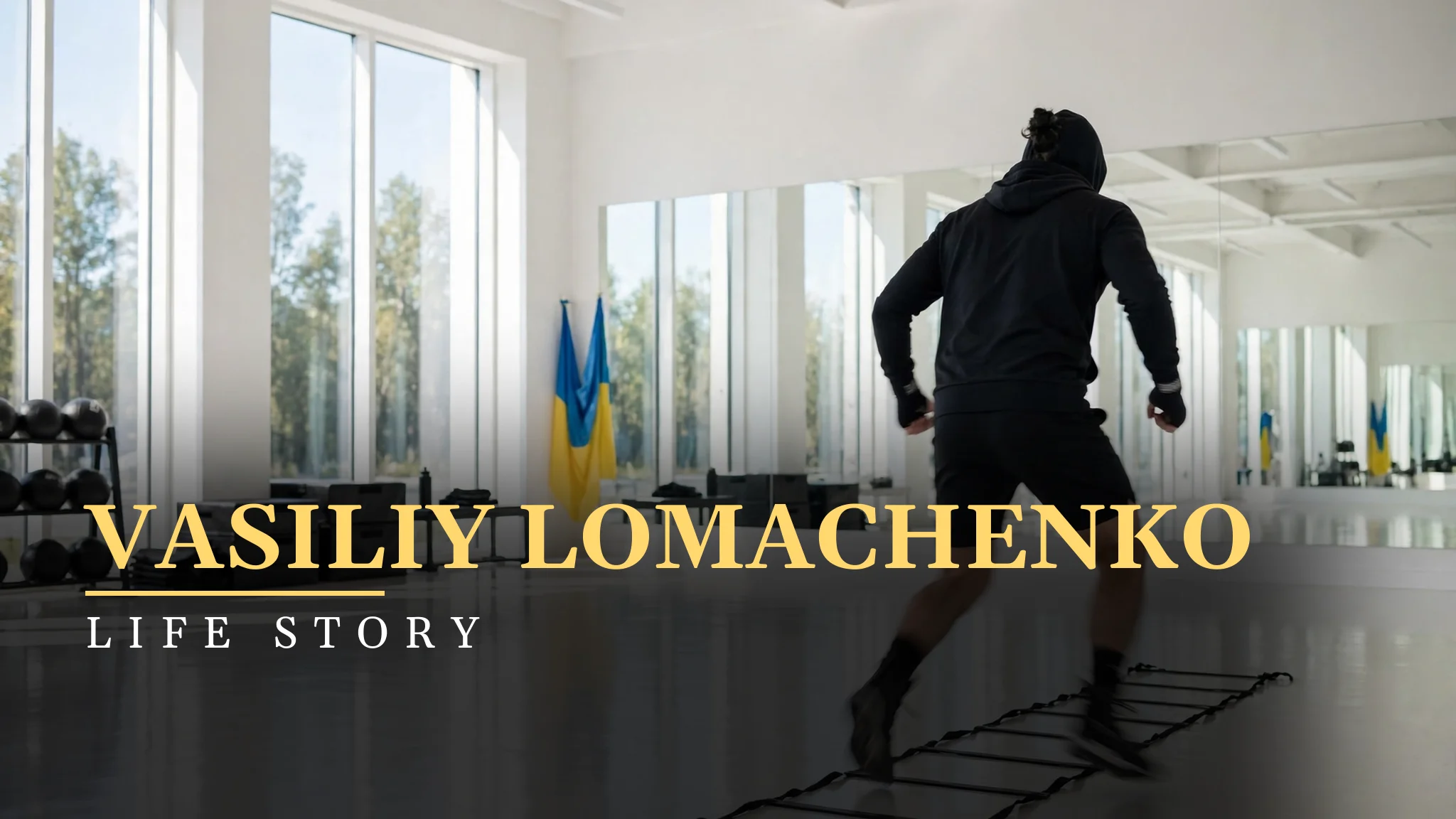
In this post
- Bilhorod-Dnistrovskyi and a Father With Unusual Ideas
- Two Olympic Golds and the Fastest Road to a Title
- The Matrix, Rigondeaux, and Three Weight Classes
- The Haney Decision, Kambosos, and a Final Title
- War, Family, and Life in Ukraine
- Ballet, Football, and the Feet That Made a Champion
- The Comebacks Against Nakatani and Commey
- My Take:
Vasiliy Lomachenko is the most skilled boxer of his generation, and many experts say he is the most skilled boxer who ever lived. He does not fight like other men. He moves like a dancer, he throws punches from angles that should not exist, and he makes world champions look like amateurs. He was given the nickname the Matrix, because his opponents feel as if they are fighting a man who can see the future, a man who is always one step ahead. He was an amateur with a record of 396 wins and only one loss, he won two Olympic gold medals, and he became a world champion in his third professional fight, a feat that had never been done before.
Lomachenko’s story is a story of a father and a son. His father, Anatoly, was his trainer, and he was a man with unusual ideas about how to train a boxer. He made his son take ballet lessons, he made him play football and do gymnastics, and he made him train his feet before he trained his hands. He believed that footwork was the key to boxing, and that a fighter who could move well could beat a fighter who could punch well. He was right. Lomachenko’s feet are the best in boxing, and they are the reason he can do things that other fighters cannot.
He became champion in three weight classes, featherweight, super-featherweight, and lightweight, and he beat men like Gary Russell Jr, Guillermo Rigondeaux, and Jorge Linares. He lost to Teofimo Lopez in 2020, and he lost a controversial decision to Devin Haney in 2023, but he came back and won the IBF lightweight title in 2024, beating George Kambosos Jr in Australia. He retired in June 2025, and he left the sport as one of its great artists. This is the story of a dancer who became a boxer, and a boxer who became a legend.
Bilhorod-Dnistrovskyi and a Father With Unusual Ideas
Vasiliy Anatoliyovych Lomachenko was born on 17 February 1988 in Bilhorod-Dnistrovskyi, a town in the Odesa region of Ukraine, which was then part of the Soviet Union. His father, Anatoly, was a boxing trainer, and his mother, Tetiana, was a gymnast. He grew up in a family that understood sport, and he began boxing at a young age, under his father’s eye. Anatoly was not a normal trainer. He had ideas about training that other coaches thought were strange, and he was willing to try them on his own son.
He made Vasiliy take ballet lessons, because he believed that dance would teach him balance, grace, and footwork. He made him play football, because he believed it would teach him to move in space and to read the game. He made him do gymnastics, because he believed it would teach him body control. And he made him train his feet for years before he was allowed to focus on his hands. Other boys were learning to punch, and Vasiliy was learning to dance. It seemed strange, but it worked. When he finally began to box seriously, his feet were already better than those of any boy his age, and his movement was like nothing anyone had seen.
He was a small boy, and he was not a big puncher, but he was fast, he was clever, and he was impossible to hit cleanly. He fought as an amateur, and he won, again and again. He won the World Championships, he won the European Championships, and he won the Olympic gold medal at the 2008 Games in Beijing, in the featherweight division. He was twenty years old, and he was the best amateur boxer in the world. He defended his title at the 2012 Games in London, winning gold again, this time in the lightweight division. He was the first boxer to win two Olympic gold medals in different weight classes, and he was regarded as the greatest amateur of his generation.
His amateur record was 396 wins and one loss, a record that is almost unbelievable. He lost only once, to Albert Selimov of Russia, and he beat Selimov twice in rematches, avenging the loss. He fought for Ukraine, and he was a national hero, and he was seen as a future professional star. But he did not turn professional at once. He stayed amateur for the 2012 Olympics, and he won his second gold, and then he finally turned professional in 2013, at the age of twenty-five. It was late for a professional debut, but he was ready, and he was already one of the most skilled fighters in the world.
Two Olympic Golds and the Fastest Road to a Title
Lomachenko turned professional in October 2013, and he won his first fight by knockout. In his second fight, in March 2014, he fought Orlando Salido, a tough Mexican veteran, for the WBO featherweight title, and he lost on points. It was a controversial fight, because Salido had missed weight and had fought dirty, using low blows and holding, but Lomachenko lost, and it was the first defeat of his professional career. It was also a lesson. He learned that professional boxing was different from amateur boxing, and that he needed to be tougher and more patient.
He did not let the loss break him. In his third professional fight, in June 2014, he fought Gary Russell Jr, a talented American, for the vacant WBO featherweight title, and he won on points, clearly and fairly. He became a world champion in only his third professional fight, tying the record for the fastest road to a world title. It was a remarkable achievement, and it showed that his amateur skills had translated to the professional game. He was a champion, and he was only twenty-six years old.
He defended the featherweight title against Chonlatarn Piriyapinyo and Gamalier Rodriguez, and then he moved up to super-featherweight in 2016, beating Roman Martinez by knockout to win the WBO title in a second weight class. He defended it against Nicholas Walters, a Jamaican fighter who quit on his stool after seven rounds, saying that he could not hit Lomachenko and that he did not want to continue. It was a sign of how frustrating it was to fight Lomachenko. He was too fast, too clever, and too hard to hit, and his opponents gave up trying.
He also beat Jason Sosa and Miguel Marriaga, and he became a star in America, fighting on HBO and on ESPN. The crowds loved him, because he was a joy to watch. He moved like a dancer, he threw combinations that seemed to come from nowhere, and he made his opponents miss by inches. He was called the Matrix, because his movement seemed impossible, and because his opponents felt as if they were fighting a man from another world. He was the most skilled boxer in the sport, and everyone knew it.
The Matrix, Rigondeaux, and Three Weight Classes
In December 2017, Lomachenko fought Guillermo Rigondeaux, a Cuban Olympic champion who was regarded as one of the best technical boxers in the world. It was a fight between two great amateurs, and it was billed as a battle of skill. Lomachenko won, and Rigondeaux quit after six rounds, saying he had injured his hand. It was a clear win for Lomachenko, and it showed that he was the better of the two great technicians. He was now a star, and he was regarded as the best pound-for-pound fighter in the world.
In May 2018, he moved up to lightweight, and he fought Jorge Linares, a Venezuelan champion, for the WBA title. Linares knocked him down in the sixth round, the first knockdown of Lomachenko’s professional career, but Lomachenko got up and knocked Linares out in the tenth round with a body punch. He became champion in a third weight class, and he had done it in only twelve professional fights. It was a remarkable achievement, and it made him one of the great fighters of his era.
He defended the lightweight titles against Jose Pedraza in 2018, unifying the WBA and WBO titles, and against Anthony Crolla in 2019, knocking him out in four rounds. He also beat Luke Campbell in London in 2019, winning the WBC title and becoming the unified lightweight champion. He was the best lightweight in the world, and he was the best pound-for-pound fighter in the world, and he seemed unbeatable. Then, in October 2020, he fought Teofimo Lopez, a young American, and he lost on points. It was a shock, and it was a lesson. Lopez was younger, stronger, and more aggressive, and he outboxed Lomachenko in the early rounds. Lomachenko came back late, but it was too late, and he lost his titles.
The loss to Lopez was a turning point, and it showed that Lomachenko was no longer the untouchable fighter he had been. He was thirty-two years old, and he had fought for many years, and his body was starting to show the strain. He had shoulder surgery, and he took time away from the sport, and he thought about his future. He came back, and he won fights against Masayoshi Nakatani and Richard Commey, but he was no longer the dominant force he had been. The Matrix was still there, but it was slower, and the magic was fading.
The Haney Decision, Kambosos, and a Final Title
In May 2023, Lomachenko fought Devin Haney in Las Vegas, for the undisputed lightweight title. It was a close and exciting fight, and many people who watched it thought Lomachenko had won, landing more punches and controlling the later rounds. The judges gave the decision to Haney, and Lomachenko lost. It was a controversial decision, and it was widely criticised, but it was the result, and Lomachenko accepted it with grace. He did not complain bitterly, and he did not make excuses. He said that Haney was a good fighter, and that he would come back.
He did come back. In May 2024, he fought George Kambosos Jr in Perth, Australia, for the vacant IBF lightweight title, and he won by technical knockout in the eleventh round, becoming champion again. It was a brilliant performance, and it showed that he still had skill and heart. He was thirty-six years old, and he was a world champion again, in a third weight class, and he had done it in front of a hostile crowd in Australia. It was a fitting win, and it was a reminder that the Matrix was still alive.
After the Kambosos fight, Lomachenko thought about his future. He was thirty-six, he had fought for many years, and he had achieved everything he set out to achieve. He was a two-time Olympic champion, a three-weight world champion, and a man who was regarded as one of the most skilled boxers who ever lived. He decided to retire, and he announced his retirement in June 2025. He was thirty-seven years old, and he left the sport with a record of eighteen wins and three losses, with twelve wins by knockout. It was a short professional career, only twenty-one fights, but it was a great one, and it was one that will be remembered for its skill and its beauty.
His retirement was a quiet one, and it was fitting for a quiet man. He did not make a big announcement, and he did not seek attention. He said that he was grateful for his career, and that he was ready to move on. He returned to Ukraine, and he spent time with his family, and he thought about his future. He had been a boxer for most of his life, and he was now a former boxer, and he was at peace with that.
War, Family, and Life in Ukraine
Lomachenko’s life outside the ring has been shaped by his family and by his country. His father Anatoly was his trainer, and he was the most important person in his career. Anatoly taught him to dance, to move, and to think, and he built him into the fighter he became. The two men were close, and they worked together for Lomachenko’s whole career. Anatoly was not just a trainer. He was a father, a teacher, and a friend, and his influence is visible in every fight Lomachenko ever had.
When Russia invaded Ukraine in February 2022, Lomachenko was in Greece, training for a fight, and he returned to Ukraine at once, joining the territorial defence forces in his home town of Bilhorod-Dnistrovskyi. He stayed there, and he helped to defend his country, and he spoke about the war with a quiet sadness. He was a boxer, but he was also a Ukrainian, and he felt a duty to stand with his people. He later left the defence forces to return to boxing, but he continued to speak about Ukraine, and he continued to support his country.
He is a family man, and he has a wife, Elena, and children, and he is known as a devoted father who spends time with his family and who teaches his children the values he learned from his own father. He is a private man, and he does not share much about his family in public, but he is known as a kind and humble man who is loved in Ukraine. He is a national hero there, and he is remembered as a man who represented his country with honour, in the ring and in the war.
Today, Lomachenko is remembered as one of the great technicians in boxing history, and as a man who was loved for his skill and for his humility. He was the Matrix, the dancer, the two-time Olympic champion, and the three-weight world champion, and he was a man who never lost his calm or his grace. His story is one of a father and a son, of ballet and boxing, and of a small town in Ukraine that produced one of the greatest fighters who ever lived.
Ballet, Football, and the Feet That Made a Champion
Vasiliy Lomachenko’s feet are the best in boxing, and they are the reason he can do things that other fighters cannot. He moves like a dancer, he glides around the ring, and he throws punches from angles that should not exist. Those feet were not an accident. They were built by his father, Anatoly, who made his son take ballet lessons, play football, and do gymnastics, before he was allowed to focus on his hands. It was an unusual way to train a boxer, and other coaches thought it was strange, but it worked. Lomachenko’s feet are the foundation of his style, and they are the reason he is called the Matrix.
He took ballet lessons as a boy, and he learned balance, grace, and footwork. Ballet teaches a dancer to move with precision, to control their body, and to be light on their feet. Those lessons translated directly to boxing, where footwork is the key to everything. A boxer who can move well can hit and not be hit, and Lomachenko can do both better than anyone. He dances around his opponents, he steps to the side, and he throws punches from angles that his opponents cannot defend. It is a beautiful style, and it is a style that came from the ballet studio, not from the boxing gym.
He also played football, and he learned to move in space, to read the game, and to anticipate where his opponent would go. Football is a team sport, but it teaches a player to think about space and about movement, and those lessons helped Lomachenko in the ring. He learned to cut off the ring, to trap his opponents, and to create openings. He also did gymnastics, and he learned body control, flexibility, and coordination. All of those sports combined to make him a complete athlete, with feet that were better than any boxer of his generation.
His father made him train his feet for years before he was allowed to focus on his hands. Other boys were learning to punch, and Vasiliy was learning to dance. It seemed strange, but it was a brilliant decision. When he finally began to box seriously, his feet were already better than those of any boy his age, and his movement was like nothing anyone had seen. He was a dancer who became a boxer, and his dancing made him a better boxer than he would have been otherwise. It is a lesson for any parent or teacher. At times the finest route into one craft runs through another one, which quietly shows you what you need.
Young fighters still study Lomachenko’s footwork, and coaches still show videos of his fights to their students. They point to his feet, his balance, and his movement, and they tell their students that footwork is the key to boxing. A fighter who can move well can beat a fighter who can punch well, and Lomachenko proved that again and again. He was not a big puncher, and he did not knock out many of his opponents with a single punch. He won with skill, with movement, and with intelligence, and his feet were the foundation of it all. That is a legacy that will last, and it is a lesson that will be taught in boxing gyms for years to come.
The Comebacks Against Nakatani and Commey
After losing to Teofimo Lopez in 2020, Vasiliy Lomachenko had to prove that he was still a great fighter, and he did it with two impressive wins. In June 2021, he fought Masayoshi Nakatani, a tall and tough Japanese fighter, in Las Vegas, and he won by technical knockout in the ninth round. It was a brilliant performance, and it showed that his skill and his footwork were still there. He was thirty-three years old, and he had shoulder surgery, and he was coming back from a defeat, and he fought like a man who had something to prove. He did prove it, and the boxing world took notice.
Later that year, in December 2021, he fought Richard Commey, a former champion from Ghana, at Madison Square Garden in New York, and he won on points, clearly and fairly. Commey was a strong and dangerous fighter, and Lomachenko outboxed him for twelve rounds, showing his skill and his patience. It was a mature performance, and it showed that he could win a fight on points, not just by knockout. He was a complete fighter, and he was still one of the best lightweights in the world, even after his loss to Lopez.
Those two wins were important, because they showed that Lomachenko had not given up, and that he was still hungry. He was a former champion, and he wanted to be champion again, and he was willing to fight his way back, one fight at a time. He did not complain about the Lopez loss, and he did not make excuses. He went back to work, he trained, and he won. That is a mature response to defeat, and it is one that I respect deeply. He was a man who learned from his mistakes, and who came back stronger, and that is the mark of a great champion.
My Take:
I think Vasiliy Lomachenko is the most beautiful boxer I have ever watched, and I mean that in a literal sense. His movement is beautiful. He glides around the ring, he throws punches from angles that should not exist, and he makes world champions miss by inches. I have watched his fights many times, and I still cannot understand how he does it. He is like a dancer who happens to be a boxer, and that is not an accident. His father made him take ballet lessons, and those lessons gave him feet that no other boxer has. I think that is a wonderful story, and it is one that tells me something important about training. Sometimes the best way to learn a skill is to learn a different skill first, and to let that skill teach you what you need to know.
What I admire most about him is his amateur record. He won 396 fights and lost only one, and he won two Olympic gold medals in different weight classes. That is an almost unbelievable record, and it tells me that he was the best amateur boxer of his generation, and perhaps the best amateur who ever lived. He was not just a good amateur. He was a dominant one, and he beat everyone who was put in front of him, again and again. I think that record is one of the great achievements in sport, and it is one that deserves more attention than it usually gets.
I also think about his father, Anatoly, and the unusual ideas he had. He made his son dance, play football, and do gymnastics before he let him focus on his hands. Other coaches thought he was strange, but he was right. Footwork is the key to boxing, and Lomachenko’s feet are the best in the sport. I think about how much courage it takes for a father to trust his own ideas, even when other people think they are wrong. Anatoly trusted his ideas, and he built a champion. That is a lesson for any parent or teacher. Trust your instincts, and do not be afraid to be different, if you believe in what you are doing.
The loss to Salido in his second professional fight is a part of his story that I find interesting, because it showed that professional boxing is different from amateur boxing. Salido missed weight, he fought dirty, and he won. Lomachenko lost, and he learned a hard lesson. He did not let the loss break him. He came back in his next fight and won a world title, in only his third professional fight. That is a remarkable response to defeat, and it tells me that Lomachenko is a man who learns quickly and who does not dwell on his mistakes. He fixes them, and he moves on.
If I have to be honest, I would say that his professional career was shorter than it should have been, and that he did not fight as many great opponents as he could have. He had only twenty-one professional fights, and he lost three of them. He was a great fighter, but he was not a fighter who had a long prime, and his losses to Lopez and Haney showed that he was vulnerable when he faced younger and stronger men. I do not say that to diminish him. I say it because it is true, and because it is part of his story. He was a brilliant technician, but he was not unbeatable, and his defeats are part of what makes him human.
The Haney fight in 2023 frustrates me, because I believe Lomachenko won it, and the judges did not give him the decision. He landed more punches, he controlled the later rounds, and he looked like the better fighter. The judges saw it differently, and Haney kept his titles. I think that decision was wrong, and I think it cost Lomachenko a chance to become undisputed champion. It is a reminder that boxing is a sport where the judges can get it wrong, and where a fighter can do everything right and still lose. Lomachenko accepted the decision with grace, and that grace is part of who he is.
What I learn from Lomachenko is that skill matters more than power. He was not a big puncher, and he did not knock out many of his opponents with a single punch. He won with skill, with movement, and with intelligence. He made his opponents miss, he made them tired, and he made them give up. That is a different kind of power, and it is a power that comes from years of training and from a deep understanding of the sport. I think young fighters should study him, not because they can copy his style, but because they can learn from his approach. Train your feet, train your mind, and the rest will follow.
I also learn from him that a father can be a great teacher. Anatoly Lomachenko was not just a trainer. He was a father who believed in his son, and who had the courage to train him in an unusual way. He taught him to dance, and that dance became the foundation of his boxing. I think that is a beautiful story, and it is one that tells me something about parenting. A good parent does not just teach a child what to do. A good parent teaches a child how to think, how to move, and how to be patient. Anatoly did all of that, and his son became a legend because of it.
In the end, I will remember Vasiliy Lomachenko as the Matrix, the dancer, the two-time Olympic champion, and the three-weight world champion, and as a man who was loved for his skill and for his humility. He was a beautiful boxer, and he was a good man, and his story is one of a father and a son, of ballet and boxing, and of a small town in Ukraine that produced one of the greatest fighters who ever lived. I hope young boxers watch his fights, and I hope they learn from them, because there will never be another Lomachenko.
I also think about his feet, and how they made him a champion. His father made him take ballet lessons, and those lessons gave him balance, grace, and footwork that no other boxer has. I think about how strange that must have seemed to other coaches, to see a young boxer in a ballet studio, learning to dance. But it worked, and it made Lomachenko the most skilled boxer of his generation. I think that is a wonderful story, and it is one that tells me something important about training. Sometimes the best way to learn a skill is to learn a different skill first, and to let that skill teach you what you need to know.
I think about the Lopez loss in 2020, too, and how it showed that Lomachenko was human. Lopez was younger, stronger, and more aggressive, and he outboxed Lomachenko in the early rounds. Lomachenko came back late, but it was too late, and he lost his titles. It was a shock, and it was a lesson. He was thirty-two years old, and he had fought for many years, and his body was starting to show the strain. He had shoulder surgery, and he took time away, and he thought about his future. He came back, and he won fights, but he was no longer the dominant force he had been. The Matrix was still there, but it was slower, and the magic was fading. I think that is a sad thing, but it is also a natural thing. Every great fighter fades, and Lomachenko faded with grace.
The Kambosos win in 2024 is a moment I think about with great respect. He travelled to Australia, he fought George Kambosos Jr in front of a hostile crowd, and he won by technical knockout in the eleventh round, becoming champion again. He was thirty-six years old, and he was a world champion again, in a third weight class, and he had done it with skill and with heart. It was a fitting win, and it was a reminder that the Matrix was still alive. I think he knew it would be his last great win, and he fought like a man who had nothing to lose. That is a beautiful way to end a career, and it is one that I admire.
I also think about his service in the territorial defence forces in 2022, and how it showed his character. He was in Greece, training for a fight, and he returned to Ukraine at once when Russia invaded, joining the defence forces in his home town. He stayed there, and he helped to defend his country, and he spoke about the war with a quiet sadness. He was a boxer, but he was also a Ukrainian, and he felt a duty to stand with his people. I think that is a brave and honourable thing to do, and it shows that his character is as strong as his footwork. He is a champion, and he is a patriot, and those two things go together in his life.
What I would tell a young fighter who admires Lomachenko is to train your feet before you train your hands. His father made him dance, play football, and do gymnastics, and those sports gave him feet that no other boxer has. I think young fighters should do the same. Learn to move, learn to balance, and learn to control your body, and the punches will follow. Footwork is the key to boxing, and Lomachenko proved that again and again. He was not a big puncher, but he was a great mover, and his movement won him fights that power alone could not have won.
I think about his retirement in 2025, too, and how quiet it was. He did not make a big announcement, and he did not seek attention. He said that he was grateful for his career, and that he was ready to move on. He returned to Ukraine, and he spent time with his family, and he thought about his future. He had been a boxer for most of his life, and he was now a former boxer, and he was at peace with that. I think that is a fitting ending for a quiet man, and it is one that I respect. He did not need a farewell tour, and he did not need applause. He knew what he had achieved, and that was enough.
In the end, I will remember Vasiliy Lomachenko as the Matrix, the dancer, the two-time Olympic champion, and the three-weight world champion, and as a man who was loved for his skill and for his humility. He was a beautiful boxer, and he was a good man, and his story is one of a father and a son, of ballet and boxing, and of a small town in Ukraine that produced one of the greatest fighters who ever lived. I hope young boxers watch his fights, and I hope they learn from them, because there will never be another Lomachenko.
I also think about his Hall of Fame future, and how certain it is. He will be inducted into the International Boxing Hall of Fame, and the honour will be a recognition of a career that was great in every way. He was a two-time Olympic champion, a three-weight world champion, and a man who was regarded as the most skilled boxer of his generation. He was also a humble and honest man, and he was loved by fans around the world. I think young fighters should study his career, not just for his fights, but for his character, because he showed that a boxer can be brilliant and humble at the same time.
I think about the town of Bilhorod-Dnistrovskyi, too, and how much Lomachenko means to it. He grew up there, he trained there, and he became a champion there, and the town is proud of him. He is a hero in Ukraine, and he is a symbol of what a boy from a small town can achieve. He returned to his home town when Russia invaded, and he joined the defence forces, and he stood with his people. That is a brave thing to do, and it is a thing that matters more than any title. A title is a belt, and a belt can be lost. A legacy in a town, in the hearts of its people, is a different kind of achievement, and Lomachenko has earned it.
I also think about his father Anatoly, and how much he gave to his son. Anatoly was not just a trainer. He was a father who believed in his son, and who had the courage to train him in an unusual way. He taught him to dance, and that dance became the foundation of his boxing. I think about how much trust there must be between a father and a son who work together every day, for years. It is a bond that is hard to describe, and it is one that made Lomachenko the fighter he is today. He was a son who trusted his father, and a father who trusted his instincts, and together they built a legend.
Frequently Asked Questions
What was Vasiliy Lomachenko’s amateur record?
He won 396 amateur fights and lost only once, to Albert Selimov of Russia, whom he later beat twice in rematches. He won Olympic gold medals in 2008 in Beijing and in 2012 in London, in different weight classes.
Why is Vasiliy Lomachenko called the Matrix?
He earned the nickname because his footwork and movement seem almost impossible, as if he can see punches coming before they are thrown. His opponents often miss by inches, and he throws punches from angles that seem to come from nowhere.
How did Vasiliy Lomachenko become world champion so quickly?
He won the WBO featherweight title in only his third professional fight, in June 2014, beating Gary Russell Jr on points, tying the record for the fastest road to a world title. He had lost his second fight to Orlando Salido, who had missed weight.
Did Vasiliy Lomachenko win titles in three weight classes?
Yes, he won world titles at featherweight, super-featherweight, and lightweight, beating Jorge Linares in 2018 to become champion in a third division. He also held the unified lightweight titles before losing to Teofimo Lopez in 2020.
What happened in the Devin Haney fight?
In May 2023 in Las Vegas, Lomachenko fought Haney for the undisputed lightweight title and lost on points in a controversial decision. Many observers thought Lomachenko had won, but the judges scored the fight for Haney.
When did Vasiliy Lomachenko retire?
He announced his retirement in June 2025, at the age of thirty-seven, after beating George Kambosos Jr in May 2024 to win the IBF lightweight title. He finished with eighteen wins and three losses in twenty-one professional fights.


