Verde 70: The Life Story Behind the Ecuadorian Rock Band
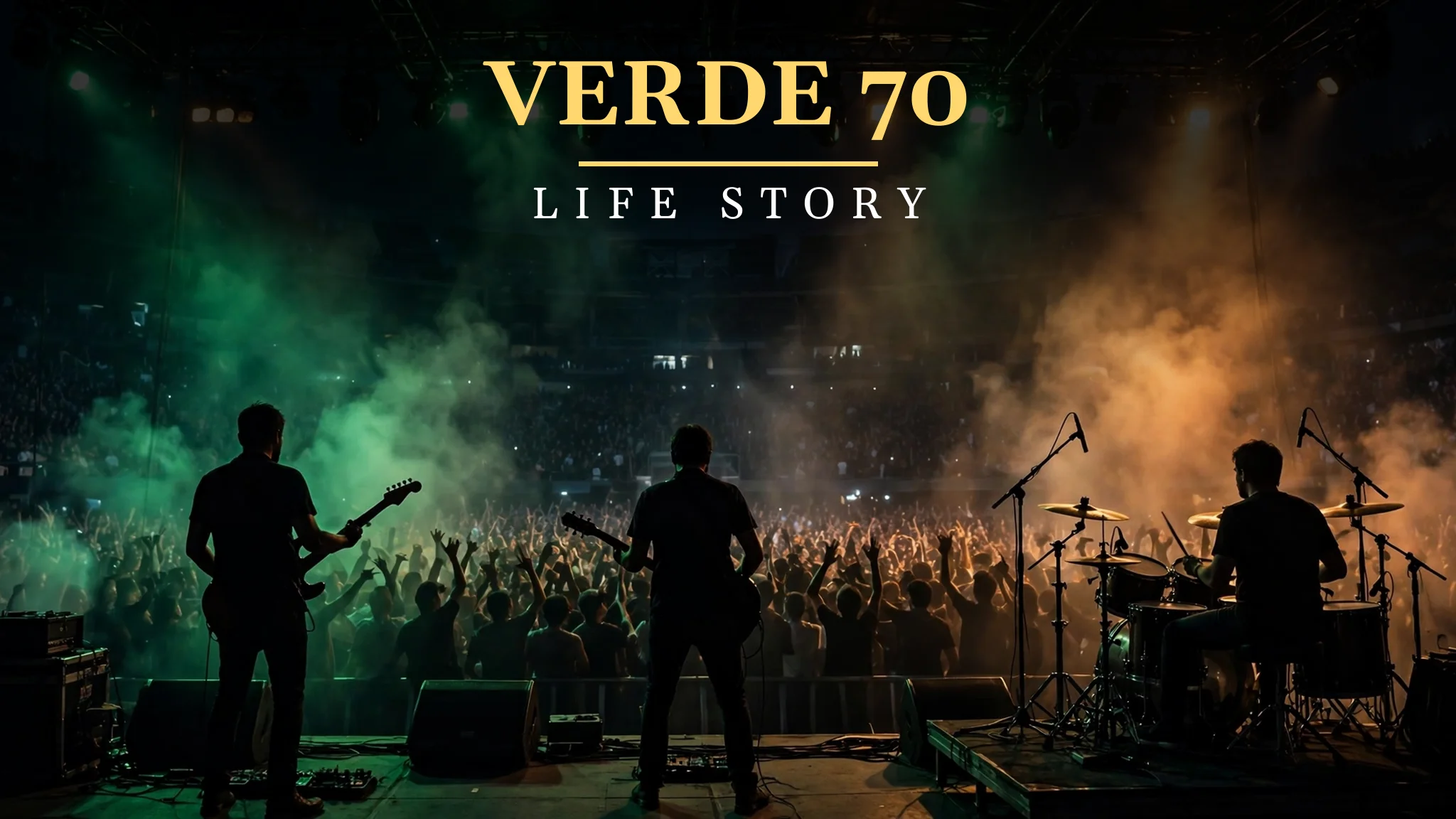
In this post
- Growing Up in Quito and Finding Rock Music
- The First Rehearsals and the Early Gigs
- En la Inmensidad and the Breakthrough
- Albums, Tours, and Life on the Road
- The Hard Years and Staying Together
- Reunions, Anniversaries, and the Fans Who Stayed
- What Verde 70 Means to Ecuadorian Rock
- The Songs Beyond the Hit and the Sound That Stayed
- My Take:
Verde 70 is the sound of Ecuadorian rock for a whole generation of listeners who grew up in Quito at the end of the 1990s. Their name is short, their sound is direct, and their songs are sung in Spanish by people who know every word. For many fans in Ecuador, the band is not a distant group on a poster. It is the band that played the school festival, the band whose songs were on the radio on the way to work, and the band whose chorus still starts a singalong whenever it comes on at a party. That closeness is the heart of their story.
The band came together in Quito, the capital of Ecuador, a high city in the Andes where the air is thin and the music scene is small enough that everyone knows everyone. In the late 1990s, rock in Spanish was already big across Latin America, but Ecuador had fewer famous rock bands than its larger neighbours. Verde 70 stepped into that space with guitars, drums, and songs about love, distance, and everyday life. They did not try to sound like a band from somewhere else. They sounded like young men from Quito, and that honesty is what made people listen.
What follows is the story of how Verde 70 grew from rehearsals in Quito into one of the best-known rock bands in Ecuador, how their best-known song travelled far beyond their home city, and how they kept going through the changes that end most bands. It is a story about a small scene, a big chorus, and a group of musicians who learned that a song can belong to a whole country.
Growing Up in Quito and Finding Rock Music
Quito sits high in the Andes, and life there has its own rhythm. The city is old and crowded, with colonial streets in the centre and newer neighbourhoods spreading up the hillsides. Music is everywhere in Quito, from the folk songs played at festivals to the pop and rock that comes over the radio from Mexico, Argentina, Spain, and the United States. The young men who would become Verde 70 grew up inside that mix, hearing many kinds of music and slowly working out which one felt like their own.
Rock music reached them the way it reaches most young people, through friends, through cassettes and compact discs passed from hand to hand, and through the radio. They listened to the great rock bands of the English-speaking world, but they also listened to the Spanish-language rock that was filling stadiums across Latin America in the 1990s. That second influence mattered more, because it showed them that rock did not have to be sung in English to be powerful. A song in Spanish could be just as loud, just as emotional, and just as able to fill a hall with people singing along.
The band members were not born stars. They were ordinary young men in Quito who liked the same music and who wanted to play it themselves. They learned their instruments the slow way, by practising, by copying the songs they loved, and by playing together until the sound began to feel like something of their own. Rehearsal rooms in Quito were not grand studios. They were small spaces, borrowed rooms, and garages, and the work done in them was patient and unglamorous. That is where Verde 70 was really formed, long before anyone outside their circle knew the name.
Quito in the late 1990s was not an easy place to start a rock band. The music business in Ecuador was small, and radio stations played mostly international hits. A local band had to work hard to be heard at all. But the small size of the scene also helped. Musicians knew each other, bands shared stages, and a good performance at a local venue could be talked about for weeks. Verde 70 learned to play live first and to worry about records later, and that order shaped everything that came after.
The First Rehearsals and the Early Gigs
The band took shape near the end of the 1990s, when the members began playing together regularly in Quito. They chose the name Verde 70, a name that is simple and easy to remember, and they began to build a set of songs that mixed rock energy with melodies that ordinary listeners could follow. Their early songs were about the things young people talk about: love that does not work out, friends, the city at night, and the feeling of wanting more from life.
Their first gigs were small. They played in bars, at school events, and at local festivals, in front of audiences that were sometimes no bigger than a few dozen people. Those small shows taught them the most important lesson a band can learn, which is how to hold a room. When the audience is small and close, there is nowhere to hide. The band had to play well, sing clearly, and give the people in front of them a reason to stay. Verde 70 learned that skill early, and it stayed with them when the rooms got bigger.
Word of mouth did the work that advertising could not. People who saw the band told their friends, and the friends came to the next show. In a city the size of Quito, that kind of talk travels fast. The band began to be known as a live act worth seeing, and local radio began to notice them too. A song played on a Quito station could reach thousands of listeners in a single afternoon, and for a young band that was the closest thing to a breakthrough.
The members also had to learn how to be a band, which is harder than it sounds. A band is a small group of people who must agree on songs, on money, on rehearsal times, and on the direction of the music, and disagreements are normal. Verde 70 survived those early years because the members shared the same aim: to make Spanish-language rock that belonged to Ecuador. That shared aim carried them through the slow period when the money was small and the work was constant.
En la Inmensidad and the Breakthrough
The turning point for Verde 70 came with the song that most Ecuadorians still name first when they talk about the band. “En la inmensidad” is a rock ballad about distance and longing, built around a melody that is easy to remember and hard to forget. It became their signature song, the one that radio stations played again and again and the one that audiences sang back to the band at concerts. For a band from a small scene, a song like that changes everything.
The song appeared on the band’s work in the early 2000s, a period when Ecuadorian rock was finding a wider audience. The album that carried it helped Verde 70 move from being a popular live band in Quito to being a name known across Ecuador. People in Guayaquil, Cuenca, and smaller towns began to hear the song, and the band began to play in places they had never played before. A hit song does that for a band: it turns a local name into a national one.
What made “En la inmensidad” work was not a trick. The words are simple and direct, and the feeling behind them is one that almost everyone has known. Distance from someone you love, the sense of being far away, and the hope of coming back: these are not complicated ideas, but they are deep ones, and the band put them into a melody that carried the weight. Listeners did not need to be told what the song meant. They felt it the first time they heard it.
The success of the song also brought new pressure. A band with a hit is expected to repeat it, and the music business starts to pay attention in a way that can be both helpful and difficult. Verde 70 had to decide whether to chase the same sound again or to grow. They chose to grow, and they kept writing songs that explored love, loss, and everyday life in Ecuador, while keeping the guitar-driven sound that their fans recognised. The hit opened the door, but the band’s later work is what kept them in the room.
Albums, Tours, and Life on the Road
After the breakthrough, Verde 70 settled into the life of a working rock band: recording albums, playing concerts, and travelling around Ecuador to meet the audiences who had heard them on the radio. Their albums built on the sound of “En la inmensidad”, with songs that mixed loud rock choruses with quieter, more thoughtful moments. The band wrote in Spanish, and their lyrics stayed close to ordinary life, which is one reason their fans stayed loyal.
Touring in Ecuador is not like touring in a large country with big highways and huge venues. The distances are shorter, but the roads climb through the mountains, and the venues range from large halls in Quito and Guayaquil to much smaller stages in towns where a rock band is a rare event. Verde 70 played all of them. They learned that a concert in a small town can matter as much as a concert in the capital, because the people in that town may have waited years to see them. That attitude earned them a reputation as a band that showed up for its fans.
Recording was the other half of the work. In the studio, the band had to turn the energy of a live show into something that sounded good on a record. That is a different skill, and it takes time to learn. The members worked at it album by album, and their sound became tighter and more confident. They were not a band that changed its style with every fashion. They knew what they were, and they refined it rather than abandoning it.
The road also tested the band. Long days, late nights, and time away from home are part of a musician’s life, and they wear people down. Verde 70 kept going because the audience kept coming back. When a crowd sings your songs back to you, the tiredness matters less. The band’s live shows became their strongest argument: no matter what was happening in the music business, a Verde 70 concert was a night of loud guitars, shared singing, and a room full of people who felt the same things.
The Hard Years and Staying Together
Every band that lasts more than a few years goes through hard times, and Verde 70 was no exception. The music business changed around them. Compact discs gave way to downloads, and downloads gave way to streaming. Radio changed too, and the way people found new music changed with it. A band that had built its name on radio play and live shows had to learn new ways to reach listeners, and that learning was not always easy.
There were also the ordinary pressures of a long career. Members grow older, their lives change, and the time they can give to a band changes with them. Some bands break apart at this point, because the members want different things. Verde 70 faced those choices like any other band, and the fact that the name is still known in Ecuador today says something about how they handled them. They slowed down at times, they stepped back when they needed to, but they did not let the band simply disappear.
The hardest part of a long career in a small market is that the rewards are modest. Ecuadorian rock bands do not earn the money that international stars earn, and the work is often done for love rather than for wealth. Verde 70 kept playing because the music mattered to them and because their audience still wanted to hear it. That is a simple reason, but it is a strong one, and it is the reason many long-lasting bands give when they are asked why they are still here.
There were also periods when the band was quiet, and fans wondered whether they had finished. In those quiet periods, the songs did not go away. “En la inmensidad” kept playing on the radio, kept appearing at parties, and kept being discovered by younger listeners who had not been born when it first came out. A song that survives its own time is a rare thing, and it gave the band a foundation to return to whenever they were ready to play again.
Reunions, Anniversaries, and the Fans Who Stayed
One of the happiest parts of Verde 70’s story is the way their fans have stayed with them. In Ecuador, the band’s anniversary concerts and reunion shows have drawn crowds of people who grew up with the songs and who now bring their own children. A concert becomes a shared memory across generations, and the band can see, from the stage, that their music has outlasted the moment it was made in. That is a reward that no chart position can match.
Anniversary shows also gave the band a chance to look back at their whole career in one night. They could play the early songs, the hit, and the later work, and the audience would know them all. For a band, that kind of night is proof that the years of work added up to something. It is also a reminder that the songs belong to the listeners as much as to the musicians who wrote them.
The band’s relationship with Quito has stayed close. They are a Quito band in a way that matters to the city. They came from its rehearsal rooms and its small stages, and they carried its name with them when they played elsewhere. In a country where the biggest music stars often come from outside, Verde 70 showed that a band from the capital could make music that the whole country loved, and that the music could last.
In recent years, the band has continued to perform, and their songs continue to be streamed and shared by fans old and new. The music business around them has changed again and again, but the core of what they do has not: guitars, drums, a strong melody, and words in Spanish about feelings that people recognise. That simplicity is not a weakness. It is the reason the songs still work.
What Verde 70 Means to Ecuadorian Rock
Verde 70 matters to Ecuadorian rock because they proved that a local band could matter nationally. Before them, many people in Ecuador assumed that the biggest rock songs would always come from other countries. Verde 70 showed that a band from Quito could write a song that the whole country would sing, and that the song could still be sung many years later. That proof gave confidence to the bands that came after them.
Their legacy is not only the hit song. It is also the example of a band that kept its sound, kept its language, and kept its connection to its audience. They did not try to become something they were not. They made rock music in Spanish, about Ecuadorian life, and they trusted that listeners would respond. The listeners did, and they still do.
For younger Ecuadorian musicians, Verde 70 is a reminder that a career in music does not have to be built in a single year. It can be built slowly, show by show, song by song, until the work adds up to a name that people know. The band’s story is not a story of sudden world fame. It is a story of steady work in one country, and of a song that became part of that country’s life. That is a smaller kind of fame, but it is a real one, and it lasts.
The Songs Beyond the Hit and the Sound That Stayed
A band with one huge hit faces a question that never quite goes away: what comes next, and how do you keep an audience that already loves one song? Verde 70 answered that question by doing what they had always done, which was to write songs about ordinary life in Quito, about love that does not last, about friends who drift apart, and about the city at night. Their later songs did not try to copy “En la inmensidad”. They tried to be honest, and they were. Fans who listened closely found songs that were just as strong, even if the radio did not play them as often.
The band’s sound also stayed true to its roots. They kept the guitars loud, the drums steady, and the melodies clear, and they did not chase the electronic sounds that became fashionable in Latin pop. That choice cost them some attention, because the music business rewards novelty, but it earned them something more valuable: trust. When a Verde 70 fan puts on a record, they know what they will hear, and they know it will be good. That trust is built over years, and it is the reason the band’s audience stayed loyal long after the first excitement had faded.
Their live shows remained the heart of their work, and the band learned to use the hit wisely. “En la inmensidad” became the moment in the concert when the whole room sang together, but the rest of the show gave the band room to play the songs that mattered to them. A concert is a conversation between a band and its audience, and Verde 70 learned to have that conversation well. They played the song everyone knew, and then they played the songs they wanted everyone to know, and the audience listened, because the band had earned their attention.
The band also became a reference point for younger rock musicians in Ecuador. A young band in Quito today, rehearsing in a small room and dreaming of the radio, can look at Verde 70 and see that it can be done. A band from their city can write a song that the whole country sings, and that song can still be sung twenty years later. That example is worth more than any advice, because it is proof. Verde 70 gave that proof to Ecuador, and they gave it by doing the work, year after year, without giving up.
In the end, the songs beyond the hit are the real measure of the band. A hit is a moment, but a catalogue is a career. Verde 70 built a catalogue of songs that belong to Ecuador, songs that are played at parties, on the radio, and in cars on the way to work. Those songs are the band’s true legacy, and they are the reason the name Verde 70 still means something in Quito, long after the first guitars were plugged in.
My Take:
I think Verde 70 is a band I admire more the longer I sit with their story, and the reason is simple: they did the hard thing, which is to stay true to one place and one sound for many years, when it would have been easier to chase something else. I have read many stories about bands that became famous in one year and then fell apart, and I have read stories about bands that changed their style every time the fashion changed. Verde 70 did neither of those things. They made rock music in Spanish, in Quito, about feelings that ordinary people know, and they kept doing it until the whole country knew their name. That kind of patience is rare, and I respect it.
What strikes me most is the song “En la inmensidad” and what it tells us about how a hit really works. A hit is not only a clever melody or a loud chorus, though this song has both. A hit is a song that says something people already feel but have not found the words for. Distance from someone you love is one of the oldest feelings in the world, and it is one that almost every person has known, whether they left home for work, or lost touch with someone, or simply missed a person who was far away. Verde 70 put that feeling into a song that was easy to sing and hard to forget, and that is why it travelled. I think that is a lesson for any songwriter: the biggest songs are often the simplest ones, because simple feelings are the ones we all share.
I also think about Quito when I think about this band, because the city shaped them in a way that a bigger, richer music scene might not have. Quito is high in the mountains, far from the great music capitals, and its music scene is small. In a small scene, you cannot hide behind a big budget or a famous producer. You have to play well in a small room, in front of people who are close enough to see your face. I think that made Verde 70 honest. They learned to hold a room before they learned to fill a stadium, and that order matters. A band that learns the small room first never forgets that the audience is made of real people, not numbers on a chart.
I feel a lot of warmth for the early years of the band, the rehearsals in borrowed rooms and the small gigs in bars and school halls. Those years are not glamorous, and nobody writes songs about rehearsal rooms, but they are the years that decide whether a band will last. Anyone can enjoy a big concert. Not everyone can keep going when the audience is small, the money is small, and the work is the same every week. Verde 70 kept going, and I think that is the real story, more than any single hit. The hit was the reward for the years of small shows, not the start of the story.
I also think their story says something about language. They sang in Spanish, and they could have been told that rock in Spanish would never travel as far as rock in English. But the opposite turned out to be true for their audience. Singing in Spanish was not a limit. It was the reason people in Ecuador felt the songs belonged to them. When you hear a song in your own language, about your own city and your own feelings, it feels like it was written for you. I think Verde 70 understood that, and I think it is one of the smartest choices they made, even if it was not a calculated choice at the time. It was simply who they were.
The hard years in their story make me think about how the music business treats bands from small countries. The change from compact discs to streaming was not a small change. It changed how bands earned money, how they reached listeners, and how they knew whether anyone was still listening. A band from Ecuador did not have the same safety net as a band from a big market. They had to adapt with fewer resources and less help. I admire that they did adapt, and that they did not give up when the old ways stopped working. I think many bands would have stopped, and I think it is worth saying plainly that continuing was an act of courage, not just habit.
I also think about the fans, because a band is only half of the story. The other half is the people who keep the songs alive. In the case of Verde 70, the fans did something remarkable: they kept singing “En la inmensidad” long after the first excitement had passed, and they brought their children to the concerts. That is how a song becomes part of a country’s life. It stops being a new release and becomes a memory, and then it becomes a shared memory, something a parent and a child can sing together. I find that deeply moving, because it means the band’s work did not end when the album was finished. It kept working in people’s lives, at parties, on the radio, and in cars on the way to work.
If I am honest, there is also something sad in their story, and I do not want to pretend it is not there. The sadness is that a band this good, with a song this strong, did not become famous all over the world. In a fair world, “En la inmensidad” would be known in every Spanish-speaking country, and Verde 70 would be named alongside the great Latin rock bands. But the music business is not fair, and bands from small countries often stay known mainly at home, no matter how good they are. I think that is a loss for listeners outside Ecuador, who missed a great band, but it is also a kind of gift for Ecuador, because the band belongs to them in a special way. I feel both of those things at once, and I think both are true.
What I would tell a young musician who reads this story is to pay attention to the slow parts. The slow parts are the rehearsals, the small gigs, the years when nobody outside your city knows your name, and the decision to keep writing songs even when the last one did not become a hit. Verde 70 teaches that a career is built in those slow parts, not in the single moment when a song takes off. The song takes off because of the slow parts. If you skip them, the song has nothing to stand on.
I also learn from Verde 70 that staying the same is not the same as standing still. The band kept its sound, but they refined it, album by album, and they learned how to record better, how to play better, and how to reach new listeners without losing the old ones. That is a harder skill than changing everything. Changing everything is easy: you just follow the fashion. Staying yourself while getting better is the work of a lifetime, and I think Verde 70 did that work with quiet discipline.
There is another lesson I take from them, about home. Many artists feel they must leave home to succeed, and sometimes that is true. But Verde 70 stayed close to Quito, and they made Quito part of their identity. They did not pretend to be from somewhere else. They let their city shape their music, and in return their music gave something back to the city. I think that is a model worth following, not only for musicians but for anyone who makes something. You do not always have to go far away to matter. Sometimes the most important thing you can do is to make something true where you are, and to trust that the people around you will hear it.
When I think about their legacy, I think it is measured in the most ordinary way: people still sing the songs. A legacy is not a statue or a museum. It is a chorus that people still know by heart, years after the song was written. Verde 70 has that, and it is enough. I hope the band knows how much that means, because a song that people carry with them is a rare and precious thing, and not many bands ever make one.
I also want to say that I respect the way they handled the quiet periods. Many bands panic when the attention fades, and they rush out bad work to stay visible. Verde 70 did not do that. They stepped back when they needed to, and they came back when they were ready. That patience is something I admire in any artist. It says that the music comes first, and the attention comes second. If the music is good, the attention will find it again, as it did for them.
In the end, my feeling about Verde 70 is one of gratitude. I am grateful that a band from a small scene in the Andes made a song that says something true about distance and love, and that they kept playing it for the people who needed it. I am grateful that they showed younger Ecuadorian musicians that it can be done. And I am grateful that their story reminds me that fame is not the only measure of a life in music. Sometimes the measure is simpler: did you make something honest, did you keep doing it, and do people still sing it? Verde 70 can answer yes to all three, and that is a life in music well lived.
I also think about what it means to be famous in one country and unknown in most of the world. Verde 70 are stars in Ecuador, and yet most people outside Latin America have never heard their name. I used to think that was a sad thing, but now I am not so sure. There is a special kind of fame that belongs to one place, a fame that is deep rather than wide. The band’s songs are part of Ecuadorian life in a way that a worldwide hit never could be. They are sung at weddings, at parties, and in cars, by people who feel that the songs belong to them. That is a deeper fame than a song that is known everywhere and loved nowhere in particular.
I keep returning to the idea of the rehearsal room, because I think it is where the band’s real story happened. A rehearsal room is not glamorous. It is a small space, with bad light, with cables on the floor, and with the same song played again and again until it sounds right. Verde 70 spent years in rooms like that, and those years are the reason the songs are good. A song that is written quickly can be catchy, but a song that is rehearsed until it is right has a strength that a quick song does not have. I respect the band for doing that slow work, and I think it is a lesson for anyone who makes anything: the slow work is the real work.
I also want to say something about the guitar sound, because it matters. Verde 70 play guitar-driven rock, and the guitar is an honest instrument. You cannot hide behind a guitar. If you play badly, everyone hears it. If you play well, everyone feels it. The band’s guitars carry the emotion of their songs, and they do it without tricks. I think that honesty is part of why the band has lasted. They did not rely on studio effects or on fashion. They relied on guitars, drums, and a good melody, and those things do not go out of date.
There is one more thing I think about when I read their story, and it is the idea of home. Verde 70 could have left Quito, could have moved to Mexico City or to Miami, and tried to become international stars. They stayed close to home, and they made home part of their music. I think that is a brave choice, because the world tells artists that they must leave home to succeed. Verde 70 show that you can succeed at home, that you can matter to your own people, and that mattering to your own people is enough. I hope young musicians in small countries hear that message, because it is a true one.
Frequently Asked Questions
Who are the members of Verde 70?
Verde 70 is a rock band from Quito, Ecuador, and the group has been built around a core of musicians who write and perform the band’s songs together. The line-up has changed at times over the years, as is common with long-running bands, while the band’s guitar-driven Spanish-language rock sound has stayed at the centre of their work.
What is Verde 70’s most famous song?
Their best-known song is widely named as “En la inmensidad”, a rock ballad about distance and longing. It became a radio favourite in Ecuador in the early 2000s and remains the song most fans name first when they talk about the band, as well as a regular singalong moment at their concerts.
Where is Verde 70 from?
Verde 70 is from Quito, the capital of Ecuador, high in the Andes mountains. The band formed there in the late 1990s and built its name first on the Quito live scene before their music spread to audiences across the whole country.
When did Verde 70 form?
The band took shape in Quito near the end of the 1990s, when the members began playing together regularly and building a set of original songs. Their breakthrough with “En la inmensidad” followed in the early 2000s, when Ecuadorian radio picked up the song and carried it across the country.
What kind of music does Verde 70 play?
Verde 70 plays Spanish-language rock, built around guitars, drums, and strong melodies. Their songs mix loud rock choruses with quieter ballads, and the lyrics stay close to everyday feelings such as love, distance, and life in their home city.
Is Verde 70 still performing?
The band has continued to perform in Ecuador, including anniversary and reunion concerts that draw long-time fans as well as younger listeners who discovered the songs later. Their music also continues to be played on radio and streaming services in Ecuador.


