Viviane Chidid: The Life Story Behind Senegal's Queen of Mbalax
In this post
Viviane Chidid is a singer who earned her crown the hard way. She is called the Queen of Mbalax, the popular music of Senegal, and she holds that title because she has sung, danced, and worked for it for more than thirty years. She did not start as a star. She started as a backing singer, standing behind other artists, learning her craft, and waiting for her chance. When the chance came, she took it, and she built a career that made her one of the most famous women in Senegalese music.
She was born in Mbour, a coastal city south of Dakar, in 1973, and she grew up in a place where music was everywhere. She sang in church, she sang at home, and she dreamed of a life on stage. Her path was not easy. She was a young woman in a music world led by men, and she had to prove herself again and again. She did, and she became known for her powerful voice, her energetic dancing, and her ability to fill a concert hall with joy. Her songs, like “Sammina” and “Kocc Barma”, are played at weddings and celebrations across Senegal.
Her story is the story of a woman who rose from the background to the front of the stage, who built her own band, who survived personal hardship, and who became a queen in her own right. It is a story of talent, of hard work, and of a voice that would not stay quiet. This is the story of Viviane Chidid, the Queen of Mbalax.
A Girl From Mbour Who Loved to Sing
Viviane Chidid was born on 29 September 1973 in Mbour, a coastal city in Senegal. She grew up in Mbour, in a family where music and faith were both important. As a girl, she sang in church, where she learned to use her voice with feeling and with power. Church singing taught her how to hold a note, how to sing with others, and how to make a song feel like a prayer. That training stayed with her, and it gave her voice a depth that listeners can still hear today.
She also sang at home, for her family and friends, and she began to dream of a career in music. Senegal in the 1980s was full of music, with bands playing mbalax in Dakar’s clubs and at parties, and with singers like Youssou N’Dour becoming famous around the world. Young Viviane listened to all of it, and she imagined herself on stage, singing for a large audience. The dream seemed far away, but she held on to it. She had a voice, and she had a determination that would carry her through many hard years.
As a teenager, she began to perform, singing at small events and learning her craft. She was not yet a star, but she was learning. She learned how to sing with a band, how to move on stage, and how to connect with an audience. She also learned that the music world was not easy for a young woman. She had to work harder than the men around her to be taken seriously, and she had to prove herself at every step. She did not complain. She worked, and she sang, and she waited for her chance.
Her family supported her, but they also worried about her. Music was not a safe career for a young woman in Senegal at that time, and many families hoped their daughters would choose a more stable path. Viviane understood that worry, but she believed in her voice. She believed that singing was what she was meant to do, and she was willing to take the risk. That belief, that quiet confidence, would become the foundation of her career.
Backing Singer for the Super Étoile
Viviane Chidid’s first big break came when she joined the Super Étoile de Dakar, the great band led by Youssou N’Dour, as a backing singer. For a young singer, joining the Super Étoile was like joining the best school in Senegalese music. The band was famous, its musicians were among the finest in the country, and its concerts drew huge crowds. Viviane stood at the back of the stage, singing harmonies and learning from the best. It was not a glamorous job, but it was a vital one, and it taught her everything she needed to know.
As a backing singer, she learned how to sing in harmony, how to blend her voice with others, and how to support a lead singer without overpowering him. She learned how a great band works, how the drums, the guitars, and the keyboards fit together, and how a concert is built from the first song to the last. She watched Youssou N’Dour perform night after night, and she learned how a star holds a stage, how he talks to an audience, and how he makes a crowd feel like they are part of the music. Those lessons were priceless, and they stayed with her for her whole career.
She also met people in the Super Étoile who would become important in her life. She married Bouba Ndour, the brother of Youssou N’Dour, and she became part of a musical family. That marriage brought her closer to the centre of Senegalese music, but it also brought challenges, as any marriage in the public eye does. She learned to balance her personal life with her career, and she learned to keep singing even when life was hard. Her time in the Super Étoile was a time of learning, of growth, and of preparation for the solo career that would follow.
After several years as a backing singer, she began to think about stepping forward. She had a voice that deserved to be heard on its own, and she had the experience to lead a band. She knew it would be a risk to leave the safety of the Super Étoile, but she also knew that she could not stay in the background for ever. She was ready to be a star in her own right, and she decided to take the chance. It was the right decision, and it would change her life.
Going Solo and Finding Her Own Voice
When Viviane Chidid went solo, she had to build everything from nothing. She needed a band, she needed songs, and she needed an audience that would come to hear her, not just as a backing singer but as a star. She worked hard, she recorded, and she performed at clubs and events in Dakar. Slowly, people began to notice her. Her voice was powerful, her dancing was energetic, and her stage presence was joyful. She was not copying Youssou N’Dour. She was being herself, a woman singer with her own sound and her own style.
Her early solo albums showed a singer who was finding her voice. She sang mbalax, the music she had learned with the Super Étoile, but she sang it in her own way, with a feminine energy and a warmth that was different from the male singers around her. Her songs spoke of love, of life in Dakar, and of the joys and sorrows of being a woman in Senegal. Listeners responded to that honesty, and her audience grew. Women in particular loved her, because she sang about their lives, their feelings, and their strength.
She formed her own band, and she became known for her live shows, which were lively, colourful, and full of dance. She would sing, she would dance, and she would invite the audience to join in. Her concerts were celebrations, and people left them feeling happy. That joy is a large part of her appeal. She does not just sing. She creates a party, a moment of happiness in a hard world. That is a gift, and it is one that her fans treasure.
By the late 1990s and early 2000s, Viviane Chidid was a star in her own right. She was no longer just a former backing singer. She was a leading singer, with her own band, her own songs, and her own audience. She had earned her place, and she had done it through hard work and talent. The Queen of Mbalax was beginning to take her throne, and the best years of her career were still ahead.
Sammina, Kocc Barma, and the Hits
Viviane Chidid’s fame grew with a series of hit songs that became anthems in Senegal. One of her best-known songs is “Sammina”, a joyful, danceable mbalax song that is played at weddings and celebrations across the country. When “Sammina” plays, people dance. It is a song that captures the happiness of a party, the energy of Dakar, and the joy of being together. It became one of her signature songs, and it is still one of the first songs people think of when they hear her name.
Another important song is “Kocc Barma”, named after a wise figure from Senegalese tradition. The song speaks of wisdom, of learning from the past, and of the value of knowledge. It showed a different side of Viviane, a singer who could sing about serious subjects as well as about dance and joy. It became popular because it spoke to listeners in a direct way, in Wolof, about things that mattered to them. It proved that she was not just a party singer. She was a singer with something to say.
She also recorded songs like “Waw” and others that became hits, and her albums sold well in Senegal and among Senegalese living abroad. Her music was played on radio, on television, and at every celebration. She became a household name, and her face was known across the country. She was invited to perform at major events, at festivals, and at concerts in Europe, where Senegalese audiences welcomed her with great warmth. She had become a star, and she carried that stardom with a grace that made her even more loved.
Her success was not just about hits. It was about consistency. She released album after album, she toured, she performed, and she kept her audience. In a music world where many singers have one hit and then fade, Viviane stayed. She stayed because her voice was strong, because her shows were joyful, and because her songs spoke to real life. That staying power is the mark of a true queen, and it is why her title has lasted.
The Queen on Stage and the Bataclan
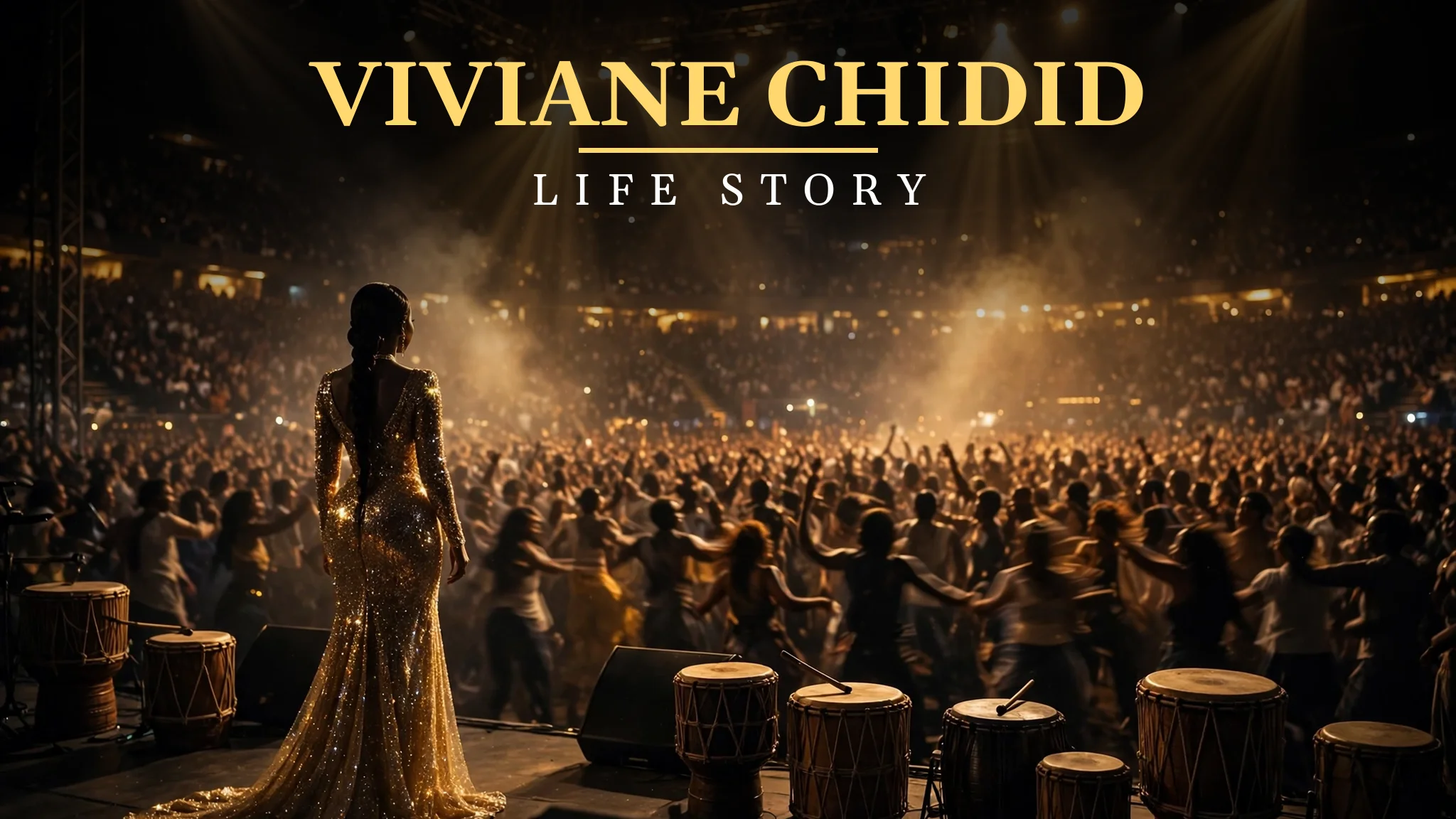
Viviane Chidid’s live shows are legendary in Senegal. She performs with a large band, with dancers, and with an energy that fills a concert hall. She sings, she dances, and she talks to the audience, making them feel like they are part of the show. Her concerts in Dakar draw thousands of people, and her shows in Paris, at venues like the Bataclan, have become famous among Senegalese living in France. Those Paris concerts are homecomings of a different kind, a chance for people far from Senegal to hear the music of home and to dance as they would in Dakar.
Her album Bataclan Cafe, recorded live in Paris, captured that energy. It showed a singer at the height of her powers, performing for an audience that knew every word and sang along with every song. The album is a favourite among her fans, because it feels like being at a concert. You can hear the crowd, you can feel the joy, and you can hear Viviane’s voice soaring above it all. It is a record of a queen on her throne, in front of her people, doing what she does best.
She has also performed at festivals around the world, and she has shown that mbalax can fill a stage anywhere. She does not change her sound for foreign audiences. She sings in Wolof, she dances in the Senegalese style, and she trusts that the music will speak. It does, and audiences who have never been to Senegal leave her concerts feeling happy and energised. That is the power of a great live performer, and Viviane is one of the best.
Her stage presence is also a statement about women in Senegalese music. She is a woman who leads a band, who commands a stage, and who is not afraid to be joyful, powerful, and visible. In a music world that was long led by men, her success is a sign of change, and it has inspired many young women to sing. She shows that a woman can be a queen in mbalax, and that she can do it on her own terms. That is an important part of her legacy, and it is one that goes beyond music.
Hard Times, Family, and Keeping Going
Viviane Chidid’s life has not been free of hardship, and much of it has been lived in public. Her marriage to Bouba Ndour ended, and the separation was widely discussed in Senegal. She has spoken about the pain of that time, and about the difficulty of raising her children while building a career. She did not hide her struggles. She faced them, and she kept singing. That honesty has made her even more loved by her fans, who see in her a woman who has lived a real life, with real joy and real pain, and who has kept going.
She is a mother, and she has spoken about the importance of her children and her family. Balancing a career as a touring singer with motherhood is hard, and she has managed it with a strength that many women recognise. She has brought her children with her when she could, she has made time for them, and she has kept her home life as private as she can in a public career. That balance is not easy, and it is one of the reasons her fans respect her. She is not just a star. She is a mother, a daughter, and a woman who has built a life with care.
There have also been the ordinary difficulties of a long career in music. Tastes change, new singers appear, and the music business is never easy. Viviane has faced those challenges by staying true to her sound, by working hard, and by trusting her audience. She has not chased every new fashion. She has kept singing mbalax, and she has kept her shows joyful. Her audience has stayed loyal, because they know what to expect from her: a great voice, a great show, and a great party. That loyalty is worth more than a brief moment at the top of a chart.
She has also faced health and personal challenges, as any person does over a long life, and she has handled them with a quiet dignity. She does not make a show of her pain, but she does not hide it either. She sings, she performs, and she lives her life with an honesty that her fans appreciate. That honesty is part of why she is called the Queen. A queen is not just a singer with hits. A queen is a woman who has lived, who has suffered, and who has kept her crown through it all.
A Queen Who Still Reigns
Today, Viviane Chidid is still the Queen of Mbalax, and her place in Senegalese music is secure. She continues to perform, to record, and to fill concert halls in Dakar and in Paris. Her songs are still played at weddings, at celebrations, and on the radio. Young people know her songs, even if they were not born when she made her first records, because their parents played them at home. That is a sign of a singer whose music has become part of a people’s life.
She has also become a mentor to younger singers, especially young women who want to follow her path. She shows them that a woman can lead a band, can fill a stadium, and can build a career on her own terms. She shows them that backing singing can be a school, not a prison, and that a singer who starts at the back of the stage can end up at the front. Those lessons matter, and they are lessons that go beyond music. They are lessons about patience, about hard work, and about believing in yourself.
Her influence is felt across Senegalese music, and her name is spoken with respect whenever mbalax is discussed. She is not just a singer. She is a symbol, a woman who rose from the background to the throne, and who has kept her crown for more than thirty years. That is a remarkable achievement, and it is one that will be remembered long after her last concert.
She is still singing, still dancing, and still making people happy. The Queen of Mbalax reigns on, and her story is not finished. But even now, her place is clear. She is one of the great voices of Senegal, a woman who earned her title with a voice, a dance, and a lifetime of work. That is a legacy to be proud of, and it is one that will last.
The Dance That Carries Her Songs
Viviane Chidid’s dancing is not separate from her singing. It is part of it, and it is one of the reasons her concerts are so joyful. She dances as she sings, moving with the rhythm of mbalax, and inviting the audience to dance with her. Her dancing is energetic, graceful, and full of life, and it shows that she learned her art with her whole body, not just with her voice. When she performs, she is not just a singer standing still. She is a performer in motion, and that motion is infectious.
She learned to dance as a girl, and she danced with the Obsessions before she became a singer. That training gave her a sense of rhythm that many singers do not have. She knows how a song should move, how a beat should feel in the body, and how to make an audience feel that beat. Her concerts are not just about listening. They are about moving, about celebrating, and about feeling the music in your feet as well as in your ears. That is a different kind of art from quiet singing, but it is no less valuable, and Viviane does it beautifully.
Her dancing also speaks to the women in her audience. When a woman sees Viviane dance with confidence and joy, she feels that she can dance too, that she can be bold and free. That is a powerful message, and it is one that Viviane carries with every performance. She shows that a woman can be strong, joyful, and visible, and that she can lead a celebration. That example matters, and it is part of why her fans love her so deeply. She does not just sing for them. She dances for them, and she invites them to dance with her.
My Take:
When I hear Viviane Chidid sing, the first thing I feel is joy. Her voice is powerful, her music is fast, and it makes me want to dance. I do not need to understand Wolof to feel it. The joy is in the rhythm, in the drums, in the way she sings with a smile in her voice. That joy is a rare thing, and it is why I keep returning to her music. In a world that is often sad and hard, a singer who can make people happy is doing a very important job. Viviane does that job beautifully.
What I admire most about her is that she started at the back and worked her way to the front. She was a backing singer in the Super Étoile, standing behind Youssou N’Dour, singing harmonies while someone else took the applause. Many singers would have stayed there, content with a safe job. Viviane did not. She learned, she waited, and when she was ready, she stepped forward and became a star in her own right. That takes courage, and it takes patience. It is easy to be a star when someone gives you the chance. It is much harder to earn the chance yourself, by working in the background for years and then proving that you belong in the front. She did that, and I respect her deeply for it.
I think her story teaches a lesson about women in music that is worth thinking about. She built her career in a world led by men, where women were often expected to sing in the background. She broke that expectation, not by shouting about it, but by singing so well that no one could ignore her. She became the Queen of Mbalax, and she did it on her own terms, with her own band, her own songs, and her own style. That is a powerful example for young women, in Senegal and everywhere. It says that you do not need to wait for permission. You need to work, to learn, and to believe in your own voice. When you do that, the world will listen.
Her concerts are something I think about often, because they are not just concerts. They are celebrations. She sings, she dances, and she invites the audience to join in. That joy is infectious, and it is a reminder that music is not only about listening. It is about being together, about dancing, about forgetting your troubles for a few hours. Viviane understands that, and she gives her audiences that gift every time she performs. I think that is a beautiful thing, and it is one of the reasons her fans love her so much. They do not just admire her. They love her, because she makes them happy.
If I am honest, I sometimes feel sad about the hard times she has faced, especially the end of her marriage and the public discussion that followed. It must have been painful to live a personal hardship in front of a whole country. I do not know the details, and I will not pretend to know them. But I can see the result. She kept singing. She kept performing. She kept raising her children and building her career. That resilience is a kind of strength that is easy to praise and hard to live. I admire her for it, and I think her fans admire her for it too. They did not abandon her when life was hard. They stayed with her, and she stayed with them.
What I learn from her life is that a crown is not given. It is earned. Viviane did not become the Queen of Mbalax because someone gave her the title. She earned it, song by song, concert by concert, year by year. She earned it by working hard, by singing well, and by never giving up. That is a lesson for anyone who wants to achieve something. You do not wait for a crown. You work for it, and you keep working, even when it is hard. Viviane’s career is proof that hard work, over a long time, can lead to a place of honour that no one can take away.
I also think about the young women who look up to her, and I feel hopeful. They see a woman who leads a band, who fills a concert hall, and who is respected as a queen in her field. That must give them courage. It tells them that they can do the same, that they can sing, dance, and lead, and that they do not need to stay in the background. Viviane’s example is a door that she has opened for them, and I hope many young women walk through it. The future of Senegalese music will be better because she showed them the way.
Her voice itself is something I think about, because it is powerful in a way that is different from other singers. It is not a soft voice. It is a strong voice, a voice that can fill a hall and make people dance. But it is also a warm voice, a voice that feels like a friend. That combination, strength and warmth, is rare, and it is why her songs work so well. She can sing a fast dance song, and she can sing a slow, emotional one, and both sound true. That range is a sign of a great singer, and it is one that I admire.
In the end, I come back to the simple feeling of joy that her music gives me. When I hear “Sammina”, I want to dance. When I hear her sing live, I feel happy. That happiness is not a small thing. It is a gift, and it is one that Viviane has given to millions of people for more than thirty years. She is the Queen of Mbalax, and she earned that title with a voice, a dance, and a lifetime of work. I am glad she is still singing, and I hope she keeps singing for many years to come, because the world needs her joy.
I also want to say something about her church singing, because I think it shaped her voice in a deep way. She learned to sing in church, where a song is not just a performance but a prayer. That training gave her voice a sincerity that is hard to fake. When she sings, I hear that sincerity, even in a dance song. She sings as if she means it, and that is why her audiences believe her. A singer who has learned to sing with feeling, in a church, in a small room, can carry that feeling to a stadium. Viviane does that, and it is one of the reasons her concerts feel so personal, even when the crowd is huge.
I also think about the way her voice sounds when she sings a slow song, because it shows a different side of her. She is known for dance music, but she can also sing a tender melody with warmth and feeling. That range is a sign of a great singer, someone who is not limited to one mood. When she sings slowly, I hear the church training in her voice, the sincerity and the depth that she learned as a girl. That is a beautiful thing, and it shows that her talent is deeper than a single style. She can dance, she can sing fast, and she can sing slow, and she does all of it well.
Another thought that stays with me is about her fans in Paris, and how important her concerts there are for Senegalese living abroad. For a person who lives far from Dakar, a Viviane concert is a taste of home. It is a night when they can hear Wolof, dance mbalax, and feel like they are back in Senegal. That is a powerful gift for a singer to give, and Viviane gives it with generosity. She does not just perform for people in Senegal. She performs for Senegalese everywhere, and she reminds them that home is not far away, as long as the music is playing. That is a beautiful service, and it is one that I respect deeply.
I also admire the way she has handled the public discussion of her personal life. She has been open about her marriage, about its end, and about the difficulty of raising children while building a career. That openness is brave, because it invites judgement, and she has faced judgement with dignity. She does not hide, and she does not apologise for living her life. She sings, she performs, and she lives with honesty. That honesty is a strength, and it is one of the reasons her fans trust her. They know that she is real, that she has lived a real life, and that her songs come from that life.
When I think about her future, I hope she keeps performing, because her concerts are a joy that Senegal needs. I hope she records more albums, because her voice still has much to say. And I hope young women in Senegal learn from her, because they have much to learn. They can learn that a backing singer can become a queen, that a woman can lead a band, and that a singer can build a career on her own terms. Those are lessons that will serve them well, and Viviane is the best teacher they could have.
In the end, I think Viviane Chidid matters because she is a queen who earned her crown. She did not inherit it. She worked for it, song by song, concert by concert, year by year. She started at the back of the stage, she learned, she waited, and she stepped forward when she was ready. That journey, from backing singer to Queen of Mbalax, is one of the most inspiring in Senegalese music, and it is a journey that gives hope to anyone who starts at the back and dreams of the front. I am glad she is still singing, and I hope she keeps singing for many years.
I also want to say something about the joy in her music, because it is easy to overlook joy as a serious thing. Joy is serious. In a hard world, a singer who can make people happy is doing important work. Viviane does that work every time she performs, and she does it with a generosity that is rare. She gives her audience a few hours of happiness, a few hours when they can dance and forget their troubles. That is a gift, and it is one that I value deeply. Her joy is not shallow. It is deep, it is earned, and it is shared with love.
When I listen to her now, I feel happy, I feel energised, and I feel like dancing. That is the power of her music. It does not just entertain. It lifts the spirit, it brings people together, and it reminds them that life, even when it is hard, is worth celebrating. Viviane Chidid is the Queen of Mbalax, and I believe her reign will last for many years to come, because joy, when it is real, does not fade.
I also think about the young women in Dakar who watch Viviane perform, and how important her example is for them. They see a woman who leads a band, who fills a concert hall, and who is respected as a queen in her field. That must give them courage. It tells them that they can sing, they can dance, and they can lead, and that they do not need to stay in the background. Viviane’s example is a door that she has opened for them, and I hope many young women walk through it, because the future of Senegalese music will be better when more women lead it.
Another thought that stays with me is about the way her songs are played at weddings in Senegal, because that is where her music lives most fully. A wedding is a time of joy, of family, and of celebration, and Viviane’s songs are made for that moment. When “Sammina” plays, people dance, they laugh, and they forget their troubles for a while. That joy is a gift, and it is one that Viviane gives generously, song after song, year after year. I think that is a beautiful legacy, and it is one that will last as long as Senegalese weddings are celebrated with music and dance.
In the end, I think Viviane Chidid will be remembered as a queen who earned her crown with a voice, a dance, and a lifetime of work. She started at the back of the stage, she learned, she waited, and she stepped forward when she was ready. That journey is one of the most inspiring in Senegalese music, and it gives hope to anyone who starts at the back and dreams of the front. I am glad she is still singing, and I hope she keeps singing for many years, because Senegal needs her joy.
Frequently Asked Questions
When and where was Viviane Chidid born?
Viviane Chidid was born on 29 September 1973 in Mbour, Senegal. She grew up in the coastal city of Mbour and sang in church as a girl before she began her professional career.
How did Viviane Chidid start her music career?
She started as a backing singer with the Super Étoile de Dakar, the band led by Youssou N’Dour. Singing in the background taught her harmony, stagecraft, and how a great band works.
Why is Viviane Chidid called the Queen of Mbalax?
She is called the Queen of Mbalax because she is one of the most famous and long-lasting women singers in mbalax, the popular music of Senegal. Her powerful voice, her dancing, and her hit songs earned her the title.
What are Viviane Chidid’s most famous songs?
Her best-known songs include “Sammina”, a joyful dance song played at weddings and celebrations, and “Kocc Barma”, a song about wisdom. She also recorded “Waw” and many other hits.
Was Viviane Chidid married to Bouba Ndour?
Yes, she was married to Bouba Ndour, the brother of Youssou N’Dour. The marriage ended, and she has spoken about the difficulty of that time while continuing her career and raising her children.
What is the Bataclan Cafe album?
Bataclan Cafe is a live album recorded at the Bataclan in Paris, capturing Viviane Chidid performing for a large Senegalese audience in France. It is loved by fans for its energy and its feeling of a live concert.
Is Viviane Chidid still performing today?
Yes, she is still performing and recording, singing at concerts in Dakar and Paris and at festivals around the world. Her songs remain popular at weddings and celebrations across Senegal.


