What Foods Help Kids Focus at School
In this post
Every parent knows the feeling. You send your child to school in the morning, and you wonder what is going on inside that classroom. Are they listening? Are they understanding the lesson? Are they awake and alert, or are they tired, distracted, and counting the minutes until lunch? Food cannot answer all of those questions, because focus depends on many things: sleep, the teacher, the subject, and the child’s own mood. But food plays a real part, and it is a part that parents can control. A child who starts the day with a good breakfast and carries a lunchbox with steady, filling food is simply in a better position to learn than a child who starts the day hungry or who eats only sweet snacks that give a quick rush and then fade.
This does not mean you need special brain food, expensive supplements, or complicated recipes. The foods that help children focus are ordinary foods that most families already buy: eggs, bread, fruit, yoghurt, nuts, beans, vegetables, and water. What matters is not any single magic food, but the pattern across the day. A breakfast that includes protein and fibre, a lunchbox that mixes slow energy with something fresh, and a drink of water instead of a sweet drink will do far more for a child’s school day than any single product that promises to boost the brain. This article explains that pattern in plain words, so you can build a lunchbox that actually helps, without spending extra money or extra time.
Why Food Matters for a Child’s School Day
A child’s brain is a hungry organ. Even though it is small compared with the rest of the body, it uses a large share of the energy a child takes in, especially when the child is thinking hard, learning new things, or concentrating on a task. When a child has not eaten enough, or has eaten food that gives energy too quickly and then runs out, the brain is the first place to feel it. The child finds it harder to pay attention, harder to remember what the teacher just said, and harder to sit still. Teachers see this every day. Children who have skipped breakfast are often the ones who are restless in the first lesson, tired by the second, and hungry long before lunch.
The reason is simple. After a night’s sleep, a child’s body has gone many hours without food, often ten or twelve hours. Blood sugar, which is the level of sugar in the blood that the body uses for energy, is low in the morning. Breakfast restores it. If breakfast is missing, or if it is only something very sweet, such as a biscuit or a sweet drink, the energy rises quickly and falls quickly, and by mid-morning the child is hungry again. A breakfast with protein, fibre, and some healthy fat works differently. It releases energy slowly, so the child stays alert for longer, and the feeling of hunger stays away until lunch.
Age matters too. Younger children have smaller stomachs, so they need to eat more often, in smaller amounts. A five-year-old cannot eat a huge breakfast and stay full until lunch, because their stomach is small and their body burns energy quickly. They need a good breakfast, a small snack at break time, and a proper lunch. Older children can go longer between meals, but they also have longer school days and more homework, so they need food that lasts. The principle is the same at every age: regular, balanced food through the day supports steady attention, while long gaps and sweet snacks make attention rise and fall.
It is also worth saying plainly what food cannot do. Food cannot make a child clever, it cannot fix a bad night’s sleep, and it cannot replace a good teacher. A child who is very tired will struggle to focus no matter what they eat. A child who is worried about something at home or at school will struggle too. Food is one piece of a bigger picture, and parents should not feel guilty if their child has a difficult day at school even after a good lunchbox. But food is a piece that parents can control, and when it is done well, it removes one obstacle from the child’s day. That is a worthwhile thing to do.
Breakfast: The Meal That Sets Up the Morning
Breakfast is the most important meal for a school child’s focus, and it is also the meal most often rushed or skipped. Mornings are busy. Children need to wash, dress, find their books, and get out of the door on time. In that rush, breakfast is often reduced to a biscuit eaten on the way out, or nothing at all. But a child who leaves home without breakfast is starting the school day with an empty tank, and no amount of effort can fully make up for that. Even five minutes for a proper breakfast is worth more than five extra minutes in bed.
A good school breakfast has three parts. The first part is something that gives steady energy, such as bread, oats, or porridge. Wholemeal bread is a better choice than white bread, because it contains fibre, which slows down digestion and keeps energy steady. Porridge made with milk or water is another excellent choice. It is warm, filling, cheap, and it can be made in a few minutes. A bowl of porridge with a sliced banana on top is a complete breakfast on its own: it gives energy, fibre, and potassium, and it keeps a child full for hours.
The second part is protein, because protein is what keeps hunger away. An egg is one of the best breakfast proteins there is. A boiled egg, a fried egg on toast, or scrambled egg takes only a few minutes, and it gives a child lasting fullness. Yoghurt is another good source of protein, and it works well with fruit or a small handful of oats. Milk, or a milk-based drink, also gives protein, and it is a natural part of breakfast for many children. A glass of milk with a piece of bread and an egg is a simple breakfast that has fed schoolchildren for generations, and it still works.
The third part is something fresh, usually fruit. A banana, an apple, or a small bunch of grapes adds vitamins, fibre, and water, and it makes breakfast more enjoyable. Fruit is also a good way to add sweetness without adding sugar. Many breakfast cereals sold for children are very high in sugar, and they give a quick rush of energy followed by a crash. A plain cereal, such as plain oats or a low-sugar wholegrain cereal, with milk and a piece of fruit, is a far better choice. If a child insists on a sweet cereal, it is better to give a small amount of it mixed with a plain cereal, so the sugar is lower and the meal still has fibre and protein.
Lunchbox Foods That Keep Energy Steady
The lunchbox is where many parents struggle most, because it must do several jobs at once. It must keep the child full until the end of the school day, it must survive a few hours in a school bag, and it must be food the child will actually eat. A lunchbox that comes home uneaten helps nobody. The best lunchboxes are simple, familiar, and built around foods the child already likes, with small improvements that make them steadier and more filling.
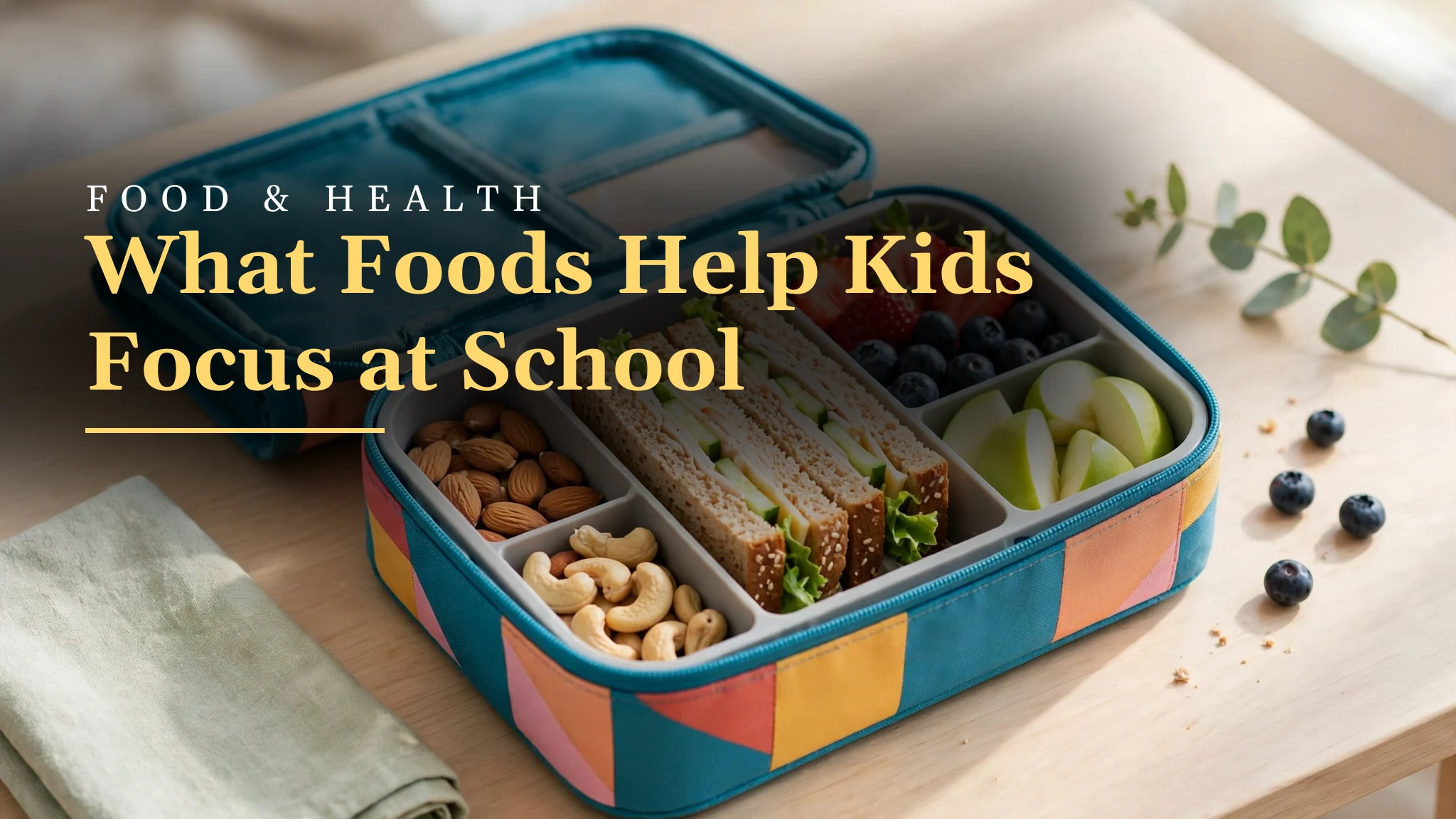
A sandwich is the heart of most lunchboxes, and the bread you choose matters. Wholemeal bread gives fibre and slower energy, while white bread gives quicker energy that fades faster. The filling matters even more. A sandwich with egg, cheese, beans, or peanut butter gives protein that keeps a child full. A sandwich with only jam or only chocolate spread is mostly sugar, and it will not last until the afternoon. A cheese sandwich is a good choice, and it becomes better with a slice of tomato or cucumber inside, which adds water and freshness. An egg sandwich is a classic for a reason: it is cheap, filling, and easy to make. A peanut butter sandwich is also filling, but check whether the school allows nuts, because some schools do not, for the safety of children with allergies.
Fruit belongs in every lunchbox. An apple, a banana, a small box of grapes, or a few slices of orange are all easy to pack, and they give vitamins, fibre, and water. Fruit also gives a child something sweet to look forward to, which makes the lunchbox more appealing. Dried fruit, such as raisins, can work too, but it should be a small amount, because it is much sweeter and more concentrated than fresh fruit, and it can stick to teeth. A small pot of yoghurt is another good lunchbox item. It gives protein and it feels like a treat, especially if the child can add their own fruit to it. Plain yoghurt is better than sweetened yoghurt, because it has far less sugar.
Vegetables are harder to get into a lunchbox, because many children refuse them, but it is worth trying in a small way. A few carrot sticks, cucumber slices, or cherry tomatoes, packed with a small pot of hummus or yoghurt to dip them in, can work well, because dipping makes eating vegetables more fun. Even a small amount of vegetables in a lunchbox is useful, because they add fibre and water. Do not pack a large salad that the child will throw away. Pack a small amount, and let the child get used to it. A lunchbox is not the place for a battle. It is a place for steady, familiar food that the child will eat happily.
Snacks That Help Between Lessons
Most school days have a break in the middle of the morning and another in the afternoon, and those breaks are when snacks matter most. A child who eats nothing at break time will be hungry and distracted by the next lesson. A child who eats only a chocolate bar or a packet of crisps will feel a quick rush of energy and then a quick fall, and they will be hungry again before lunch. The best break-time snacks are small, filling, and easy to eat quickly, because break time is short and children want to play as well as eat.
A banana is probably the best break-time snack there is. It needs no preparation, it fits in a school bag, it is soft and easy to eat, and it gives quick energy plus fibre. A small handful of nuts is another good choice for older children, because nuts give protein and healthy fat that keep hunger away for a long time. But remember that some schools do not allow nuts, so check the school rules first. A small box of raisins or a cereal bar with a short ingredient list can work, but avoid bars that are mostly sugar and chocolate, because they behave like sweets.
A small pot of yoghurt, a piece of cheese, or a boiled egg are all good break-time snacks, but they need to be kept cool, so they work better in a lunchbox with a cold pack than loose in a pocket. A small sandwich, cut in half, can also work as a break-time snack, with the other half saved for lunch. Some parents find it easier to pack one lunchbox with a sandwich, fruit, and a snack, and let the child choose what to eat at break time and what to save for lunch. That gives the child some control, and children who choose their own food are more likely to eat it.
The most important thing about break-time snacks is that they should not replace lunch. A child who fills up on biscuits and crisps at break time will not be hungry for the sandwich at lunch, and then they will be hungry again in the afternoon. The snack should be small, just enough to take the edge off hunger until the next meal. If a child comes home every day with an uneaten sandwich and an empty crisp packet, the snack is too big or too sweet, and it is time to change it.
Water and Its Quiet Role in Focus
Water is the most overlooked part of a child’s school day, and it is also one of the most important. Children lose water all day through sweating, breathing, and playing, and many of them drink far too little to replace it. A child who is even slightly short of water can feel tired, headachy, and less able to concentrate, and teachers often notice this in the afternoon, when children who have drunk nothing since the morning become restless and unfocused. Water does not give energy the way food does, but it helps the body use the energy from food properly, and it keeps the brain working as it should.
The simplest answer is a water bottle. A reusable bottle that the child carries to school, filled with plain water, is one of the best investments a parent can make. It costs almost nothing, and it means the child can drink whenever they are thirsty, instead of waiting for lunch. Some children do not like plain water, and for them a slice of lemon or orange in the bottle can make it more appealing. What matters is that the drink is water, not a sweet drink. Fruit juice, fizzy drinks, and sweetened milk drinks all contain a lot of sugar, and they do not hydrate a child any better than water. In fact, a very sweet drink can make a child thirstier, because the sugar needs water to be digested.
Parents should also remember that children copy what they see. A parent who carries a water bottle and drinks water through the day is teaching a habit without saying a word. A parent who drinks sweet drinks all day is teaching a different habit. The school day is long, and a child who drinks water regularly will feel better in the afternoon than a child who drinks nothing until they get home. If your child comes home every day with a full water bottle, ask them why they did not drink it. Sometimes the bottle is hard to open, or the water gets warm, or the child is embarrassed to drink in class. A different bottle, or a bottle kept cold with a small ice pack, can fix the problem.
Milk is also a useful drink for children, and a small carton of milk at lunch gives protein and calcium, which are both important for growing bodies. But milk is a food as well as a drink, and it should not replace water. Water is the drink for thirst. Milk is a food for a meal. Keeping that distinction clear helps a child drink enough water without filling up on milk and losing their appetite for lunch.
Foods That Make Afternoons Harder
Just as some foods help a child focus, others make the afternoon harder, and it is useful to know which ones they are. The biggest problem is sugar. A lunchbox full of sweet foods, such as chocolate, biscuits, cake, and sweet drinks, gives a child a quick burst of energy that feels good for a short time, and then a sharp fall. After that fall, the child feels more tired than before, and it is harder to concentrate. This pattern is so common that teachers can often tell which children have had a sugary lunch, because they are restless and tired in the afternoon lesson. This does not mean sugar should be banned completely. A small sweet treat in a lunchbox is fine, and most children enjoy it. The problem starts when the sweet food is the main part of the lunch, instead of a small extra.
Very fatty and fried foods can also make afternoons harder, because they sit heavily in the stomach and can make a child feel sleepy. A lunch of fried food, such as a large portion of chips or a fried snack, may taste good, but it takes a long time to digest, and the body sends energy to the stomach instead of the brain. A child who eats a heavy, greasy lunch is more likely to feel drowsy in the afternoon. This is one reason why a light lunch, with bread, protein, fruit, and vegetables, works better for school than a heavy fried meal.
Skipping meals is the other problem. A child who skips breakfast, or who throws away their lunch, will be hungry and distracted, and no food in the afternoon can fully fix that. Some children skip lunch because they do not like what is in the lunchbox, or because they want to spend the whole break playing. If your child regularly comes home with an uneaten lunch, do not scold them. Ask them what they would like instead. Sometimes the answer is simple: a different sandwich, a different fruit, or a smaller lunchbox that is easier to finish. A lunchbox that a child finishes is worth far more than a perfect lunchbox that comes home untouched.
Finally, it is worth being careful about foods that promise to improve focus. There are many products sold to parents that claim to boost a child’s brain, from special drinks to gummy vitamins. Most of these are expensive, and there is no good reason to believe they work better than ordinary food. A child who eats a varied diet with fruit, vegetables, protein, and whole grains is already getting what they need. Money spent on a special brain drink would be better spent on a week’s worth of fruit and yoghurt. Ordinary food, eaten regularly, is the real brain food.
Building a Lunchbox a Child Will Actually Eat
The best lunchbox is not the healthiest lunchbox on paper. It is the lunchbox that comes home empty. A parent can pack the most nutritious food in the world, but if the child does not eat it, it does no good at all. Building a lunchbox that a child will actually eat starts with the child. Ask them what they like. Let them choose between two good options, such as an egg sandwich or a cheese sandwich, an apple or a banana. When children choose, they eat. When food is forced on them, they resist, and the food comes home uneaten.
Variety helps, but it should be gentle variety. A child who eats the same sandwich every day may get bored, but a child who gets a completely different lunch every day may feel unsure and eat nothing. The best approach is a simple pattern with small changes. Keep the same structure, a sandwich, a fruit, a small snack, and water, and change one thing each day. Monday might be an egg sandwich with an apple. Tuesday might be a cheese sandwich with a banana. Wednesday might be a peanut butter sandwich with grapes. The structure stays the same, so the child knows what to expect, but the food changes enough to stay interesting.
Preparation makes all of this possible. Mornings are busy, and a lunchbox made in a rush is often a poor lunchbox. Making the lunchbox the night before, or preparing parts of it at the weekend, changes everything. Boil a few eggs on Sunday. Wash fruit and put it in a box. Cut carrot sticks and keep them in the fridge. Make sandwiches the night before and wrap them well. When the morning comes, you only need to put the pieces together, and the lunchbox is ready in two minutes. Parents who prepare the night before are far more likely to pack a good lunchbox than parents who try to do it in the morning rush.
It also helps to keep the lunchbox simple and to pack only what the child can finish. A lunchbox that is too full can feel overwhelming to a small child, and they may eat nothing at all. A small lunchbox with three or four items is better than a large one with eight. And remember to check the lunchbox when the child comes home. If something comes home uneaten every day, that food is not working, and it is time to try something else. If something is always eaten first, that food is a success, and it should stay. The lunchbox is a conversation between parent and child, and it gets better every week if you pay attention to what comes home.
My Take:
If you ask me what I think about food and children’s focus at school, my honest answer is that food matters more than most people admit, and less than some people claim. It matters because a hungry child cannot learn well, and that is a simple fact that any teacher will confirm. A child who has not eaten breakfast, or who has eaten only sweets, will struggle to pay attention, and no amount of telling them to concentrate will fix that. But food is not a magic answer either. It will not turn a tired child into an alert one, it will not fix a child who slept badly, and it will not make a difficult subject easy. I think the truth sits in the middle: good food removes one obstacle from a child’s day, and that is worth doing, but it is only one obstacle, and parents should not blame themselves when other obstacles remain.
I think the biggest mistake parents make is to look for a special food, a special product, or a special supplement that will make their child focus better. I have seen shelves full of products that promise to boost the brain, improve memory, or increase concentration, and almost all of them are expensive and unnecessary. The foods that help children focus are the foods that ordinary families have eaten for generations: eggs, bread, fruit, yoghurt, milk, beans, vegetables, and water. There is nothing special about them, and that is exactly why they work. They are cheap, they are available everywhere, and they give a child a mix of steady energy, protein, fibre, and water. A parent who buys a week’s worth of fruit, eggs, and yoghurt is doing far more for their child than a parent who buys a bottle of brain vitamins.
Breakfast is the part I feel most strongly about, because it is the meal that is most often skipped, and it is the meal that matters most for the morning. I know mornings are busy. I know children are slow to get up, and parents are in a rush, and the school bus does not wait. But I also know that five minutes for breakfast is worth more than five minutes of anything else in the morning. A child who eats a boiled egg, a piece of bread, and a banana before school is starting the day with fuel in the tank. A child who leaves home with an empty stomach is starting the day with nothing, and they will feel it by the second lesson. If your mornings are too rushed for a cooked breakfast, prepare it the night before. A sandwich, a boiled egg, and a banana can be ready in the fridge, and the child can eat them in five minutes. There is always a way, if breakfast is treated as important.
The lunchbox is the part where I think parents should listen to their children more than they usually do. I have seen parents pack beautiful lunchboxes full of foods the child hates, and then wonder why the lunchbox comes home full. The answer is simple: the child did not choose it. A lunchbox is not a place for a parent to show off their knowledge of nutrition. It is a place to give a child food they will eat, with small improvements that make it steadier. If your child loves a cheese sandwich, give them a cheese sandwich, and add a slice of tomato and a piece of fruit. If your child loves peanut butter, give them peanut butter on wholemeal bread, and add a banana. Do not replace the food they love with food they hate. Improve the food they love, a little at a time, and they will eat it happily.
I also think water deserves more attention than it gets. I have watched children come home from school with full water bottles, day after day, and their parents have no idea why. Sometimes the bottle is hard to open. Sometimes the water is warm and tastes bad. Sometimes the child is shy about drinking in front of others. These are small problems with small answers: a better bottle, a cold pack, a conversation with the child. But if nobody asks, the problem goes on for months, and the child spends every afternoon slightly thirsty and less able to focus. Water is free, it is simple, and it is one of the easiest things a parent can fix. Ask your child whether they drink their water, and if they do not, find out why.
Sugar is the part where I think parents need the clearest advice. I am not saying children should never eat sweets. A small piece of chocolate, a biscuit, or a slice of cake in a lunchbox is a normal pleasure, and children enjoy it, and there is no need to feel guilty about it. What I am saying is that sugar should be the small extra, not the main event. A lunchbox that is mostly biscuits, chocolate, and sweet drinks will give a child a quick rush and then a crash, and the afternoon will be harder than it needed to be. A lunchbox that is mostly bread, protein, fruit, and water, with one small sweet treat, will keep a child steadier. That is the balance I would aim for, and it is a balance that most parents can manage without any special effort.
I want to say something about guilt, because I think many parents carry too much of it around food. They worry that they are not feeding their child well enough, that other parents pack better lunchboxes, that their child is falling behind because of food. I think most of that guilt is unnecessary. If you give your child breakfast most mornings, if you pack a lunchbox with a sandwich, a fruit, and water most days, and if you offer a proper dinner in the evening, you are already doing a good job. Perfection is not needed. A child does not need a different lunch every day, or organic food, or expensive snacks. They need regular food, eaten without a fuss, and a parent who pays attention to what comes home uneaten. That is enough, and it is more than many children get.
Finally, I want to say that the lunchbox is also a message. When a parent packs a lunchbox with care, the child knows that someone was thinking about them that morning. That matters more than any nutrient. A child who opens a lunchbox and finds food they like, packed neatly, with a small note or a favourite fruit, feels cared for, and a child who feels cared for is more confident at school. I do not mean you need to write a note every day. I mean that the act of packing the lunchbox, of choosing food your child likes, of remembering what they ate yesterday and what they left uneaten, is itself a form of care. And care, like food, helps a child focus, because a child who feels safe and cared for is a child who can pay attention to the lesson instead of worrying about everything else. So pack the lunchbox, keep it simple, keep it steady, and know that you are doing something that matters, even if it looks ordinary. Ordinary is often exactly what a child needs.
I also want to talk about the afternoon, because most of the advice about school food focuses on breakfast and lunch, and the afternoon is forgotten. Yet the afternoon is when many children struggle most. Lunch is long past, the day is long, and the last lessons are the hardest to sit through. A child who has nothing to eat between lunch and home time will be hungry, tired, and restless, and homework will be harder too. A small snack when the child comes home, something like a piece of fruit with a glass of milk, or a small sandwich, or a bowl of yoghurt, can make homework much easier. It is not a reward for a good day. It is fuel for the next part of the day, and it works in the same way as the break-time snack at school. Parents who give their child a small snack after school, and then a proper dinner an hour or two later, are giving their child two chances to refuel instead of one, and the child feels the difference.
There is another point I think is worth making, and it is about schools themselves. Parents cannot control what happens in the classroom, but they can ask questions, and those questions matter. If your child’s school sells only sweet drinks and crisps, it is worth asking whether fruit and water are available too. If break time is so short that children have no time to eat, it is worth raising that with the teacher. You do not need to be difficult about it. A simple question, asked politely, can change things, especially if other parents ask the same question. Children spend most of their waking hours at school, and the food environment there shapes their habits for years. A parent who packs a good lunchbox is doing their part, and a parent who asks the school for better options is doing a little more, and both are worth doing.
I also think it helps to remember that children are not small adults, and their needs change as they grow. A five-year-old needs small, frequent meals and food that is easy to hold and easy to eat. A ten-year-old needs more food, and can manage a bigger lunchbox. A teenager needs the most food of all, because they are growing fast, and they often skip meals because they are busy or self-conscious about eating in front of others. The lunchbox that worked at seven will not work at fourteen, and parents should expect to change it. The best way to keep up is to keep asking the child what they want, and to keep watching what comes home. The child who once loved an egg sandwich may now want a cheese sandwich, and that is fine. The pattern stays the same, a steady food, a fresh food, a drink of water, and only the details change. That is how a lunchbox grows up with a child.
One last thing, and it is about patience. Food habits do not change in a day, and a child who has been eating biscuits at break time for years will not suddenly love carrot sticks. Change takes time, and it works best in small steps. Replace one sweet snack with a banana this week. Add a piece of fruit to the lunchbox next week. Try a wholemeal sandwich the week after. If the child refuses something, do not force it. Try it again in a few weeks, in a different form. A child who refuses carrot sticks may eat them with hummus. A child who refuses yoghurt may eat it with fruit on top. Patience is not giving up. Patience is trying again, gently, until the new habit feels normal. And when it does feel normal, it will stay with the child for years, long after they have left school, and that is the real prize. A child who learns to eat well at school becomes an adult who eats well without thinking about it, and that is a gift that lasts a lifetime.
And one more small thing I want to add, because parents often forget it in the rush of the morning: the lunchbox does not need to be perfect to be good. Some mornings you will be late, and the lunchbox will be simpler than usual, and that is fine. Some days your child will trade their fruit for a friend’s biscuits, and that is fine too. What matters is the pattern across the whole week, not any single day. If most days the lunchbox has a sandwich, a fruit, and water, and most mornings start with a proper breakfast, your child is getting what they need. Do not let one rushed morning make you feel you have failed. Pack what you can, send them off with a smile, and try again tomorrow. That steady, ordinary care is worth far more than a perfect lunchbox on one day and nothing the next.
Frequently Asked Questions
Is what foods help kids focus at school something I should think about every day?
Yes, in a simple way, because children eat at school every day, and a small amount of planning makes the whole day easier. You do not need a new plan each morning. A steady pattern, a good breakfast, a lunchbox with a sandwich, fruit, and water, and a small snack at break time, is enough. Once that pattern is in place, it takes only a few minutes a day to keep it going.
How long does it take to notice anything from what foods help kids focus at school?
Many parents notice a difference within a week or two, especially in the mornings. A child who eats a proper breakfast with protein and fibre is often more alert in the first lessons and less hungry before lunch. Changes to the lunchbox may take a little longer to show, because you need to see what the child actually eats and what comes home uneaten, but within two or three weeks the pattern usually becomes clear.
Can what foods help kids focus at school fit into a busy workday?
Yes, and preparation is the key. Make the lunchbox the night before, boil a few eggs at the weekend, and keep fruit, yoghurt, and bread ready in the kitchen. On a busy morning, a ready lunchbox and a simple breakfast of bread, egg, and fruit take only a few minutes. The busiest parents are often the ones who benefit most from preparing the night before.
What is the simplest way to start with what foods help kids focus at school?
Start with breakfast. Give your child a piece of wholemeal bread or a bowl of porridge, an egg or a pot of yoghurt, and a piece of fruit, every school morning for one week. At the same time, put a bottle of plain water in their school bag. That one change is the simplest start, and it is the change that makes the biggest difference to the morning.
Does what foods help kids focus at school work the same way for everyone?
No, it does not, because children are different in age, appetite, and taste. Younger children need smaller, more frequent meals, while older children can go longer between meals. Some children love fruit and some do not. Some schools allow nuts and some do not. The right lunchbox is the one your child finishes, and that will look different from one child to another, even in the same family.
What should I do if what foods help kids focus at school does not suit me?
If your child keeps bringing food home uneaten, ask them what they would prefer and change one thing at a time, rather than changing the whole lunchbox at once. If a food upsets your child’s stomach, stop giving it and try a plainer option. And if you are worried about your child’s appetite, energy, or ability to focus over a long period, speak to a qualified health professional rather than trying special products or supplements on your own.
Sources
- NHS — Eat Well
- World Health Organization — Nutrition
- Centers for Disease Control and Prevention — Nutrition
- Healthline — Nutrition
- Mayo Clinic — Nutrition and Healthy Eating
This article is general information only. It is not medical advice and it does not diagnose, treat, or cure anything. For personal concerns, speak to a qualified health professional.


